
A quilting triangle challenge

The Exe Valley Contemporary Quilt Group displayed their triangle challenge quilts at the 2026 Newark Quilt Show, and the results were thought provoking as perhaps not all of the triangles were quite what you’d think. Many quilting blocks use triangles, notably the half square triangle, which is pretty self descriptive. But the group’s challenge allowed any medium or technique, and the only criterion was that the quilt should include at least one recognisable triangle of any size.

I loved to see how the individual quilters interpreted the challenge, and I hope you do too. The challenges are set by members and quilters from across the region from North Dorset to South Cornwall participated.

Here’s some of the ones I loved from the display:
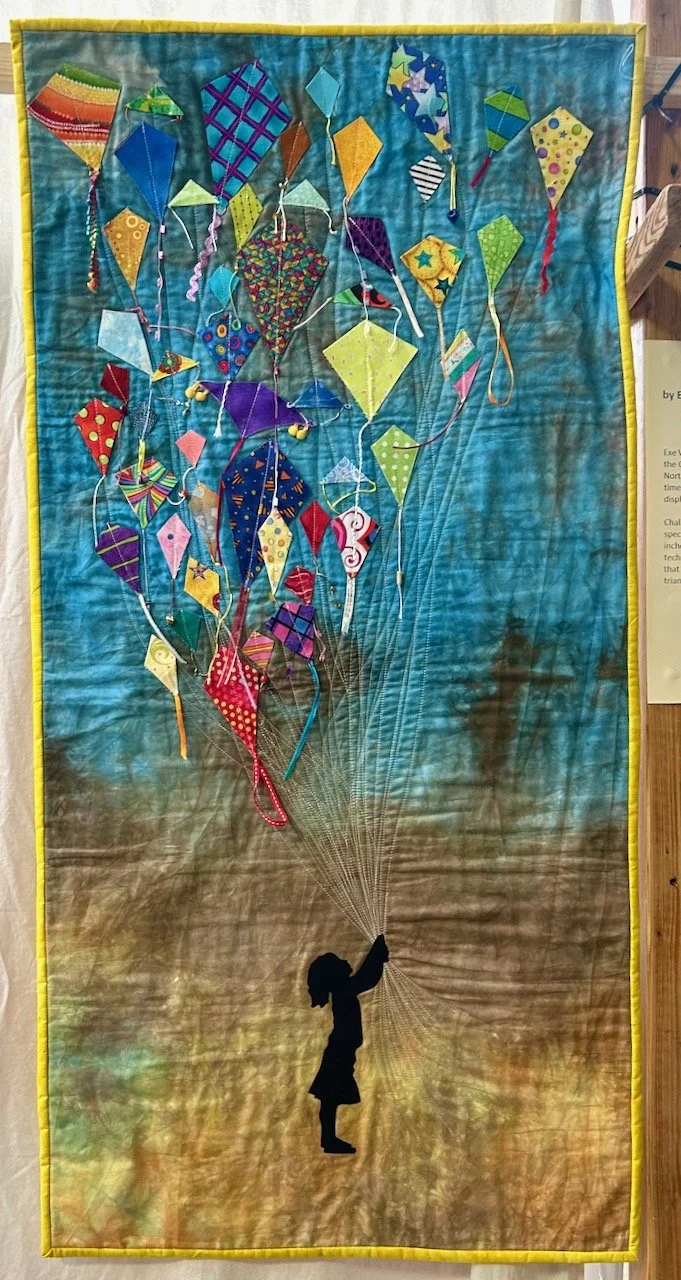
LET’S GO FLY A KITE BY SALLY HARRADINE - NEWARK QUILT SHOW, JANUARY 2026

LET’S GO FLY A KITE BY SALLY HARRADINE

If triangles were the challenge my mind wouldn’t automatically go to kites, but the inspiration for this one came from looking out the window on a blowy day and thinking that it would be fun to fly kites with the grandchildren - and so the triangles are incorporated in amongst the kites, in what I think is a really effective and dreamy looking quilt.

I’ll admit that the next one is my favourite from this display, I love its contemporary-ness, plus it uses scraps and simple stitches, and hand sewing - all of which appeal to me.
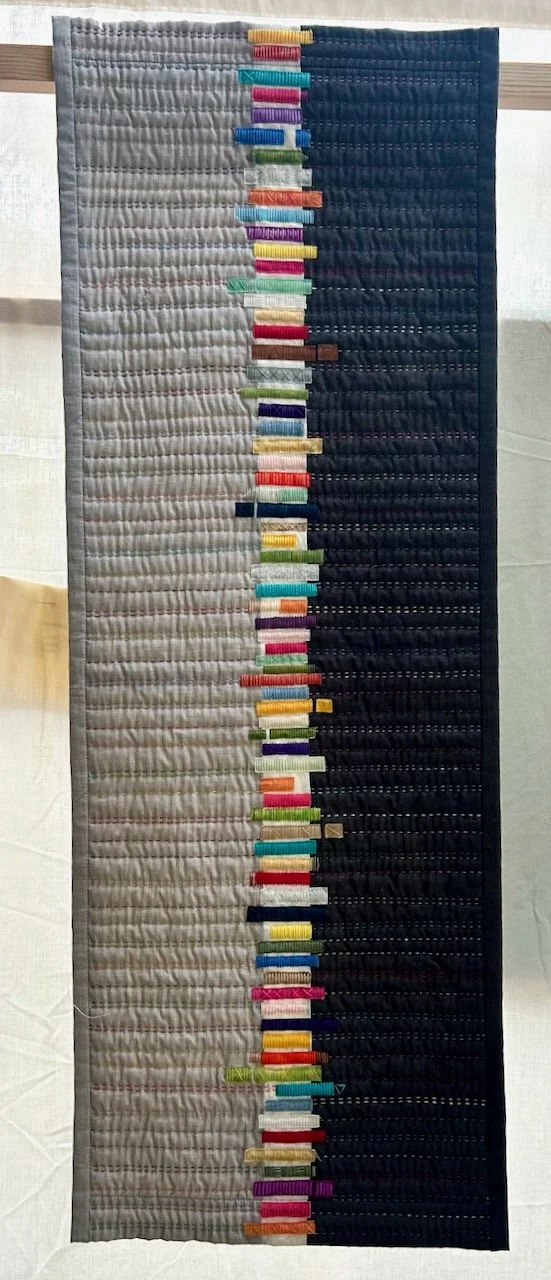
TWELVE TRIANGLES BY JANE SYERS - NEWARK QUILT SHOW JANUARY 2026
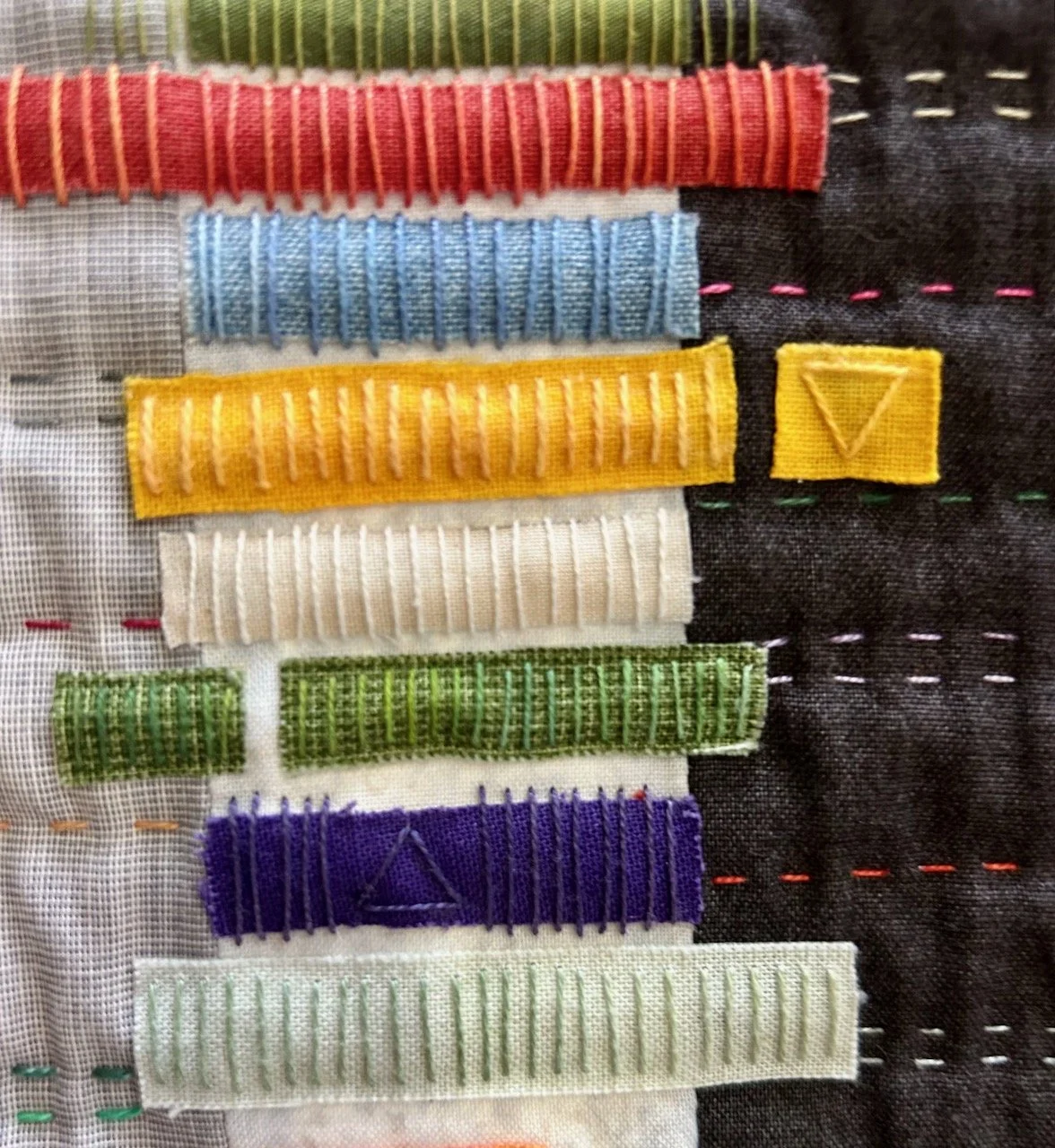
TWELVE TRIANGLES BY JANE SYERS

TWELVE TRIANGLES BY JANE SYERS - NEWARK QUILT SHOW JANUARY 2026

TWELVE TRIANGLES BY JANE SYERS

But look at the detail, and how the triangles are included. So very clever, meets the brief in a quiet and understated but also impactful way. Bravo!
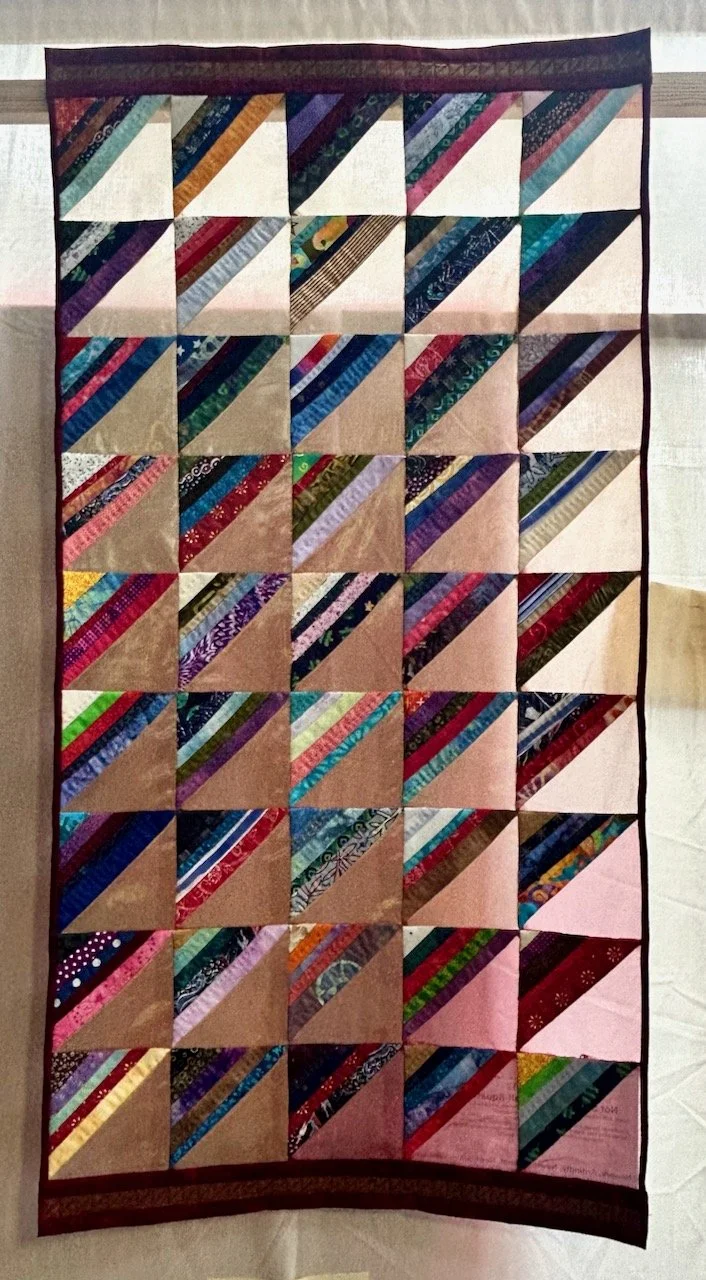
NOT SO TRADITIONAL HALF-SQUARE TRIANGLES BY PENNY KUROWSKI - NEWARK QUILT SHOW, JANUARY 2026
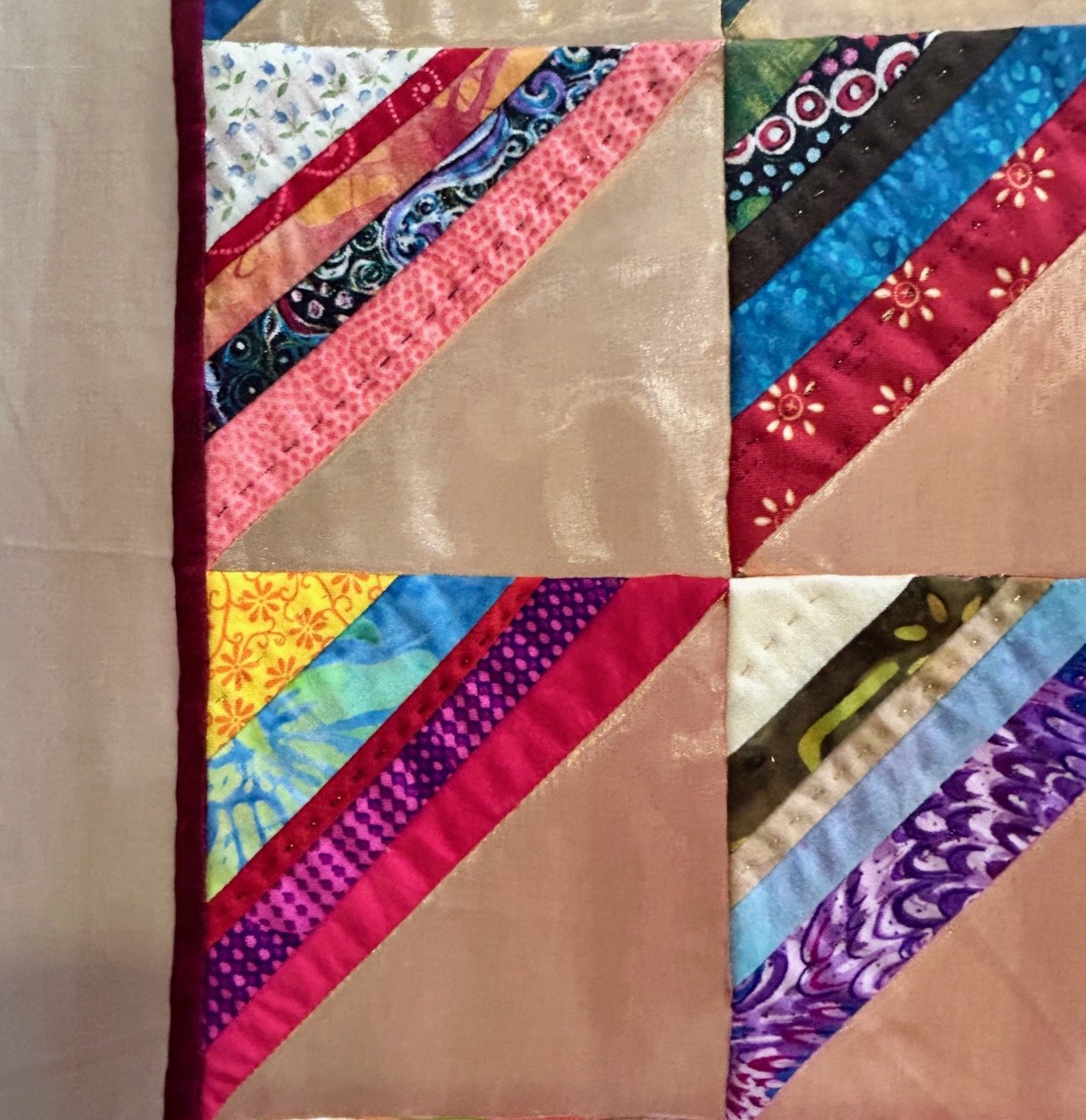
NOT SO TRADITIONAL HALF-SQUARE TRIANGLES BY PENNY KUROWSKI

NOT SO TRADITIONAL HALF-SQUARE TRIANGLES BY PENNY KUROWSKI - NEWARK QUILT SHOW, JANUARY 2026

NOT SO TRADITIONAL HALF-SQUARE TRIANGLES BY PENNY KUROWSKI

I mentioned half square triangles at the top of this post, and this quilt uses them in a not so traditional way, again with scraps but also the plain triangle is organza, which is way harder to sew with so I take my hat off to this quilter and her shimmery creation.
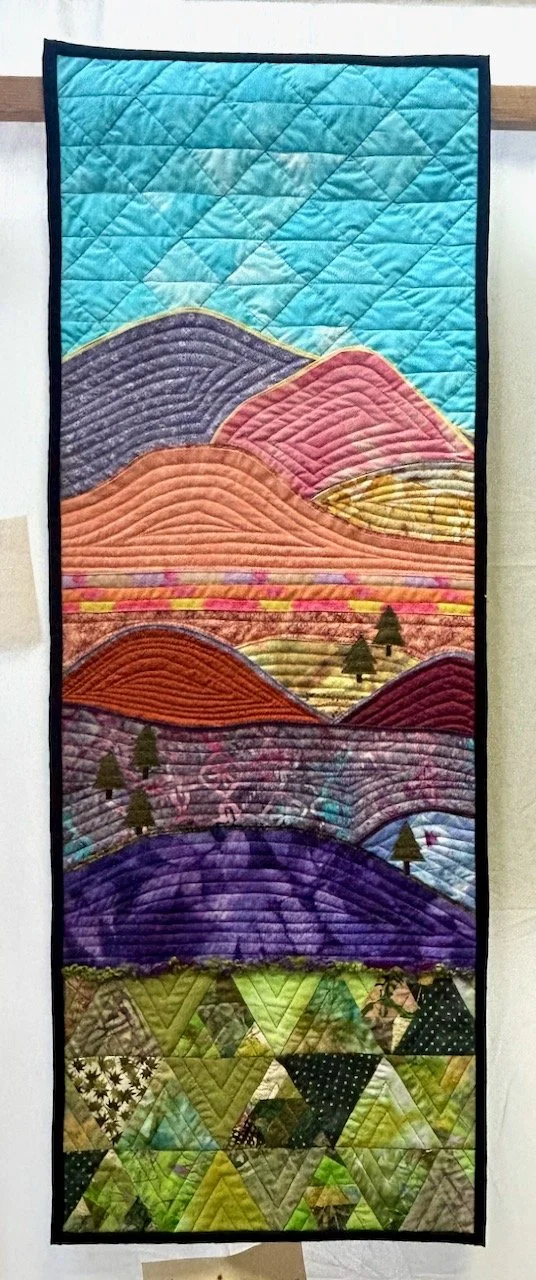
COLOURS OF ANDALUCIA BY MANDY WINTER - NEWARK QUILT SHOW, JANUARY 2026

COLOURS OF ANDALUCIA BY MANDY WINTER

I love the colours and patterns in this quilt which is inspired by visits to Spain, and influenced by and created in the style of artist Poul Webb. The triangles form the sky and the grassland, but also the mountains are kind of triangles too right?

So it just goes to show, not all triangles are equal, or even equilateral!
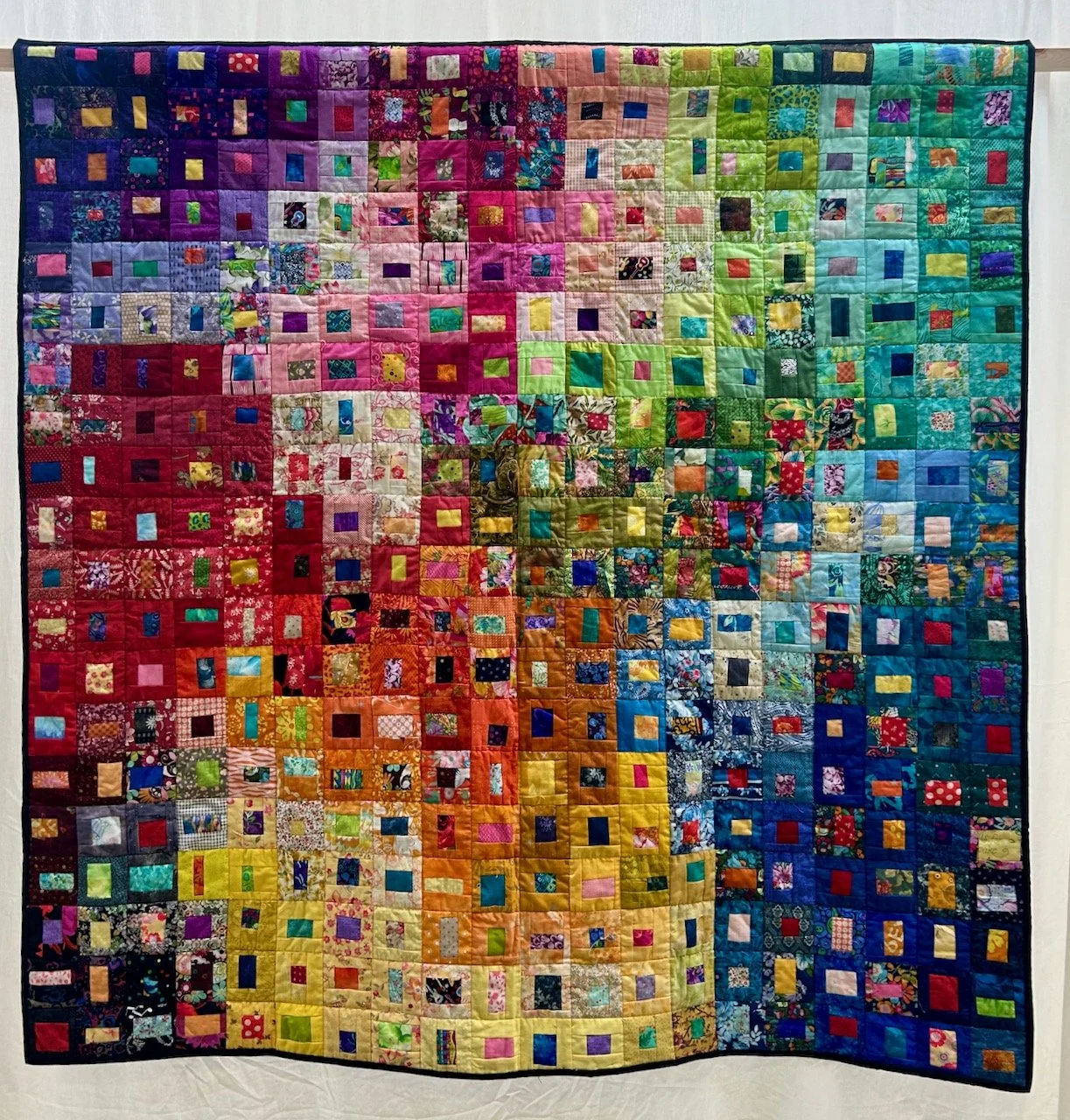
Sue Jennings' Colourwash Quilts

As well as her amazing One Block Wonders, Sue’s Colourwash Quilts were also on display at the show, they too were quilts not to miss. As many quilters will tell you quilting projects generate a lot of scraps and Sue said she started to make colourwash quilts after watching technique videos online by the Canadian quilter, Terry Rowlands.

The quilts are perfect for using up lots of small scraps - which is the point in which I should stop reading (and looking) as this will only encourage me to save every last scrap, the challenge is though of course, where to store them and how to make them look as fantastic and as ‘put together’ as these by Sue.

Sue says she uses prints, solids, batiks, silk, wovens and in fact anything goes, and the only time she uses a ruler is to square up the blocks and the quilt, so everything can be rough cut, and any shape can be used.

This really isn’t what I wanted to hear!! But I agree and the lack of regularity makes the quilts more interesting and when Sue says it’s a joy to look at these quilts and remember which fabric was used in which quilt, I’m totally with her.

Her first colourwash quilt used all colours of scraps, and when it was done she wondered what was next. Let me tell you now, what came next was even more stunning, with her colour inspiration coming from artwork and photos, and you’ll see just what I mean.

ORIGINAL COLOURWASH, SUE JENNINGS AT THE NEWARK QUILT SHOW 2026

ORIGINAL COLOURWASH, SUE JENNINGS

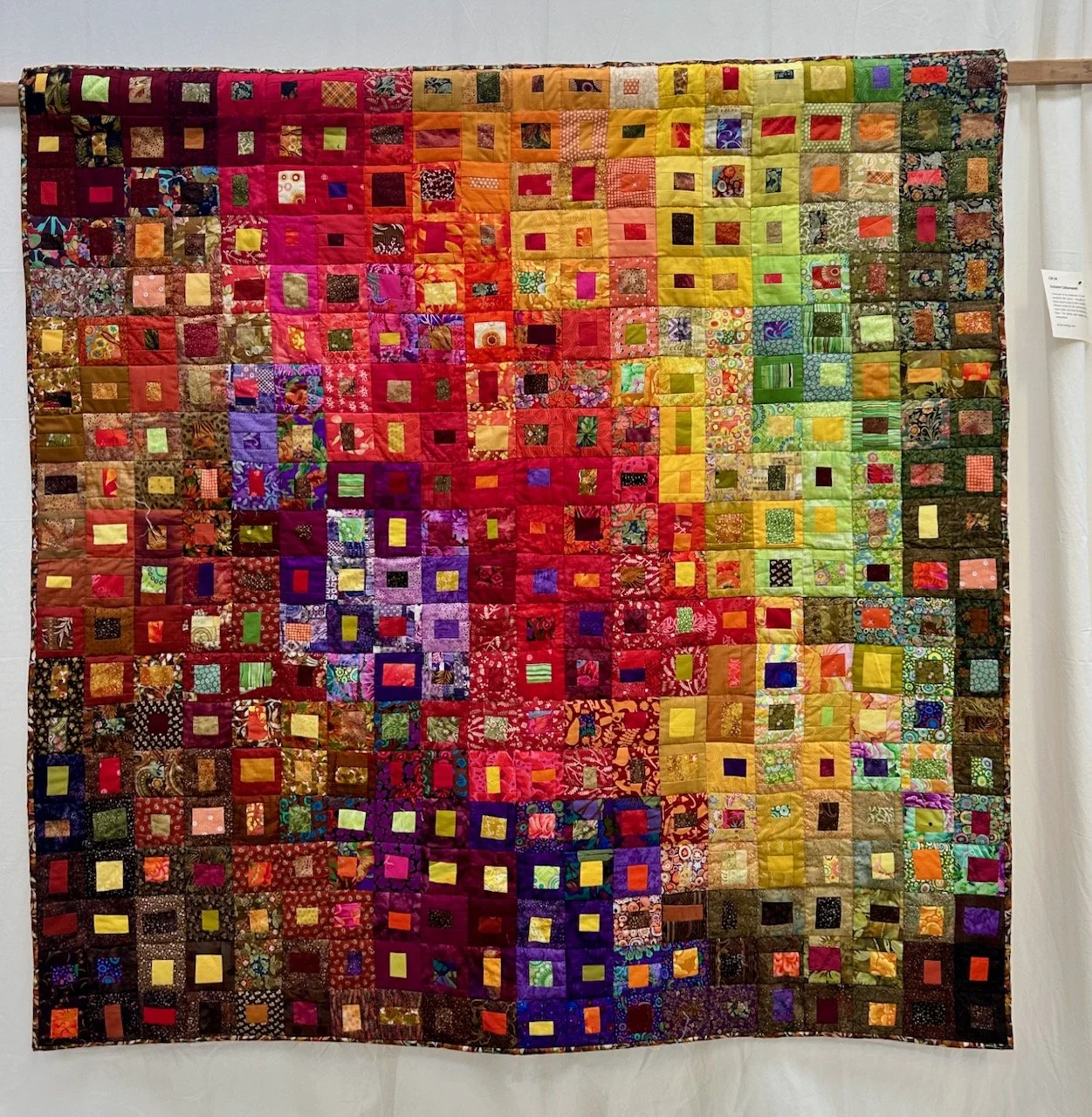
The inspiration for her Autumn quilt was the ‘wonderful fall colours’ she experienced while living for part of her childhood in Canada, and she thought ‘it would be a joy’ to recreate those using her scrap fabrics, and that resulted in another wonderful quilt.

AUTUMN COLOURWASH, SUE JENNINGS AT THE NEWARK QUILT SHOW 2026

AUTUMN COLOURWASH, SUE JENNINGS

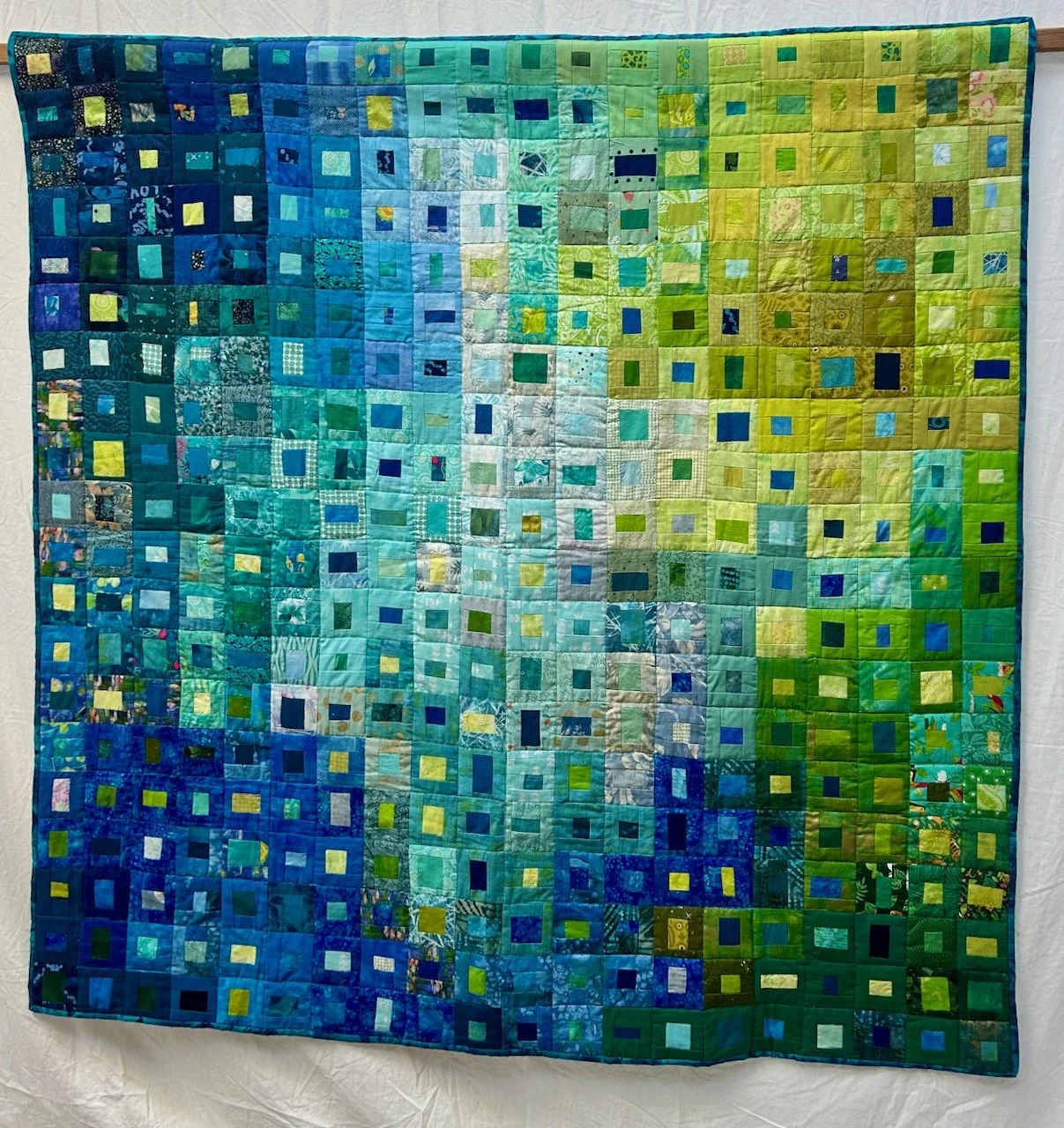
WATERLILLIES COLOURWASH, SUE JENNINGS AT THE NEWARK QUILT SHOW 2026

WATERLILIES COLOURWASH, SUE JENNINGS

You’ll not be surprised to learn that Sue’s inspiration for the Waterlilies quilt was a photo of a Monet painting. It’s a vibrant but calming palette, and a fabulous quilt isn’t it?

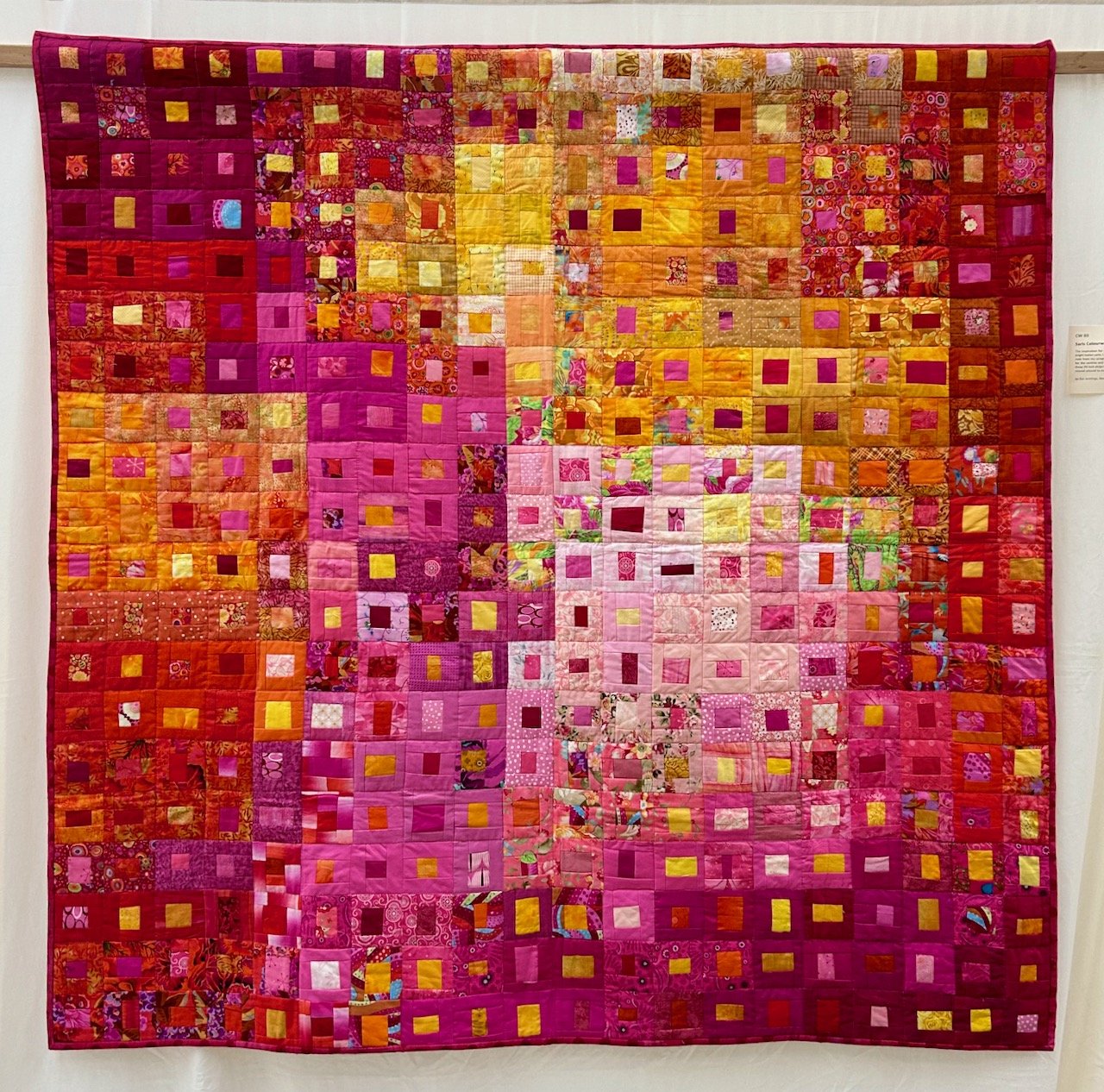
SARIS COLOURWASH, SUE JENNINGS AT THE NEWARK QUILT SHOW 2026

SARIS COLOURWASH, SUE JENNINGS

The inspiration for the Saris quilt was photos of ‘beautiful bright Indian saris’ and Sue ‘particularly wanted to wash oranges, pinks and reds’ from her scraps. These are colours that I love together, though I veer more towards oranges and pinks with yellow, rather than reds - and this quilt does remind me of the colourful saris we saw women wear in India, particularly those when we visited a stepped well. The contrast against the natural elements was stunning, as is this quilt - and I think of all of Sue’s colourwash quilts, this is my favourite - which is yours?

A couple of Shabby Chic Rosettes

Before I got to the Newark Quilt Show this year I’d already chosen which workshop I’d like to do, and a backup choice just in case. But I was fortunate enough to get onto my first choice which was the Shabby Chic Rosettes with Kate Crossley, who as it turned out had led the bag making course that I attended in 2024. I did wonder, and I was right.

It was a great workshop, and I even finished one of the rosettes there on the day which was great as it meant that I really wanted to finish the other one at home, rather than leave it languishing in a cupboard somewhere, which can quite often be the case can’t it?

Making the rosettes

The tools and materials for this workshop were strips of material, glue, scissors and a pencil, and no sewing.

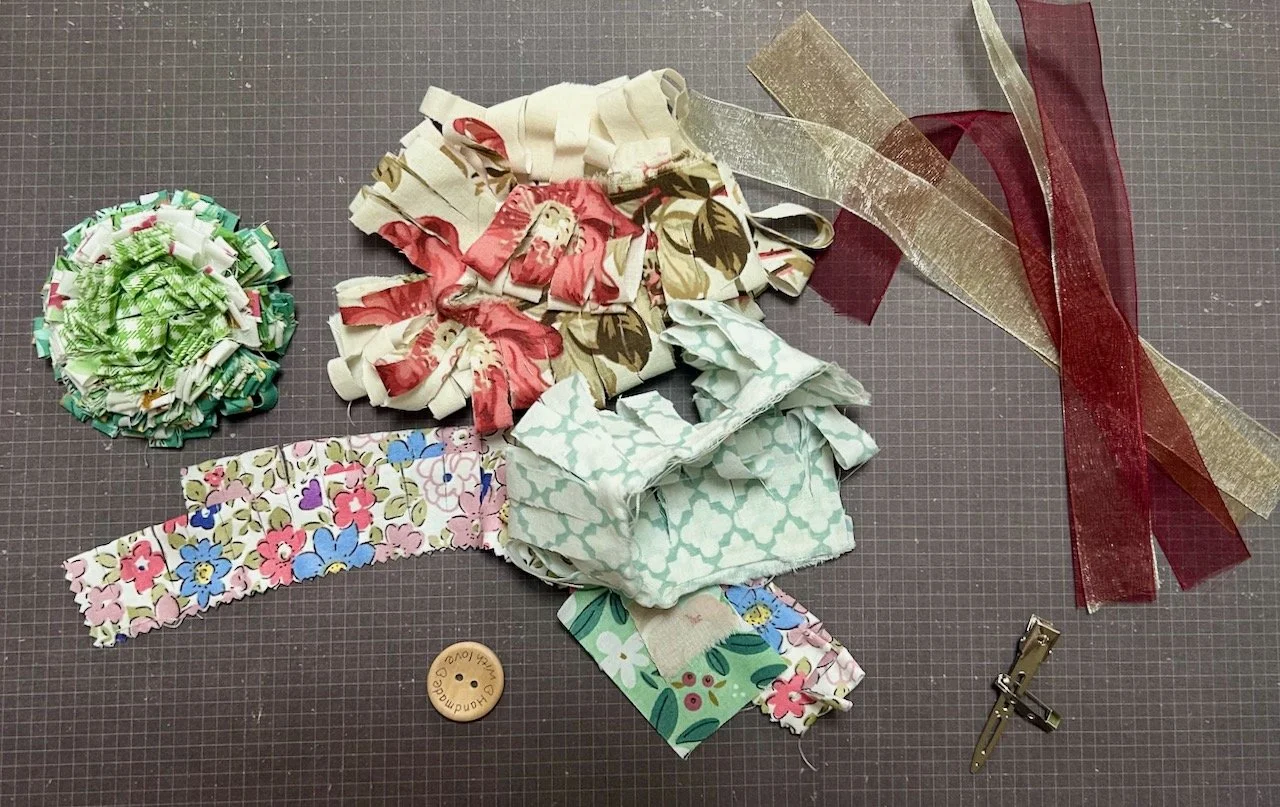
I shared the image below previously as part of my what’s new in my craft room update, the green and white rosette in the top left corner was the one I completed on the day. As well as a second rosette to make at home I also left with a button to finish the centre of the larger rosette, a selection of ribbons, some small pieces of material for the back and a brooch and hair clip attachment.

One finished rosette, elements for a second one and ribbon and more to finish both off

I was keen to finish the second rosette. At the workshop I’d folded the length of material in half and cut most of the way through the folded edge, creating the petals. I hadn’t started the rolling as I thought it would be easier to start afresh rather than to pick it up part way through.

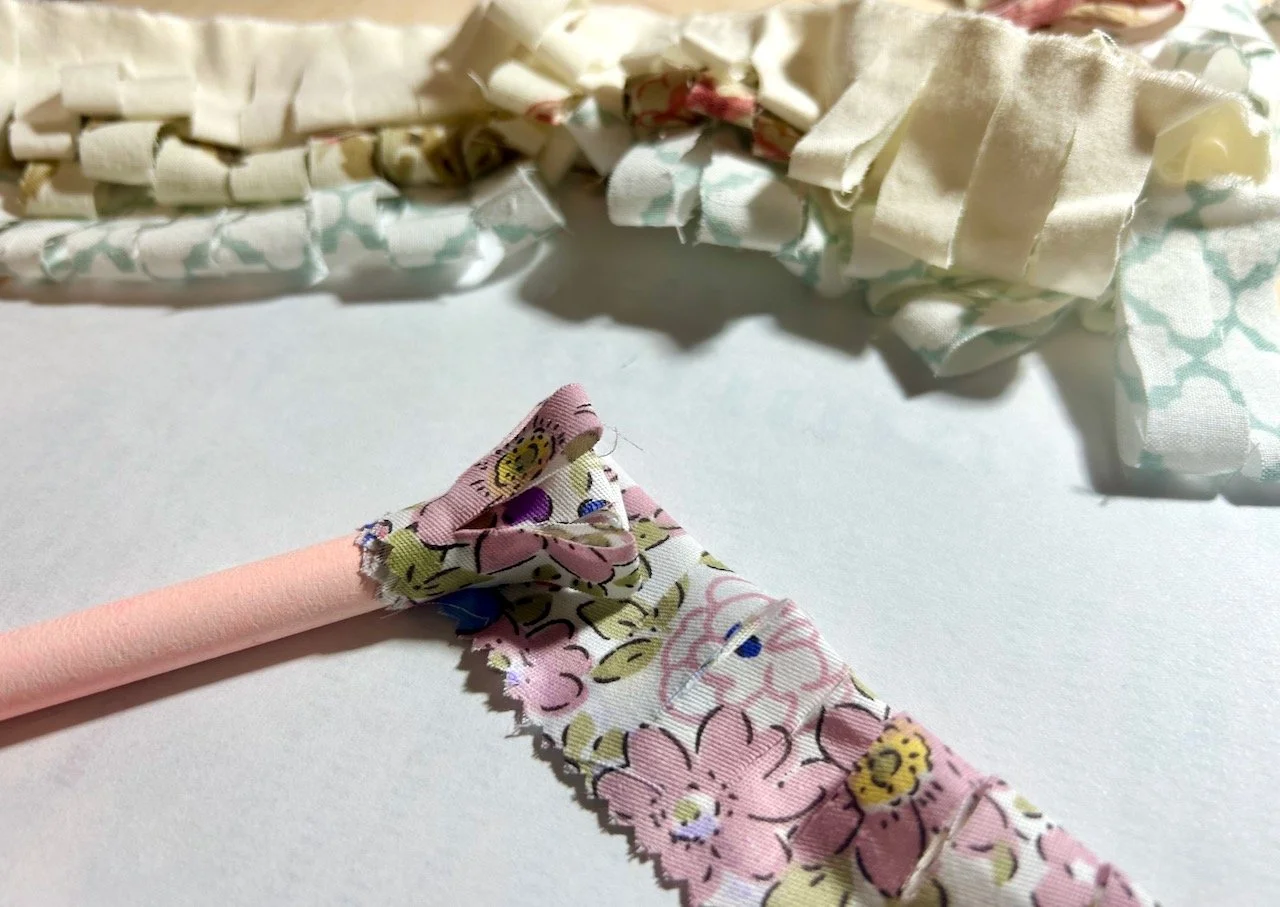
Rolling one of the strips around the pencil

The rolling is where the pencil came in, and more glue. As you roll, you glue.

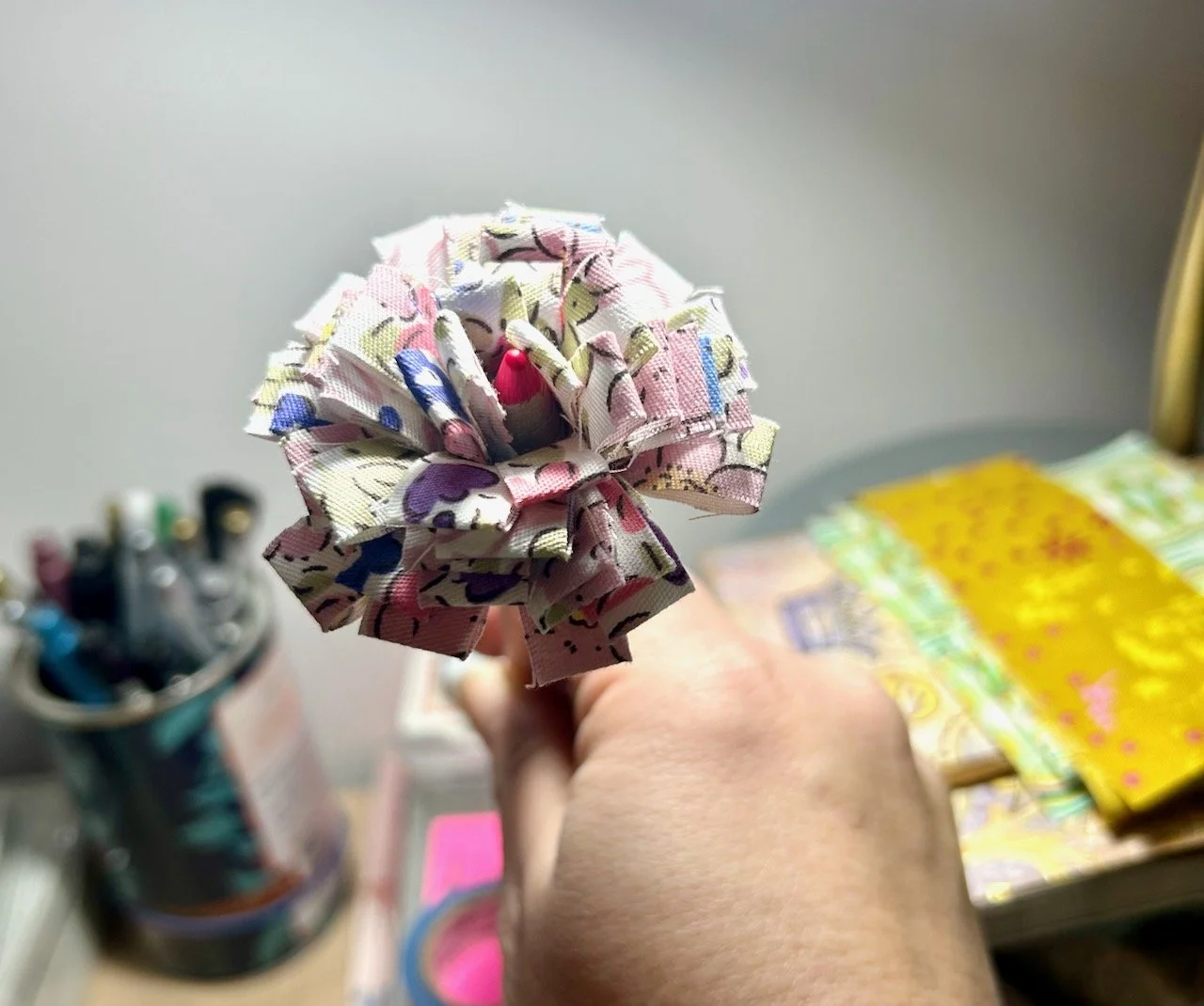
One strip glued and rolled - more to go!

Or rather glue, and roll.

Glue and roll.

And keep going.

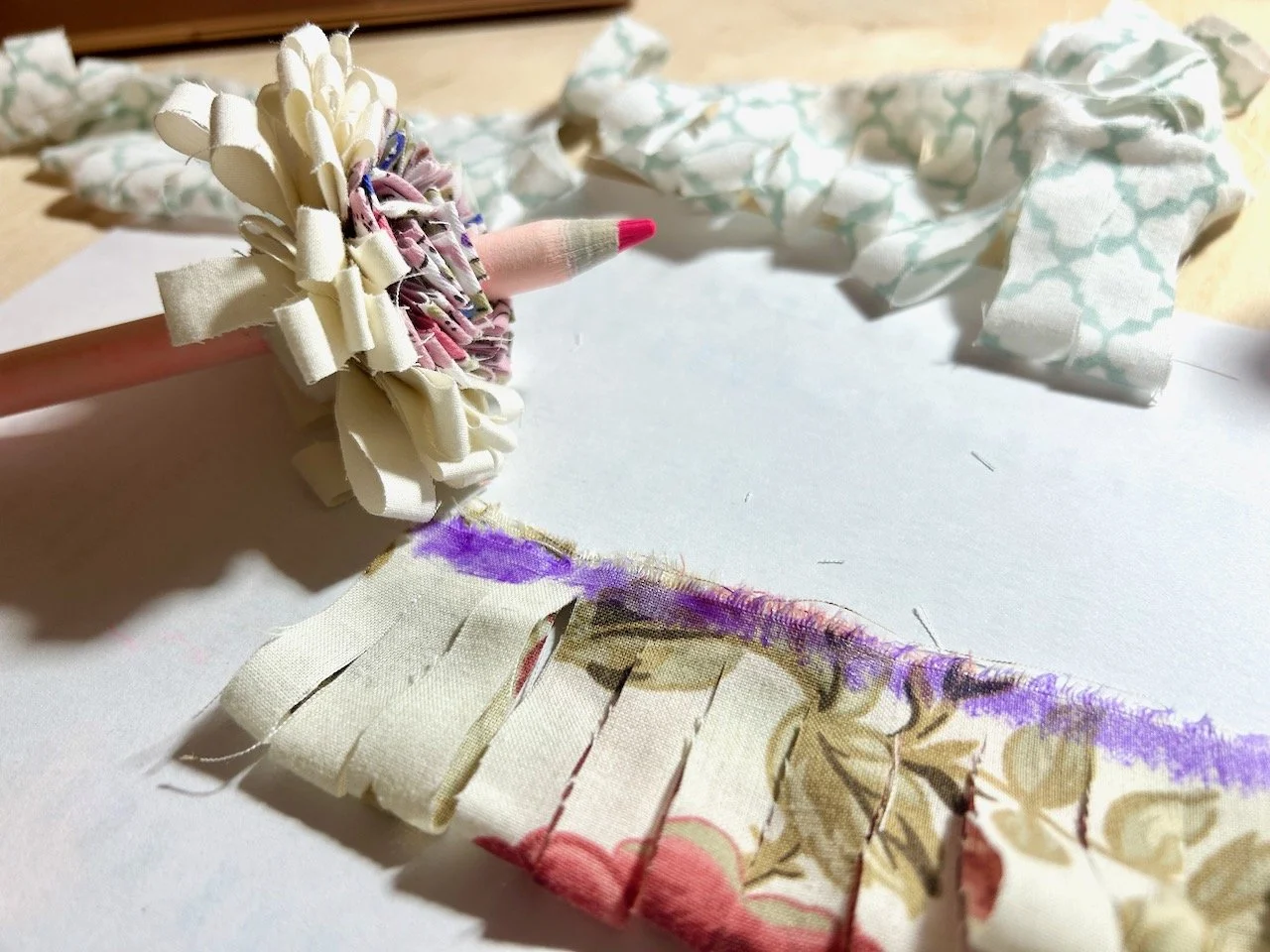
Showing the purple glue on the second strip, rolling in progress

Kate suggested using this ‘Amazon Basic’ glue stick, which goes on purple and dries clear, which does make it easier to see where you’ve glued already. It’s relatively cheap too, and some slipped into my Amazon basket ahead of attempting to finish this at home.

Once the four strips are glued and rolled, I was almost done.

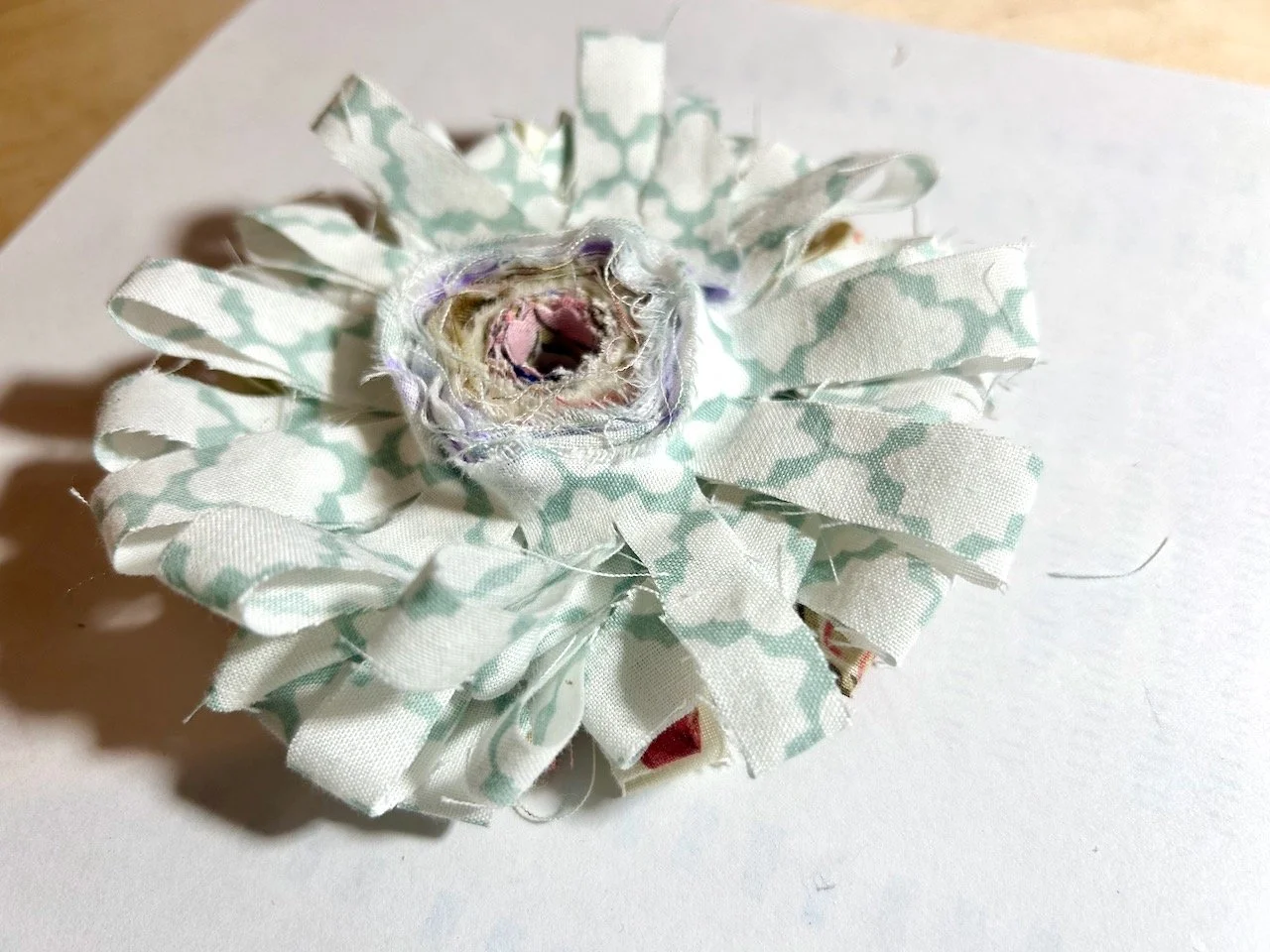
The reverse of the finished rosette

I was quite pleased at how neat mine was at the back, I’d taken particular care to keep the ends level and it worked. To help it ‘set’ Kate turns them right side up and squashes them down with her hand. And it works, even though it feels counterintuitive to squash your work!

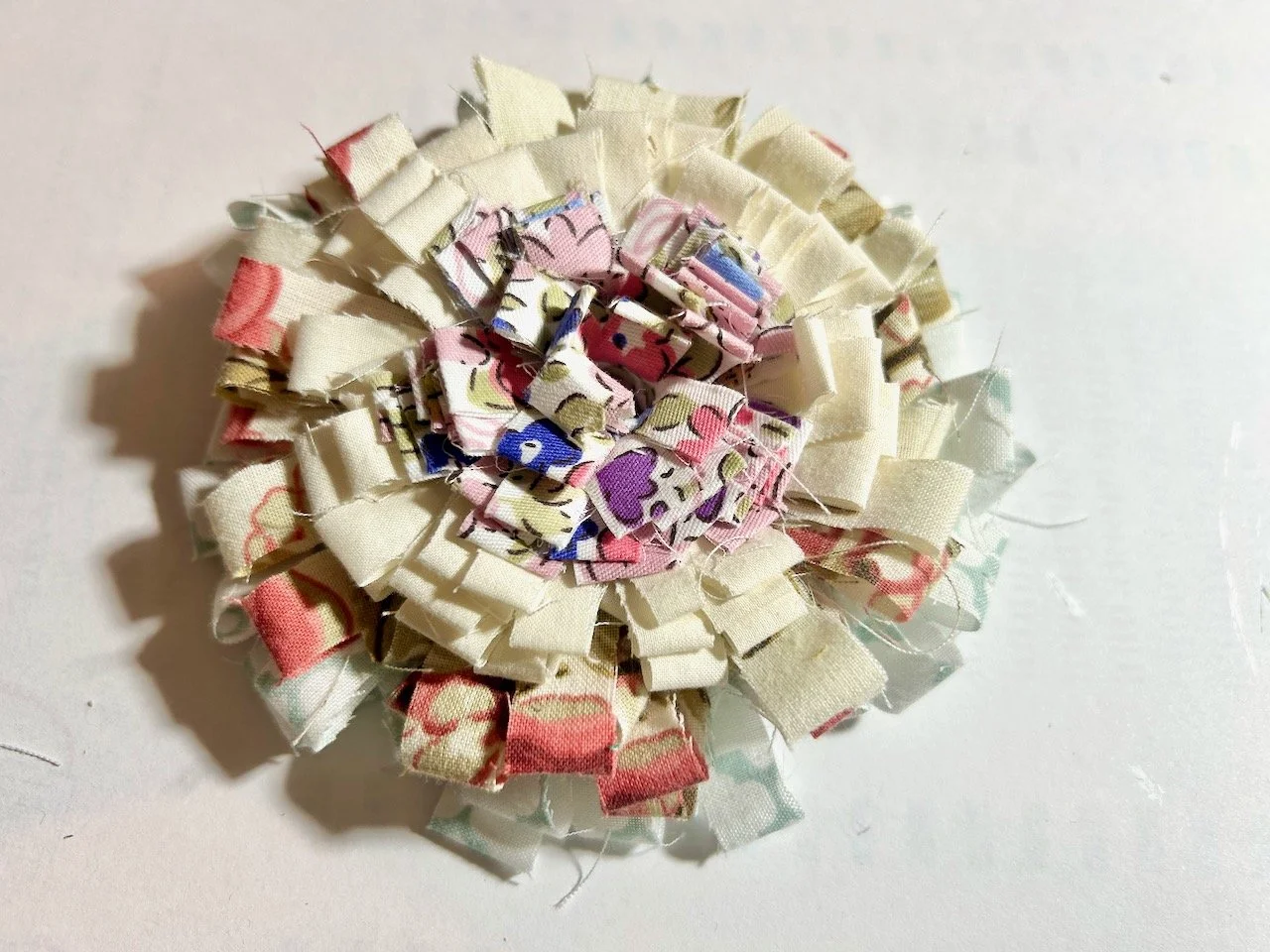
The front of the second completed rosette

So now I have two Shabby Chic Rosettes, and the knowledge to create many, many more. I already think they’ve got plenty of potential uses alongside the brooch and hairpin options - I haven’t added either of the backings yet, as I want to think about how I’ll use them first.

I think these could be added to bags, and pouches (!) as a decoration, and they could be made in fabric which complements your outfit for an coordinated embellishment, or even as corsages for weddings etc. Another suggestion on the day was to make two and glue them together to make a sphere, adding a hanging loop so they can hang on your bunting, or on your Christmas tree. The possibilities are endless it seems!

But it was a great way to spend an hour, and to leave with something finished, a new skill and plenty of ideas. I’m sure I’ll be making more!