An impromptu name badge

I’m not a big fan of name badges.

I know they're useful and all that but I’m still not a fan, and if I’m honest I’m less of a fan of those handwritten by someone else. Unless they have fabulous handwriting of course, but then again it’s still a name badge.

When it was mentioned that while volunteering on my knitting group’s stand at the Newark Wool Show that we should wear name badges provided I almost had a quick rethink about it all. Yes, that’s how much I don’t like wearing name badges.

But I reasoned that I couldn’t let the organisers down, as that would be even worse than wearing a name badge, and so I thought I’d make my own. But time was tight the show was that weekend, and in the week in the lead up to the show life got in the way, a lot.

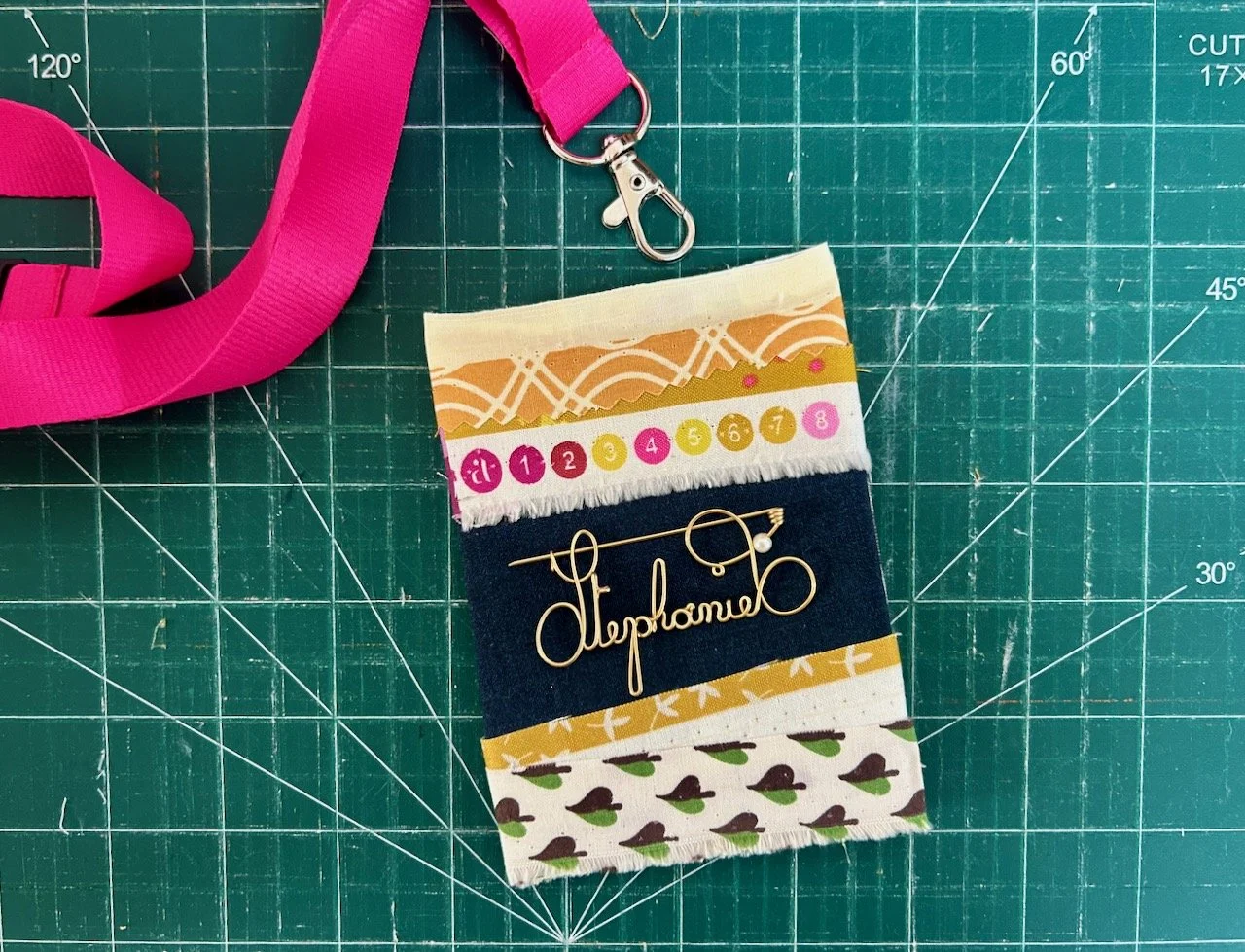
I remembered that I had a wire brooch with my name on and I thought if I could find that I could use that, I found it and so an impromptu name badge I made.

Yes I know I could have just worn the wire brooch, but I wasn’t sure if it would show up on my clothes as much as it would against a dark background, and at the time I had no idea what I’d wear, plus I’m not much of a brooch person either!

I knew I didn’t have time for knitting or crocheting, or even sewing - so fabric and glue it was. This is what I started with:

  • scraps of material, including selvedges

  • the wire name brooch

  • a lanyard (saved from a previous need to wear a name badge most likely at a work conference - but at least it was bright pink!)

  • a cardboard tag from clothes purchase.
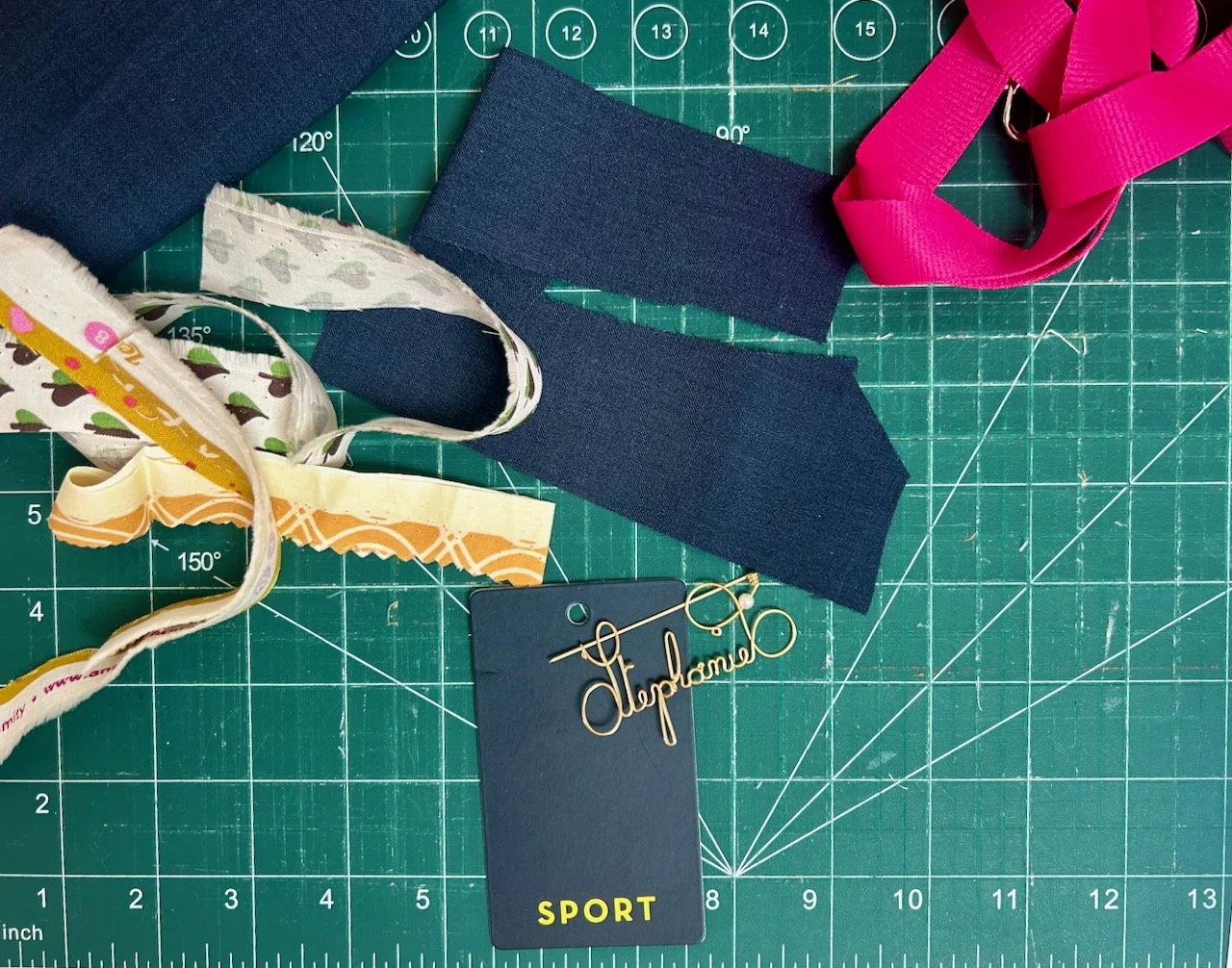
The starting point and materials for my impromptu name badge

I quickly realised that my wire name brooch was wider than my backing card - the joys of a longer name - and so I cut my wadding wide enough to extend the width of the badge.
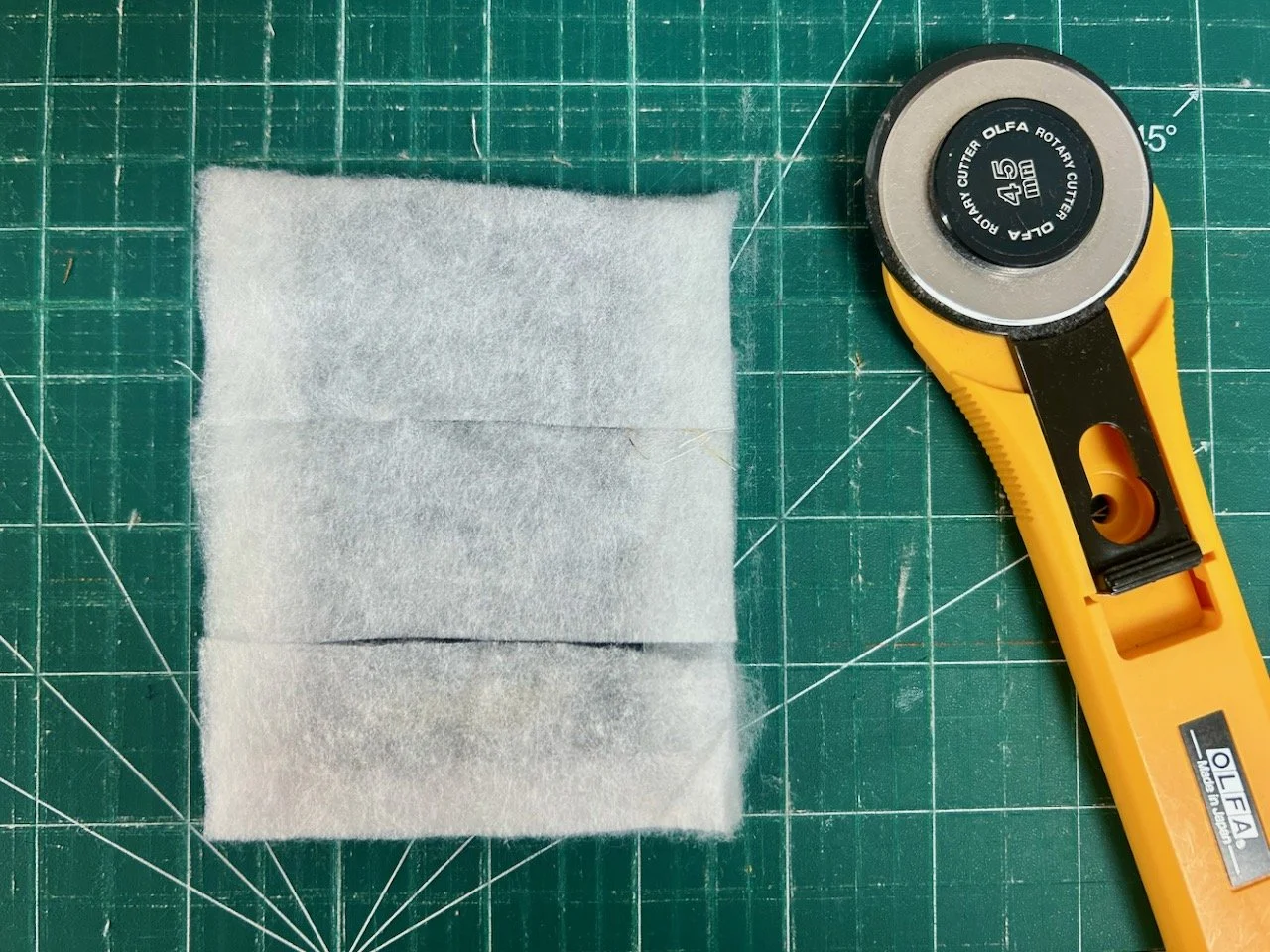
Using wadding to make the name badge wide enough for my name!

Next I stuck the fabric in place - on both sides, covering the central section with a plain navy fabric so the wire brooch would show up clearly. I’d planned to use the ‘hole’ on the clothes tag, but my fabric covered that and extended beyond the top of the tag, so I used my vintage ticket clipper to make a single hole, hoping that the lanyard would hold my creation.
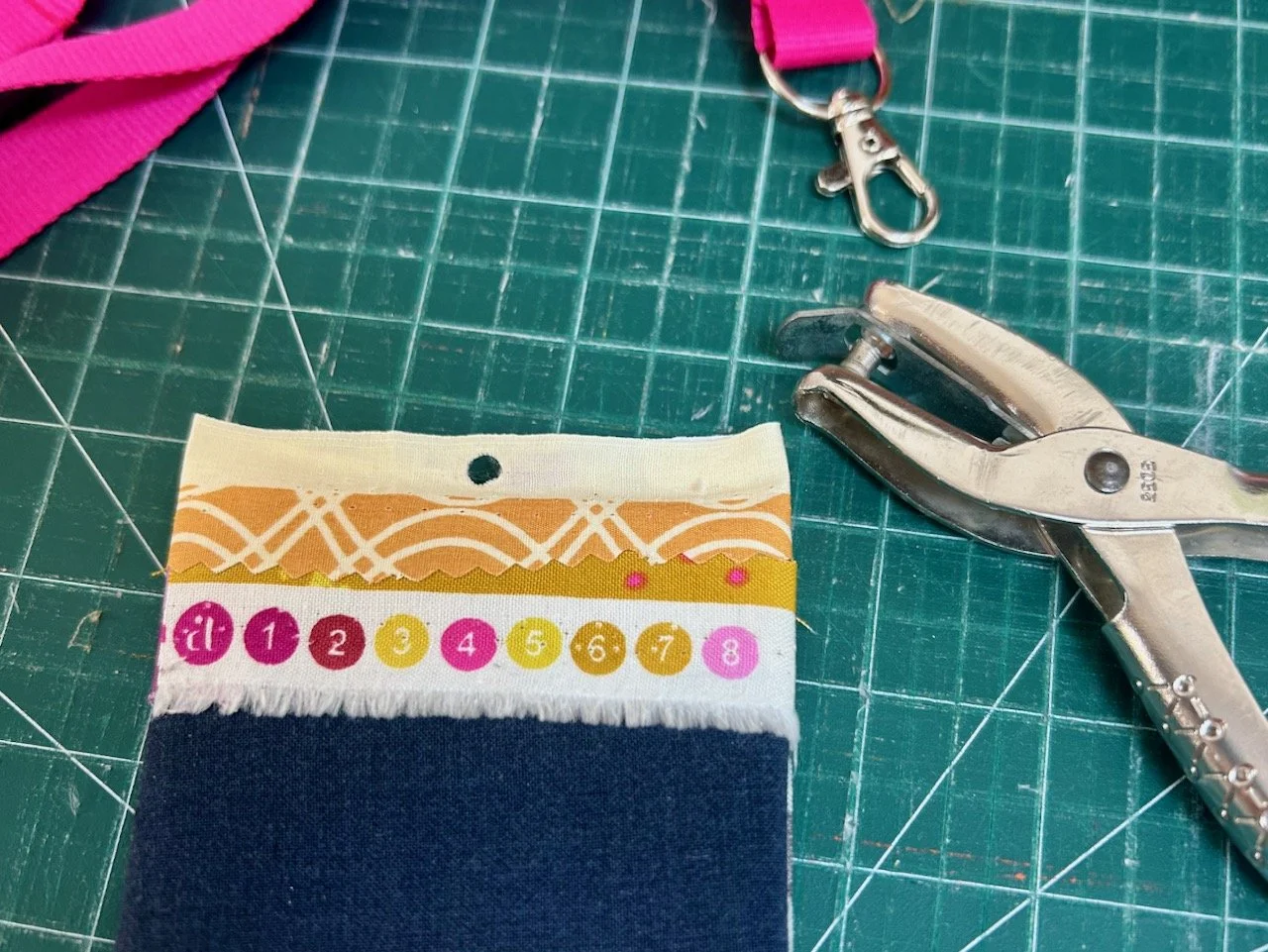
Using my vintage ticket clipper to make a single hole in the fabric I'd stuck onto the clothes tag

I left it to dry and set overnight under a pile of heavy books, and hoped.

The finished name badge - I'm rather pleased with it, but won't be wearing it more than I need to!

And it worked, and now it’s the best name badge on a lanyard I’ve ever had. I wore it at the show alongside the handwritten one, and I’ve got it ready for next time it’s needed, though as much as I like it, I hope it doesn’t get too many outings!
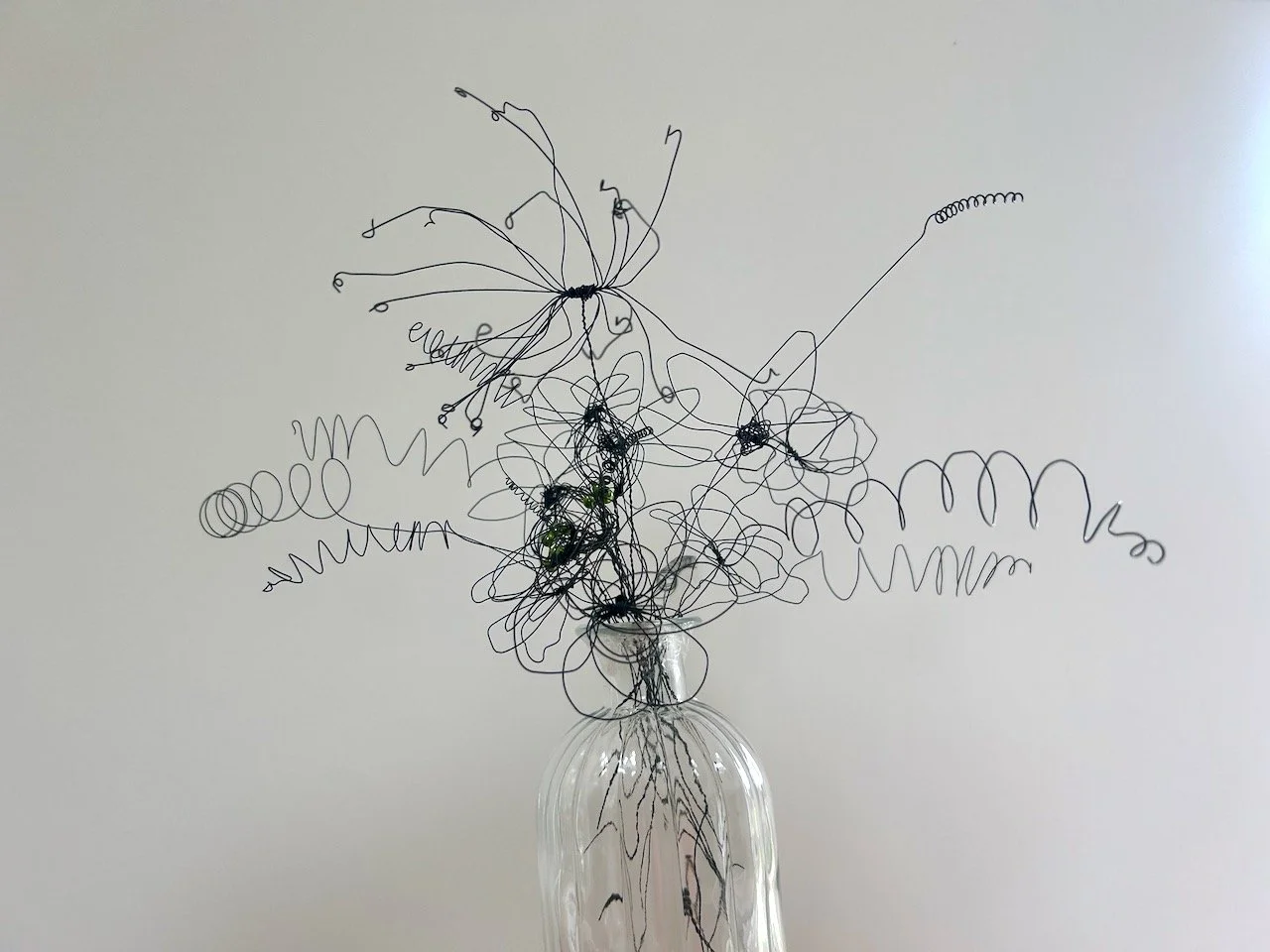
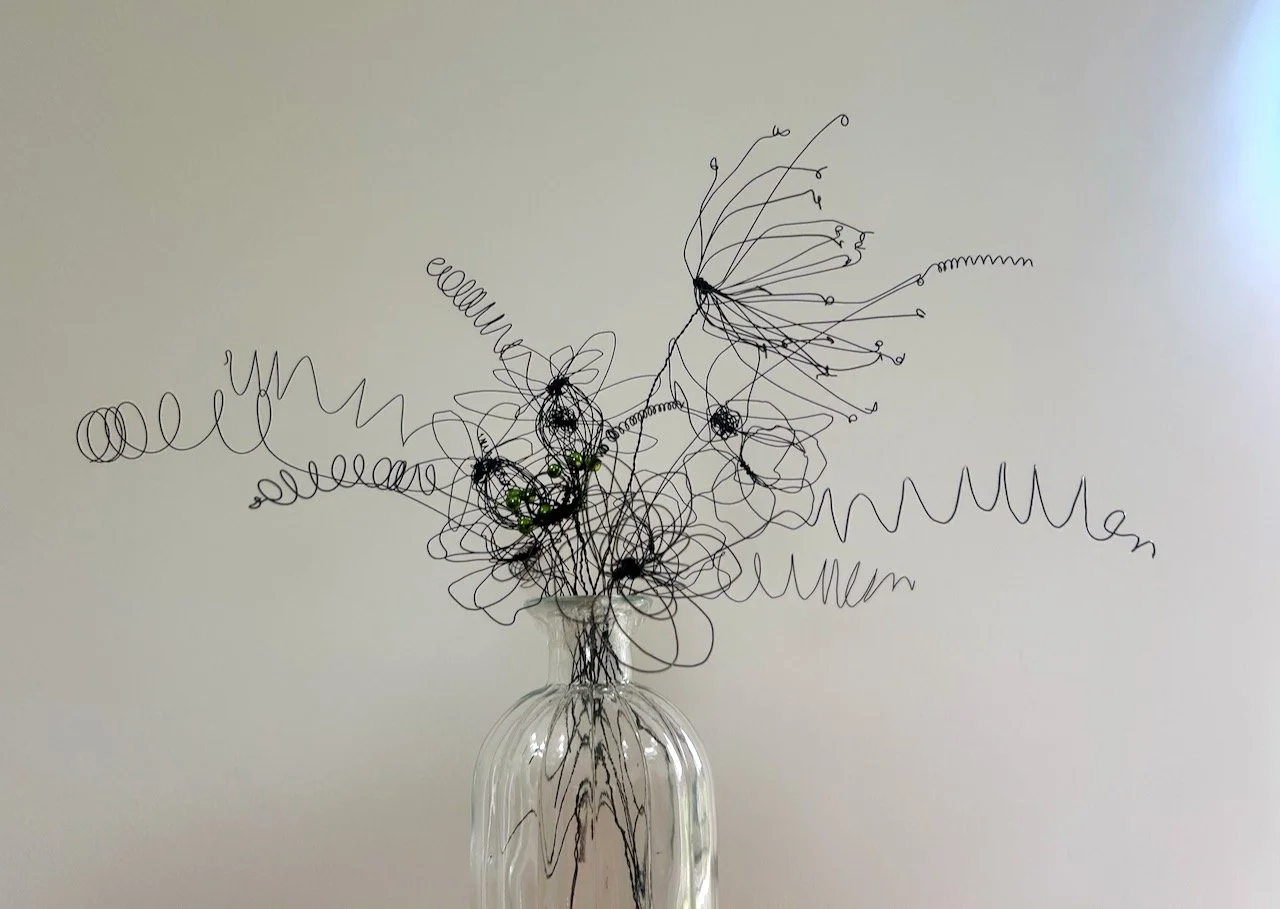
Making wire flowers and seed heads

A while back I saw a workshop advertised to make a bouquet of wire flowers, intrigued I looked into it further and finally decided to book myself on it as what’s the worst that could happen? I’d thought that they might make a good garden display, but I was wrong about that - they’re too delicate for that, but with thicker wire something similar would absolutely work for outside.

So last month I spent a morning with people I’d never met before making a vase of wire flowers. And yes, I’ll admit they can look like a jumble of wires, or a two dimensional pencil squiggle; but it was great fun and it’s really not too much of a challenge to look past the wire jumbles.

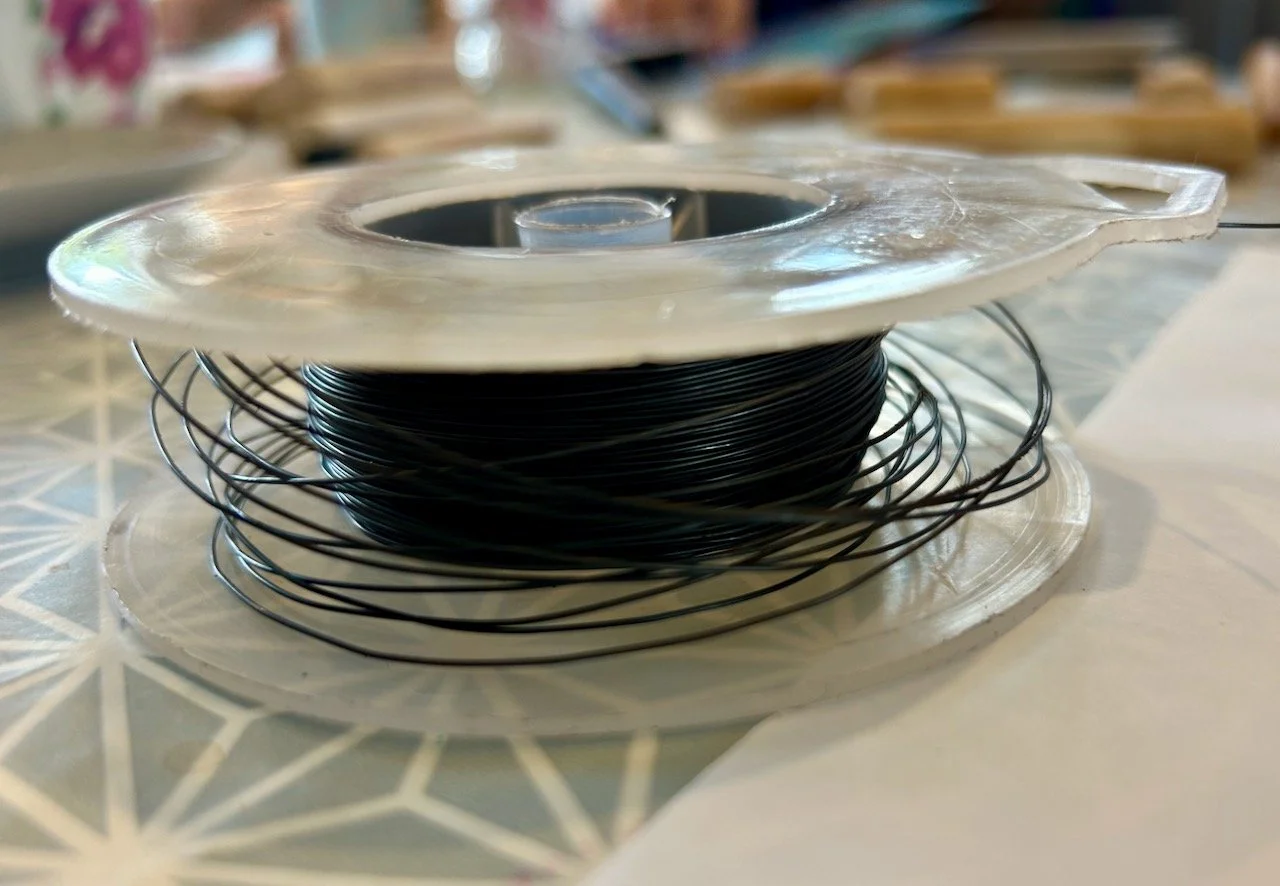
I was clearly quite prolific at my wire twiddling and twisting! Like many great ideas this was relatively simple and didn’t need much equipment. All that was needed was some wire (we used 22 gauge at the workshop) and something to wind it around.

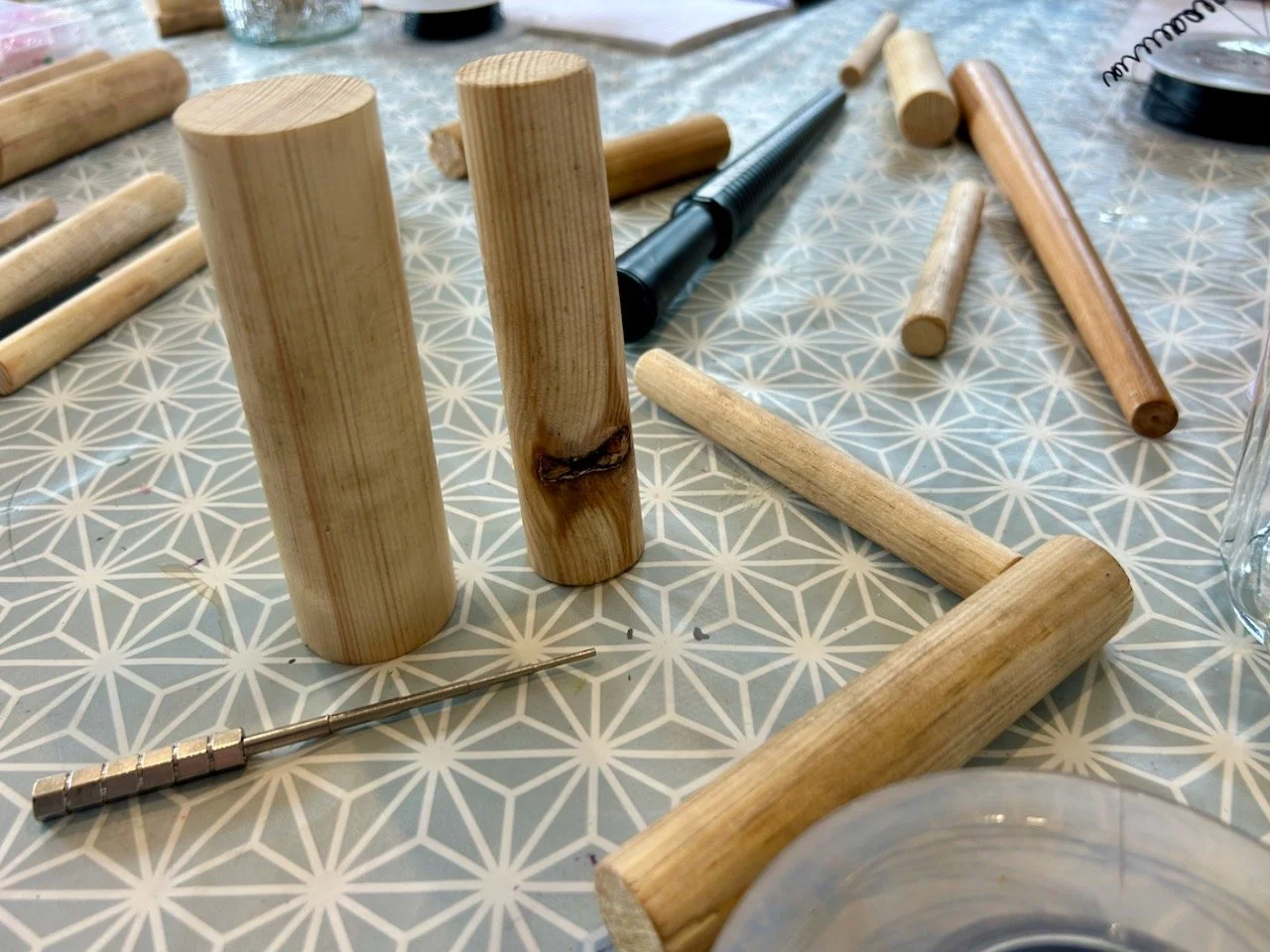
The somethings to wind it around were of differing sizes and ranged from wooden dowels to ring sizers - and they were all effective, but I think there’s things we have around the house (and garden) that could be used - wooden spoons, cotton reels and even a garden dibber would all work equally well. The key thing I think is to have different sizes to provide variety for your squiggles!

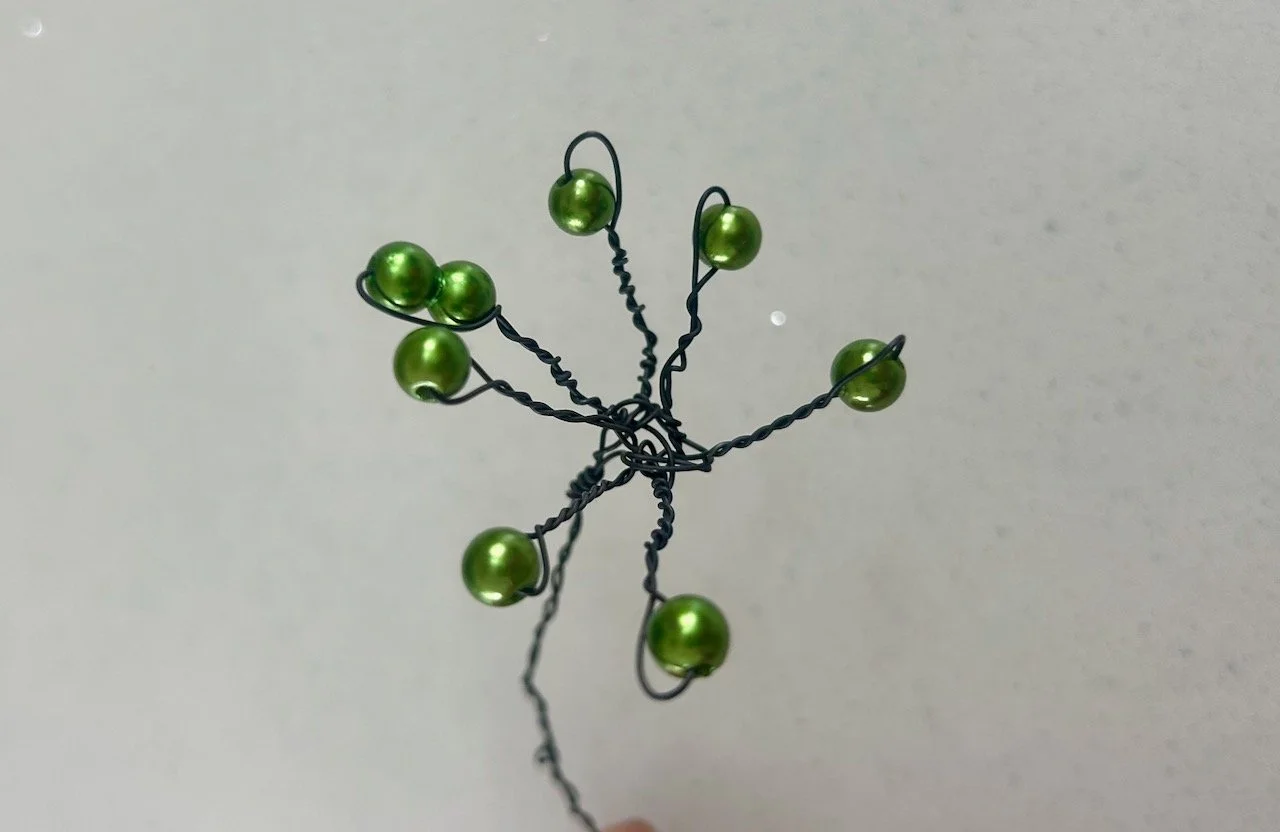
I didn’t think I’d want to make my own wire flower with beads, but actually my green version below is one of my favourite shapes I made - and in case you’re wondering the double beads were stuck together, so I just went with it. This was the last flower type we made at the workshop, which following plenty of chat from everyone there ran over so it was quickly twisted into shape - but I’d definitely do more, though if I’m using thicker wire I’ll need bigger beads, but I’ll cross that bridge when the time comes (if it does).

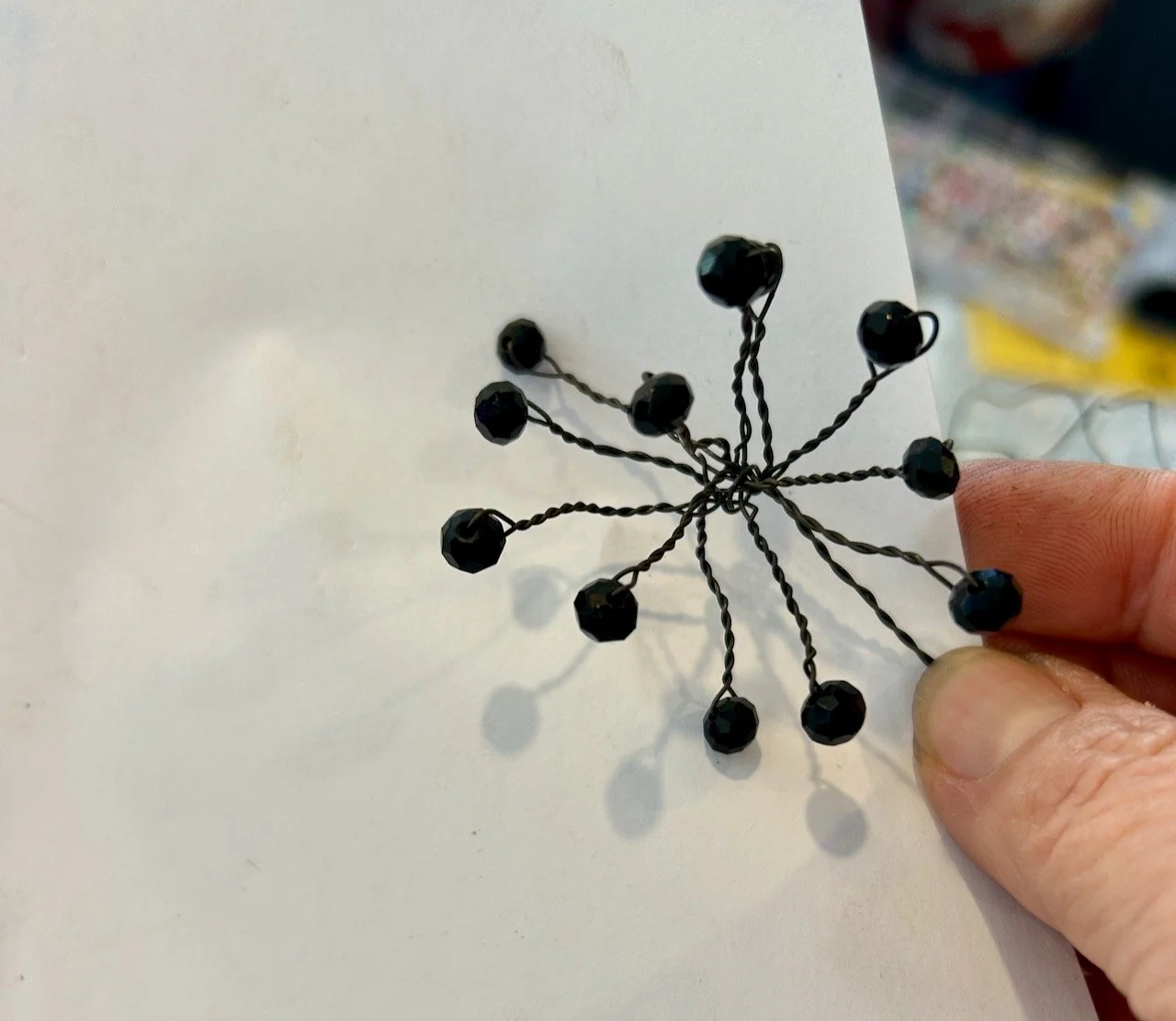
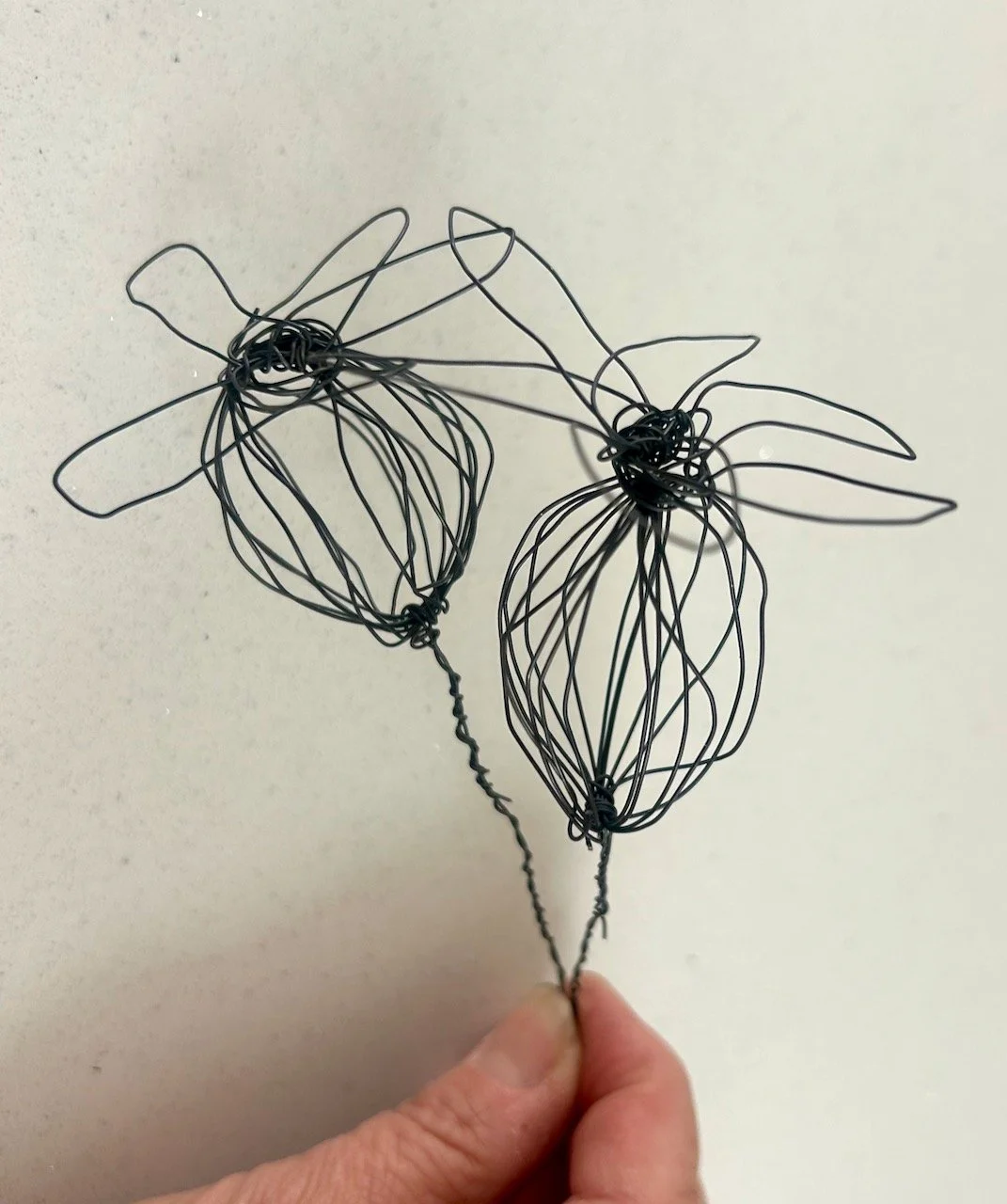
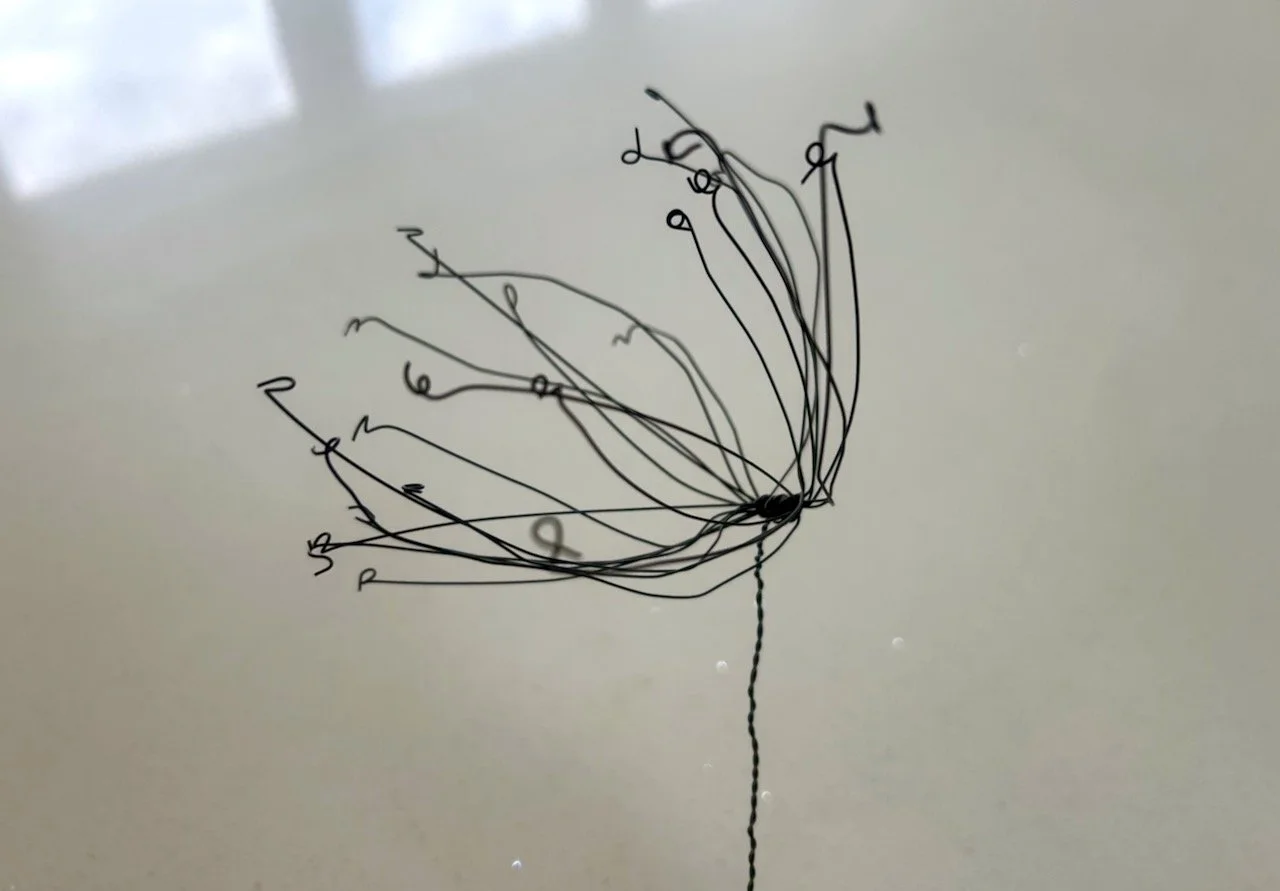
The seed heads were also high on my list of favourites, a simple shape to replicate and one that would look great in a thicker wire for the garden.

And this one is simple too - just lengths of wire secured in the middle with the ends twiddled around to replicate the shapes we see in nature.

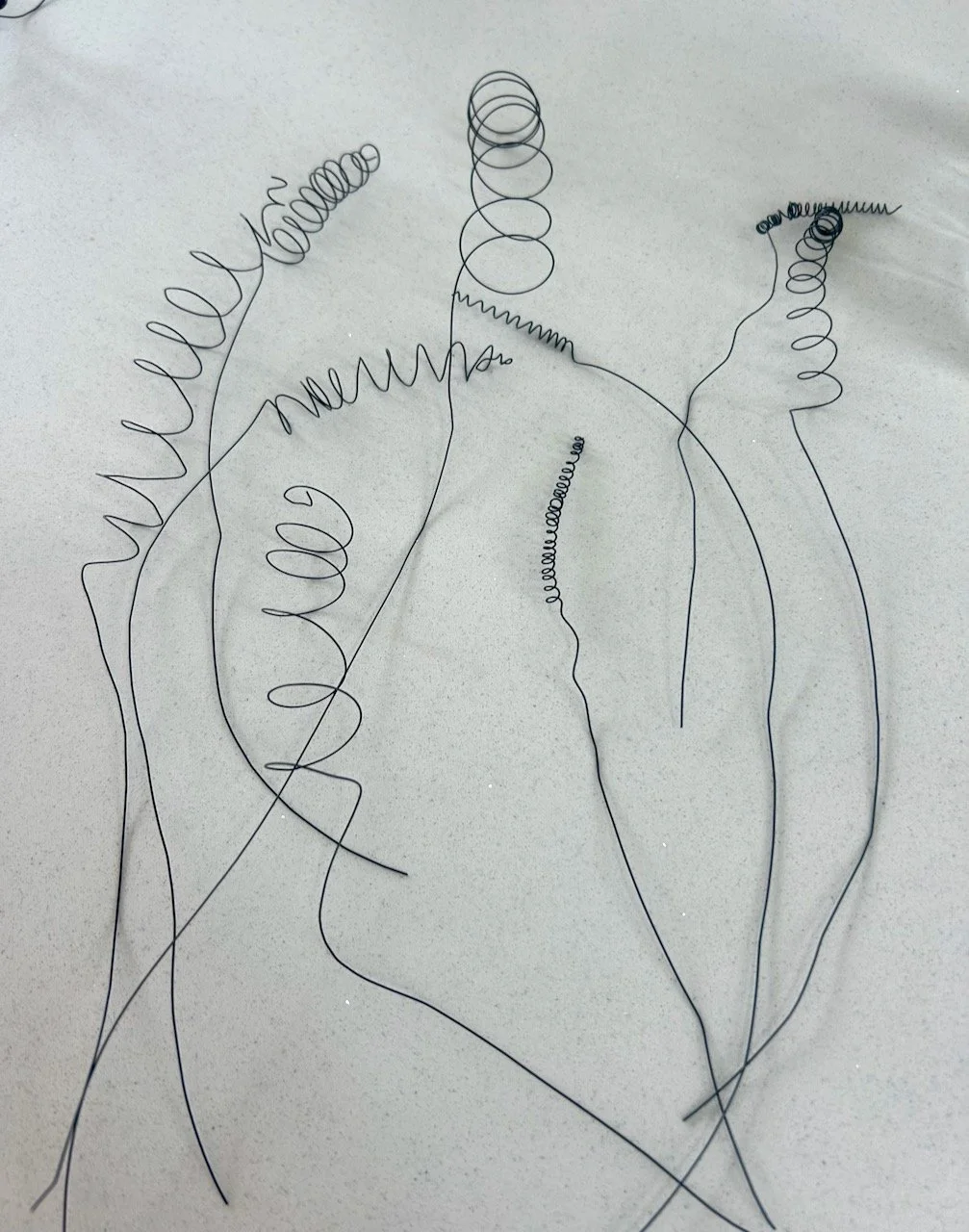
The whirly twisty fillers were incredibly satisfying to make - and I seem to have got a few of these, in many sizes!

There were more typical flower types too, but the ones above are the favourites amongst those I made, and would be the ones I’d look to make in a thicker wire for the garden - but that probably won’t be this year. It’s definitely one to remember though.

Village quilts 2 & 3

It’s been a few months since I shared my first village charity quilt, and back in May I wasn’t as on track as I’d wanted to be to meet my ‘one a quarter’ plan, but it’s amazing what a difference a couple of months can make, as here I am with the second and third of this style of quilts - and I still love making them so I think there will be plenty more.

But 2 & 3…

Mum came along to the July Saturday sewing group meeting with me and at that meeting I seemed to steam through topping up my house pile to make another top. I know I need 30 houses for each quilt top, so when I think I’m close and then find out I’m not as close as I thought, I put my foot down.

Anyway at that sewing group meeting I completed the top for the second quilt - and as you’ll notice one of the houses on the second row has a more modern take on the roof shape. It’s an oops, but an acceptable oops in this style of quilt, as well, not all houses look the same anyway do they?

Village 2 quilt top

VILLAGE 2 QUILT TOP

I enjoyed piecing this so much that over the next few days I completed the top for my third village quilt.

Village 3 quilt top

VILLAGE 3 QUILT TOP

I love how they look so different, but are so clearly the same design. Some fabrics are used in both quilt tops, and some will continue to feature for a quilt or two more I’m sure, while I’ve probably used the last of some in these quilts.

I decided it would be sensible to choose two different backings for these quilts, as it made sense to batch the remaining tasks. This led me to another ‘design decision’. I was keen to use the bluey/grey and white dot fabric with the yellow flowers as a backing for the final time, but if I added two borders I wouldn’t have quite enough. I guestimated that with a single border I could use it as backing, and even better I could use that material on the front too as a border, though I wasn’t quite sure how it would work as previously I’d used the cream border.

There was only one way to find out

So both quilts were basted and quilted, then trimmed ready for binding.

Village 2 quilted and trimmed, ready for binding

VILLAGE 2 QUILTED

Village 3 quilted and trimmed, ready for binding

VILLAGE 3 QUILTED

The patterned border makes them look quite different again, doesn’t it?

Both quilts ready for the binding and finishing

I like it though, and it’s persuaded me to be bolder with some of these quilts in the future. But discipline meant that I needed to finish these quilts before I’d let myself play with any future colour schemes, and I wanted to include both of these in my donation early in September.

The completed village 2 quilt hanging on my bannister

VILLAGE 2 FINISHED

The completed village 3 quilt hanging on my bannister

VILLAGE 3 FINISHED

I’m pleased with both of them and love how they’re both the same but also so different - and I hope that they’ll provide a hug to someone that needs one soon.

You can see my other quilts I’ve made to donate to Project Linus - a charity whose mission is to provide love, a sense of security, warmth and comfort to children, who are sick, disabled, disadvantaged or distressed through the donation of new, homemade, washable quilts and blankets.