

The Walled Garden at Flintham Hall

I was pleased to learn that nearby Flintham Hall was opening for charity as part of the National Garden Scheme, and that I’d get a chance to have a look at another part of the estate’s garden. We’d visited in April for the Bluebell walk and that was amazing, so my expectations were high.

I was not disappointed.

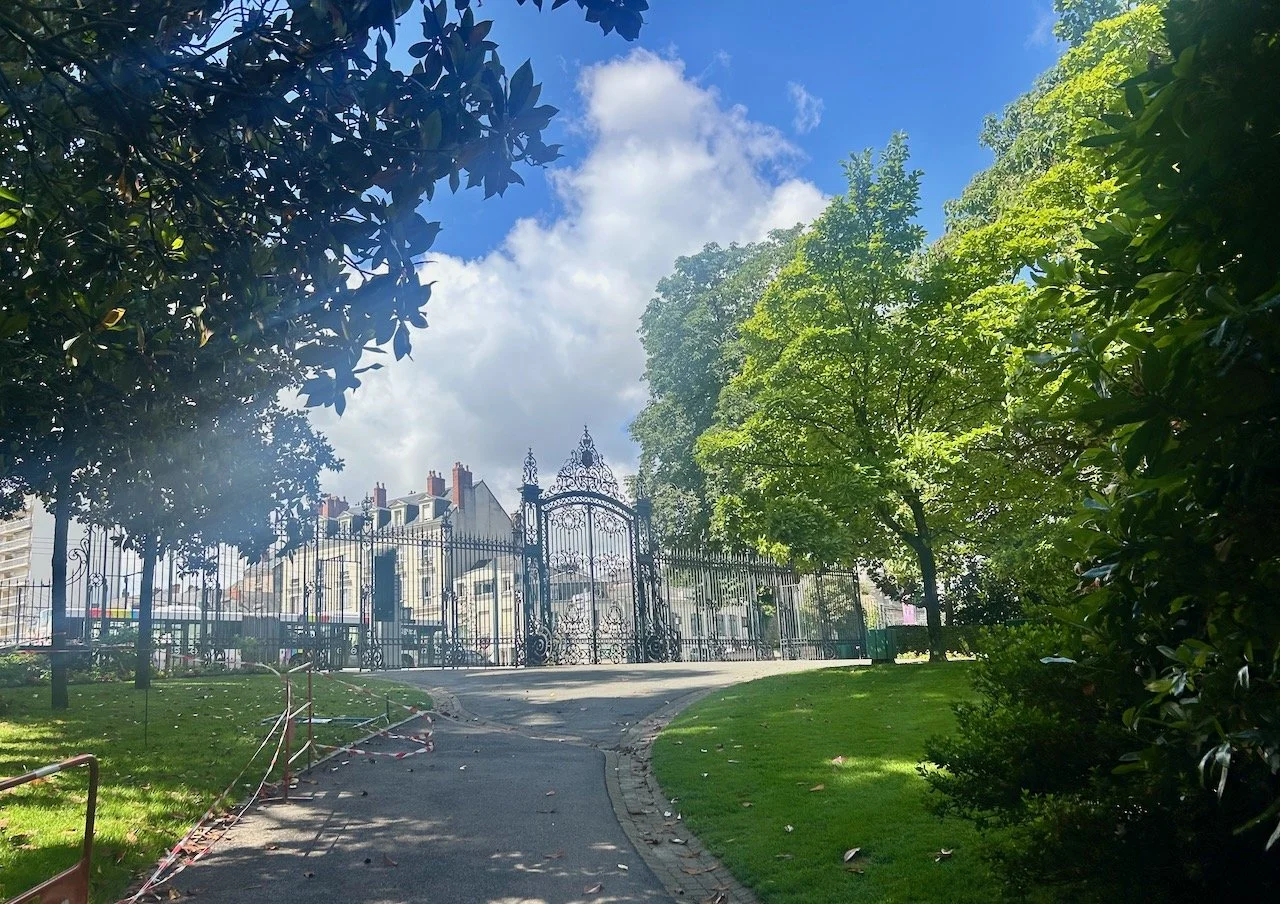
I mean, what an enticing entrance.

An enticing view through the gate to the garden

And after turning the corner and spending quite a bit of time admiring the flowering wisteria, as well as the alliums and tulips planted beneath it, and the plentiful hawthorn blossom we headed through the wrought iron gate into the walled garden.

In flower wisteria covering the entrance to the walled garden
The wisteria is underplanted with flowering alliums  - looks great
Closer look at the alliums and some lilac 'frilly ' tulips
Pink edged hawthorn blossom

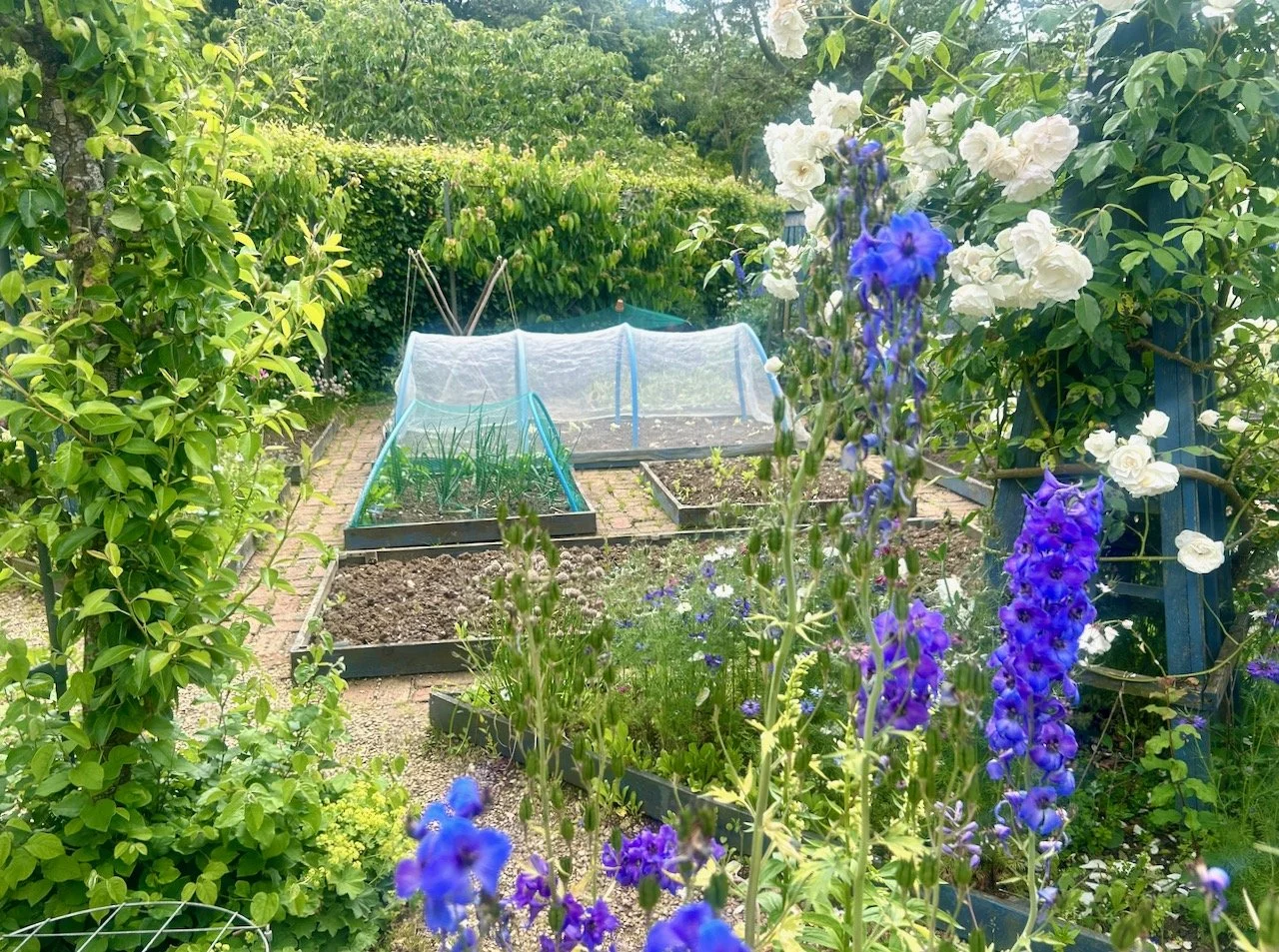
My first view of the walled garden was pretty special too.

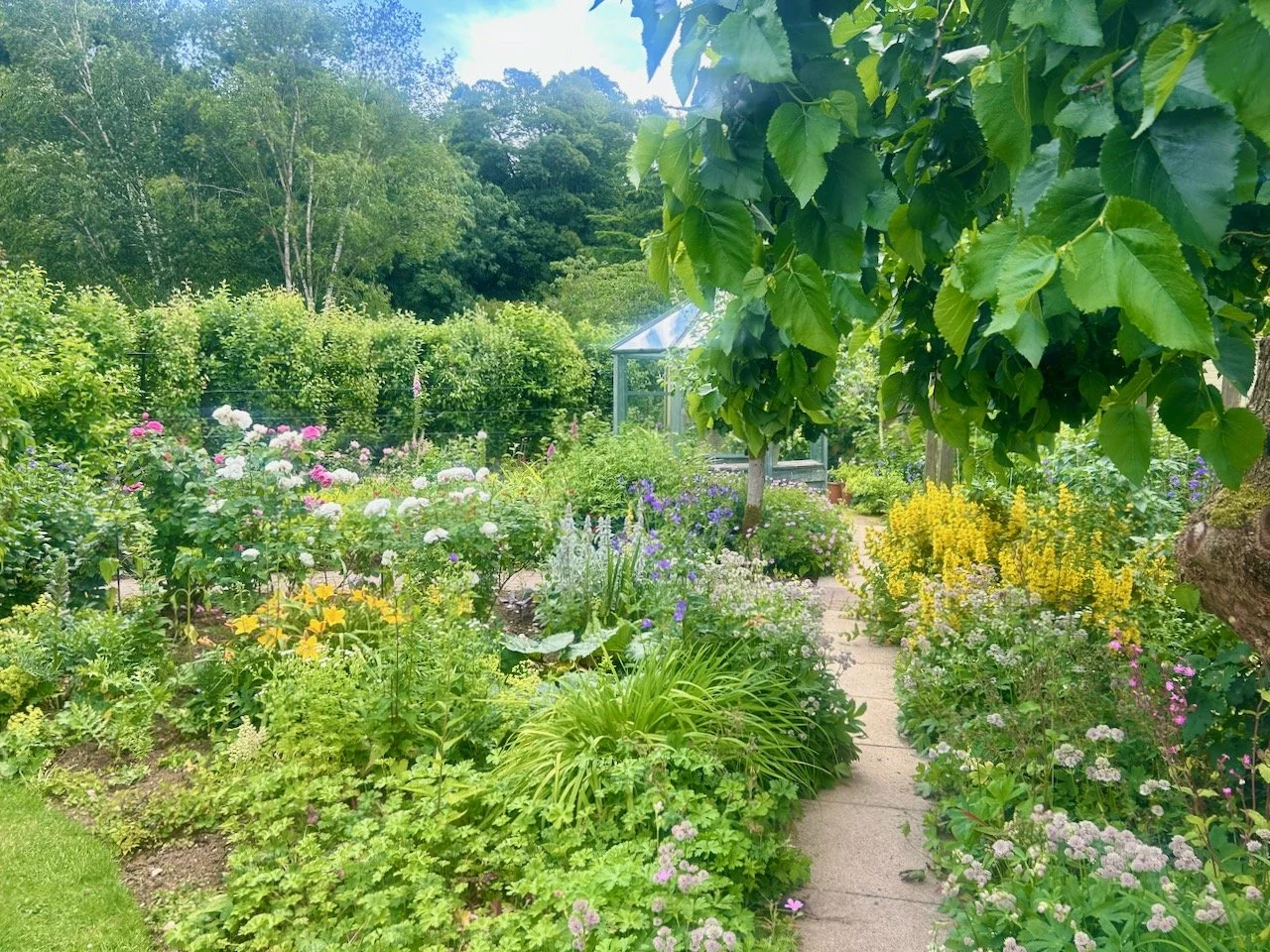
The first look inside the walled garden looking along the long border
peonies fit to burst - cerise and gorgeous

We followed the path that led to the glasshouse, past many bushes of peonies whose buds looked ready to pop. In the glasshouse - which was also to die for - was this pastel blush coloured flowering amaryllis.

A pale peach amaryllis in the glasshouse

What a glorious space.

A glasshouse to be envious of - with a fig, vine and plenty of potted geraniums

I finally left the glasshouse, which had a swimming pool at one end, to discover a non-native animal eyeing up the waterlilies in the pond, or maybe something else?

is that an alligator or crocodile by the pond?

Next we headed towards an area with fruit trees which were clearly old - and shaped into a fantastic goblet. It looks, like me, that the estate will be expecting a fair few apples later in the year too.

An apple tree on the lawn
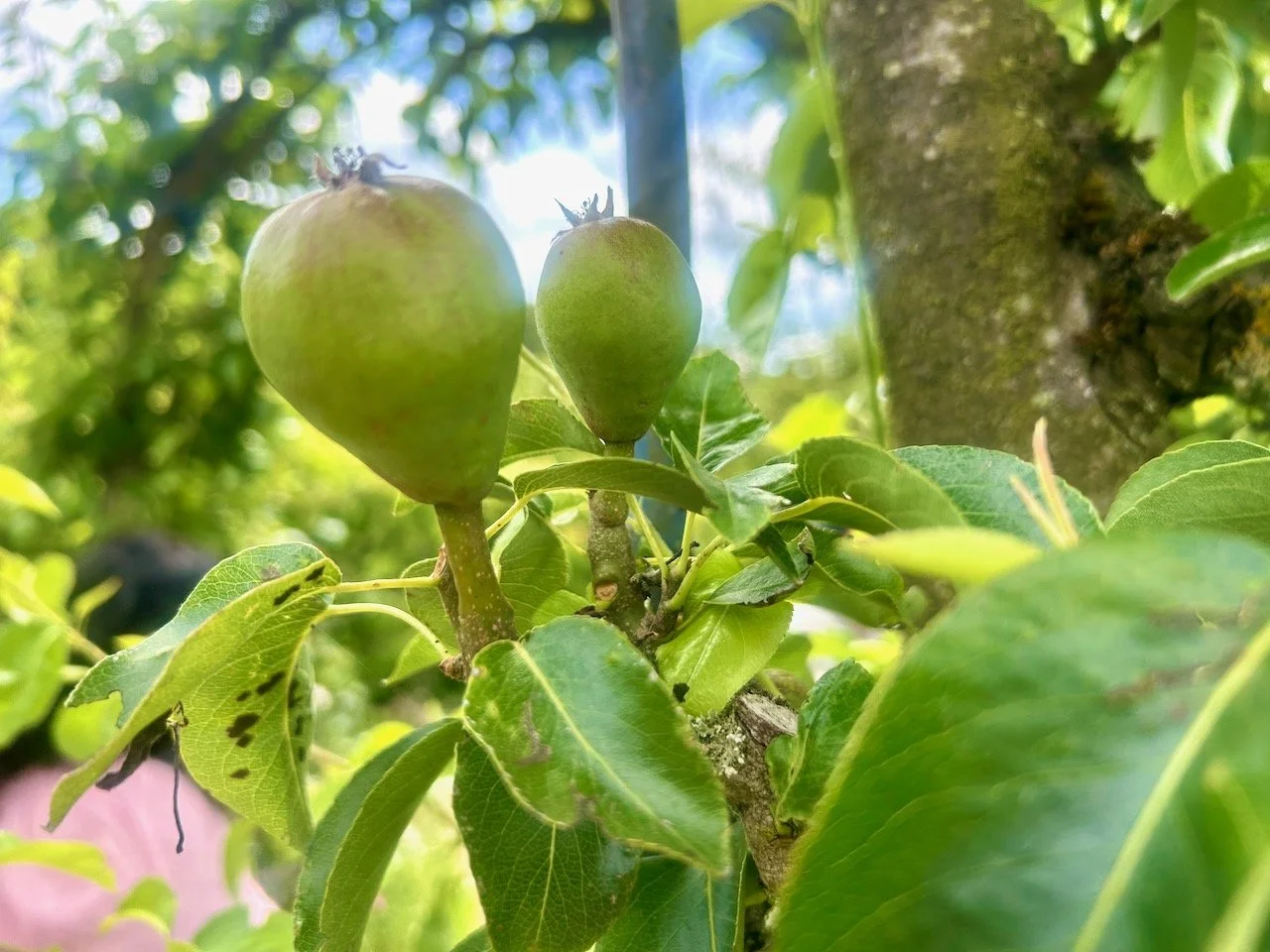
apples starting to form on the branches

Though their roses (and peonies) are way ahead of mine, but like the peonies before I was happy to stop and admire the blooms.

A gloriously pink rose in full flower

This was our exit from the walled garden, and passing another gnarly and twisted wisteria which to me the trunk of it looks like the face of an animal (if you look closely enough!) and the exit was just as thought out as either of the gates I showed at the start of this post, but I wasn’t prepared for what came next.

An old and twisty/gnarly wisteria trunk by the gate out and alongside an urn like statue
frothy cow parsley in the outer garden with a mown path - looking dreamy

How beautiful, dreamy and enticing is this mown path through the cow parsley? I think I want to move in…

The Head Gardener's Office at Scampston

Not only where we able to look around the Gardeners Yard at Scampston Hall, we also got to look ino the Head Gardener’s Office - and while it was set up more as an exhibit rather than a working office, it was still a delight to see.

We made our way in through the Conservatory which was built by Richardson of Darlington in 1894 and restored in 2015 with help from the Heritage Lottery Fund amongst others and now housing a series of exhibition rooms, displays and with a space for community engagement too.

Blue flowers of the plumbago climbing the peach coloured wall in the conservatory

The blue flowered plumbago clambering up the peach wall inside the conservatory definitely drew me in, but turning around the view was just as spectacular and I can see how important it was for the garden to restore the glasshouse to its former glory.

Looking back out of the conservatory towards the fountain with the geraniums in an arc at the bottom of the picture
Looking out of the conservatory to the central fountain in the garden (and a cloudy sky!)

If only all conservatories had this view!

Turning further into the building we found the Head Gardener’s Office, and wouldn’t it just be a dream to manage and plan the garden from here - and I’d especially like that wooden drawer unit to organise my own garden plans.

Shelving and storage in the Head Gardener's Office with plenty of garden paraphernalia
The open shelves with a wooden bureau in the Head Gardener's Office at Scampston Hall

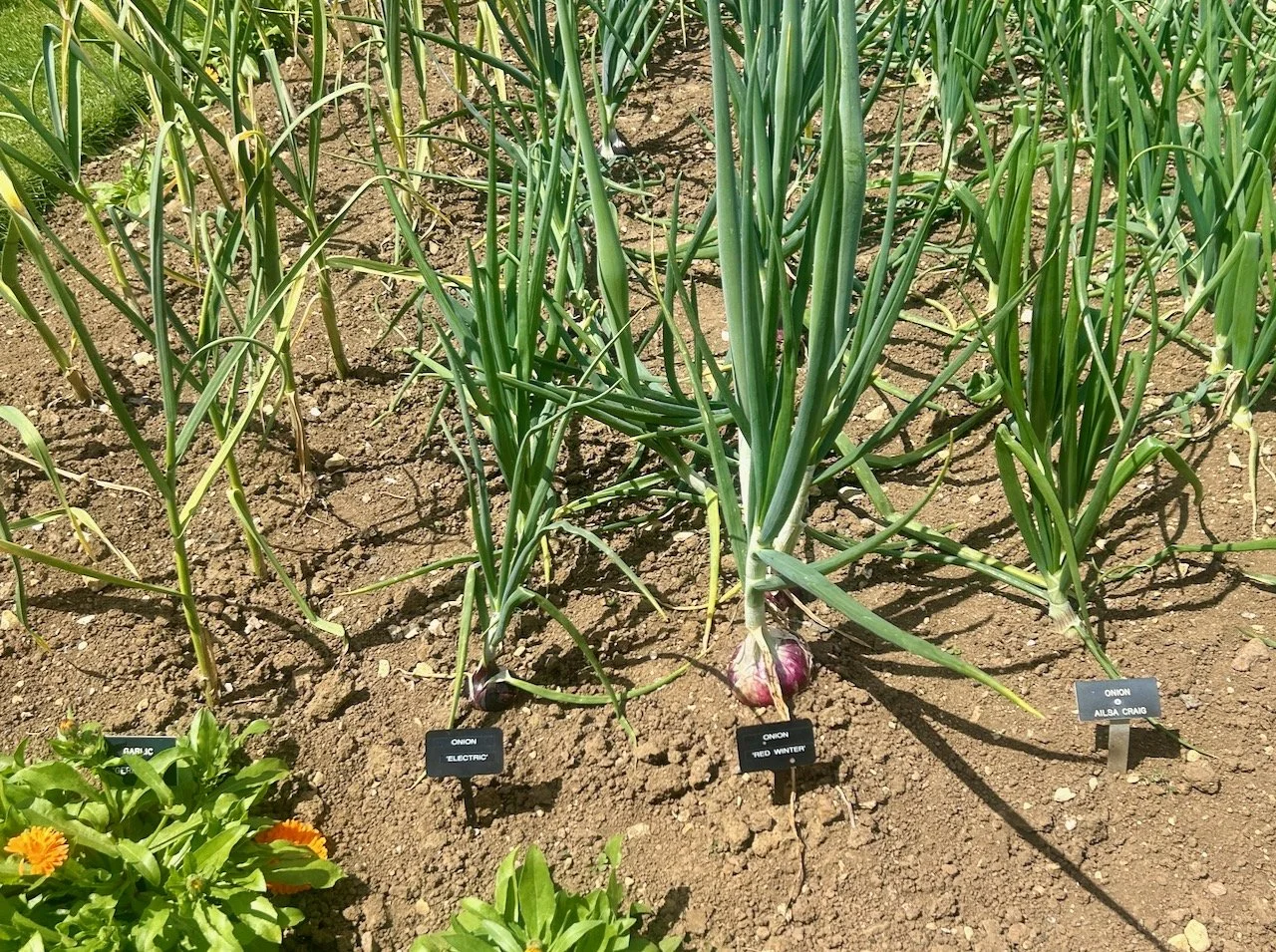
And while this is a great place for drying onions, garlic and seed heads I think this would be hard to replicate in my own garden setup, and actually I never seem to have much luck with onions anyway, so that’s probably just as well.

The log burner adorned with onions, garlic and seed heads drying

But I did see some inspiration on how I could pot up some succulents, isn’t it darling?

A succulent in a tea cup

Of course I left with some seeds of my own - and actually this post is a great reminder for me to look them out and actually do something with them. I saw some Agastache in the garden centre earlier this week, and I thought it sounded familiar but I couldn’t remember why. Here’s why!

Packets of seeds for sale in the Head Gardener's Office

And finally one connection in history that I learnt as we read the interesting information boards around the space. The glasshouse was originally made by Richardson of Darlington, which went on to become one of the glasshouse companies in the Victorian era. It was also the only company to last into this century, rebranding in the 1960s as Amdega. That company finally closed in 2011, but the liquidators sold the brand to Everest the double glazing company, and so the brand lives on with heritage at its heart. I love discovering things like that.

Now I’m off to look out those seeds…

Bluebells (and tulips) at Flintham Hall

Last weekend was the annual Bluebell Walk at nearby Flintham Hall raising money for the village’s church, St Augustine and the village hall charity. It’s a private residence so it’s a great opportunity to see a bit more of the local area which we wouldn’t normally see, and a very generous way to raise money for the village in which it’s situated.

And it was busy. We finished the walk and got a cuppa in the village hall around 1pm and the hall was rammed, and the cakes were few and far between. Last year there will still cakes at 3.30pm but this year they’d gone much earlier, which is great for raising funds but not so great for anyone still wanting cake. Luckily and for a change we didn’t mind, as we’d already planned to head to the village pub for lunch - though when we got there there was a coach load of people too, who were also quite taken aback by how busy the village was!

But anyway, back to the bluebells of which there were plenty, I’ve also thrown in a couple of photos of some tulips too as these were fabulous, and reminded me that I need more bulbs in my life (and my garden).

The hall itself was quite unusual and its present form was remodelled in an Italianate style, encasing earlier buildings on three sides in 1853-7. It’s on the site of an older medieval and Jacobean house which was rebuilt in 1798 and faced in Ancaster stone.

Flintham Hall, Nottinghamshire

It’s very ornate and looks a fabulous place but sadly it’s not open to the public. We started our visit in the courtyard and couldn’t help but wonder how the two styles of buildings came to be - is the more usual looking building on the right the equivalent of a Grand Designs glass box back in the day, who knows.

But anyway that’s where I spied the most wonderful pots of spring flowers. Alongside the tulips there were hellebores and grape hyacinths which all looked wonderful together, and clearly has been potted up by someone who’s done this before.

A large pot full of spring flowers
A closer look at the potted spring flowers

Across the courtyard was a blaze of red blossom which drew me over, and I was surprised to see that it was an ornamental quince, though it’s a bit past its best it still looked magnificent.

An ornamental quince growing against a brick wall

As we made our way to the Bluebell Walk we realised that the daffodils had already been and gone, and knew that they too would make a wonderful vista.

The grounds at Flintham Hall, Nottinghamshire

There were many points to stop and admire the view, and at this stage the bluebells hadn’t really started in earnest.

The grounds at Flintham Hall, Nottinghamshire

And then they did. And did they wow.

Bluebells in the grounds at Flintham Hall, Nottinghamshire

The woodlands here are believed to date back to the early 1800s, and it’s assumed that the choice of oak was in patriotic support of the oak shipbuilding crisis in the 1700s. It took approximately 6000 mature oak trees to build a single battleship, so it’s easy to see why a crisis would occur. Many landowners planted oak forests as the UK forests became depleted, though they were never felled as they take approximately 400 years to reach maturity - and in that time ships began to be made from metals and composite materials, but it’s our gain as if they’re all like this one they definitely add to our countryside.

Bluebells in the grounds at Flintham Hall, Nottinghamshire

The bluebells grow so well here because it’s an oak spinney. The plants require very acidic soil to maintain their deep and soft blue hue and the decomposing oak leaves provide conditions which are ideal for the fragile bulbs to thrive.

The bluebells at Flintham Hall are native English Bluebells. They have a fine leaf, a gently drooping head and a soft scent - and the scent as we walked around the route was divine. The flowers grow from one side of the stem and they have a cream colour pollen in their centre, flowering between April and May each year. They’re also protected by law so they need to stay where they’re growing.

The Spanish Bluebell, introuced to the UK around the 1900s, is quite different. They are a more robust and bulky plant, with broader leaves and a dense cluster of flowers at the head of a thicker stem. They have no scent and can also be pink or white.

After smelling the scent of so many English Bluebells I think now I’m more likely to be know the difference, and it’s great that a very pleasant walk also brings new knowledge.

Bluebells in the grounds at Flintham Hall, Nottinghamshire

If you’re off to visit bluebells in a wood near you, remember to keep to the paths as it’s against the law to intentionally pick, uproot or destroy bluebells, and the best thing you can do is leave them as you found them so others can also enjoy them.

Blossom forming against the Bluebells in the grounds at Flintham Hall, Nottinghamshire
The courtyard at Flintham Hall, Nottinghamshire

We ended our walk through the bluebells with a closer look around the Courtyard where we’d entered. I’m so glad we did, just look at these tulip beauties we might have missed otherwise.

A frilled tulip - looking beautiful
Dark 'black' double tulips

I was never too sure about the frilled tulips, but seeing the pink and green one above I’ve decided to completely change my mind. Tulips are most definitely on my garden shopping list!

Before we headed to the pub, we had a look around the church with its very country handwritten - but what looked to be effective - note stuck to the door.

'Please close this door (keep squirrels out!) - handwritten note on the church door

St Augustine’s Church is only a small church but its served as a place of worship for almost a thousand years and was recorded in the monumental survey of medieval England, the Domesday Book of 1086. It has altar rails which date from about 1600 which are considered to be the oldest set of balustraded altar rails in South Nottinghamshire.

But what really caught my eye during our visit, was these diamond shaped paintings. I learnt later that they are from the 18th and 19th century and are heraldic diamond shape paintings known as funeral hatchments. Hatchments were displayed outside the home of the deceased adn were later moved to the church for safekeeping

An ornate funeral hatchment displayed on the wall in the church at Flintham

Truly fascinating, and beautiful pieces but also a bit morbid to end this post on, so here’s one final tulip to end with, as I just can’t resist them it seems.

A yellow slightly less frilled tulip in the spring planters