Making my Mystery Block of the Month: October 2025

You’ll have seen that I plan to complete Sherri’s mystery block a month quilt and in my last post I shared the test blocks which I made into my twelfth charity quilt, today I’m sharing the centre block I made for my own quilt.

As I said yesterday I’m a fan of this block, and making it for my own quilt didn’t change my mind on that.
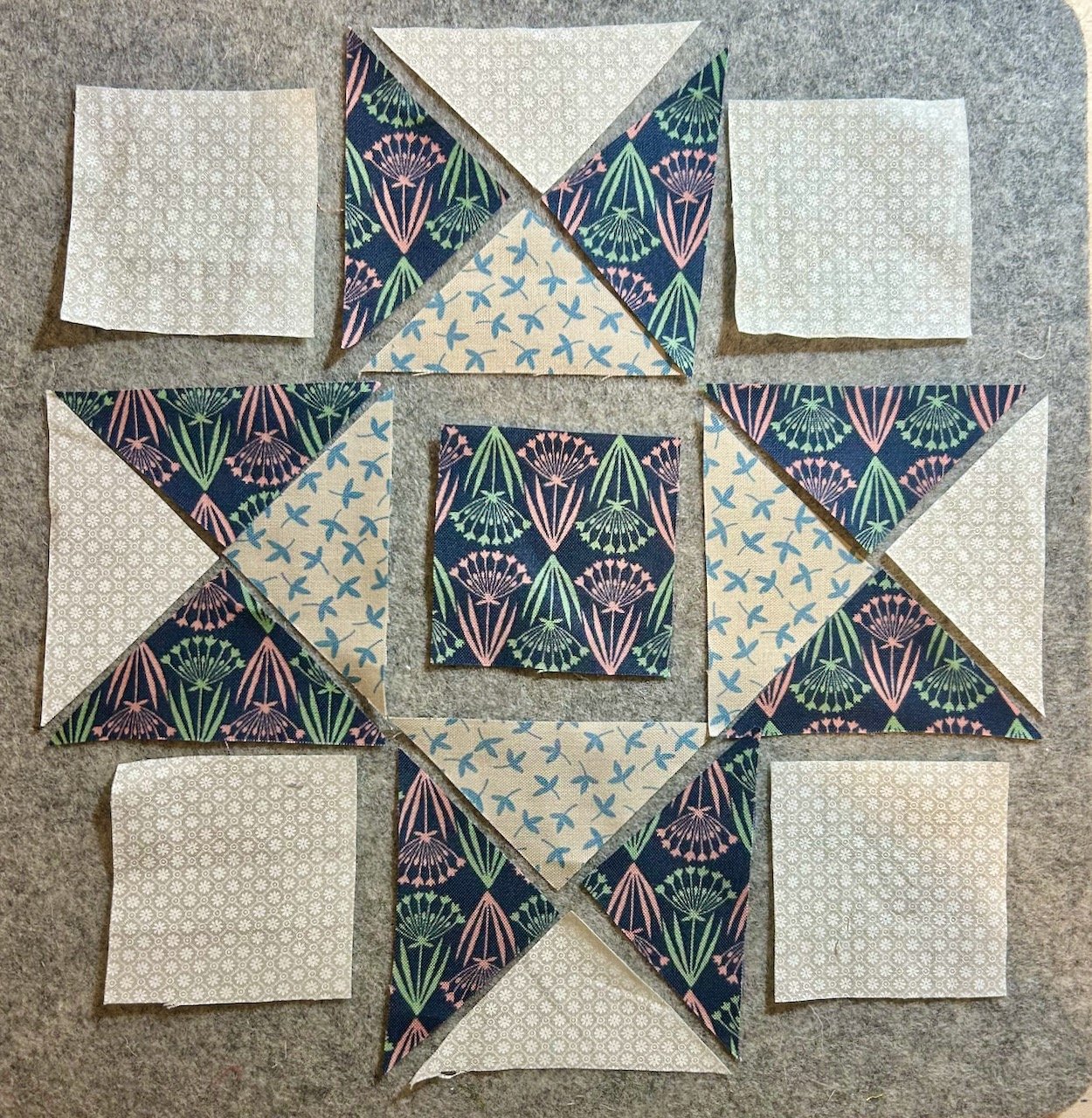
laying out the component elements for the ohio star block

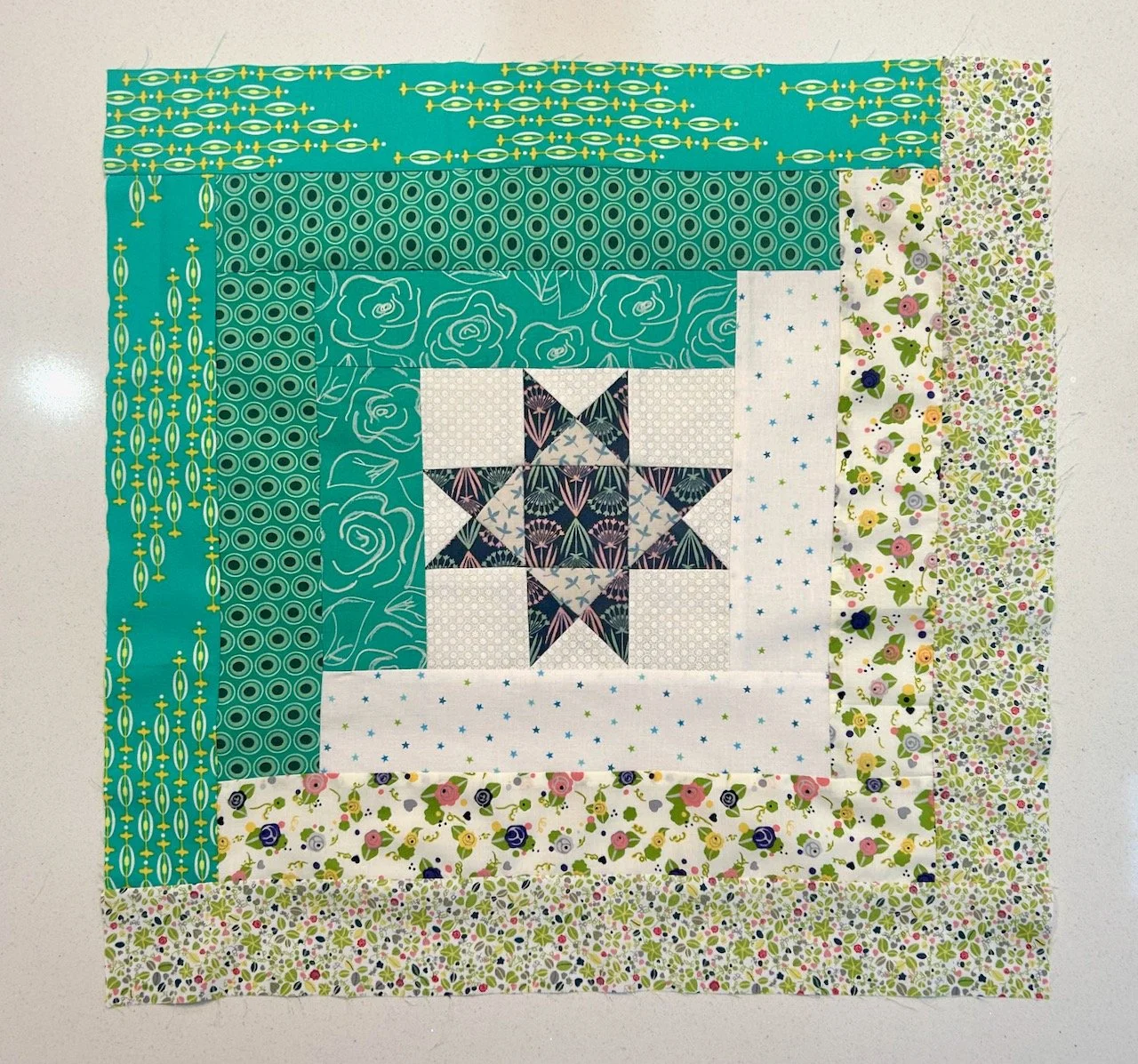
As it’s a ‘star block month’ that meant I’d be using the navy blue fabrics from the range I’ve chosen for this quilt, but I wasn’t sure if I wanted to use a selection of the three available, or just one. I knew from my blocks yesterday, and from the examples from Sherri that the triangle next to the inner square looked best if it was a lighter colour, and so I branched out a bit and opted for a non-navy fabric.
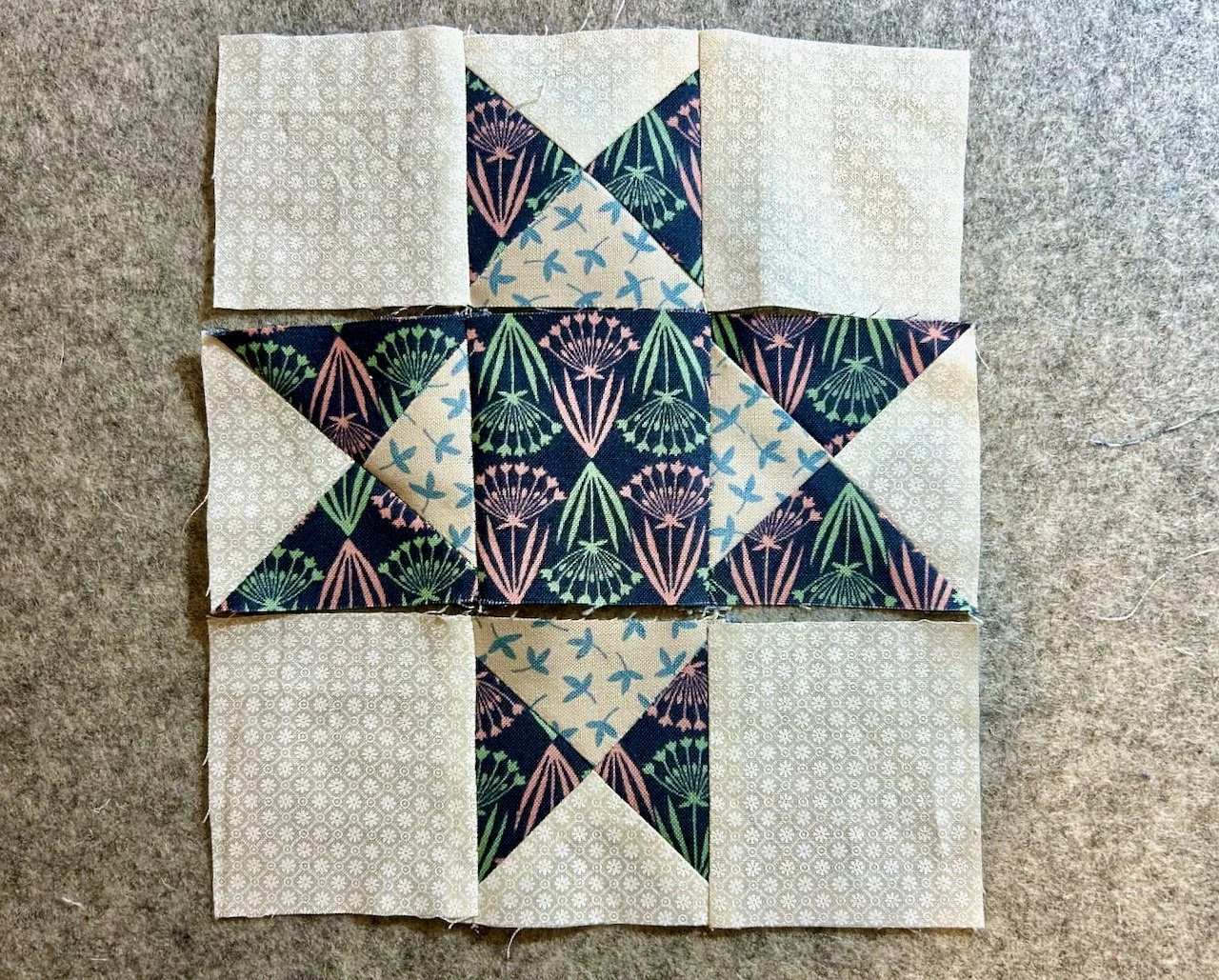
three rows of the block sewn - and it looks like the seams will meet up easily, phew

With that decision made I decided to go for a single navy fabric for the block - my gut instinct was to use this green and pink patterned fabric as I felt I hadn’t used that much. And once I’d finished the block I knew that was the right call as laid alongside the blocks that will be closest to it, that fabric didn’t appear. Phew.
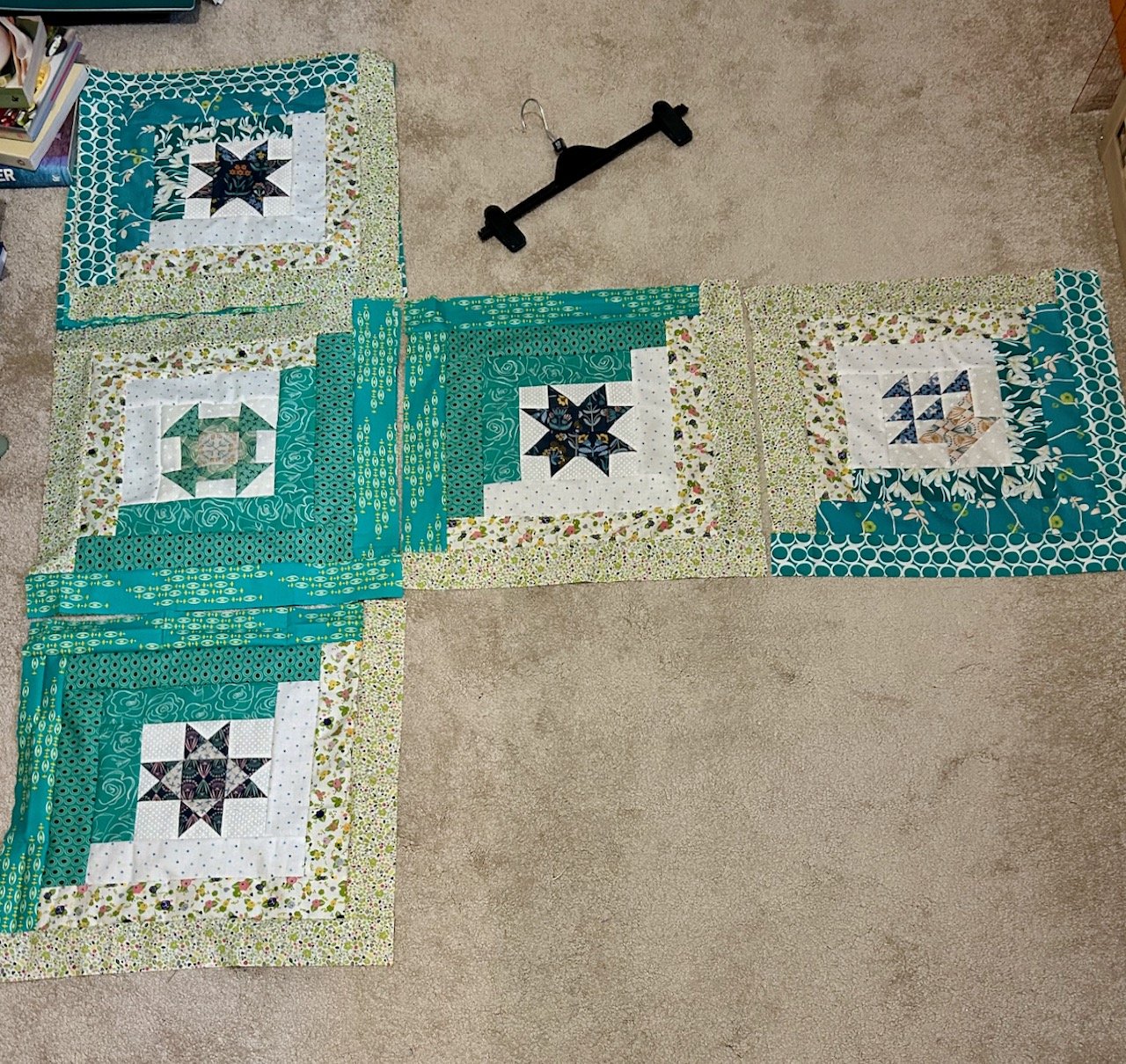
Checking my fabric choices alongside the blocks i've already sewn in the row above, horizontally and vertically

Not only did the block come together quickly, despite the numerous triangles, it was one that seemed to match and keep its points without too much work on my part - maybe that’s why I liked it?!
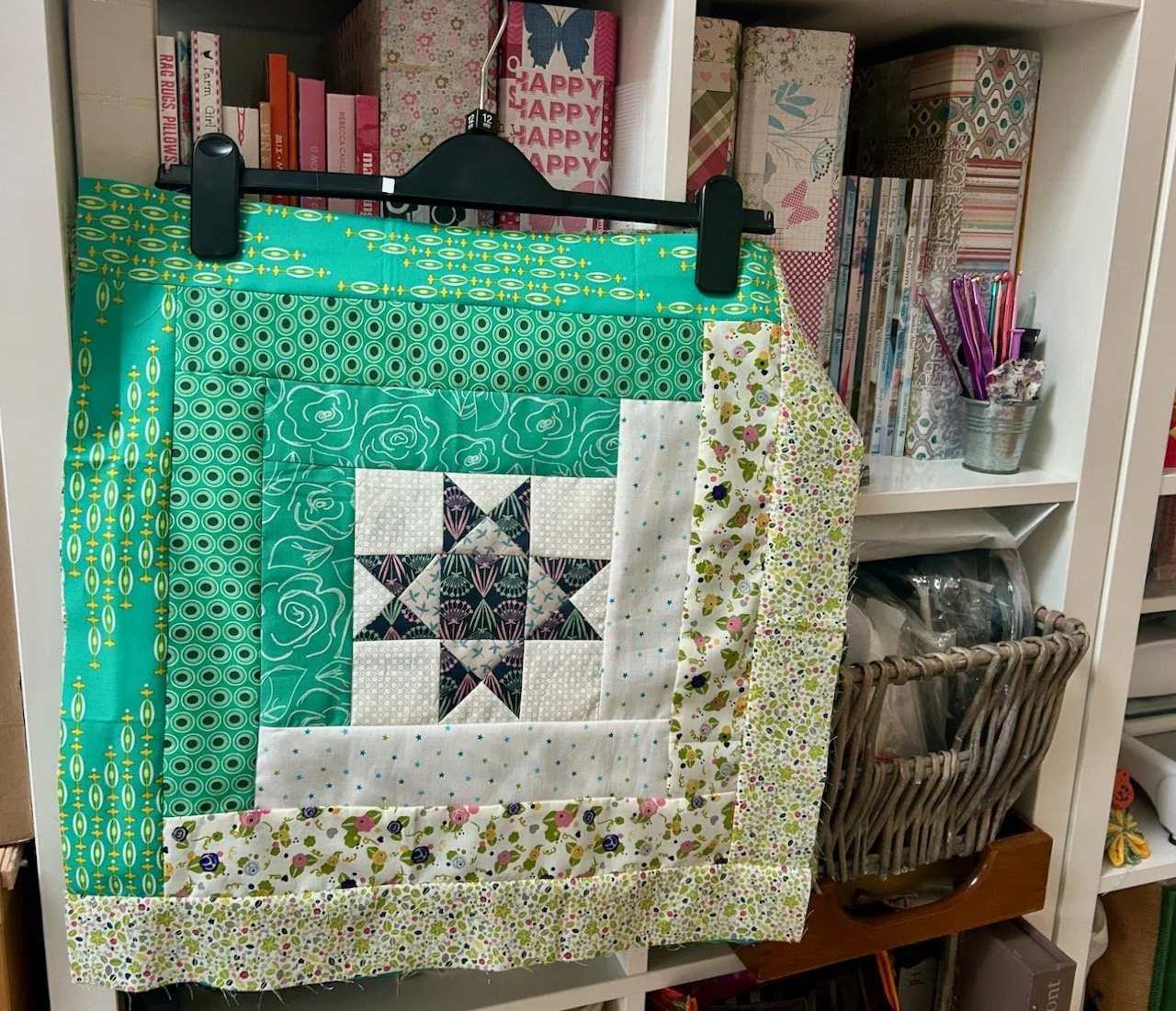
My finished block with green/light borders added
the completed block hanging with the others on my bookcase

But it’s done, and pressed and is now hanging alongside the previous month’s blocks. There’s just two more blocks to go, and then the real work of assembling and finishing the quilt starts. I’ve read today that Sherri will be sharing more about finishing the quilt next week, as well as the final block, so it’ll be good to see what’s in store - and I must remember to factor in actually finishing this quilt into my quilt plans for next year!

Join me next month to see how I get on with the next mystery block, and check out my previous posts for my mystery block quilt or the charity quilts made from the test blocks.
Ohio flower garden

I’ve made another quilt as part of my quilting ‘stretch’ project using the block from Sherri at A Quilting Life’s mystery block a month. As I said then I don’t know if I’ll manage to make a quilt a month, but I won’t really know unless I try…

And I really enjoyed making this one.

This month I’m sharing my twelfth charity quilt and my new pile is now growing, since the first nine have now been donated to the Mansfield Coordinator of Project Linus UK.

My twelfth charity quilt

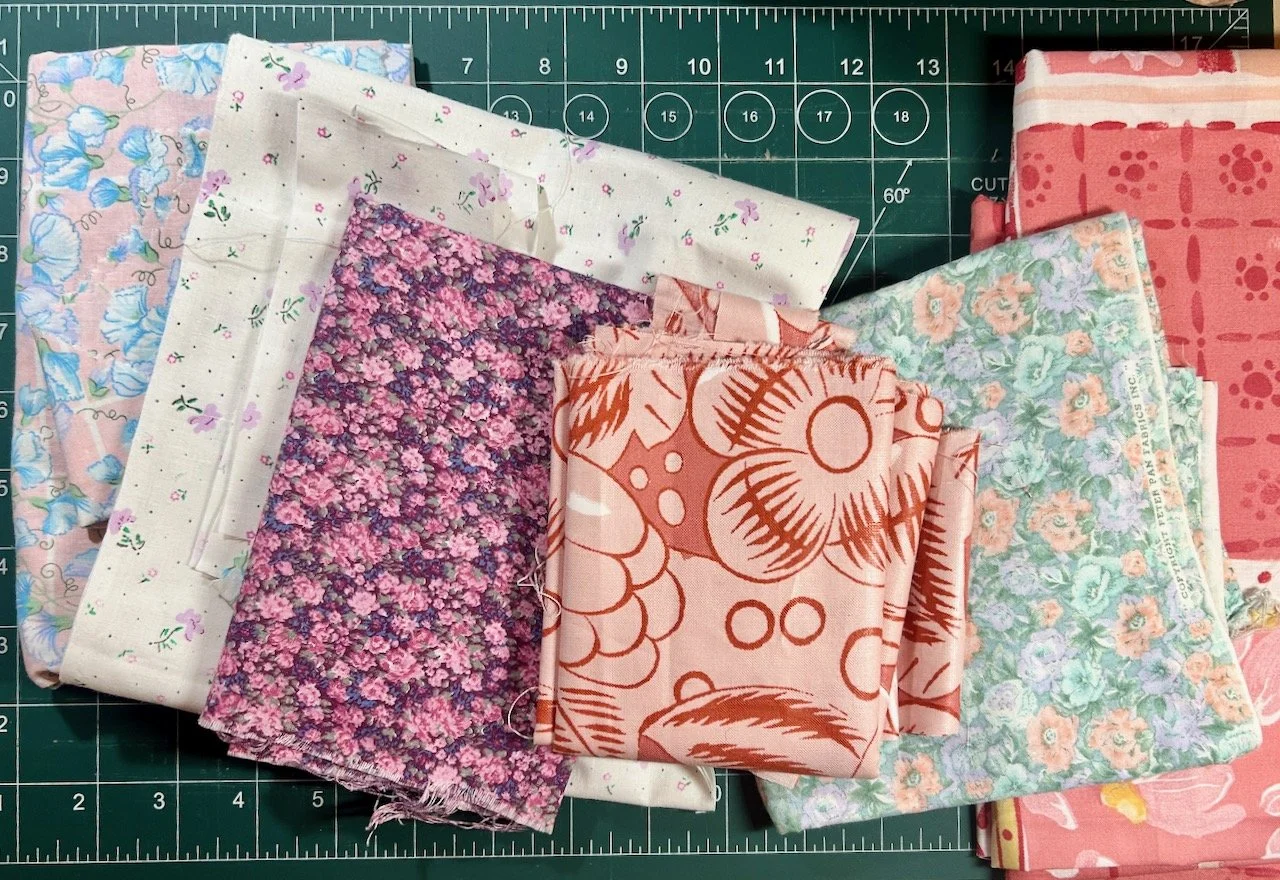
This month I decided to embrace the pinks and everything floral - after a couple of months avoiding pink, it felt good to let the pink roll! The Ohio Star block looked similar but different to one I’d completed earlier in this challenge, and when I looked back it was the friendly bee quilt it reminded me of.

I think all of these fabrics have made appearances in previous charity quilts and as you can see - it was destined to be full of florals, with lots of pink.

Laying out the pink and floral fabrics for the borders

Making the central block

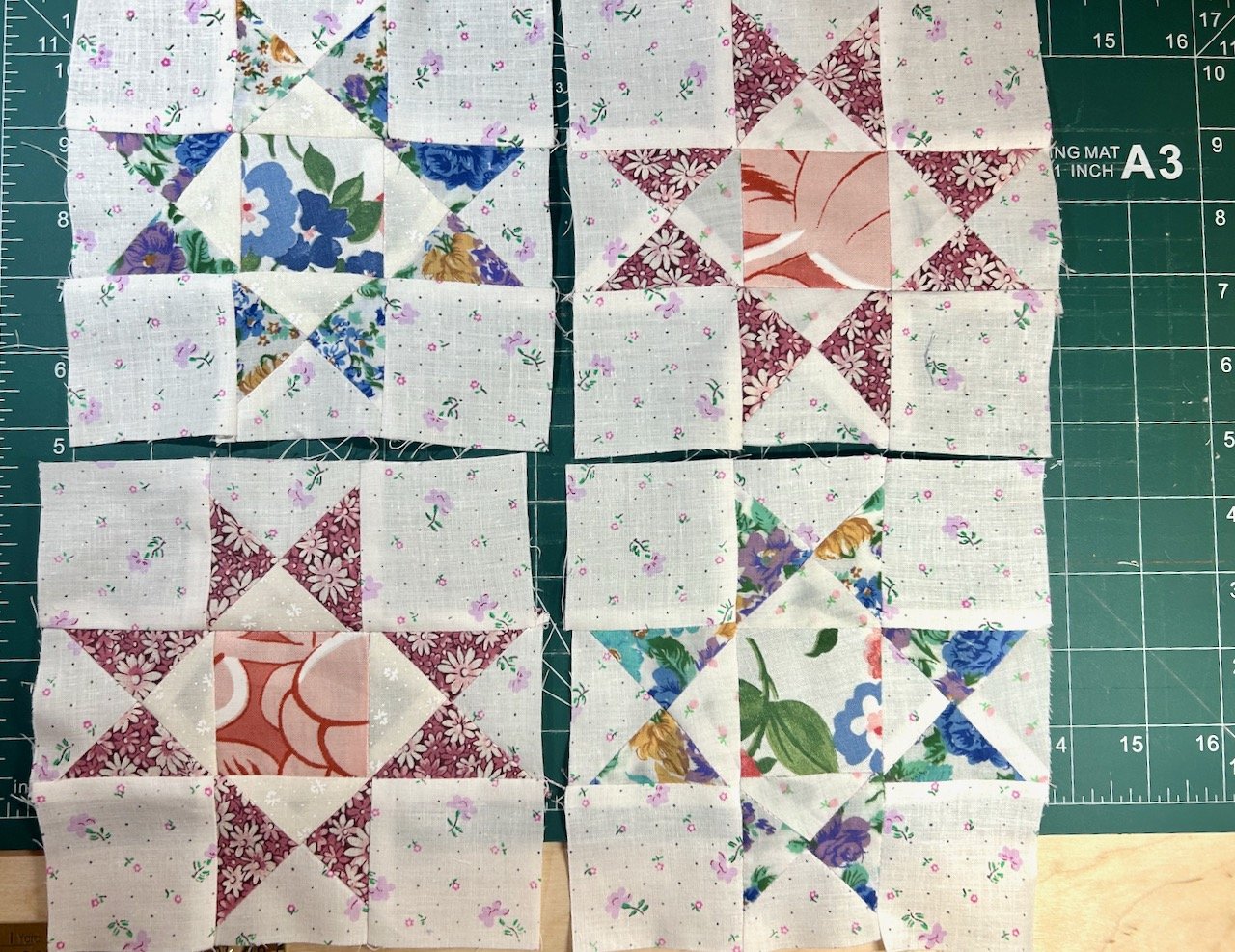
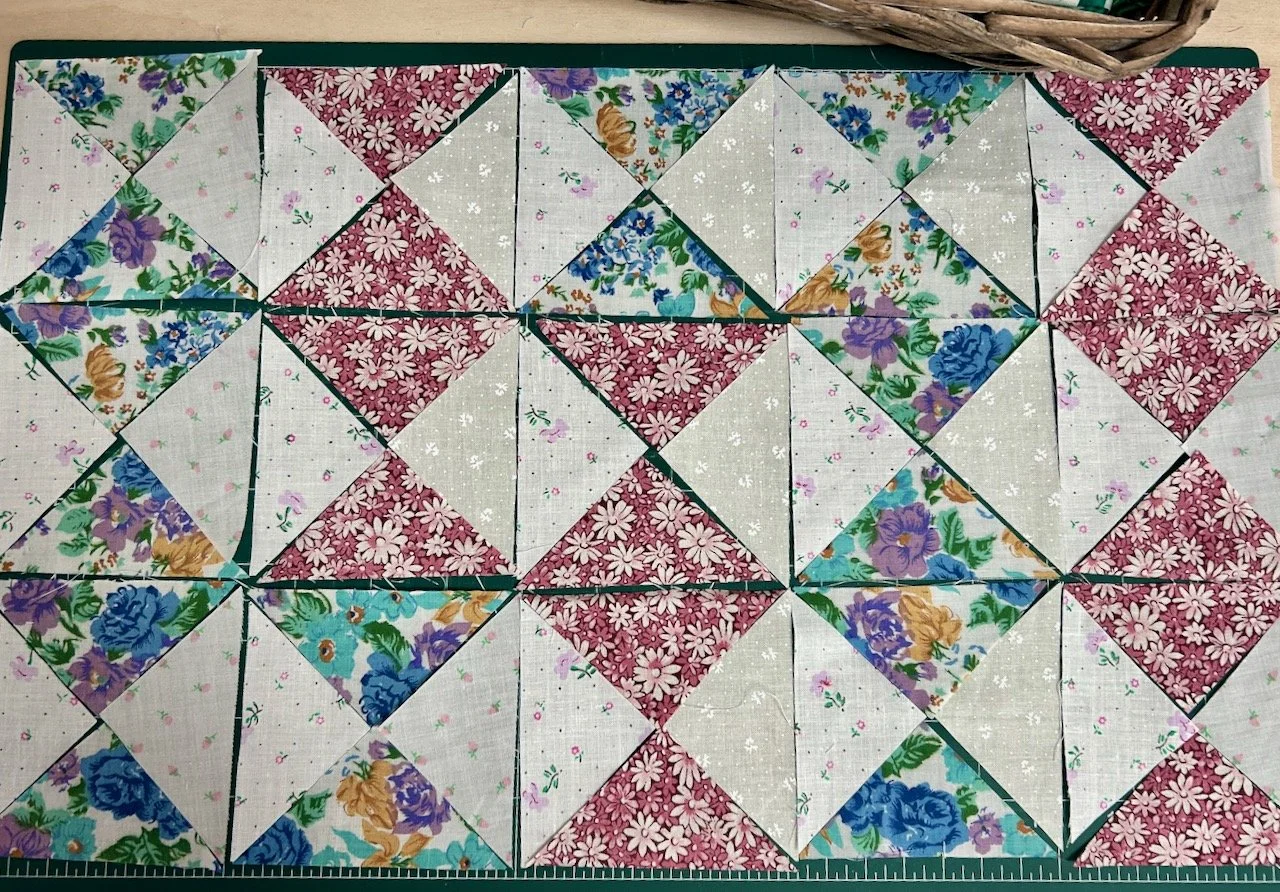
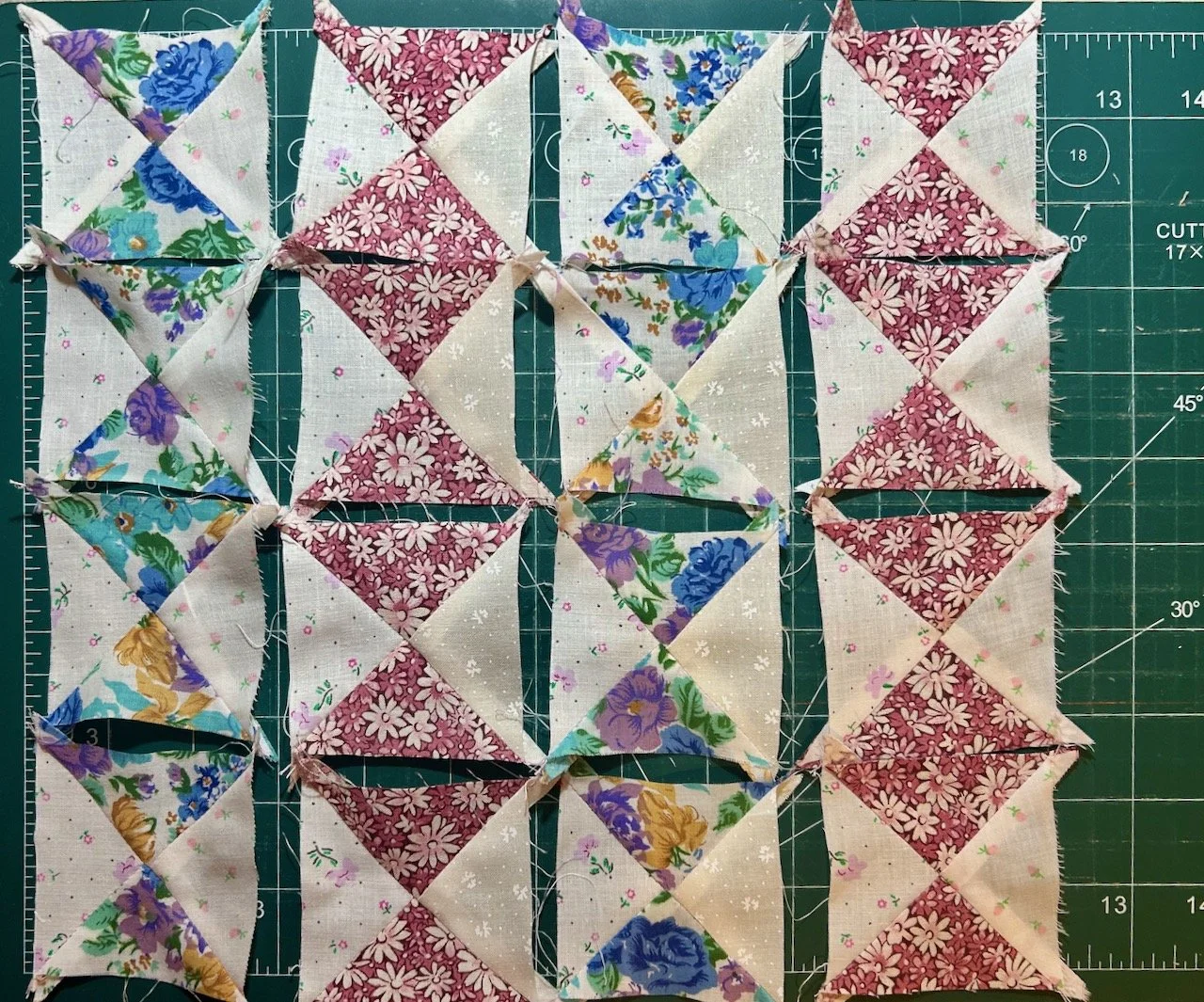
The Ohio Star block requires lots of squares cut into triangles and then sewn back together again, and despite it sounding (and looking) complicated it came together relatively quickly - and the individual stages looked pretty on my cutting board too.

The triangle components for the ohio star block laid out ready for sewing
The twelve component parts - four for each block laid out once sewn
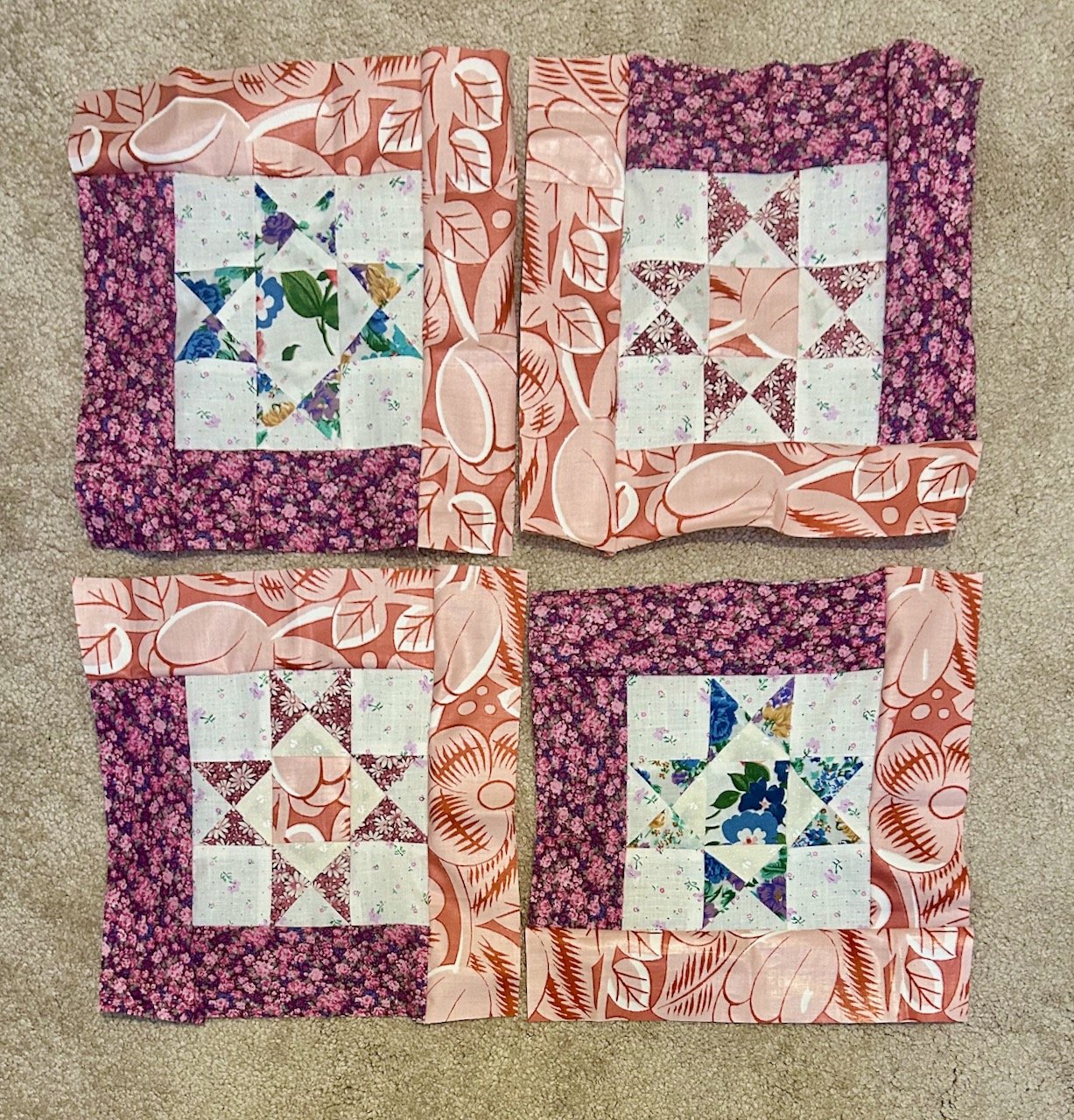
the four central ohio star blocks completed and ready for borders

Adding borders

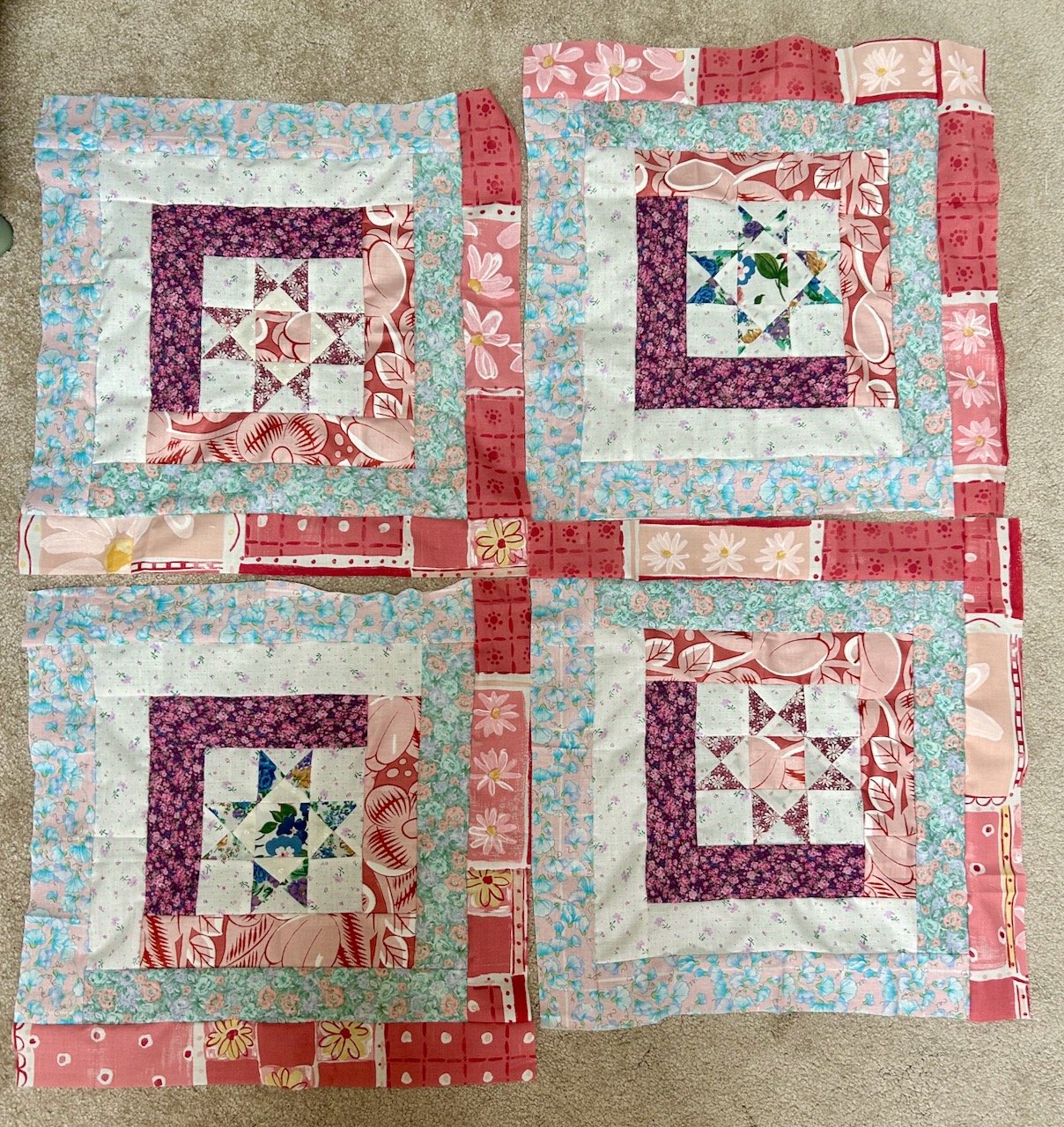
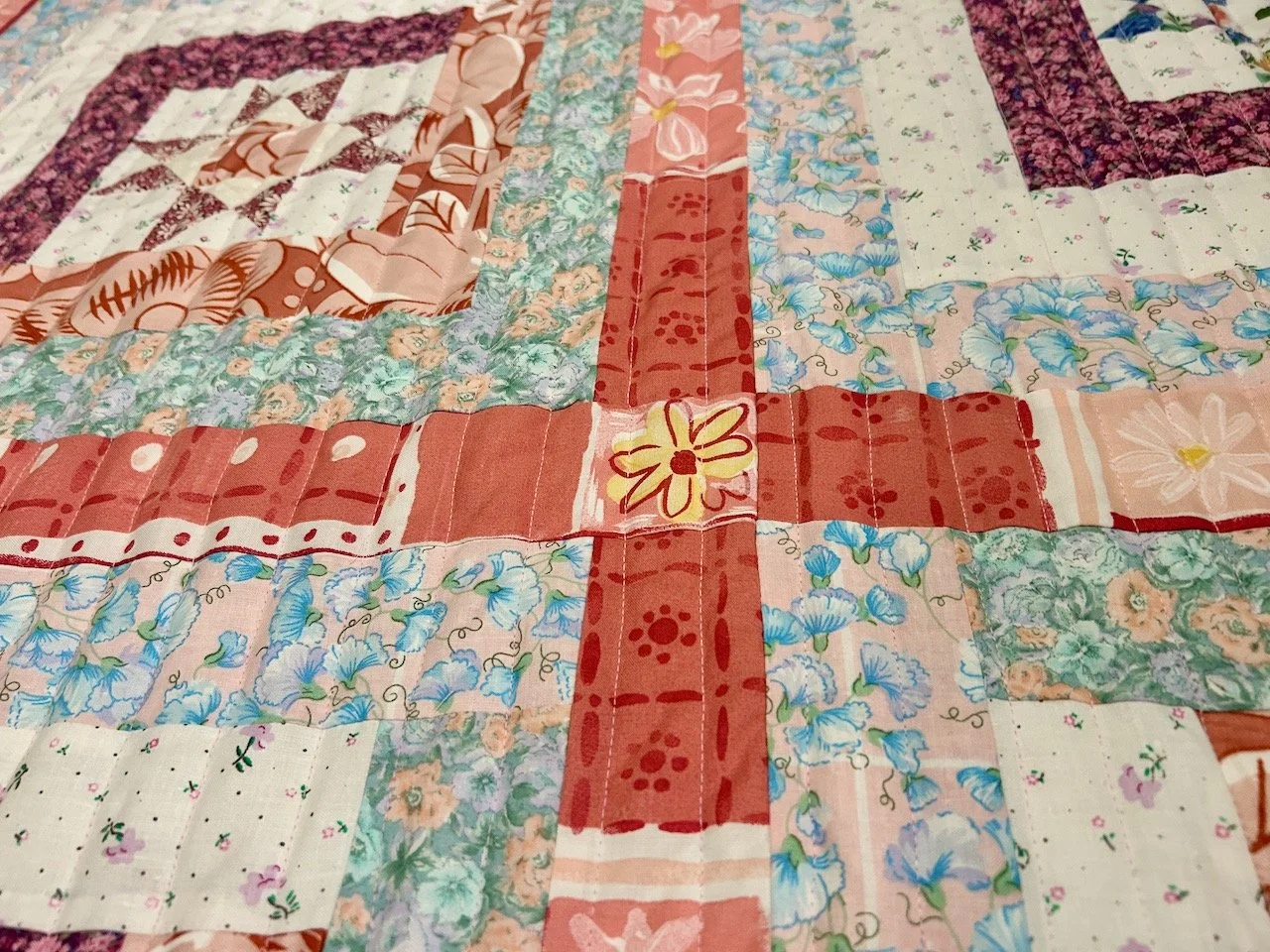
I randomly laid the blocks out after adding the first log cabin border and really liked the position of the darker burgundy fabric, and so that became the layout I was working too, although it meant I needed to make some adjustments when adding a final border so that it remained balanced to the eye.

First borders on - two pinks, one more burgundy - the layout is not symmetrical and I like it
With all three borders on - the asymmetrical means addition borders are required in odd places

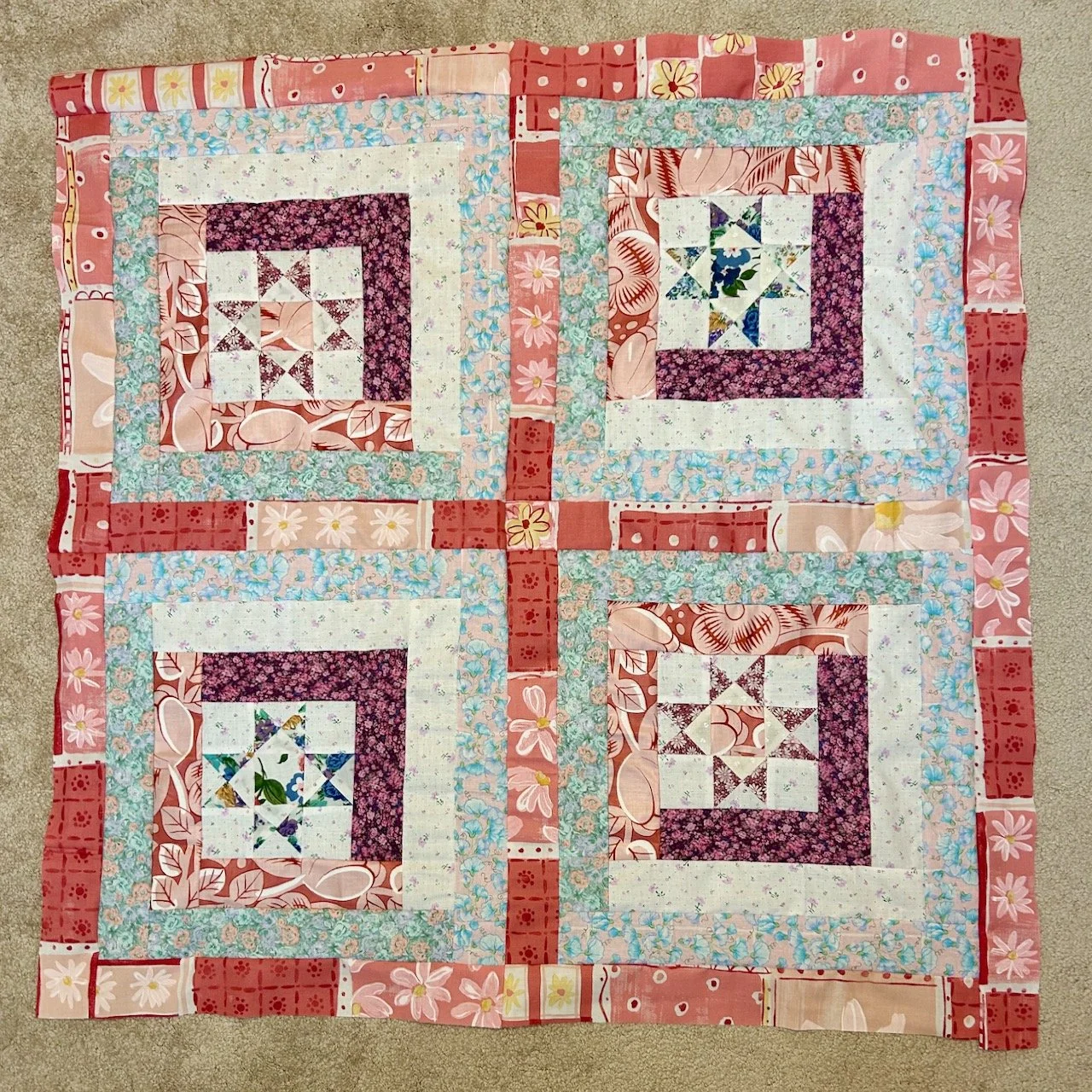
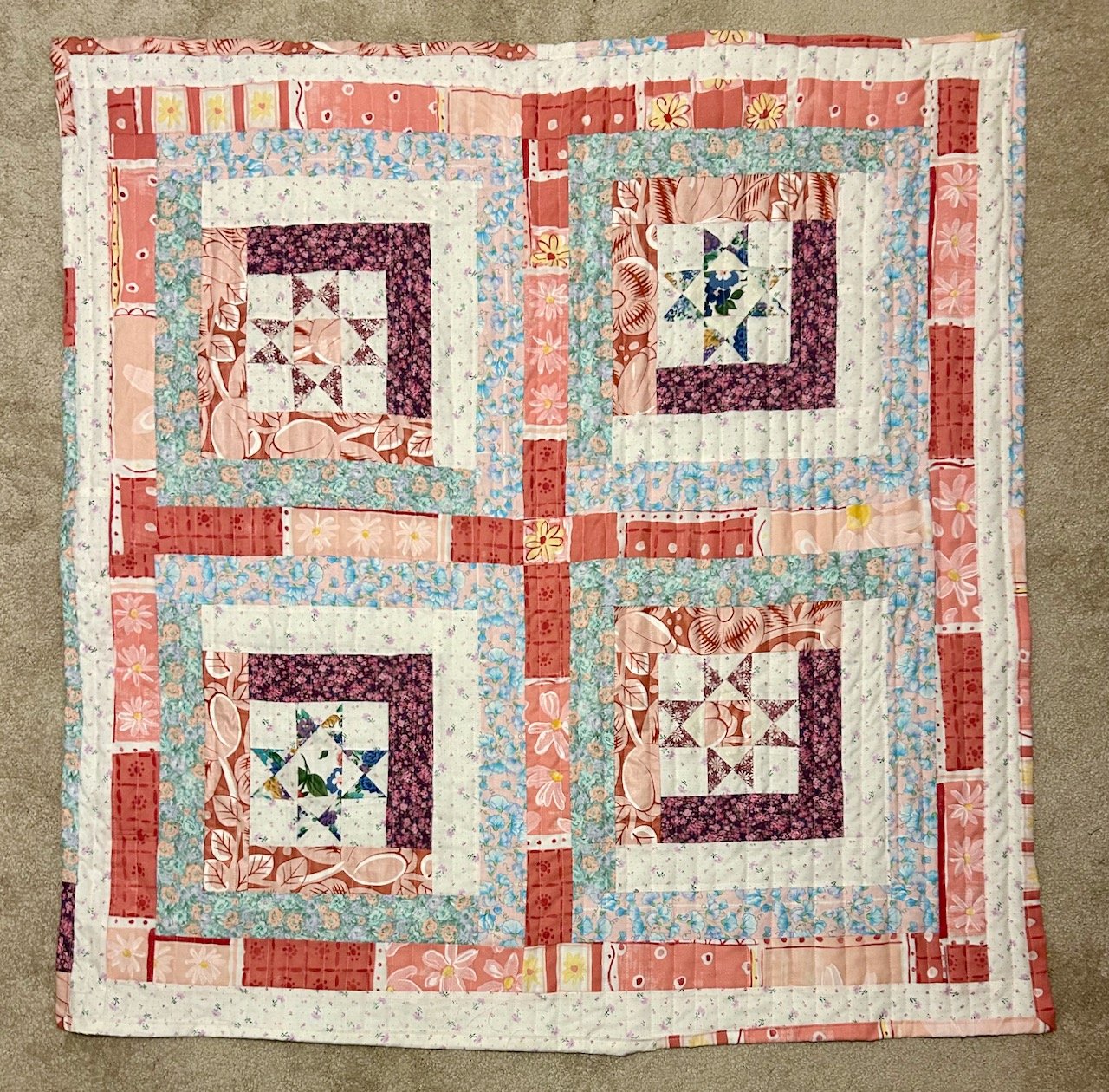
As soon as I saw the layout above, and especially the daisy which had placed itself quite unintentionally right in the centre of the quilt, that was the layout for me. I’d love to say it was planned this way, but it wasn’t!

the completed quilt top ready for the next stage
the fortuitous central daisy
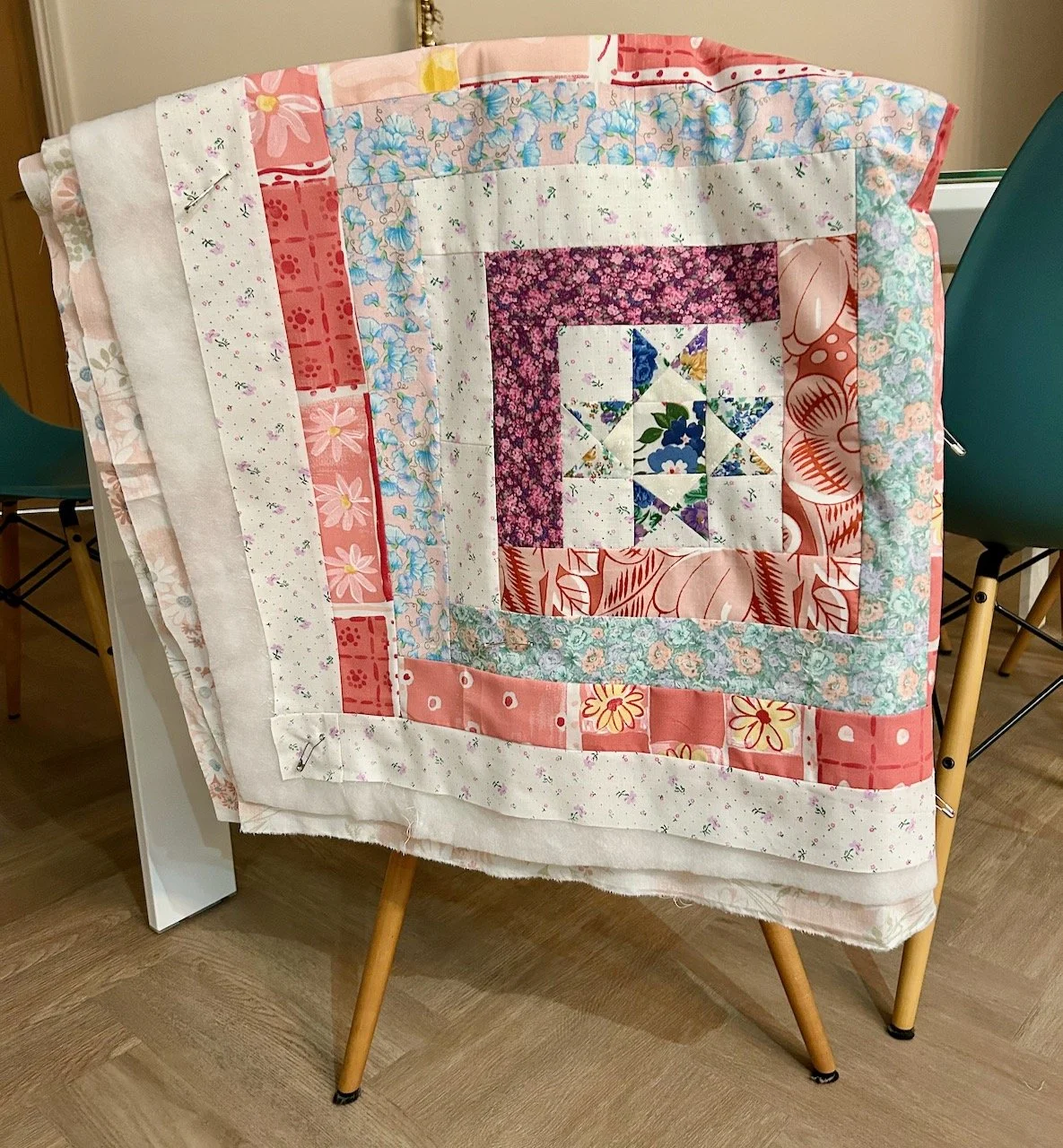
With backing and wadding and pins, folded over a chair before quilting

It’s a really effective central block and one that I enjoyed making, so I can see more Ohio stars in my future. And with all these floral patterns, it really did remind me of a flower garden so this month finding a name was easy.

The finished quilt - now quilted and with scrappy binding (using fabrics from the quilt) added

That’s twelve, but that isn’t it!

You may be thinking that now that’s the twelfth charity quilt, that’s my stretch project finished for the year. You’d be wrong - this is only the October edition of the Mystery Block quilt I’m making, so I’ve a further two quilts to go before I complete this challenge. It does mean that I’ll be making fourteen charity quilts in total but the first two that I shared were not part of the mystery block challenge. I always knew this would hopefully be the case, but I also knew that it’d give me a two month leeway if I needed it!

I have the November block and that’s currently doing its best to intimidate me a little, but I’m sure once I actually start it I’ll be fine…

You can see my other quilts I’ve made to donate to Project Linus - a charity whose mission is to provide love, a sense of security, warmth and comfort to children, who are sick, disabled, disadvantaged or distressed through the donation of new, homemade, washable quilts and blankets, including those that are part of this ‘stretch’ project in earlier posts. I’m aiming to publish an update on my progress in the last week of each month for the remainder of 2025.

A Stitch in Time with The Quilters' Guild

One of the first galleries that we stumbled across and spent time looking around was hosted by The Quilters’ Guild who were displaying some amazing items from the Quilt Collection, featuring items from the domestic Homefront, to commemorate the 80th anniversary of the end of the Second World War.

The items were displayed in chronological order starting on the eve of War with a range of items made during the 1930s and my favourites, and which I’m including here, are the patchwork pieces which show the typical fabrics and prints of the day.

Clearly the outbreak of war saw dramatic domestic changes with everyday life geared towards making what precious resources were available last as long as possible, and with fabrics and clothing rationed. As the war progressed and bombing caused destruction to homes and possessions charities such as the Canadian Red Cross Society became vital and thousands of quilts were sent over to Britain from anonymous needlewomen abroad.

At the end of the war patchwork and quilting became less popular as the were often seen as ‘making do’ and with the new age of fashionable style in clothing and domestic interiors becoming available it’s easy to see why these traditional methods were considered old fashioned. Alongside this more women worked outside the home as the decade progressed and therefore had less time, skills and inclination to continue tradition, and that’s when the ready made shiny eiderdowns and candlewick bedspreads came into their own.

I can remember having my eiderdown as a child, and I definitely remember the candlewick bedspreads - in fact I can remember when duvets, or continental quilts as they were called then, became the rage, but I digress!

The quilts in this part of the show were amazing as pieces of needlework, and then even more amazing for the time in which they were made.

War, Peace and Needlework

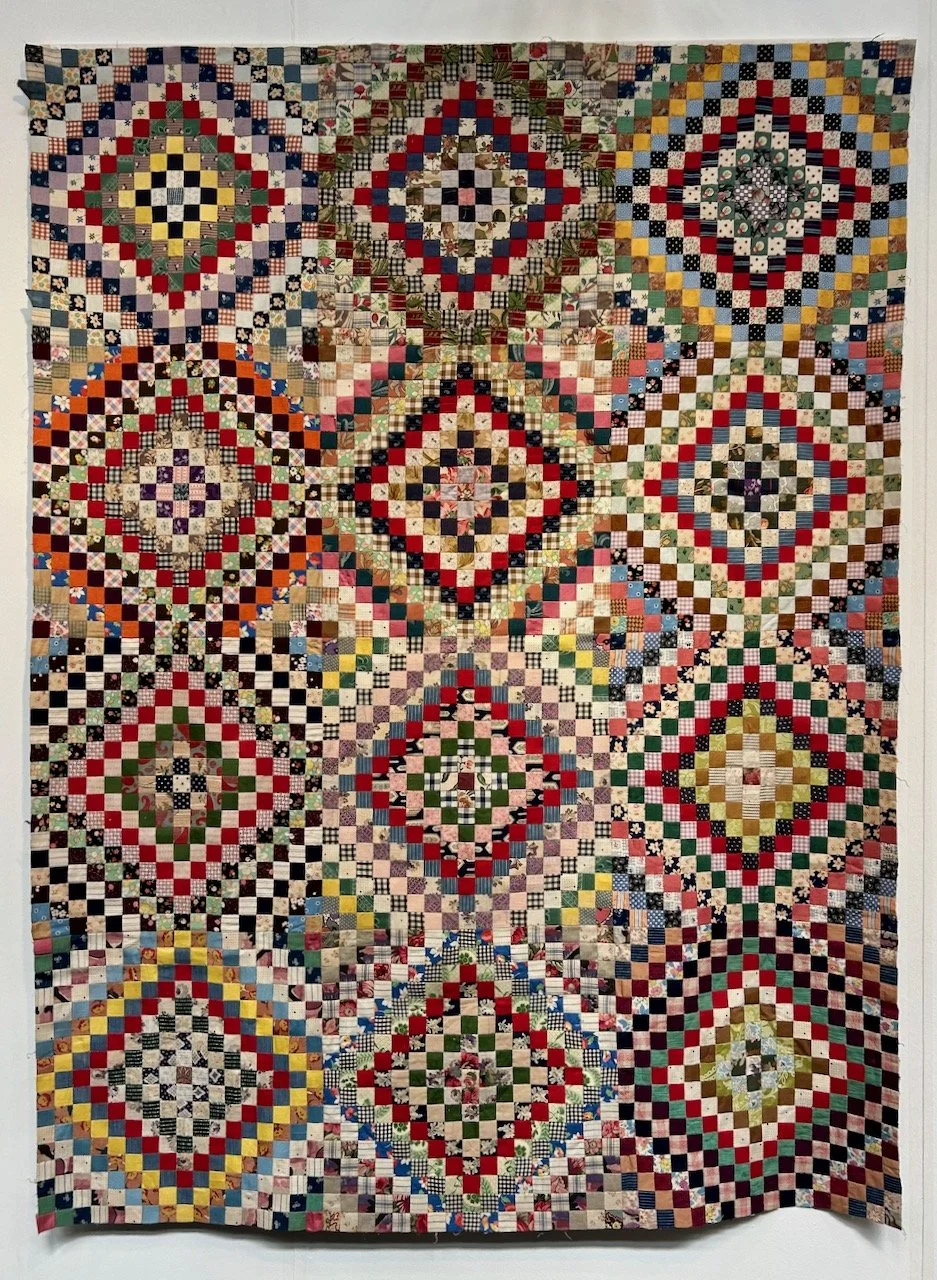
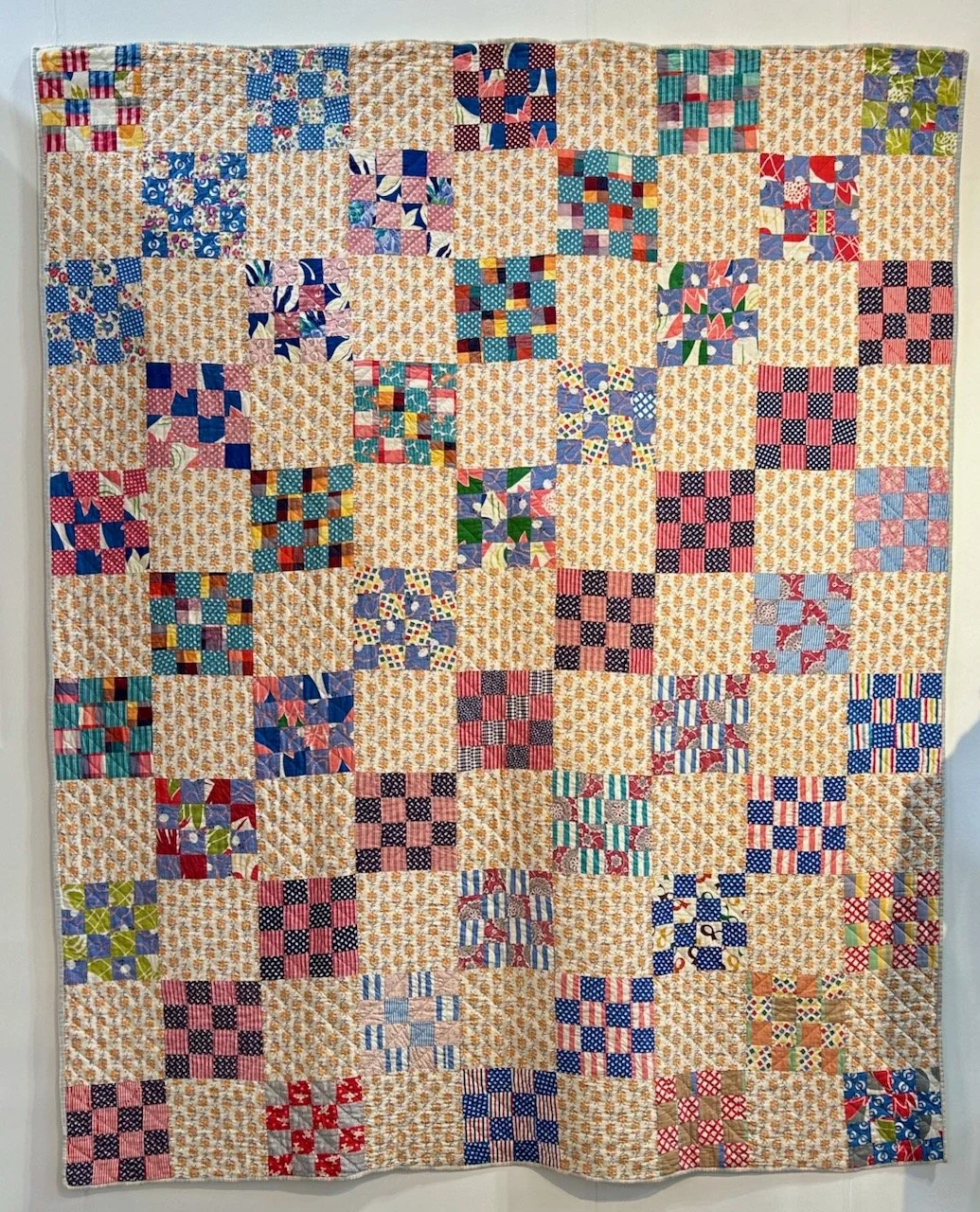
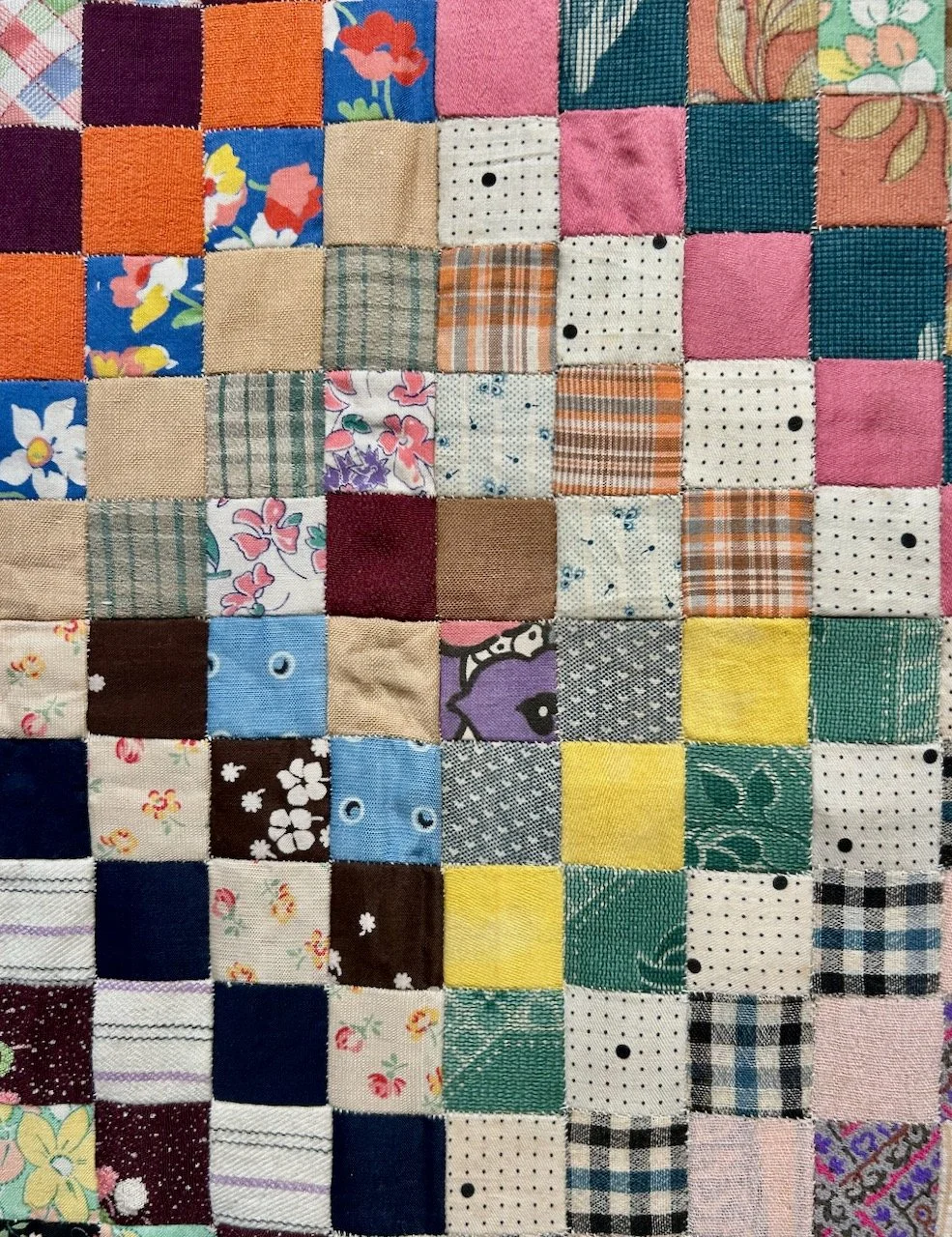
The colourful mosaic patchwork quilt top below was made from 1 inch squares of printed fabric arranged in a ‘Trip around the world’ block design, and according to the notes alongside the quilt, it still has the thick card templates attached in the reverse.

SMALL SQUARES TOP, 1930-1939, MAKER UNKNOWN

Although the quilt has been neatly finished at the edges, it doesn’t have a backing. A closer look at the fabrics reveals some of the details of the fabrics used, which includes 1930s dress prints and furnishing fabrics.

SMALL SQUARES TOP, 1930-1939, MAKER UNKNOWN

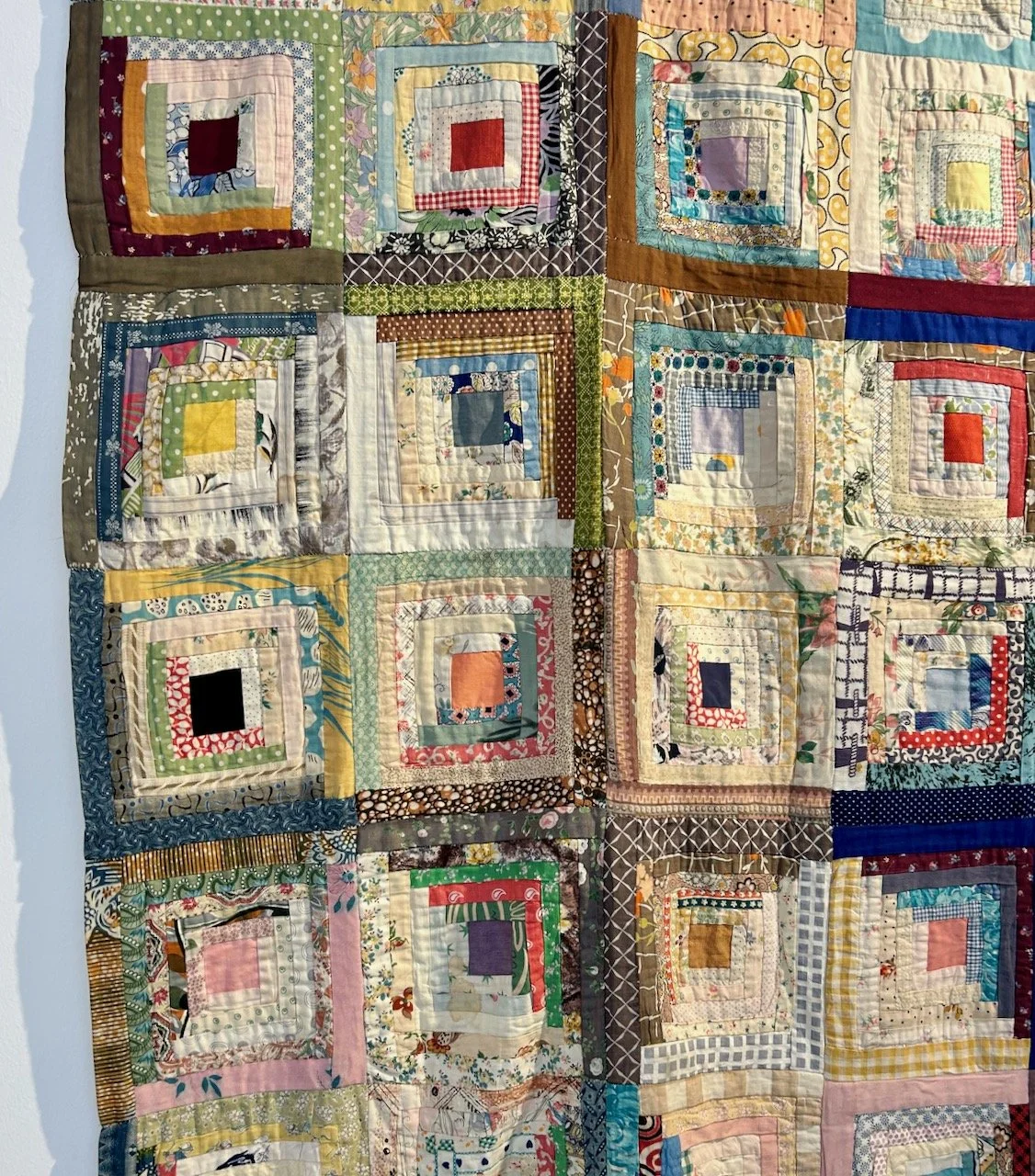
This colourful log cabin patchwork was made during the 1930s and again uses dress fabrics and furnishing fabrics to create the light and dark tones for the log cabin block - and if the block looks vaguely familiar and you think you’ve seen here before, then it was probably my charity quilts which use log cabin borders that jogged your memory.

LOG CABIN COVERLET, 1930-1939, MAKER UNKNOWN

These log cabin blocks though were sewn by hand, joined together and the seams have been opened and flattened on the back, then the seam allowance has been sewn down with a herringbone stitch - so this quilt wasn’t going to come apart.

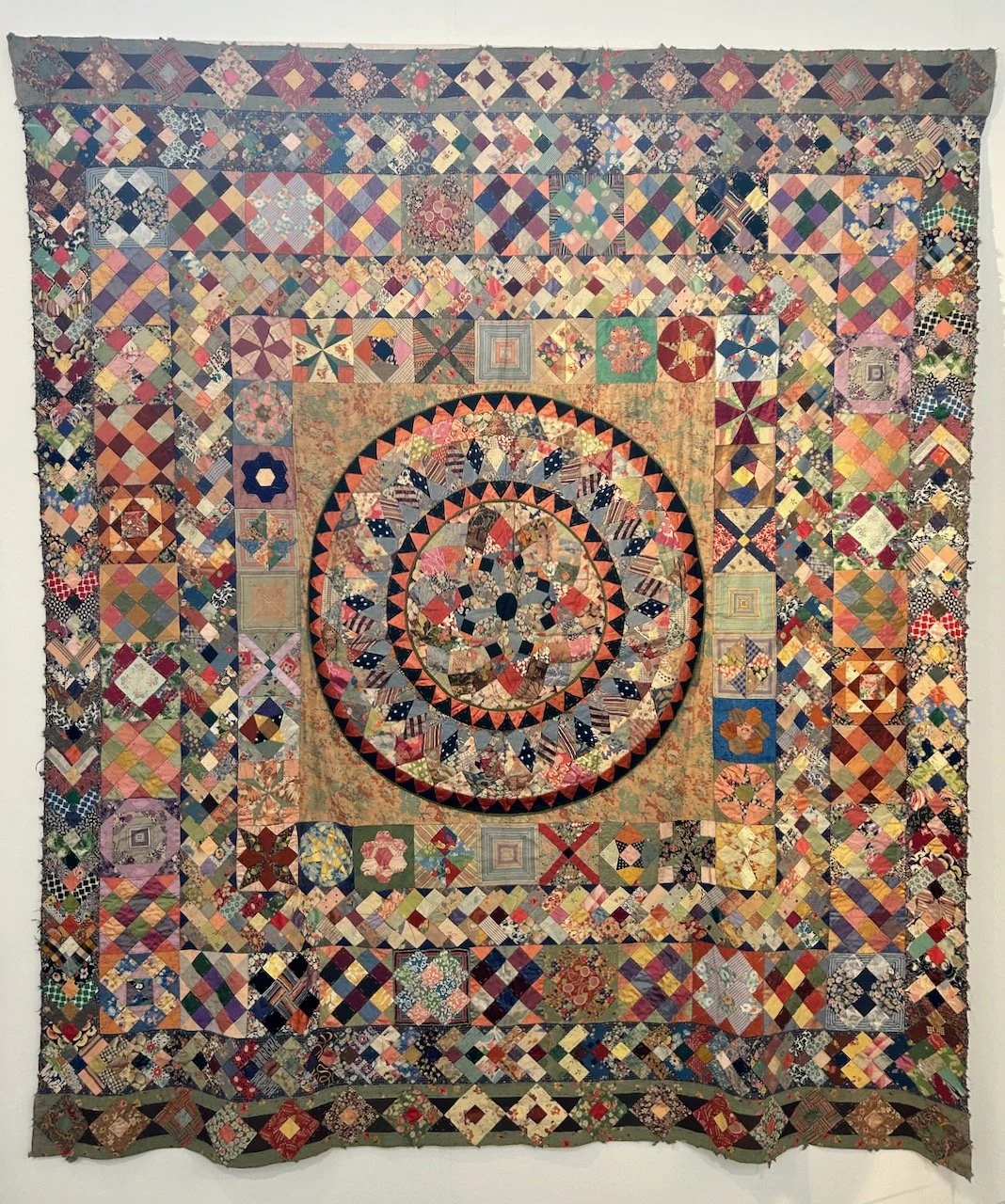
This next quilt is an example of mosaic patchwork which is complex and individual in style. The central circular medallion is thickly padded with a coarse open weave fabric on the reverse holding the wadding in place. It is thought that the maker originally intended to make a cushion but then extended it into a larger coverlet.

MOSAIC PATCHWORK, 1930s - 1940s, INA MACRAE

This was made by Ina MacRae who used materials from her scrap bag, recycled garments and remnants from the family’s haberdashery business. Ina never married, although she was engaged for a short time during the 1940s. The family story is that she broke off the engagement, and presumably lost enthusiasm for her patchwork project, leaving it unfinished with papers intact.

The quilt below is a Canadian Red Cross Society quilt and is made from alternate 16 patch squares and plain squares of orange floral print cotton, and was one of five given to Miss Alice Treeby’s family after she had returned from evacuation.

MISS TREEBY’S QUILT, 1939-1945, CANADIAN RED CROSS SOCIETY

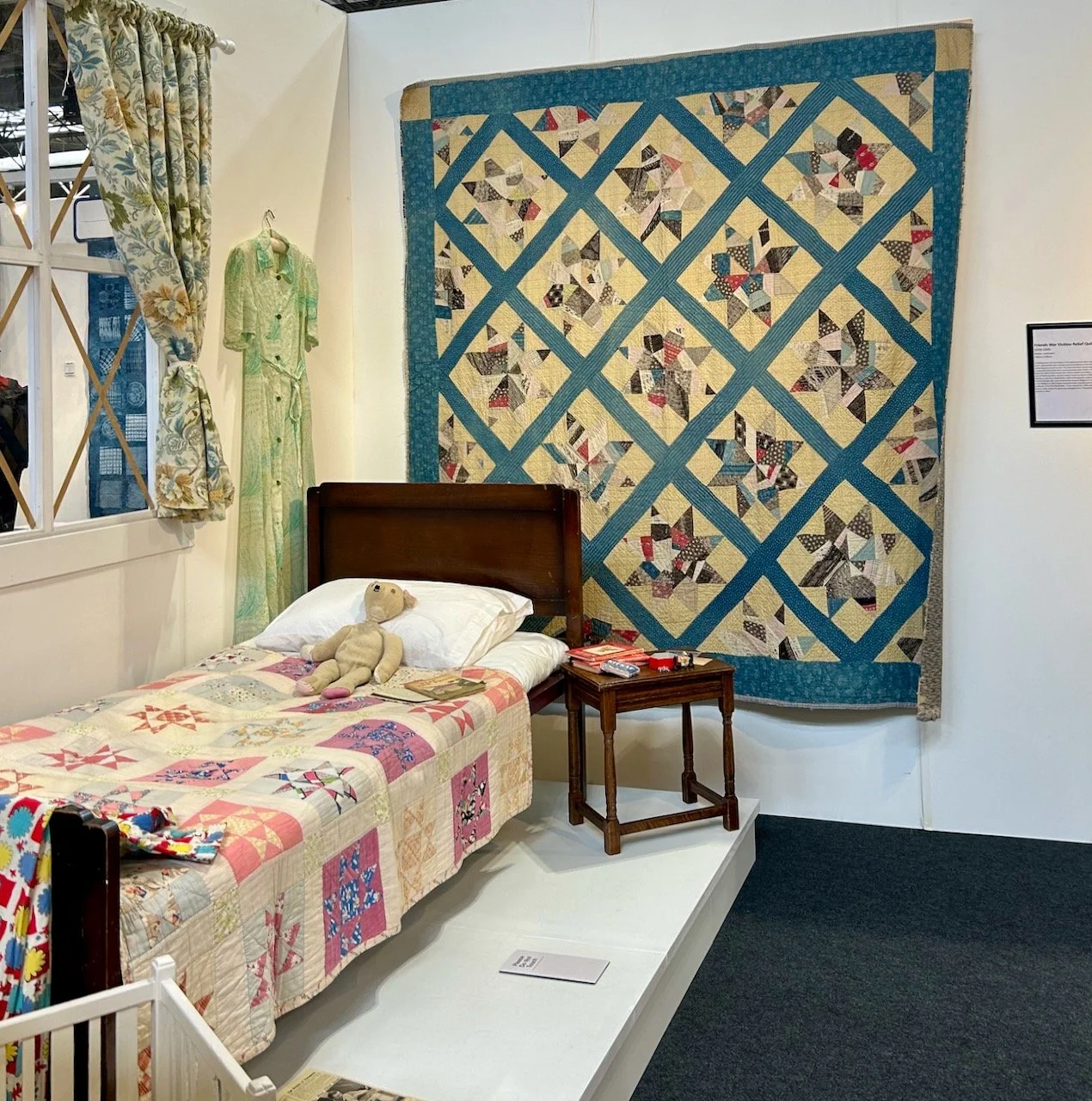
FRIENDS WAR VICTIMS RELIEF QUILT, 1939-1945, MAKER UNKNOWN

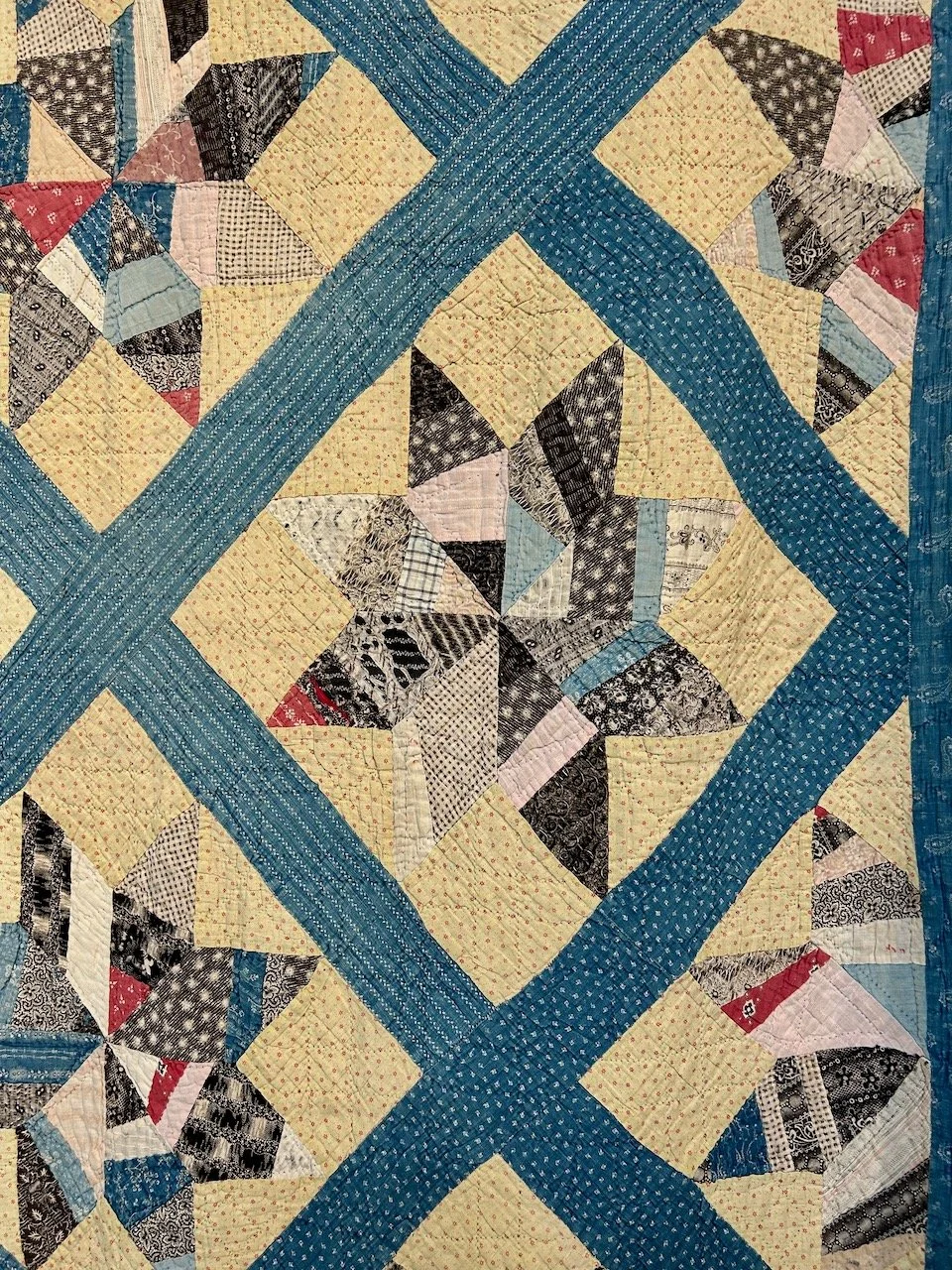
This striking stars in square block quilt includes stars which are ‘crazy patchworked’ using various cotton print fabrics and bears the label of the Friends War Victims Relief Committee, an official arm of British Quakers set up to relieve civilian distress in times of war. The group has a long history dating back to 1870 and with five revivals, the last being in 1940, before its name was changed to the Friends Relief Service in 1941.

FRIENDS WAR VICTIMS RELIEF QUILT, 1939-1945, MAKER UNKNOWN

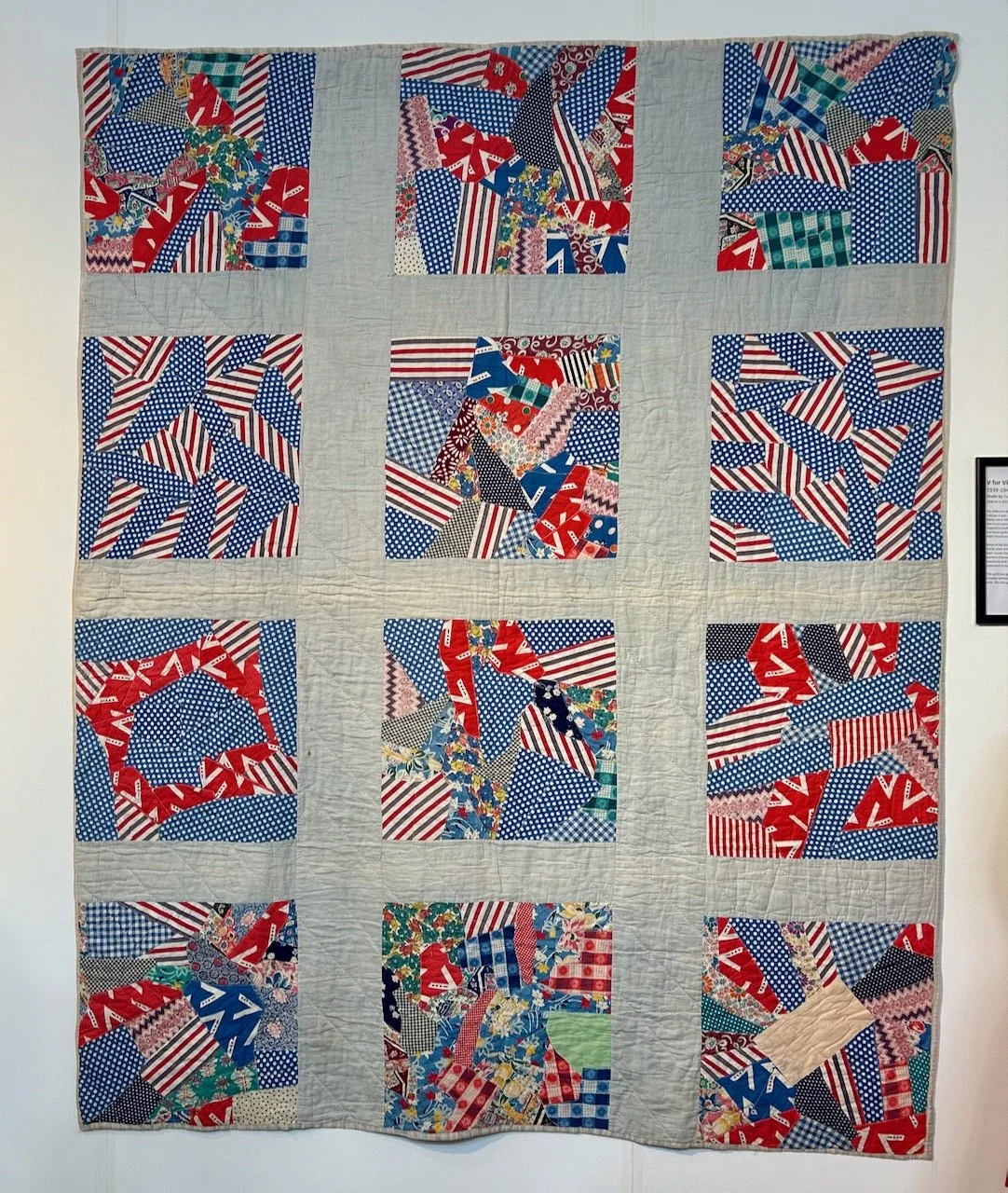
Crazy patchwork blocks feature again in this quilt - and that makes a lot of sense with materials hard to come by, but it could also indicate that it was made by a group of women in the Canadian Red Cross. Blocks were often made at home to standard sizes at home, then brought into the Red Cross premises to be joined together and finished off with materials supplied in bulk by the society.

V for VICTORY QUILT, 1939-1945, MADE BY CANADIAN RED CROSS SOCIETY

This one has been machine stitched, and uses ‘Patriotic Prints’ - look for the white V on the red/blue background - in the V there’s morse code printed ‘dot dot dot dash’. These prints were printed with various wartime themes and often endorsed by female celebrities to increase their popularity and made into clothing, and as we can see above incorporated into quilt tops.

This quilt was give to the donor’s mother-in-law who lived in West Croydon where her house was damaged 5 times during the bombing raids, and it was during that time at some point that she was given this quilt.

The whole exhibition was full of poignant stories, alongside the fantastic historical quilts, which made me look at our lives today and realise how very fortunate we are that such sacrifices were made for us. We all know of stories from the First and Second World Wars, but somehow seeing them through these quilts gave a perspective that is rarely seen.

If you enjoyed this post from my visit to the Festival of Quilts 2025 then please do check out my other posts from the show. Even though my mind was blown by the sheer volume of quilts on display, I’m pretty sure I’ll be going again!