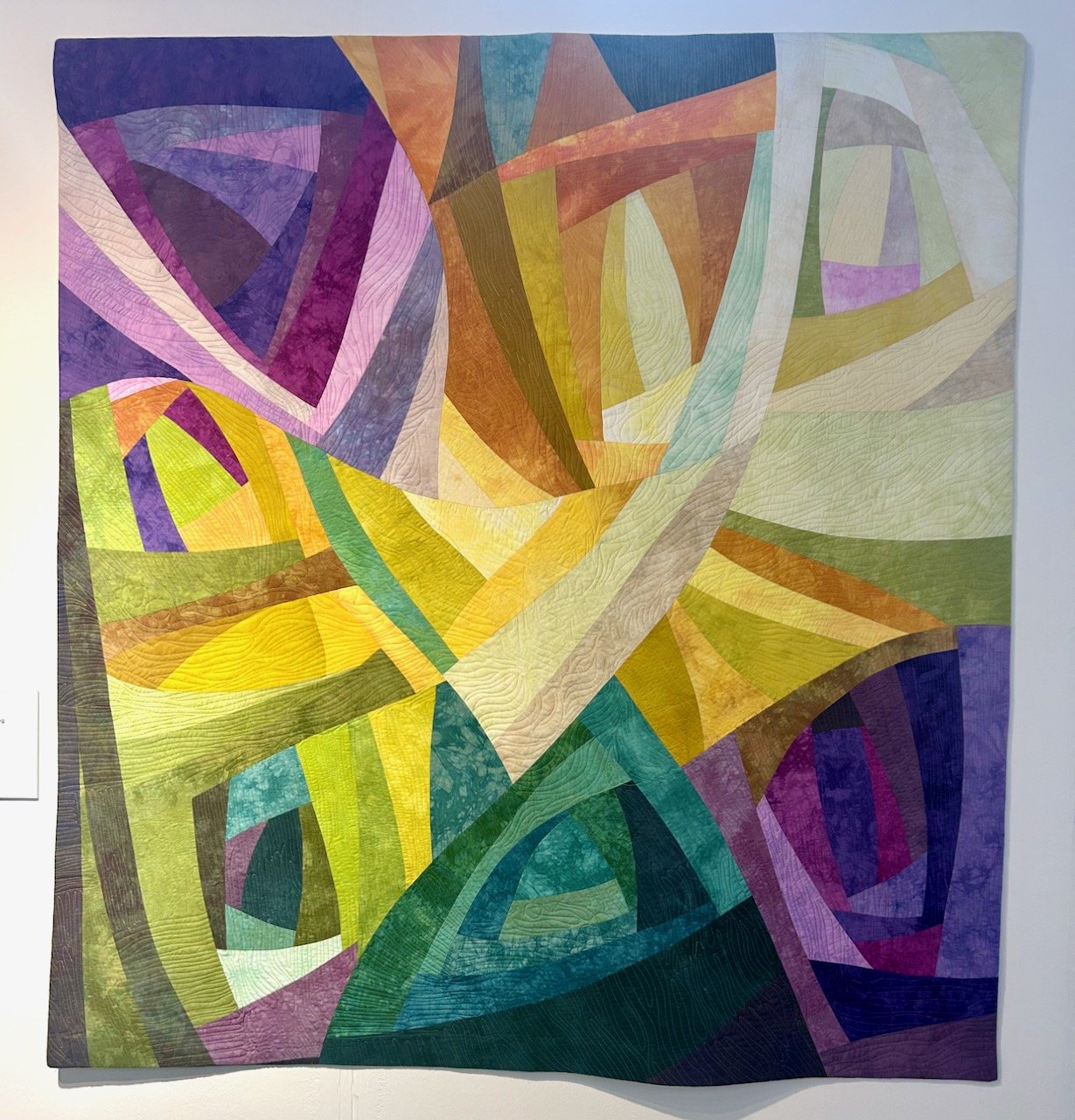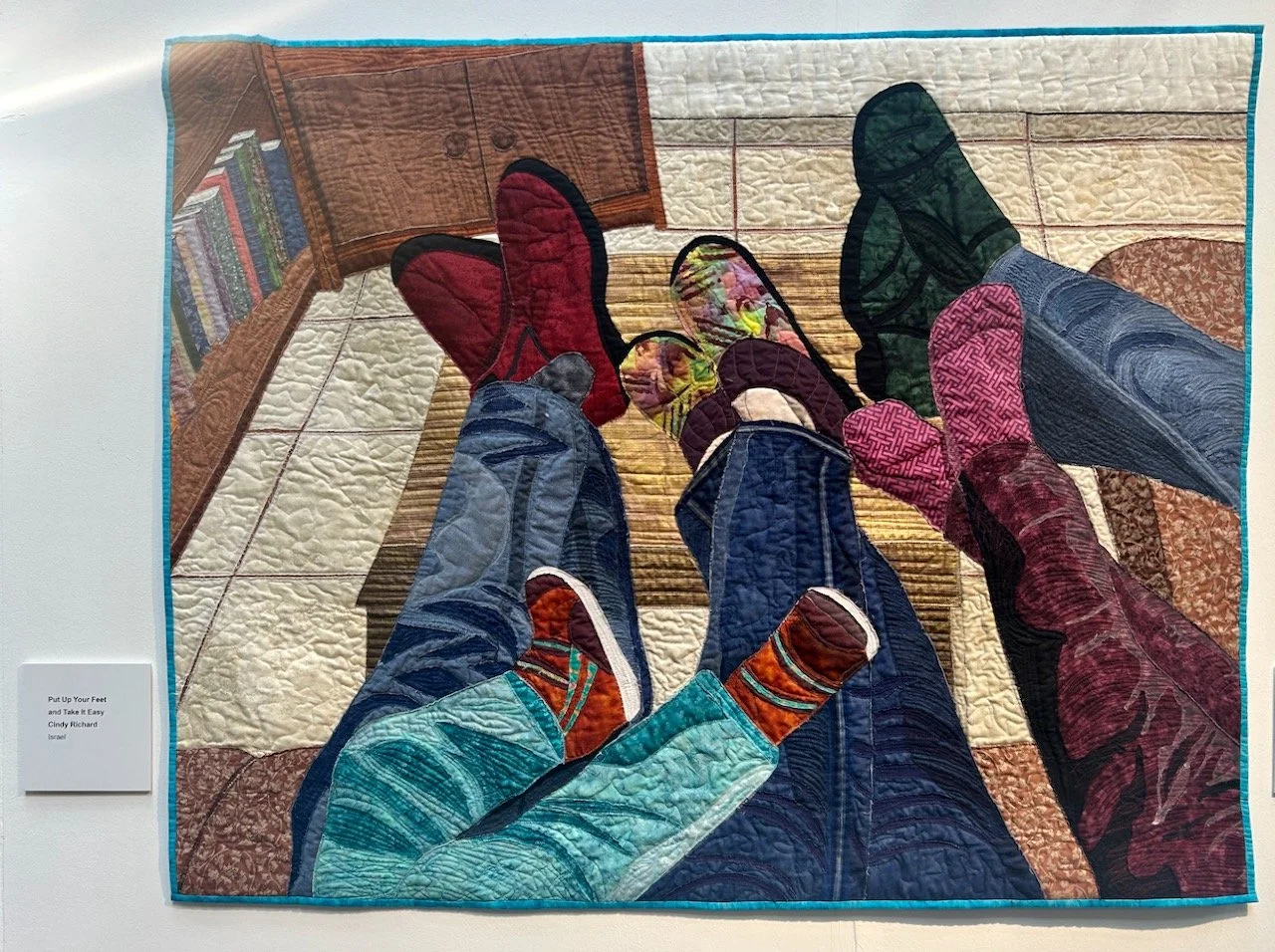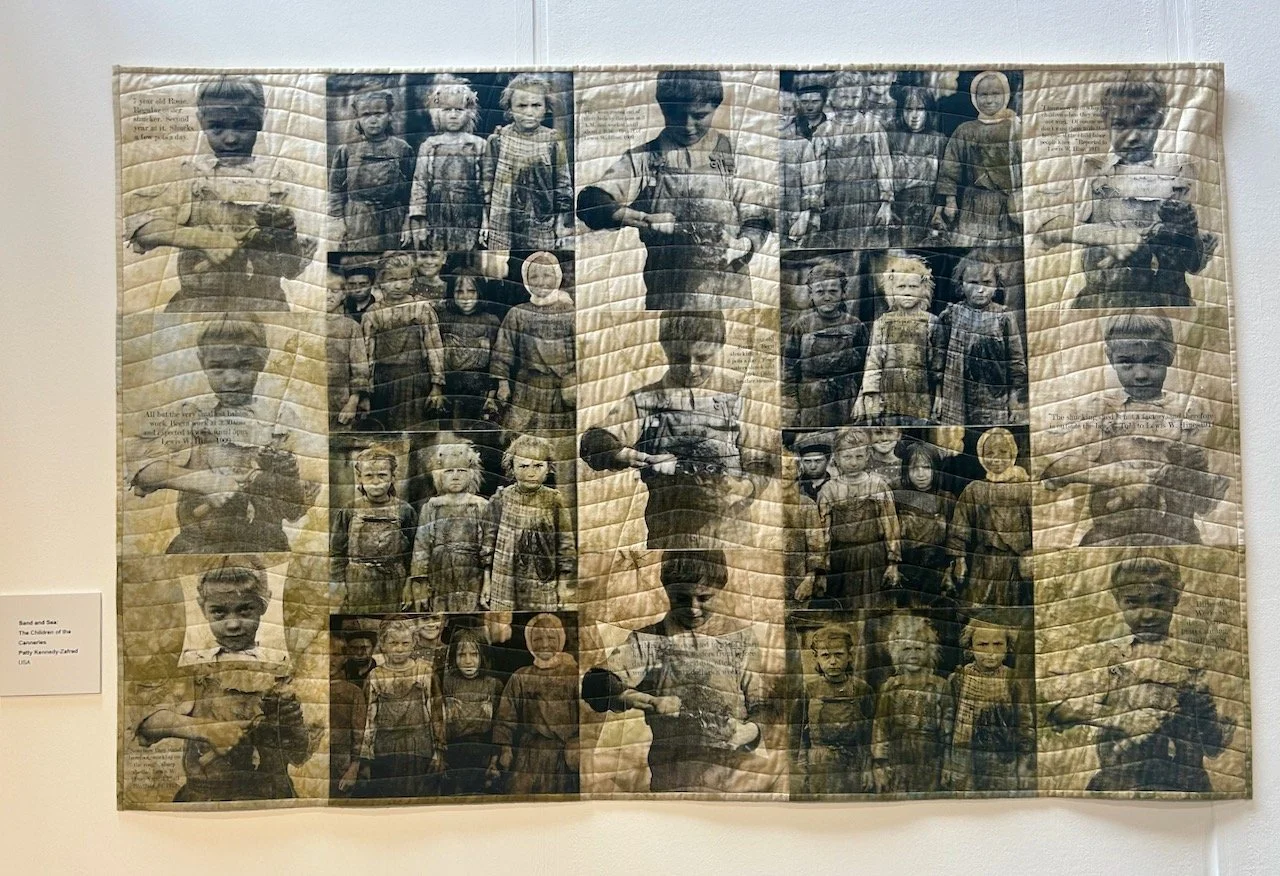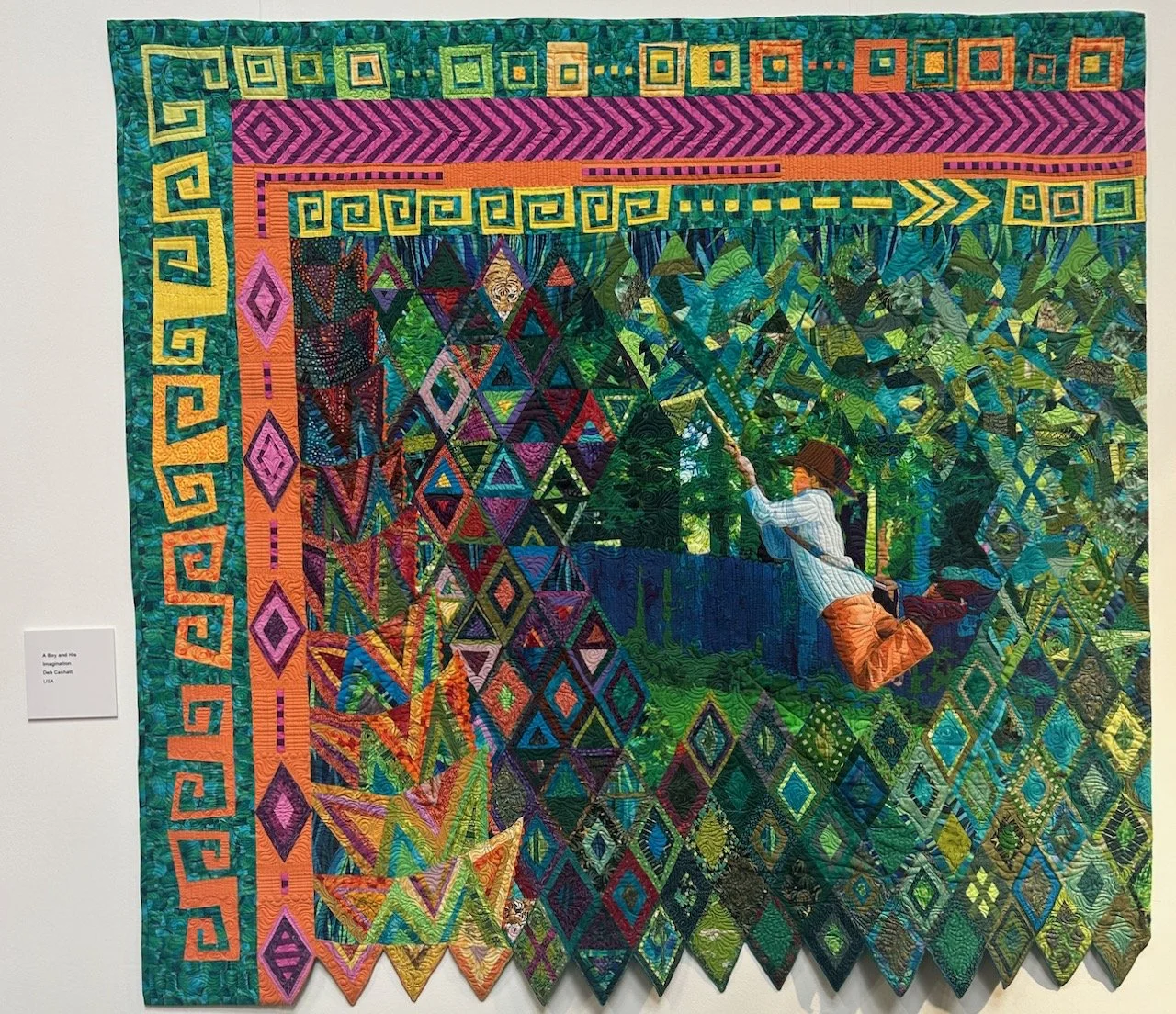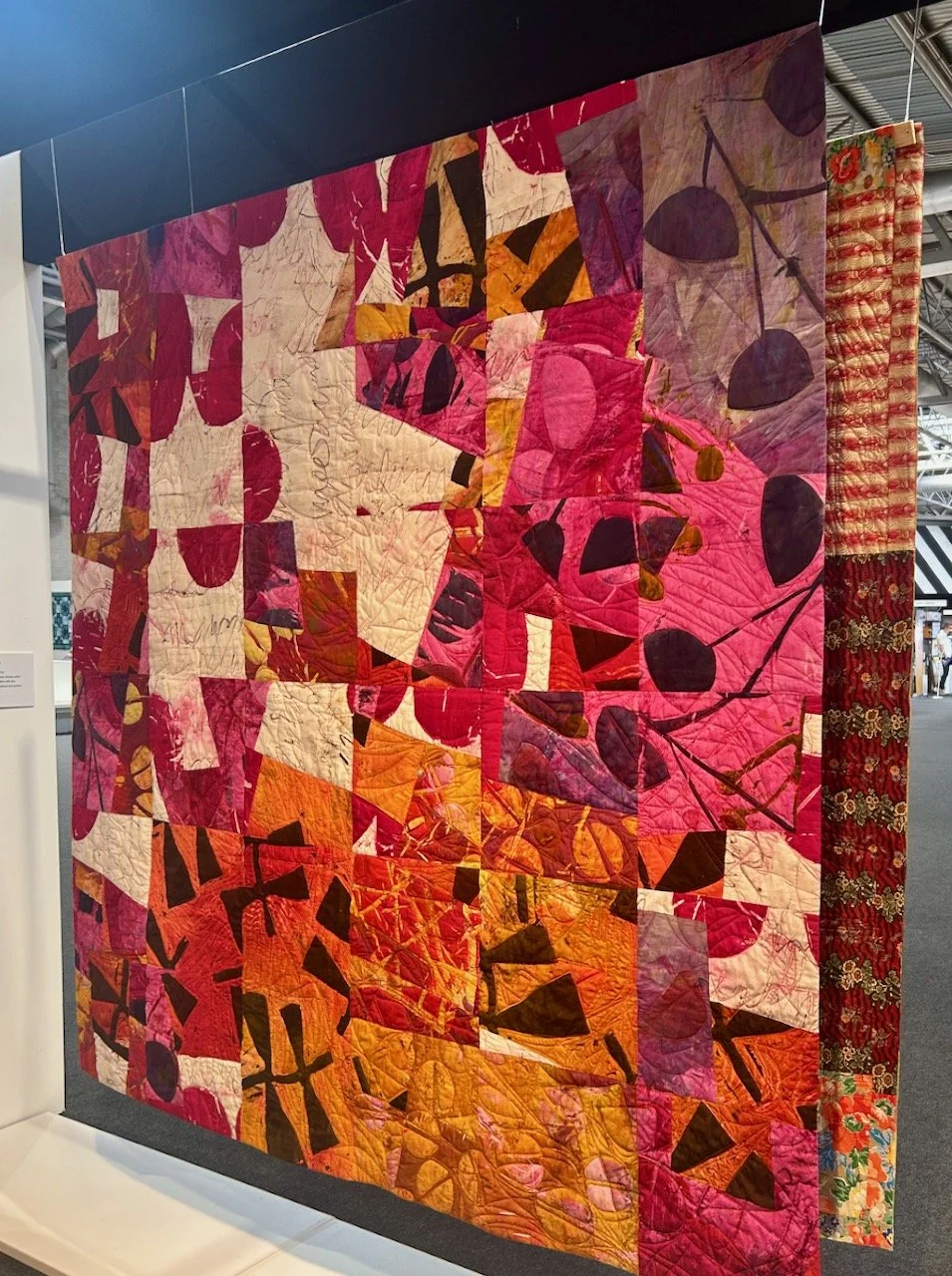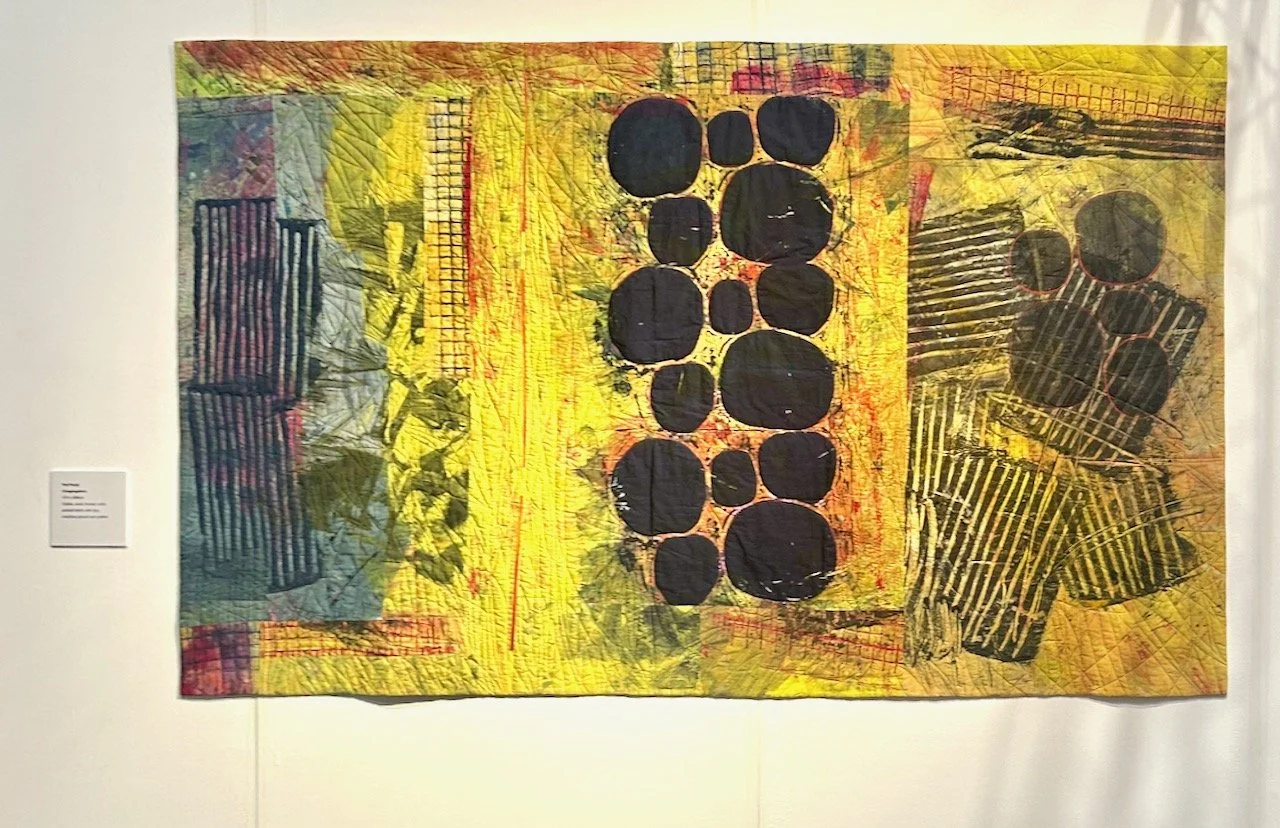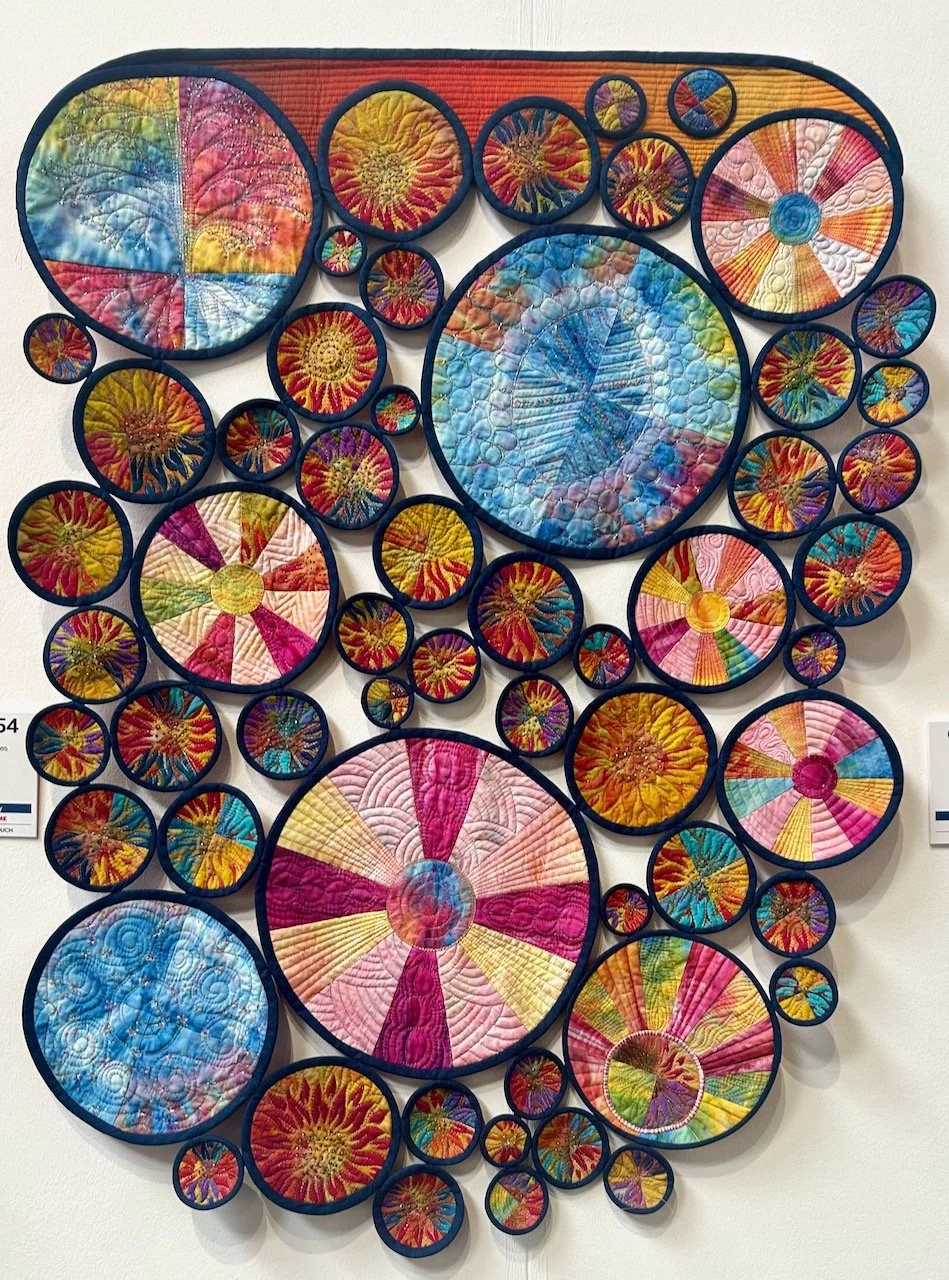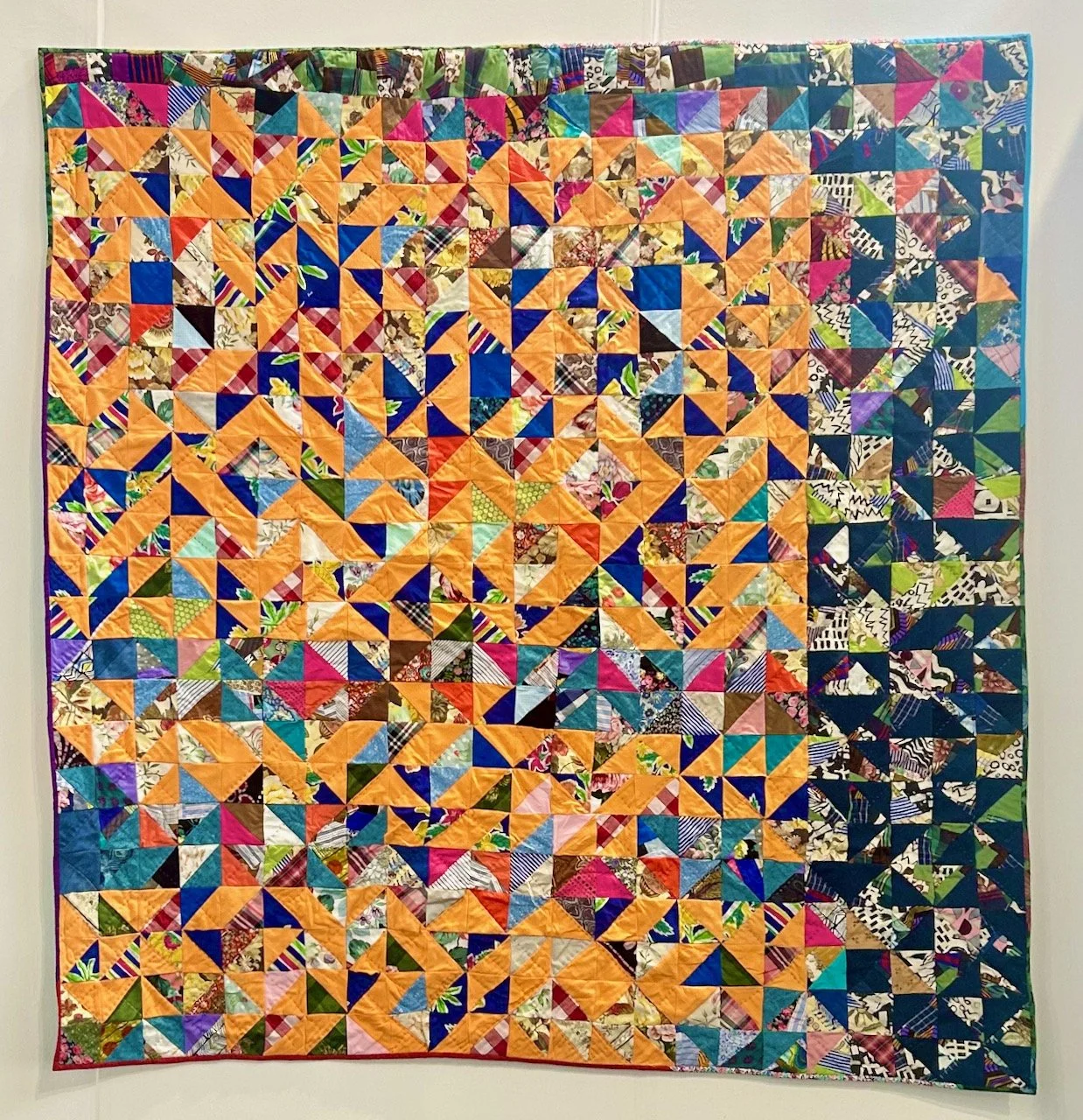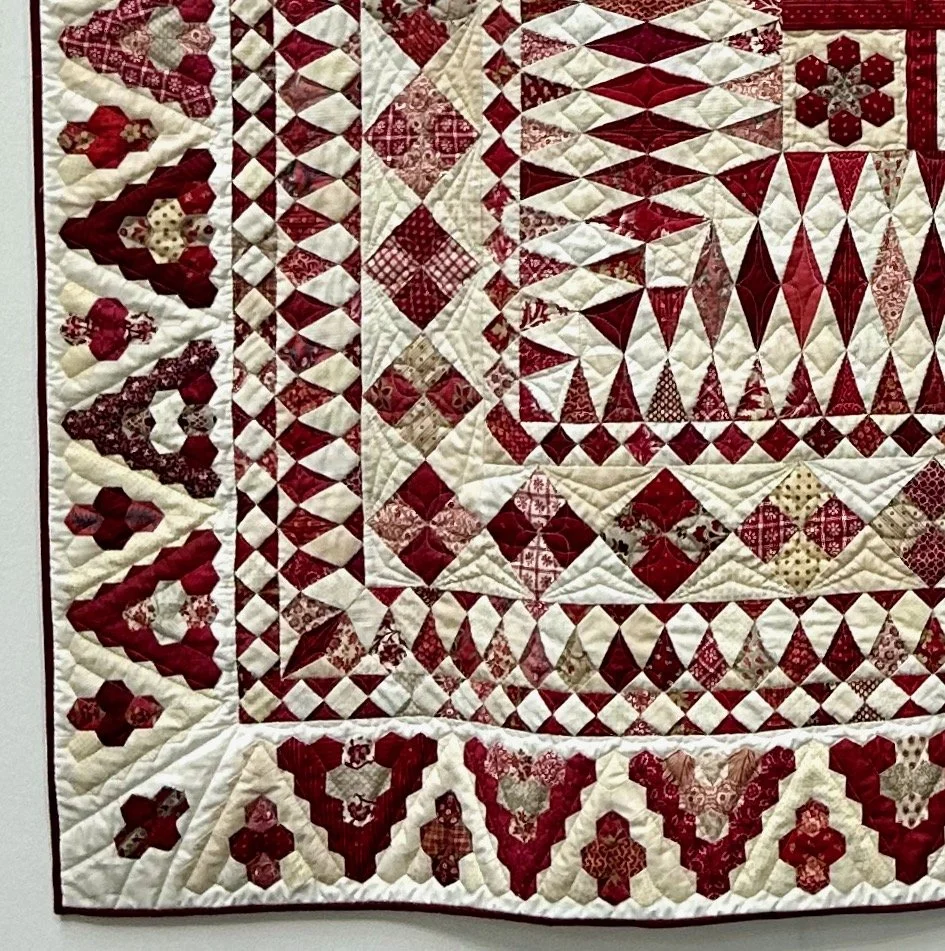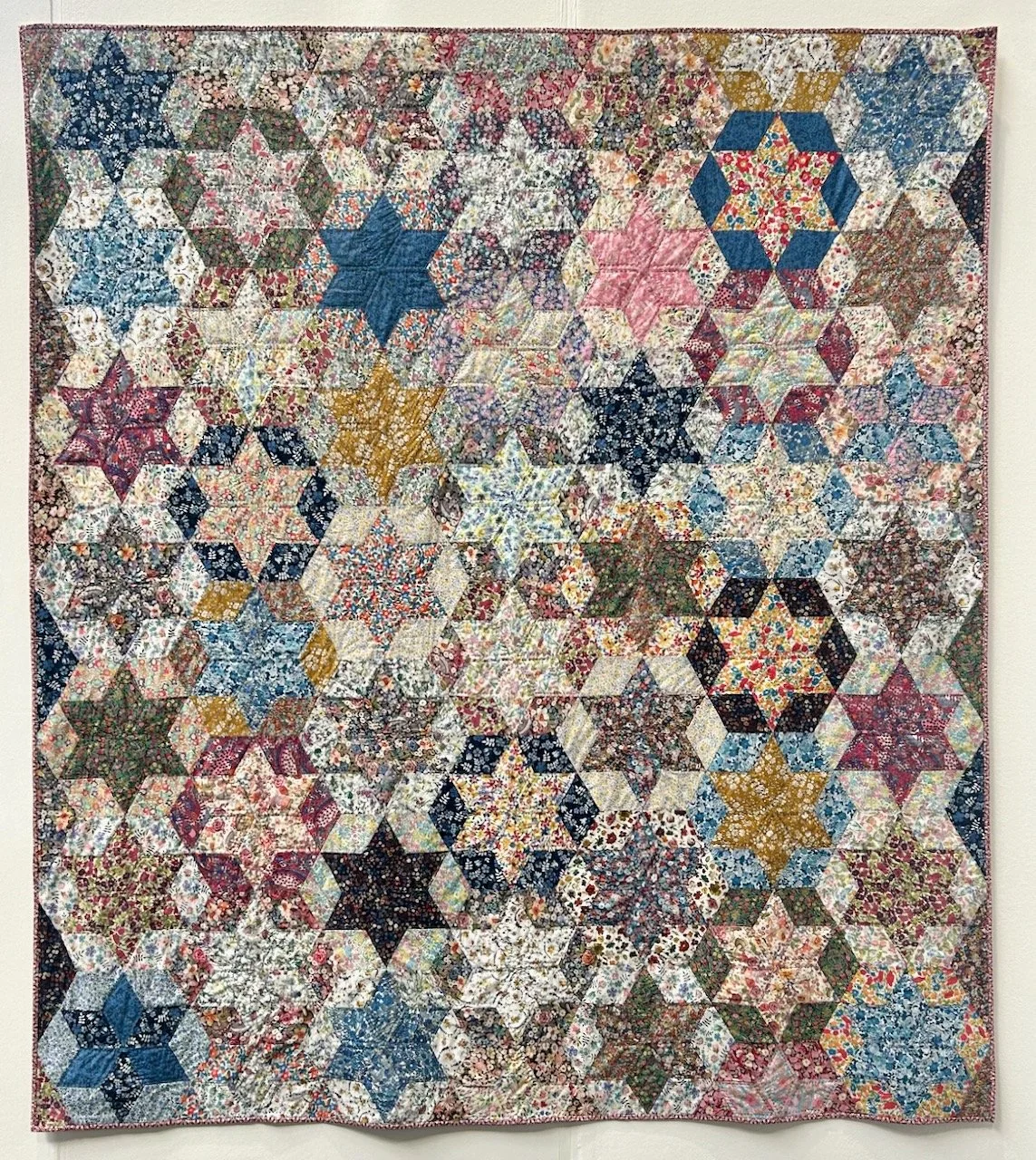
Sustainable quilts at the Festival of Quilts

This was a category I was keen to explore once I spotted it existed. You’ll know I’m trying to use as much of my stash as possible and am reusing old clothes in at least some of the quilts and pouches I’m making, so it was a category after my own heart. Having already seen some of the fantastic quilts on show I was keen to see, and be wowed, by the creativeness of these quilt makers, and I wasn’t disappointed.

To class as sustainable for the Festival of Quilts the quilt needed to have been made with ‘minimal negative impact on the environment’ with at least 75% of the fabric used being repurposed, and the remaining 25% would ideally be organic fabrics or taken from their stash, and ‘the maker should use biodegradable or recycled materials wherever possible, or use materials from sustainable and natural sources’.

And none of these criteria meant the quilts didn’t have the wow factor, in fact they do a brilliant job of showing what can be done with repurposed materials.

Prepare to be wowed

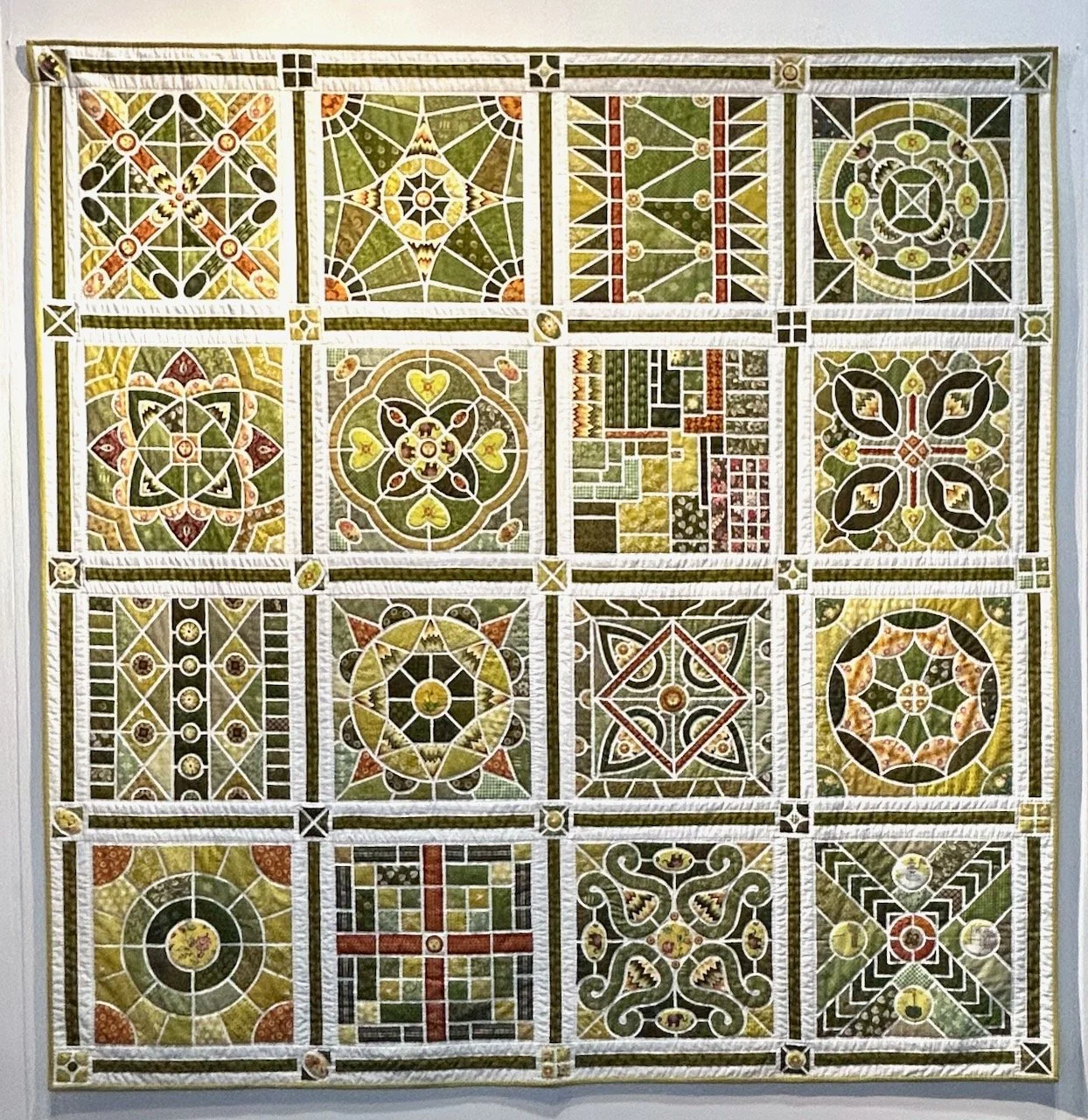
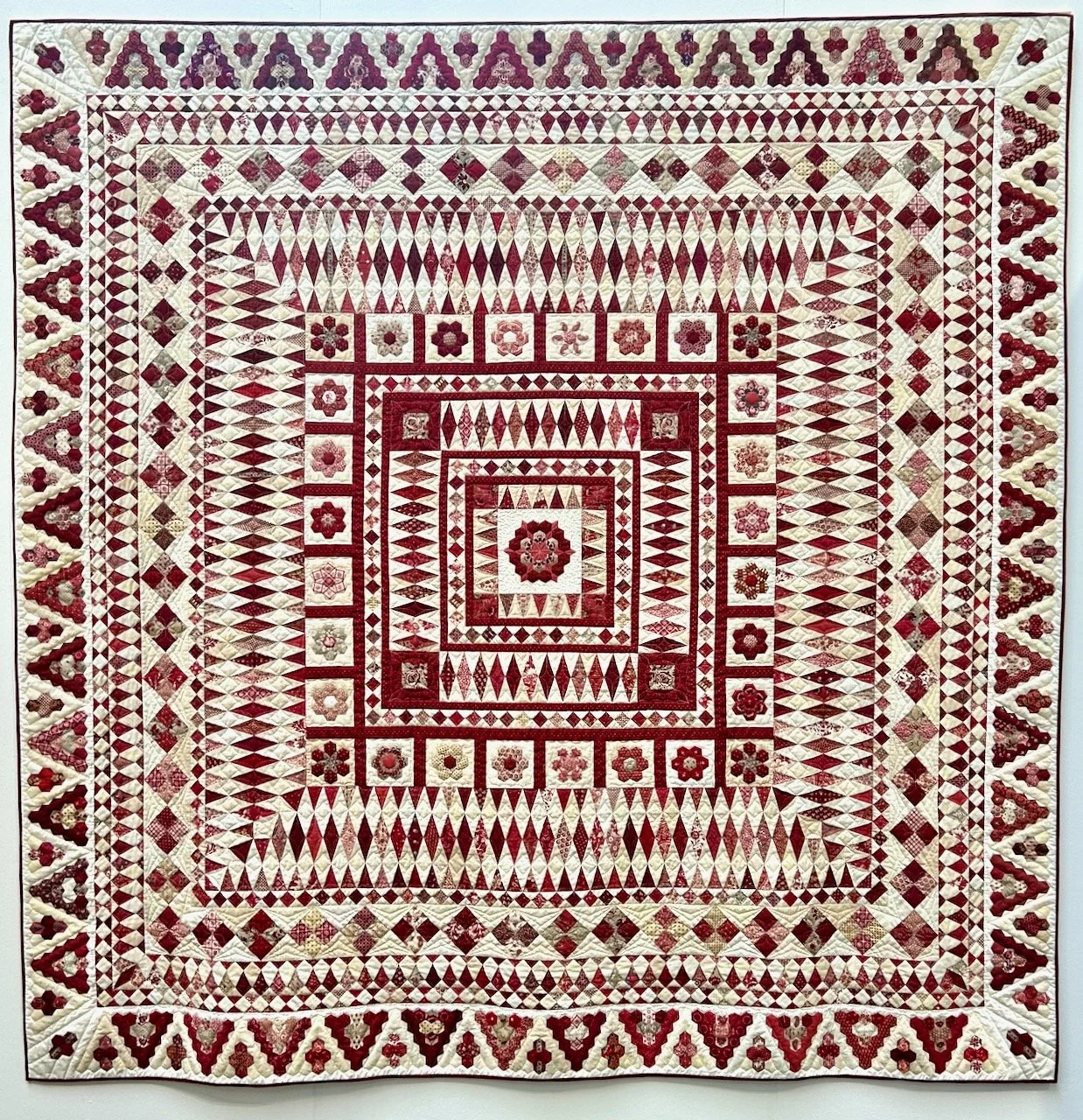
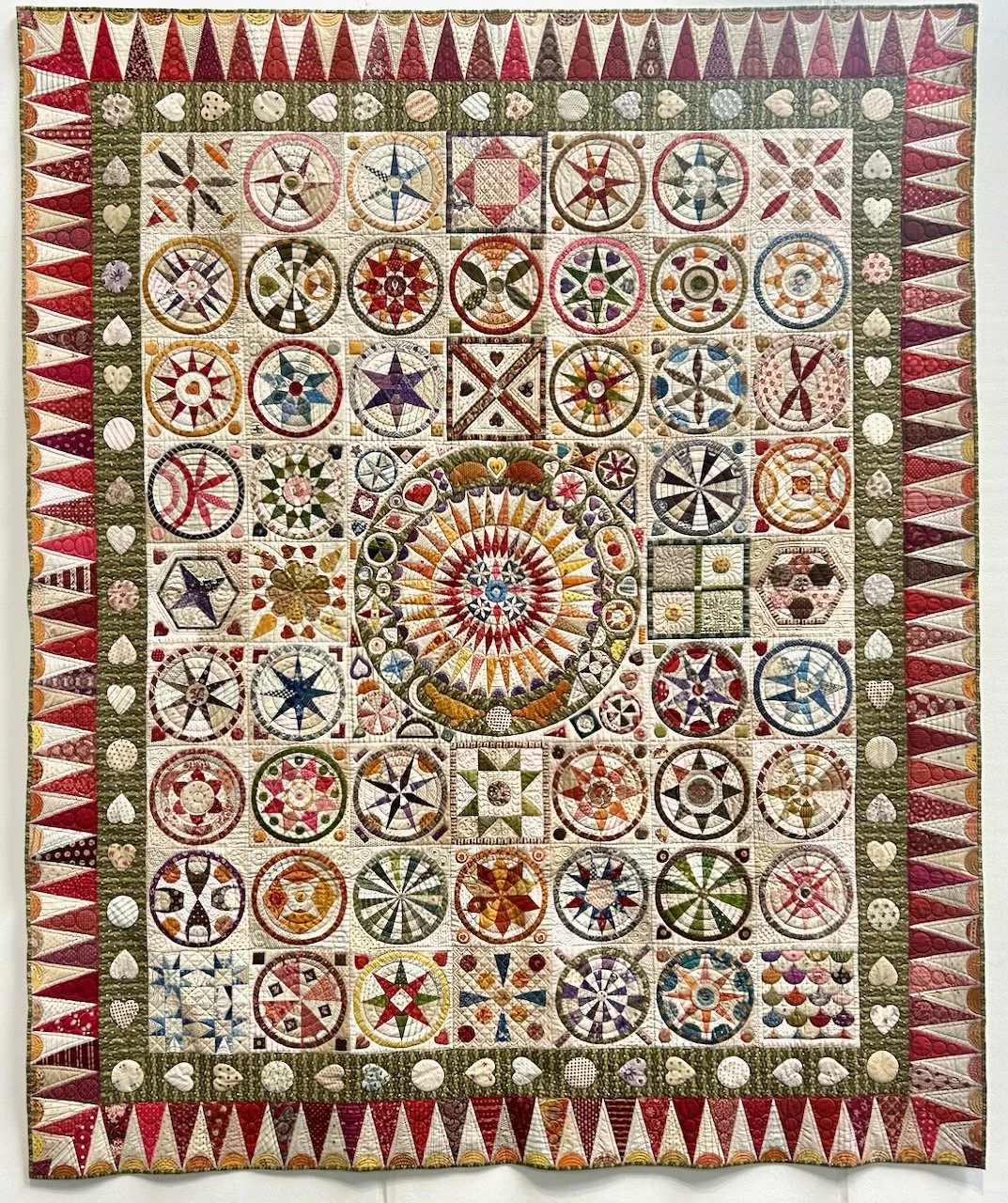
I did warn you, it’s stunning isn’t it? I am rather partial to a Cathedral Window quilt and I’ve long had an idea that I would make one in denim, but I think making one that looks good would be tricky enough so I’m not sure I need to add in the complexity and thickness of denim. I downgraded my ambition and that’s how I landed with my ‘jeans and pyjamas’ quilt on my 2025 list, there’s still some curves and some denim but hopefully in my doable category, although as I write this at the beginning of December I’ve yet to start this one - so maybe it’s optimistic to think this will make it this year, but who knows?!

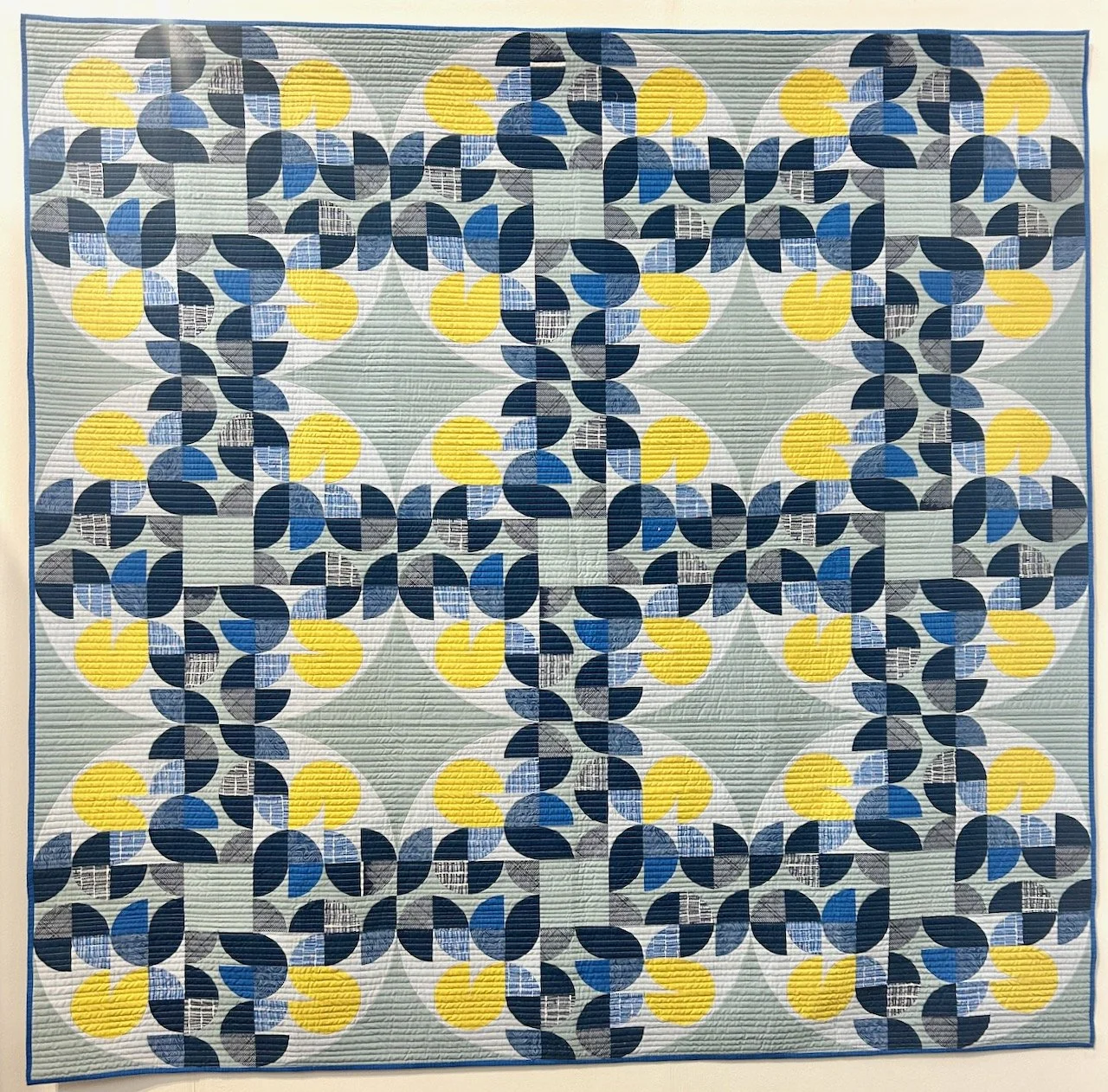
ONE OFF THE BUCKET LIST, VICTORIA MILLER

ONE OFF THE BUCKET LIST, VICTORIA MILLER

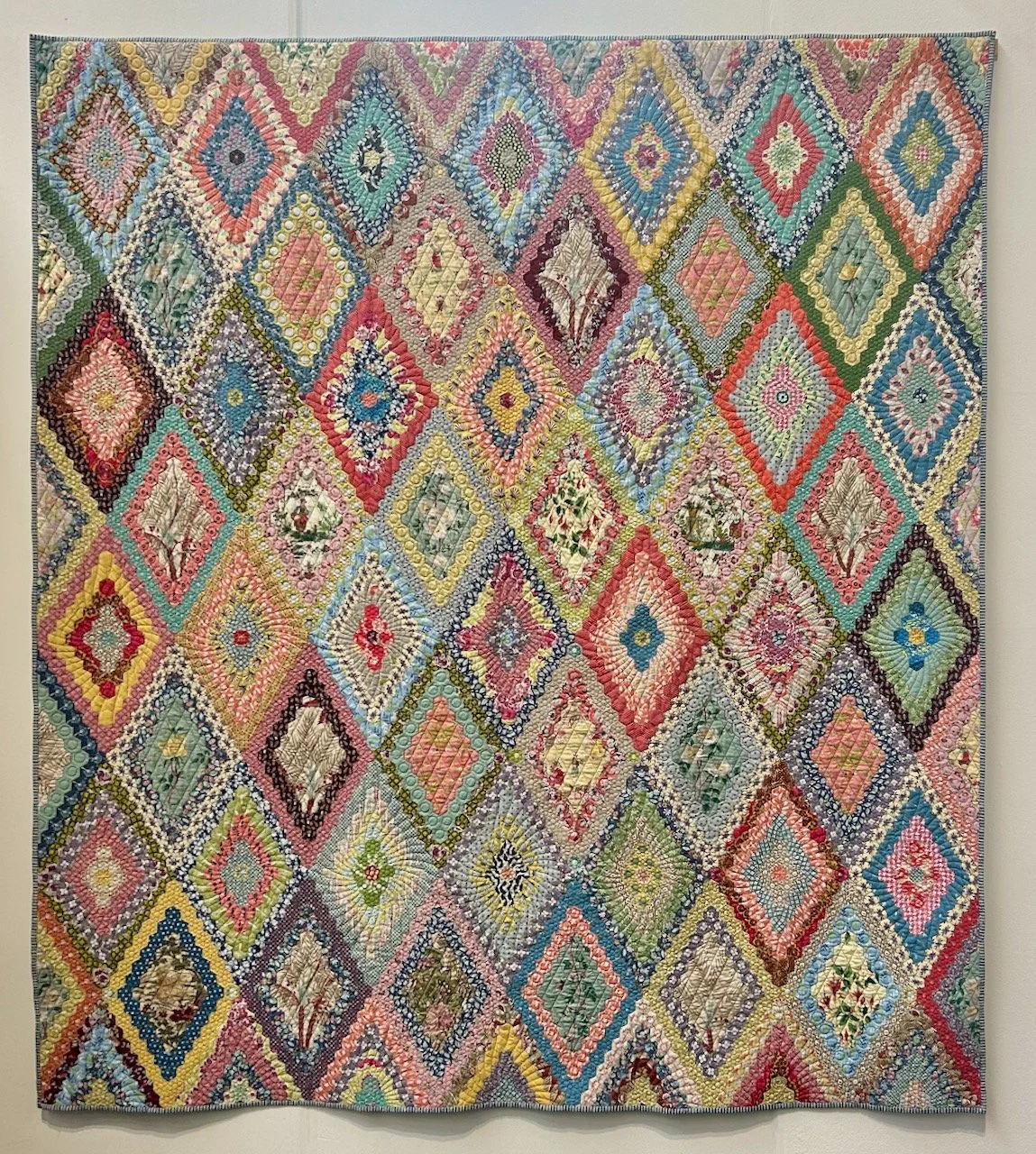
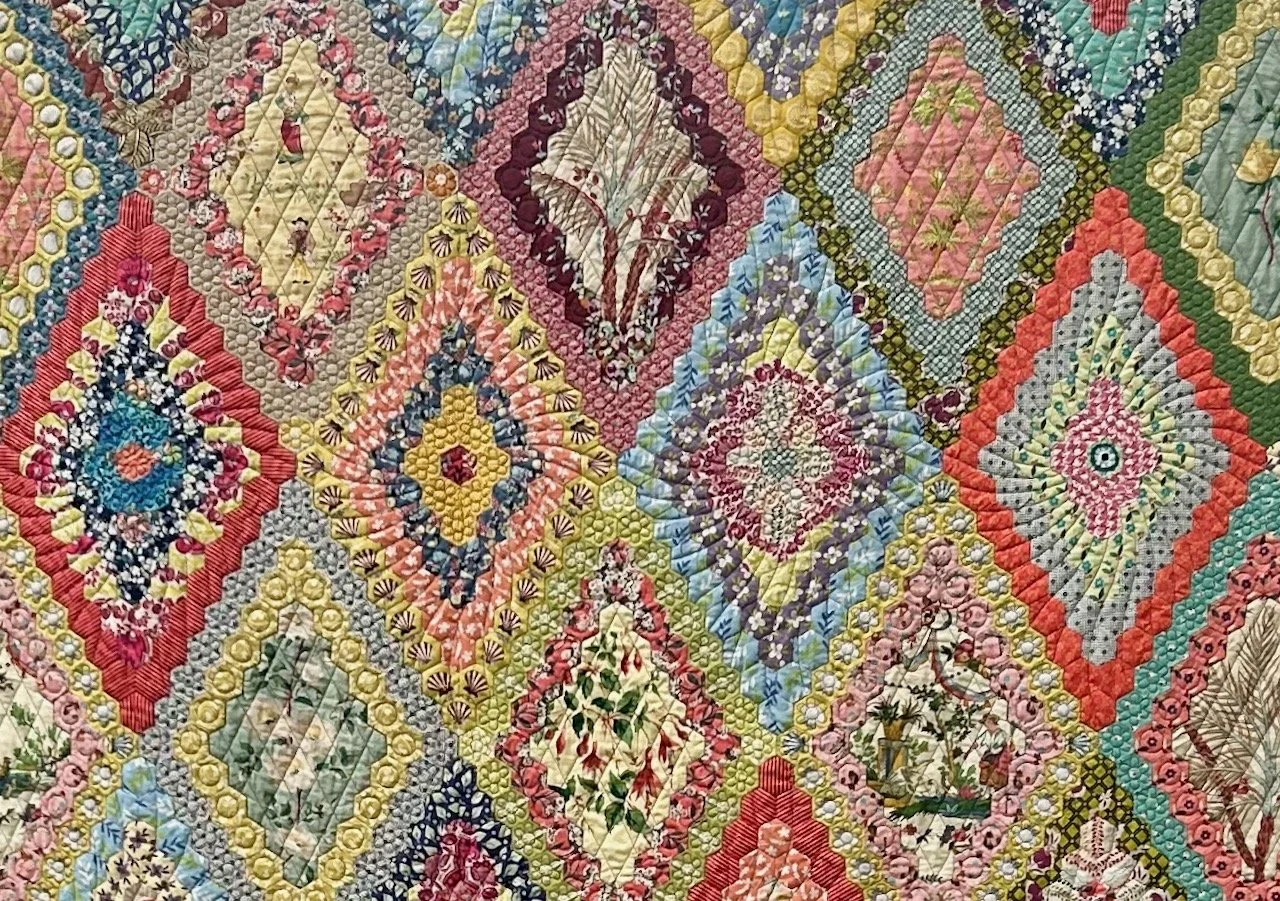
I love the repeating circle pattern, and the uniformity of the white and almost taupe colour in the detailing of the circles, but most of all I love the colour and how much it doesn’t look like it’s made from repurposed materials! I bet those colourful centres hold all sorts of memories, and that’s what really does it for me especially when using old clothes that have been much loved.

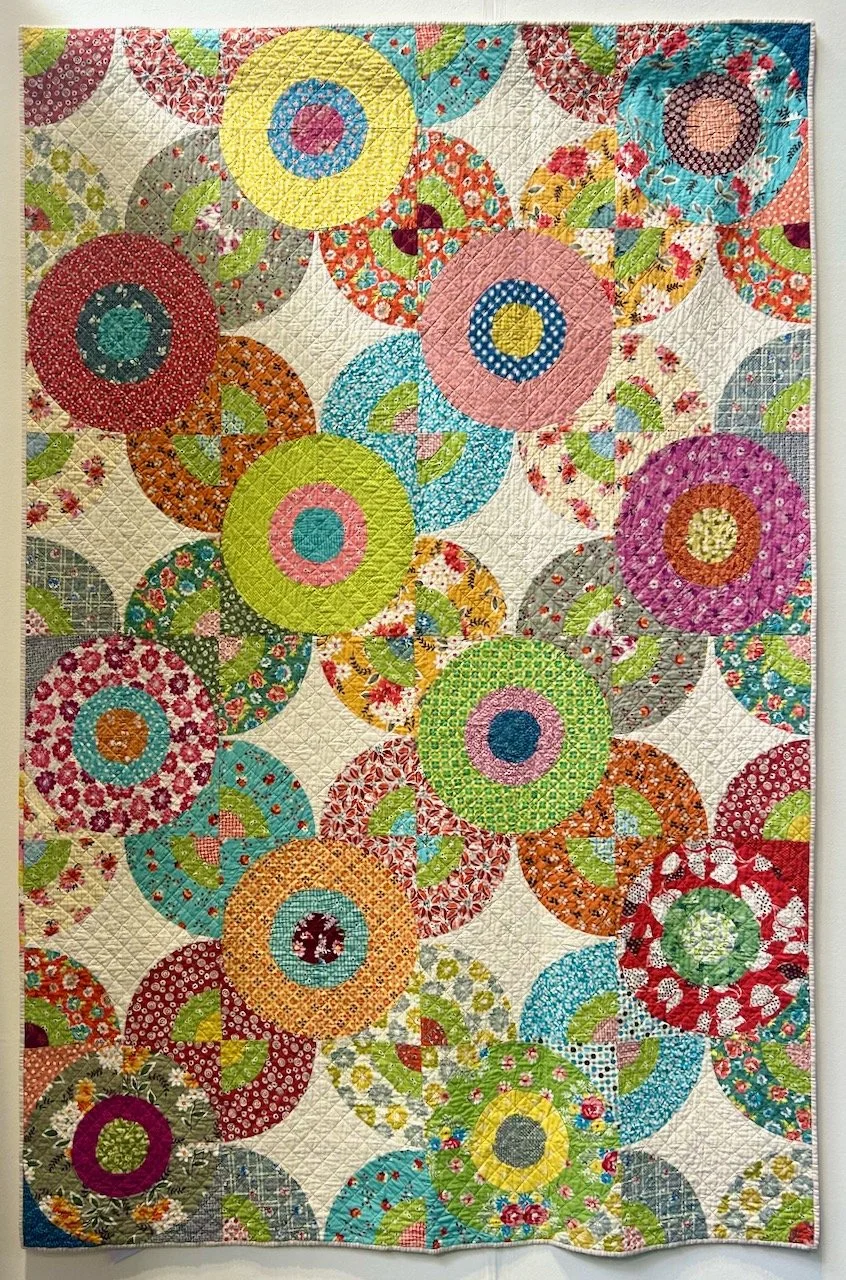
This second quilt I’m sharing is a design I need to remember, as I have a growing pile of 2.5” strips from the quilts I’m making. With clever colour placement this quilt proves that you can use those strips effectively - note made!

ÅLAND, LINNÉA EHN

ÅLAND, LINNÉA EHN

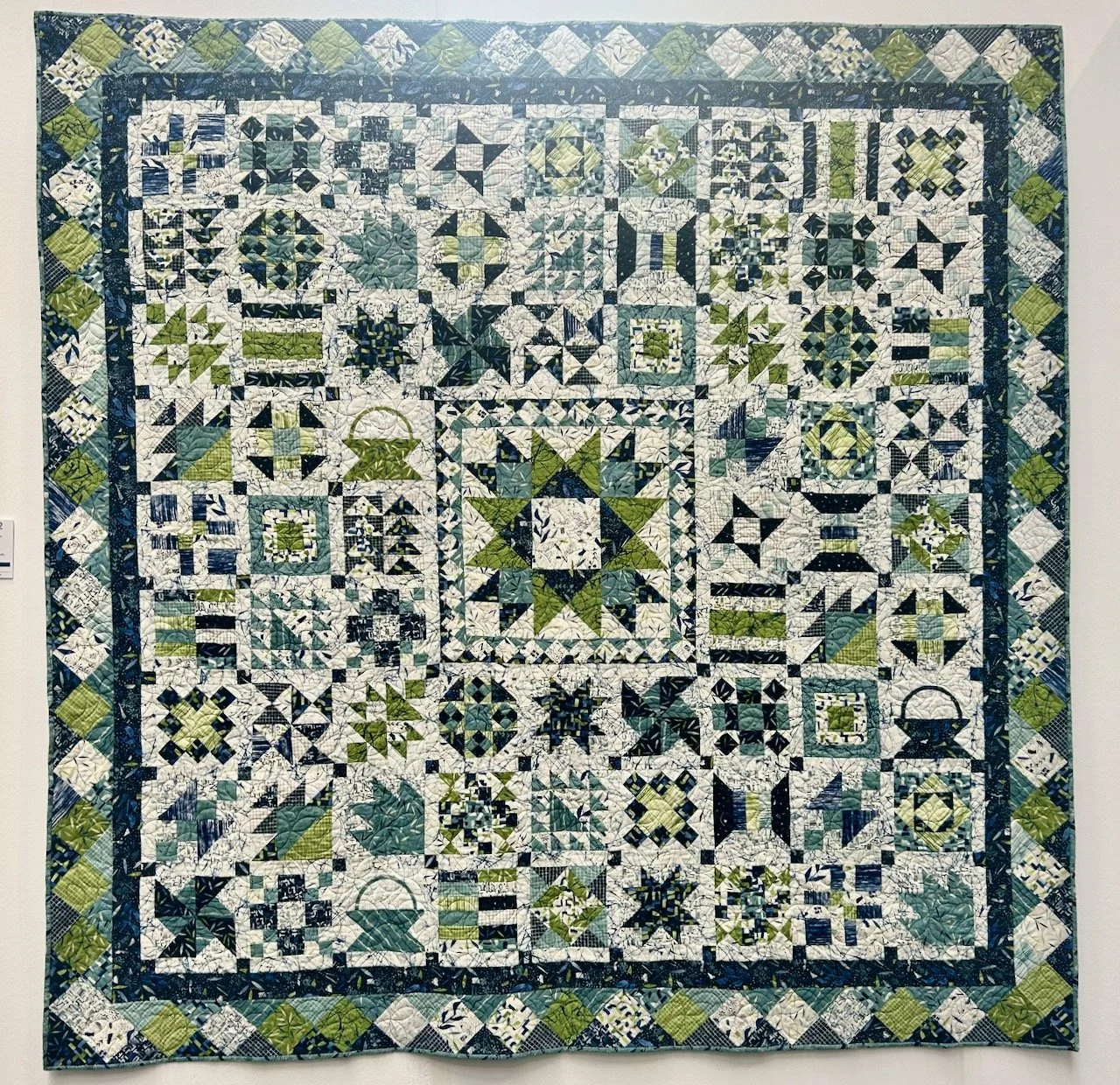
SHIRTSANDO, VICKY HAWKINS

SHIRTSANDO, VICKY HAWKINS

The quilt above looks to have used old shirts in a really effective way, but again with a fairly simple pattern. I was drawn to this one by the circles in the quilting, and I suspect this is the quilt that influenced me to try something similar with my Half the Scraps quilt, but way less successfully!

Looking at this again now it looks as if those circles have been hand quilted, and I suspect that may be the way to go if I see circles in my quilting future. Those smaller fabric circles look to be appliqued on, which is another technique I’m trying in my latest quilt.

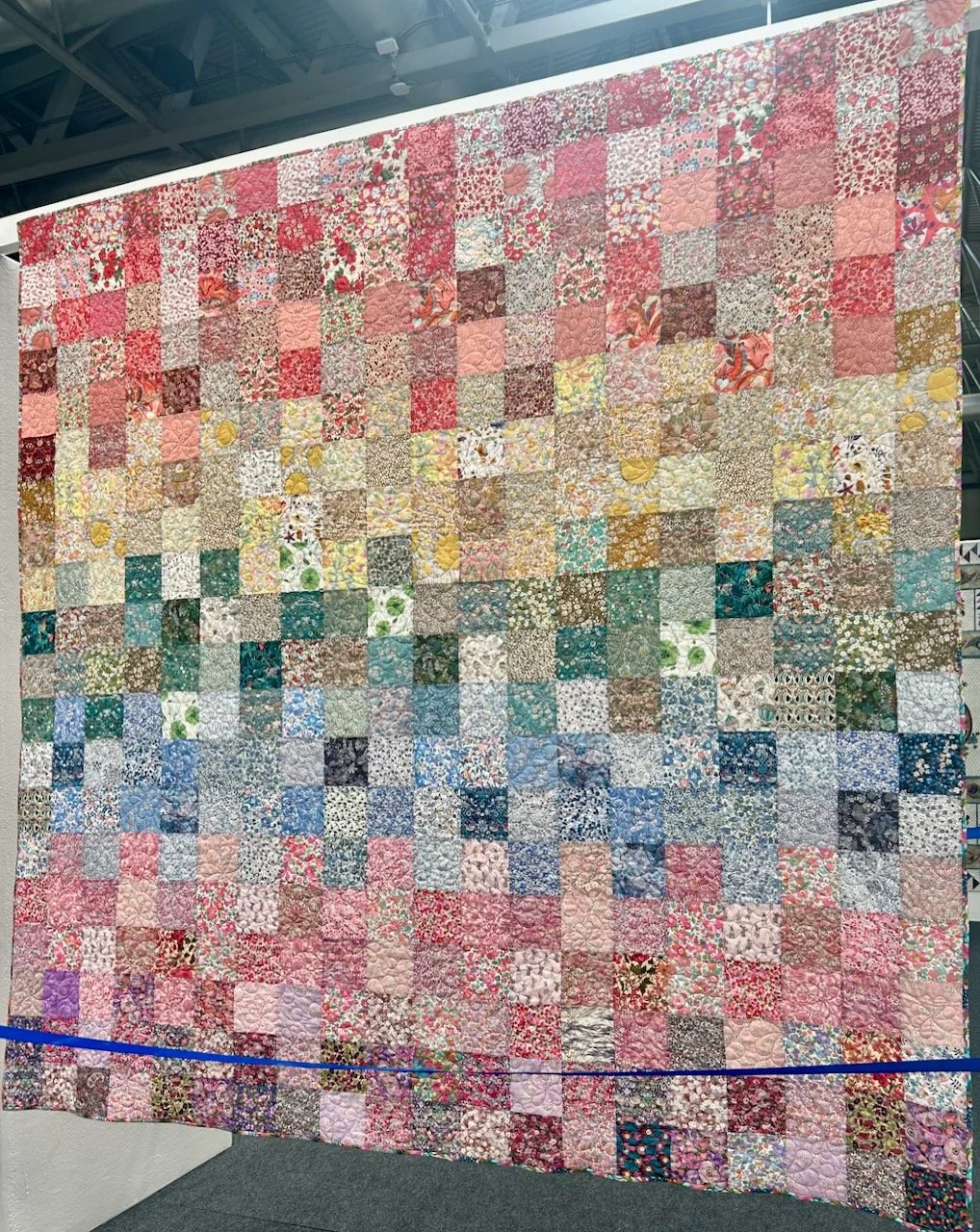
This next quilt also blew me away, I love a colour graduating quilt - but this one was huge and double sided. It was on display so you could view both sides, and while I’m sure I took a photo of the other side, I can’t find it for the life of me - I’m sure though it was equally as impressive.

ECLECTIC BECKY, ELIZABETH BARKER

ECLECTIC BECKY, ELIZABETH BARKER

But so many small squares, and so many seams to match up - but definitely a wow, wow, wow from me.

The final quilt that I’m sharing in this category (and there were more than I can include in this post) is this denim masterpiece with an equally clever title. The second picture shows the detail of the quilt, and the rivets, buttons, button holes and zipper sections used so effectively.

RIVETING RESTRICTIONS - FROM WASTE TO WONDER, MARJA MATIISEN

JUDGES’ CHOICE - RIVETING RESTRICTIONS - FROM WASTE TO WONDER, MARJA MATIISEN

RIVETING RESTRICTIONS - FROM WASTE TO WONDER, MARJA MATIISEN

RIVETING RESTRICTIONS - FROM WASTE TO WONDER, MARJA MATIISEN

It rightly deserved its Judges’ Choice label which admired the mind boggling texture, and how the madness is beautifully tamed by the dark central circle. It also called the quilt ‘Genius!’ and I have to agree, I think this was easily one of my favourite quilts at the show - and I thought I loved the Cathedral Windows quilt at the top of this post, this one I loved twice as much.

If you enjoyed this post from my visit to the Festival of Quilts 2025 then please do check out my other posts from the show. Even though my mind was blown by the sheer volume of quilts on display, I’m pretty sure I’ll be going again!

A Stitch in Time with The Quilters' Guild

One of the first galleries that we stumbled across and spent time looking around was hosted by The Quilters’ Guild who were displaying some amazing items from the Quilt Collection, featuring items from the domestic Homefront, to commemorate the 80th anniversary of the end of the Second World War.

The items were displayed in chronological order starting on the eve of War with a range of items made during the 1930s and my favourites, and which I’m including here, are the patchwork pieces which show the typical fabrics and prints of the day.

Clearly the outbreak of war saw dramatic domestic changes with everyday life geared towards making what precious resources were available last as long as possible, and with fabrics and clothing rationed. As the war progressed and bombing caused destruction to homes and possessions charities such as the Canadian Red Cross Society became vital and thousands of quilts were sent over to Britain from anonymous needlewomen abroad.

At the end of the war patchwork and quilting became less popular as the were often seen as ‘making do’ and with the new age of fashionable style in clothing and domestic interiors becoming available it’s easy to see why these traditional methods were considered old fashioned. Alongside this more women worked outside the home as the decade progressed and therefore had less time, skills and inclination to continue tradition, and that’s when the ready made shiny eiderdowns and candlewick bedspreads came into their own.

I can remember having my eiderdown as a child, and I definitely remember the candlewick bedspreads - in fact I can remember when duvets, or continental quilts as they were called then, became the rage, but I digress!

The quilts in this part of the show were amazing as pieces of needlework, and then even more amazing for the time in which they were made.

War, Peace and Needlework

The colourful mosaic patchwork quilt top below was made from 1 inch squares of printed fabric arranged in a ‘Trip around the world’ block design, and according to the notes alongside the quilt, it still has the thick card templates attached in the reverse.

SMALL SQUARES TOP, 1930-1939, MAKER UNKNOWN

Although the quilt has been neatly finished at the edges, it doesn’t have a backing. A closer look at the fabrics reveals some of the details of the fabrics used, which includes 1930s dress prints and furnishing fabrics.

SMALL SQUARES TOP, 1930-1939, MAKER UNKNOWN

This colourful log cabin patchwork was made during the 1930s and again uses dress fabrics and furnishing fabrics to create the light and dark tones for the log cabin block - and if the block looks vaguely familiar and you think you’ve seen here before, then it was probably my charity quilts which use log cabin borders that jogged your memory.

LOG CABIN COVERLET, 1930-1939, MAKER UNKNOWN

These log cabin blocks though were sewn by hand, joined together and the seams have been opened and flattened on the back, then the seam allowance has been sewn down with a herringbone stitch - so this quilt wasn’t going to come apart.

This next quilt is an example of mosaic patchwork which is complex and individual in style. The central circular medallion is thickly padded with a coarse open weave fabric on the reverse holding the wadding in place. It is thought that the maker originally intended to make a cushion but then extended it into a larger coverlet.

MOSAIC PATCHWORK, 1930s - 1940s, INA MACRAE

This was made by Ina MacRae who used materials from her scrap bag, recycled garments and remnants from the family’s haberdashery business. Ina never married, although she was engaged for a short time during the 1940s. The family story is that she broke off the engagement, and presumably lost enthusiasm for her patchwork project, leaving it unfinished with papers intact.

The quilt below is a Canadian Red Cross Society quilt and is made from alternate 16 patch squares and plain squares of orange floral print cotton, and was one of five given to Miss Alice Treeby’s family after she had returned from evacuation.

MISS TREEBY’S QUILT, 1939-1945, CANADIAN RED CROSS SOCIETY

FRIENDS WAR VICTIMS RELIEF QUILT, 1939-1945, MAKER UNKNOWN

This striking stars in square block quilt includes stars which are ‘crazy patchworked’ using various cotton print fabrics and bears the label of the Friends War Victims Relief Committee, an official arm of British Quakers set up to relieve civilian distress in times of war. The group has a long history dating back to 1870 and with five revivals, the last being in 1940, before its name was changed to the Friends Relief Service in 1941.

FRIENDS WAR VICTIMS RELIEF QUILT, 1939-1945, MAKER UNKNOWN

Crazy patchwork blocks feature again in this quilt - and that makes a lot of sense with materials hard to come by, but it could also indicate that it was made by a group of women in the Canadian Red Cross. Blocks were often made at home to standard sizes at home, then brought into the Red Cross premises to be joined together and finished off with materials supplied in bulk by the society.

V for VICTORY QUILT, 1939-1945, MADE BY CANADIAN RED CROSS SOCIETY

This one has been machine stitched, and uses ‘Patriotic Prints’ - look for the white V on the red/blue background - in the V there’s morse code printed ‘dot dot dot dash’. These prints were printed with various wartime themes and often endorsed by female celebrities to increase their popularity and made into clothing, and as we can see above incorporated into quilt tops.

This quilt was give to the donor’s mother-in-law who lived in West Croydon where her house was damaged 5 times during the bombing raids, and it was during that time at some point that she was given this quilt.

The whole exhibition was full of poignant stories, alongside the fantastic historical quilts, which made me look at our lives today and realise how very fortunate we are that such sacrifices were made for us. We all know of stories from the First and Second World Wars, but somehow seeing them through these quilts gave a perspective that is rarely seen.

If you enjoyed this post from my visit to the Festival of Quilts 2025 then please do check out my other posts from the show. Even though my mind was blown by the sheer volume of quilts on display, I’m pretty sure I’ll be going again!

Jo Avery's bright and brilliant improv quilts

In addition to the many, many quilts on display at the Festival of Quilts there’s also galleries dotted around the exhibition space, and one of my favourites was Jo Avery’s Textile Gallery. I love her brightly coloured bold quilts and it was great to see them up close and first hand.

The gallery was in celebration of Jo’s new book - Journey to the Centre of a Quilter in which she shares her inspiration and the importance of play. I don’t have the book, but it’s definitely a contender for my Christmas List - though I’m under no illusion that my quilts would ever be as fabulous as these, though I think they’d have their own level of fabulousness!

JO AVERY’S TEXTILE GALLERY, FESTIVAL OF QUILTS 2025

Even in these smaller spaces the walls were loaded with quilts, and it was hard to know where to look, or where to start but my feet led me to those that most appealed to me, funny how that happens when our brains aren’t sure isn’t it?

JO AVERY’S TEXTILE GALLERY, FESTIVAL OF QUILTS 2025

What caught my eye about the quilt above is the detail in the quilting, which stands out with the light thread on the dark background. And then looking at the main motif, and seeing the amount of detail there too. Totally mind blown.

I loved the improv quilt below, and then loved it even more when I saw it was called Jukebox.

JUKEBOX, JO AVERY’S TEXTILE GALLERY, FESTIVAL OF QUILTS 2025

But again the detail is mind blowing, and the size of this one - it’s 142cm by 217cm - and actually reminds me of a jukebox we had in our childhood home, which was I’m sure, equally as big.

JO AVERY’S TEXTILE GALLERY, FESTIVAL OF QUILTS 2025

What Jo’s quilts made me realise was how simple shapes repeated can be so effective, and look anything but simple as the quilts above and below both demonstrate.

JO AVERY’S TEXTILE GALLERY, FESTIVAL OF QUILTS 2025

JO AVERY’S TEXTILE GALLERY, FESTIVAL OF QUILTS 2025

And when those shapes are repeated and mixed with other shapes such as the houses or the wavy landscapes below, they become something truly fantastic.

POPLARS, JO AVERY’S TEXTILE GALLERY, FESTIVAL OF QUILTS 2025

This one brought me straight back to that time I tried quilting in a circle, which was one of the most stressful quilting sessions I’ve had so far, but this one makes me want to try again. Though on a much smaller scale!

JO AVERY’S TEXTILE GALLERY, FESTIVAL OF QUILTS 2025

What I also liked is how Jo’s style of quilting also works for flower shapes, and this Dream Flower quilt below is stunning in its boldness - I’d say simplicity, but there is nothing simple about the detail here, as each petal contains a different improv pieced or organic applique pattern.

DREAM FLOWER, JO AVERY’S TEXTILE GALLERY, FESTIVAL OF QUILTS 2025

The last quilt I’m sharing here today is this Giant Trilobite (which are extinct marine arthropods - I just had to Google it) and once again it features the bright colours, the circles and more improv pieced and needle-turn applique patterned segments.

GIANT TRILOBITE, JO AVERY’S TEXTILE GALLERY, FESTIVAL OF QUILTS 2025

Aren’t they all amazing?

If you enjoyed this post from my visit to the Festival of Quilts 2025 then please do check out my other posts from the show. Even though my mind was blown by the sheer volume of quilts on display, I’m pretty sure I’ll be going again!