Thinking of the moon and stars, and bats...

* I was invited to this year’s Gardeners’ World Live and provided with a pair of tickets to the show, therefore all my posts will be marked as 'Ad’ though as usual my views and opinions are very much my own.

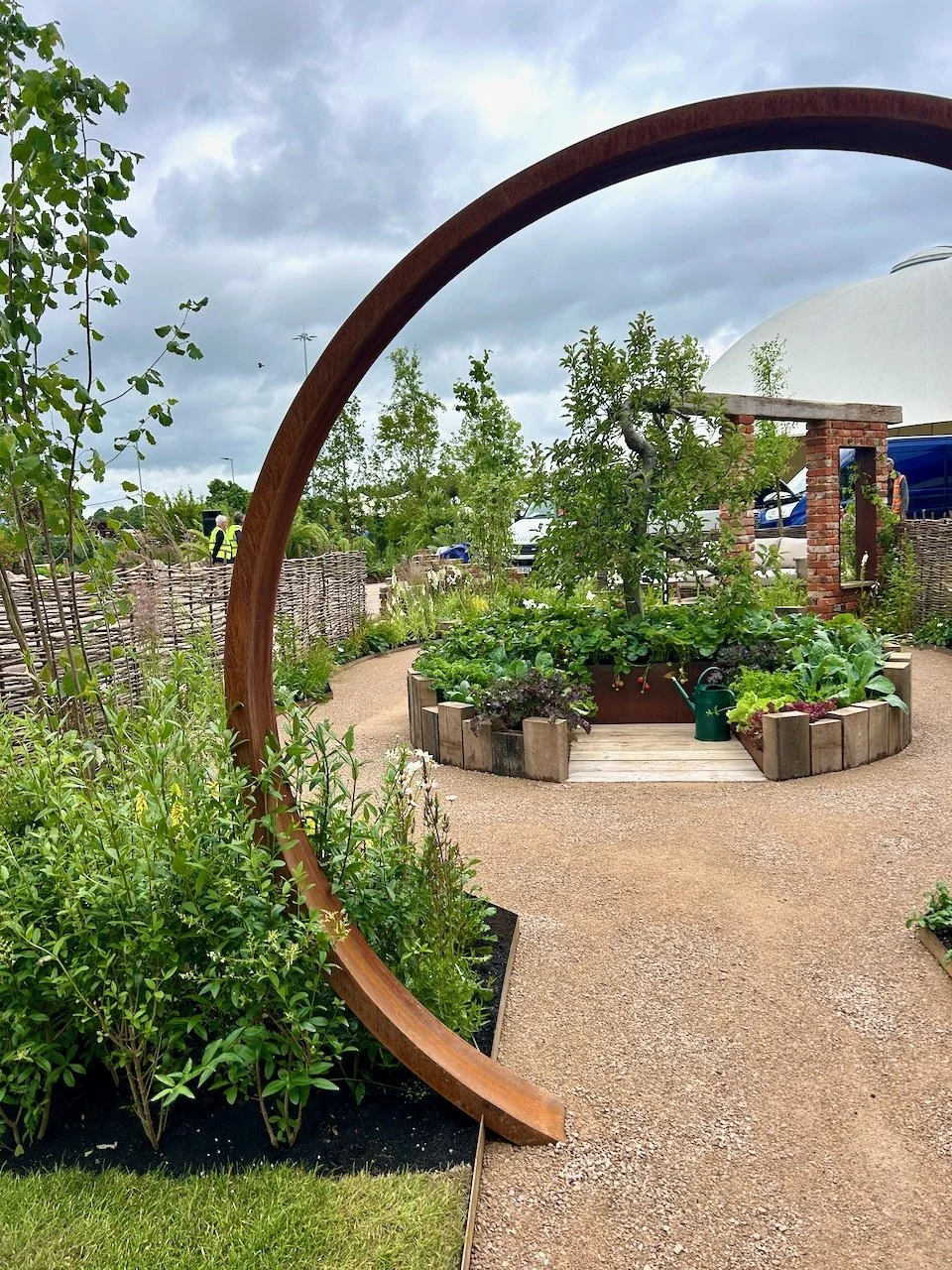
This garden, designed by Wouter Leyssen, was accompanied by and information stand hosted by one of the garden’s sponsors, the Bats Conservation Trust which is what initially caught our attention, but more on bats later.

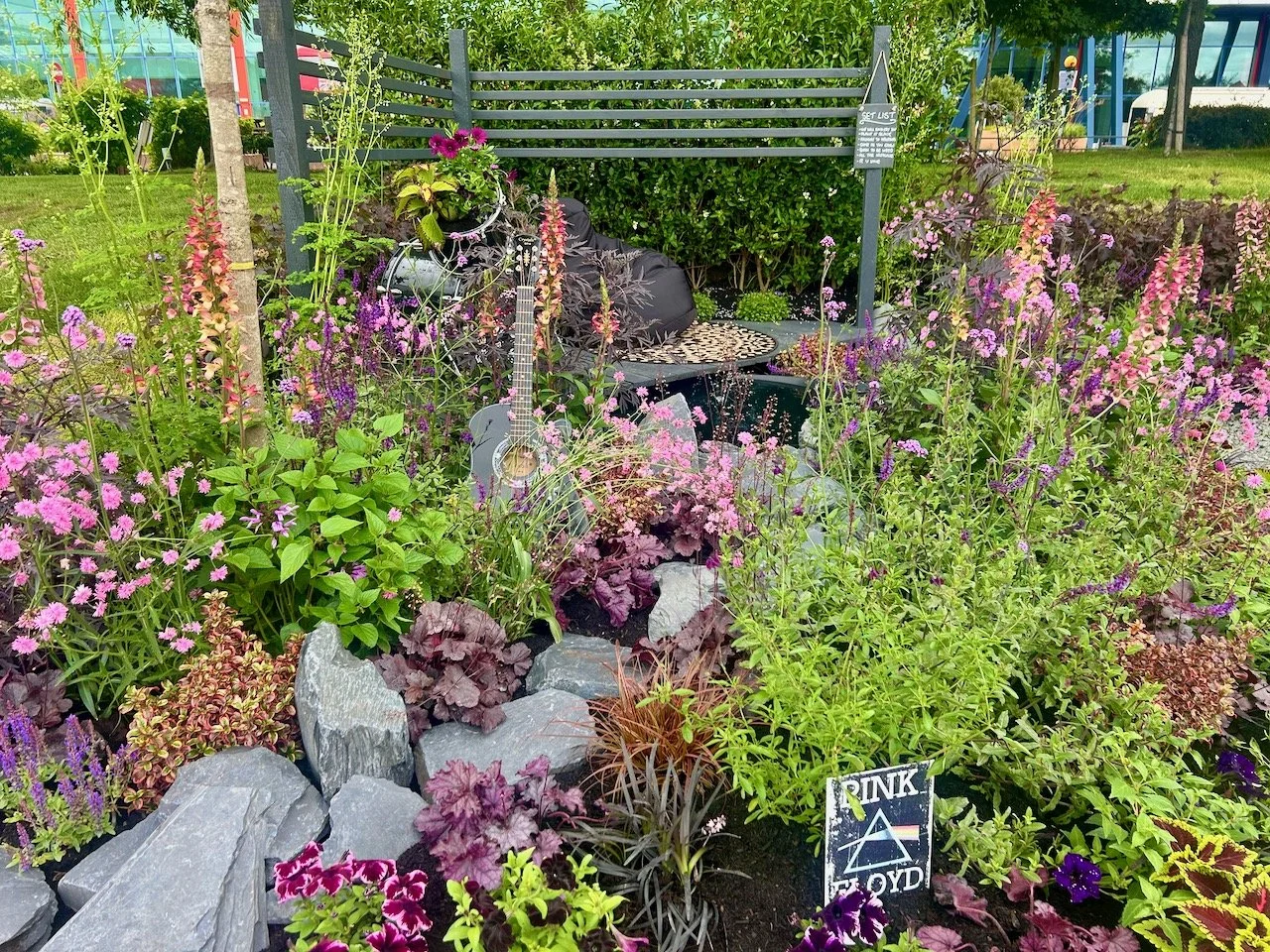
To give this Beautiful Border it’s full title - The Milky Way - Thinking of the moon and stars, connects the night and day garden. Dark leaved plants allow the visitor to experience the alien world of the night garden during the daytime. When the usual green colours disappear, things start to look unfamiliar and look like a different world, and as you can see from the photos below it’s quite effective in replicating those night time shades.
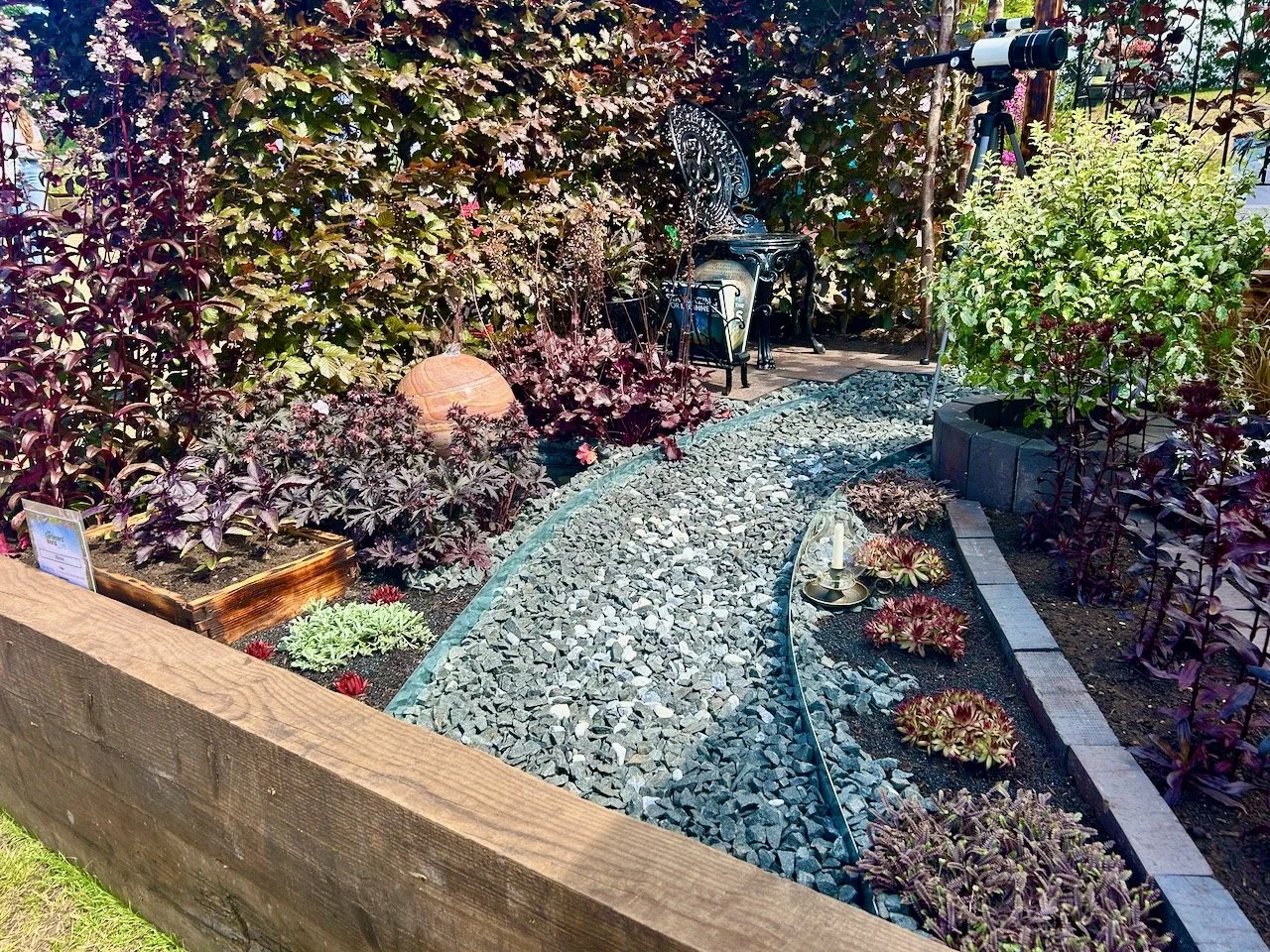
Dark leafed plants either side of the gravel path which repesents the Milky Way

They’re hard to see in these photos, but the borders were scattered with white flowers (look bottom right in the photo below), and these represent the stars.
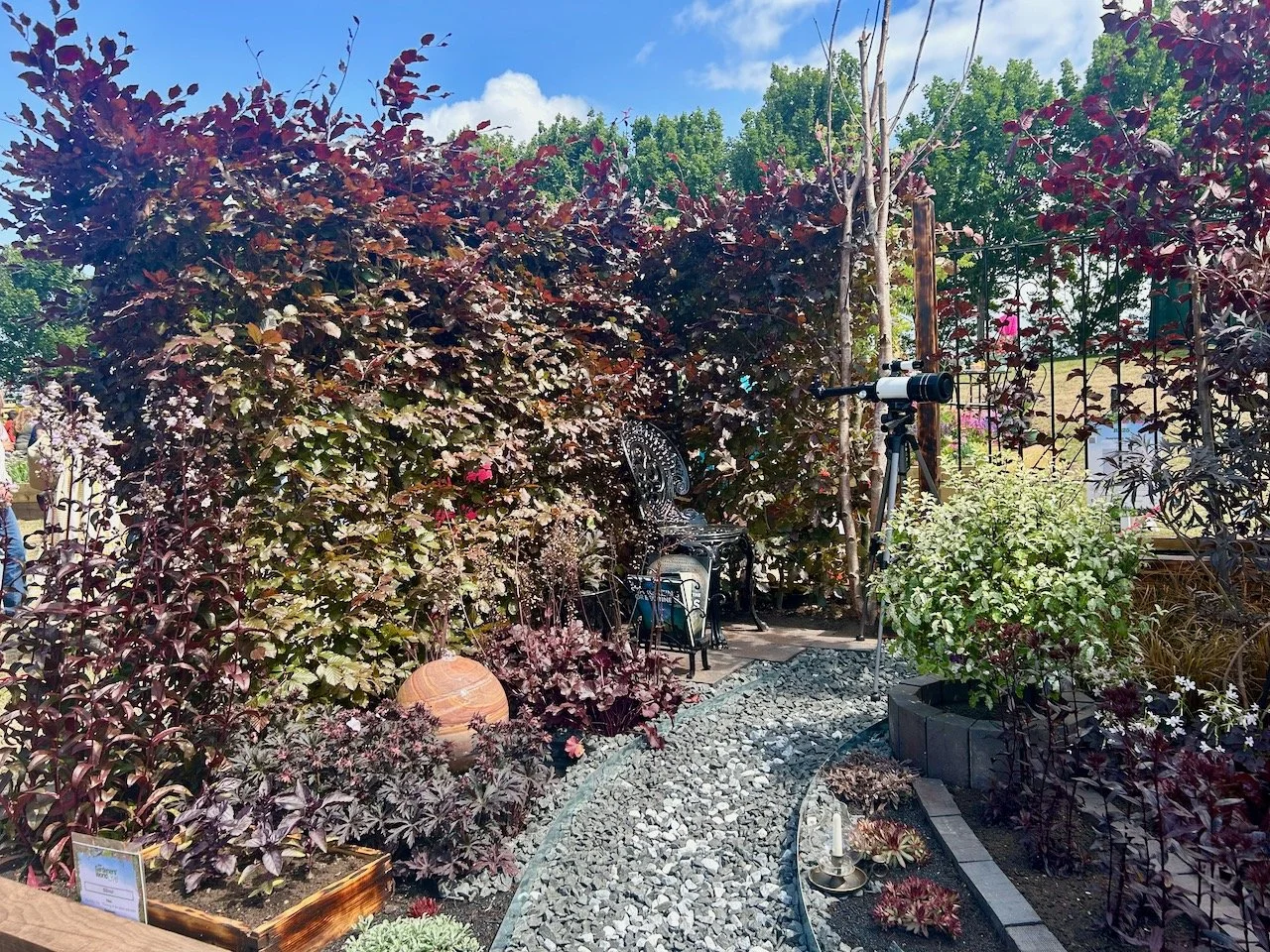
A wider view of the garden and the russet/black leaved hedging.  A black chair at the end of the path complete with a telescope

The white-green spherical evergreen shrub in front of the gate represents the moon, and the gravel path the Milky Way - which just goes to show with imagination almost anything can be replicated into a garden design, doesn’t it?
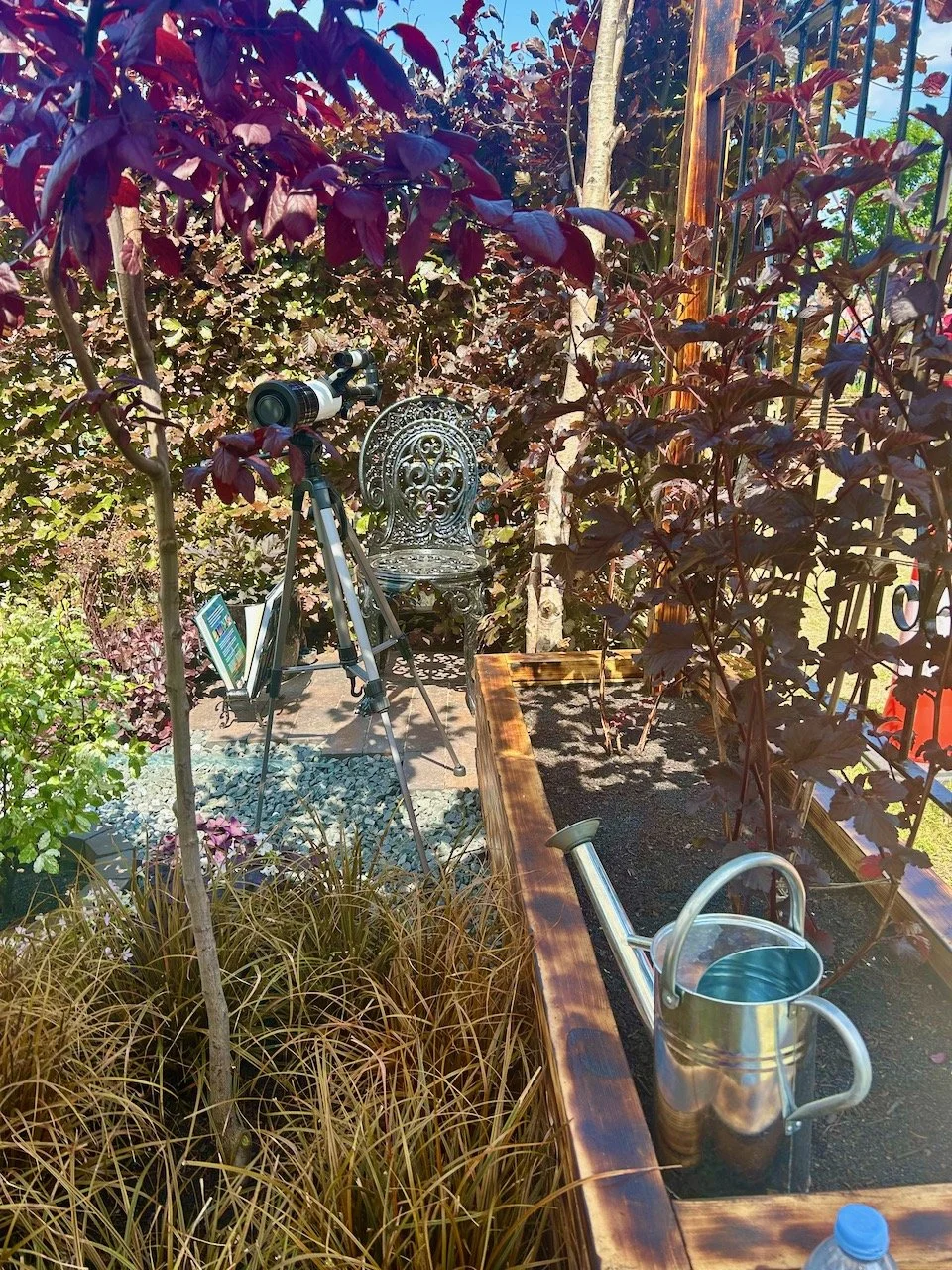
Looking at the chair and telescope from a different angle, with a galvanised watering can in the raised bed in the foreground

And the bats?

Well we were intrigued as we have a couple of bats which fly around our garden at twilight, and were keen to find out more about these peculiar little creatures. It was great to chat to the people on the information stand, and learn a little more about the fascinating species that so many of us are often quite oblivious about.

Did you know…

  • All British bats and their roosts are protected by law

  • A brown long-eared bat can hear a ladybird walking on a leaf

  • Bats are indicative of a healthy, diverse environment

  • A single pipistrelle can eat 3,000 tiny insects in just one night

  • Bats are the only mammal that can fly

  • Bats are gentle, clean and sociable animals

  • All of the 17 breeding species in the UK feed on insects

  • Bats can see but use their ears to hunt in the dark using echolocation

  • With wings folded a tiny pipistrelle could fit into a matchbox

  • Bats only have one baby each year, called a pup

  • Bats don’t make nests or chew wires when roosting in buildings

I didn’t know much about bats, but I did know some of the above. I didn’t realise that they fly all night either, which makes them truly fascinating. We recently joined a ‘bat walk’ organised by our local council at one of their parks, which was just as fascinating.
A fuzzy picture of the echolocator provided for our council organised bat walk

It was great to see so many people of all ages equipped with the provided echolocators (shown in the fuzzy picture above) keen to learn more, wandering around the park at dusk looking out and hoping to spot at least one or two of bats as they emerged for the evening.

From this walk we learnt that the bats in our gardens are most likely the tiny common pippistrelle, whose characteristics are the fast and jerky movements, but even so I’m pretty sure we’ll still be calling them Boris!

* With thanks to Gardeners’ World for inviting me to Gardeners’ World Live, it was quite a show! I’ll be sharing more from my visit to this year’s show throughout the year - I hope you enjoy them as much as I did the show.
Getting to know even more about my Bernina

When I bought my new sewing machine back in January I knew that Bernina offered a day’s training at their London HQ, and while I was keen to go along to this I wanted to take some time to get to know it at my own speed first. And since that post I’ve done quite a few projects and felt I was ready to learn more.

So at the start of this month I headed down to London for the day, prepared to take on more information. I wasn’t sure quite what, but I’d a short list of things I hoped to find out - and the day covered those and a lot more besides.

On the day

There were six of us attending with each of us using the same machine we had at home, which made a lot of sense and made it easier to transfer what we learnt to our own sewing rooms. The ability levels and familiarity with our Bernina machines were varied across the room, and I’m glad I had a good knowledge of using my machine before I went.

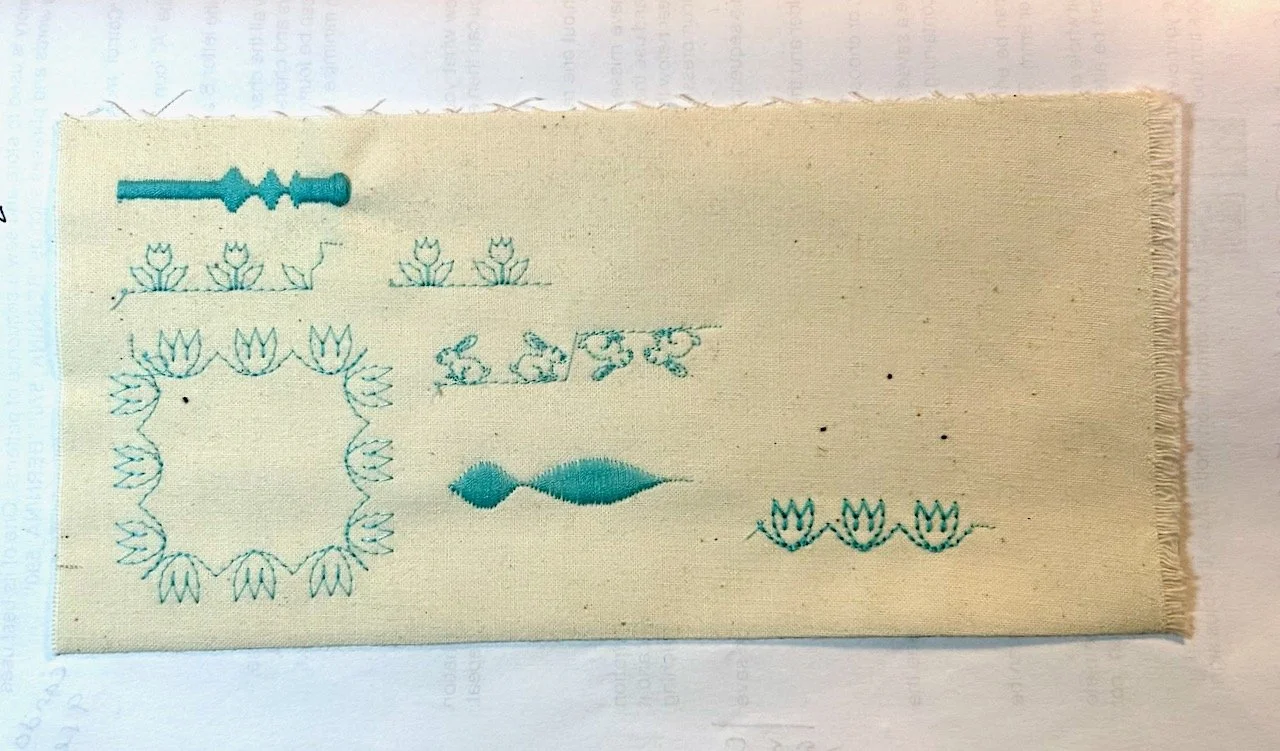
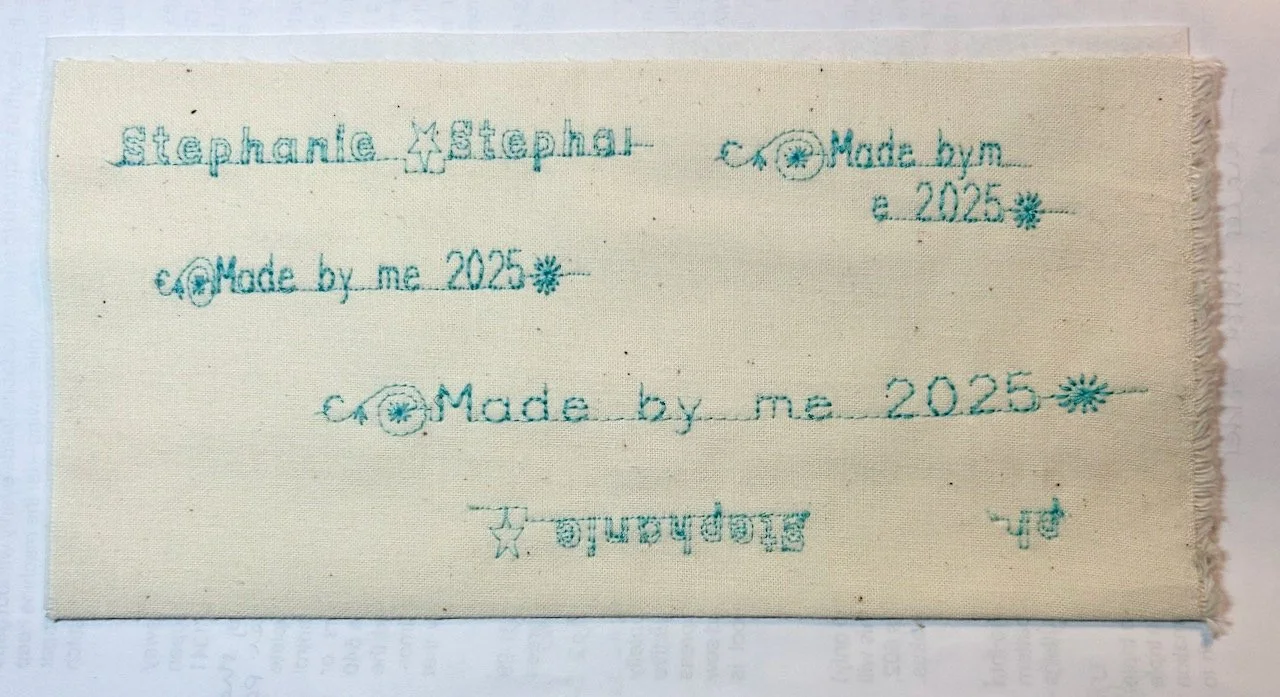
We started with practical stitches and needle positions, as well as learning some tips about automatic stitch sequences before moving onto embroidery stitches - including how to program the pattern end to avoid finishing mid emblem, as well as how to mirror those emblems - look at the bunnies in the image below!

The workbook also worked for me as not only were all the materials provided there was also space in the notes to stick in the sample for that section - and a stick of glue to secure it too.

We learnt how to program stitches into the memory, and to adjust the spacing in those. This has potential for lots of uses, especially for quilt labels so I think I’ll be playing, or rather testing, this out some more.

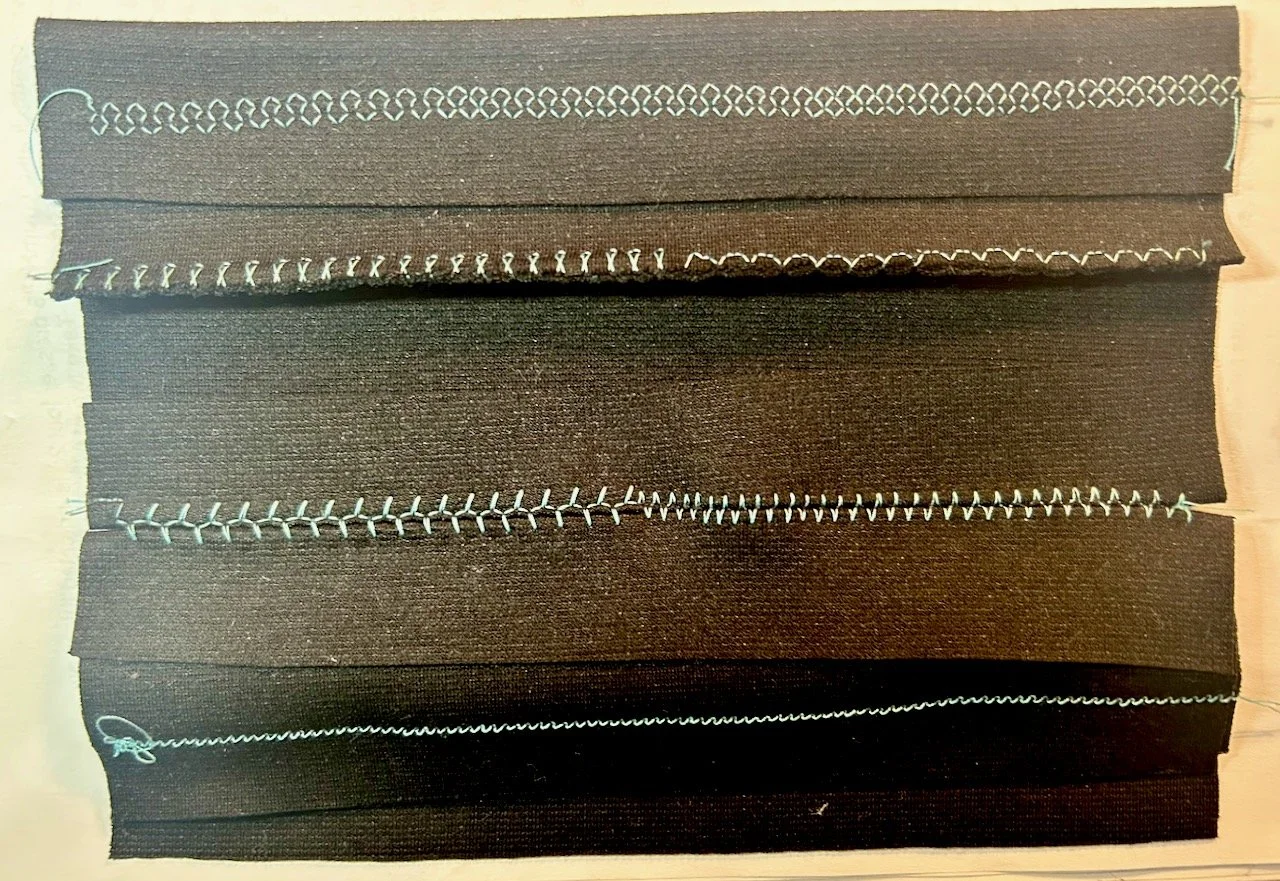
There was a section on stretch stitches, and this was timely as one of my planned makes is using material which is stretchier than I’ve used before.

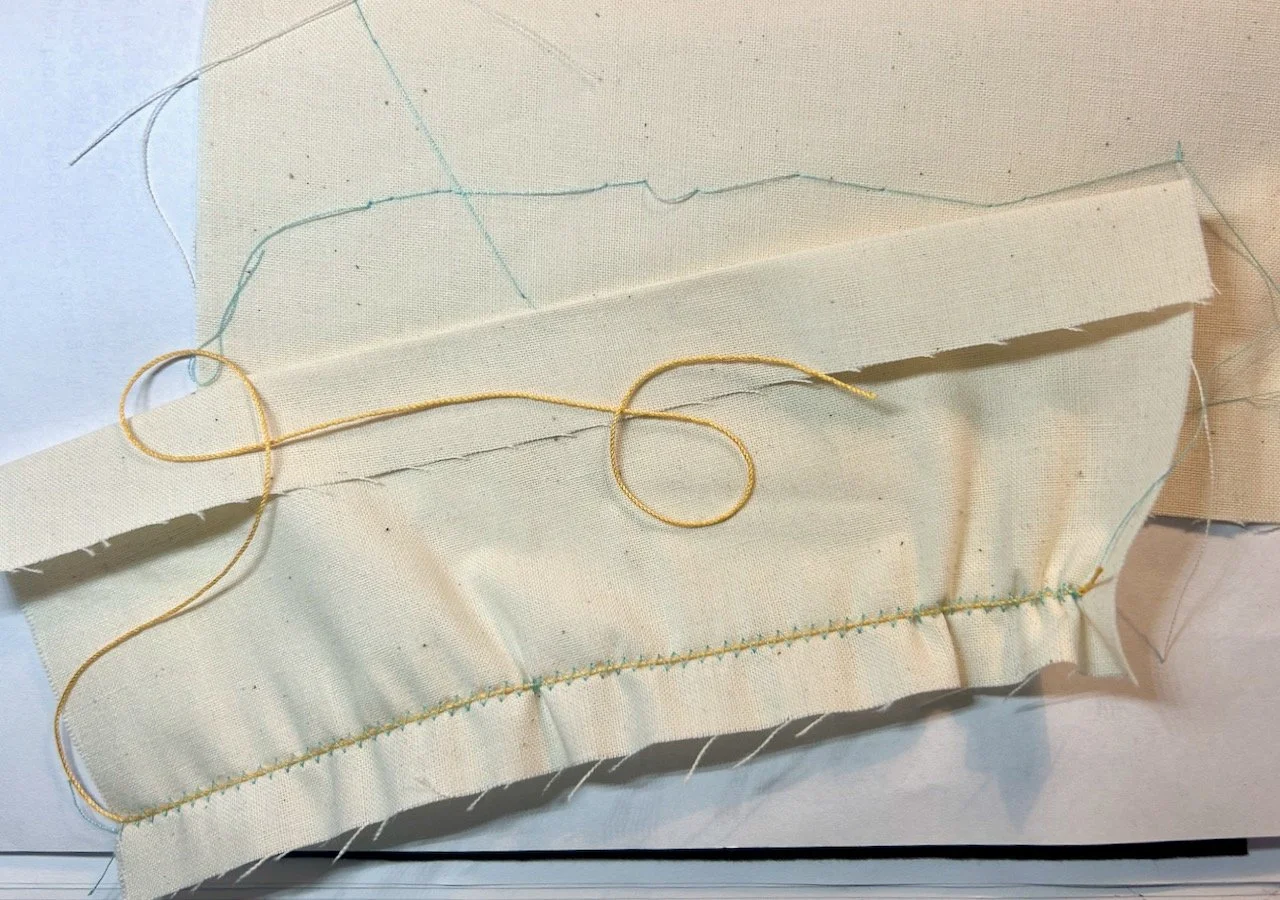
We had a go at gathering using a cord, which was interesting and also basting, the latter I found least useful (it’s the sample at the back in the photo below). I’d tried it previously as I thought it might be useful, I’d ruled it out then and my views haven’t changed.

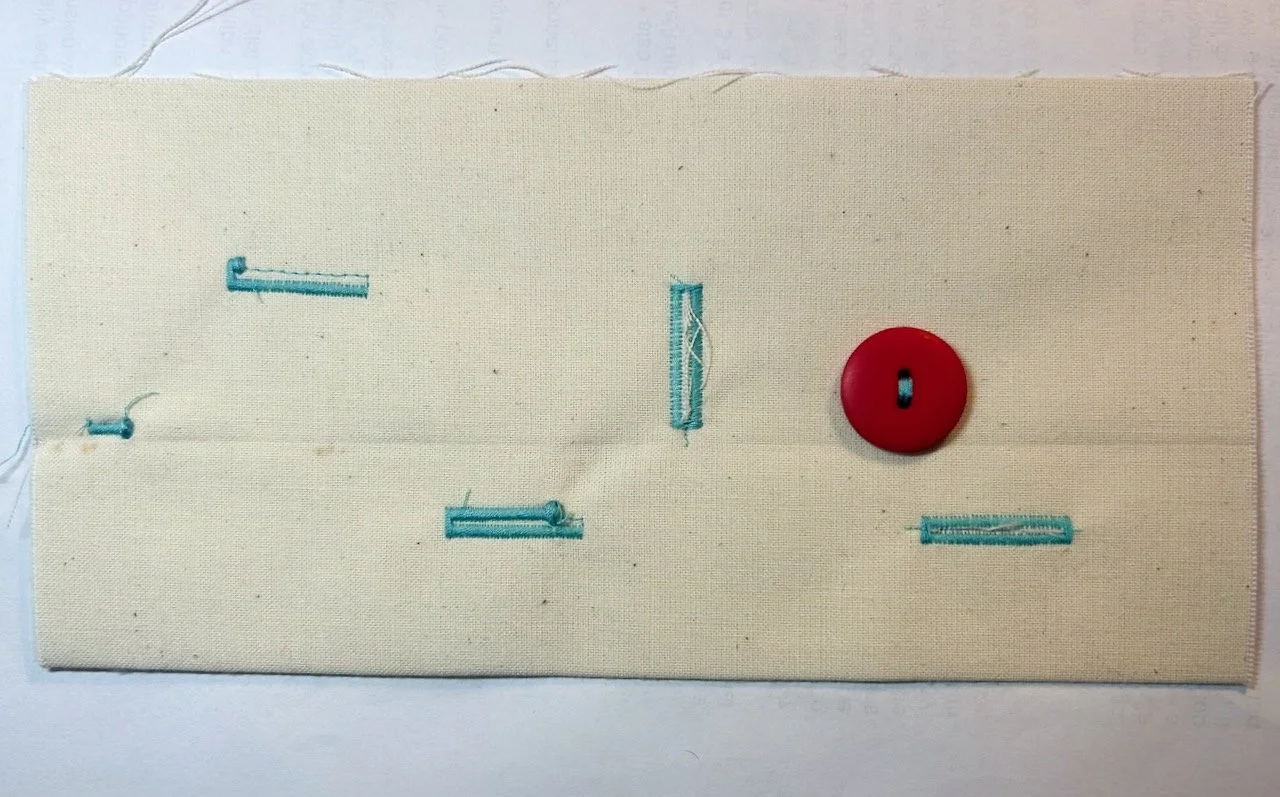
Then we got onto buttonholes. And sewing on buttons, with the machine. I’ve not tried either of these before and I managed to complete my first buttonhole successfully, the next few were a little more problematic but I did manage another one without a knot of stitches, so I know it can be done.

They’re still scary obviously, but like zips they’re something that can be done. I also learnt that the blade on a seam ripper can be used effectively to create the hole for the buttons - who knew?

Buttonholes were on my list, so it was good to get this one ticked off. The other thing on my list was to find out more about the BSR or Bernina Stitch Regulator. People rave about it, and it was one of the selling points to have this included rather than purchasing this separately afterwards, but I didn’t really know why I needed it.

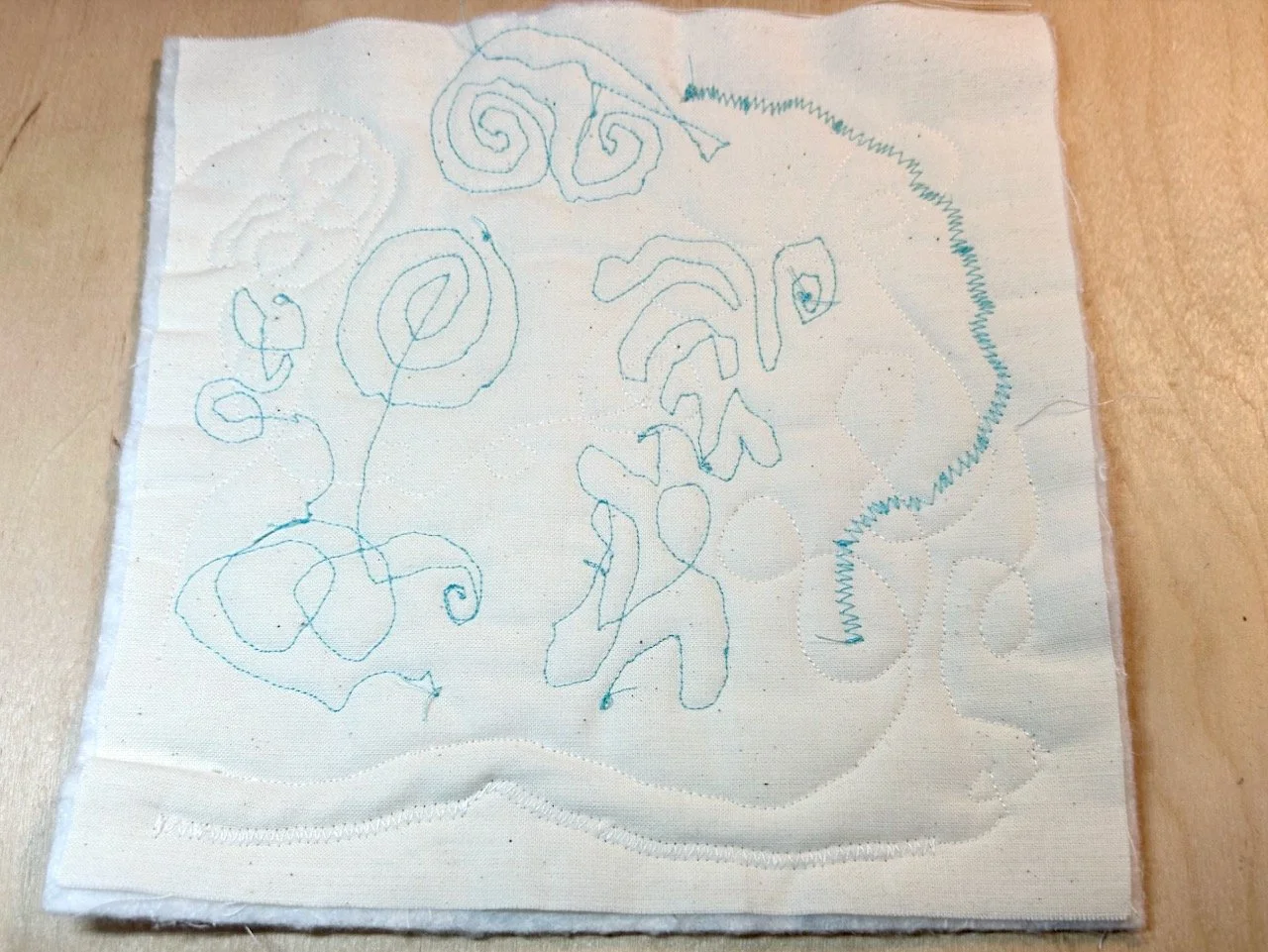
I found out though, and it’s already been out of the box since I’ve been home. On the day we tried it to do some free motion embroidery, but it will also be useful for quilting and the other thing it does is to keep the stitches the same length whichever way you move it.

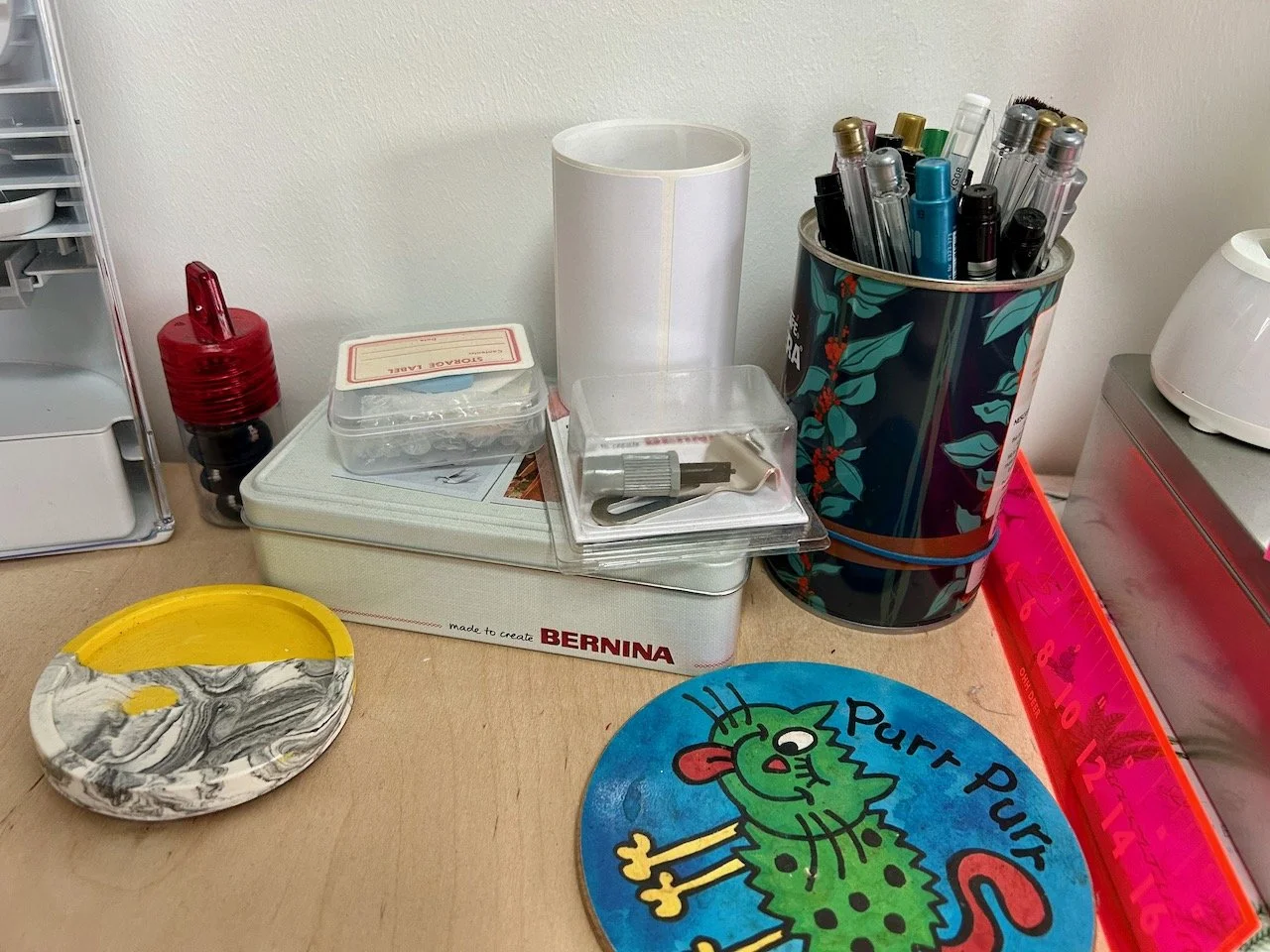
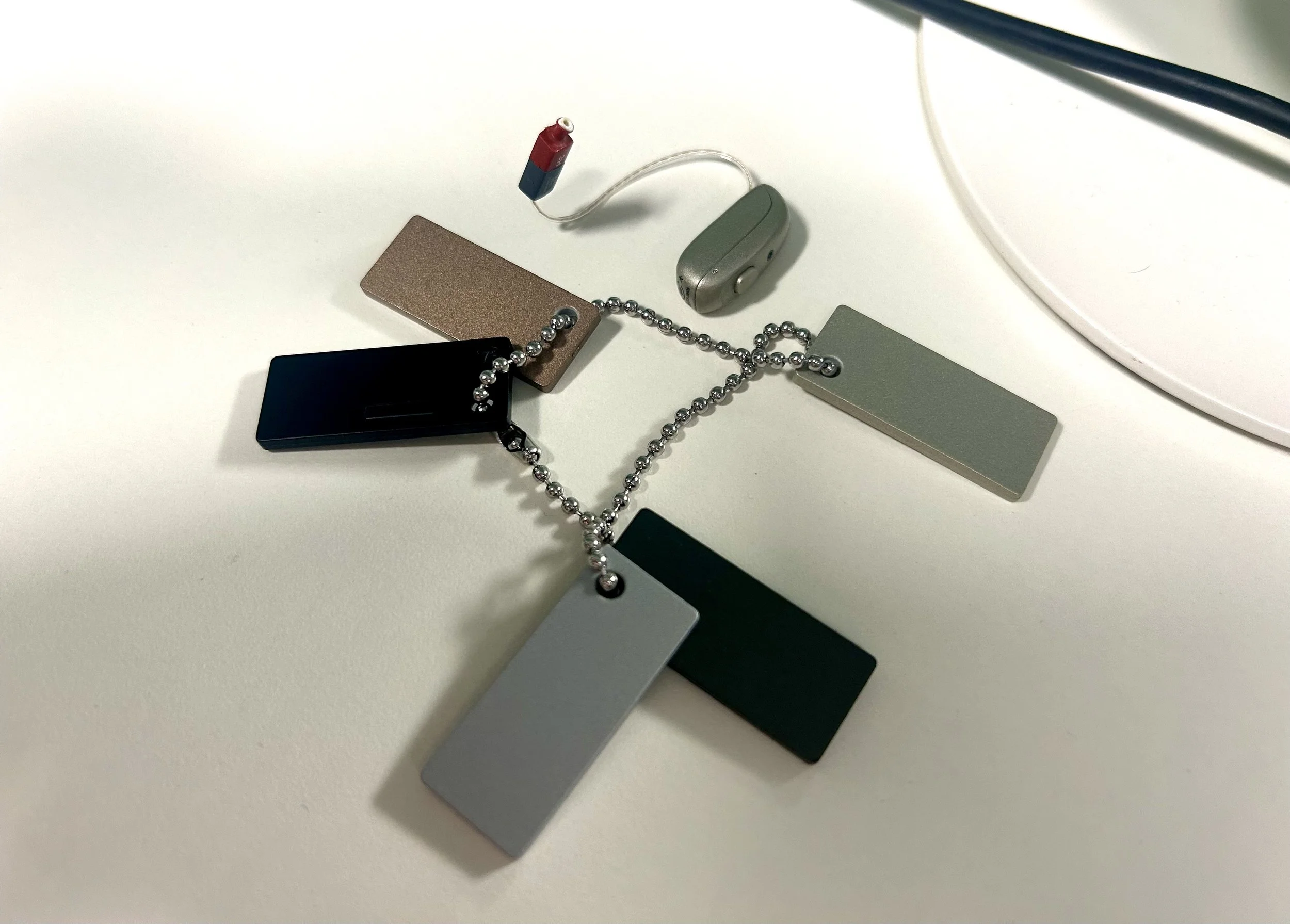
I said in my September Quilty Update that I was hoping to gleam some knowledge on my Bernina Day which I could use for my Floral Fancy and result of results, I did - the answer is to use my BSR. Since I’ve been home I added the white stitching to the sample above, having first dug the BSR (it’s in the tin) out from the arrangement on my desk!

Since the day

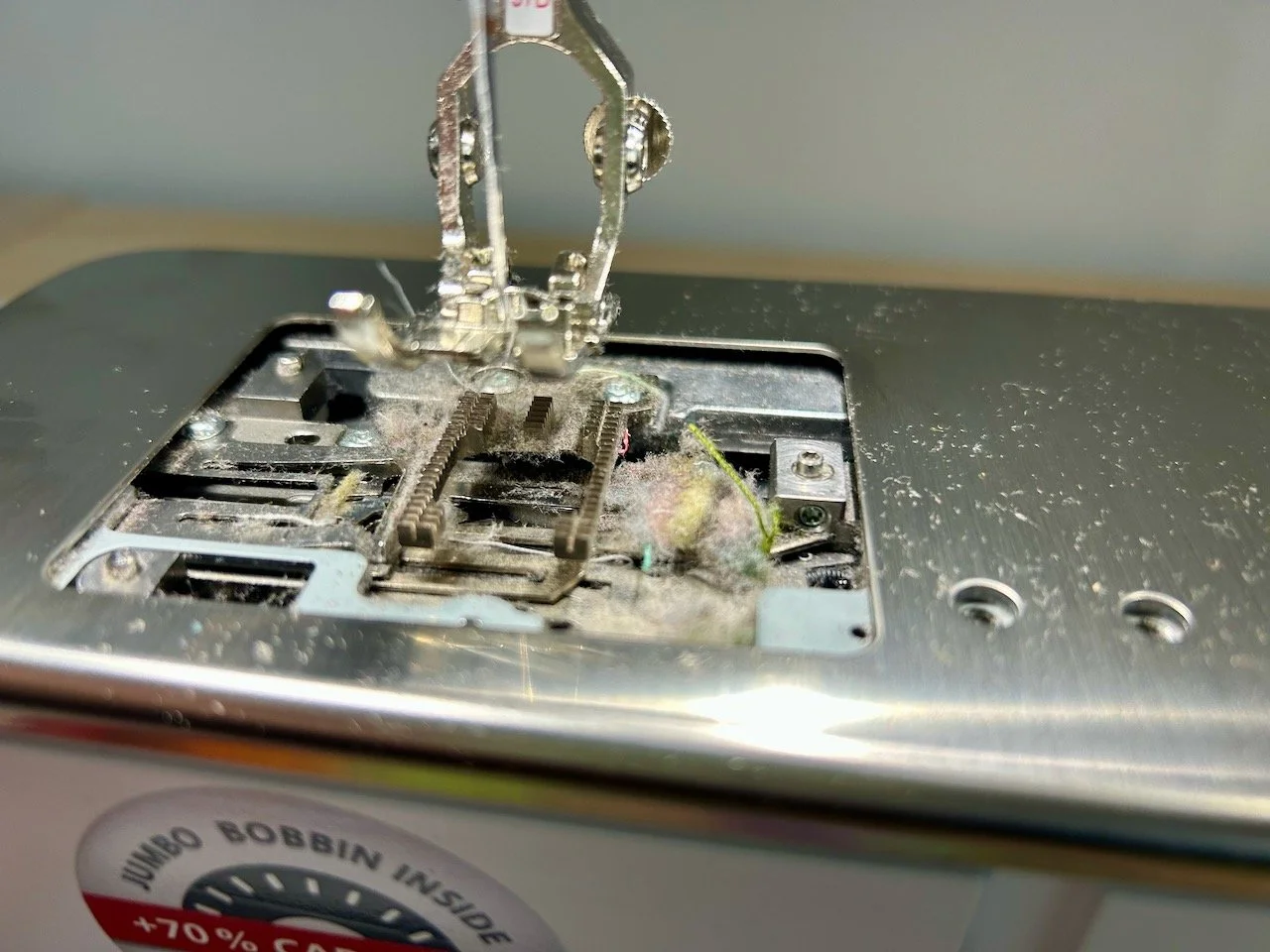
It’s not just the BSR which I’ve used since the training day, I’ve also taken a look under the stitch plate - a complete no go area for me beforehand. I was surprised to find quite so much fluff there - oops.

And by cleaning the automatic cutter I also reset the number of cut cycles - which had racked up to 718, and I don’t use it every time as I often chain sew, especially when patchworking. I also found out my total number of stitches, which was a little over 361,000 - it’ll be interesting to see how that increases.

I’ve also tested out using the knee lever to lift the need, which I think may also come in useful for my Floral Fancy. I’ve changed how the foot behaves when I stop sewing - it now hovers, rather than lifts, which means I can reposition my sewing more easily.

I’ve also remembered that I can just press the foot pedal, or the go button to start sewing without needing to put the needle down manually, again something I knew but rarely used. And I’ve started to use the back area of the foot pedal to stop, knot and cut sewing which is another great time saver.

I’m sure there’s still more to learn and discover, but a day learning from a Bernina expert using the same model machine as my own was absolutely priceless.

Quilt Creations to wow

I’ve said before that I was overwhelmed by the number of quilts I saw on my first visit to the Festival of Quilts at Birmingham’s NEC earlier this year. Since then I’ve been overwhelmed by the number of photos I took - and I didn’t (physically couldn’t!) photograph every quilt there. Though I have finally looked at the photos I did take, and there’s so many I want to share - and still to edit - but I have worked out how I’ll do that.

Usually my ‘go to method’ would be to share a selection of my favourites covering as many of the categories as possible, and then share more from the categories and displays in turn. But that’s not working for me this time round as I have so many favourites, which would make for a very long post!

So over the next however many number of weeks I’ll share my favourites from many of the categories, and if I can make enough of a decision by then to edit down my favourites then I may share my favourites from the show - but there are a lot of categories, so there’ll be plenty to see before then.

And I’m not starting with quilts as such

But they are equally as spectacular, in fact I was drawn in to this gallery section by the Liberty 150 creation, and I can’t even imagine how that came to be, but it is amazing (spoiler: they all are!) The Quilt Creations category contains clothing, wearable art or be three dimensional pieces, which leaves a lot to the imagination and it’s a category that definitely delivers.

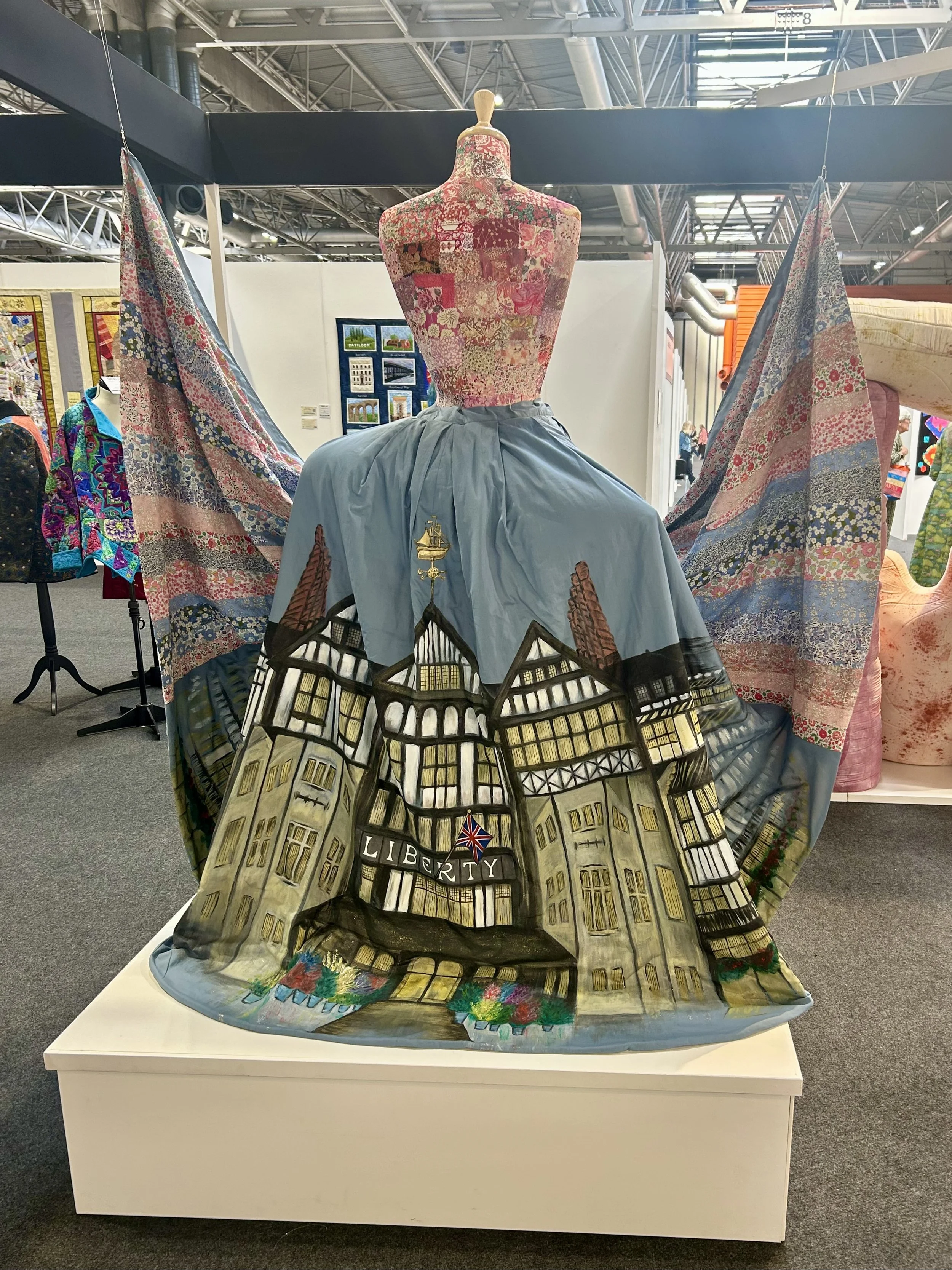
I was absolutely wowed by the Liberty One Hundred and Fifty creation, which was by far my favourite here. In fact, so much so that I’m not sure if I saw most of the other items, though this was one of the last sections we saw so I might have been quilt-dazed.

A dressmakers dummy covered in Liberty fabric with a patchwork lining to the skirt on show

ONE HUNDRED AND FIFTY @ZESTANDLAVENDER

Viewing the design from the back and the outside of the shop is replicated on the skirt's outer side

ONE HUNDRED AND FIFTY @ZESTANDLAVENDER

I told you it was good didn’t I? And the 150 ties in with Liberty celebrating their 150th anniversary.

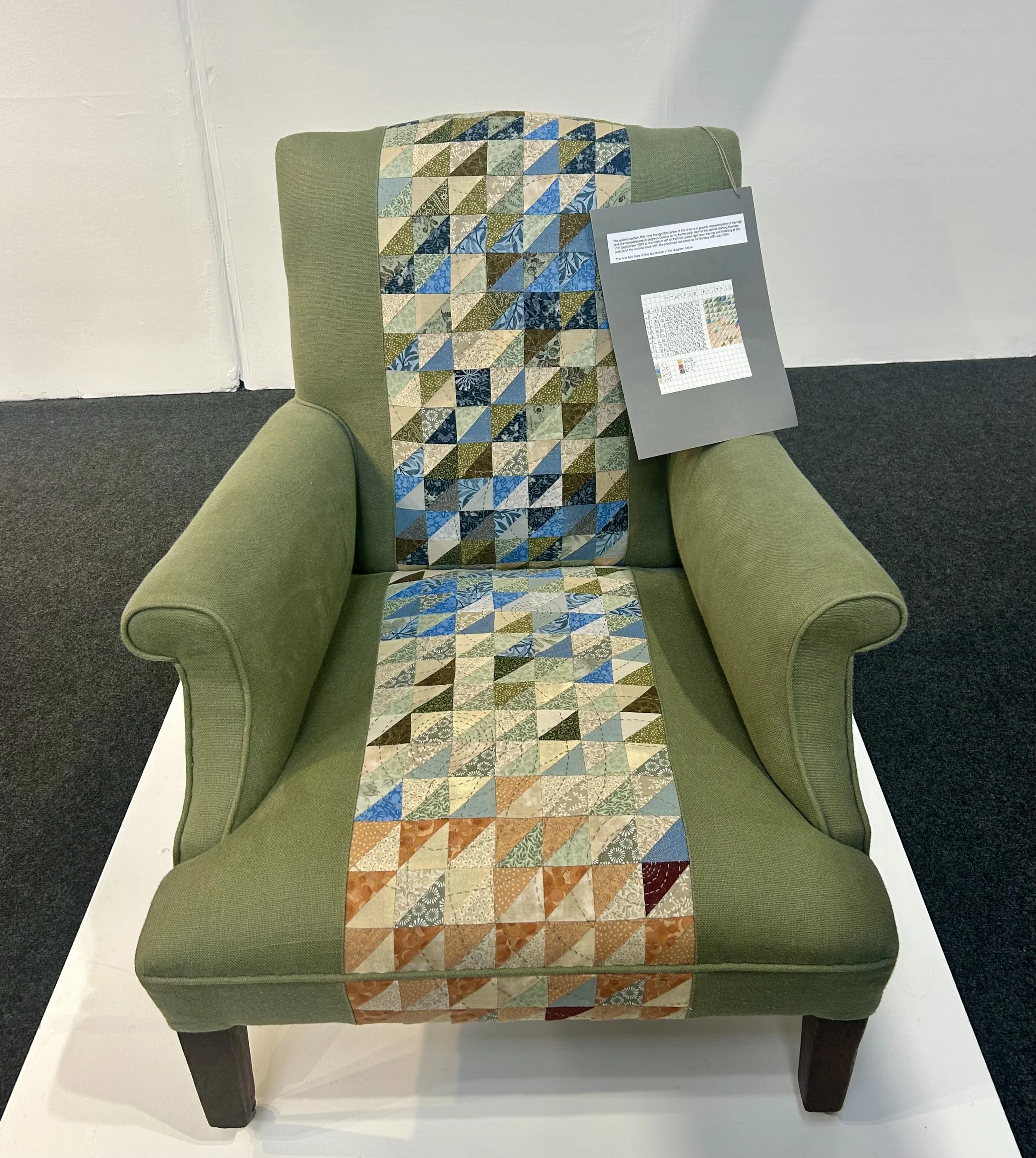
But I do have more to share, and I’d love this chair in my living room…

A comfortable looking green chair with a patterned fabric addition on the seat and up the back - the colours range from blues to oranges imitating how the seasons change - in triangles.

SHIFTING SEASONS @EMILYBODYUPHOLSTERY

It is just my colours.

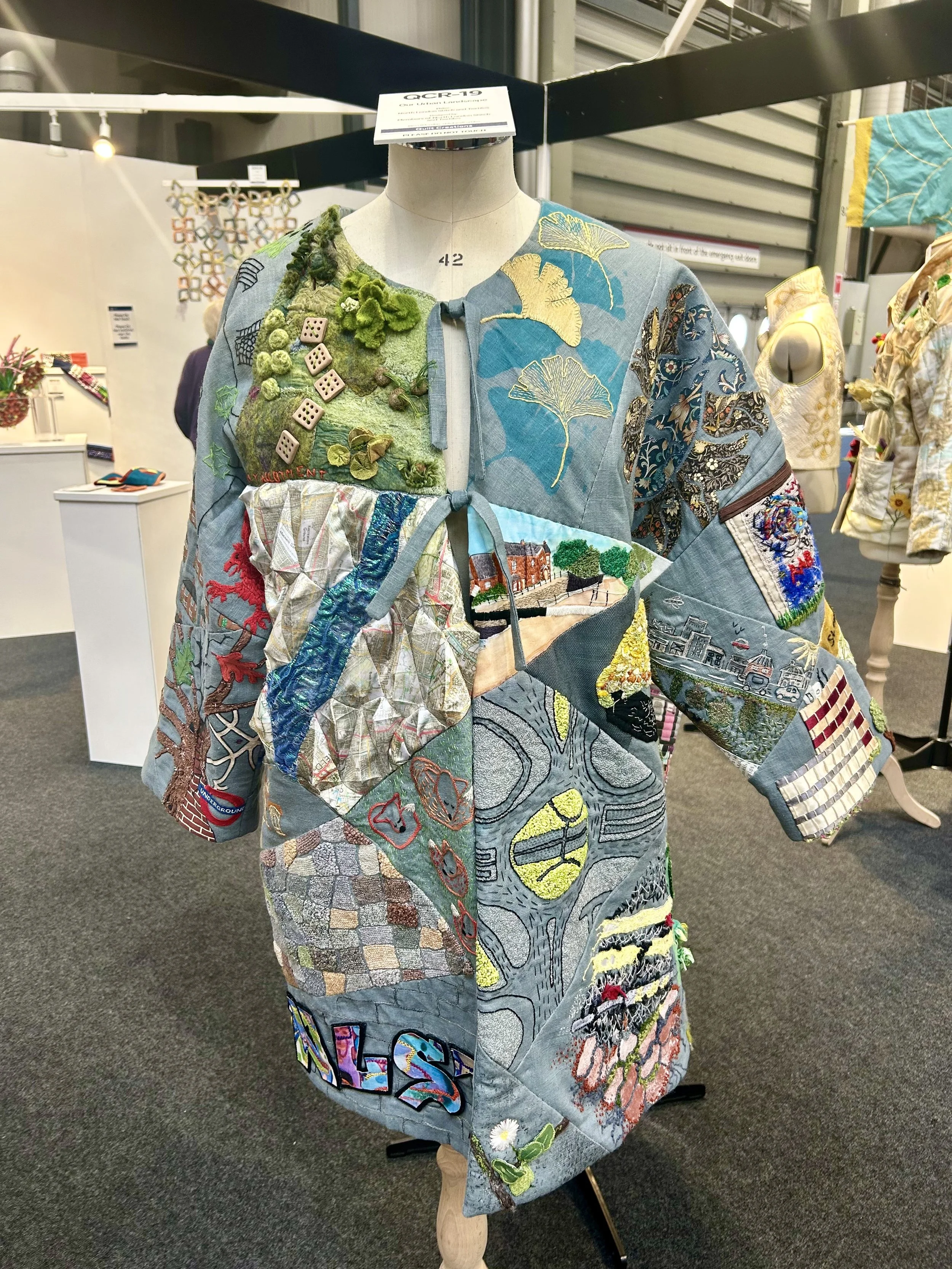
I admired the work in this jacket, even though I’m not sure I’d ever have occasion to wear it. I wonder though if any of the creators have?

A highly embroidered jacket with each section showing some of the urban landscape

OUR URBAN LANDSCAPE @NORTHLONDON_STITCH AND TEXTILES

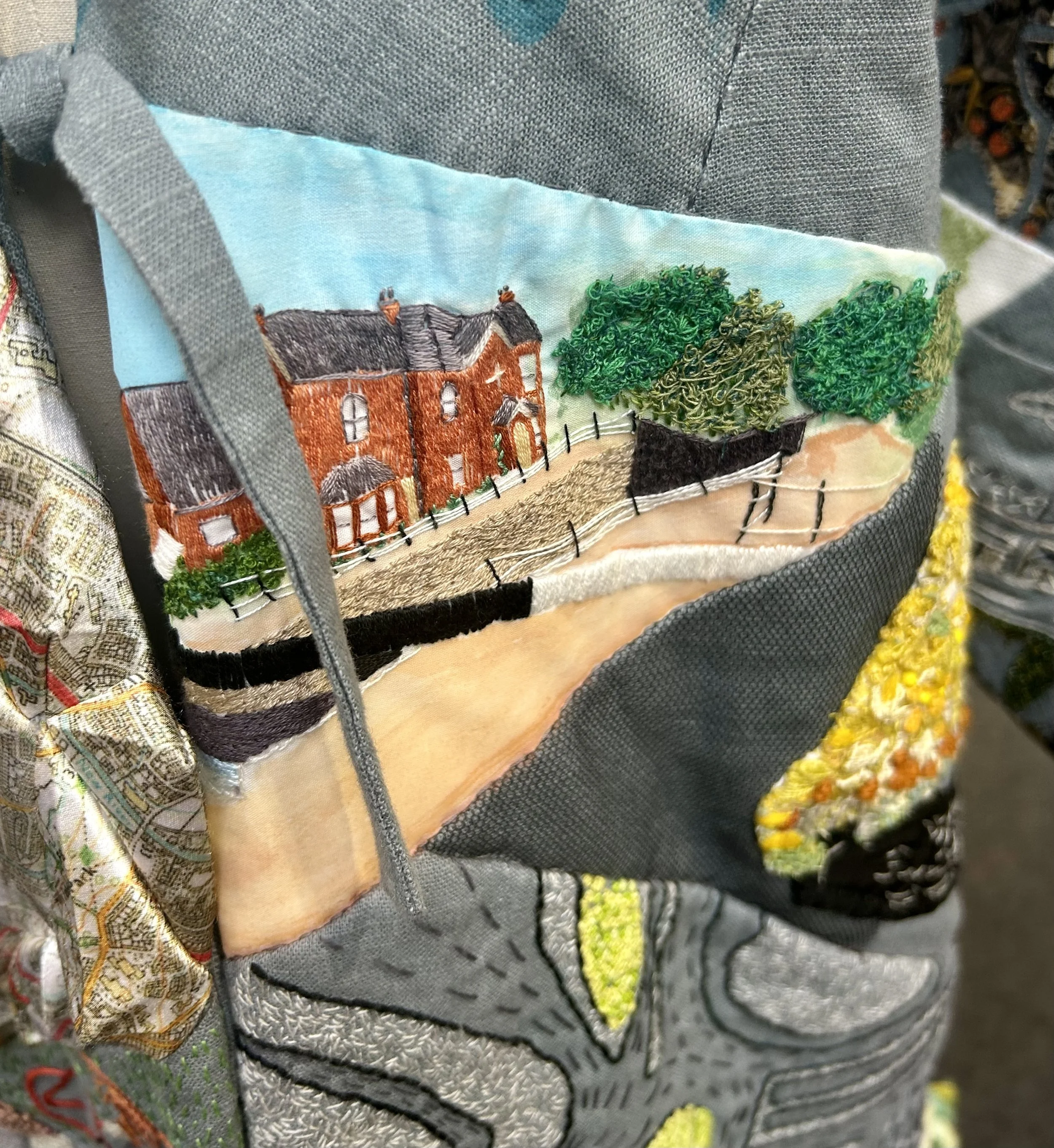
Looking in detail at the stitching on one section of the jacket - showing a streetscene with trees

OUR URBAN LANDSCAPE @NORTHLONDON_STITCH AND TEXTILES

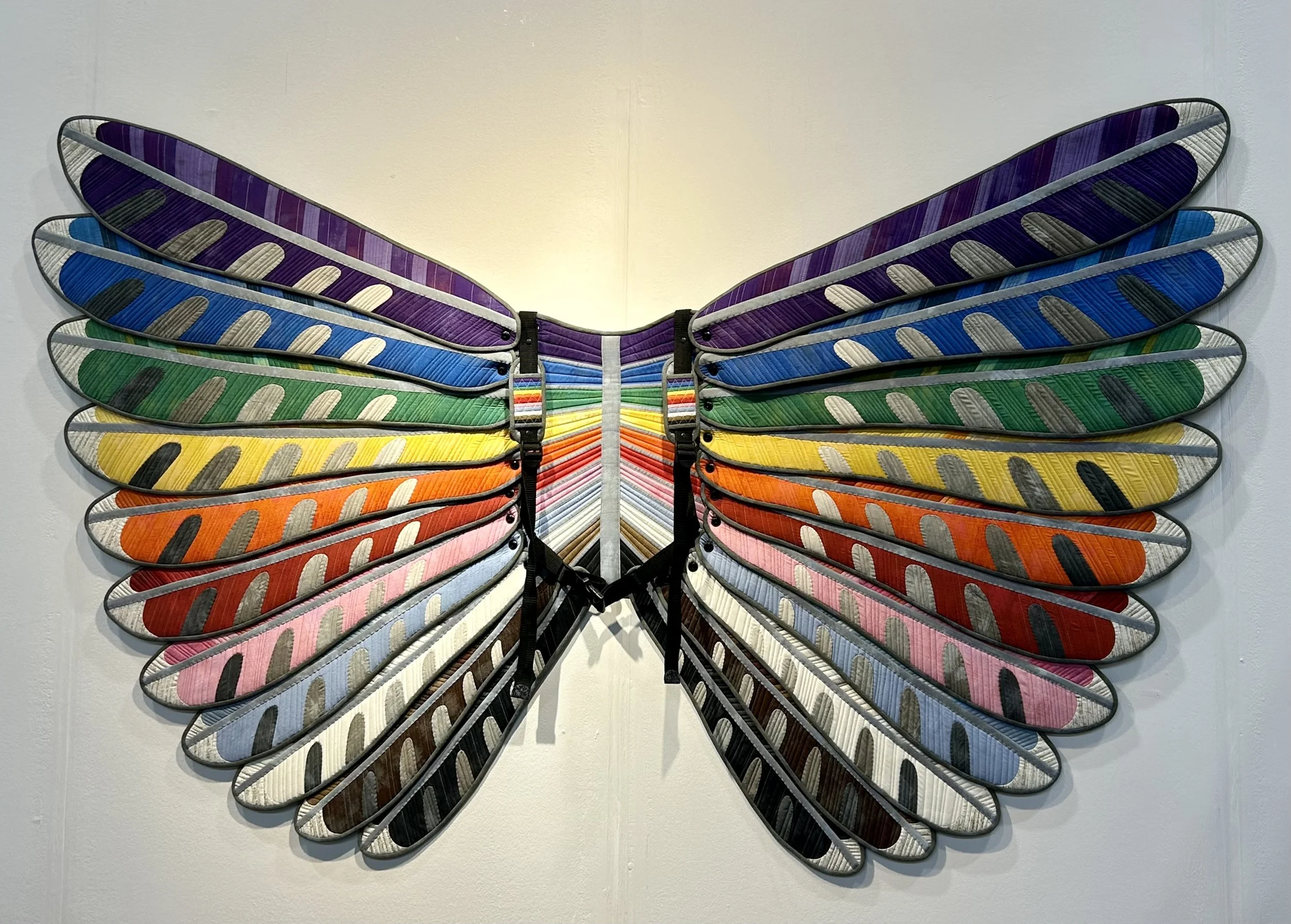
I can’t finish this post without sharing the winner of this category - another amazing entry, which no doubt is full of intricacies, engineering and a lot of hours of work in the show stopping kind of way that winners of this category should be.

Butterfly wings complete with a harness using the colours of the LGBTQ+ Pride flag

WEAR YOUR WINGS WITH PRIDE @MATTWILDING

Seriously wow - all of them.

If you enjoyed this post from my visit to the Festival of Quilts 2025 then please do check out my other posts from the show. Even though my mind was blown by the sheer volume of quilts on display, I’m pretty sure I’ll be going again!