
Making chilli jelly

With lots of ripening crab apples on our little crab apple tree this year I was keen that they didn’t all go to waste. One sunny afternoon in October I picked just over two kilograms of crab apples, and still the tree looked fully laden.
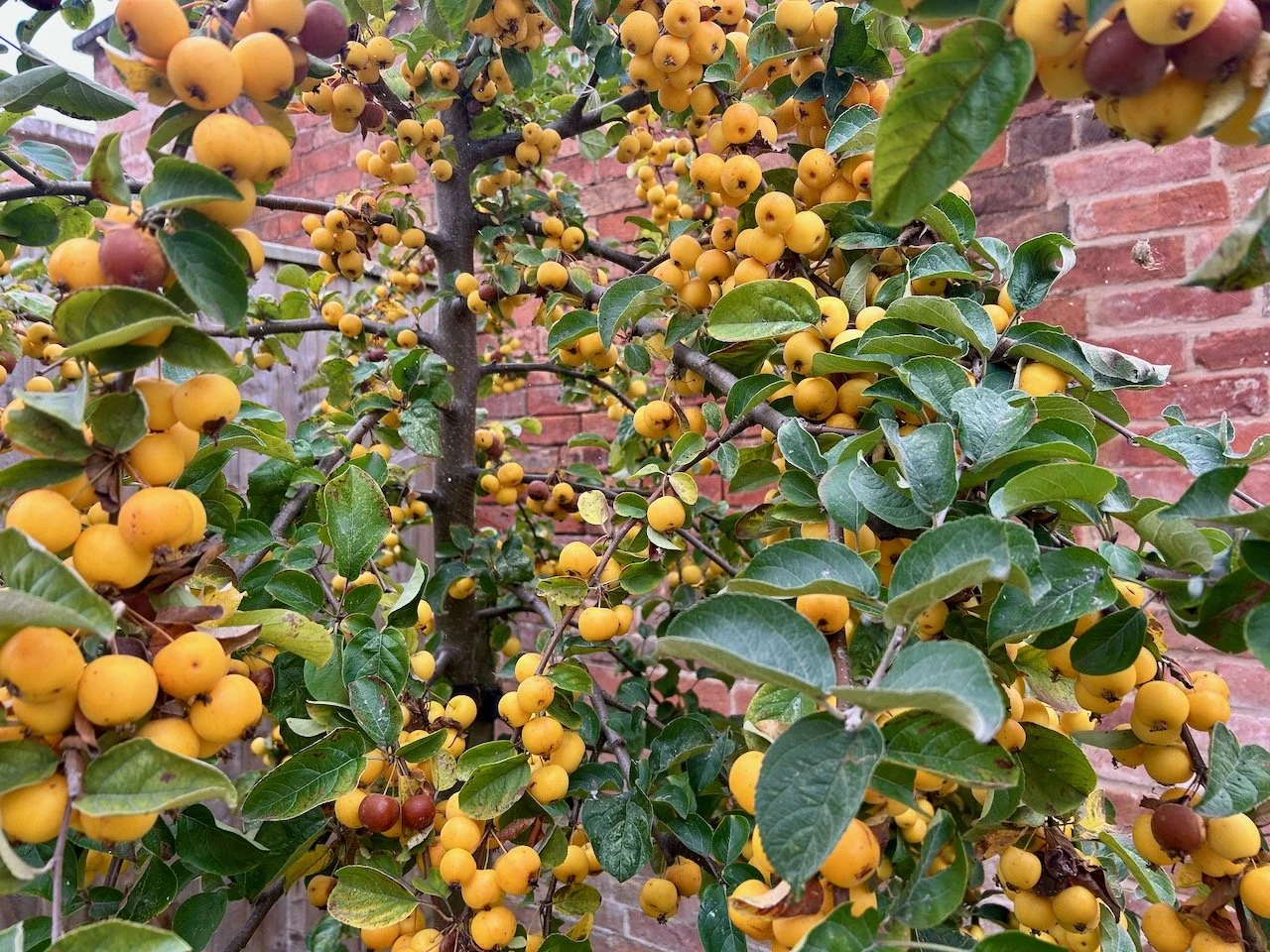
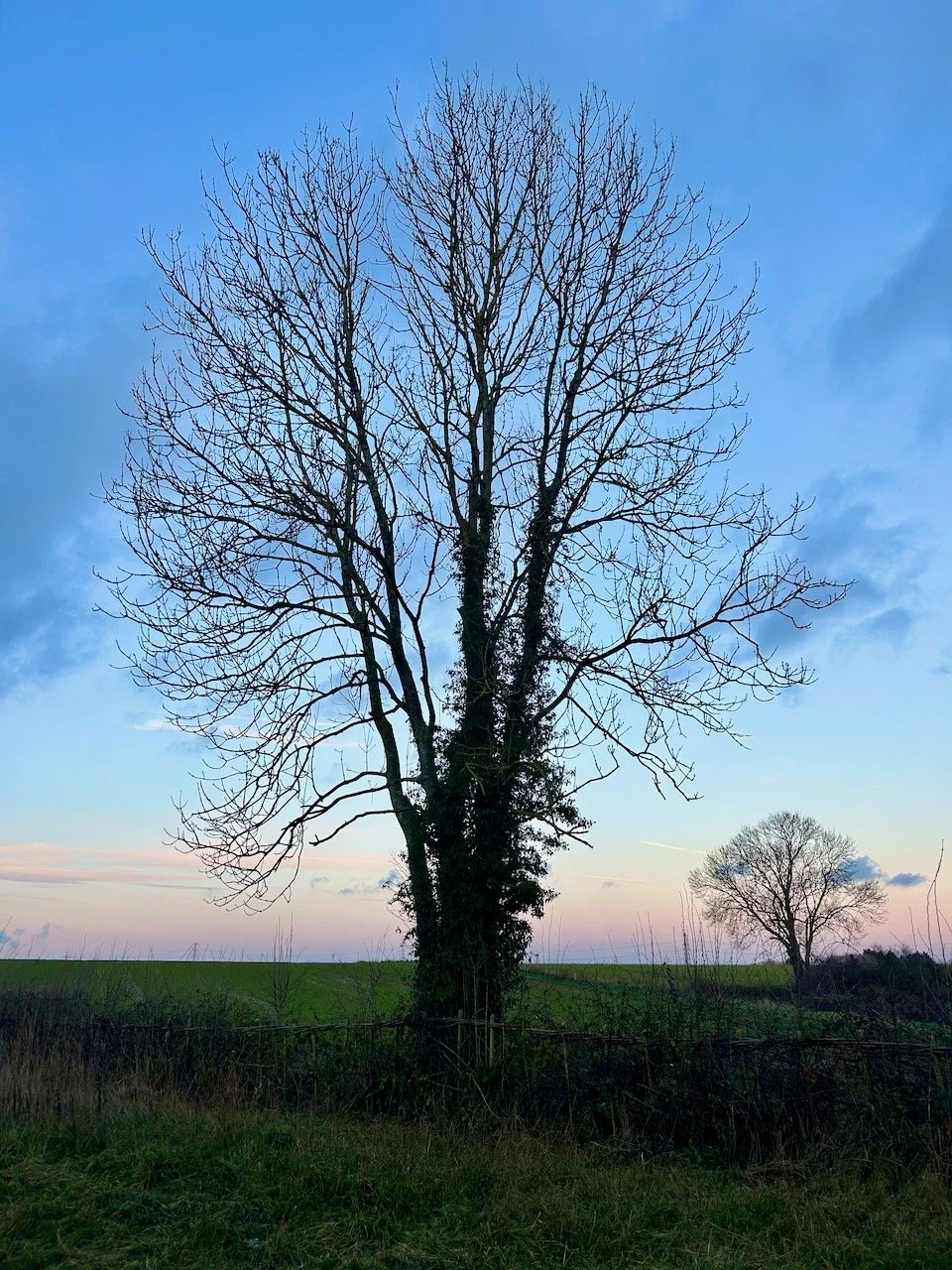
My crab apple tree - still fully loaded despite me having picked 2kg of fruit

Then I read the recipe properly - I mostly followed Sarah Raven’s Chilli Jelly Recipe - and realised that straining the jelly through muslin was essential for it to be clear and jewel-like. I had muslin, but I wasn’t sure that I could rig anything up that would be secure enough to hold the 2kg of fruity mush. And if I did, then I didn’t want to have a collapsing accident part way through and need to clear up the mess it made.

A rethink was needed, and that was the Lakeland jelly strainer, which I now highly recommend, but of course it was out of stock with more stock expected soon - so I got my order in quick, and waited for it to arrive. Thankfully that was only a week, but it was a long wait for my little apples.

Now armed with all the kit I needed I set about prepping my apples. Sorting through those that I’d stored while waiting for the jelly strainer to arrive, giving them a good wash and then weighing and chopping them before chucking them my big preserving pan.
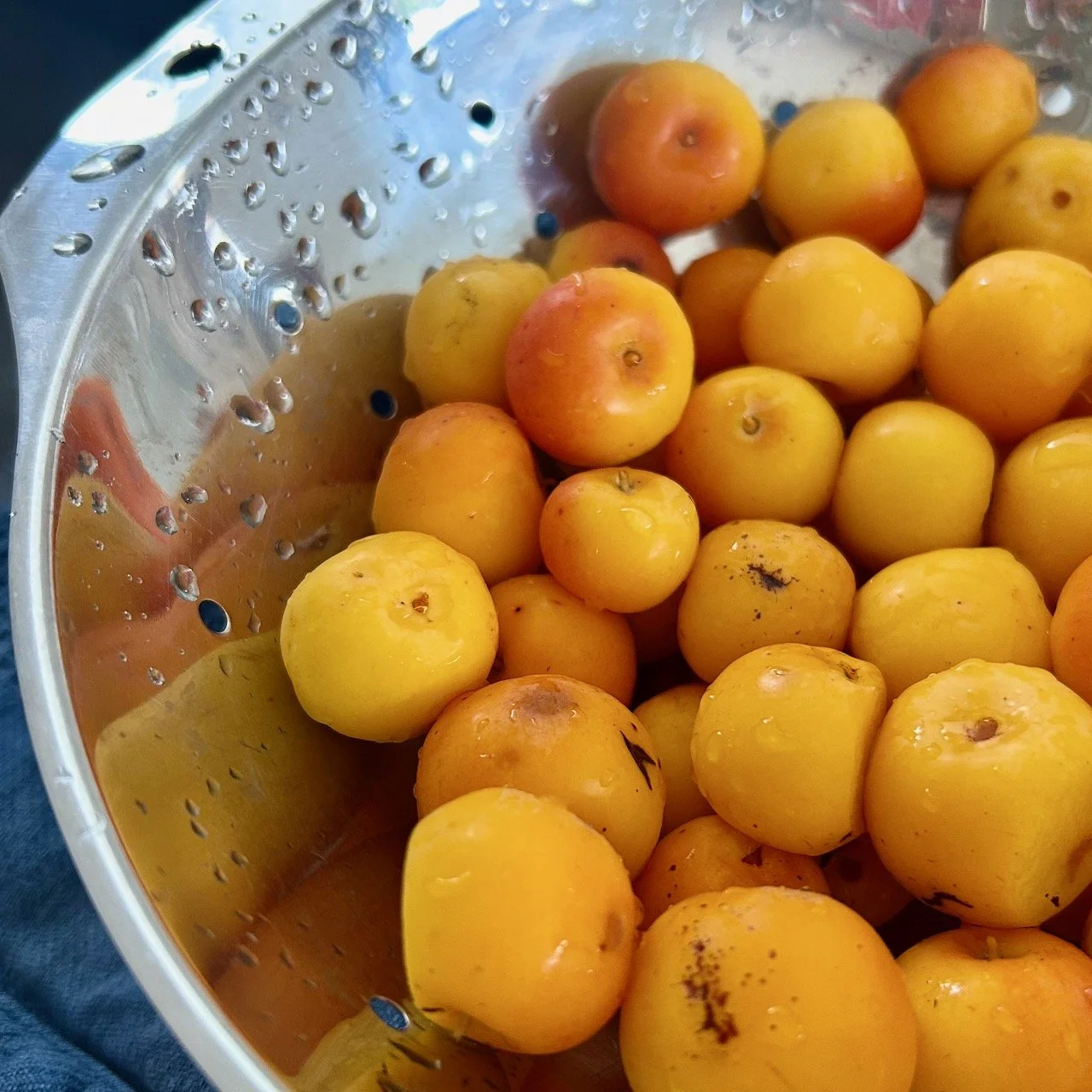
Washing some of the crab apples in a metal colander
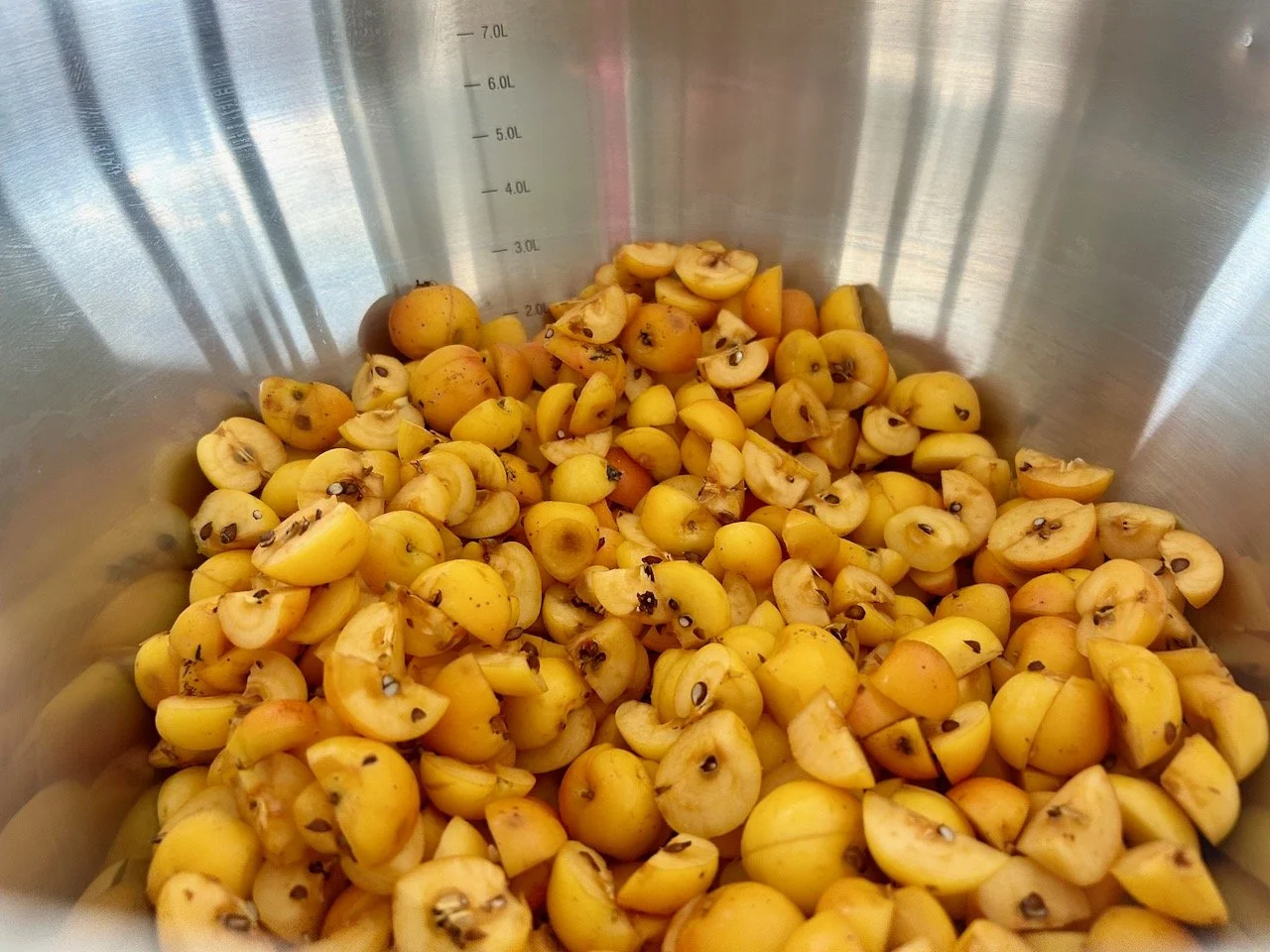
some of the apples, chopped (skin, pips and all) in the preserving pan

Thankfully the majority of the crab apples were as patient as me, and it turned out I’d overpicked a little - but even so I did need to nip out to the garden and pick about ten more apples to make up the numbers. Which wasn’t bad really.
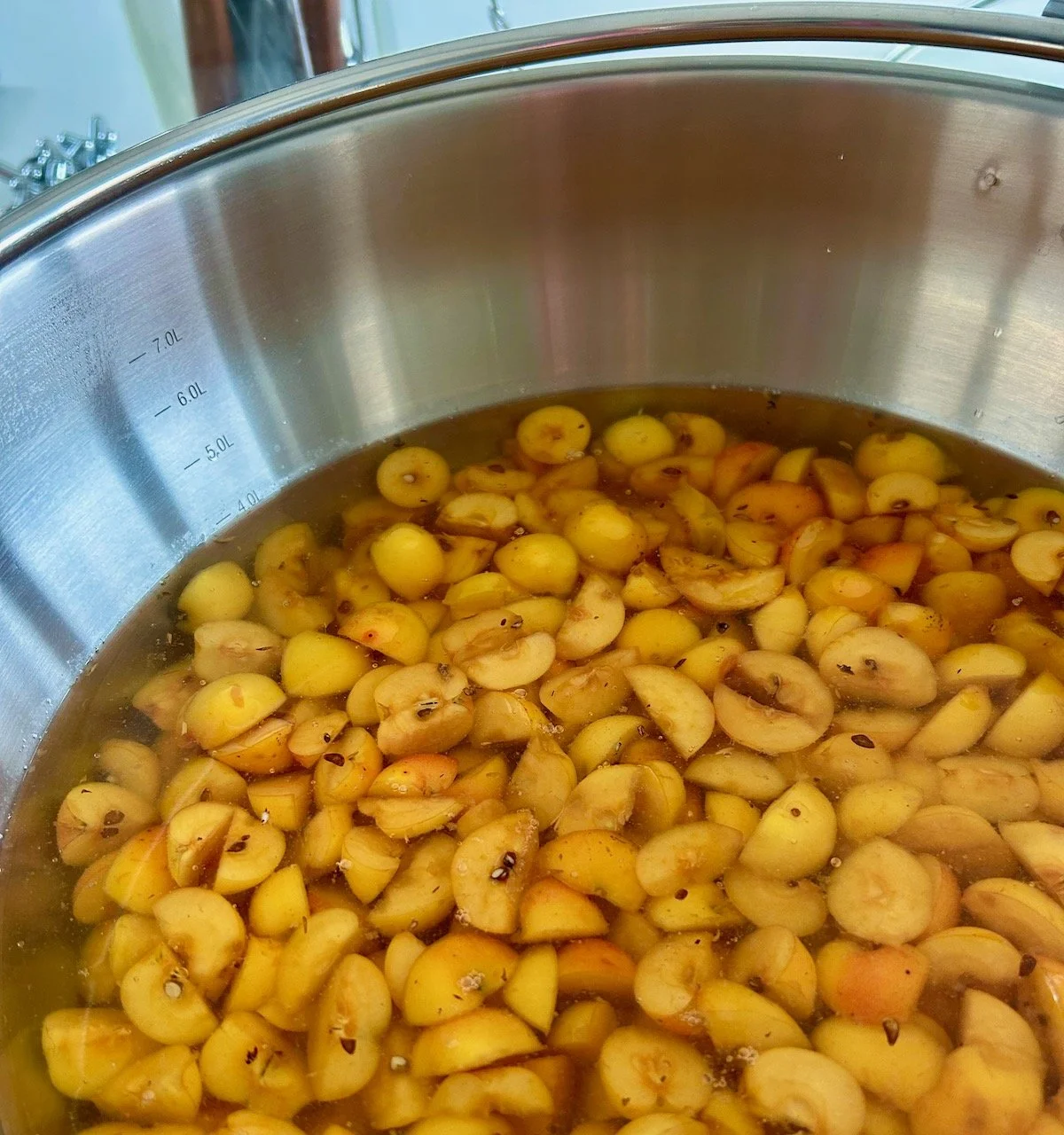
Adding water to cover the apples - the contents is up to the 4.0l mark

I brought the apples and water up to the boil, then added the cider vinegar and boiled until it was at the jam setting temperature on my jam thermometer (another piece of kit that makes preserving so much easier, and takes the guess work out of is it set or not, and without a cold saucer in sight).

Onto the straining

I’d read that I must avoid the urge to squeeze the bag if I wanted to have a clear jelly, so I did and MOH was under strict instructions not to dabble with it either. And we did good, but the set-up was much taller than I’d expected so there was no way that I’d be lifting the large preserving pan and pouring the hot apple mixture into my strainer.
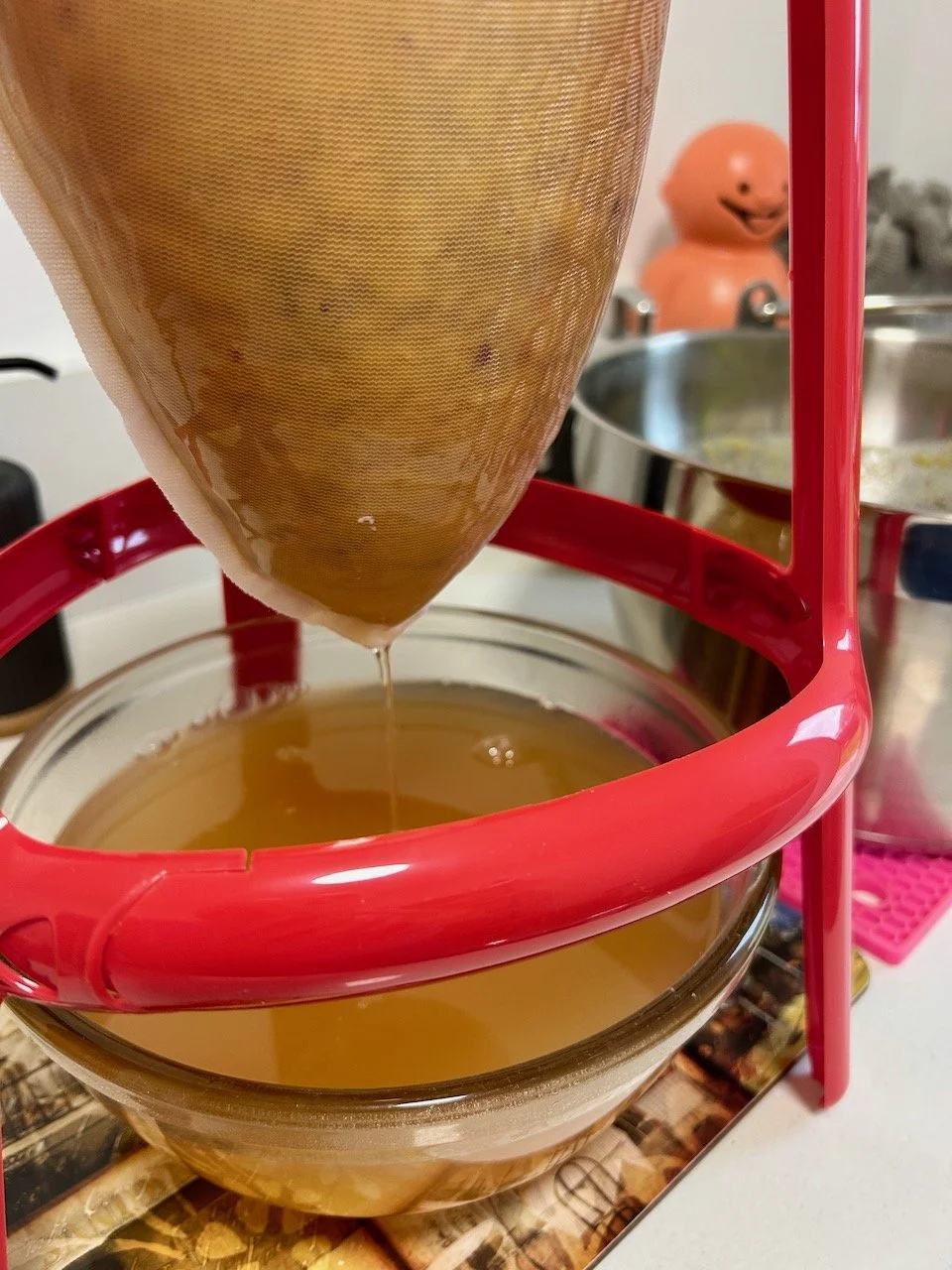
The jelly strainer full of apple mixture straining into a bowl below

Well some creative thinking was needed, and out came the kitchen steps, the ladle and a jug. And it worked. Phew.
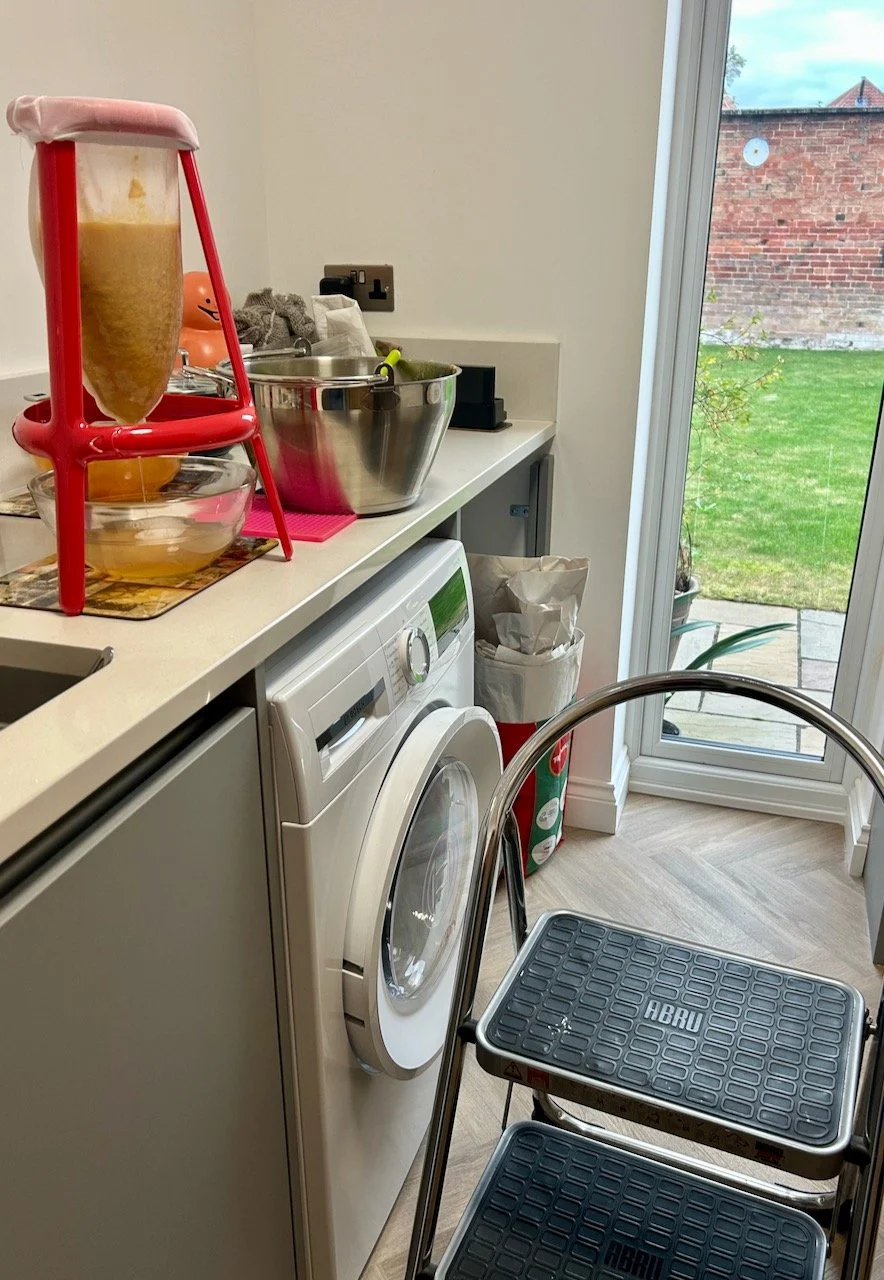
Then I realised that my large bowl was already filling up and I’d not even added all the apple mixture yet.
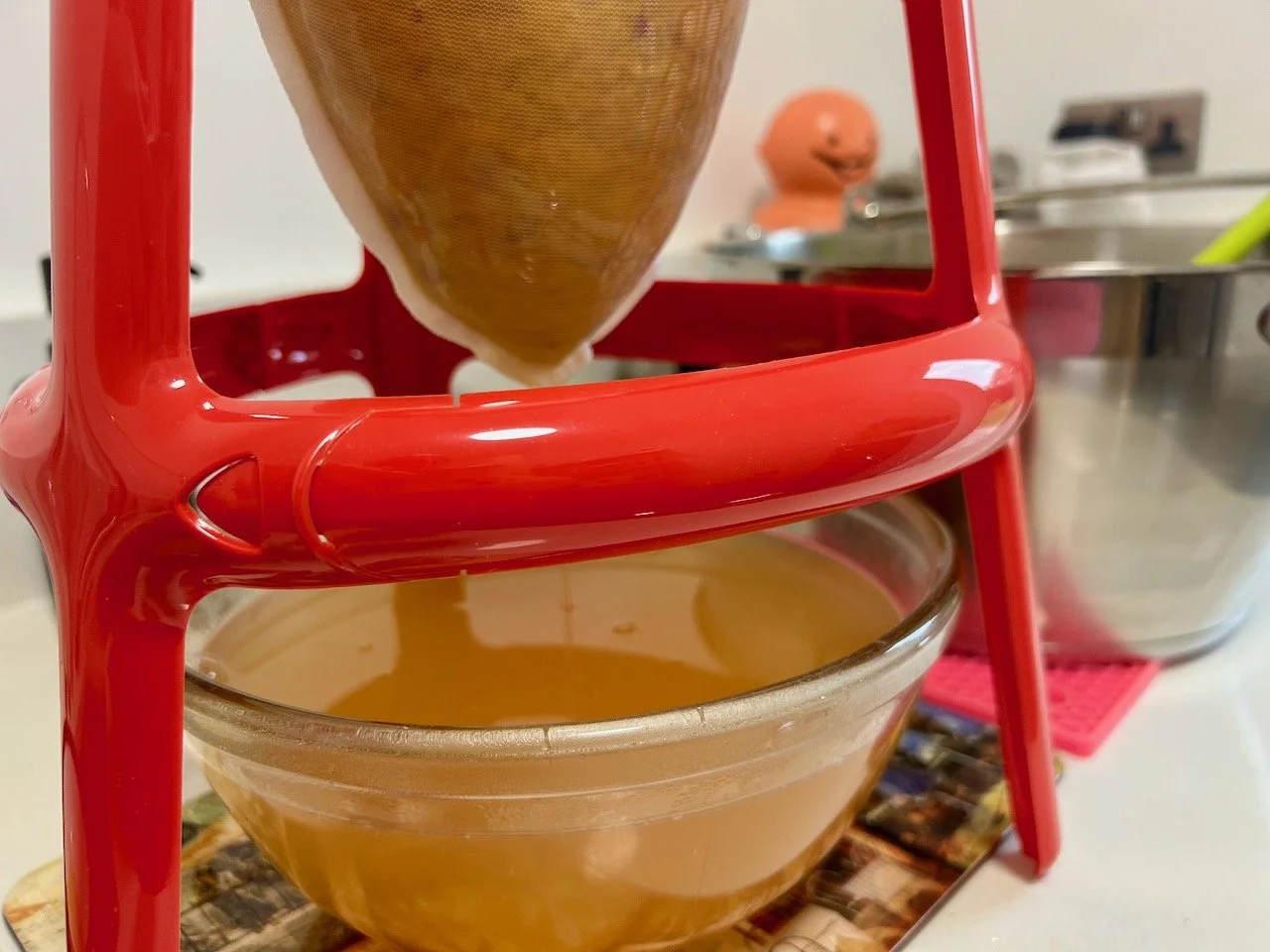
eek - the first bowl under the jelly strainer is almost full!

I’m so glad that I’d put some table mats under the jelly strainer as this helped me switch out the almost full bowl for its replacement, while the liquid happily continued to drip (well stream) through.
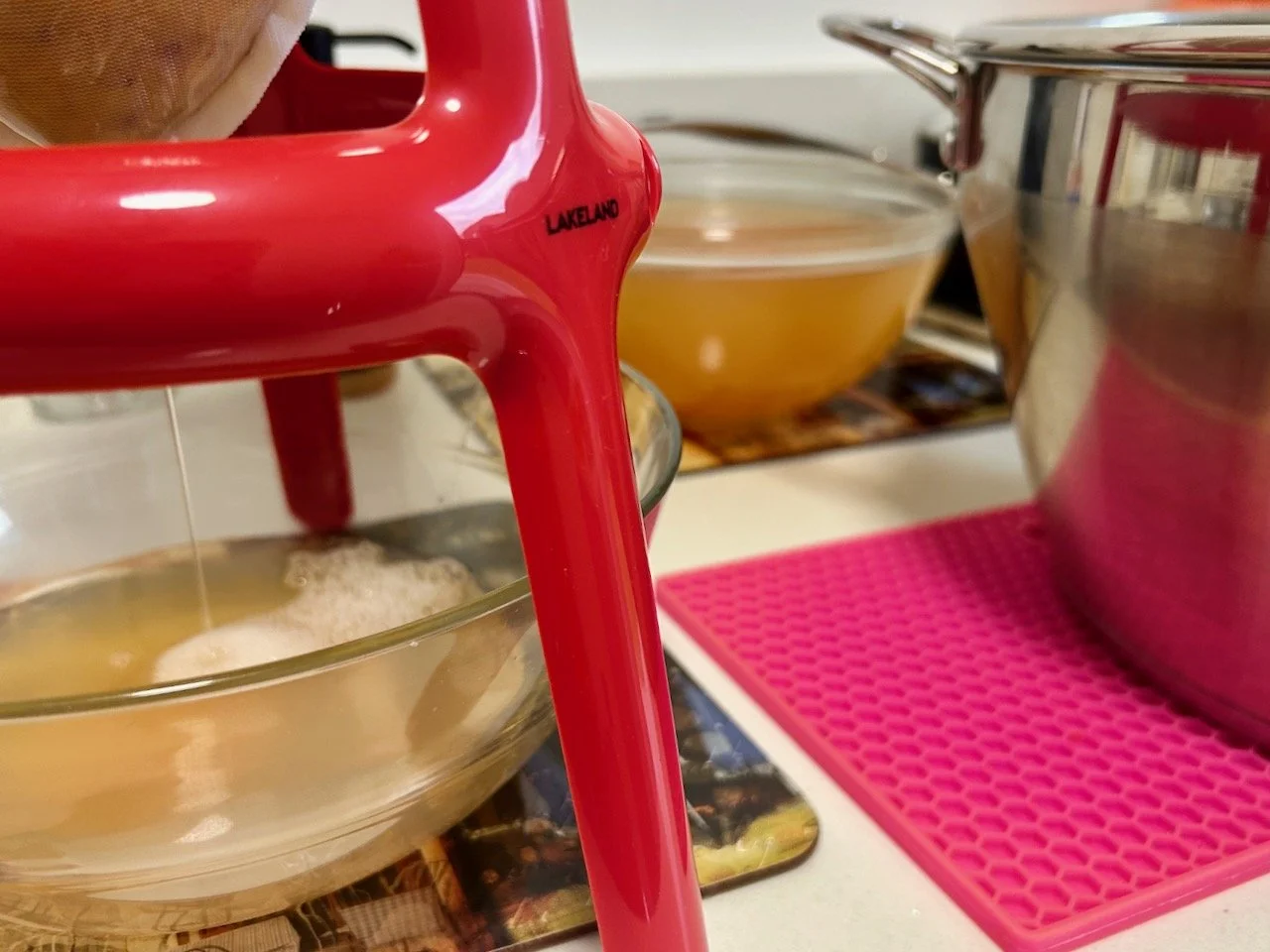
Phew - a new bowl under the strainer with the full bowl in the background

And so I left it to strain overnight, fairly confident that this bowl wouldn’t fill or overflow - and thankfully it didn’t. The jelly strainer didn’t collapse either, so that was double good news the next morning.

Adding chilli flakes

I’d originally bought fresh chillies but in the wait for the jelly strainer we’d used those but I’d seen in other recipes some used chilli flakes so that became my plan. The apples were supposed to yield about a litre of liquid, but I had double that - so then my dilemma was how much chilli flakes to add.
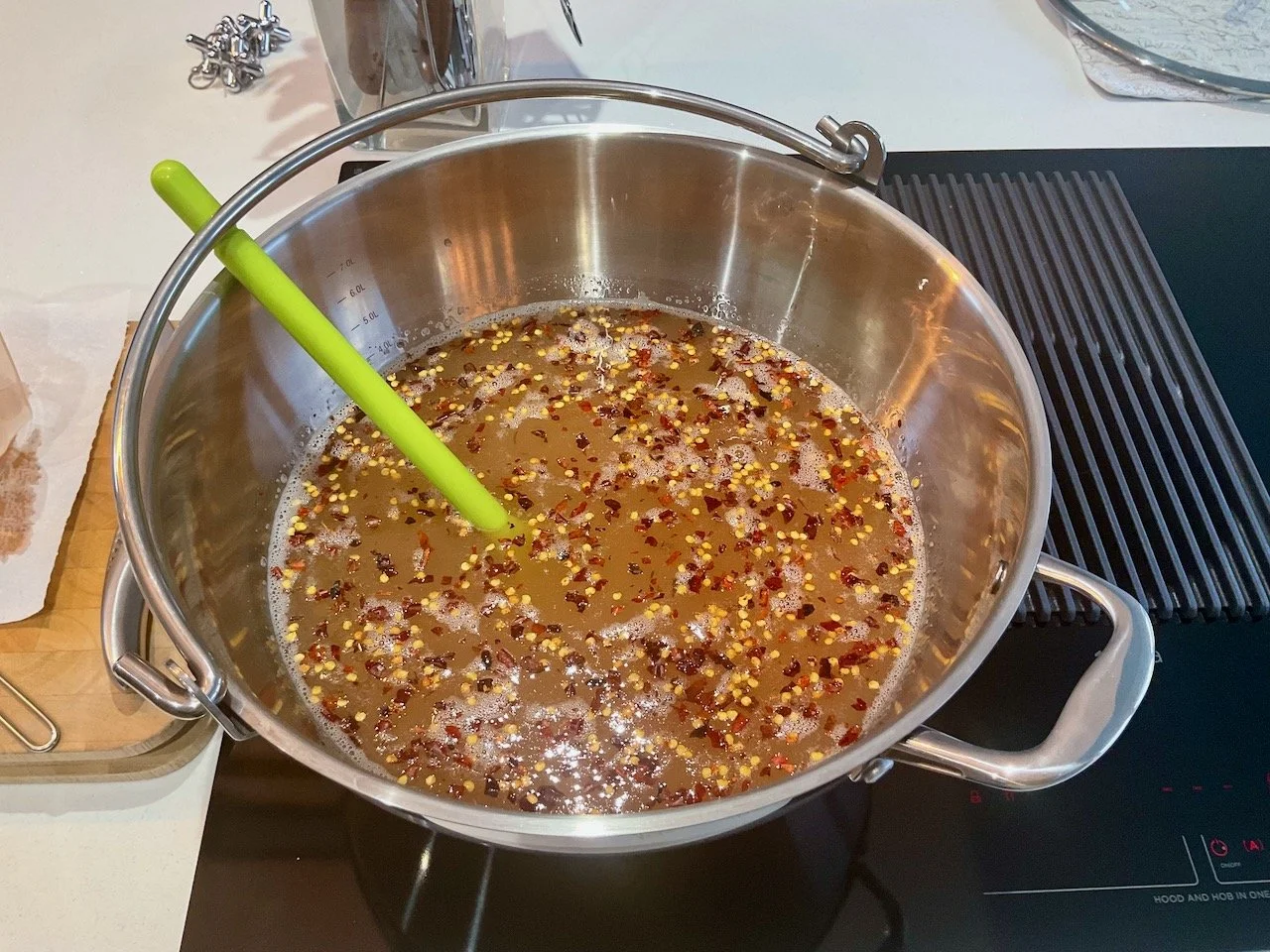
The strained liquid with sugar and chilli flakes added - back on the hob

In the end I added a couple of tablespoons along with the sugar and hoped for the best taste-wise.

The pulp

I was curious to see what was left from the overnight straining - and it was a soft but shape holding mush of apples. I’m sure this could be composted, but mine went into the green bin (which is actually brown).
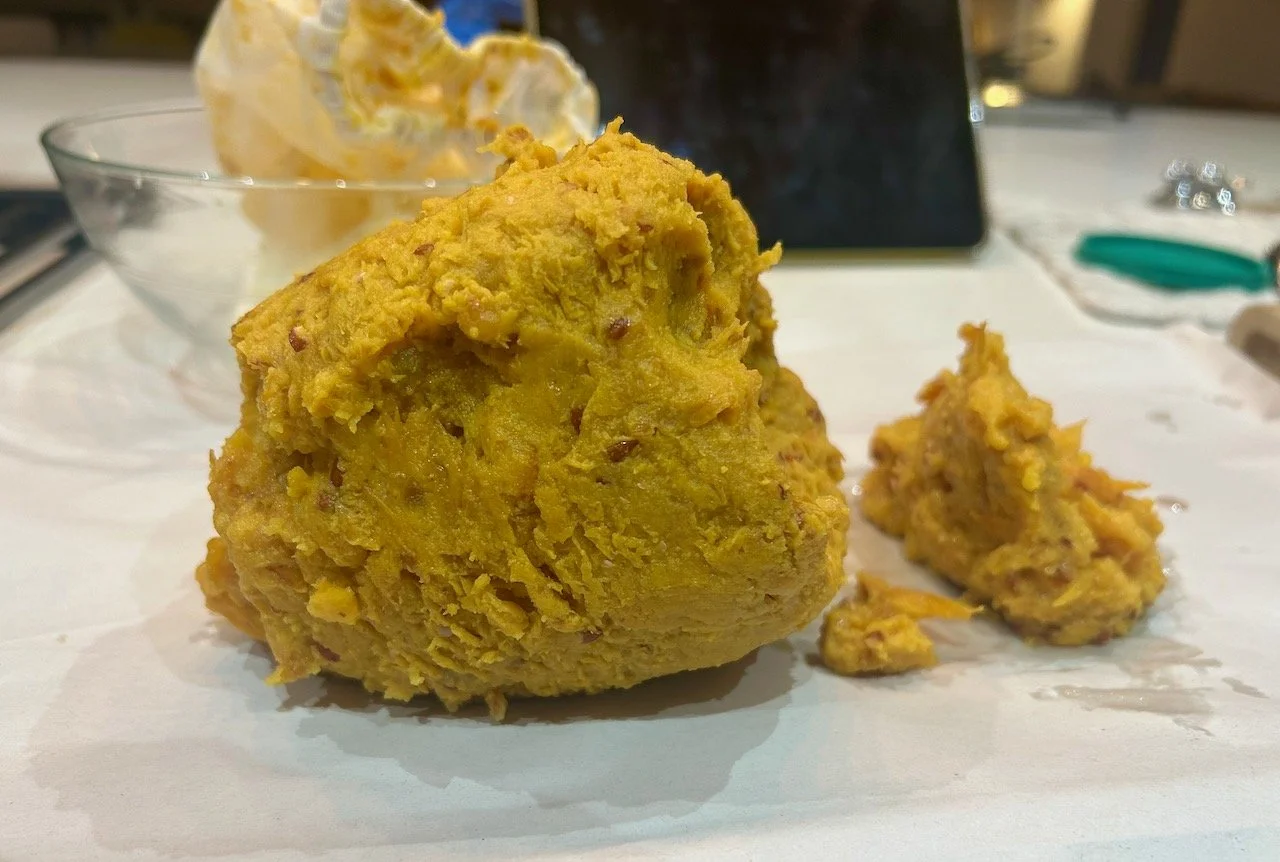
The remaining apple pulp after straining

Jewelled jars

My next decision was to gauge how many jars I’d need, and given that I had more liquid I realised I’d need more than I first thought. So I got what I thought I’d need and a couple extra - in the end I used all nine jars (of various sizes) filling them with the jewelled hot and sticky jelly.
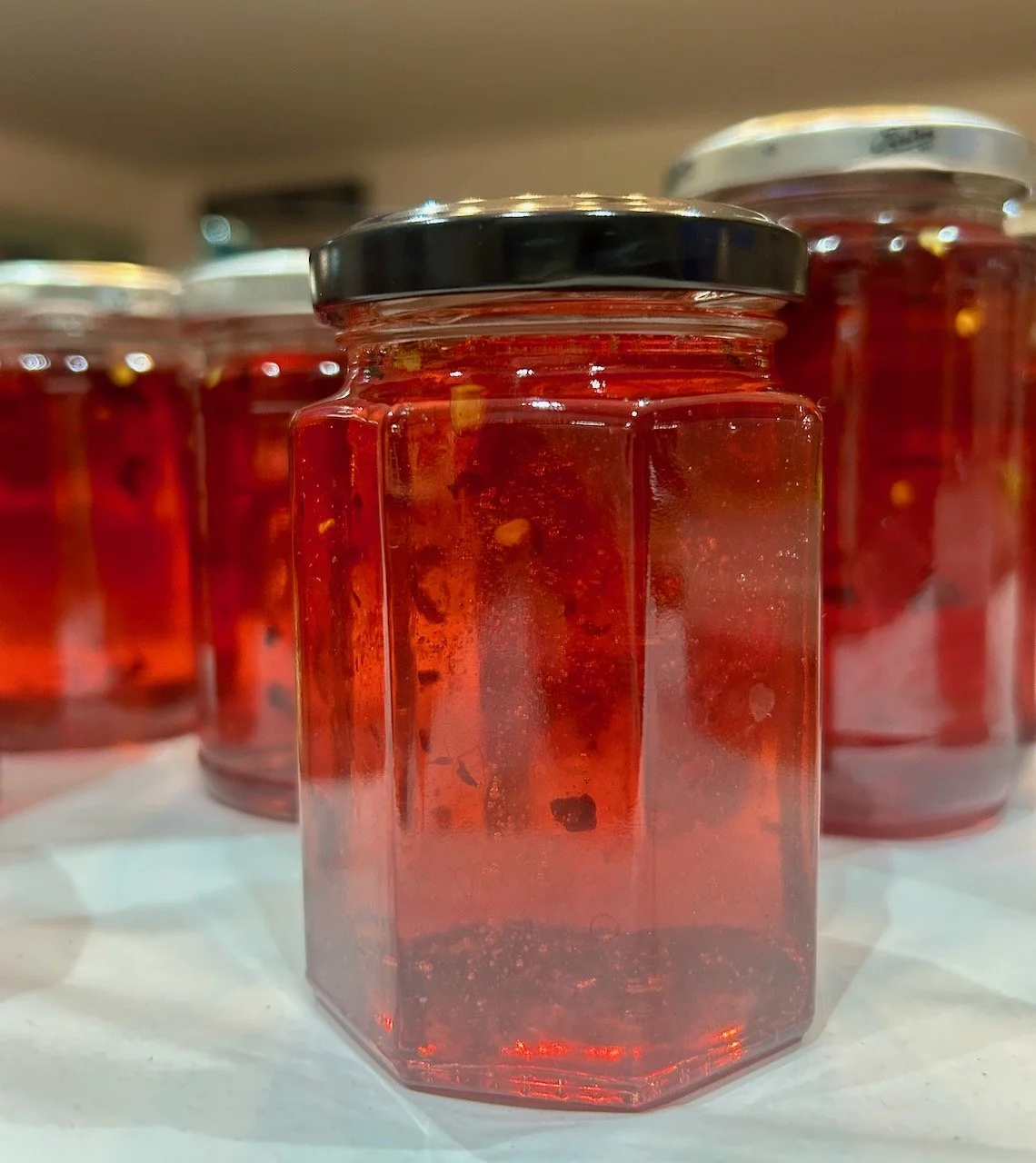
jars of red jewelled chilli jelly

Doesn’t it look fab?

As a fair few chilli flakes were left behind or removed when I skimmed off the froth I decided to add a whole dried chilli into the jars. This wasn’t as successful as I hoped as it floated to the top and isn’t visible from the outside - but it will be a surprise for the recipients, and will hopefully build a depth of flavour as the jelly stores.

It tastes pretty good too, as well as the nine jars I had enough for a small plastic tub which is in the fridge and very much in the 'eat now’ category. We’ve had it with cheese, cold meats and in sandwiches - but I think you could use it alongside sausages, and anywhere you’d use condiments such as redcurrant jelly, and I’m looking forward to adding some to gravy too.

We had enough crab apples to make even more, but my jar situation so far is severely lacking and in that time our apples have gone over - the tree has shed its leaves, and the apples are riper than I’d want to use. But there’s still a chance I may make a slightly different variant using some local Bramleys instead - watch this space…
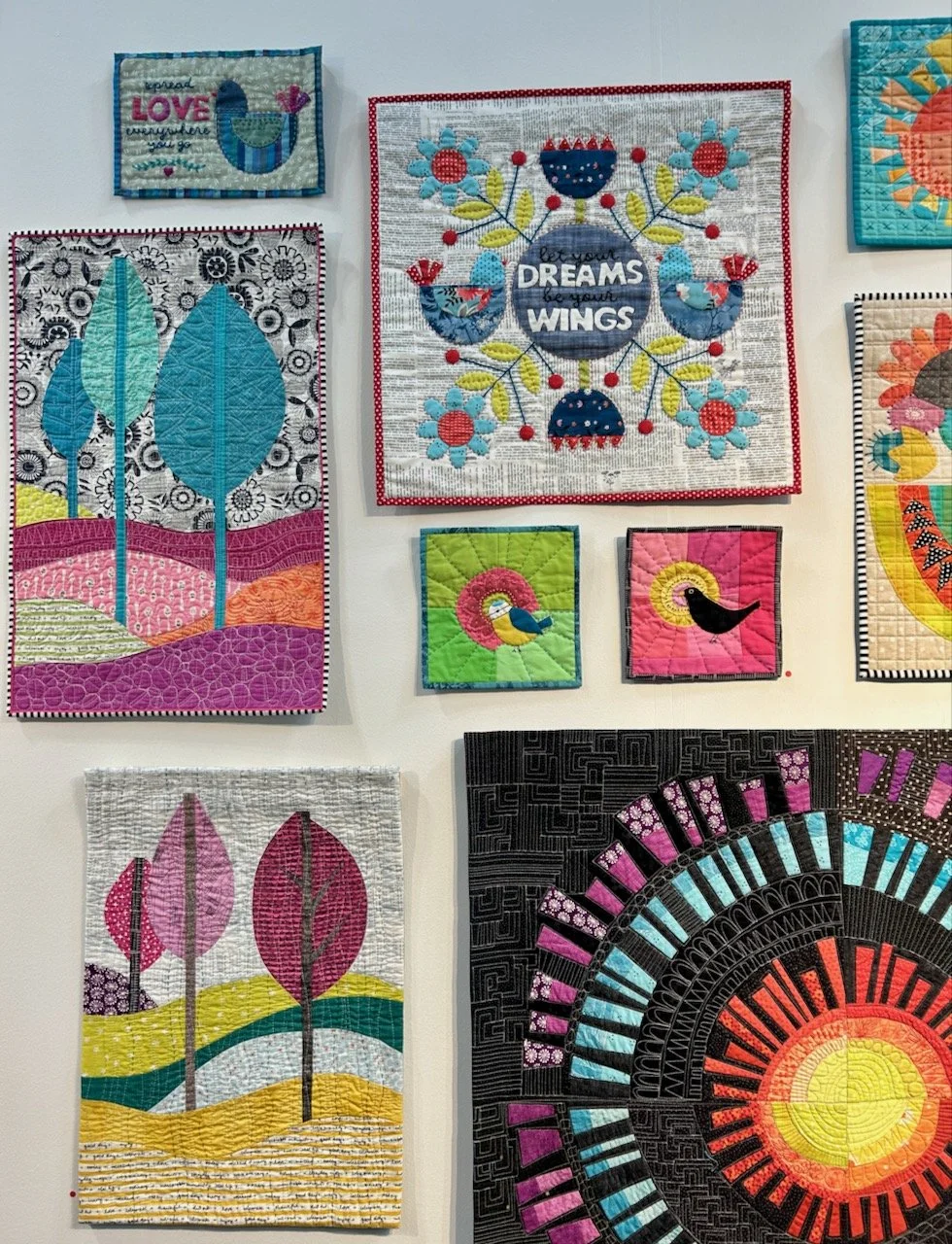
Jo Avery's bright and brilliant improv quilts

In addition to the many, many quilts on display at the Festival of Quilts there’s also galleries dotted around the exhibition space, and one of my favourites was Jo Avery’s Textile Gallery. I love her brightly coloured bold quilts and it was great to see them up close and first hand.

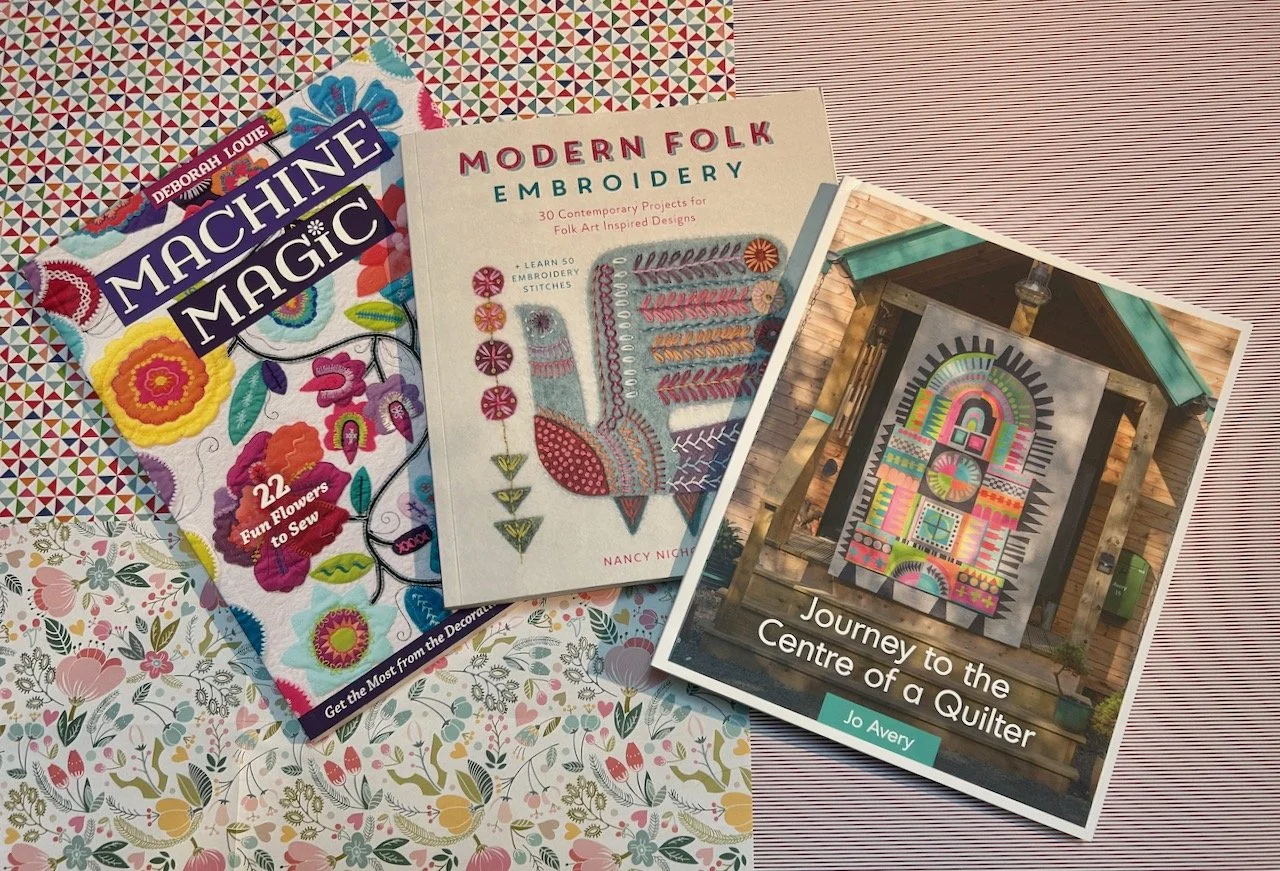
The gallery was in celebration of Jo’s new book - Journey to the Centre of a Quilter in which she shares her inspiration and the importance of play. I don’t have the book, but it’s definitely a contender for my Christmas List - though I’m under no illusion that my quilts would ever be as fabulous as these, though I think they’d have their own level of fabulousness!

JO AVERY’S TEXTILE GALLERY, FESTIVAL OF QUILTS 2025

Even in these smaller spaces the walls were loaded with quilts, and it was hard to know where to look, or where to start but my feet led me to those that most appealed to me, funny how that happens when our brains aren’t sure isn’t it?

JO AVERY’S TEXTILE GALLERY, FESTIVAL OF QUILTS 2025

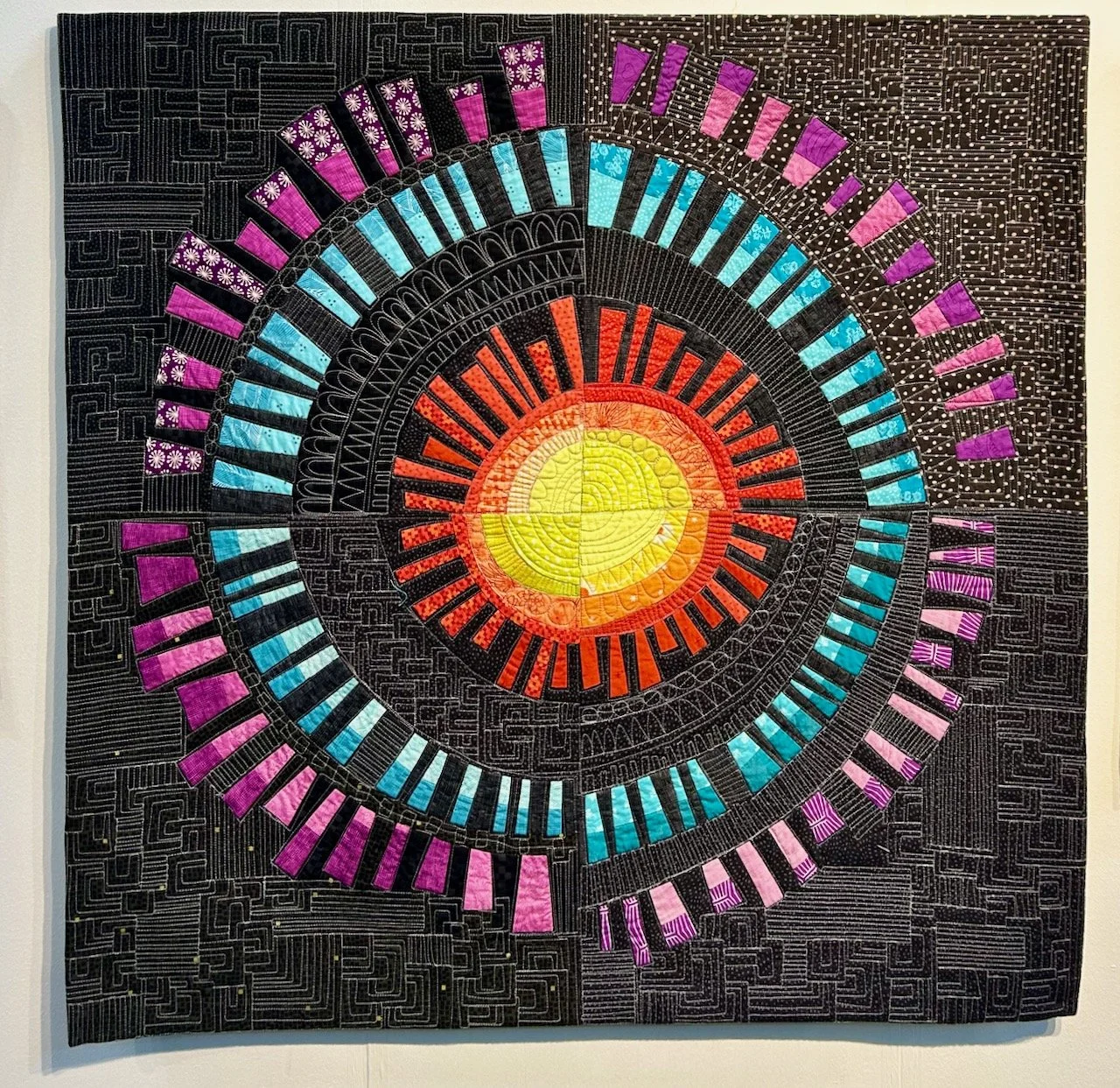
What caught my eye about the quilt above is the detail in the quilting, which stands out with the light thread on the dark background. And then looking at the main motif, and seeing the amount of detail there too. Totally mind blown.

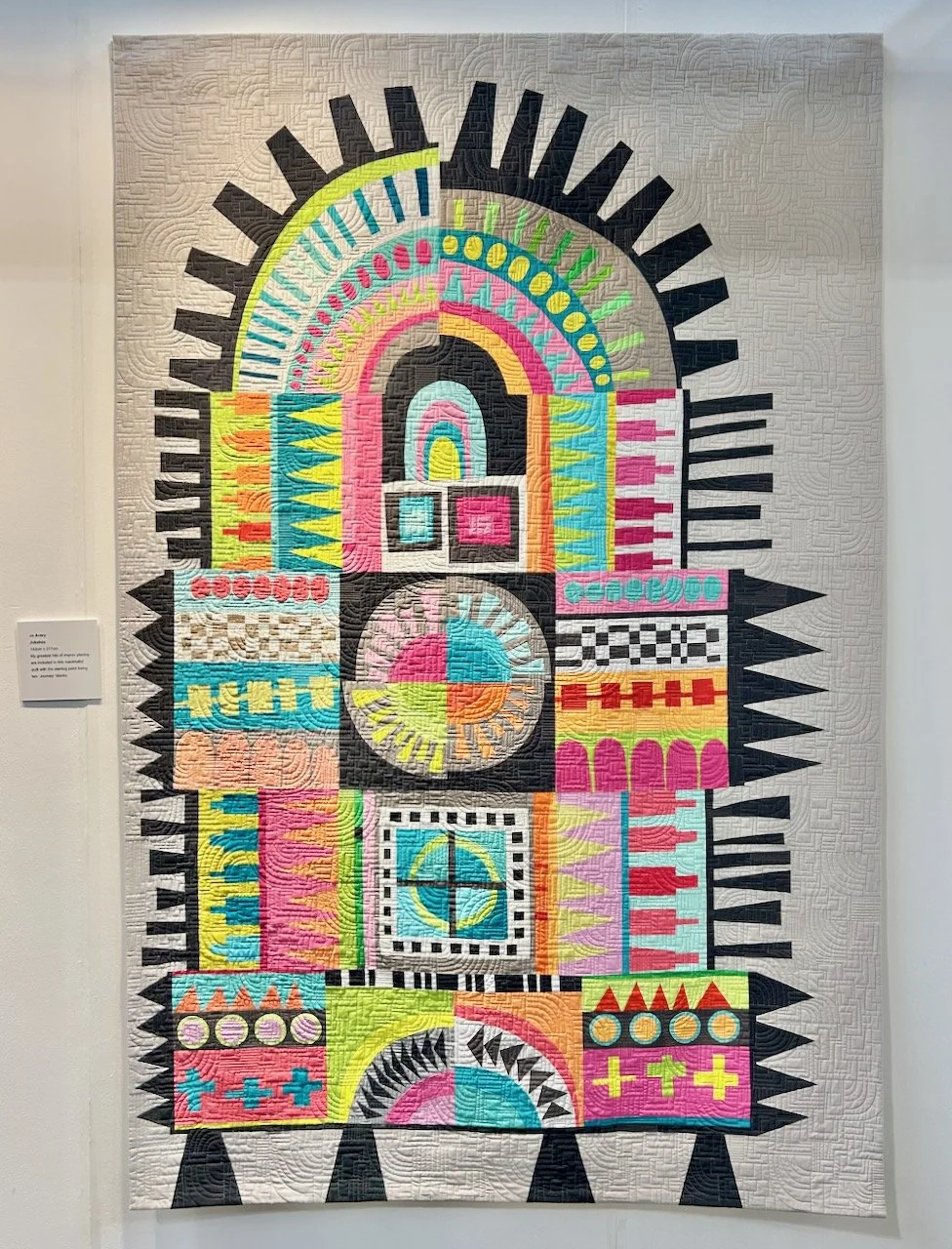
I loved the improv quilt below, and then loved it even more when I saw it was called Jukebox.

JUKEBOX, JO AVERY’S TEXTILE GALLERY, FESTIVAL OF QUILTS 2025

But again the detail is mind blowing, and the size of this one - it’s 142cm by 217cm - and actually reminds me of a jukebox we had in our childhood home, which was I’m sure, equally as big.

JO AVERY’S TEXTILE GALLERY, FESTIVAL OF QUILTS 2025

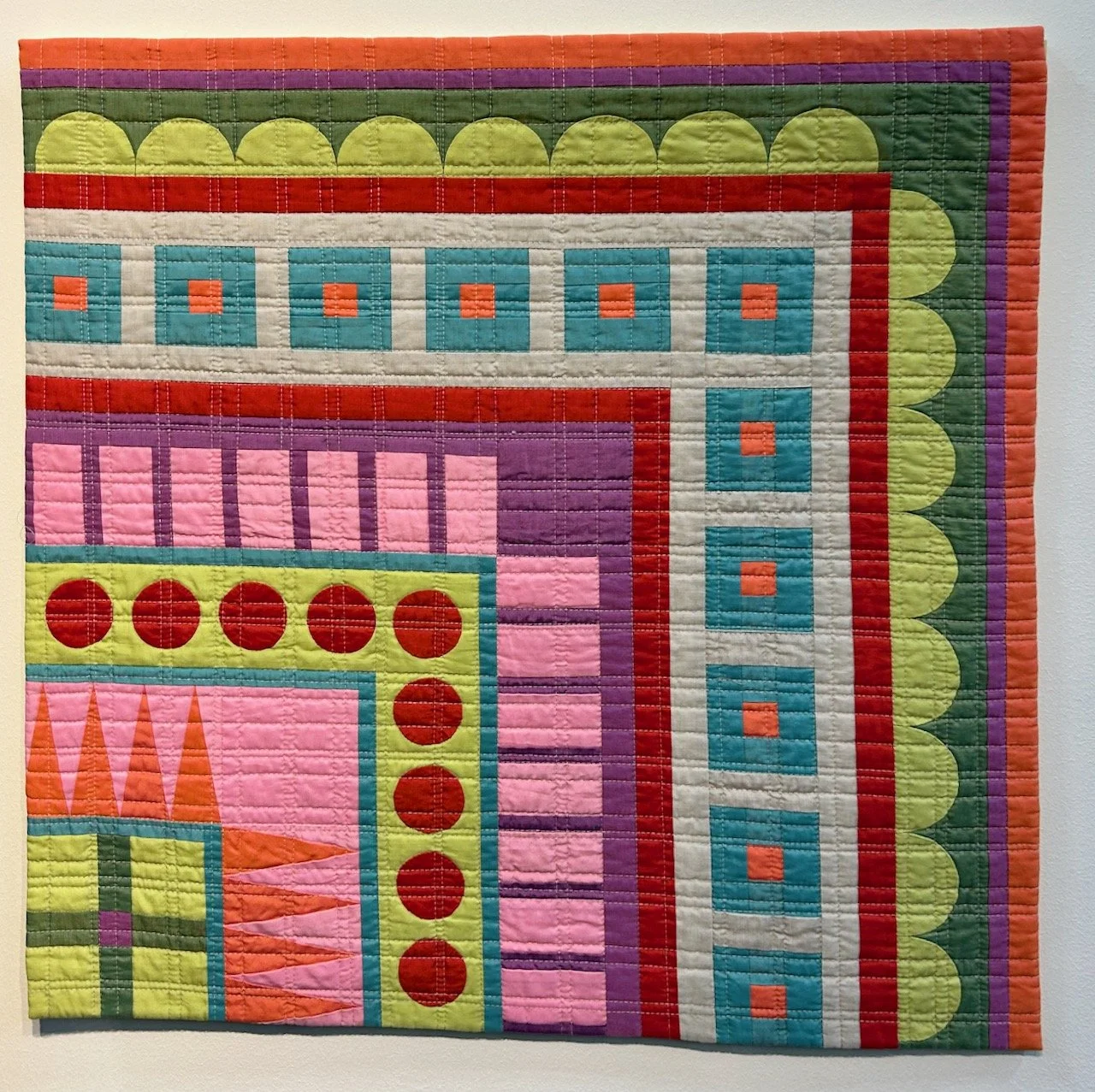
What Jo’s quilts made me realise was how simple shapes repeated can be so effective, and look anything but simple as the quilts above and below both demonstrate.

JO AVERY’S TEXTILE GALLERY, FESTIVAL OF QUILTS 2025

JO AVERY’S TEXTILE GALLERY, FESTIVAL OF QUILTS 2025

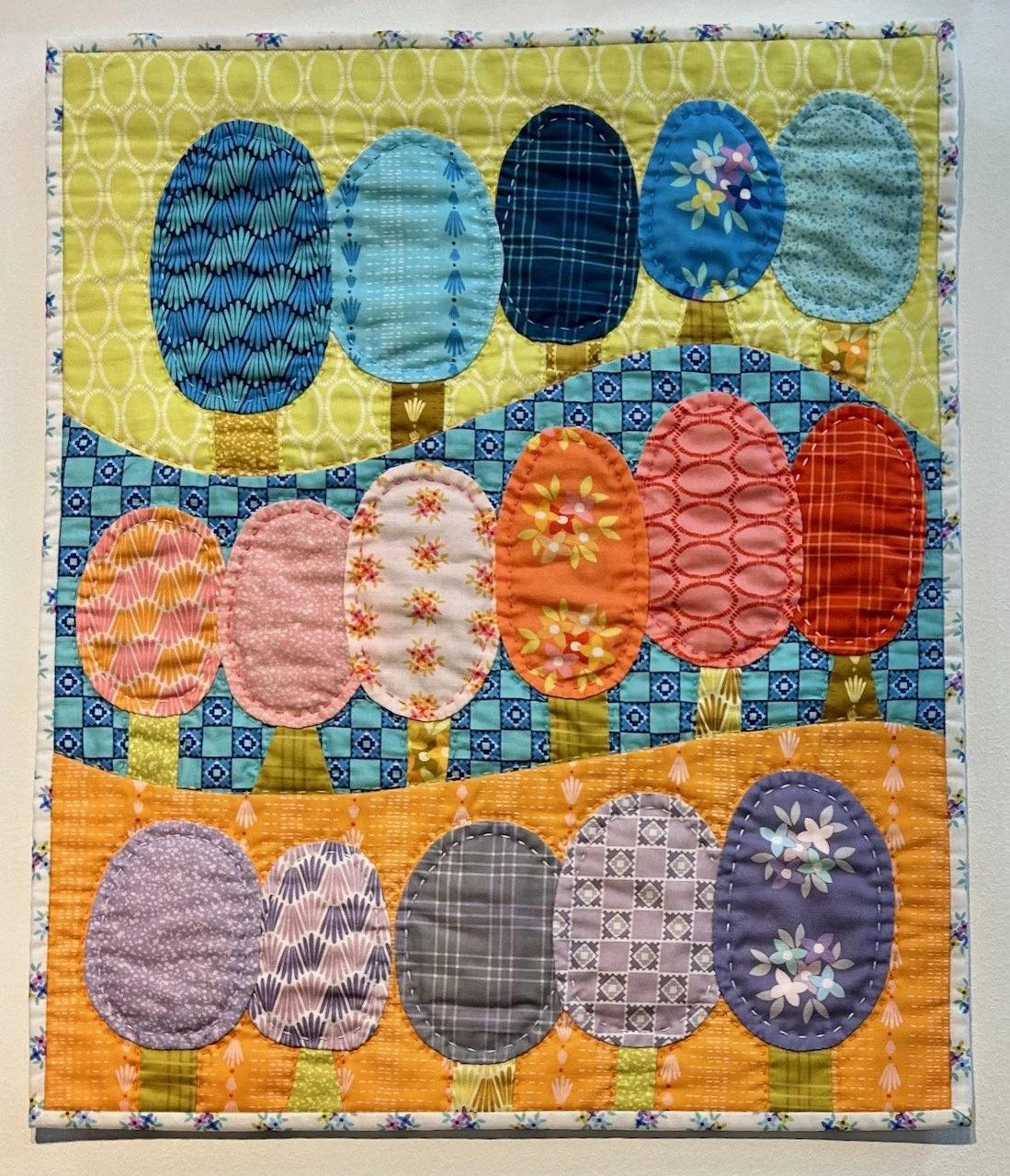
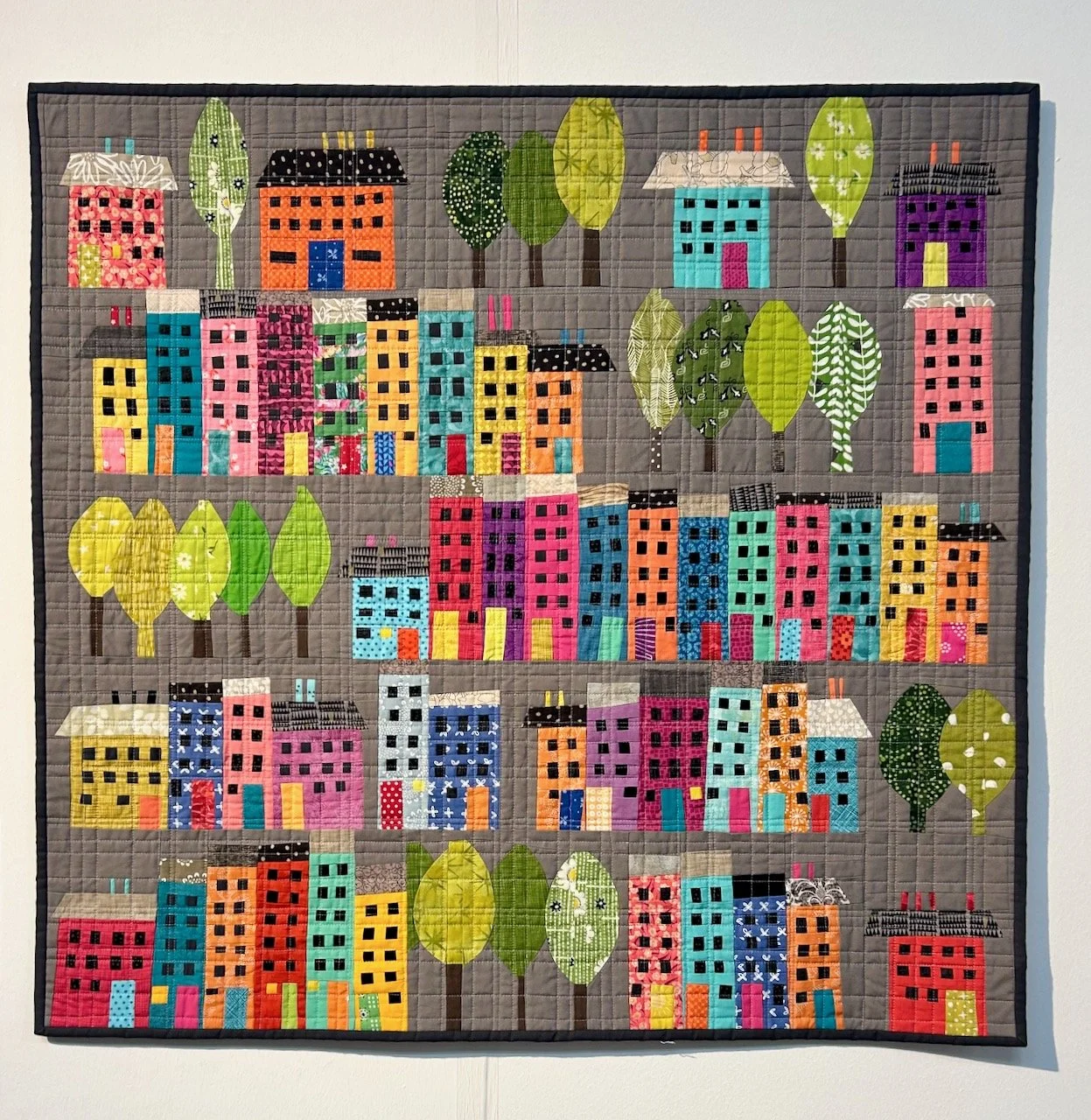
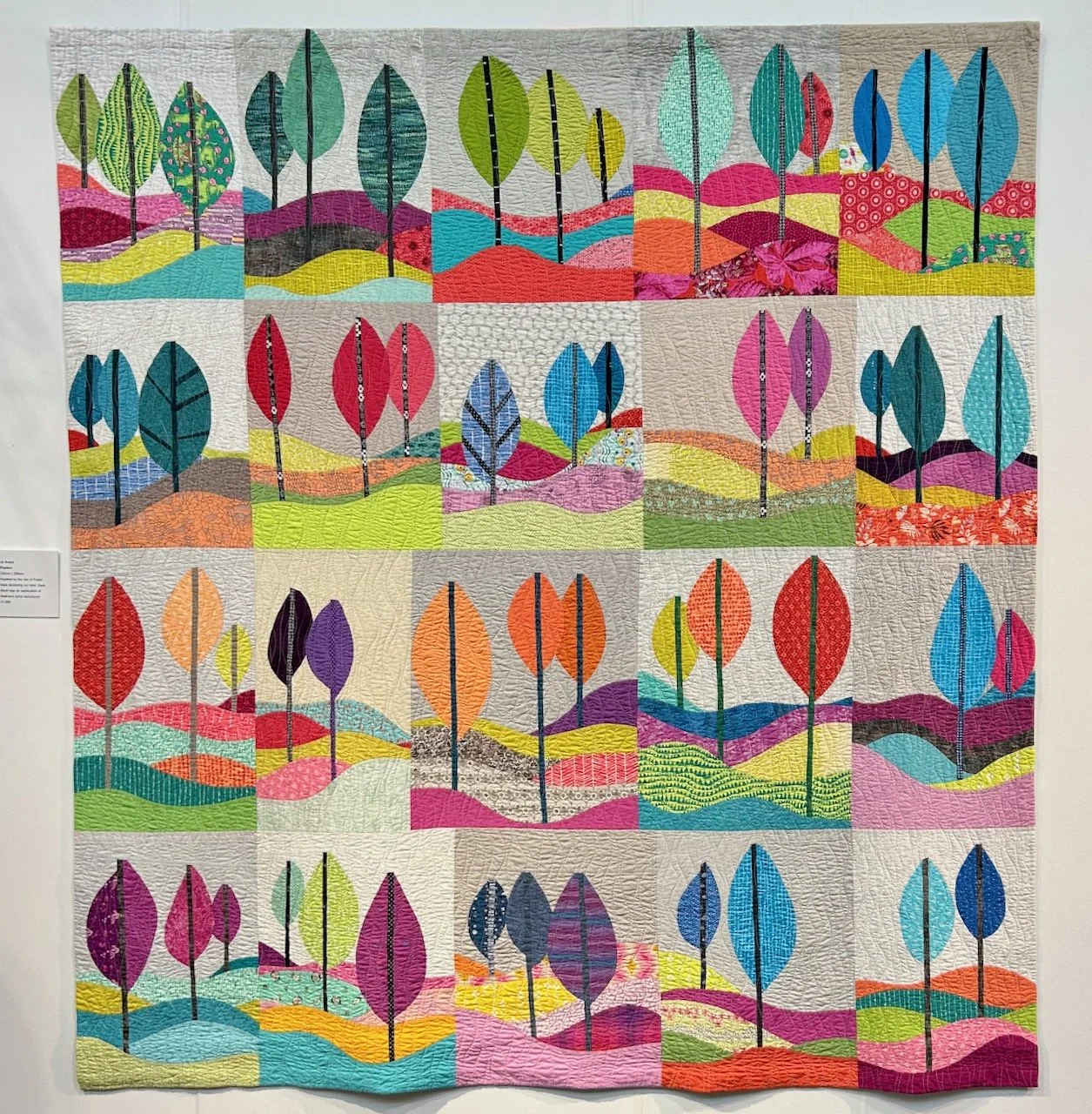
And when those shapes are repeated and mixed with other shapes such as the houses or the wavy landscapes below, they become something truly fantastic.

POPLARS, JO AVERY’S TEXTILE GALLERY, FESTIVAL OF QUILTS 2025

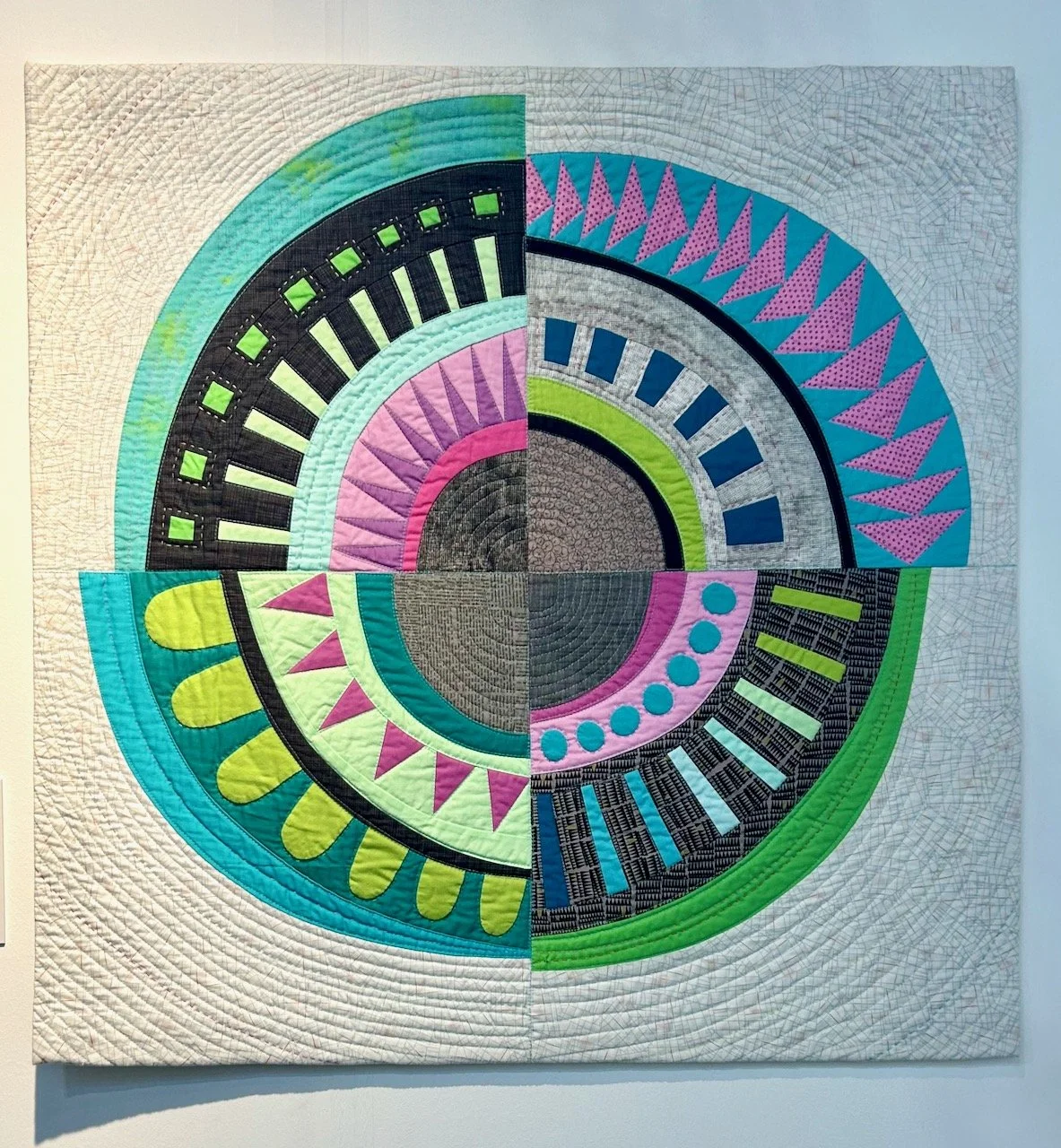
This one brought me straight back to that time I tried quilting in a circle, which was one of the most stressful quilting sessions I’ve had so far, but this one makes me want to try again. Though on a much smaller scale!

JO AVERY’S TEXTILE GALLERY, FESTIVAL OF QUILTS 2025

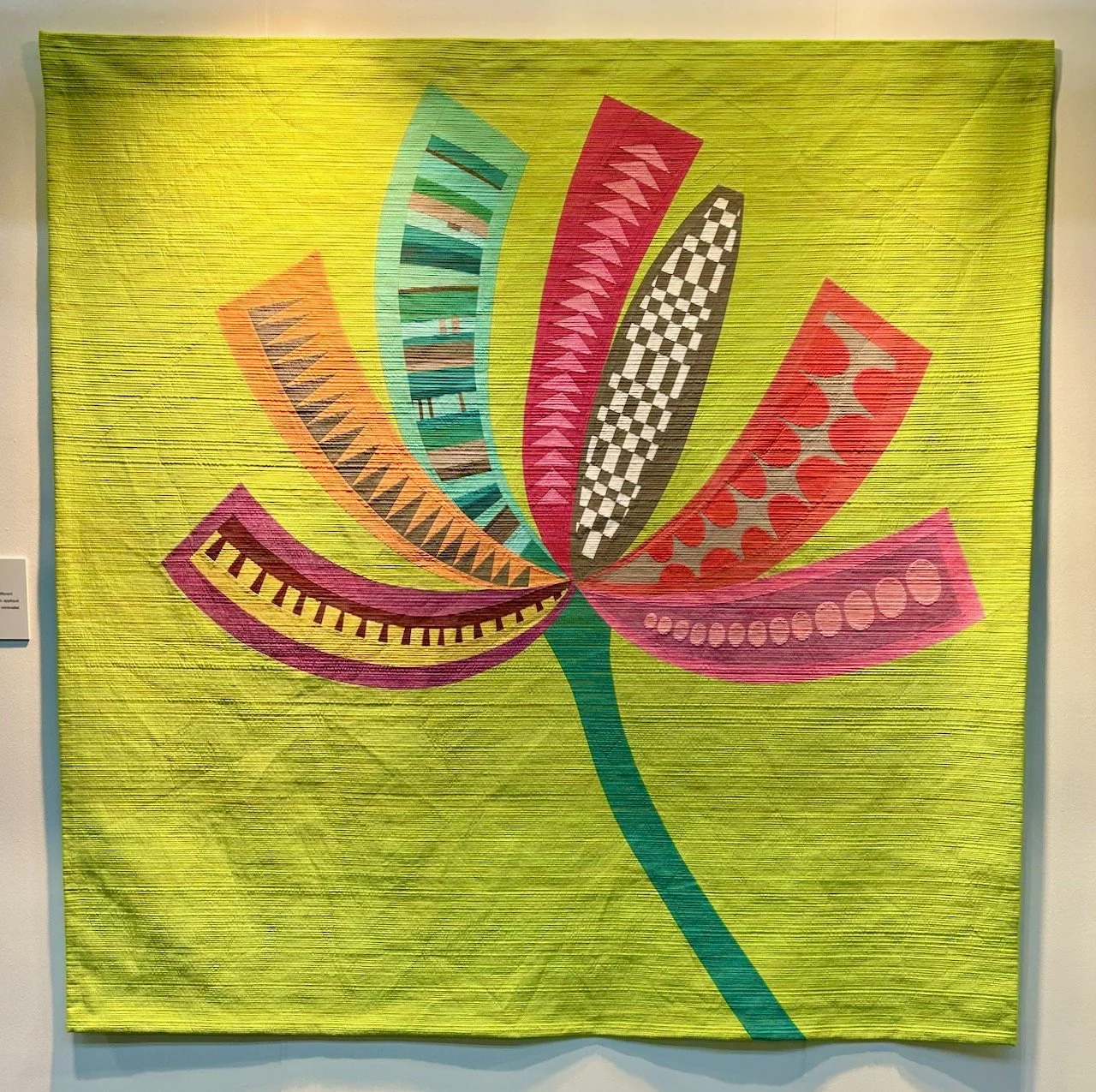
What I also liked is how Jo’s style of quilting also works for flower shapes, and this Dream Flower quilt below is stunning in its boldness - I’d say simplicity, but there is nothing simple about the detail here, as each petal contains a different improv pieced or organic applique pattern.

DREAM FLOWER, JO AVERY’S TEXTILE GALLERY, FESTIVAL OF QUILTS 2025

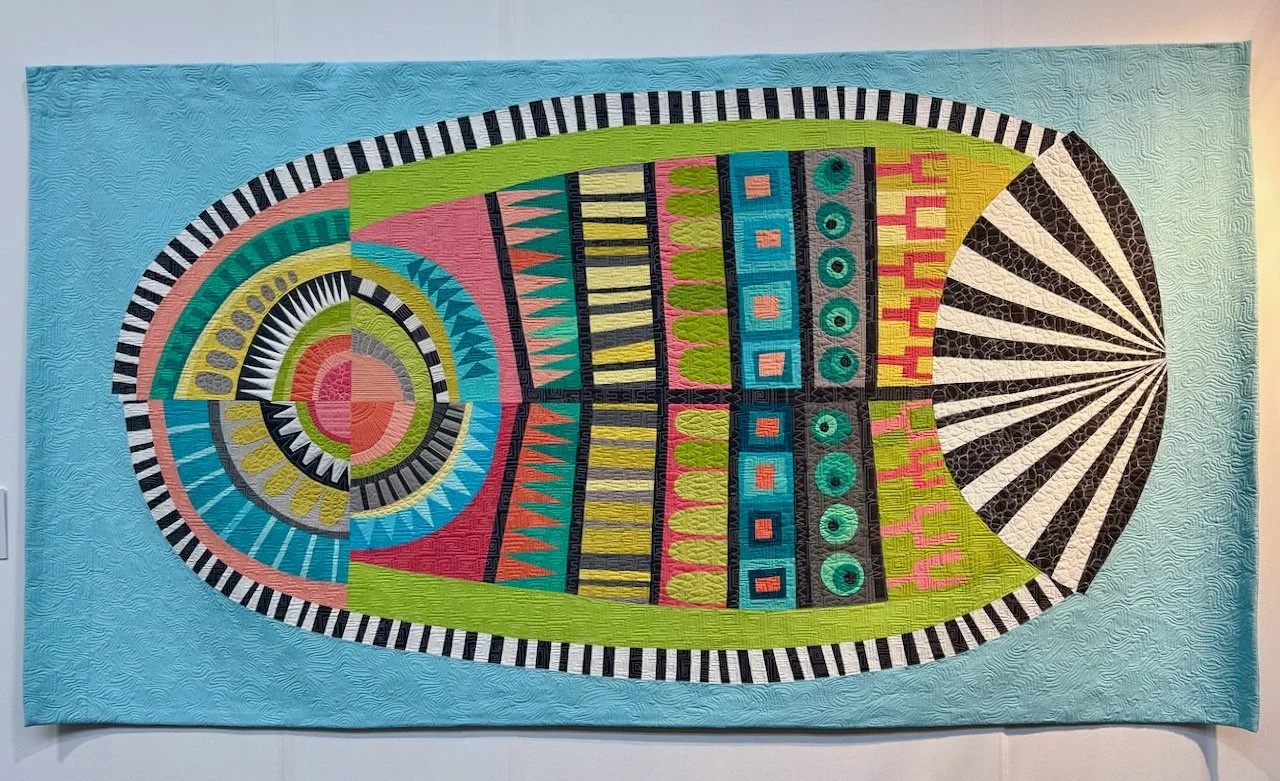
The last quilt I’m sharing here today is this Giant Trilobite (which are extinct marine arthropods - I just had to Google it) and once again it features the bright colours, the circles and more improv pieced and needle-turn applique patterned segments.

GIANT TRILOBITE, JO AVERY’S TEXTILE GALLERY, FESTIVAL OF QUILTS 2025

Aren’t they all amazing?

If you enjoyed this post from my visit to the Festival of Quilts 2025 then please do check out my other posts from the show. Even though my mind was blown by the sheer volume of quilts on display, I’m pretty sure I’ll be going again!

Gargano's gnarly olive trees

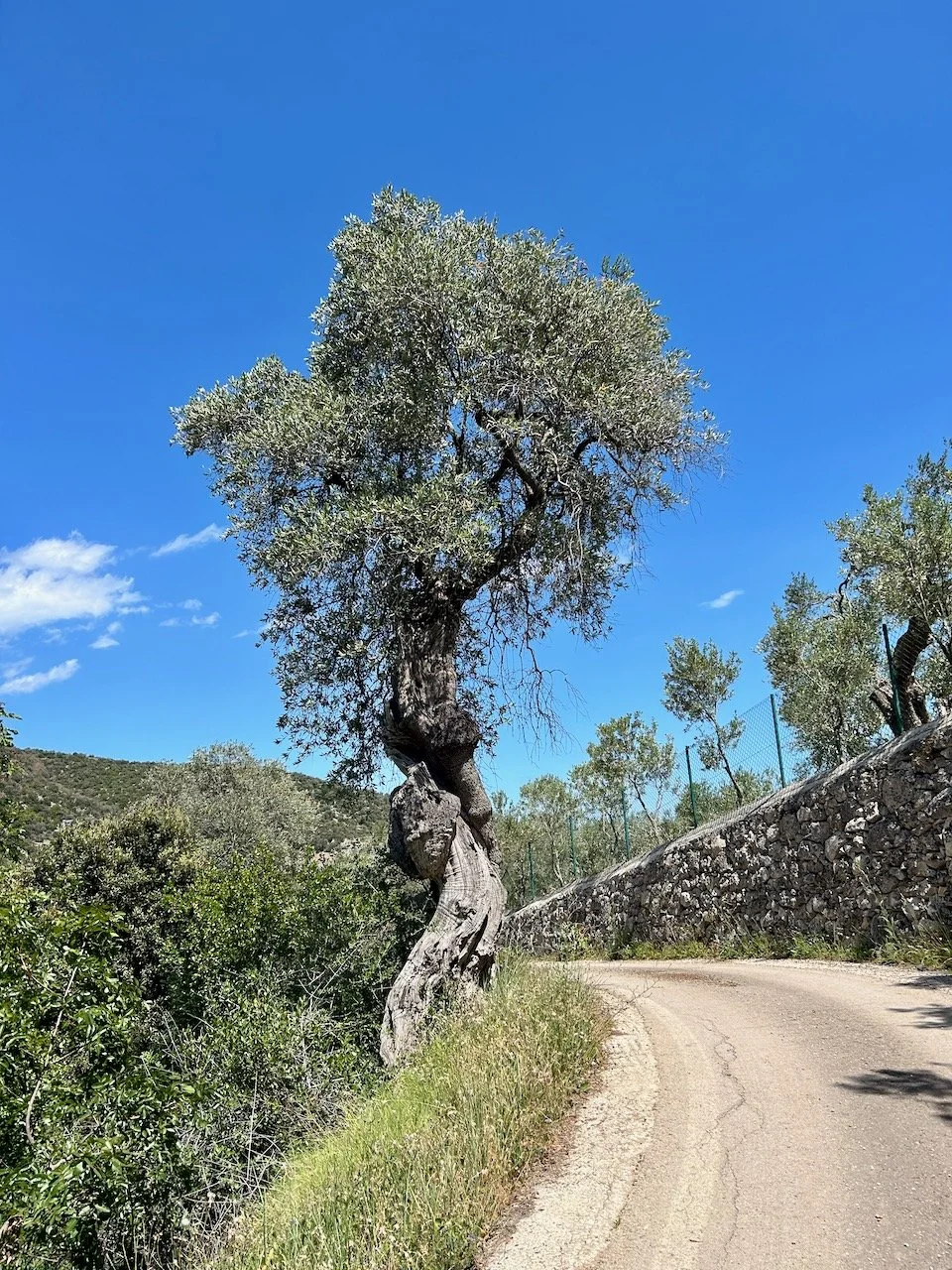
It was the day that we headed back down to the coast that we saw the most amazing olive trees on the sides of the road, and as we walked through olive groves. If you’d asked me beforehand I’d probably say that one olive tree is pretty much like any other, but I’d be wrong - and I was surrounded by the evidence on that walk! Of course there were many that looked similar but there were also many, and I’m only sharing a few here, that were the most gnarliest and stubborn trees I’ve ever seen.

I could have snapped so many more, but we as had a hotel to get find that was deemed to be the priority!

A twisted trunk on an old and tall olive tree growing on the side of the road

Once we started to notice the gnarly trunks of the olive trees, that became our challenge to spur us on as the temperature’s got warmer and we got tired-er, sort of like a grown up version of I-spy as it were.

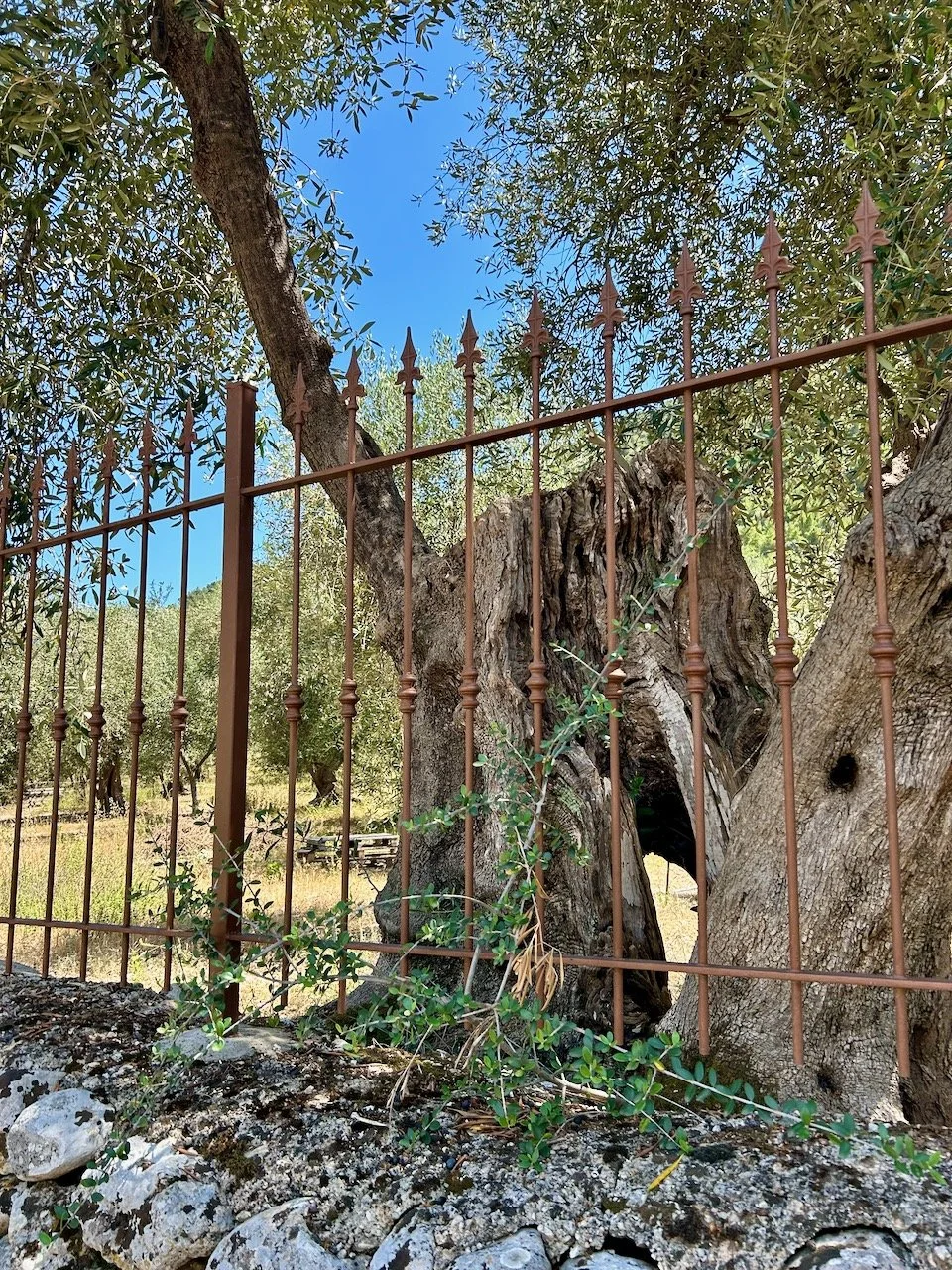
old split olive tree trunks behind railings - for whose safety?

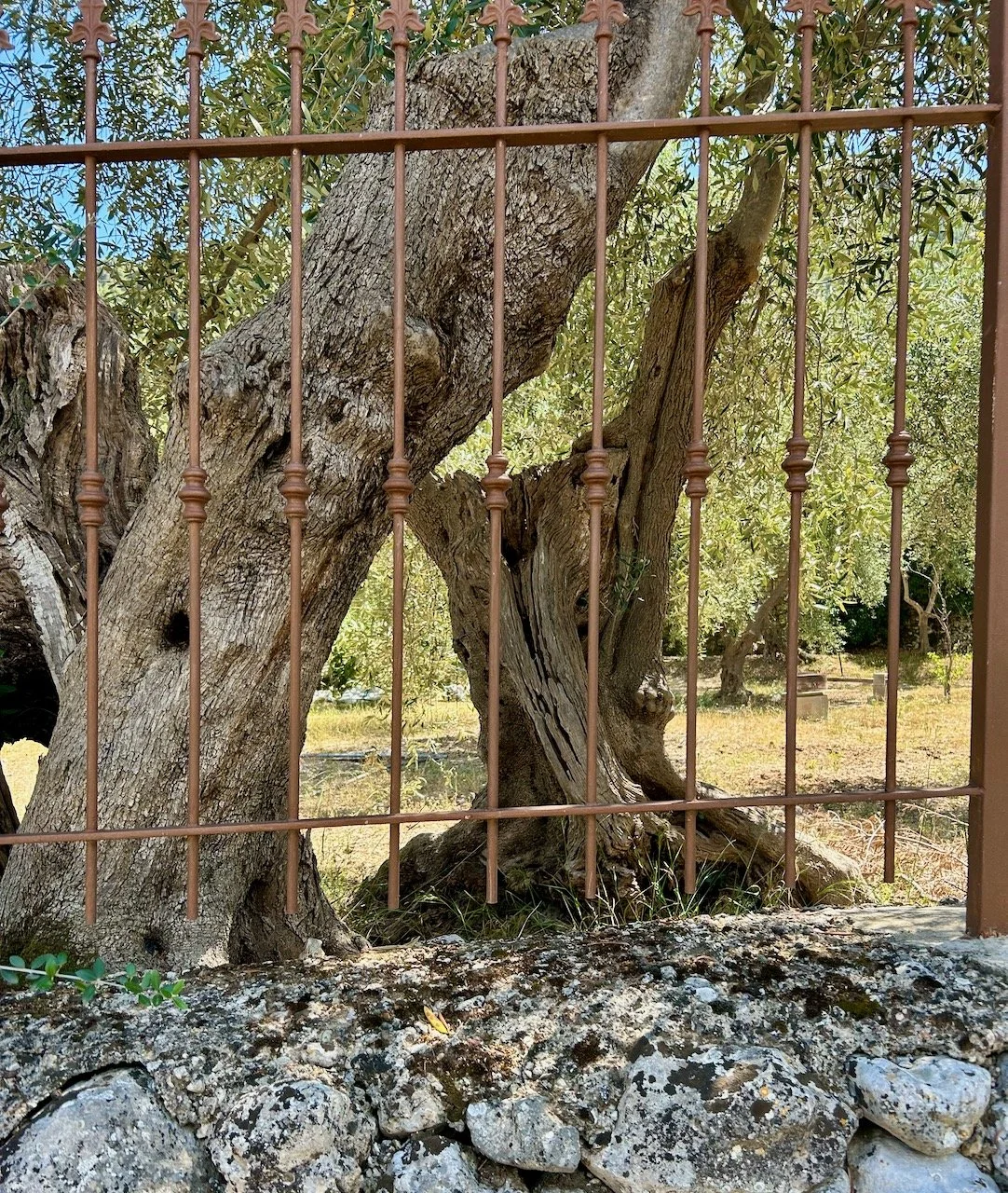
Some where growing right up against the boundaries, and I couldn’t help but wonder if they’d really been grown like that from the off or if there was some kind of boundary change which caused this. It amused me that they were so close to the railings, and I couldn’t help but wonder if that was for our safety, or theirs.

The same trees behind railings - showing more clearly how one was stronger to survive

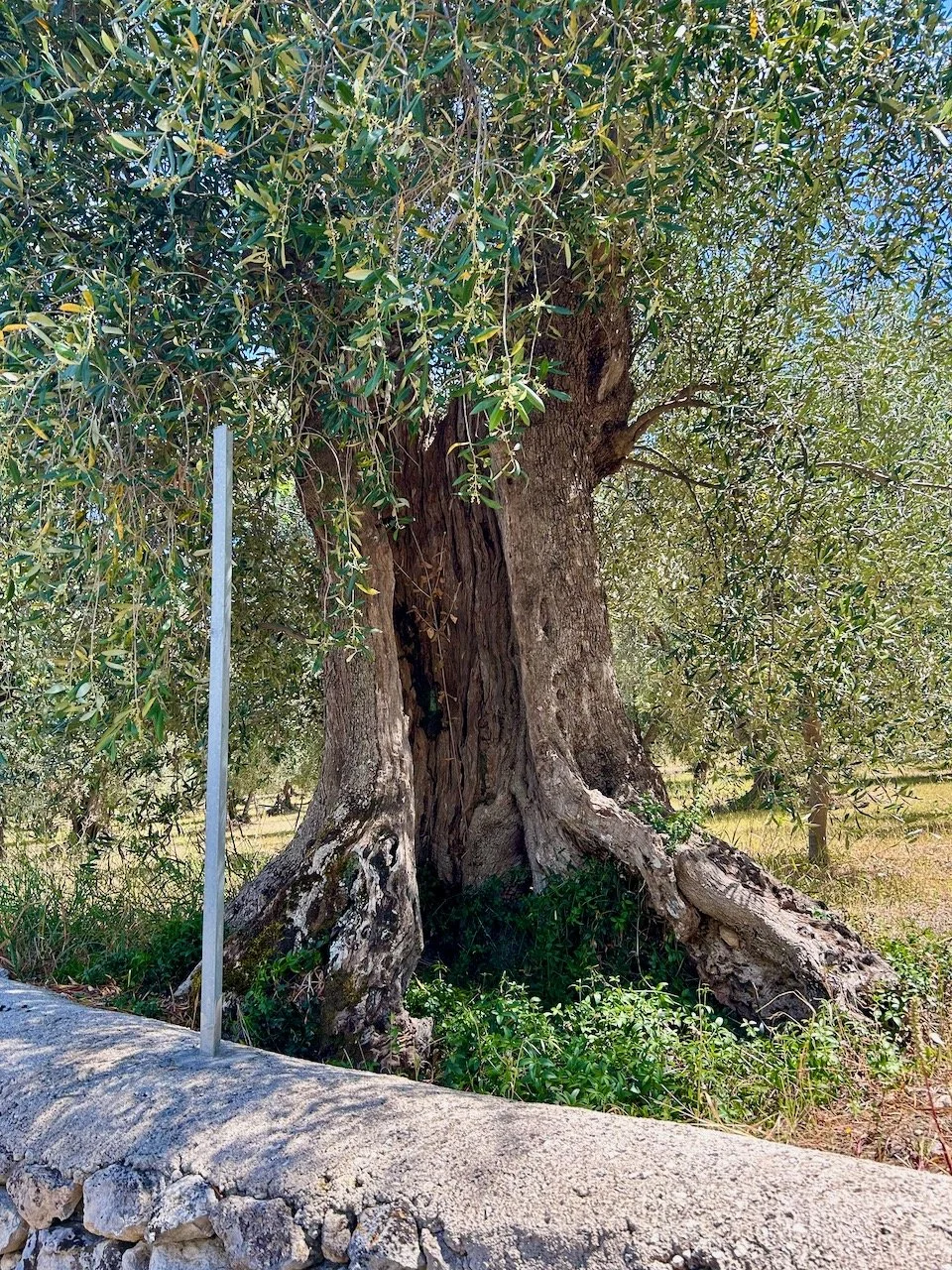
Others had almost completely hollow trunks, which looked if they could easily hide a human - we didn’t try.

A large olive tree trunk - which is almost hollow

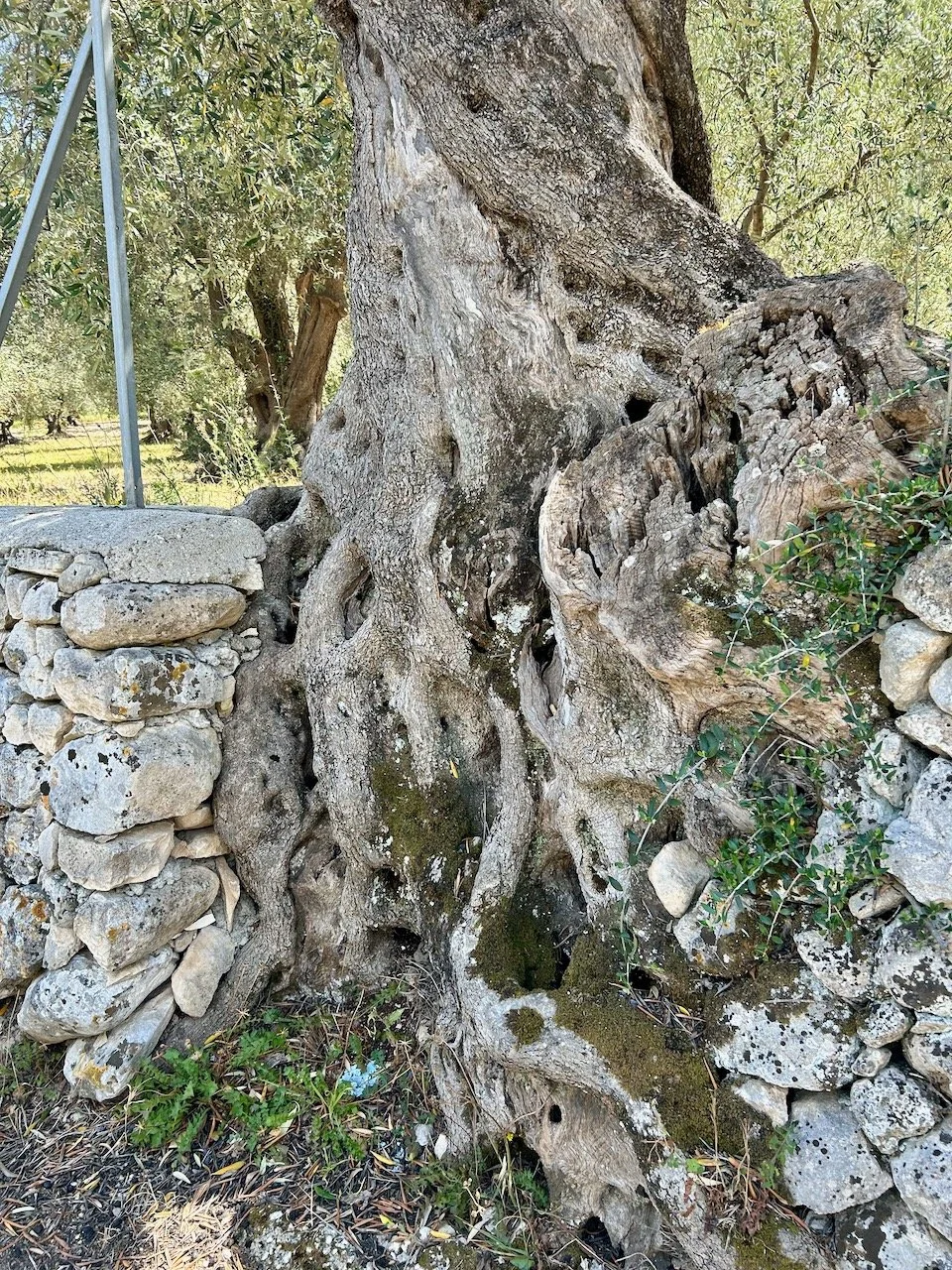
Others had walls build around them.

Another old olive tree - I think the wall was built around it

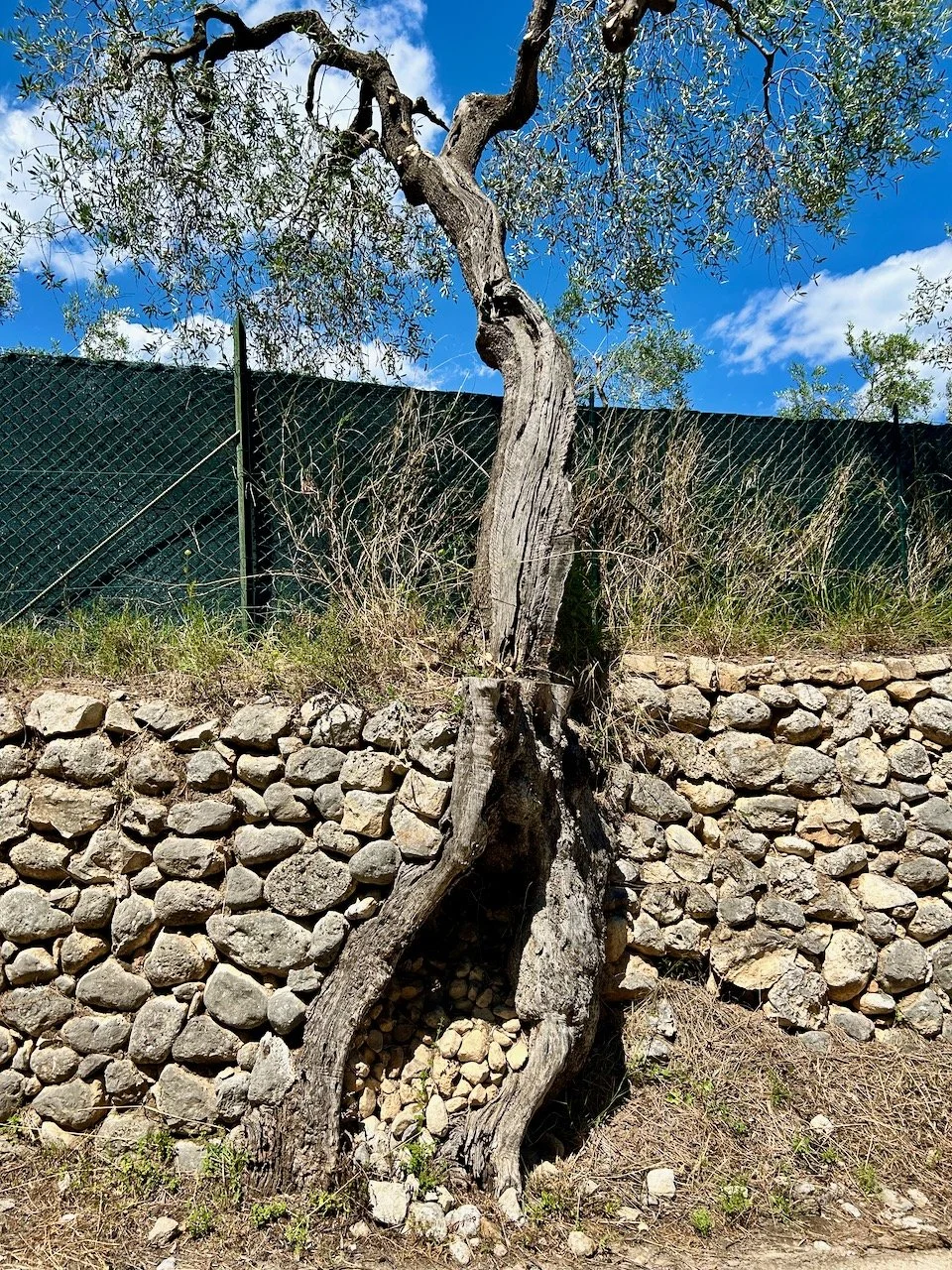
And more than one combined a number of the things I’ve been pointing out here.

Another wall built around a split trunk of an olive tree - this time with small stones in the hollow trunk

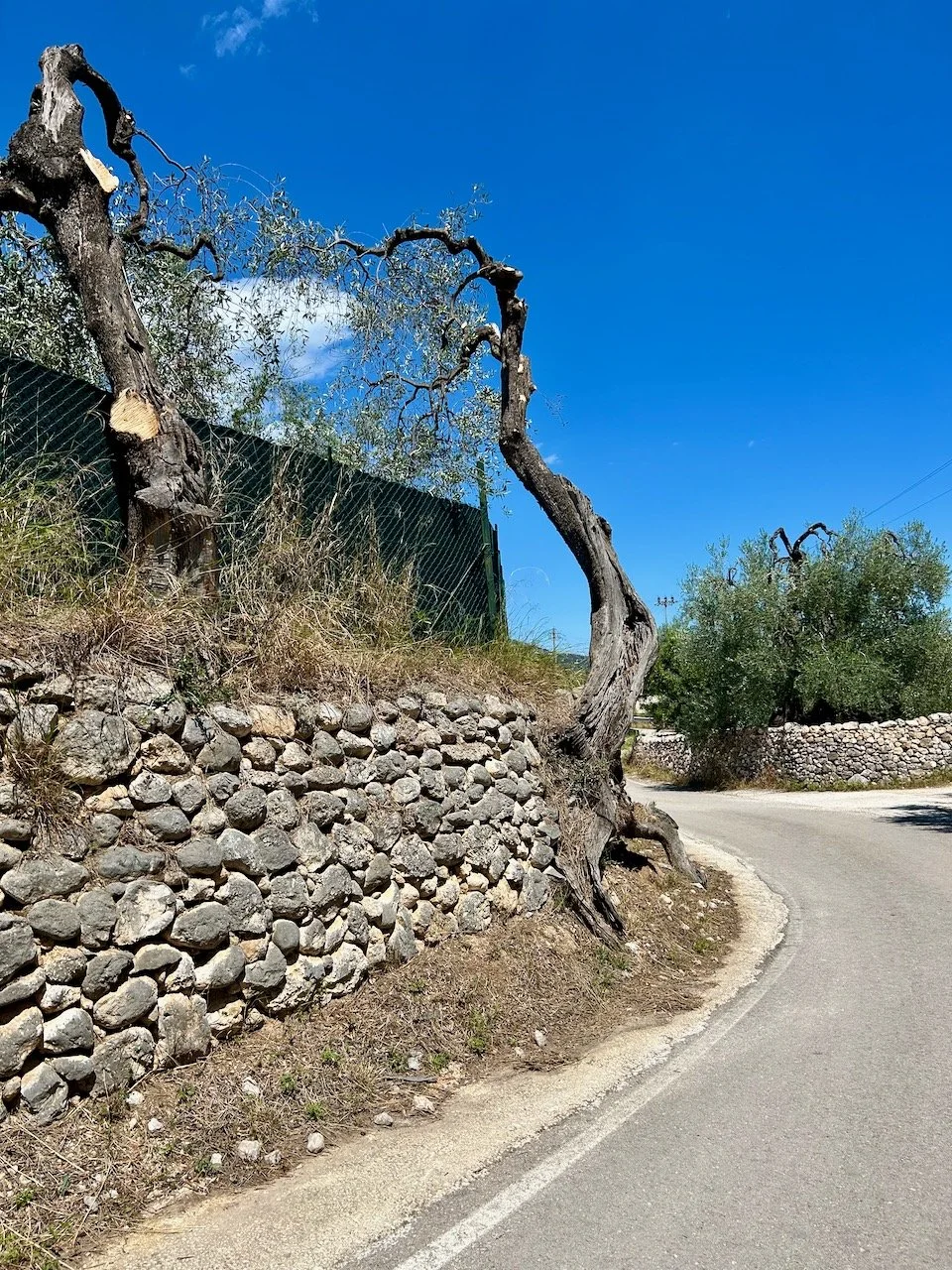
Some even appearing to have grown ‘legs’.

A twisted gnarly olive tree growing in a wall, this one has two roots (like legs) hanging onto the verge

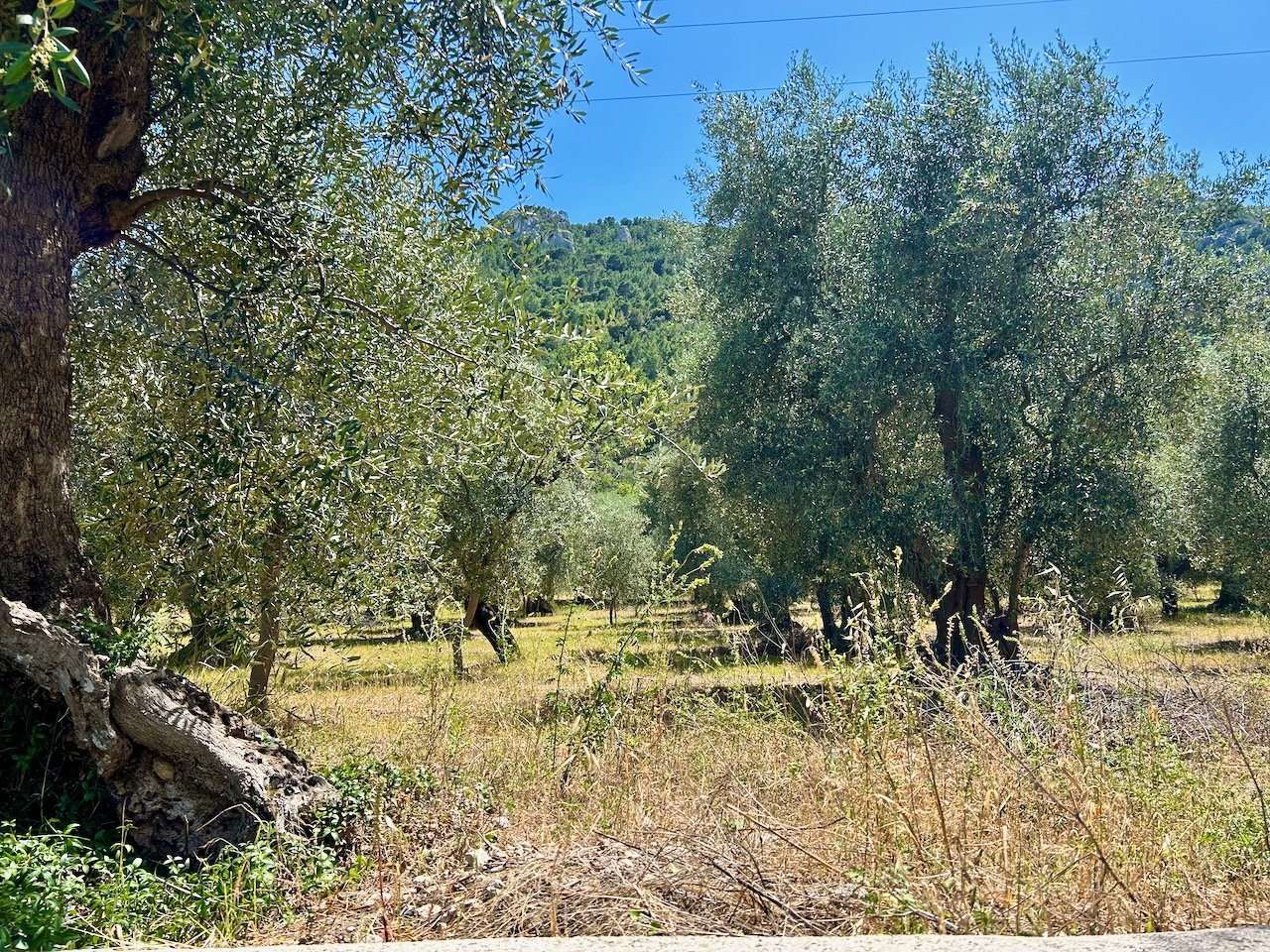
For all the weird and wacky shaped olive trees, there were many more more uniform, and I guess younger trees to see, which made spotting the gnarly ones a real privilege.

More usual looking olive trees - growing in lines in one of the olive groves our walk took us through

Whatever their shape, whatever their size they truly are amazing aren’t they?