
Making chilli jelly

With lots of ripening crab apples on our little crab apple tree this year I was keen that they didn’t all go to waste. One sunny afternoon in October I picked just over two kilograms of crab apples, and still the tree looked fully laden.
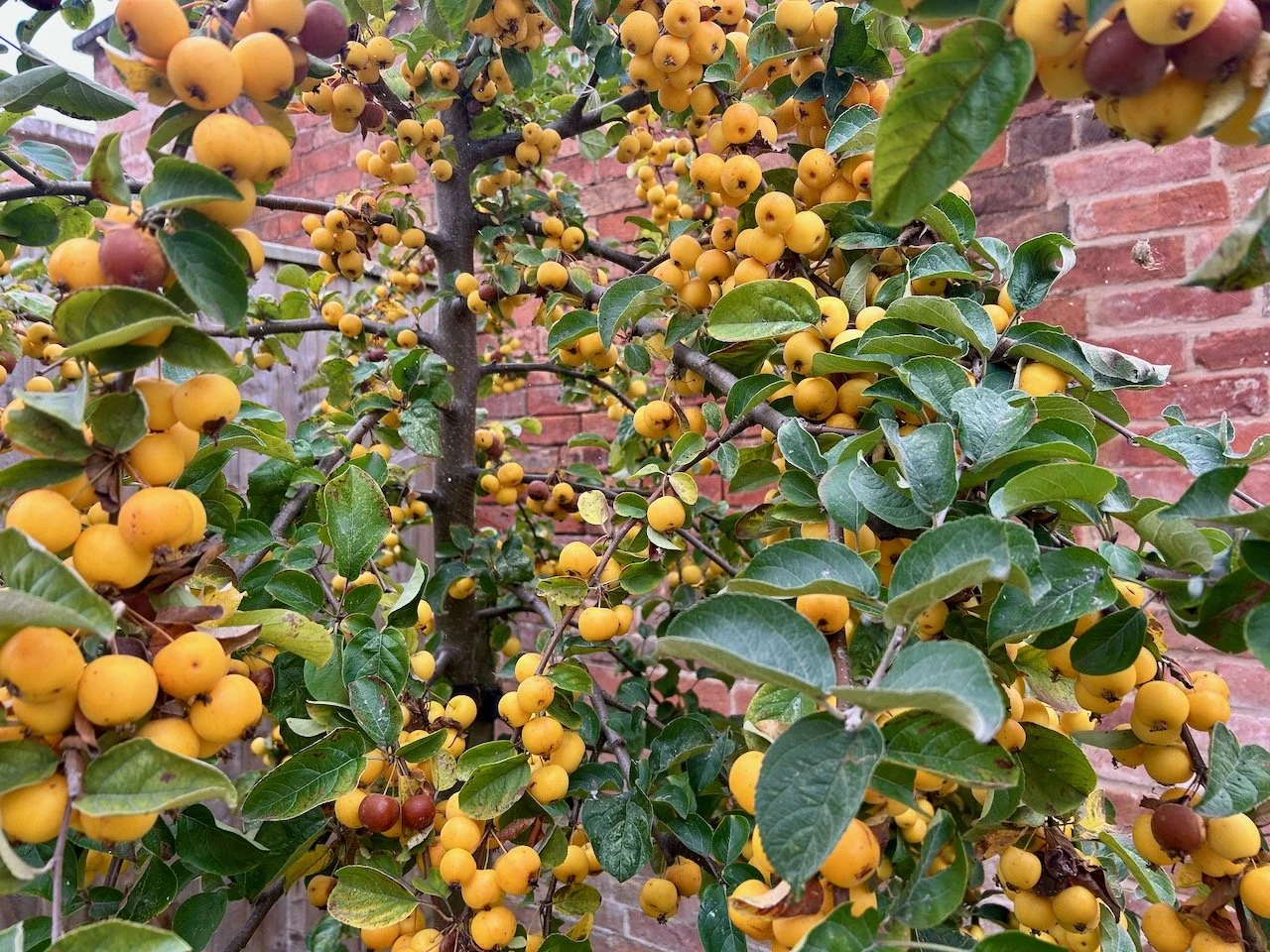
My crab apple tree - still fully loaded despite me having picked 2kg of fruit

Then I read the recipe properly - I mostly followed Sarah Raven’s Chilli Jelly Recipe - and realised that straining the jelly through muslin was essential for it to be clear and jewel-like. I had muslin, but I wasn’t sure that I could rig anything up that would be secure enough to hold the 2kg of fruity mush. And if I did, then I didn’t want to have a collapsing accident part way through and need to clear up the mess it made.

A rethink was needed, and that was the Lakeland jelly strainer, which I now highly recommend, but of course it was out of stock with more stock expected soon - so I got my order in quick, and waited for it to arrive. Thankfully that was only a week, but it was a long wait for my little apples.

Now armed with all the kit I needed I set about prepping my apples. Sorting through those that I’d stored while waiting for the jelly strainer to arrive, giving them a good wash and then weighing and chopping them before chucking them my big preserving pan.
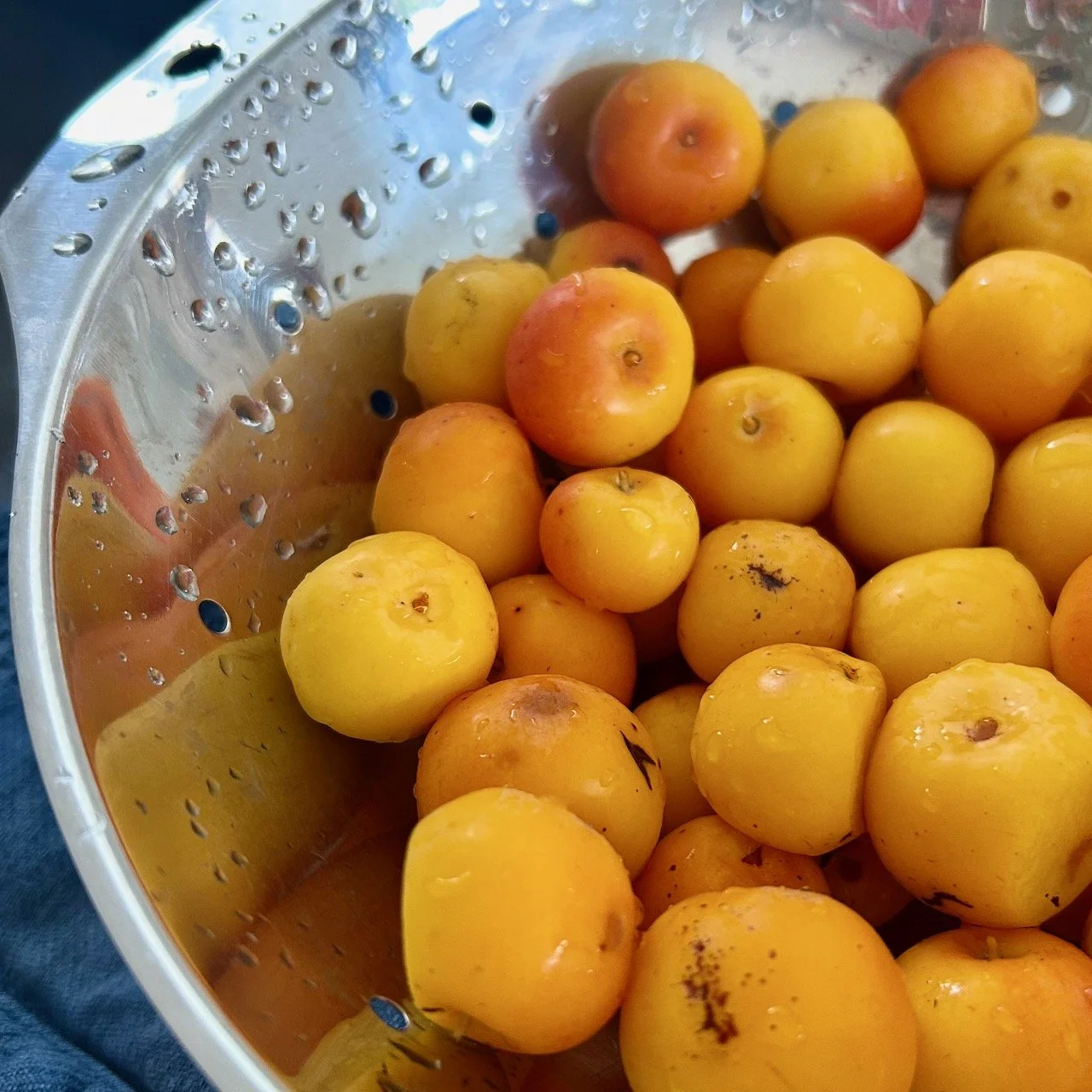
Washing some of the crab apples in a metal colander
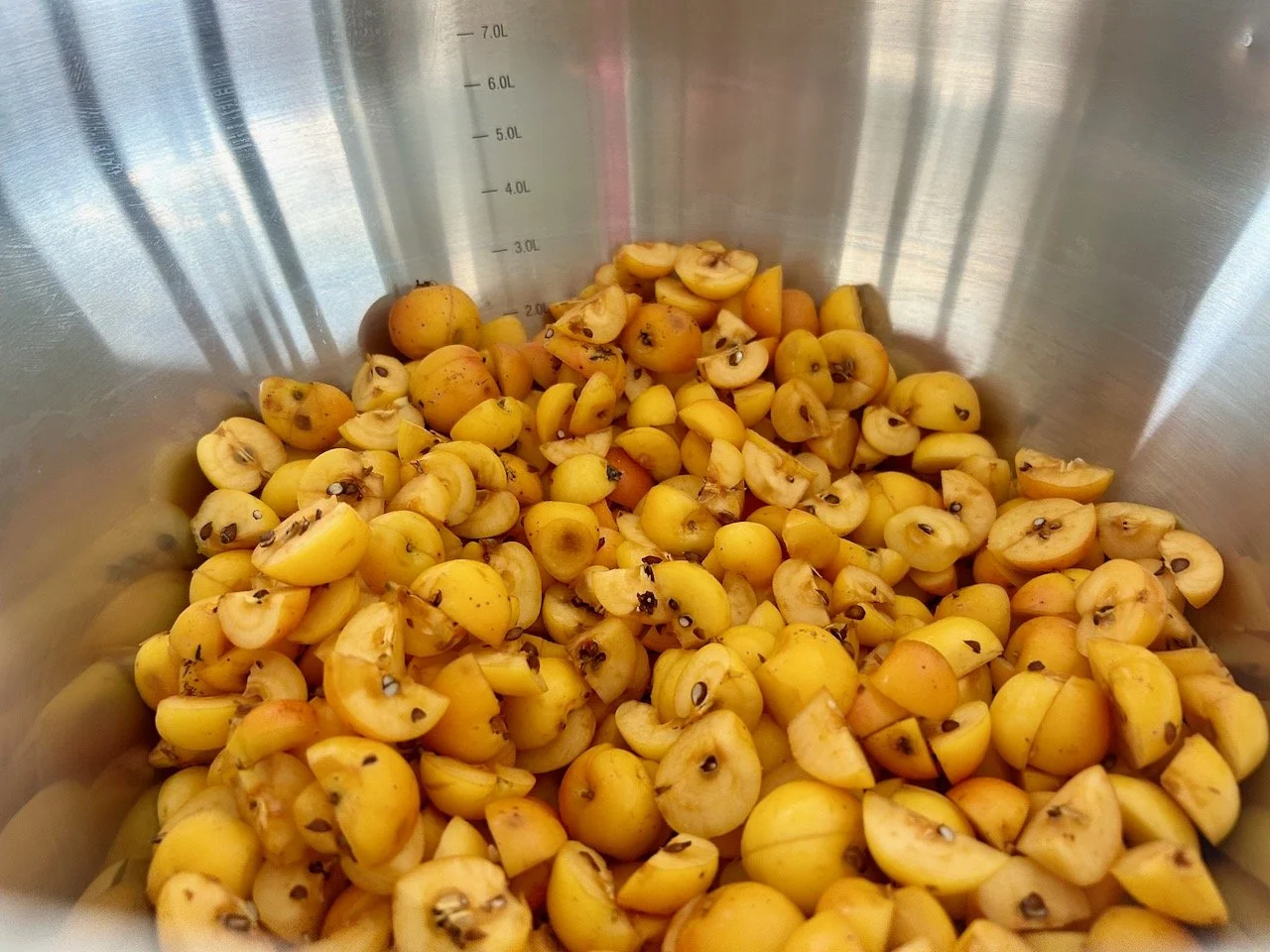
some of the apples, chopped (skin, pips and all) in the preserving pan

Thankfully the majority of the crab apples were as patient as me, and it turned out I’d overpicked a little - but even so I did need to nip out to the garden and pick about ten more apples to make up the numbers. Which wasn’t bad really.
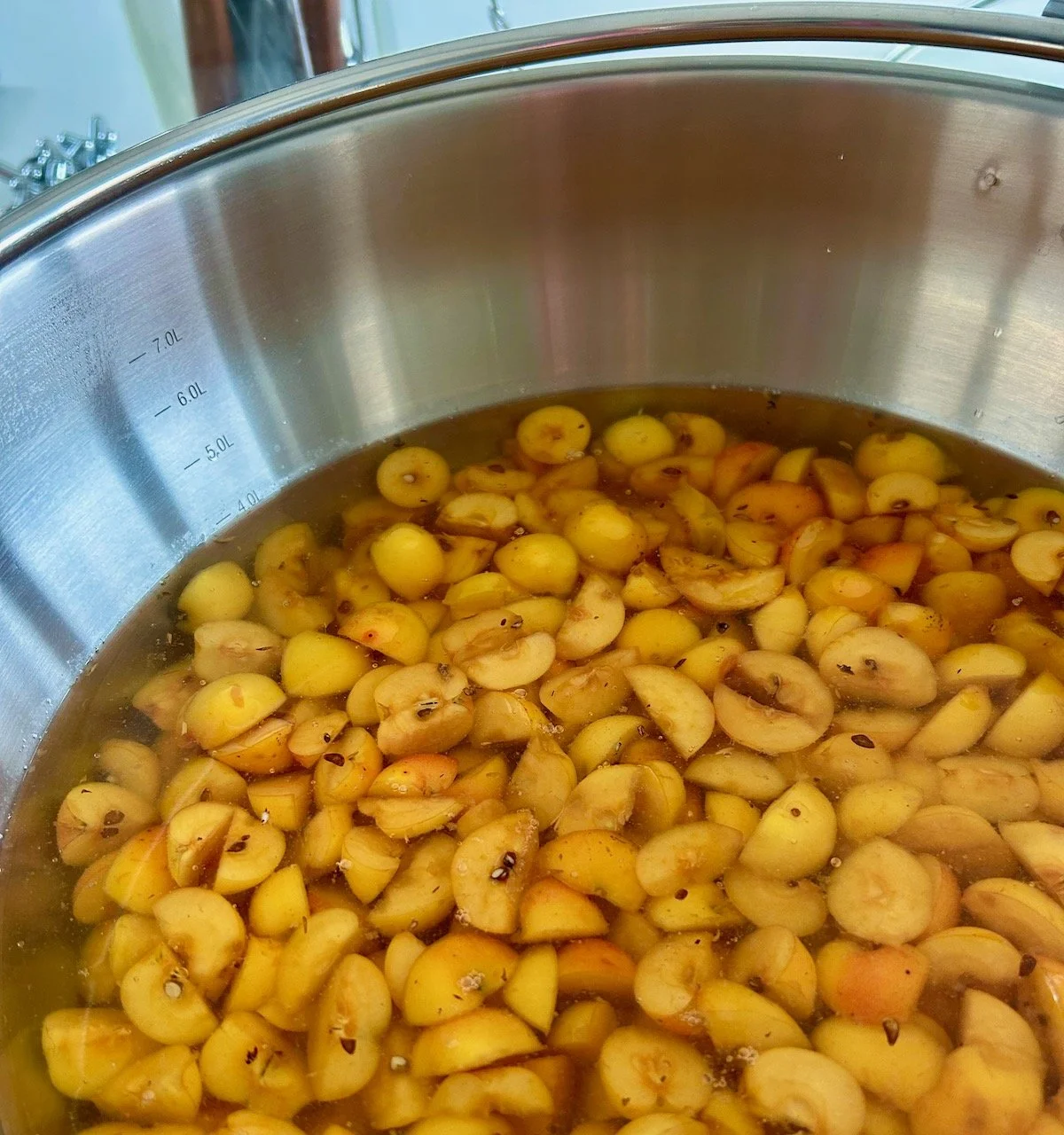
Adding water to cover the apples - the contents is up to the 4.0l mark

I brought the apples and water up to the boil, then added the cider vinegar and boiled until it was at the jam setting temperature on my jam thermometer (another piece of kit that makes preserving so much easier, and takes the guess work out of is it set or not, and without a cold saucer in sight).

Onto the straining

I’d read that I must avoid the urge to squeeze the bag if I wanted to have a clear jelly, so I did and MOH was under strict instructions not to dabble with it either. And we did good, but the set-up was much taller than I’d expected so there was no way that I’d be lifting the large preserving pan and pouring the hot apple mixture into my strainer.
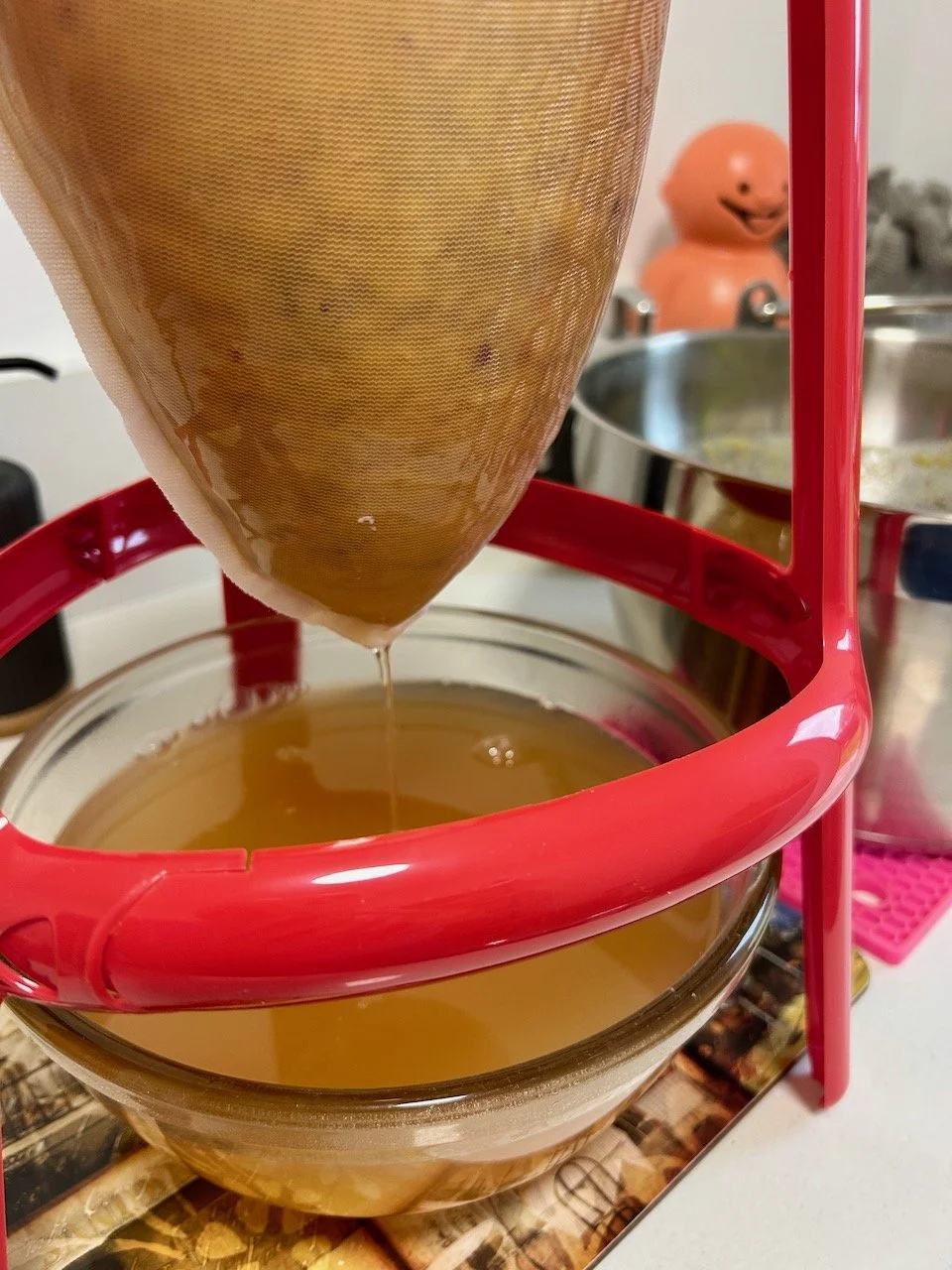
The jelly strainer full of apple mixture straining into a bowl below

Well some creative thinking was needed, and out came the kitchen steps, the ladle and a jug. And it worked. Phew.
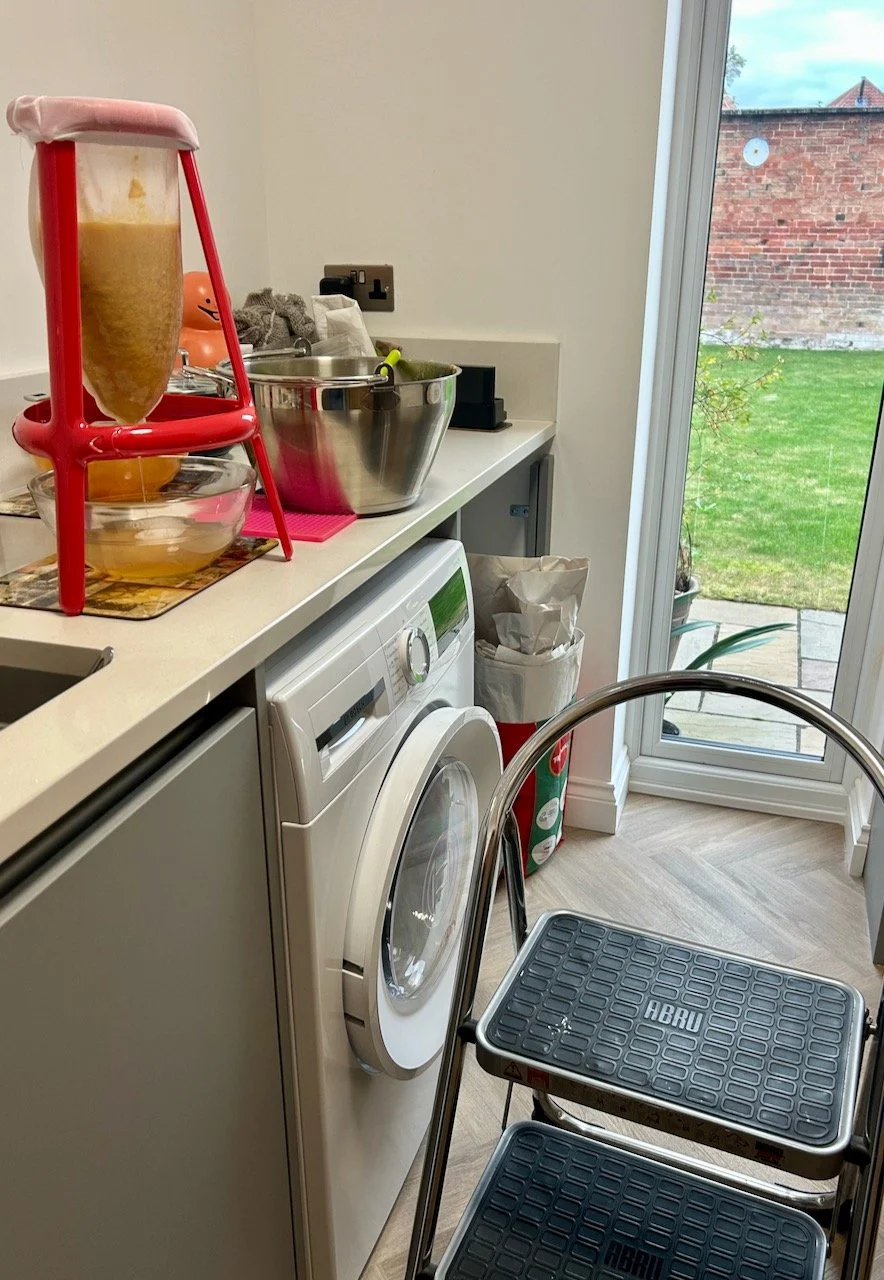
Then I realised that my large bowl was already filling up and I’d not even added all the apple mixture yet.
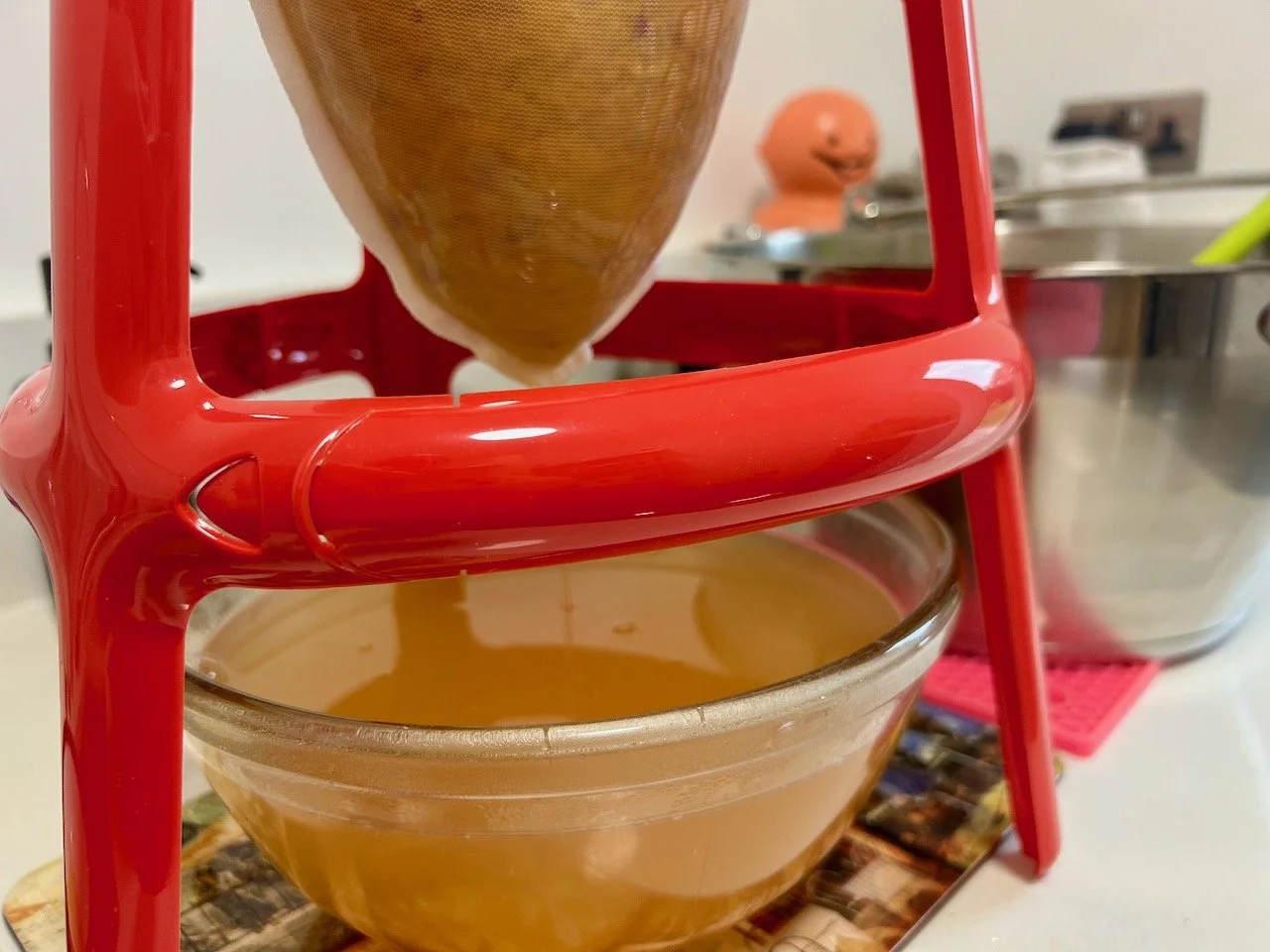
eek - the first bowl under the jelly strainer is almost full!

I’m so glad that I’d put some table mats under the jelly strainer as this helped me switch out the almost full bowl for its replacement, while the liquid happily continued to drip (well stream) through.
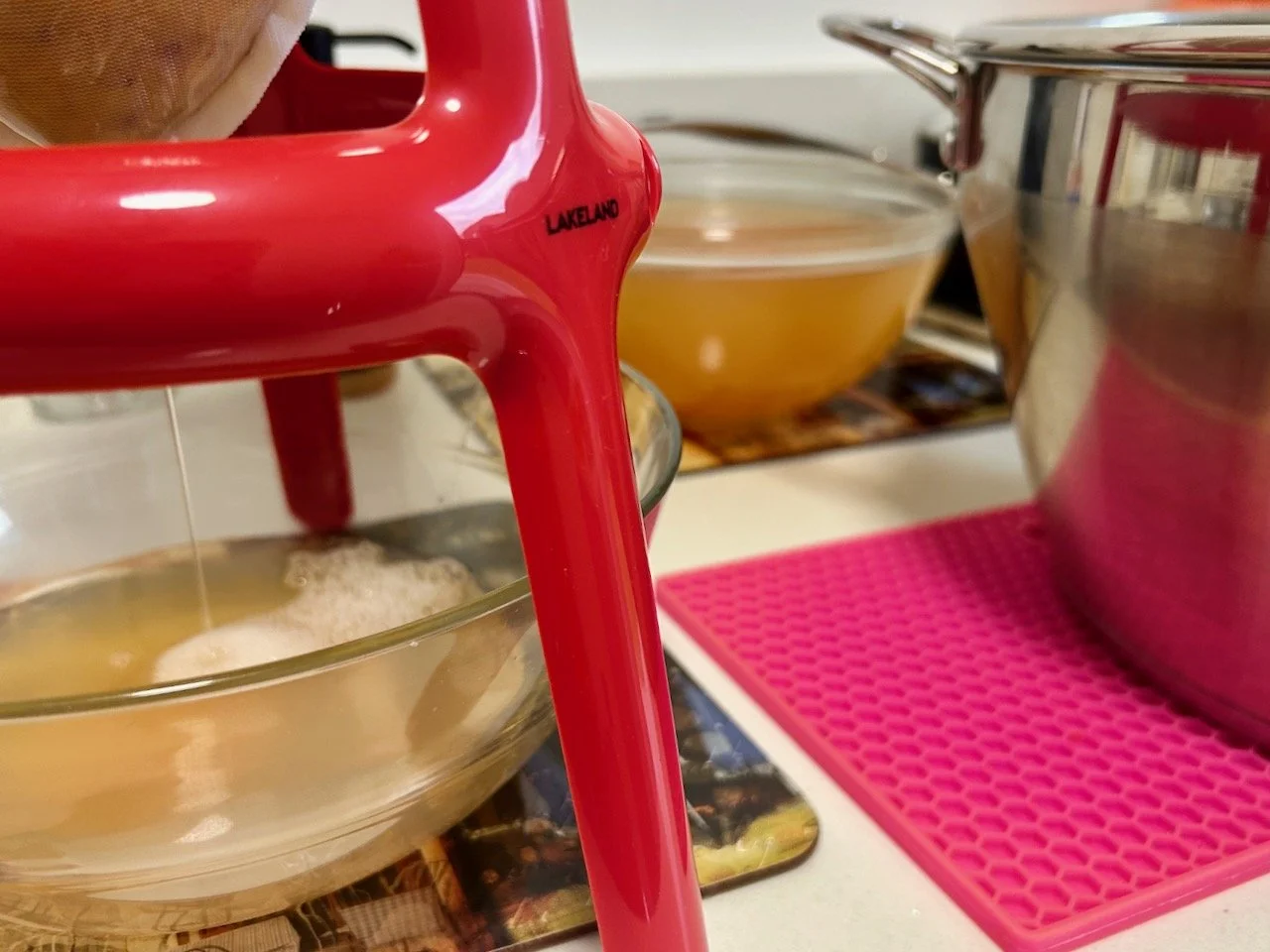
Phew - a new bowl under the strainer with the full bowl in the background

And so I left it to strain overnight, fairly confident that this bowl wouldn’t fill or overflow - and thankfully it didn’t. The jelly strainer didn’t collapse either, so that was double good news the next morning.

Adding chilli flakes

I’d originally bought fresh chillies but in the wait for the jelly strainer we’d used those but I’d seen in other recipes some used chilli flakes so that became my plan. The apples were supposed to yield about a litre of liquid, but I had double that - so then my dilemma was how much chilli flakes to add.
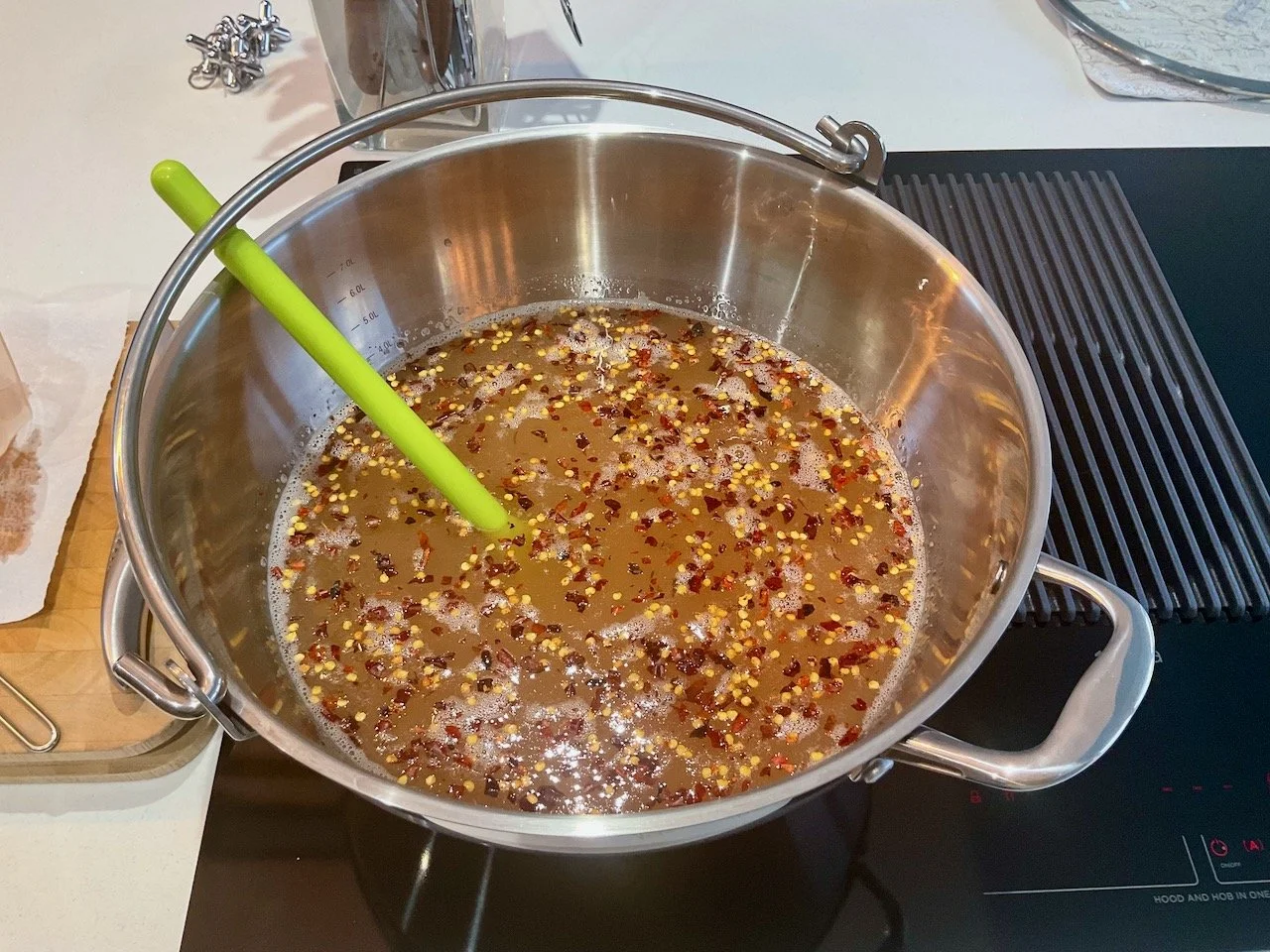
The strained liquid with sugar and chilli flakes added - back on the hob

In the end I added a couple of tablespoons along with the sugar and hoped for the best taste-wise.

The pulp

I was curious to see what was left from the overnight straining - and it was a soft but shape holding mush of apples. I’m sure this could be composted, but mine went into the green bin (which is actually brown).
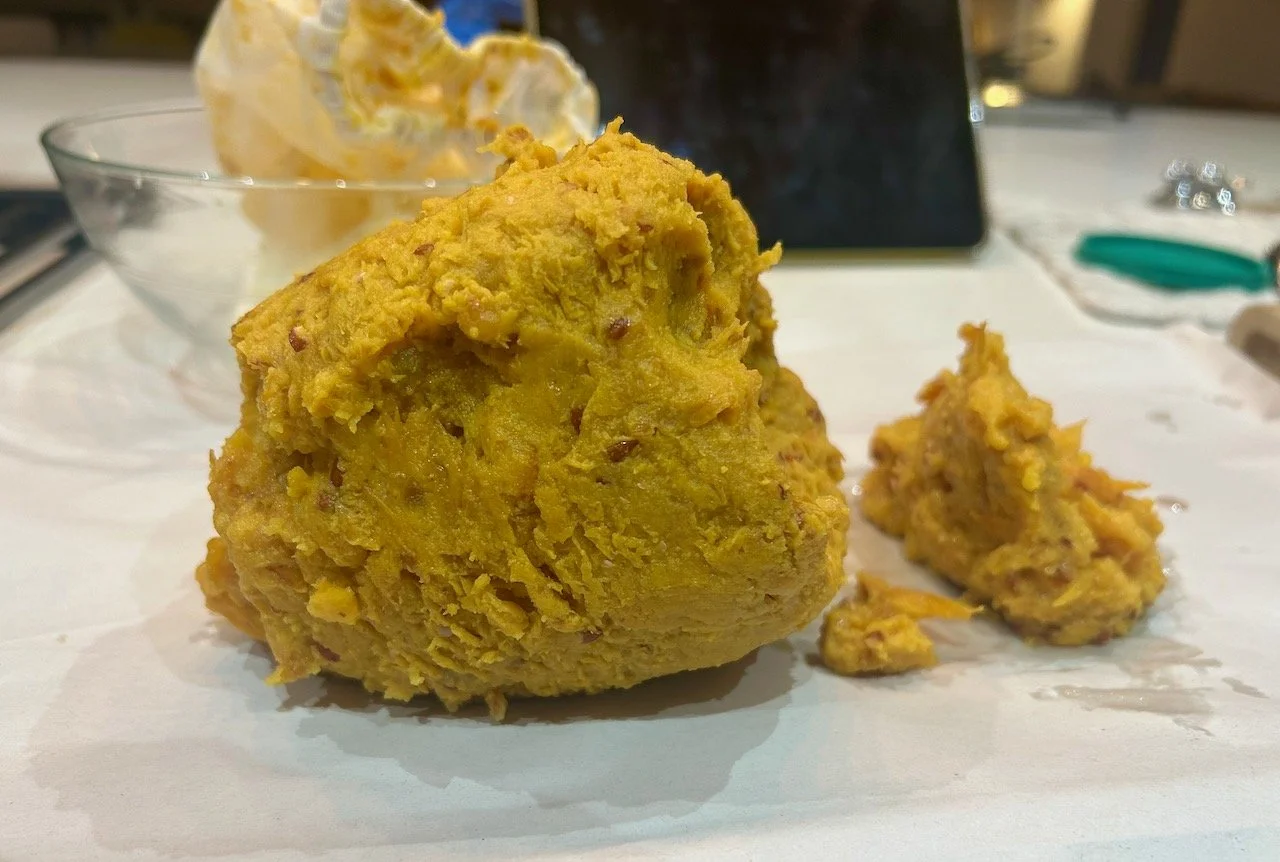
The remaining apple pulp after straining

Jewelled jars

My next decision was to gauge how many jars I’d need, and given that I had more liquid I realised I’d need more than I first thought. So I got what I thought I’d need and a couple extra - in the end I used all nine jars (of various sizes) filling them with the jewelled hot and sticky jelly.
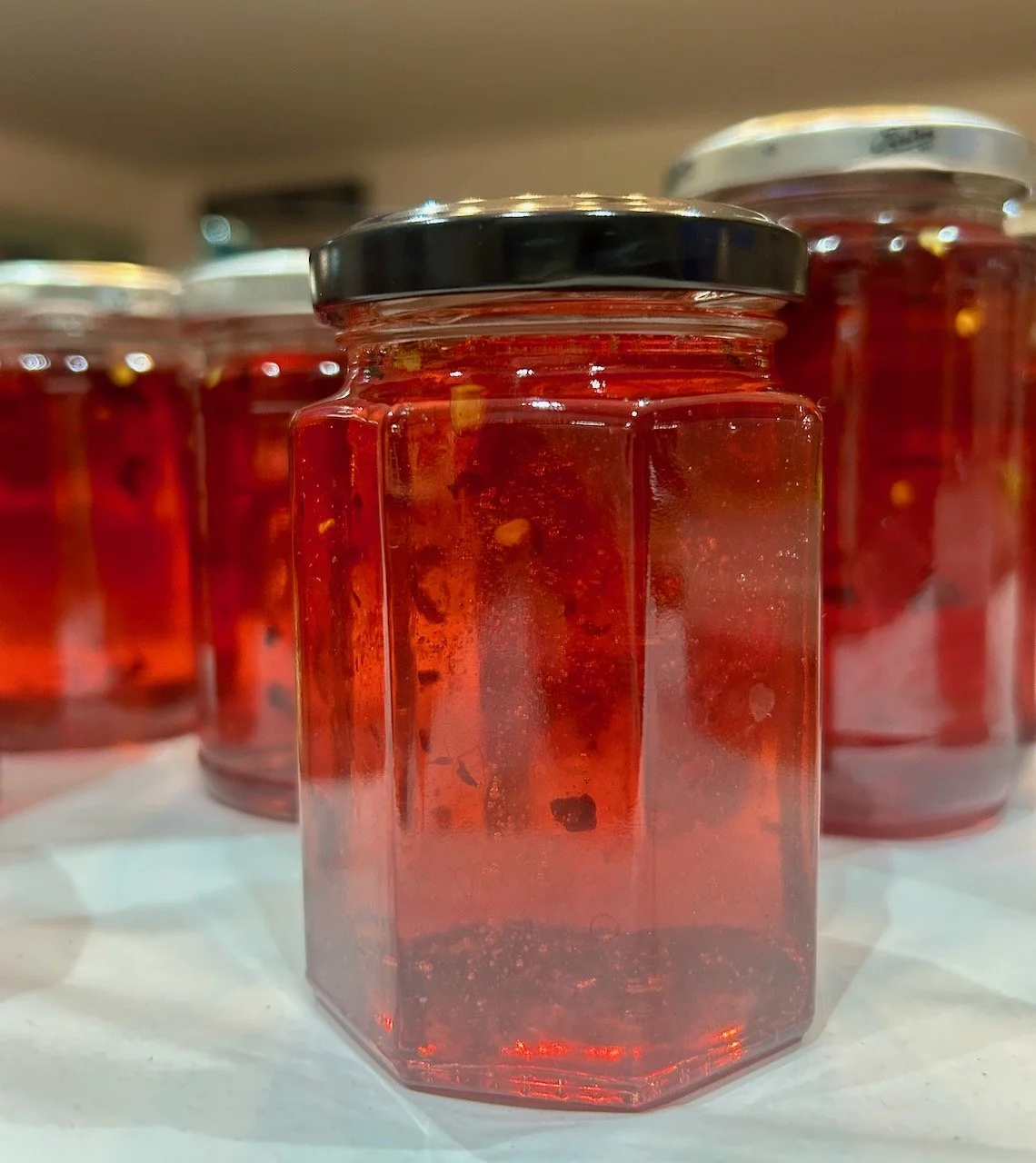
jars of red jewelled chilli jelly

Doesn’t it look fab?

As a fair few chilli flakes were left behind or removed when I skimmed off the froth I decided to add a whole dried chilli into the jars. This wasn’t as successful as I hoped as it floated to the top and isn’t visible from the outside - but it will be a surprise for the recipients, and will hopefully build a depth of flavour as the jelly stores.

It tastes pretty good too, as well as the nine jars I had enough for a small plastic tub which is in the fridge and very much in the 'eat now’ category. We’ve had it with cheese, cold meats and in sandwiches - but I think you could use it alongside sausages, and anywhere you’d use condiments such as redcurrant jelly, and I’m looking forward to adding some to gravy too.

We had enough crab apples to make even more, but my jar situation so far is severely lacking and in that time our apples have gone over - the tree has shed its leaves, and the apples are riper than I’d want to use. But there’s still a chance I may make a slightly different variant using some local Bramleys instead - watch this space…
Making green tomato chilli ketchup

Years ago I made the best green tomato chilli ketchup but somehow lost the printed copy of the recipe and I’ve been kicking myself ever since, especially as the recipe was removed from the website I’d found it on. Sigh. This year when dad said did I want any green tomatoes I searched harder online for something similar to the previous recipe - and found this Green Tomato Recipe on the From The Larder website, and it gets a huge thumbs up from me.

And of course with anything made with green tomatoes - fresh bright green tomatoes go in, and ends up as something more brown - but don’t let that put you off.

No really don’t.

This has a great taste and is so useful. I love it alongside roasted squash and rice and even in sandwiches.

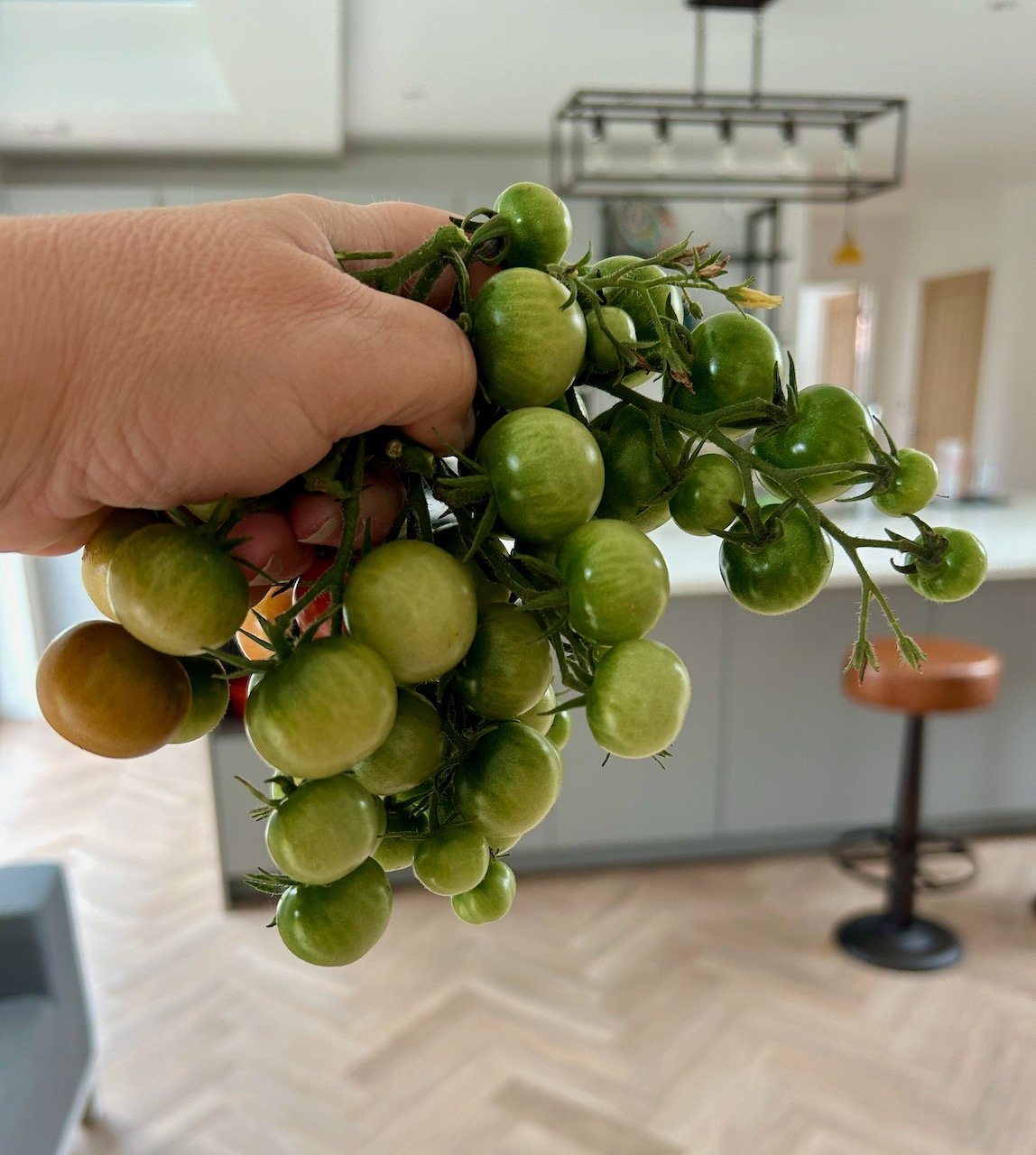
The recipe calls for 1kg of green tomatoes, and while I had a lot from dad (and I mean a lot) some had ripened as they sat alongside the already red ones and so had made their way into roasted tomato pasta sauce and subsequently the freezer, I was still a few short. And this handful topped me up to the full kilo - a quick last picking from my own tomato plants and I was good to go.

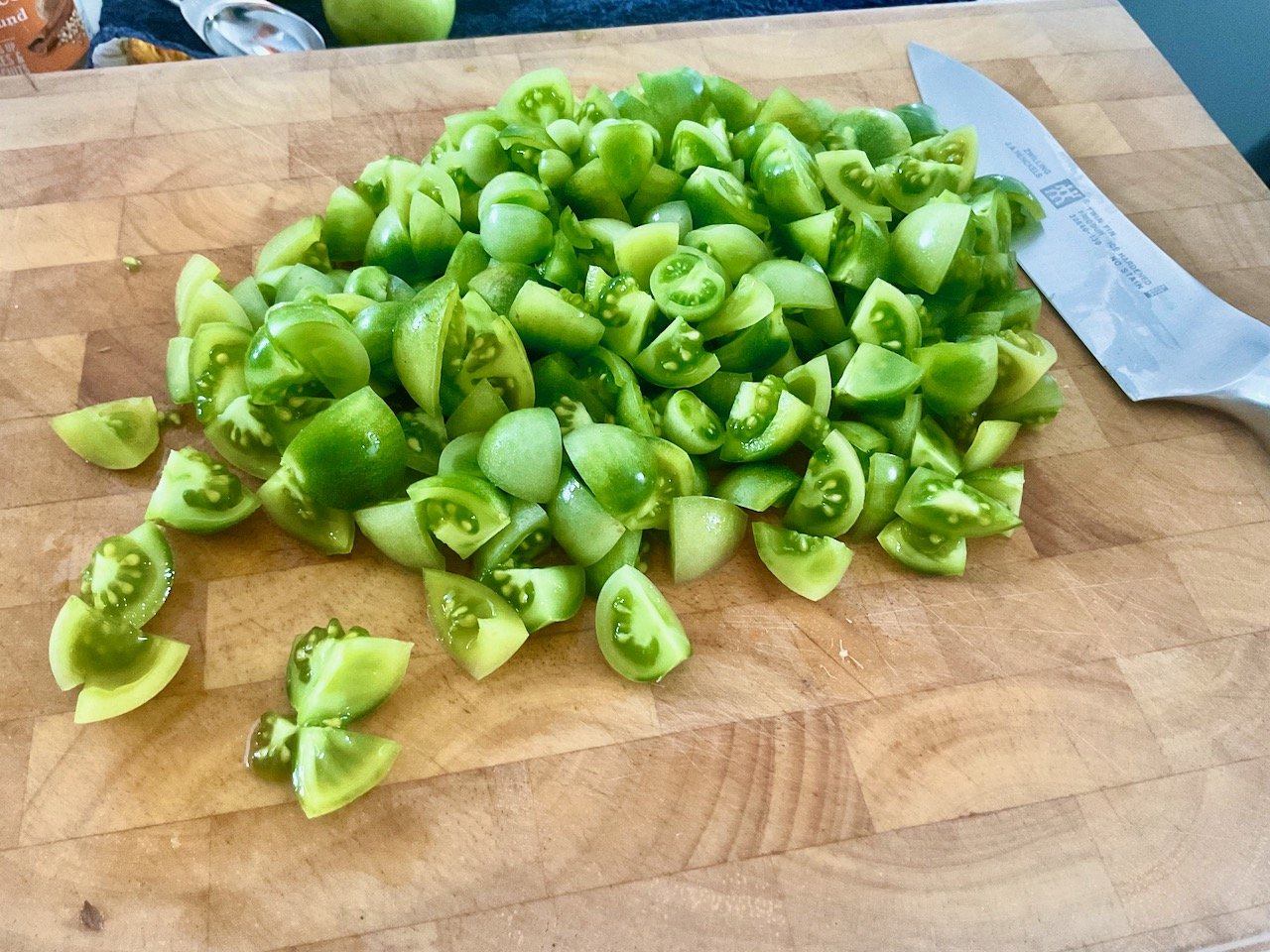
There’s a bit of chopping involved as you’d expect, but nothing too onerous. And don’t they look so fresh and vibrant?

Young, fresh green tomatoes quartered on a wooden chopping board

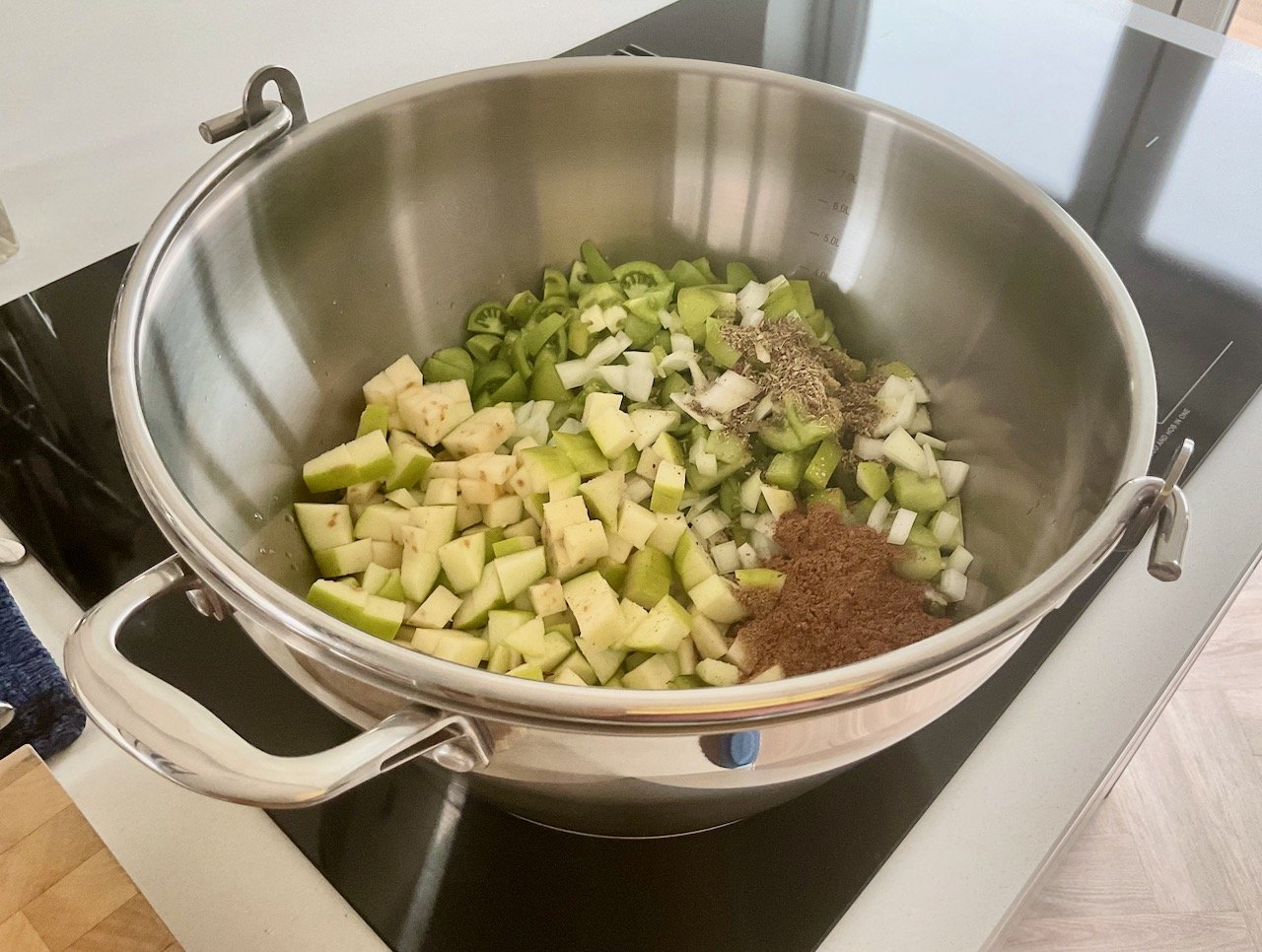
I debated (with myself, in my head!) about if I should use my preserving pan or not. And in the end the logical answer of ‘you’re preserving so why the heck not’ won out, and I’m so glad I did.

It is a large pan, and even though the amount of ketchup I was making was relatively small using this pan meant I was confident it would all fit in and there’d be no risk of anything bubbling over.

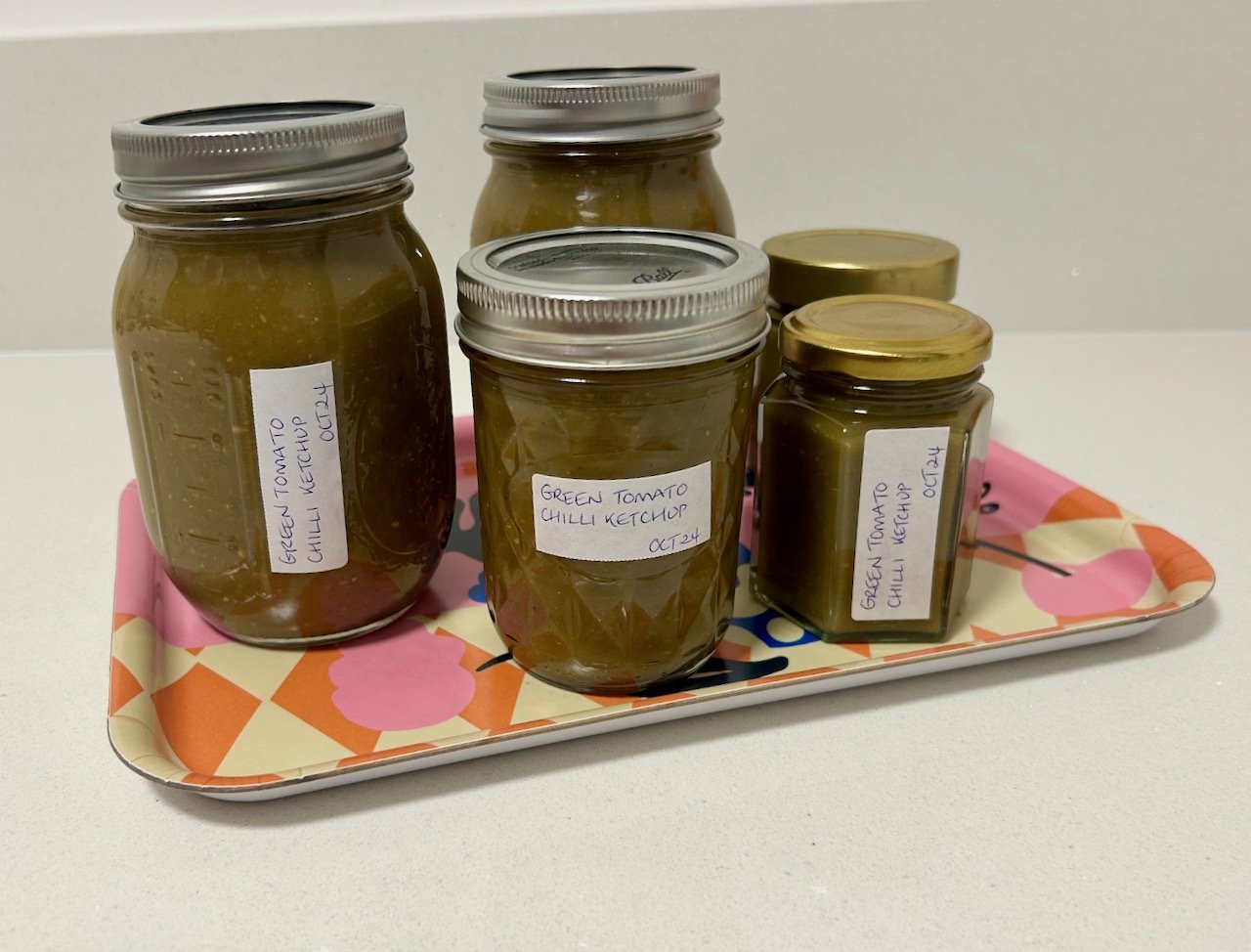
In preparation I’d even saved one of those almost 700g passata jars, but I didn’t use that in the end instead opting for smaller jars. I mean, it often takes me more than one attempt to use all the passata and I knew I’d be using the ketchup in smaller amounts, so it made sense to fill smaller jars.

This is very much like the recipe I remembered and I’m so pleased to have found it, and to have had the green tomatoes. I think next time I’d probably add more than one green chilli, and would consider adding some grated ginger too for an extra bit of zing, but that’s for next time when no doubt I’ll have lost the recipe again.

We’re already almost through one of the smallest jars, with the others safely stored on the top shelf of my pantry. And I couldn’t be happier!

PostCommentLove

Blackberry & Lime jam with Ball Preserving

Earlier this month I was invited to the Good Housekeeping Institute to see and use the Ball Preserving Starter Kit which has just launched in the UK and is available at Lakeland. I do love a jam or two (remember this Spiced Blackberry jam from last year?) and now that we've got our allotment, I knew it would be a handy session.

I wasn't wrong.

In the starter kit there's lots of green loveliness. A basket - or preserving rack - which fits inside your saucepan and easily holds four jars, a funnel to make filling the jars easier and much safer, a measuring notch which makes it easy to see when the jar is filled to the correct level, four jars and a jar-lifting tool, again a safer way to handle hot jars.

BALL PRESERVING STARTER KIT

BALL PRESERVING STARTER KIT

BallPreserving.jpg

We used all of that making the Blackberry and Lime jam. There were of course also blackberries, lime zest, sugar and pectin (also part of the Ball range and available from Lakeland)

The pectin fascinated me as I'd not made jam with this before. I'd used added-pectin sugar, jam sugar but not pectin in a powdered form. It was easy to use though and saved the need to test for the setting point either with a saucer in the freezer or a thermometer. In fact it was so easy to use I've since bought some and have made some more Blackberry & Lime jam here.

IMG_0709.jpg
STERILISING THE JARS

STERILISING THE JARS

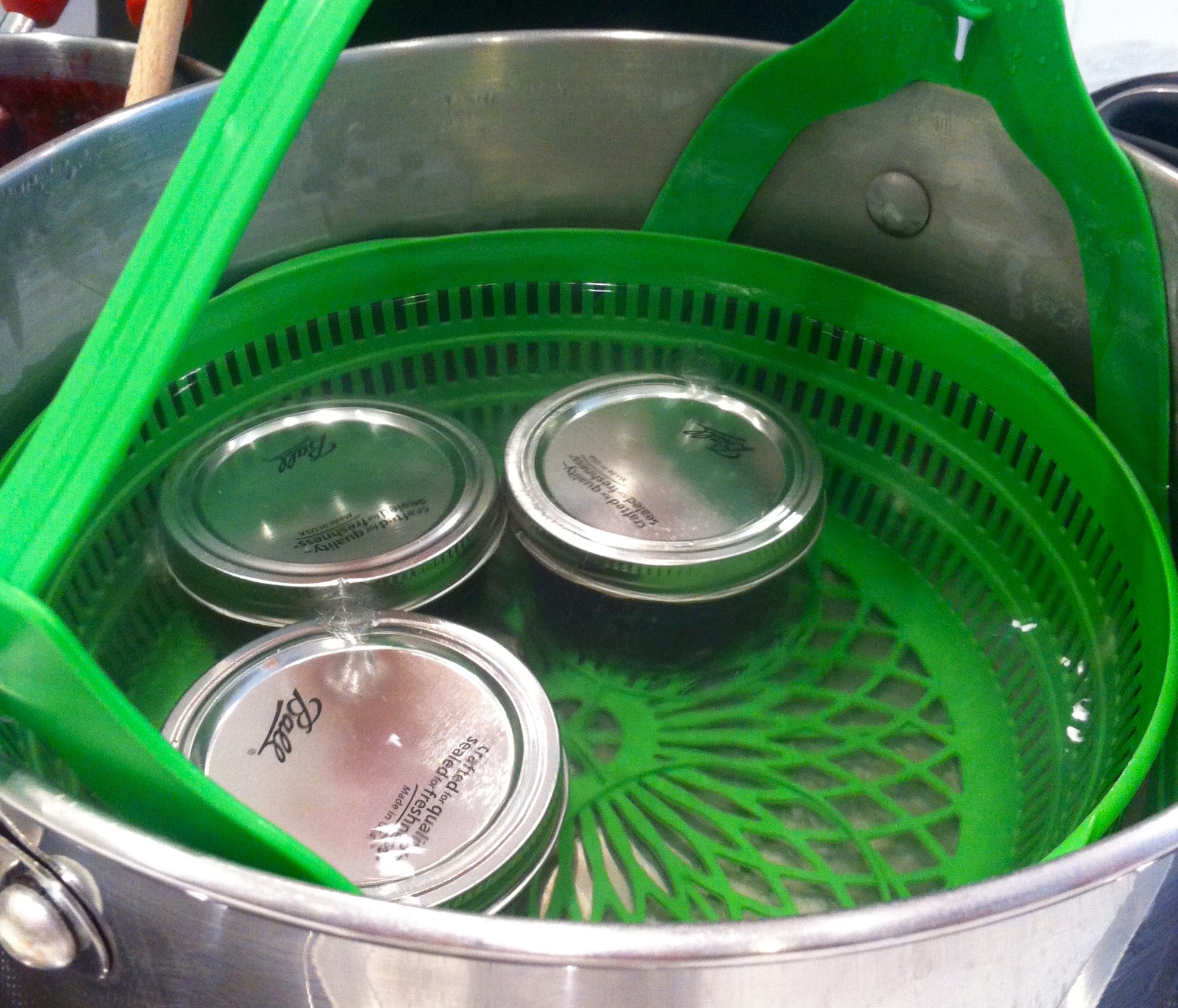
The jars can be sterilised in boiling water in the basket, there's handy markers in the design to ensure the jars don't slip about. The jars themselves are pretty, and when you're not using them for jam would look lovely storing almost anything else. The jars pictured below are the smallest size (and are about half the size of a normal jam jar) but the kit contains four 240ml jars, not these smaller ones.

The lids come in two parts; the top part of the lid (with the orange edge) can only be used once. The orange bit is the clever bit that forms the seal, and means your jams will have that pop when you open them just like the ones from the supermarket (but they'll taste nicer of course!) The silver part of the lid (on the left in the photo) can be reused along with replacement lids - if you're looking for them on Lakeland they're called "mouth lids". All of the Ball Preserving Jars are the same size at the neck, so one lid fits all jar sizes. That's a bonus, isn't it?

BALL PRESERVING JAR

BALL PRESERVING JAR

Back to the jam. To the mashed blackberries we added the lime and then stirred in the pectin in a couple of batches. Once this was absorbed, in went the sugar and the jam was brought to a hard boil for a minute. Then it was time to jar it.

It was that simple. And was much quicker than I remember from my jam making session last year.

The funnel fits the jars as well - clever hey? And it's a much safer way to transfer the hot jam into jars - it also means it's hard to get jam on the outside of your jar and on the inside of the rim. You just need to be careful not to overfill the funnel otherwise you'll have a jam overflow problem!

The notched measure is an easy way to check the jam is at the right level. To use it you simply nestle the notch over the rim of the jar, so when you see recipes that say leave a 5mm gap you'll be able to do this easily now.

Once the jars are filled, the lids added to fingertip tight they go back into the basket covered with water so that the clever orange seal can do its stuff.

BLACKBERRY & LIME JAM

BLACKBERRY & LIME JAM

And that's it, the jam is done. The trickiest bit is likely to be making sure you've got enough jam to see you through until next year. I tasted this on some scones along with some clotted cream, it's lovely and there's a very real danger the batch I made with berries foraged from the Thames Path won't hang about for very long.

I also made some Crab Apple jelly with the crab apples from the allotmentAs crab apples are naturally high in pectin I didn't need the powdered stuff.

Crab Apple Jelly

multiples of:
1kg Crab Apples
250ml water
180g sugar

Method

1. Remove the stalks and blossom ends from the crab apples and quarter them. You don't need to peel or core them as that's the bits that are high in pectin.

2. Add to a saucepan with 250ml of water per 1kg of quartered crab apples and cook them for around 30minutes until the apples are soft.

3. Leave the apples to drain. Pour off the liquid collected regularly to ensure the apples don't sit in the juice. To get a clear jelly you want the best possible juice...

4. In a clean saucepan add the pink crab apple juice, and for each 250ml of juice add 180g of sugar.

5. Stir until the sugar is dissolved and then bring the liquid to a boil.

6. Continue to boil the liquid until it reaches 105 degrees - the setting point for jam. I used my jam thermometer for this.

7. Transfer the jam to sterilised jars and immerse the sealed jars in boiling water and process for ten minutes before removing and leaving to stand for 5 minutes.

8. Once the jars are cool, label them.  

I used the Ball Preserving Dissolvable labels which I bought along with the pectin I used in the batch of Blackberry & Lime jam I made here. They're pretty and I'm assured they really do dissolve in water.


MAKINGCRABAPPLEJELLY.JPG

I've no idea what crab apple jelly tastes like, it's not something I would usually buy and it's the first time I've made it. But with the abundance of crab apples on our plot it was something I was keen to try. I'm looking forward to trying it alongside roast meats and perhaps sausages.

I'm keen to know what else does it go with, so if you're a crab apple jelly person please let me know in the comments.  Thanks.

CRAB APPLE JELLY

CRAB APPLE JELLY


* I was provided a Ball Preserving Starter Kit at the preserving session I attended. All words and opinions are my own and I have since purchased the labels, pectin and replacement lids myself.

CookBlogShare

www.mrscraftyb.co.uk