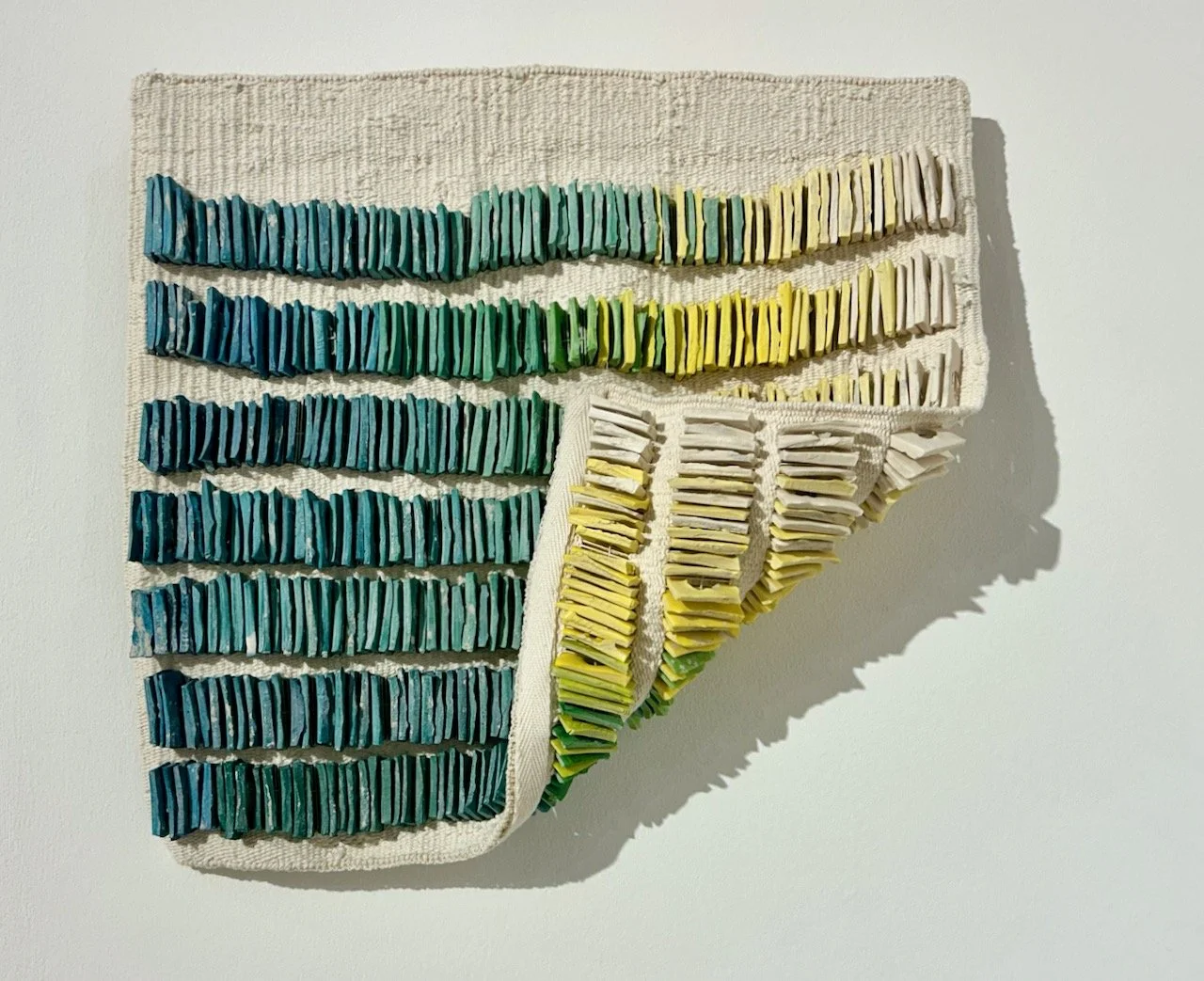
A look around Ludlow

As we headed towards Powys for youngest niece’s wedding we realised we were almost through our nearly three hour journey with no lunch stop. Some hasty googling by MOH in the passenger seat showed that Ludlow looked to be our best option, even better we hadn’t passed it yet and it was just thirty minutes or so to our final destination.

Car park found, ticket bought (for just a £1 - bargain) and we headed to where we thought was the centre of town by following the age old phenomenon of seeing where most of the people were heading and coming from. We weren’t wrong, and found ourselves walking past the fantastically ornate Feathers Hotel along the way.
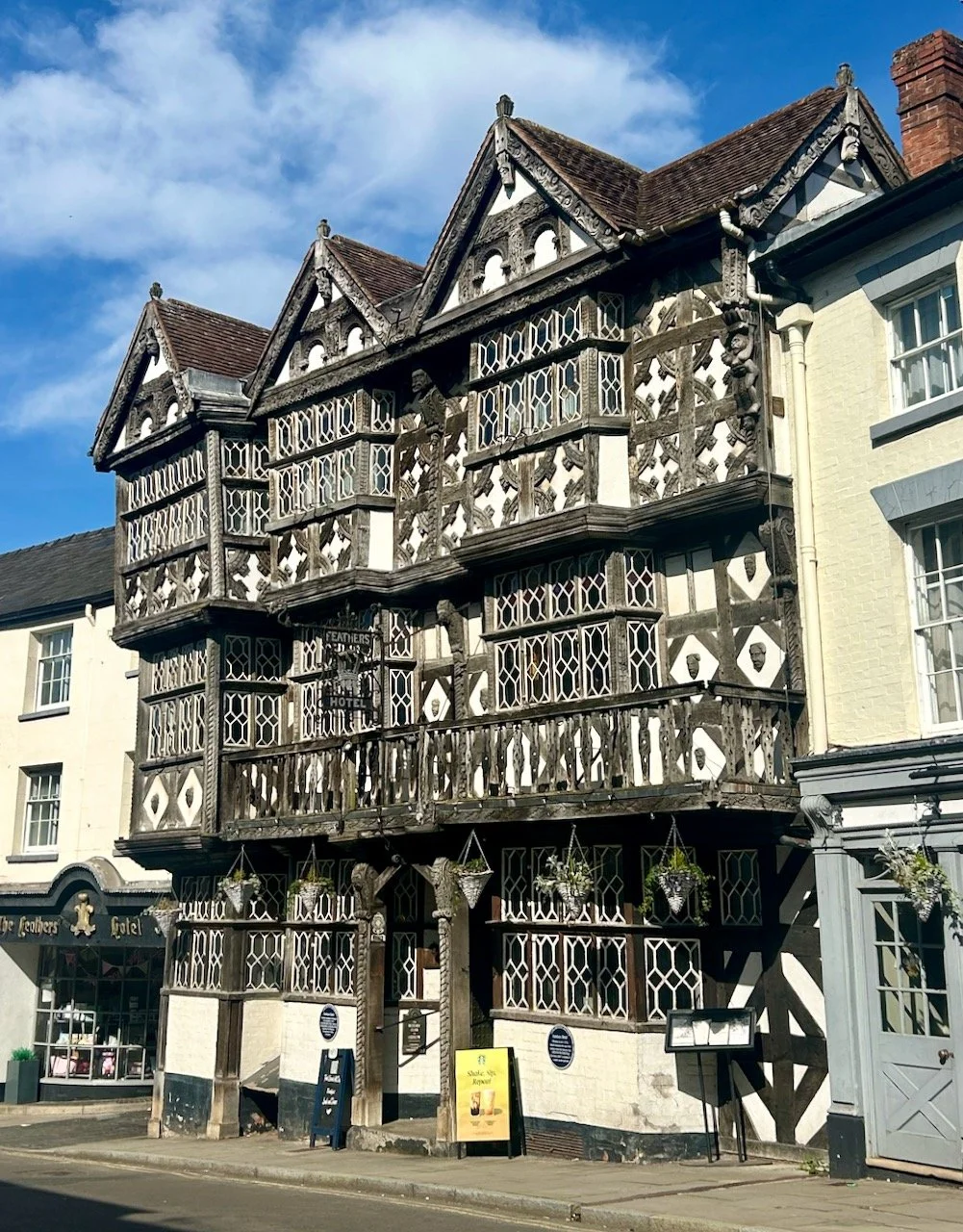
The facade of the Feathers in Ludlow

Originally built in 1619 and converted into a hotel fifty years later it’s been welcoming guests since then. It’s famous for its half-timbered Tuda facade which includes carved wooden motifs of the Prince of Wales’ three feathers emblem, hence its name.

It was listed as a Grade 1 building in 1954 and many of the 17th century features remain, though we didn’t venture inside choosing to admire it only from the outside - and what an outside that was.
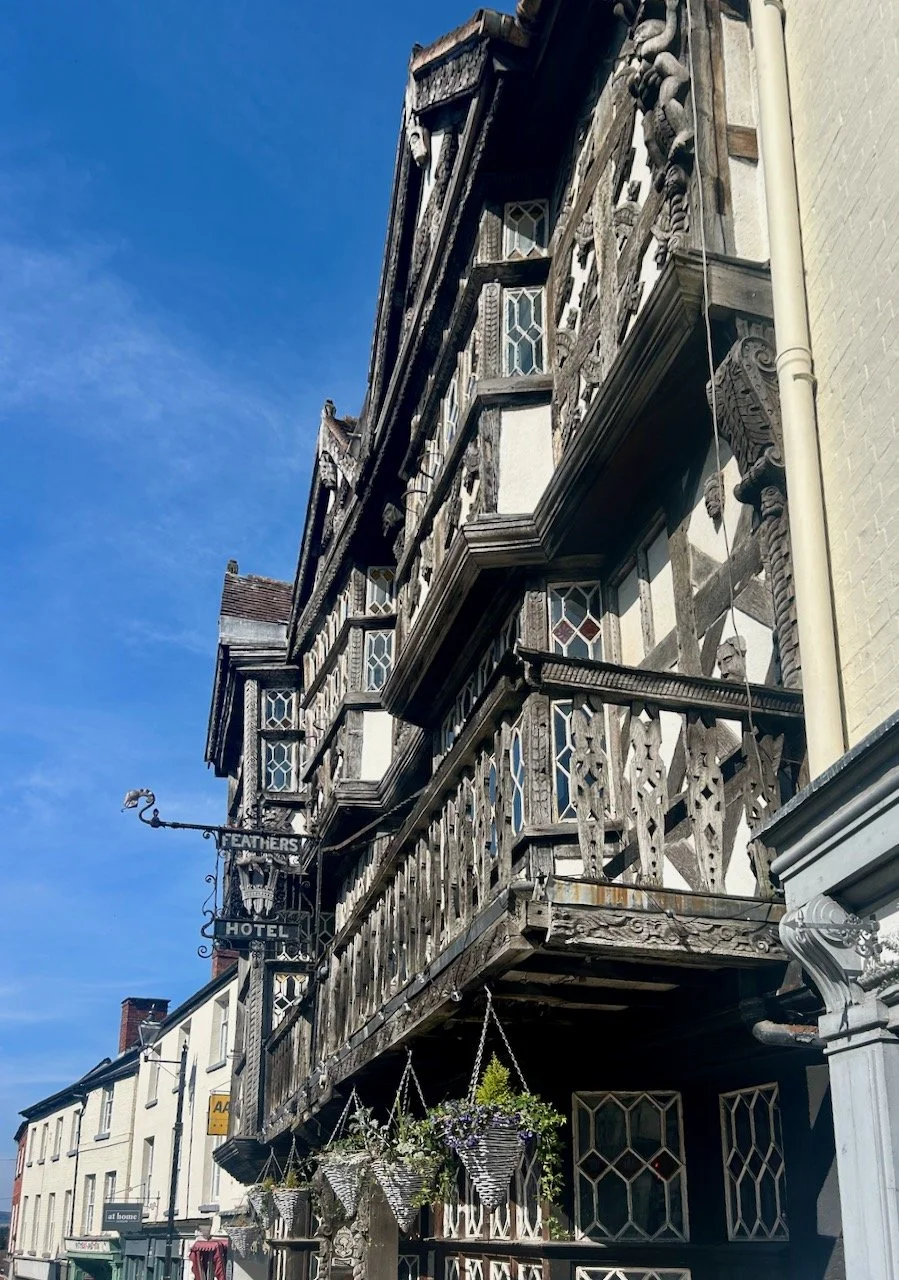
Looking up at the wooden carvings at The Feathers in Ludlow

With lunch ordered and eaten not too far away we were back on our way to the AirBnB which was our base for the wedding. We had an extra day to gather ourselves after the wedding and so after a leisurely breakfast, a visit from some departing family we made our plans for the day, which turned out to be a return visit to Ludlow.

We weren’t disappointed to see more of the town, though on this visit the weather was decidedly chillier than the balmy two days we’d had previously and so our visit was perhaps shorter than it might have been, but a there was still plenty to see as we wandered its streets admiring the half-timbered buildings.
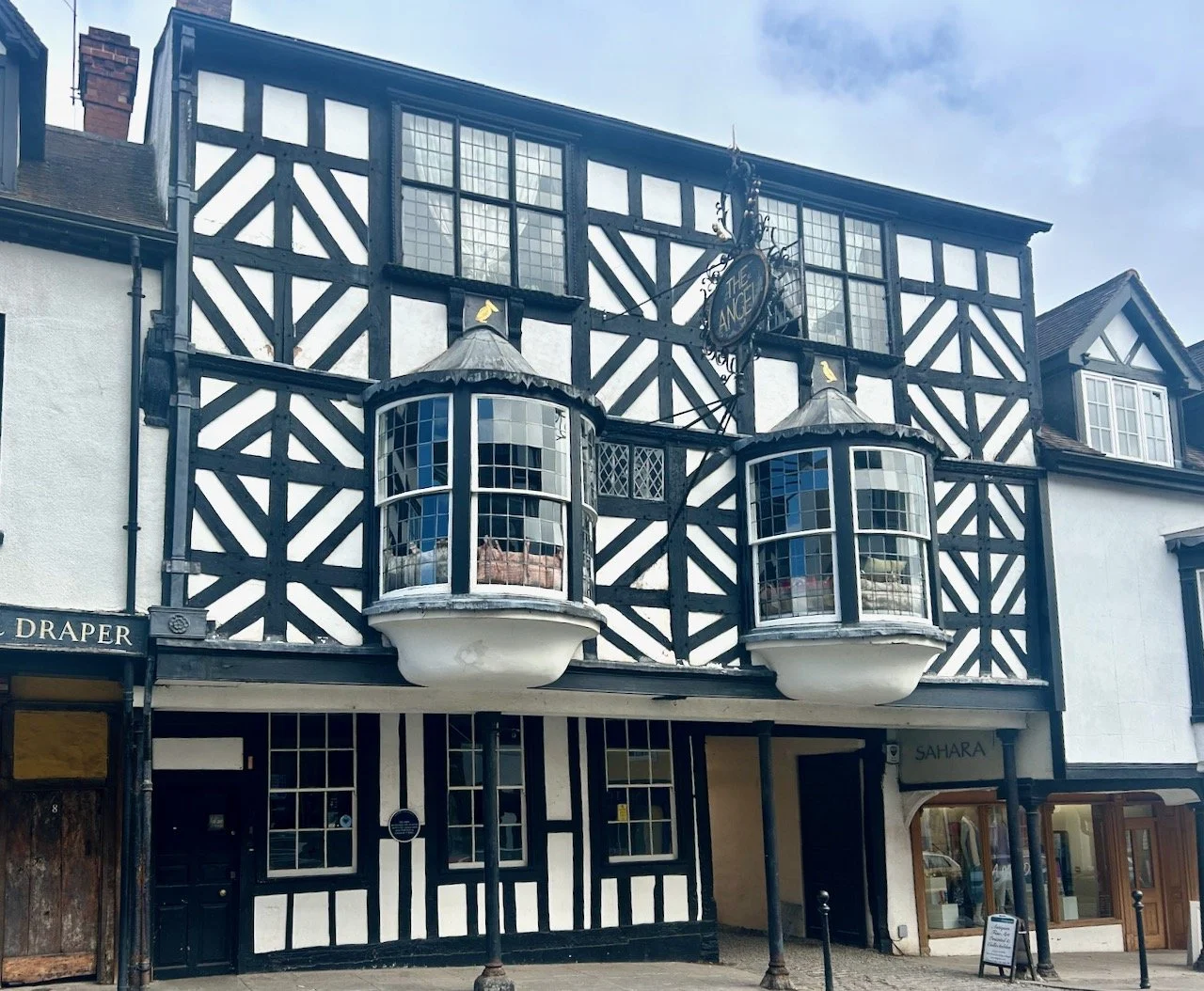
The oriel windows of The Angel in Ludlow

Our impromptu route took us under that sheltered walkway as it looked as if it would start to rain, so it wasn’t until we crossed the road that we could really admire the building’s grandeur, and those two oriel windows on the first floor.

We also had another unplanned discovery, and that was the local wool shop at the end of the sheltered walkway, now wasn’t that fortuitous (and totally unplanned) - I think I must be able to sniff them out!
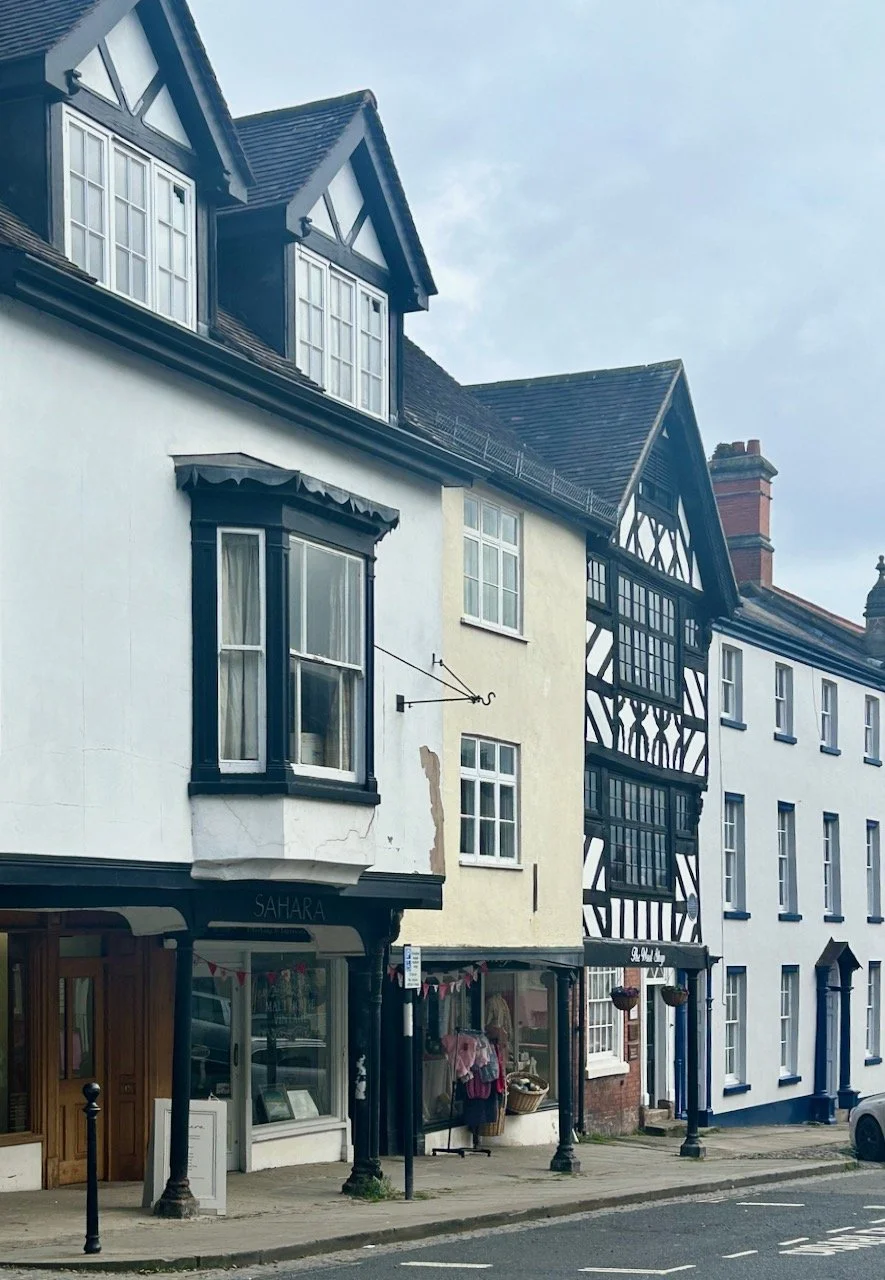
That cream building is the wool shop, which seemed to call me and my SIL

After a quick visit to the wool shop and leaving with only a couple of Fat Quarters - both green, and both to add to my green collection for leaves on my Floral Fancy - we headed back towards the Buttercross, a market hall dating from 1746 and as you can see below with a vintage style van parked outside, and now very blue skies.
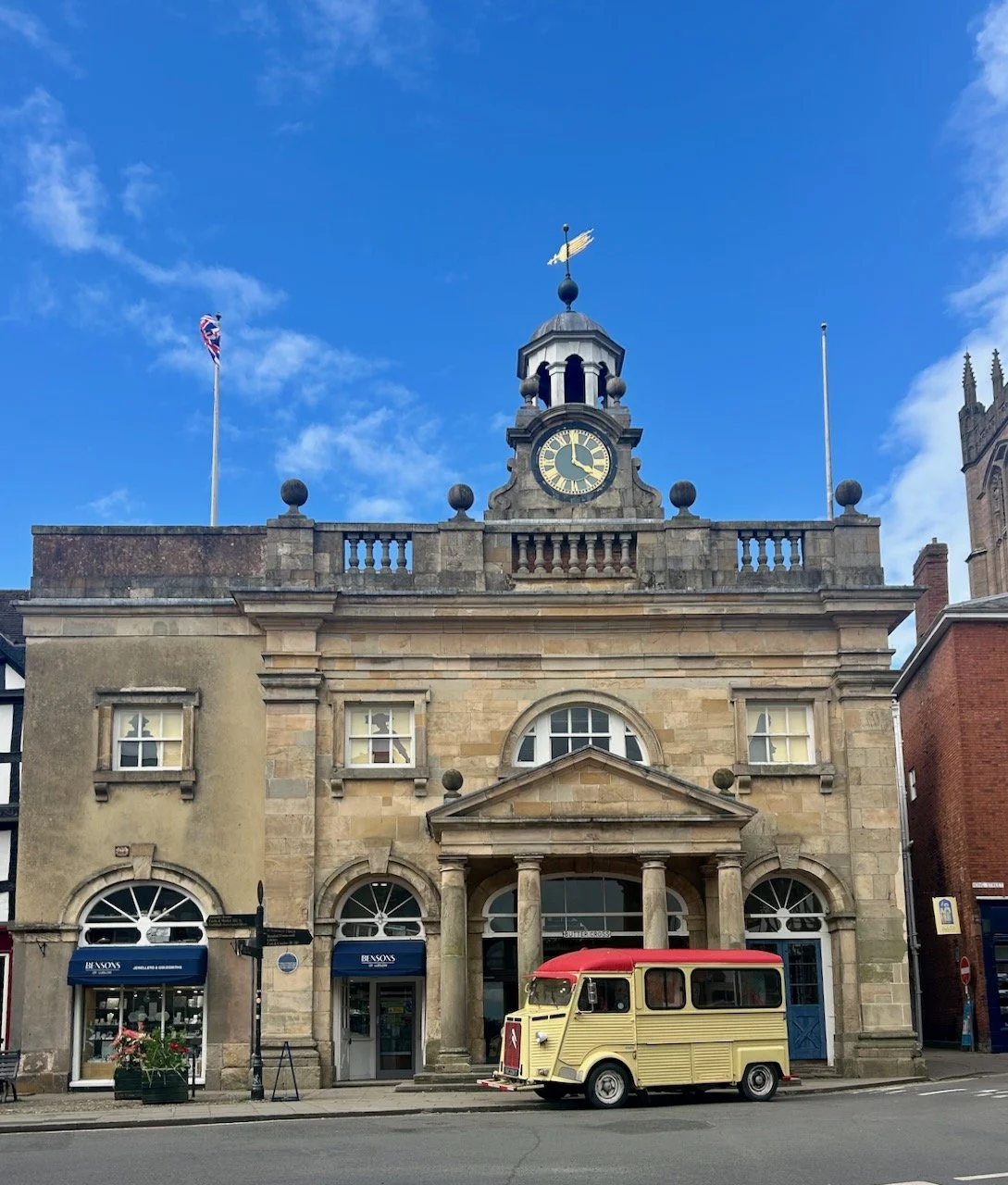
Looking towards the Buttermarket with the vintage van parked in front

The van was causing a bit of a stir where it’d parked, as the local busses couldn’t get past - eventually it was moved and we very much enjoyed the eye roll from the bus driver as he could resume his route!
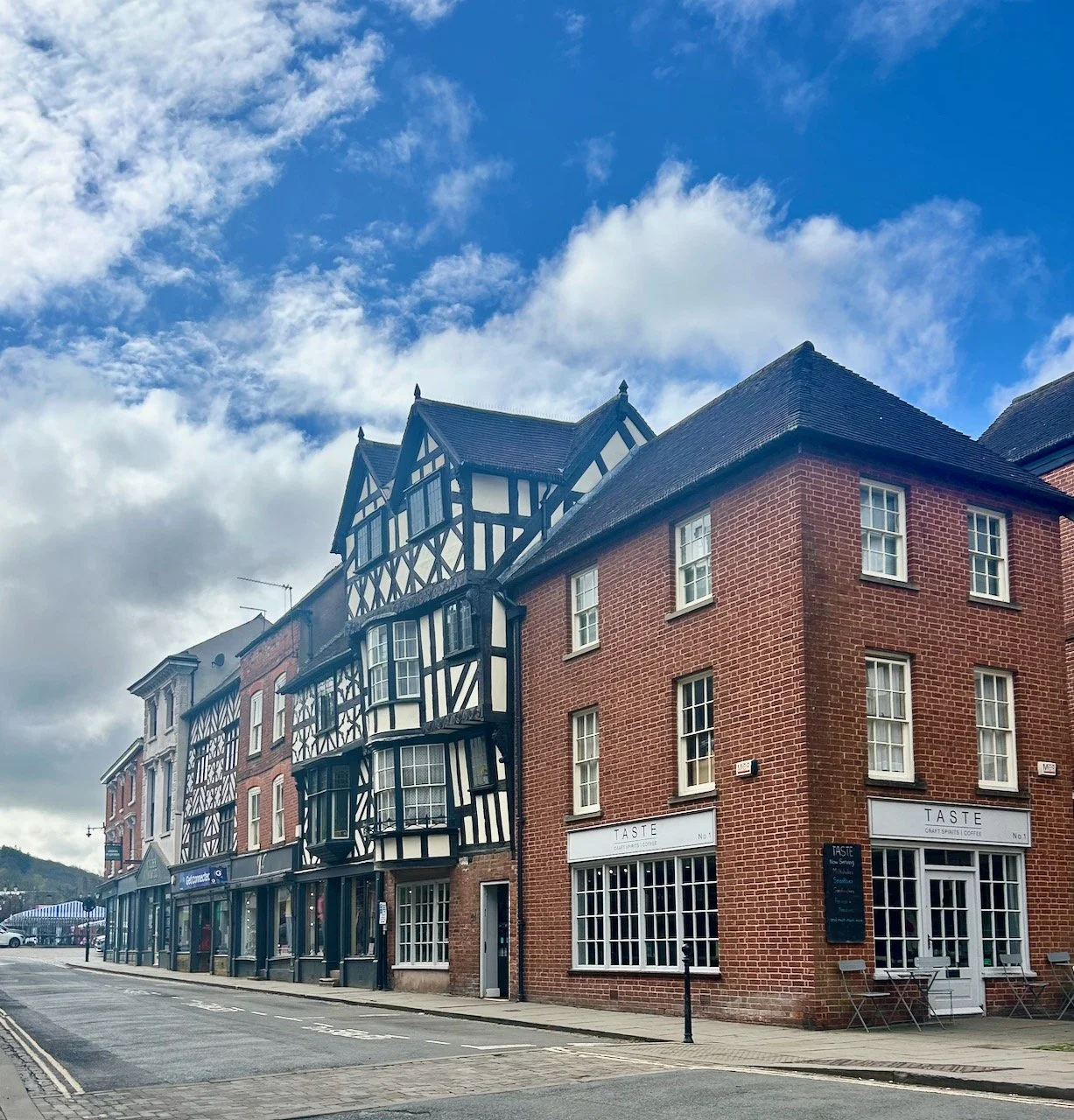
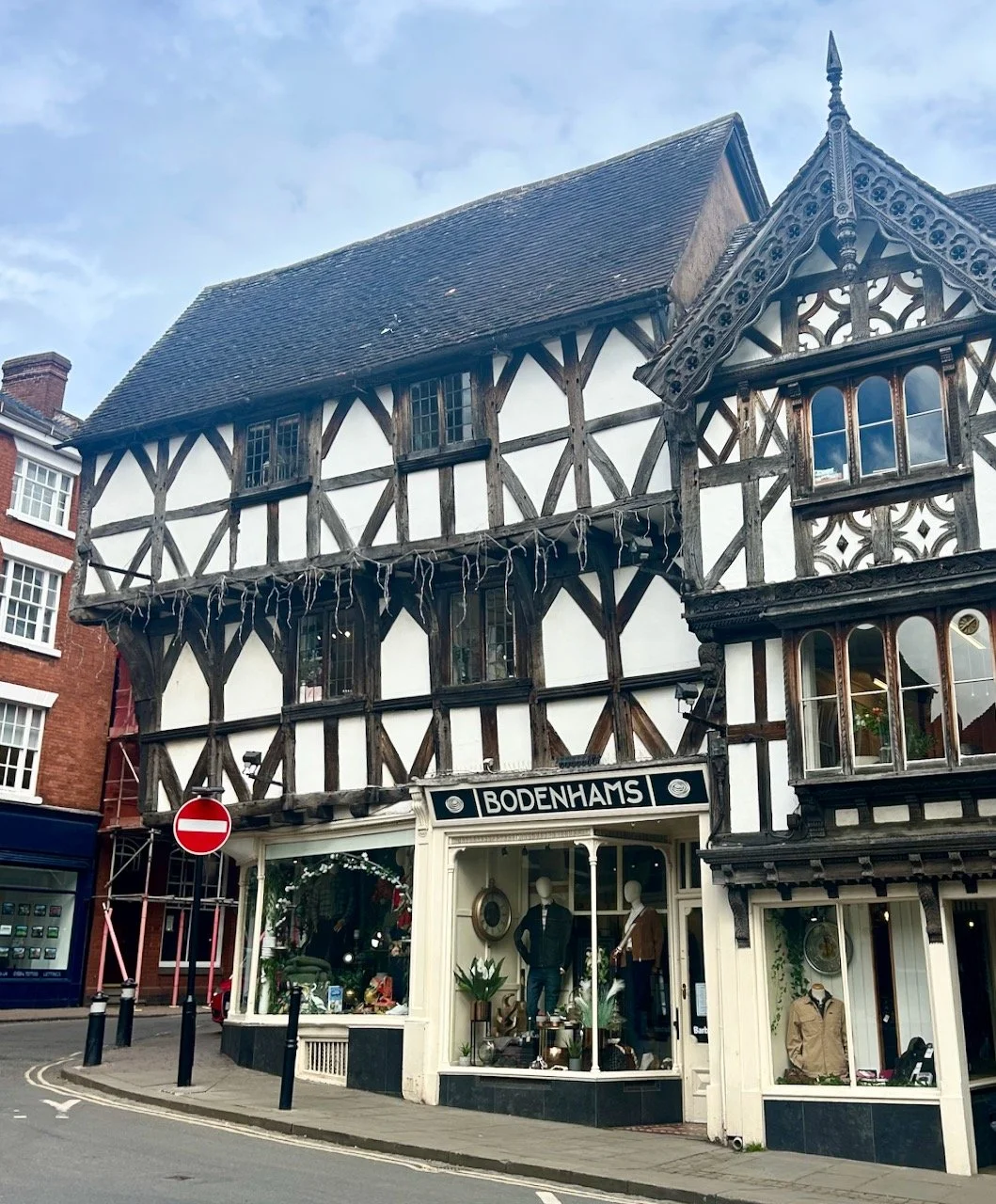
A mix of modern and half timbered buildings in the town's centre
Bodenhams half timbered building in Ludlow

It’s easy to see why Sir John Betjeman described Ludlow as “probably the loveliest town in England” for me I think it’s definitely up there, and one that at some stage we’ll most likely be back to visit again.
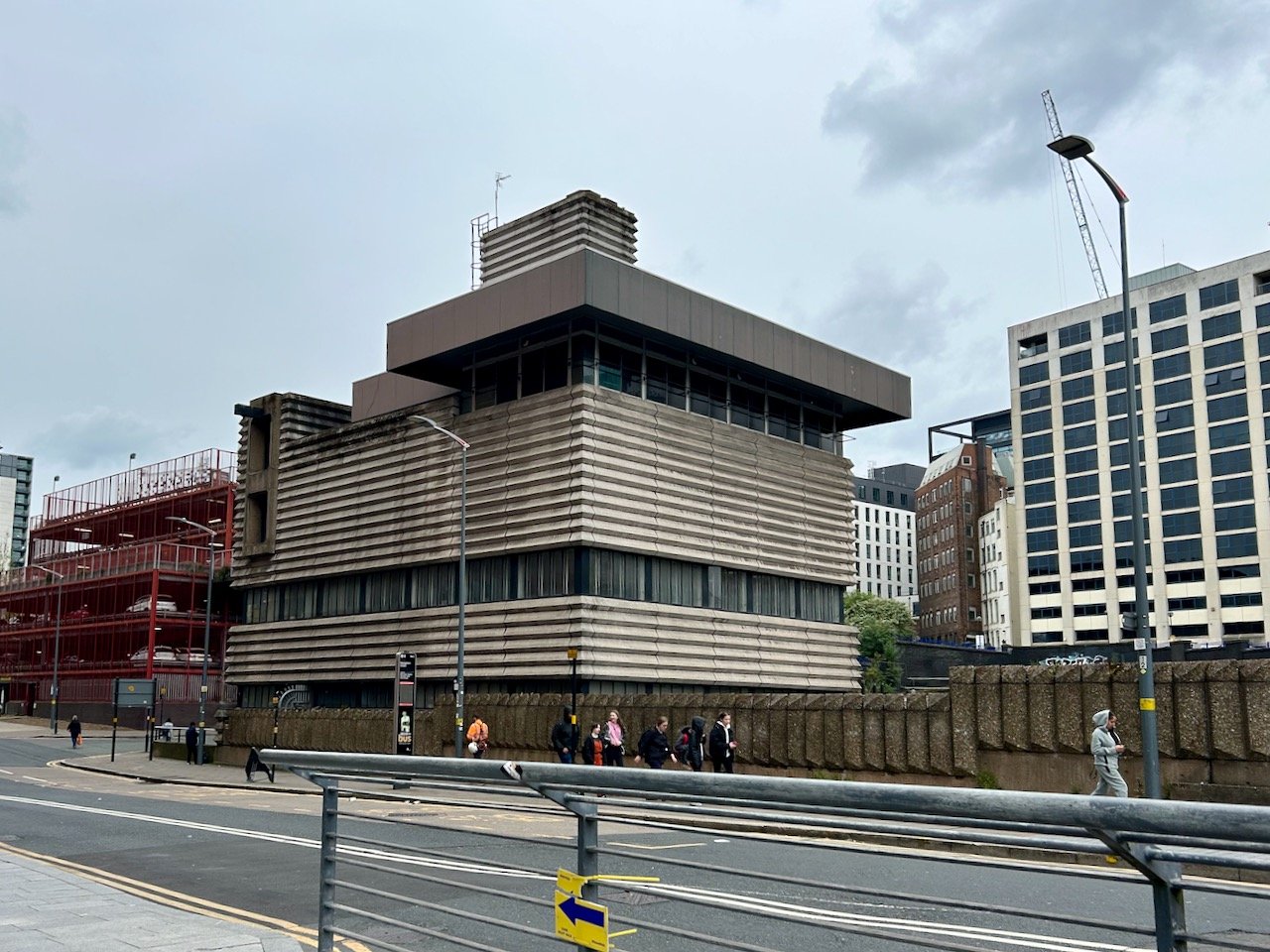
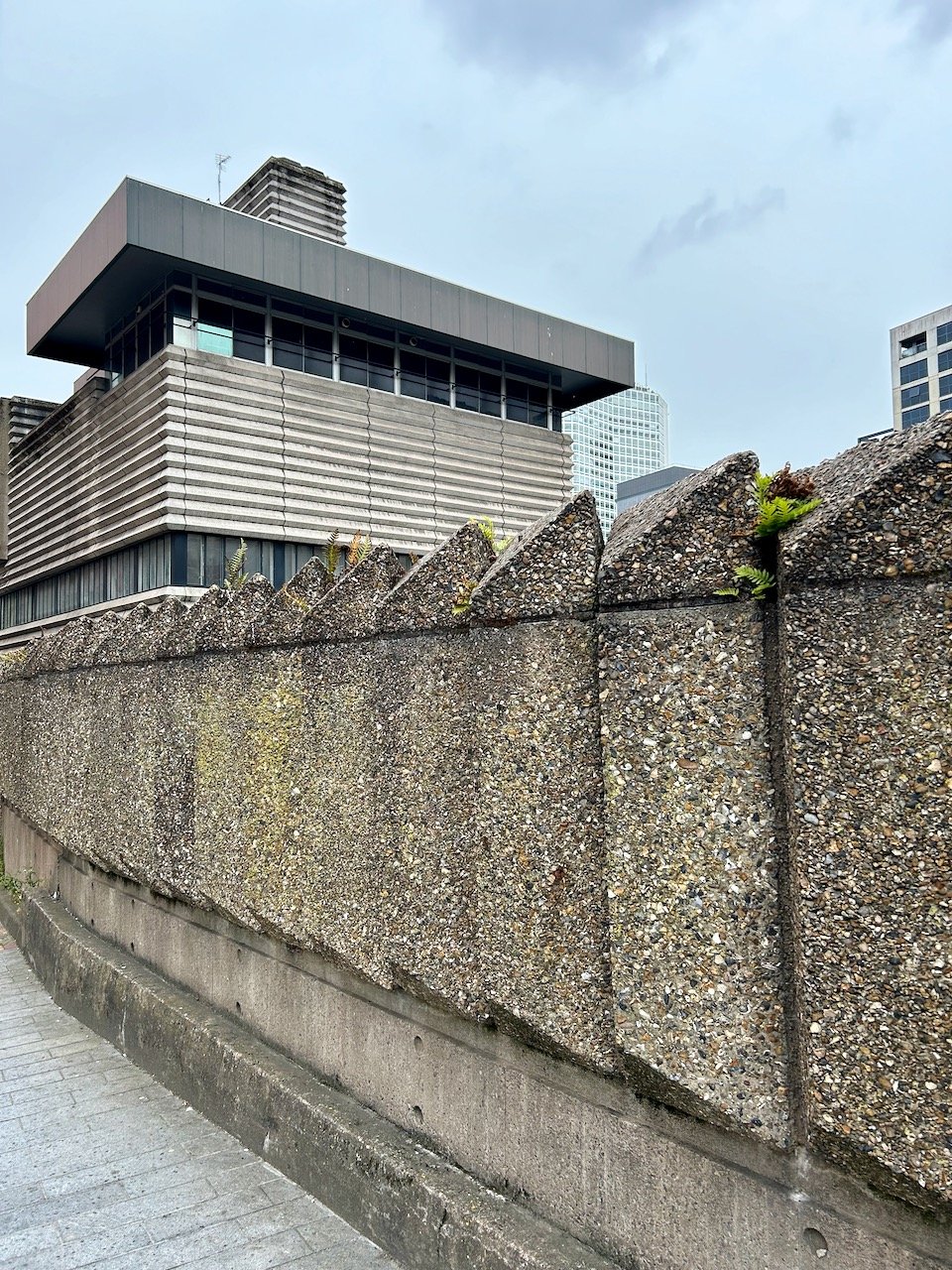
Brutalist buildings, a library and a signal box

Recently I got a bit of a surprise when I opened Instagram, there in front of me was a picture of the library in the town where I grew up, but instead it was now called The Brutalist Library SE25. And you know what, I’d never considered it as this - yes it was a modern building, and one that was quite different in style to those around it, but to me it was just the library. The place to while away hours (and hours) and even sometimes the place to complete secondary school homework.

And since then I don’t think I’ve ever really given in too much thought, so to see it on my Instagram feed was quite a surprise. It turns out that it’s had a bit of a fight on its hands, as libraries have tended to over the years, but it’s still there - and from the photos I’ve seen still looks very much like it did back in the late 1970s and 1980s.

Though I did notice that the circular planters out the front had been changed for a new mosaic - and when I say new, this mosaic is now almost 20 years old! But even so it was good to see it still there, still a library and it reminded me how many memories a single image can evoke.

But it also reminded me of our hunt to locate the brutalist Signal Box at Birmingham New Street before we caught our train back from Gardener’s World Live last year - a building which was on MOH’s list of ‘buildings to see’.

And see it we did, but only from the outside - and it’s quite imposing.

The term brutalist is used for a reason isn’t it? But there’s also some fascinating shapes, angles and textures on this now retired Grade II listed building.

But up until the end of 2022 it continued to play its important part of Britain’s railway since it started operation in 1966 - the signallers inside were capable of directing up to 1200 trains a day. Clearly the 1960s technology was getting harder to maintain, and the manual operation for the power signal box for setting safe routes for trains no longer the preferred way of working with all of Birmingham New Street’s signalling equipment converted to digital operation as you’d expect.

I was fascinated by the remaining items left in the building though, just but not quite visible through the windows - I’m sure this is, and will be if left untouched, a real life sized version of a time capsule!

Brutalist architecture won’t be (and isn’t) to everyone’s taste, but I kind of admire it - its mix of reinforced concrete and concrete cladding definitely mark a moment of time.

I don’t know if my feelings are influenced by my love of visiting the brutalist library in South Norwood, or even by growing up near to Croydon which is also home to structures considered brutalist which to me were just the shopping centre, or the 50p or eggbox building!

Who knows.

A wander around Snape Maltings

For today’s post we’re off out and about. We’re off to Suffolk in fact, and as well as travelling there we’re going back in time. We had a few days there a couple of years ago and as I’ve been looking through my photos, these are another rediscovery. It was our first time at Snape Maltings, which now is full of shops and such like. You might remember the velvet yellow sofa from a previous post, or the embroidery project for the future, which is still very much for the future, but no less beautiful.

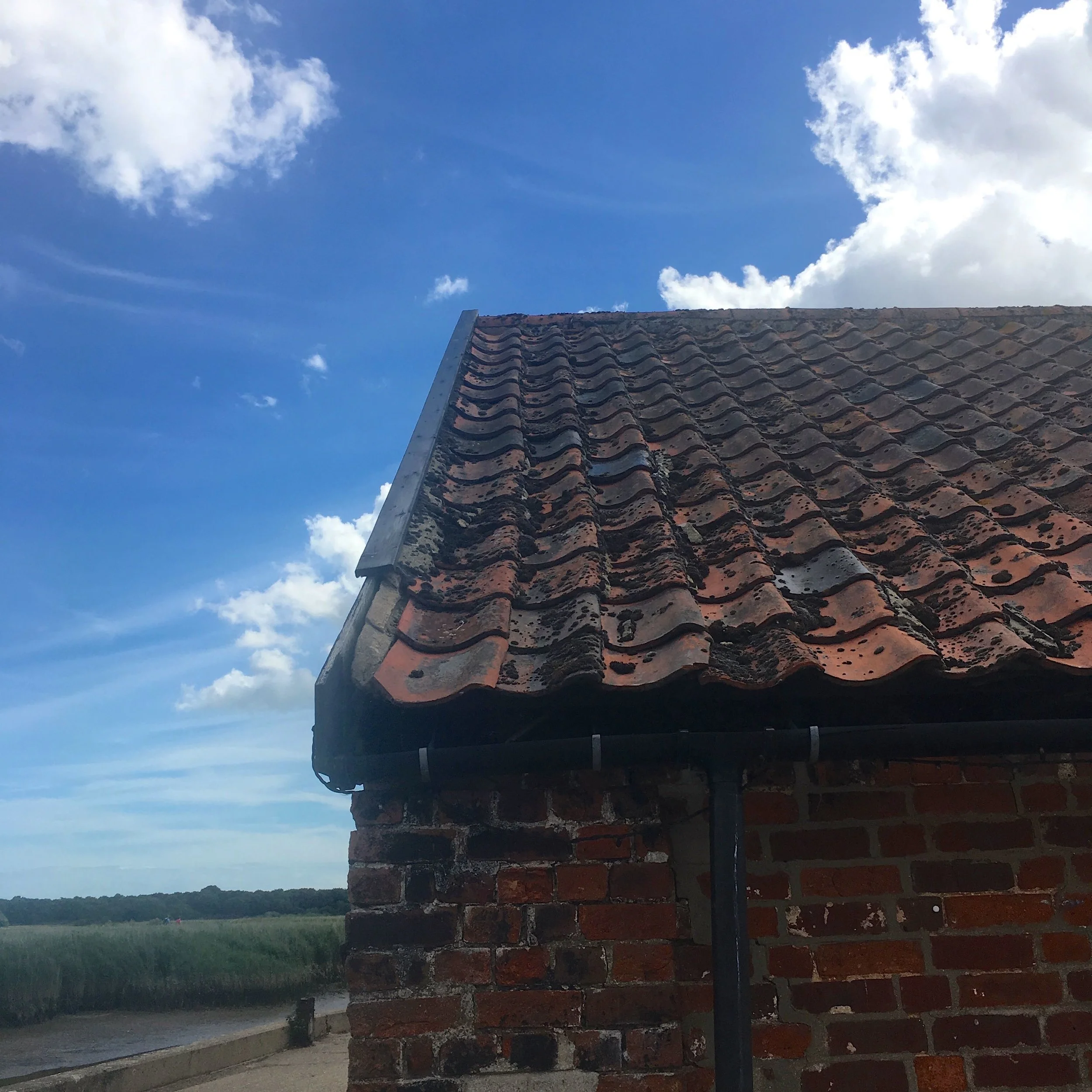
But there’s some great walks in the area too, and while our wander features mostly the buildings and sculptures close to the buildings, there’s routes which take you further afield. As soon as we were out of the car, the tiles on this roof called my name. Well, they would wouldn’t they?

arriving at snape maitings and spotting a roof to photograph

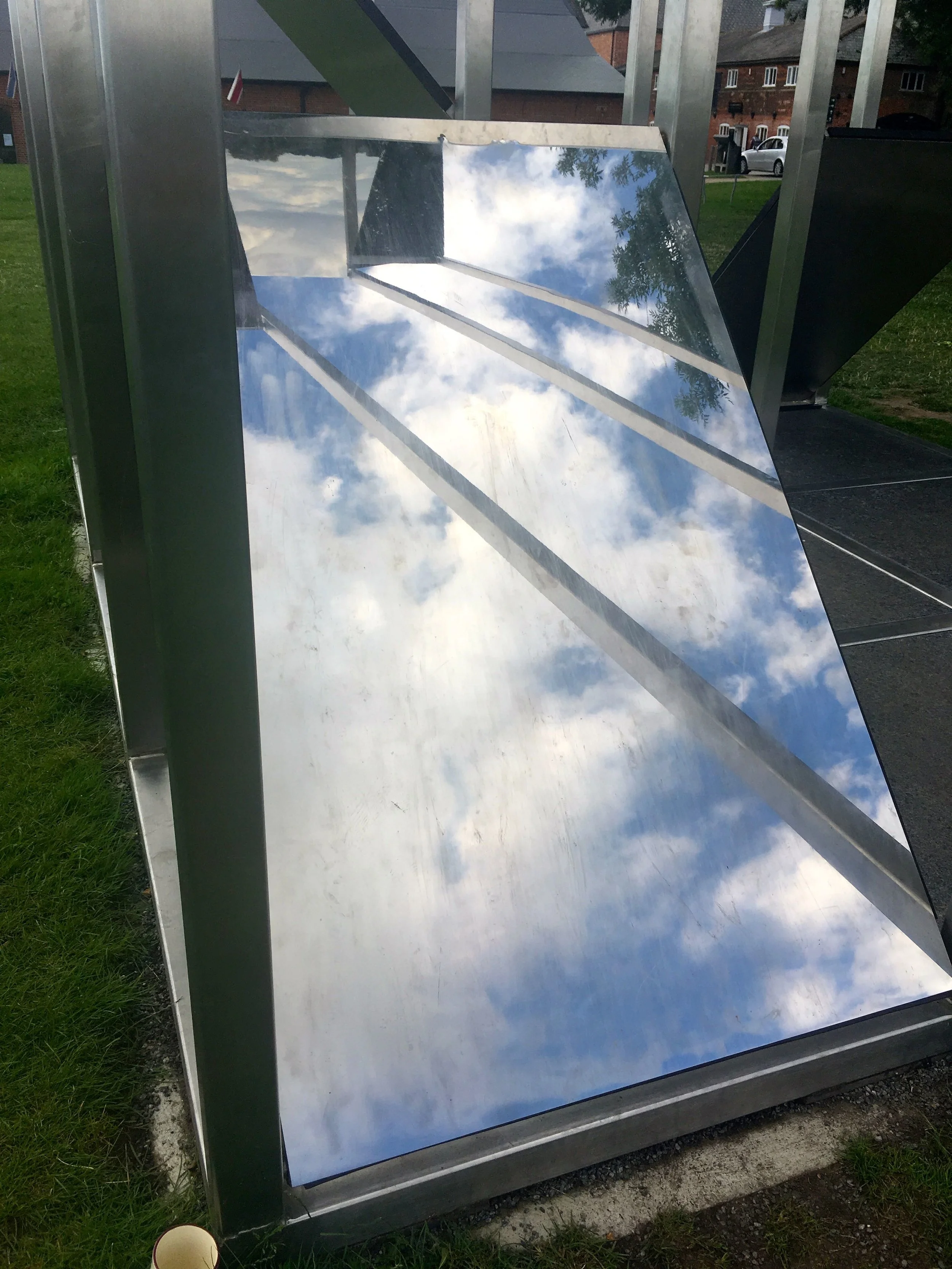
Next we, or rather I was fascinated by this sculpture called Myriad, whose clean lines and mirrored sections gave an easy view of the sky above.

A sculpture with a view at snape maltings

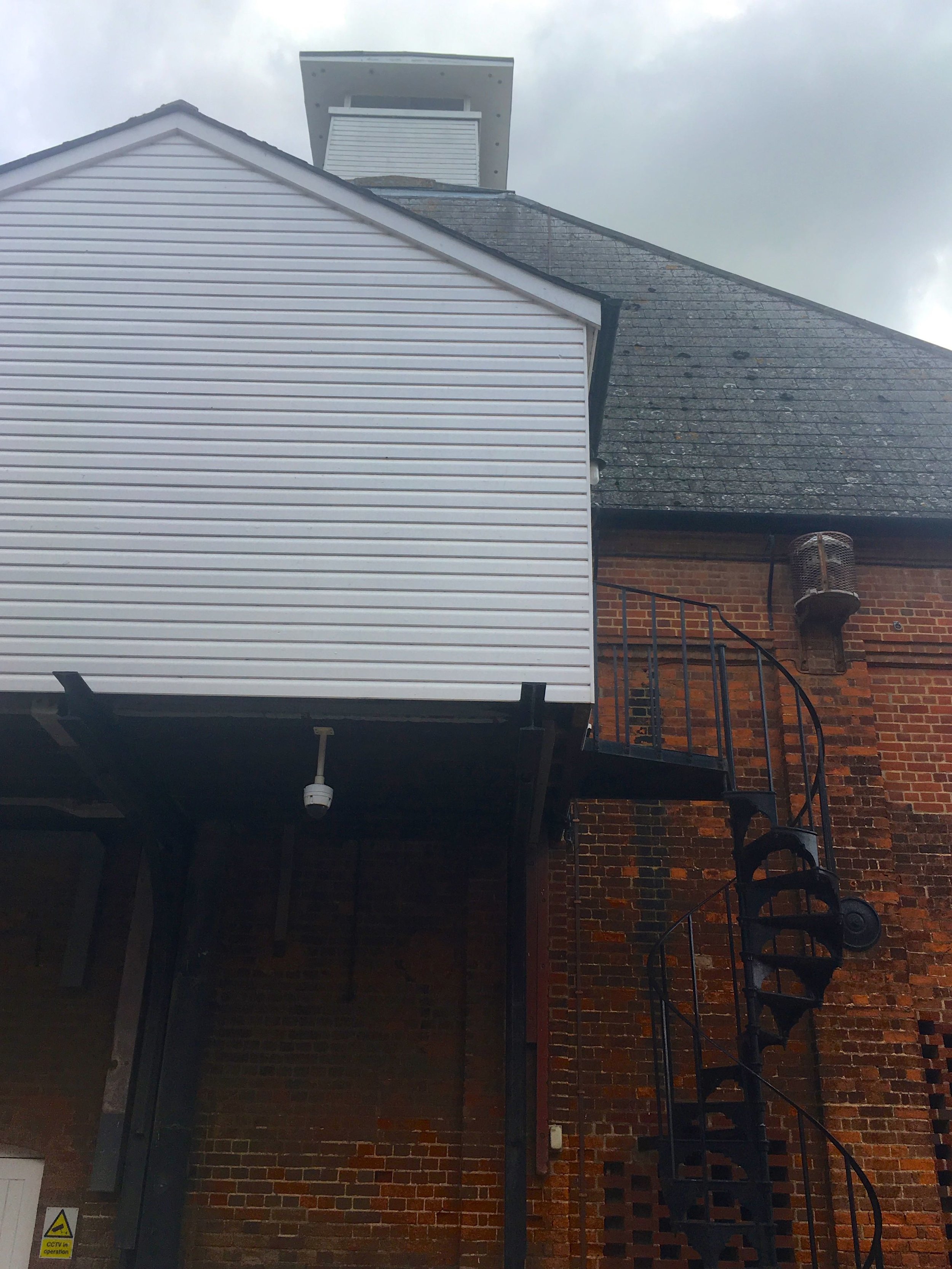
It was the sort of place, and the sort of day, where it was easy to wander inside and out. And the more I saw of the main building, the more I knew it was one I would like. And I wasn’t wrong, it was a fascinating place. As well as the shops, sculptures and cafes there’s also a concert venue and exhibition space. I’ve a feeling we’ll be back again, and not just for the shops. In fact our visit was prompted by a festering seed planted by a wedding present ten years earlier.

bricks, tiles and cladding all together stylishly so

No really. Our neighbours bought us a mosaic tea light lantern, which they bought at Snape Maltings. It’s one we still use, and one they’d bought here, so I had a feeling that it would be a place I liked. Completely true, and it goes to show how much first impressions count.

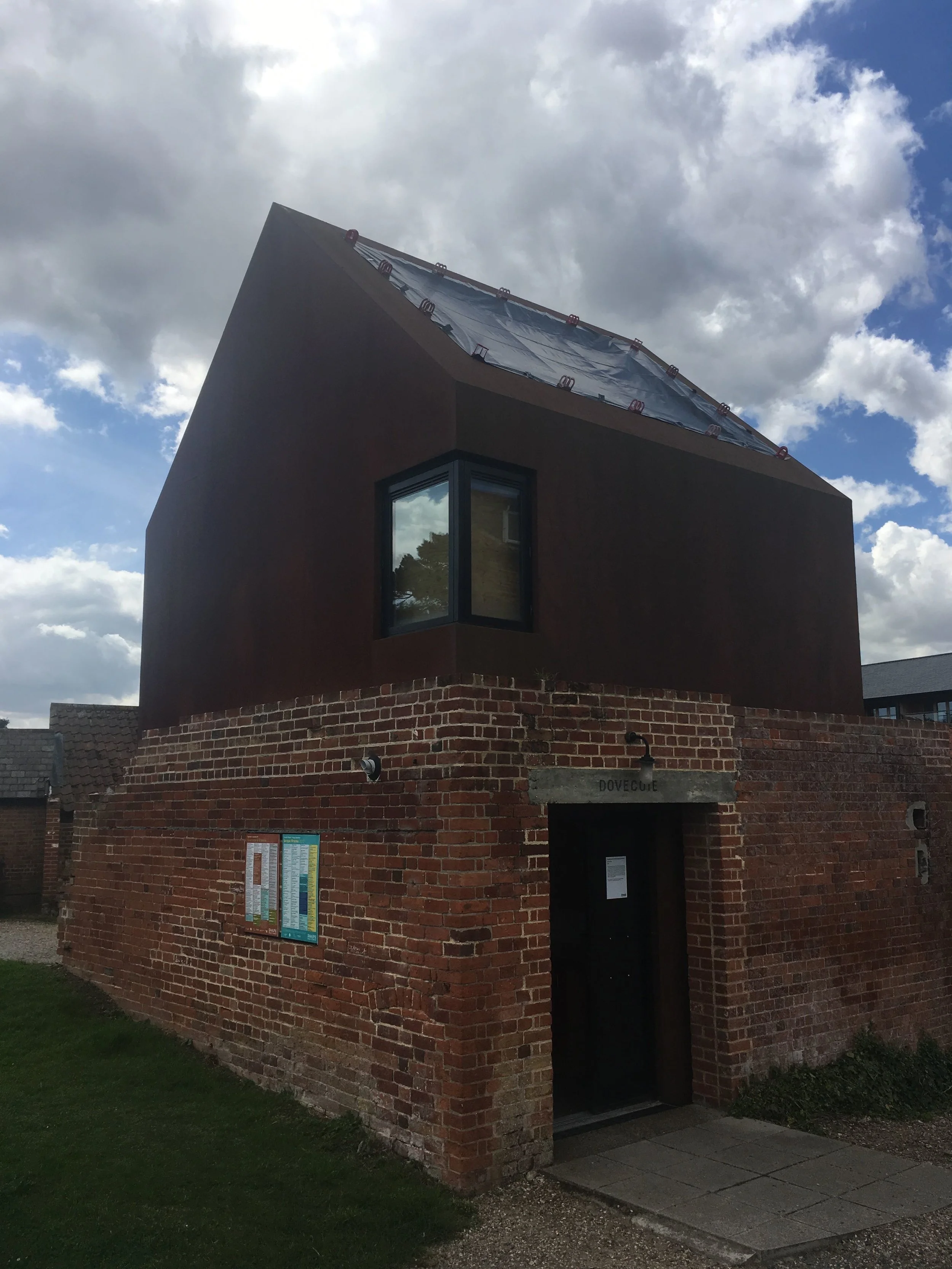
But back to exploring the buildings. Next up was the Dovecote, I don’t remember what it’s current use is, other than drawing admiring glances for the corten steel and brick structure. It’s previous use is pretty easy to guess though.

Another of the exhibits, this one clad in corten steel
The windows at the dovecote have seen better days

The windows. I’d happily have photographed this many which ways, but there’s always more to see - and really there are only so many photos you can take without ending up with at least a few duplicates. But don’t tell MOH that, as it’s something I always deny…

a look at the dovecote from the other side

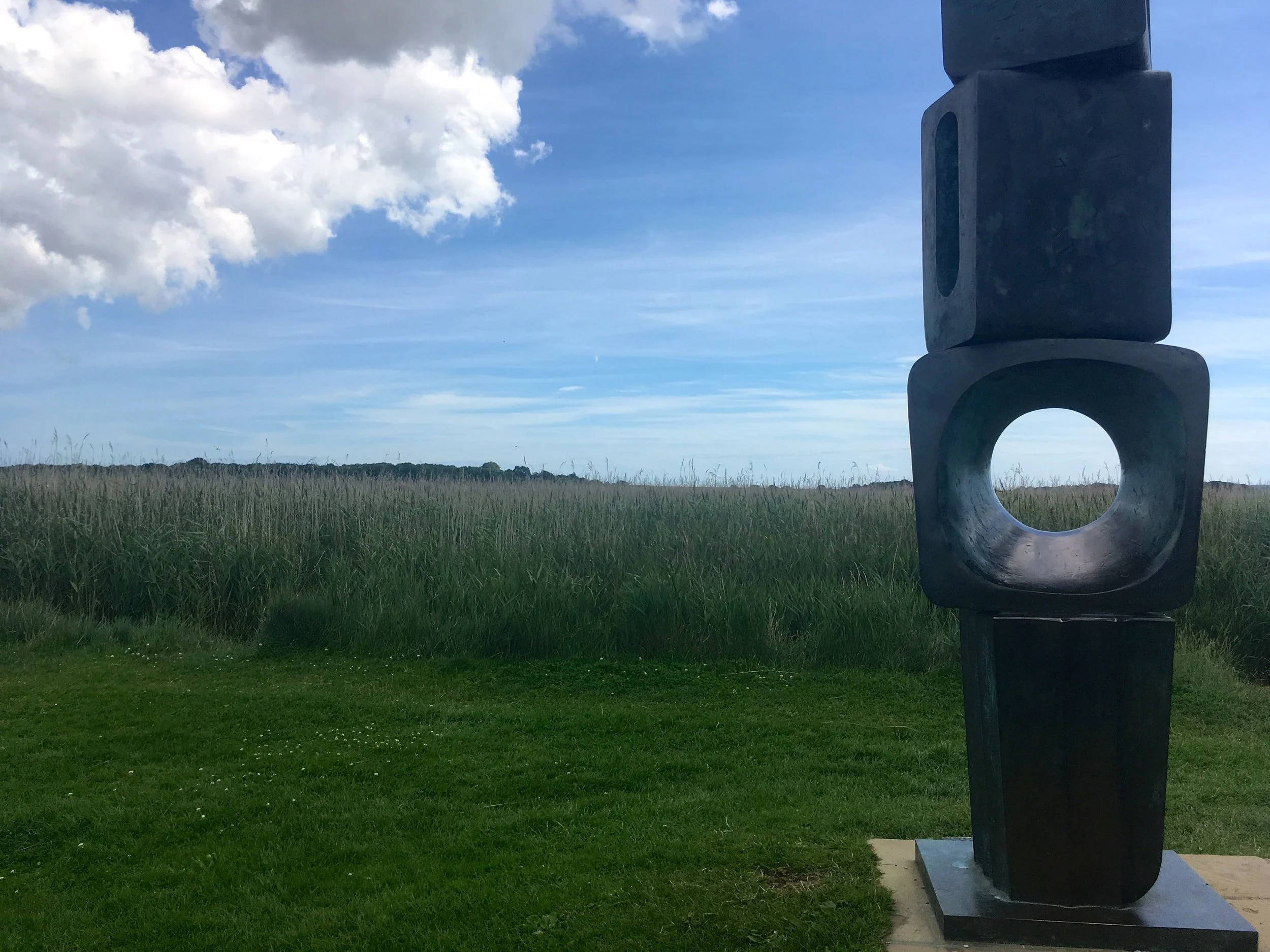
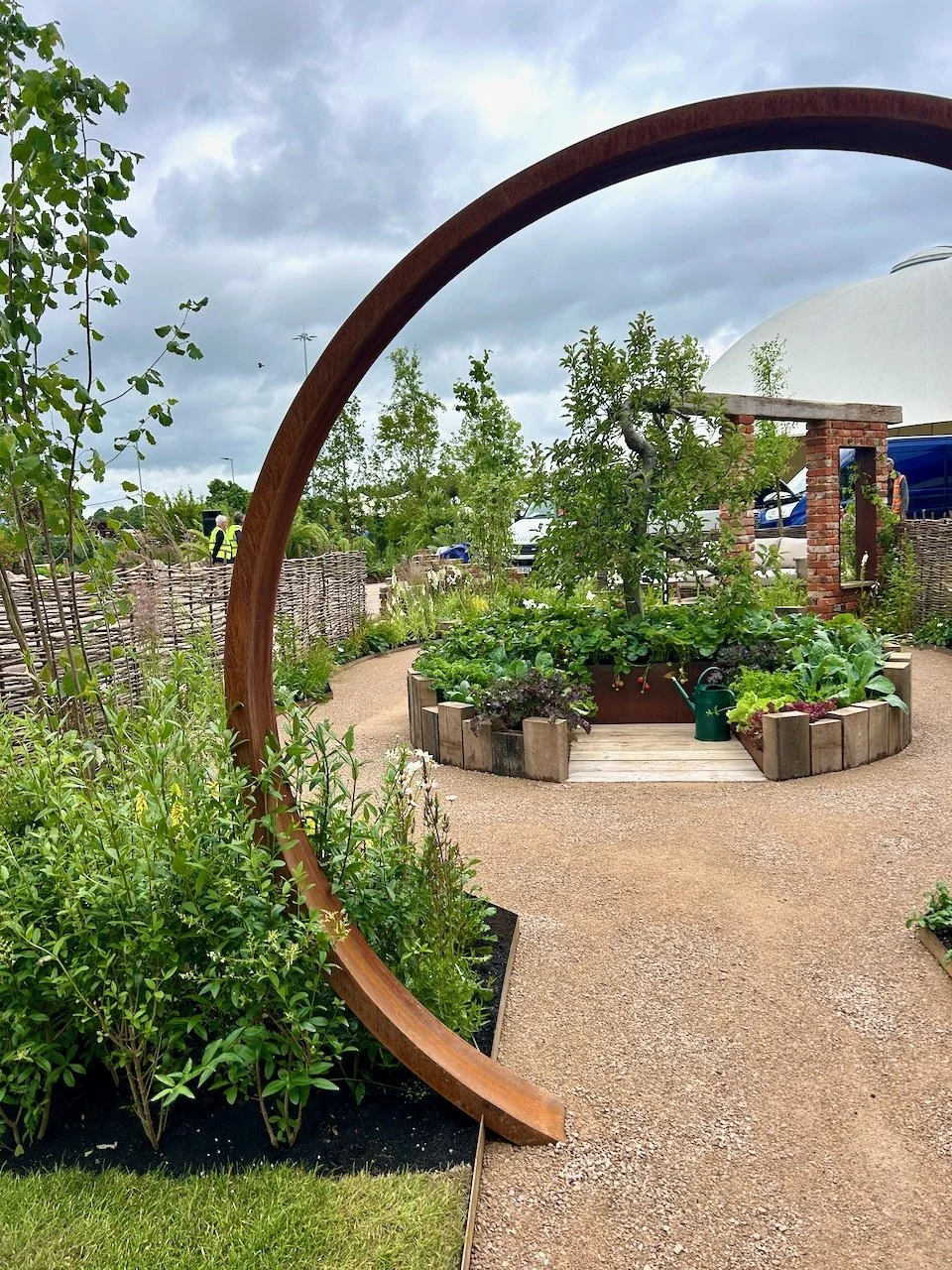
We had some fun with the final sculpture on this wander. There were three stacks to this one, and the round circular gap was just about head height. And as usual, my reluctant model posed for a silly picture or two. And the silly pictures always make it into our photo year books.

another modern sculpture with a great view

I’ve enjoyed this electronic wander, and a wander through memories made on what was actually quite a random way to choose a day’s activity. Have you been to Snape Maltings, or do you have anywhere equally as random for selecting where to visit?