
Pegboards for tools in the garage

Around the same time that I bought some pegboards for my craft room, MOH ordered some for the garage aiming to make good use of the space above his workbench. He’d spotted some reasonably priced metal pegboards, with accompanying accessories on VonHaus and was set to put his order in.

However when we measured the space we realised it could fit two sets in, as each set comprised of three individual sections. And while it wasn’t totally clear from the site, we reckoned that you didn’t have to hang all three side by side - and thankfully, that small gamble paid off.

But first, look at the accessories that came with them - this is for both of them - there’s quite the choice there.
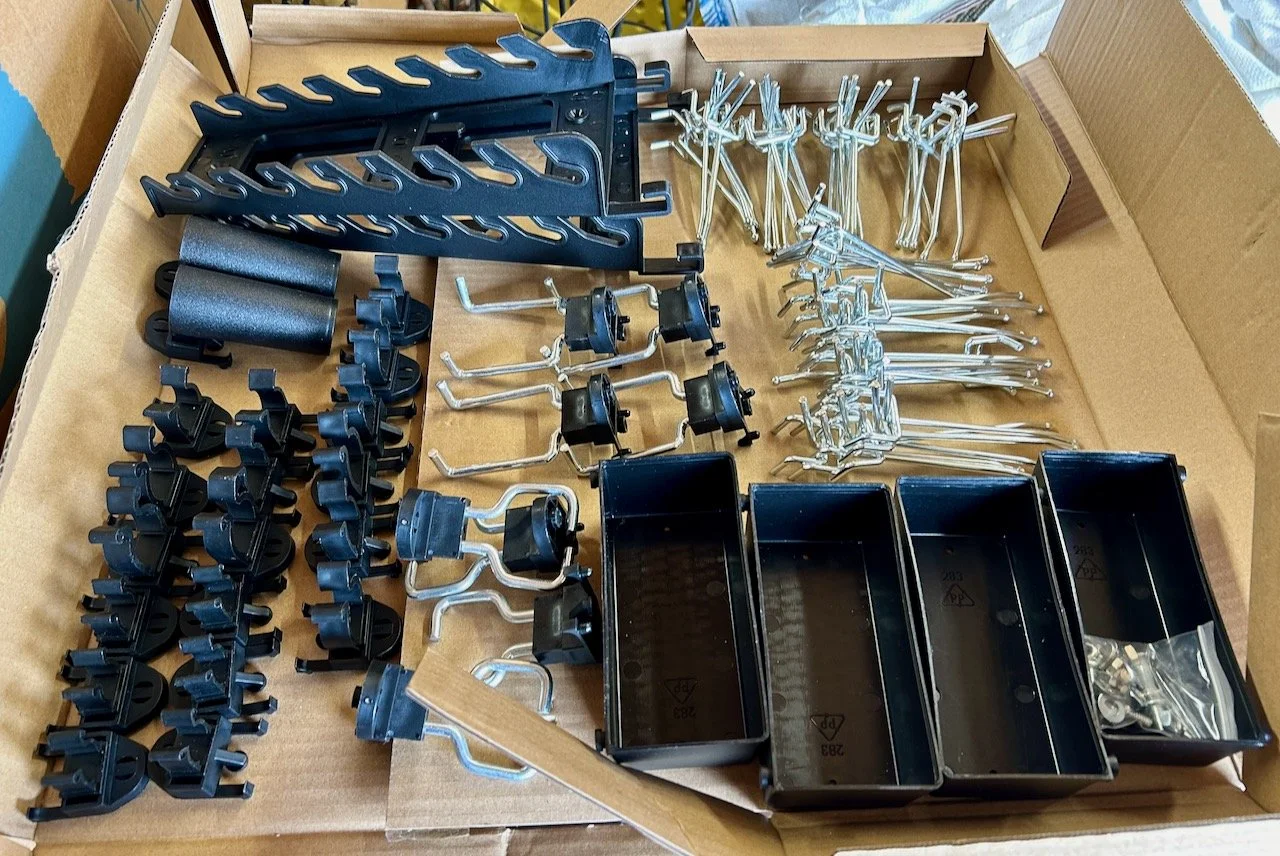
So we set to work - the Royal ‘we’ mostly! - in the opposite corner of the garage from where we added the hooks for our garden tools shortly after we moved after getting fed up of constantly stepping over and moving them. Side note: it’s worked out really well, I highly recommend!

With the workbench in position, which was my FIL’s and which we’d been storing dismantled in our shed for a fair time before our move in the hope that we’d have the space for MOH to make good use of at some point, we set about positioning the pegboards.
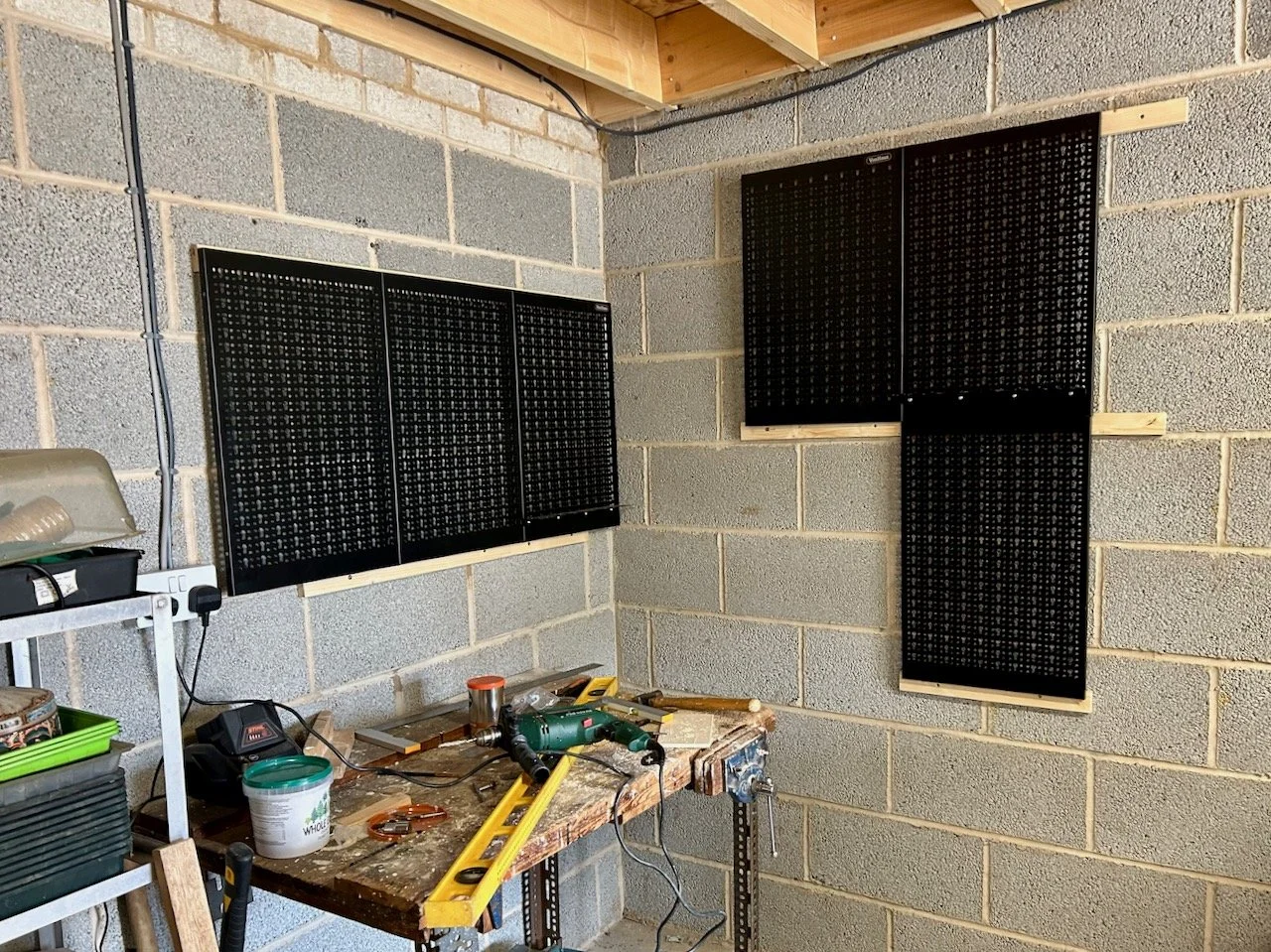
One set/three sections did go up as shown on the website directly above the workbench, but leaving enough space for tools to hang down, and also to allow a shelf to be put up above for additional storage.

We (the Royal sort again) hung the second set/three sections in an inverted L shape and higher than the others, aiming to make it easy to access as many tools as possible easily.
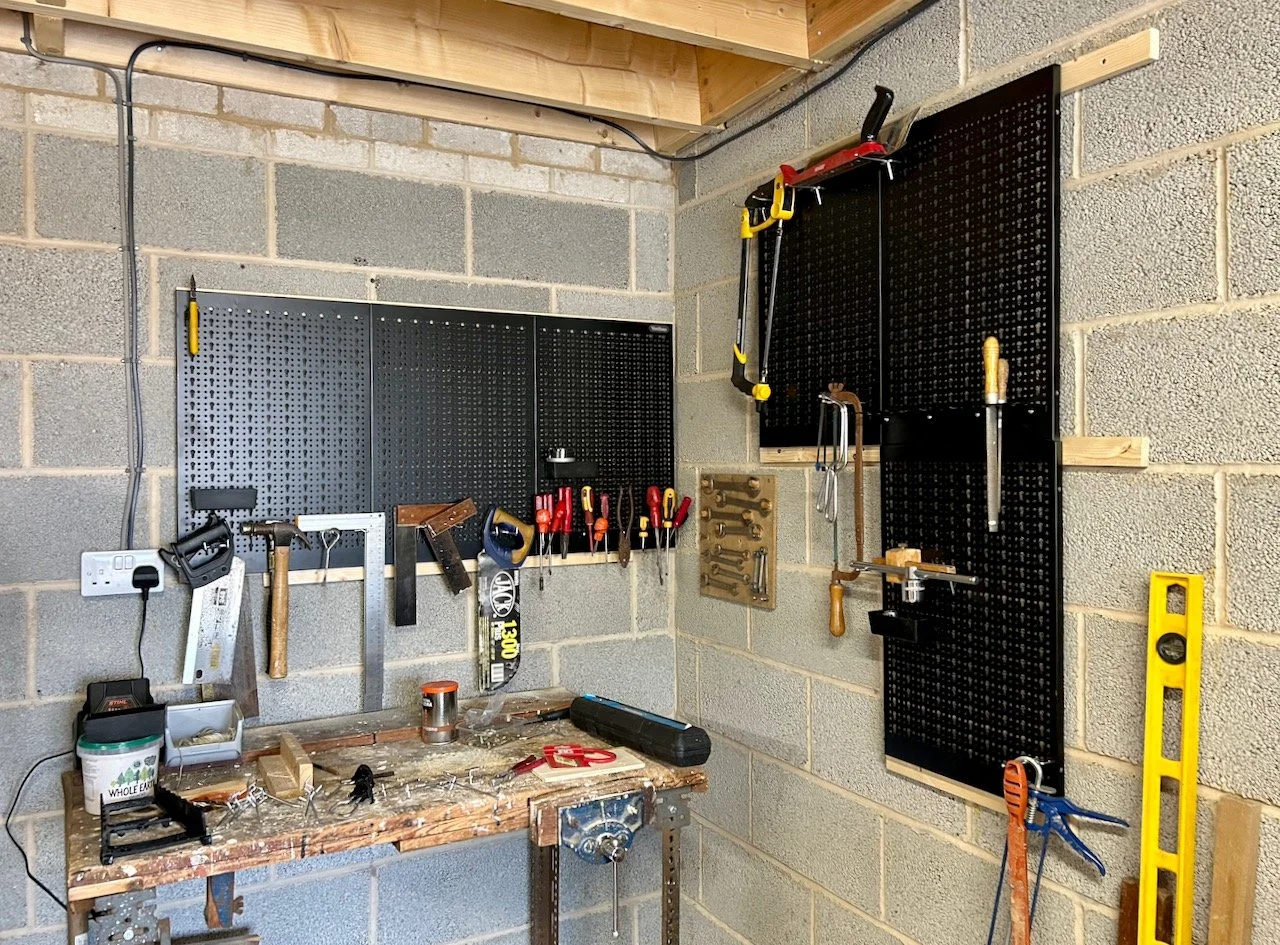
This is very much not my space, so after initially helping to get some kind of working plan for the best place for tools, I’ve retreated and left it very much to MOH. As I know from my using my craft room it’s once you start using a space that you really work out what works. And I think he’s done that, as from this little space have come the shelves for the bathroom cupboard, and the herb and spice shelves in the pantry, and as you’d expect I’ve some other jobs lined up for him too.

Thankfully though, he’s not surprised at all!
Welcoming songbirds and deterring bugs

* I was invited to the Garden Press Event, a one day show which connects garden product suppliers with garden media, therefore I’m marking my blog posts from the event as 'Ad’ though as usual my views and opinions are very much my own.

We’re all aware of the need to encourage wildlife in our gardens, and to maintain the balance - but I’m also sure that many of us also encounter some of the more annoying bugs too, and need all the help we can get dealing and coping with those. At the event there were companies there covering both of these, and so today I’m sharing some of their messages and products.

SongBird Survival

The clue’s in the name really, SongBird Survival is fighting to change the future for songbirds by funding research into the causes of decline to create and promote solutions, and as numbers have fallen 50% in 50 years that’s very much needed. In that time more than half of our UK songbirds are threatened or already in decline, so they really do need our help.

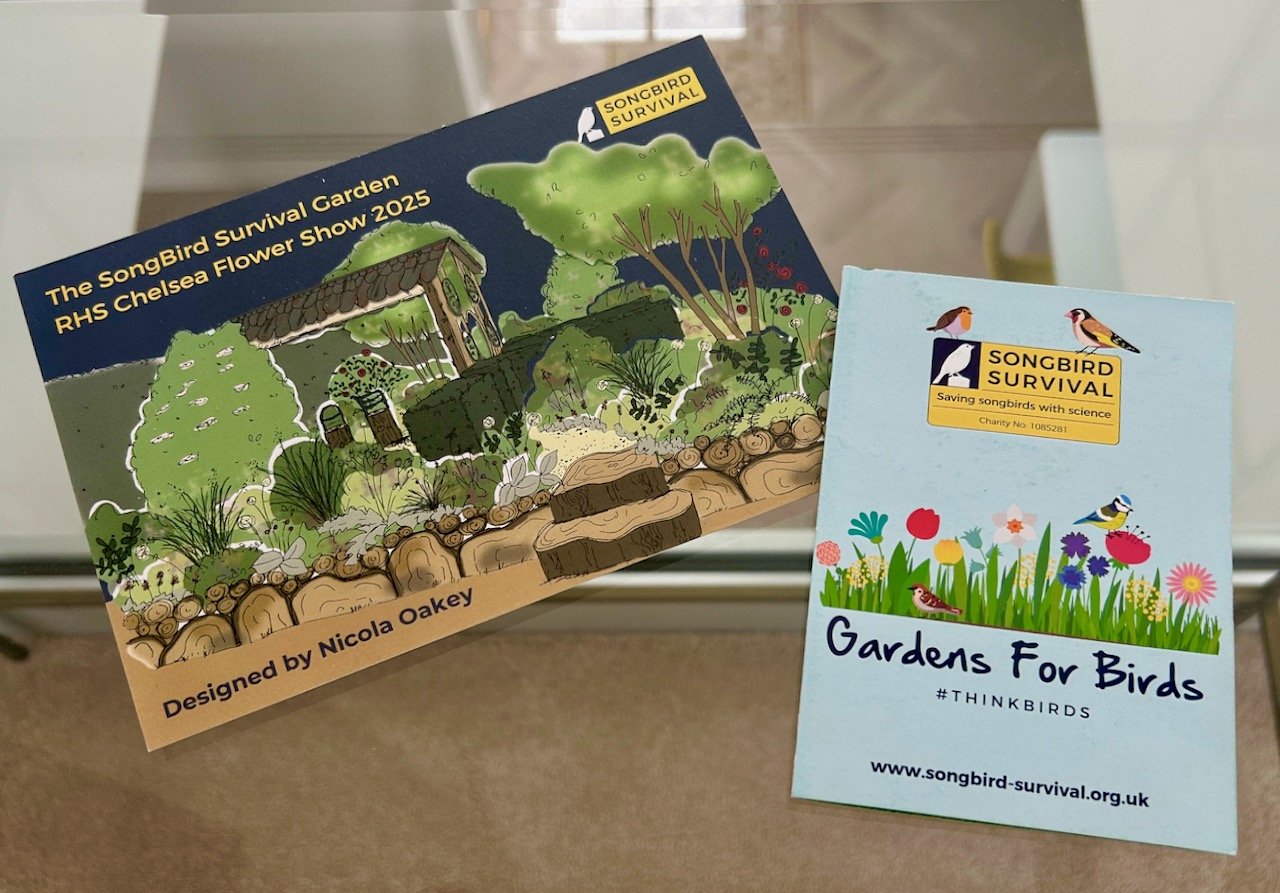
As part of their awareness for this SongBird Survival have partnered with Nicola Oakey who has designed their garden at this year’s RHS Chelsea Flower Show in May. The garden aims to show gardeners how they can do their bit to help stop the dramatic decline - so do look out for more on their garden later in the spring.

We’re already in the breeding season, which takes place between February and July - so if you haven’t already make sure your nest boxes are clean and ready for any feathered occupants, though go carefully in case any have already moved in.

If you’re wondering what you can do to encourage a wildlife-friendly garden then SongBird Survival recommends including their five essentials:

  1. Shelter - important for escaping predators; trees, hedges and shrubs can provide this.

  2. Food - a mix of flowers and greenery will attract insects, and berries and fruit trees can also provide a good source of food.

  3. Nesting - nest boxes are a great way to provide safe nesting environments, but also planting long grasses and cardoons supplies birds with good nesting materials.

  4. Water - provide a space for water, such as a shallow bird bath, which is cleaned regularly.

  5. Be natural - ditch the pesticides to help wildlife thrive.

I’m planning to cover more of their advice in my monthly The Garden Year linky when that opens for this year, so pop back on the first of each month between April and November to read more.

Alfresco, Anti Bug Bite Botanical Blend

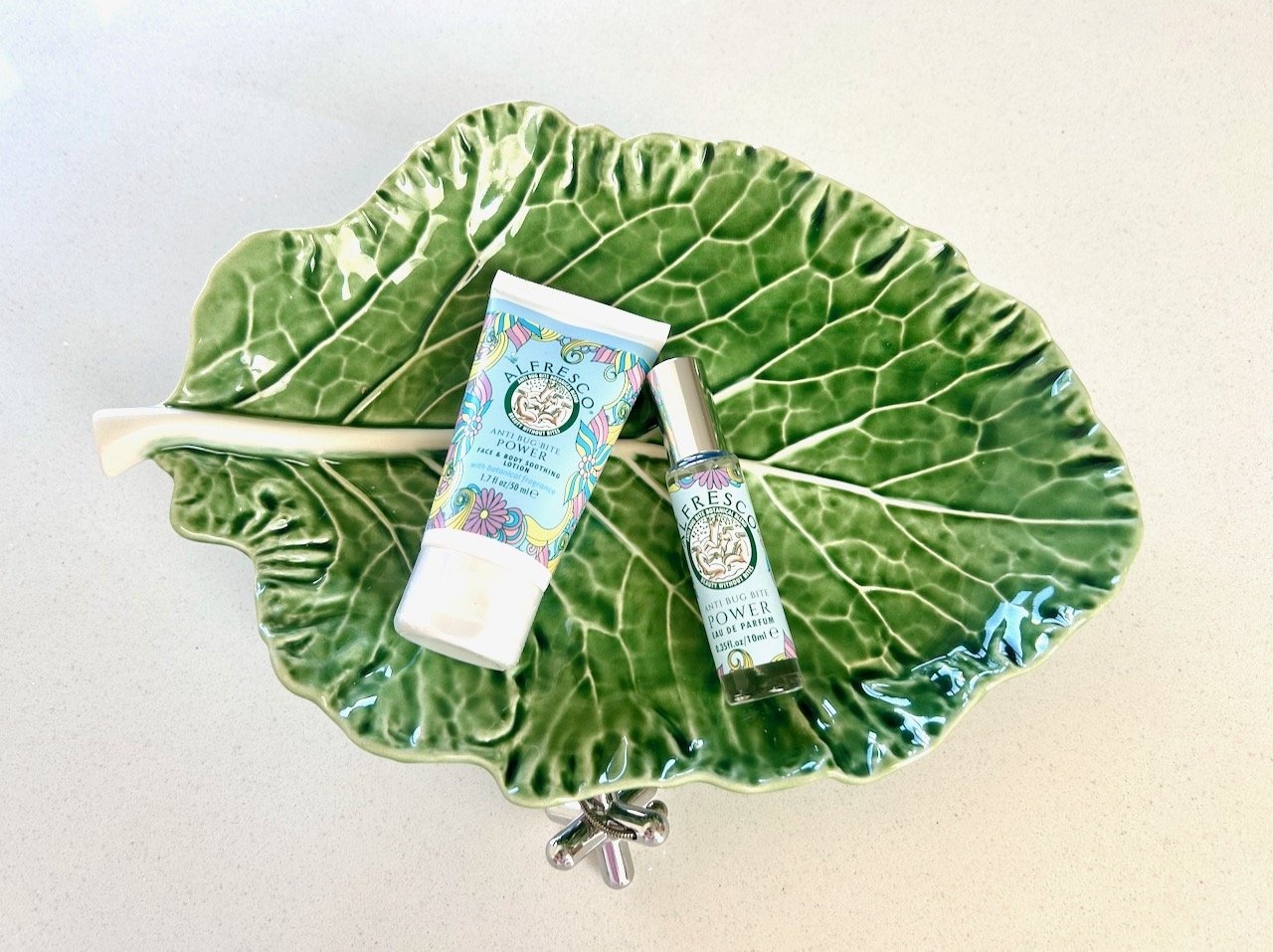
Free from DEET, parabens and synthetic chemicals these products by Alfresco feature a unique blend of over 25 essential oils which means a naturally derived mosquito repellent, along with a pleasant long-lasting fragrance - which is a world away from the usual insect repellent smell we’re used to, trust me!

I tried the Power lotion on the day of the show and was pleased with how it smelt and felt on my skin, so I’m looking forward to trying it for real as the year goes on, as I don’t think there’s anyone that enjoys attention from the bugs is there? The spray looks as if it could be useful too - there’s a few different varieties to choose from - Classic, Planet and Power, each with a different fragrance.

Super Ninja Against Plant Flies and Fruit Flies

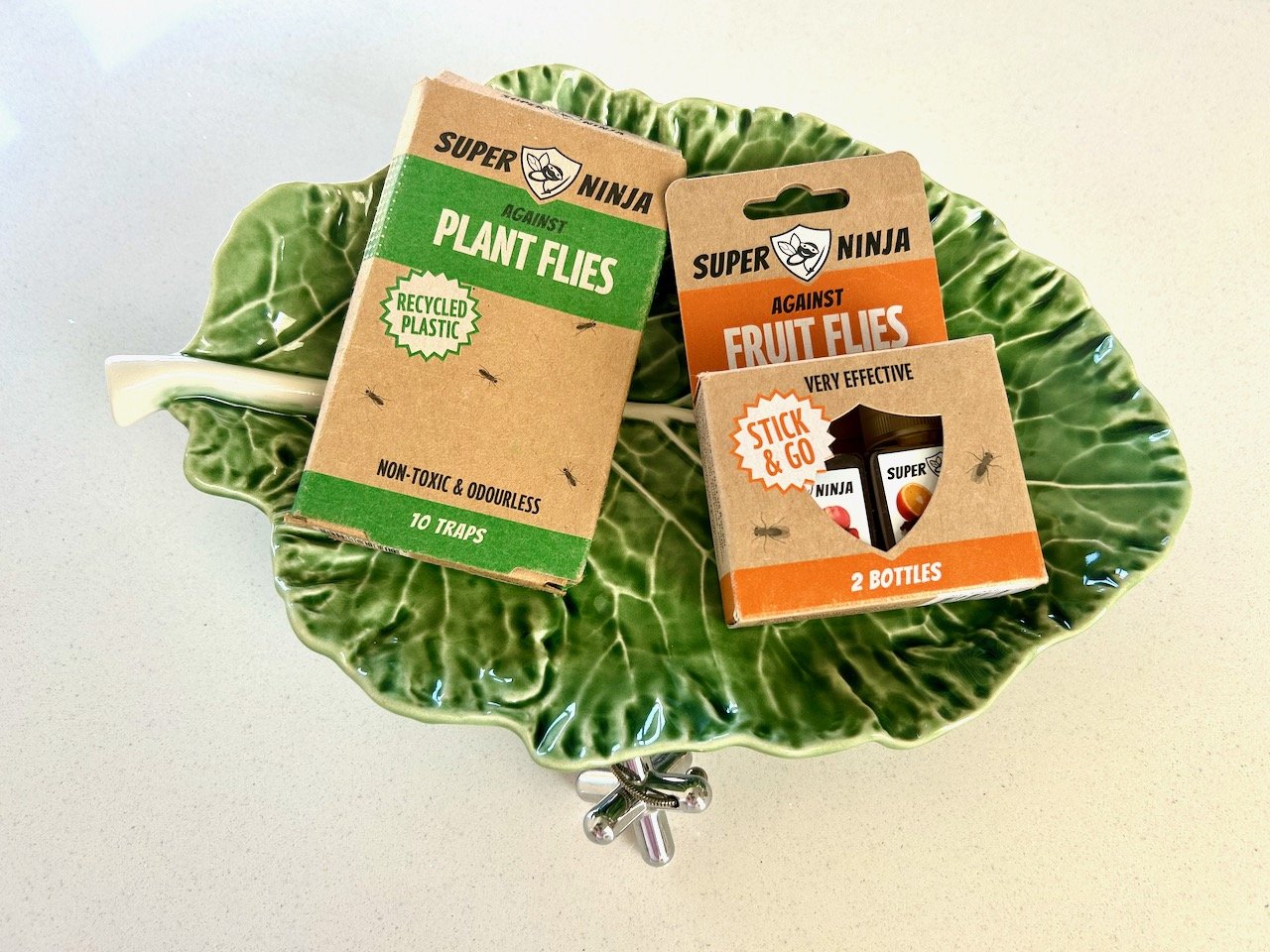
In the past we’ve experienced both plant flies and fruit flies, and they are very annoying. These products from Super Ninja are also from natural ingredients and claim to provide ‘immediate results, without harmful side effects’ as well as easy to use. And when you’re inundated with bugs, you want something easy don’t you?

The Against Plant Flies, made from recycled plastic (and are recyclable) are the yellow sticky traps which are said to last up to three months. The Against Fruit Flies are innovative and discreet, according to their website. The pack contains two small bottles of liquid which attracts the unwanted pests, and these also come with a sticky pad so you can get the bottle close to the source of the problem.

I’ve not tried either of these, and in some ways I hope I don’t need to! But if I need them, then I know from previous experience that it’s great to have something to hand to use straightaway, so if (when) that day comes again I’ll be hoping they’re as good as their word.

The Improv Quilting Journal Quilt Challenge at the Newark Quilt Show

Another of the exhibitions at this year’s Newark Quilt Show was the Journal Quilt Challenge, where quilters make two A4 size quilts based on the theme for the year, which for 2025 was Improv Quilting.

And for small quilts, there’s a lot of work in these - and there were plenty of entries, way more than I can show in a single post, so I’ve chosen my favourites to include here.

The show notes advise that ‘Improv patchwork & quilting is very ‘on trend’ at the moment but some quilters may be hesitant to try something new without the safety net of rules’ - but then again, that goes for a lot of things in life doesn’t it?

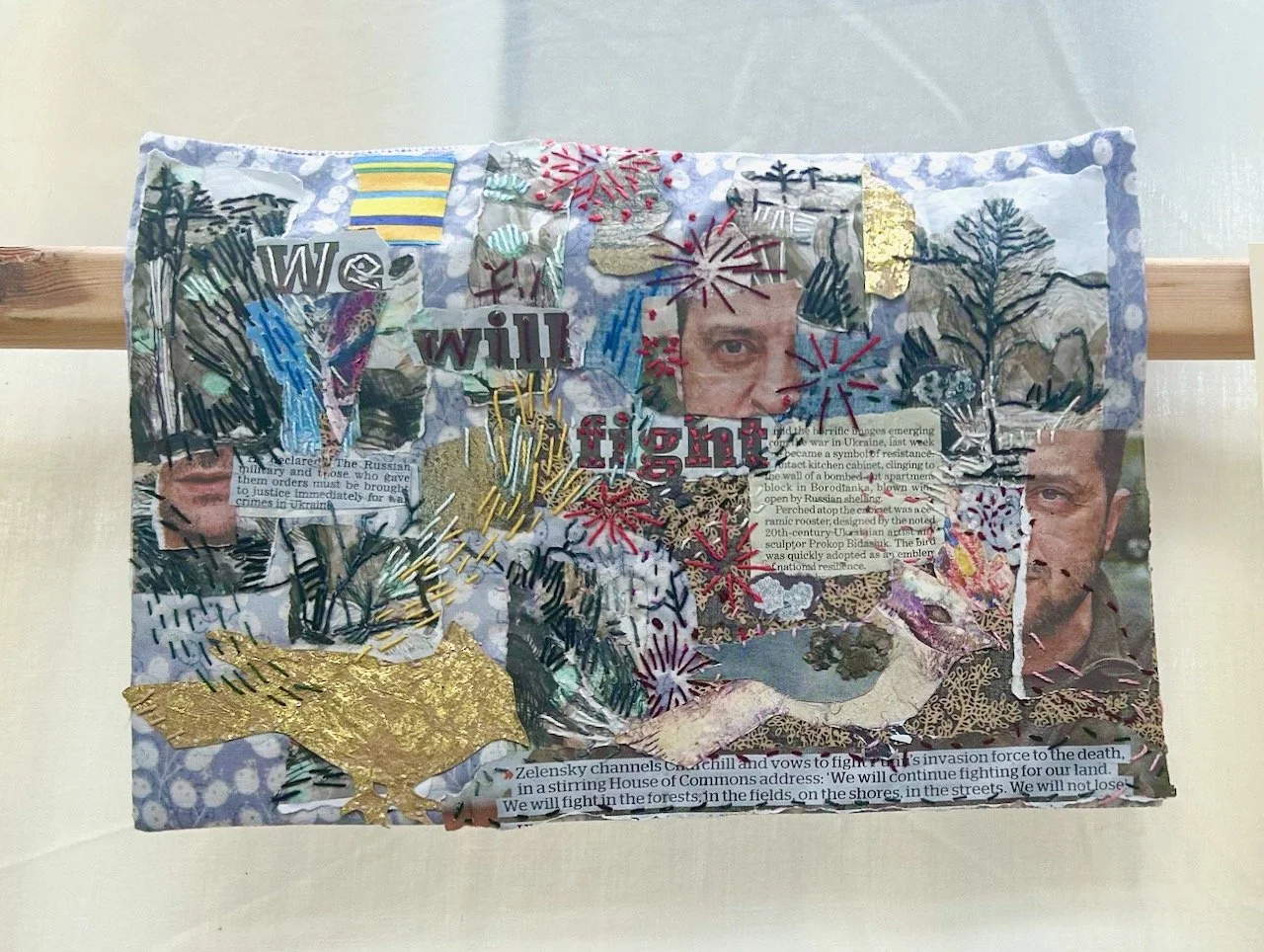
For me the standout entry was the two collages by Joan Weston - not only the subject matter, but also the materials used - fabrics, papers, newspaper extracts as well as stitching and the final products.

WE WILL FIGHT, JOAN WESTON

WE WILL NOT LOSE, JOAN WESTON

The top quilt, which remember is just A4 sized, is a collage of fabrics, papers, newspaper extract and stitching representing the invasion of Ukraine and Zelensky’s moving response channelling Churchill’s speech decades earlier. The second represents the destruction of the cities in Ukraine using newspaper cuttings, photographs and stitching. The stitches show the winter weather suffered by homeless people, bombs and the bloodshed.

No matter what your views on the subject matter, both pieces are incredibly detailed and the amount of work in such a small piece is mind blowing, and totally amazing - and definitely fits into the Improv Quilting category.

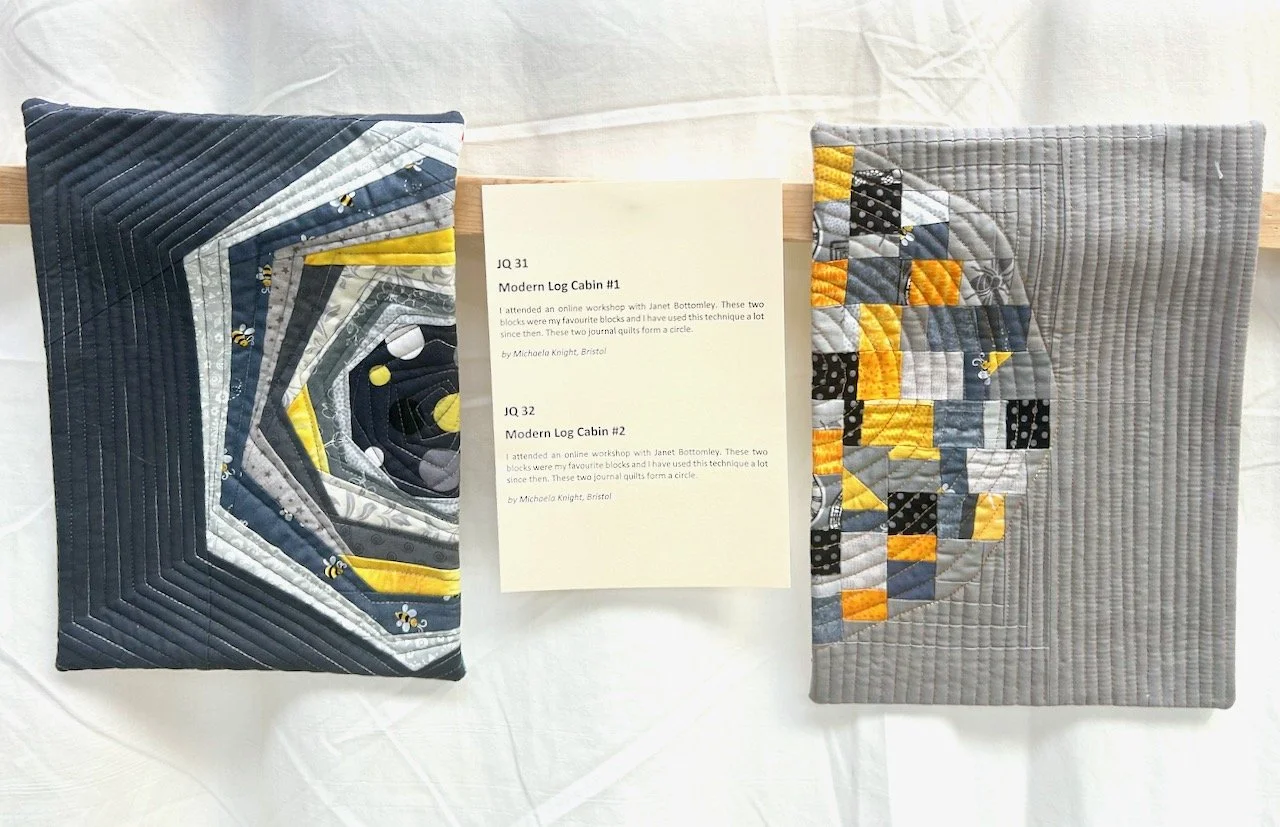
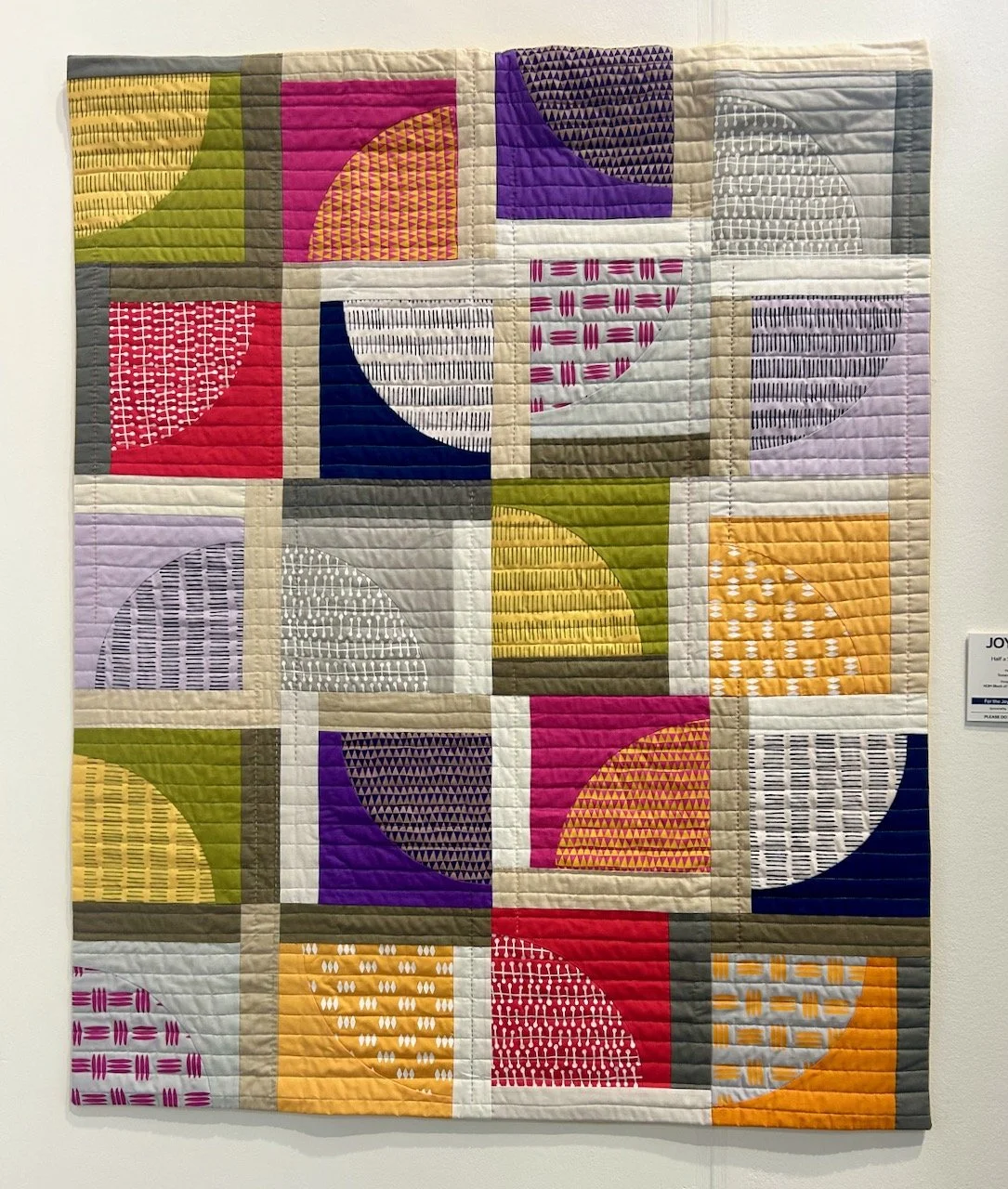
Other quilters took a more traditional approach playing with more recognisable quilting shapes and designs - you’ll no doubt recognise some of those which have been given the improv treatment.

UPS & DOWNS AND GOING IN CIRCLES, HANNAH CARLISLE

IMPROV 8-POINTED STAR AND IMPROV QUADRANGLES, RUTH CASE

MODERN LOG CABIN #1 AND #2

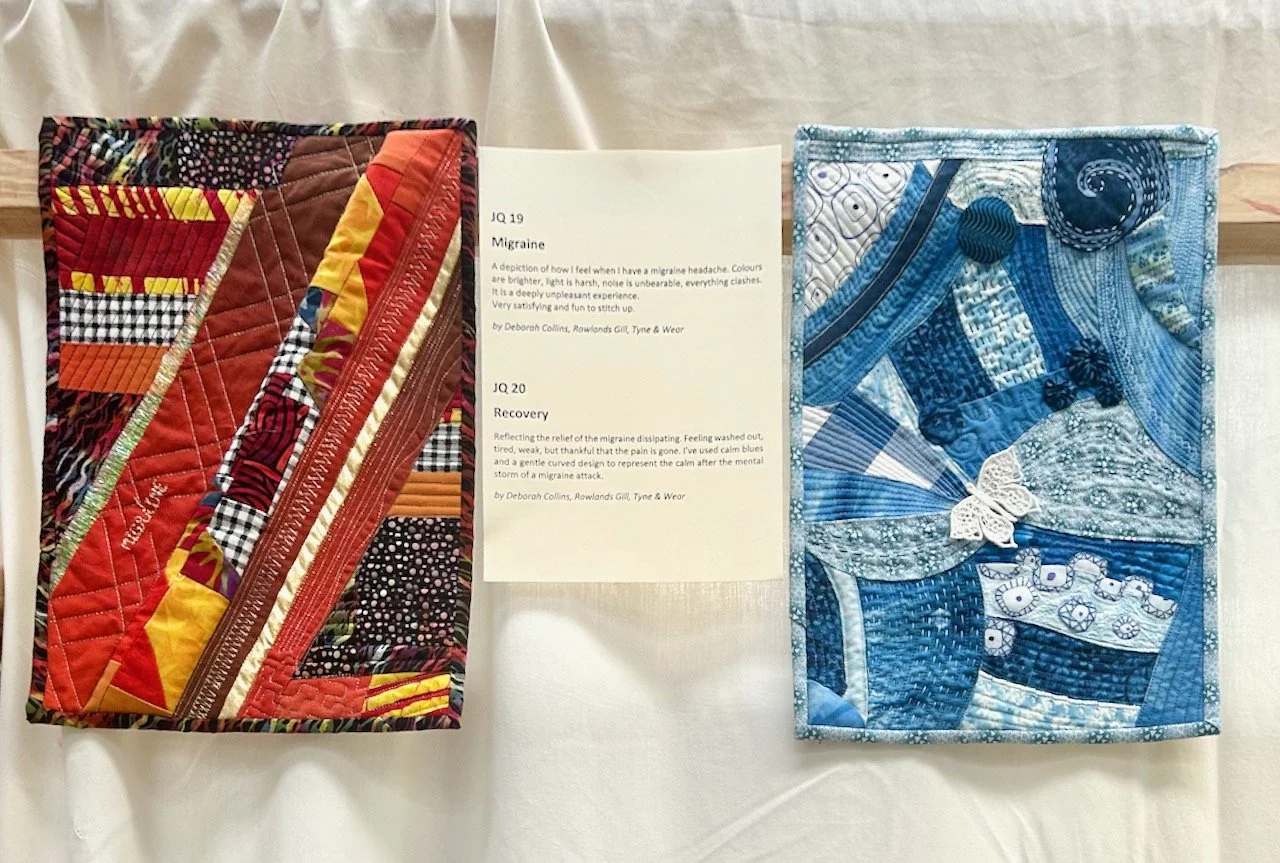
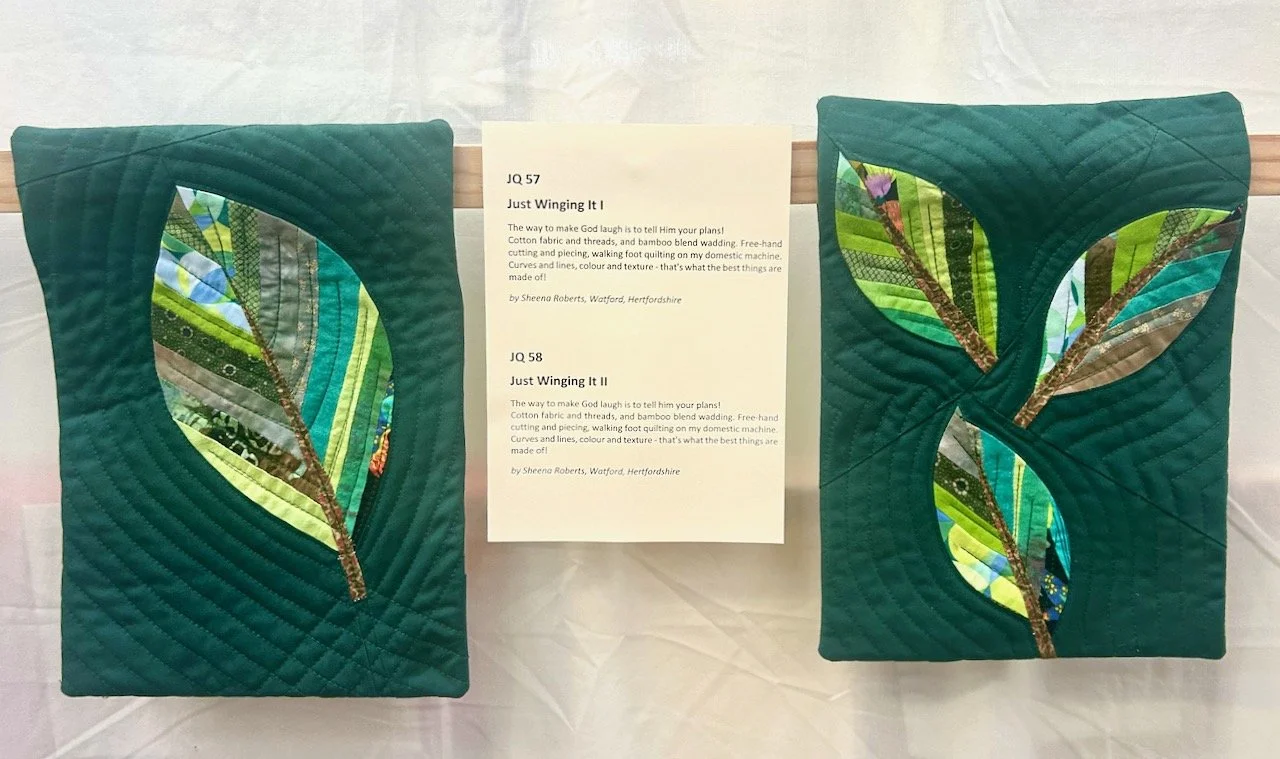
Other quilters took a less structured approach and used the materials, colours, shapes and stitching to represent a wide array of topics - from migraines and recovery, to cities and nature.

MIGRAINE AND RECOVERY, DEBORAH COLLINS

IMPRESSIONS OF NICE: I AND II, JULIET WEST

JUST WINGING IT I AND II, SHEENA ROBERTS

And then there was the completely wacky - and I say this full of admiration - the riot of colours, approaches and textures was equally as amazing.

WEIRD WILD WORLD AND WILD WEIRD WOLRD, MARY WATTS

STRANGE WORLDS AND LIFT OFF, HOPKIN REES

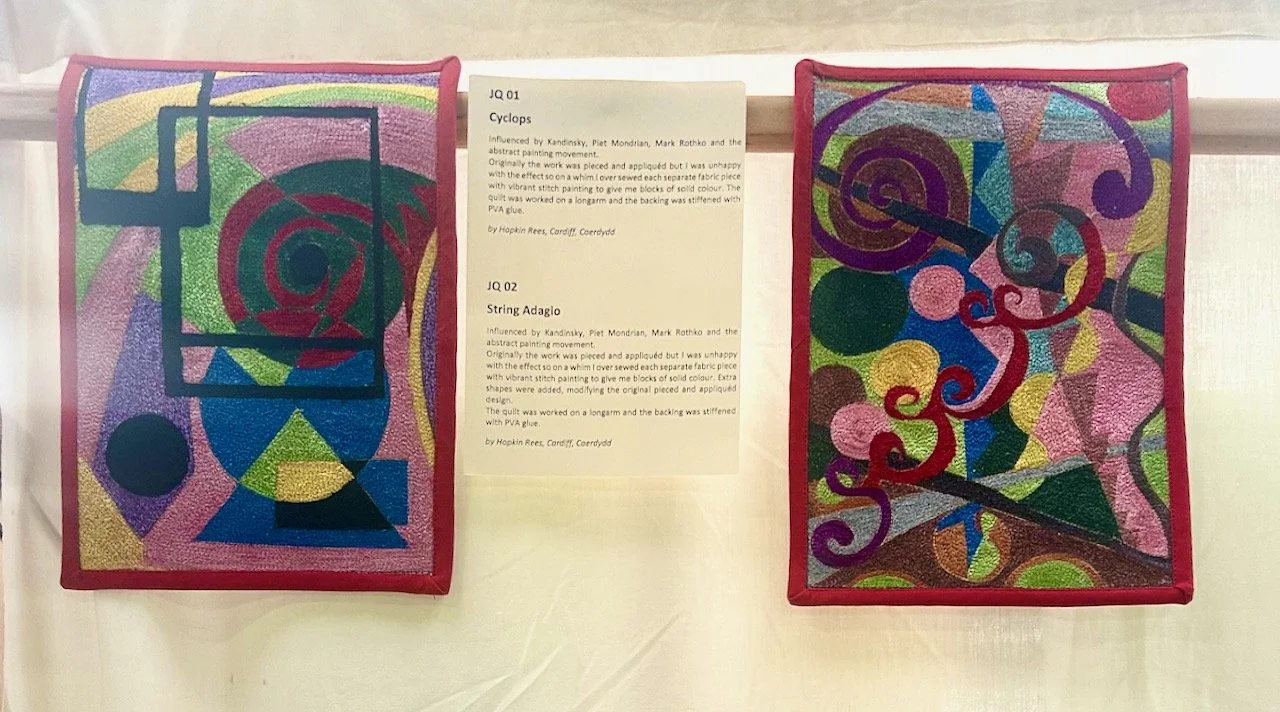
CYCLOPS AND STRING ADAGIO, HOPKIN REES

It’s also clear that these small quilts are equally as addictive as their larger versions - and I’m sure aren’t significantly less work either. The second inclusion by Hopkin Rees above was also reassuringly honest, and demonstrates that many crafters continue to be unhappy with their work. The Cyclops and String Adagio quilts were originally pieced and appliquéd but unhappy with the effect they ‘over sewed each separate fabric piece with vibrant stitch painting’ resulting in blocks of solid colour - the end result is particularly stunning I think.

QUALITY STREET, MARIA JEANNETTE

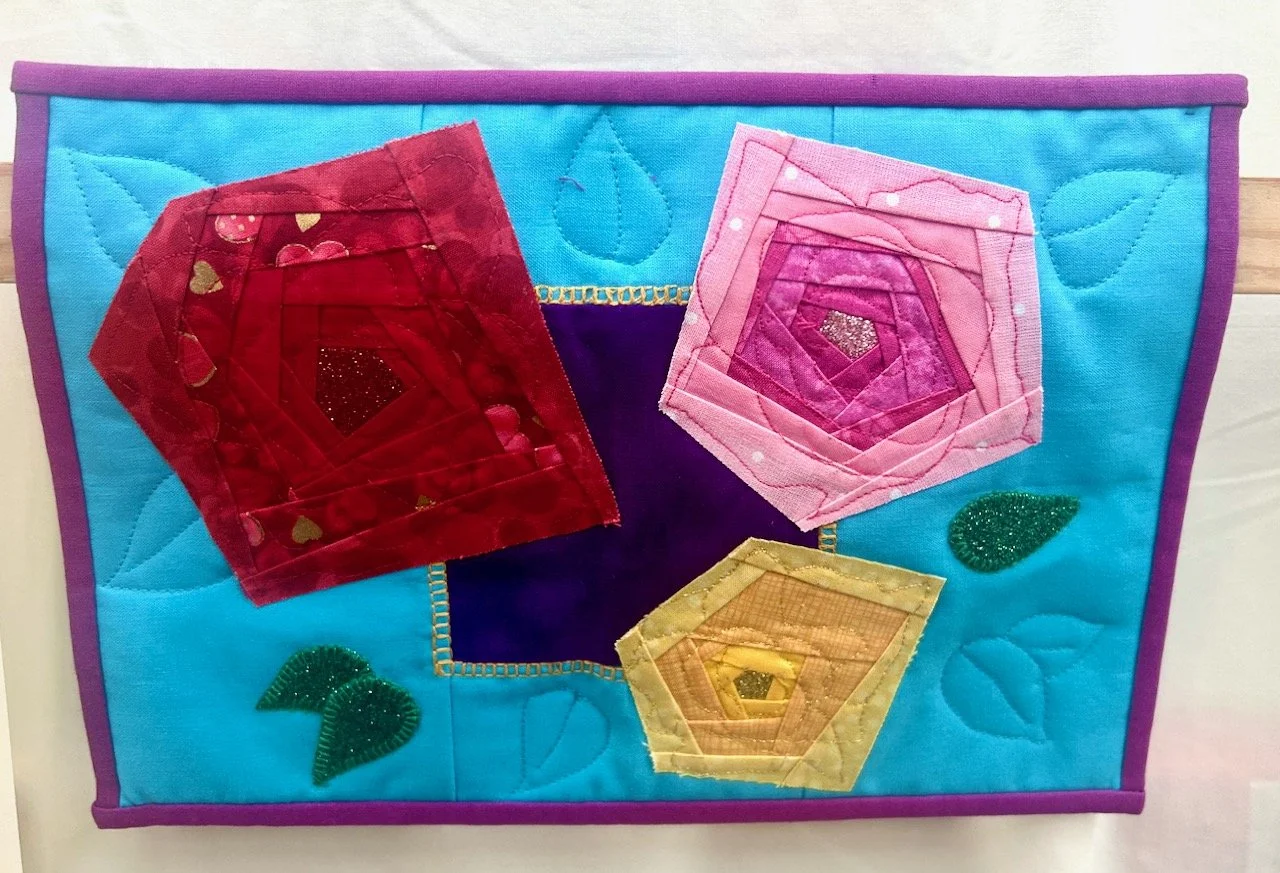
ROSES, MARIA JEANNETTE

These final two did raise a smile, which was the maker’s intention, though while I bet they were fun to make and are instantly recognisable, I think I’ll stick with the real thing!