Nick Bailey's Plant-Based Garden

* I was invited to this year’s Gardeners’ World Live and provided with a pair of tickets to the show, therefore all my posts will be marked as 'Ad’ though as usual my views and opinions are very much my own.

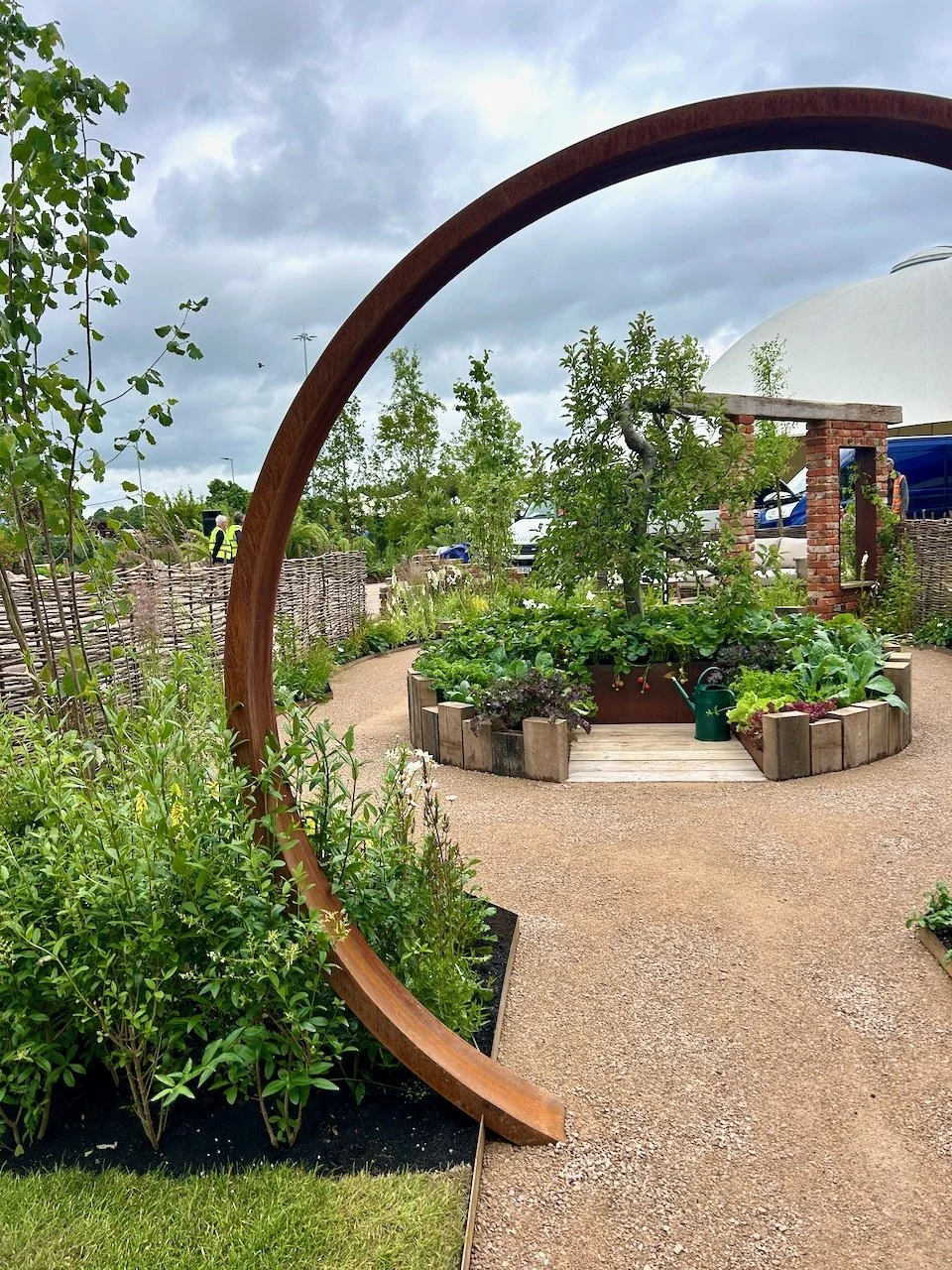
I said in my highlights post from the show that I was looking forward to seeing how Nick Bailey would incorporate the #MakeAMetre matter initiative into his garden, and how successful it was and today I’m sharing some of the many pictures I took of the garden.
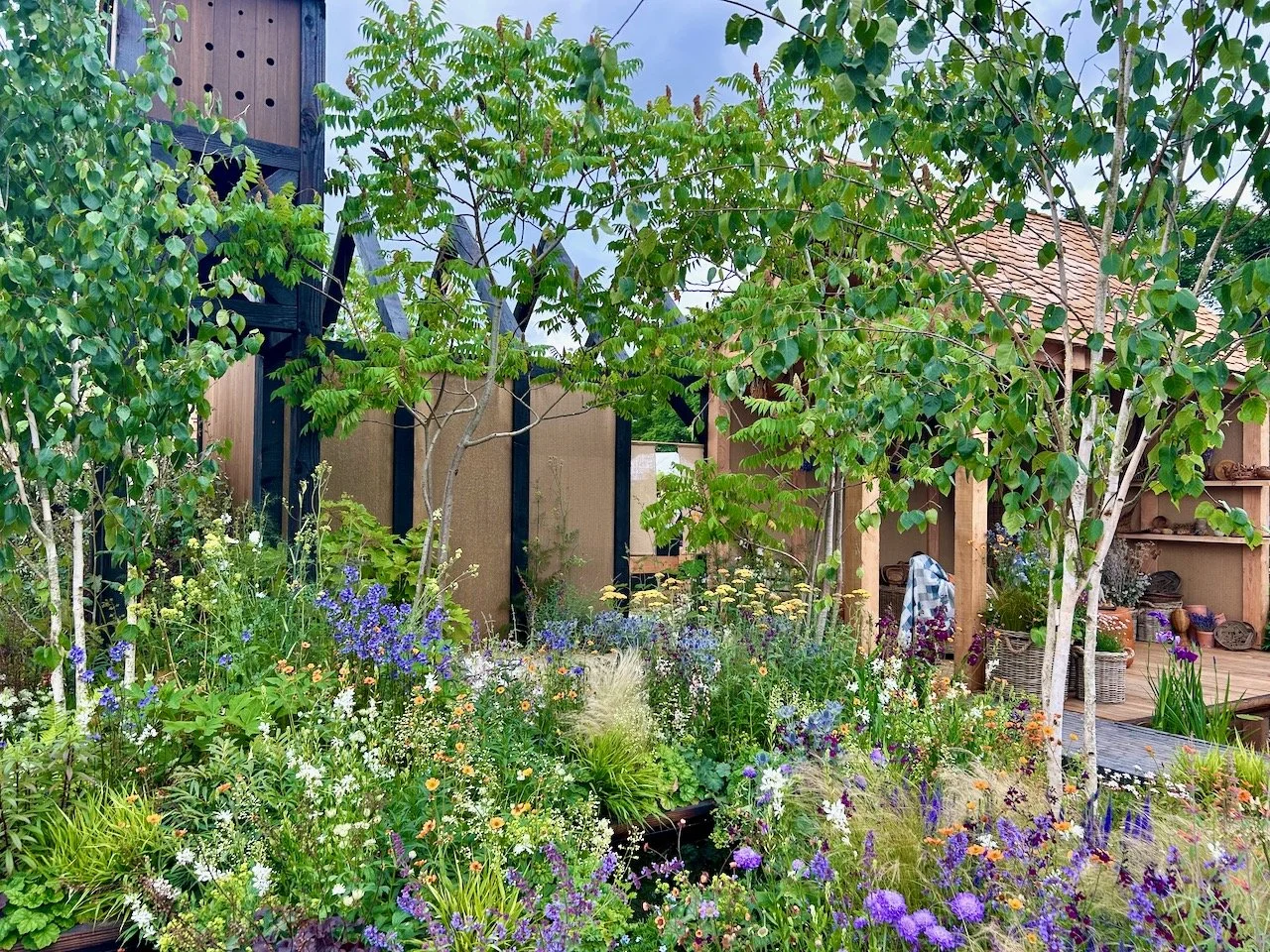
Dense prairie style planting in the foreground with the seating area in the background
Three instances of the dark roof shaped structure repeating through the garden among the raised beds

The garden features a cluster of Douglas fir buildings and structures in the style of a traditional homestead, and it was the repeating shapes of the frames that made the garden such a success for me. They brought height to the space and their bold charred wood certainly brought impact.

The narrow bricked path forming a 'central corridor' through the garden's planting, ponds and seating areas

The buildings included a Burnt-Out Barn with grape vines overhead and dining below, the Brassicarium for protection for edibles, and the Roofed Barn seating area (below) which overlooked the ponds and a meadow-matrix perennial grass planting. And if you look closely there’s patchwork throws over the chairs too.
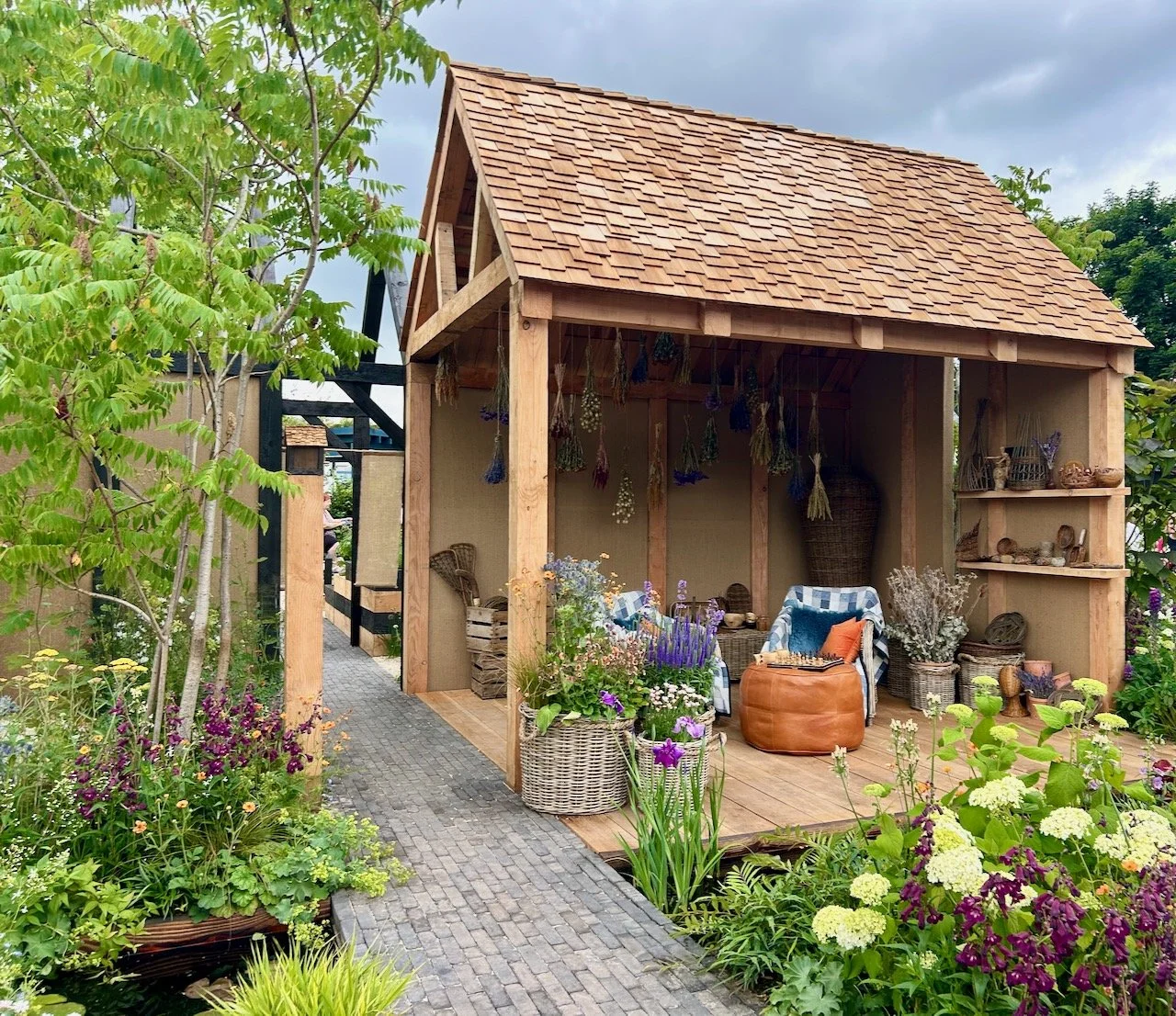
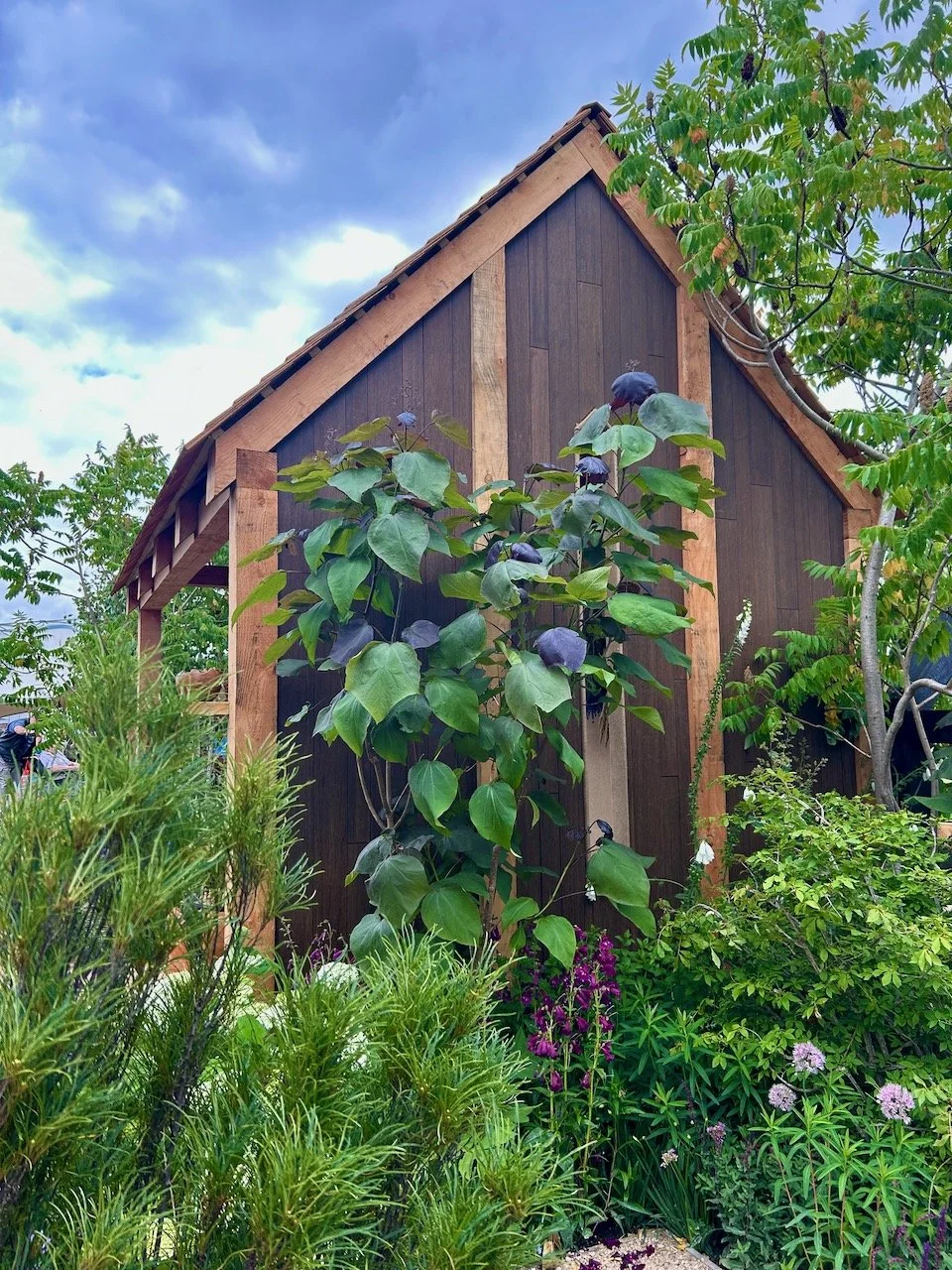
The open but covered seating area with cosy chairs, patchwork throws and a game of chess
Lush green planting growing alongside one of the buildings softening its shape

Long term readers will know that I like a structured and ordered veg plot, but never have I heard of a Brassicarium, and I wish I had - isn’t it a great word?
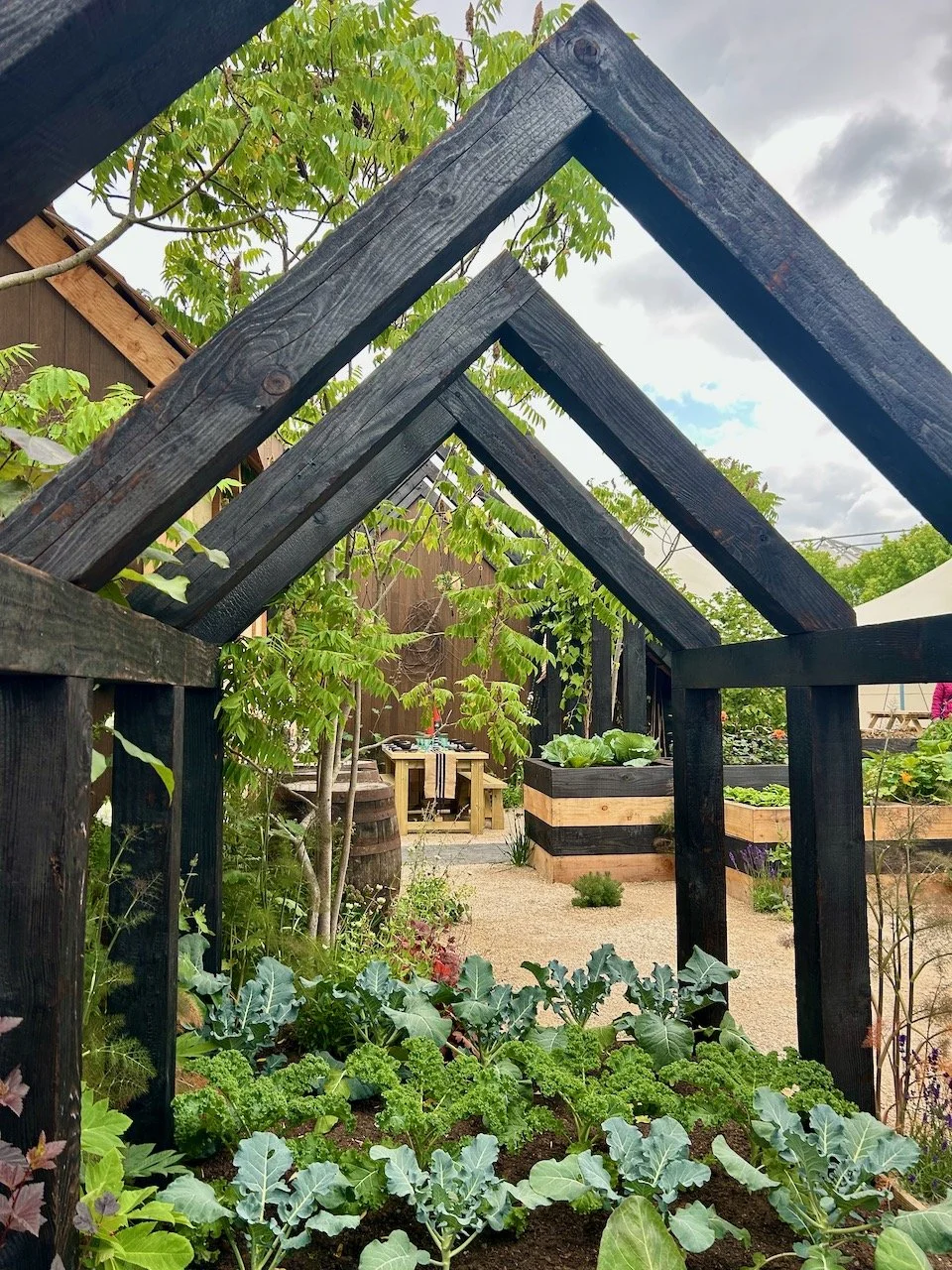
The brassicarium complete with kale and cabbages
The vegetable raised beds but with some plants - such as a bronze fennel - growing in the path

I liked that the planting was at different levels, and even the raised beds varied in height which I think helped this garden feel more like an established garden. The other thing that was a nice touch was the plants that had ‘crept’ over their borders softening the paths.

Even the sage that seemingly had ‘escaped’ the show garden’s boundaries.
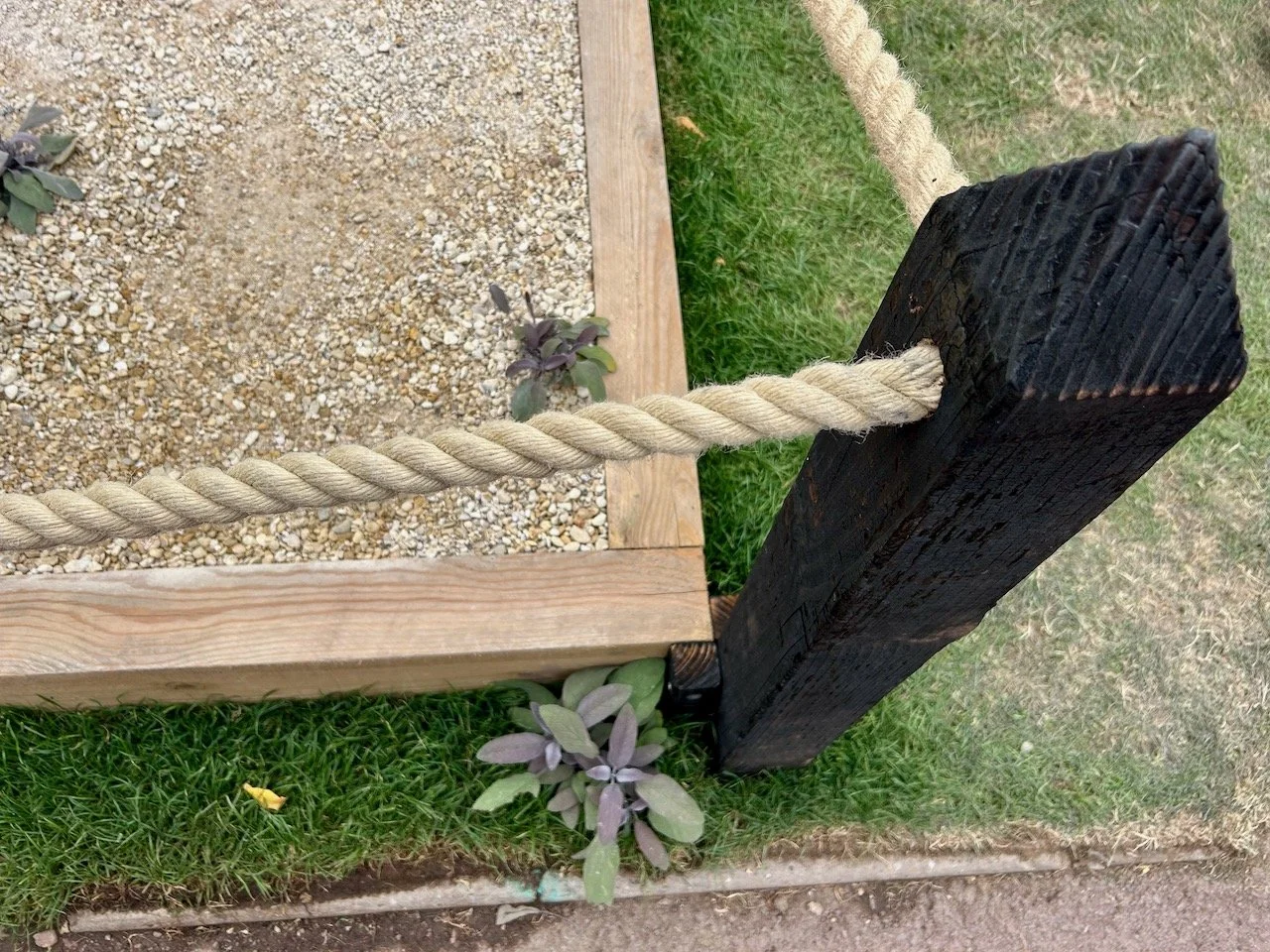
An escaped purple sage growing under the show garden's rope border

I was also a fan of the compost bins, though I’m not sure I’d have placed them this close to the dining area in a real life garden, but the open and stackable concept was good. So much so that I became a little obsessed with how they were built.
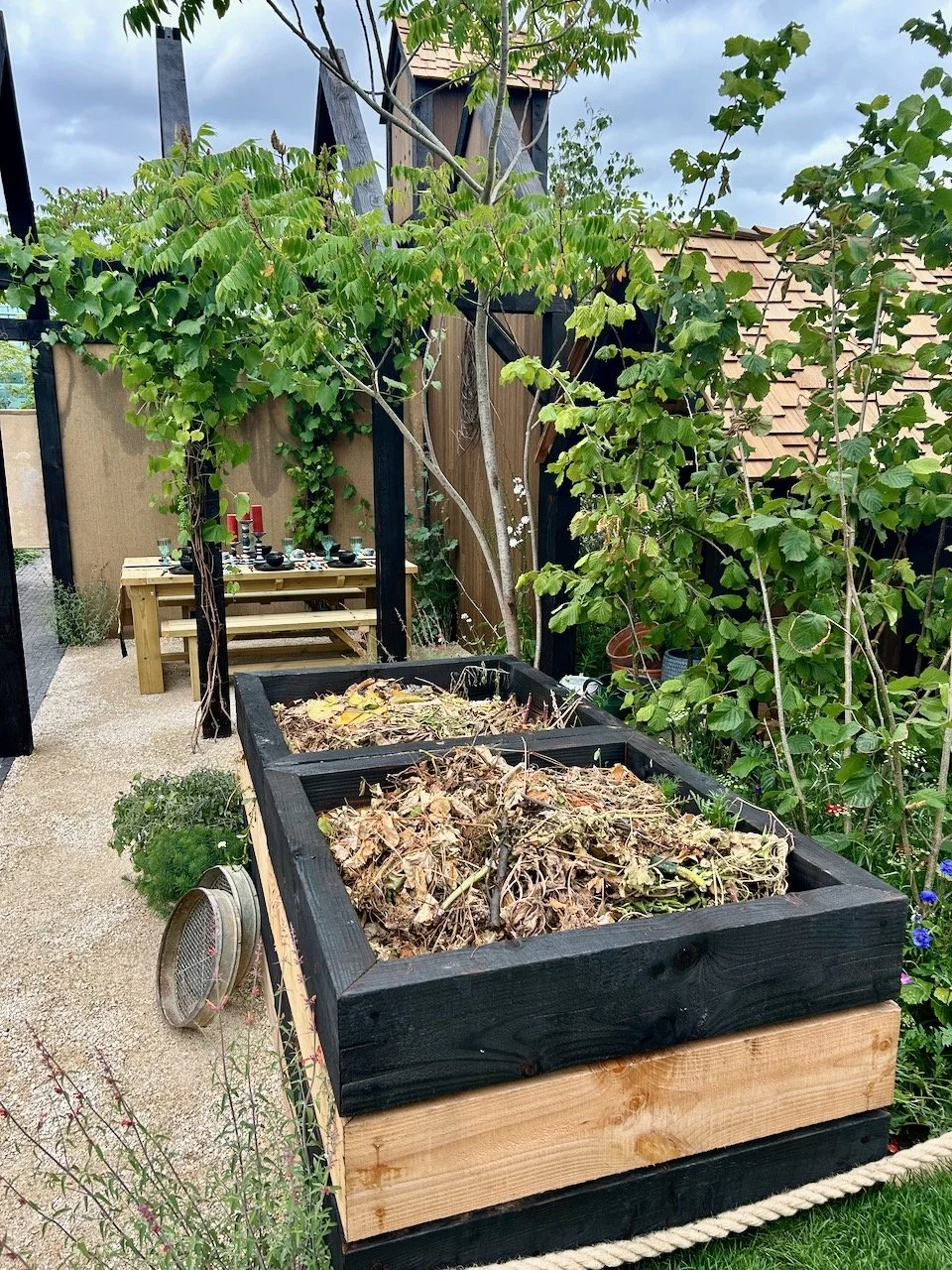
Two open compost bins made from squares of wood, with the dining area behind
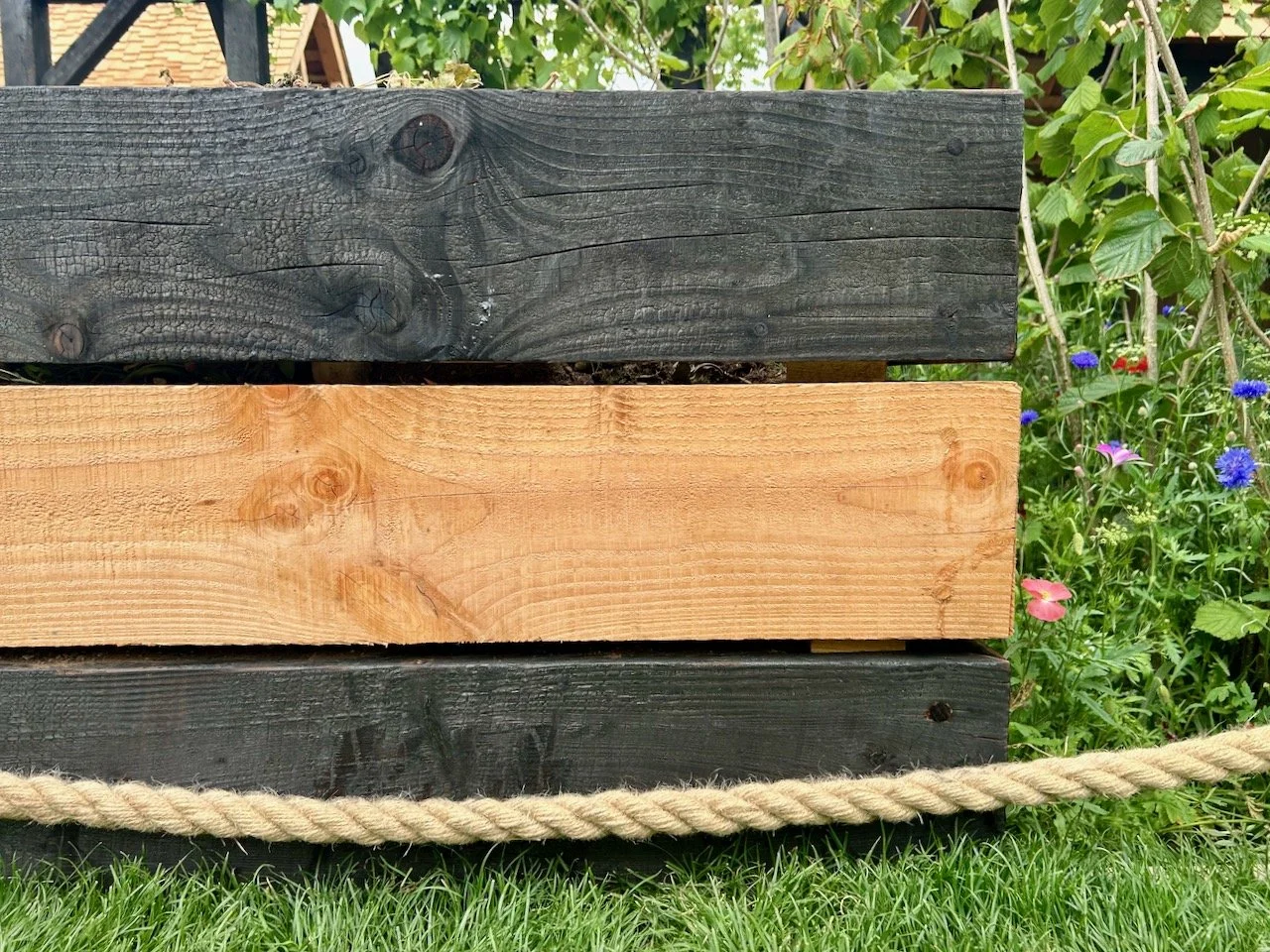
Down at ground level looking at the construction of the compost bins

Looking closely and by poking a finger in the gap it seems they were simply stacked on top of each other. And that dark wood was newly charred as my grubby finger attested to!

They definitely gave me food for thought for my own garden, though they may be over engineered for what I need, but they do show that compost bins don’t need to be the ugly plastic daleks!
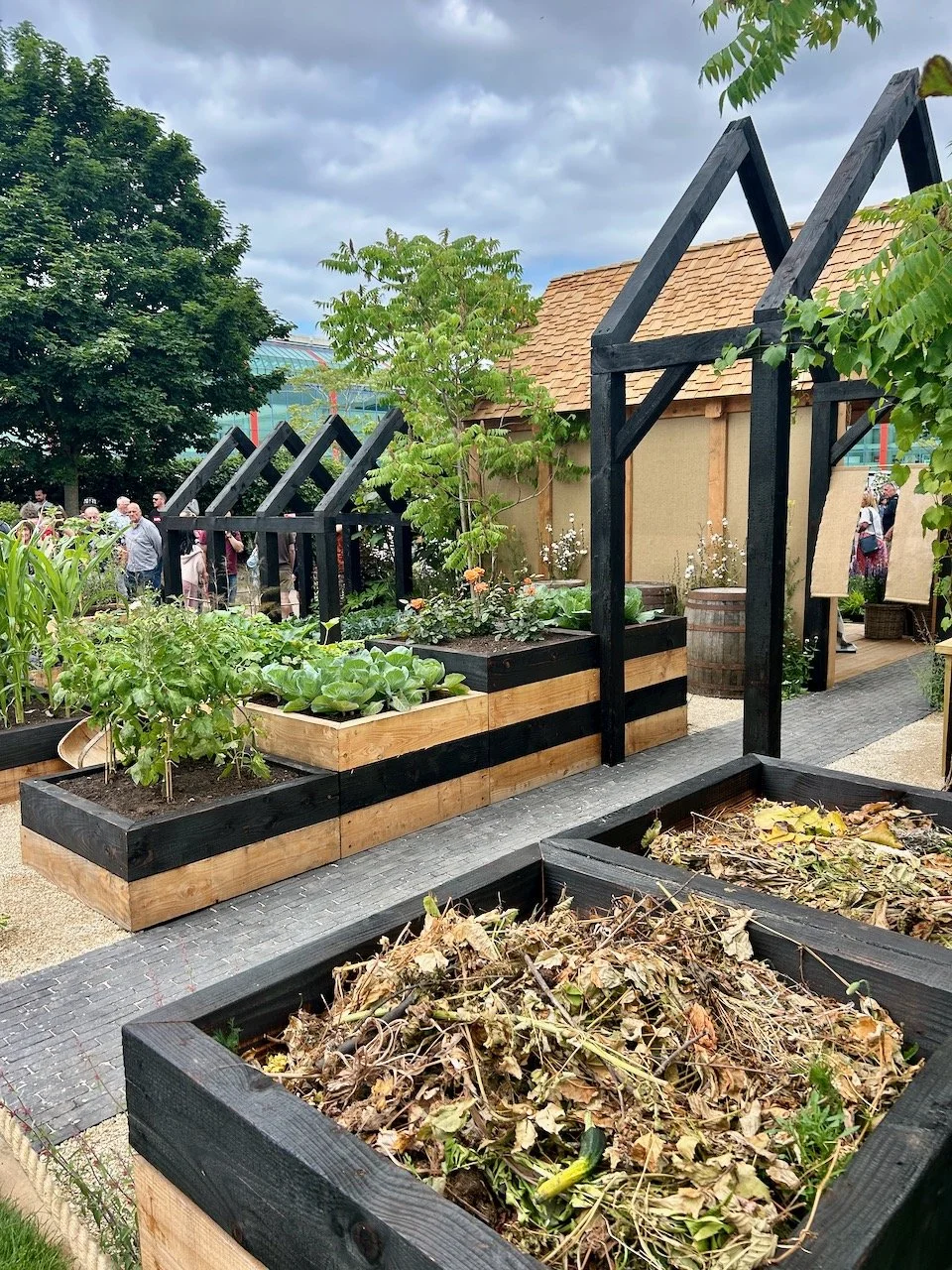
The view across the vegetable raised beds - from the compost bins

I loved this garden, and it wasn’t just the structures for me. The concept of one square metre, the dense planting, mixing edibles with flowers, the informality of it all made it a great space, and I hope it has a longer term home - it deserves it.

What do you think?

* With thanks to Gardeners’ World for inviting me to Gardeners’ World Live, it was quite a show! I’ll be sharing more from my visit to this year’s show throughout the year - I hope you enjoy them as much as I did the show.
Gardening in 2050?

* I was invited to this year’s Gardeners’ World Live and provided with a pair of tickets to the show, therefore all my posts will be marked as 'Ad’ though as usual my views and opinions are very much my own.

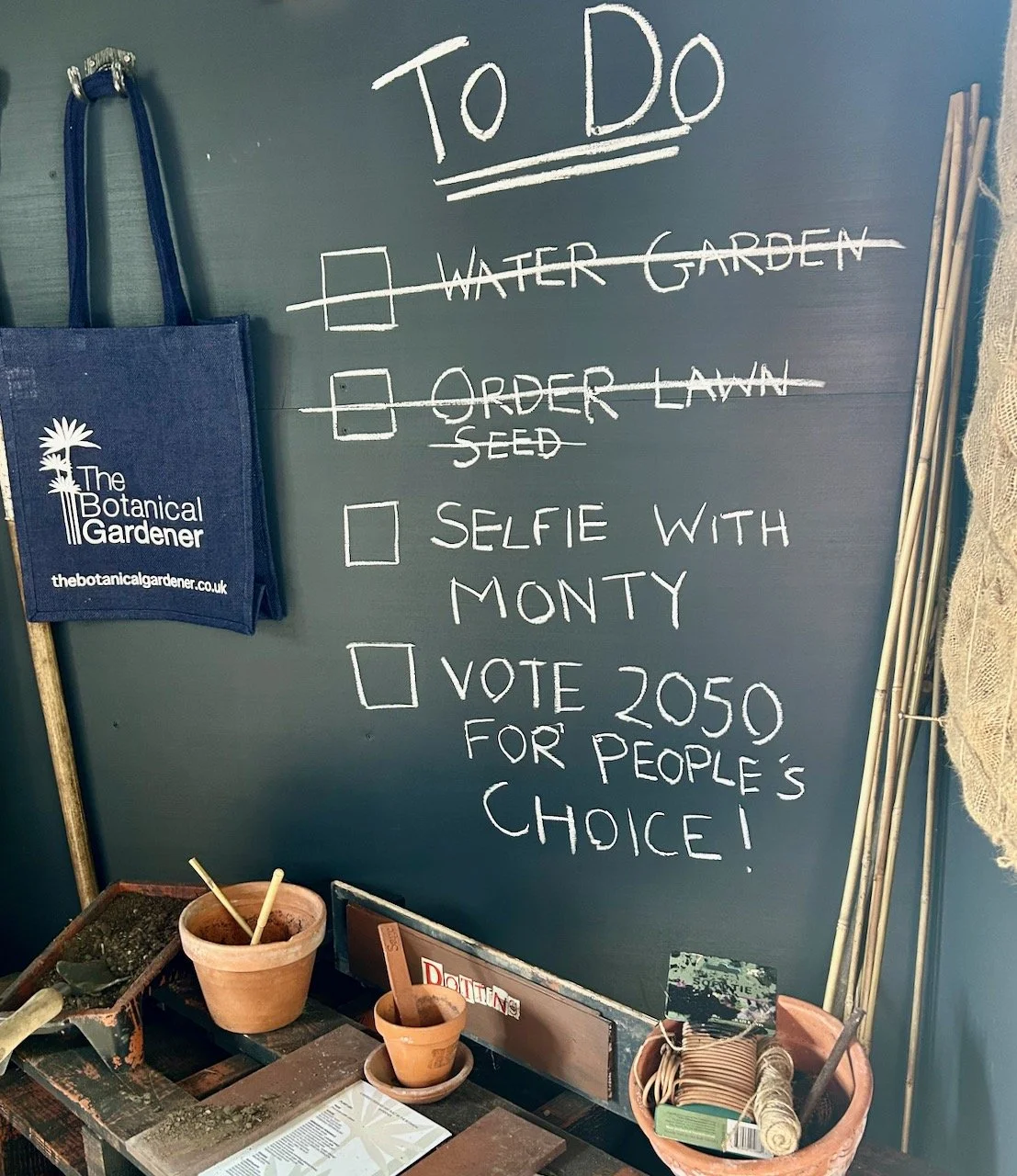
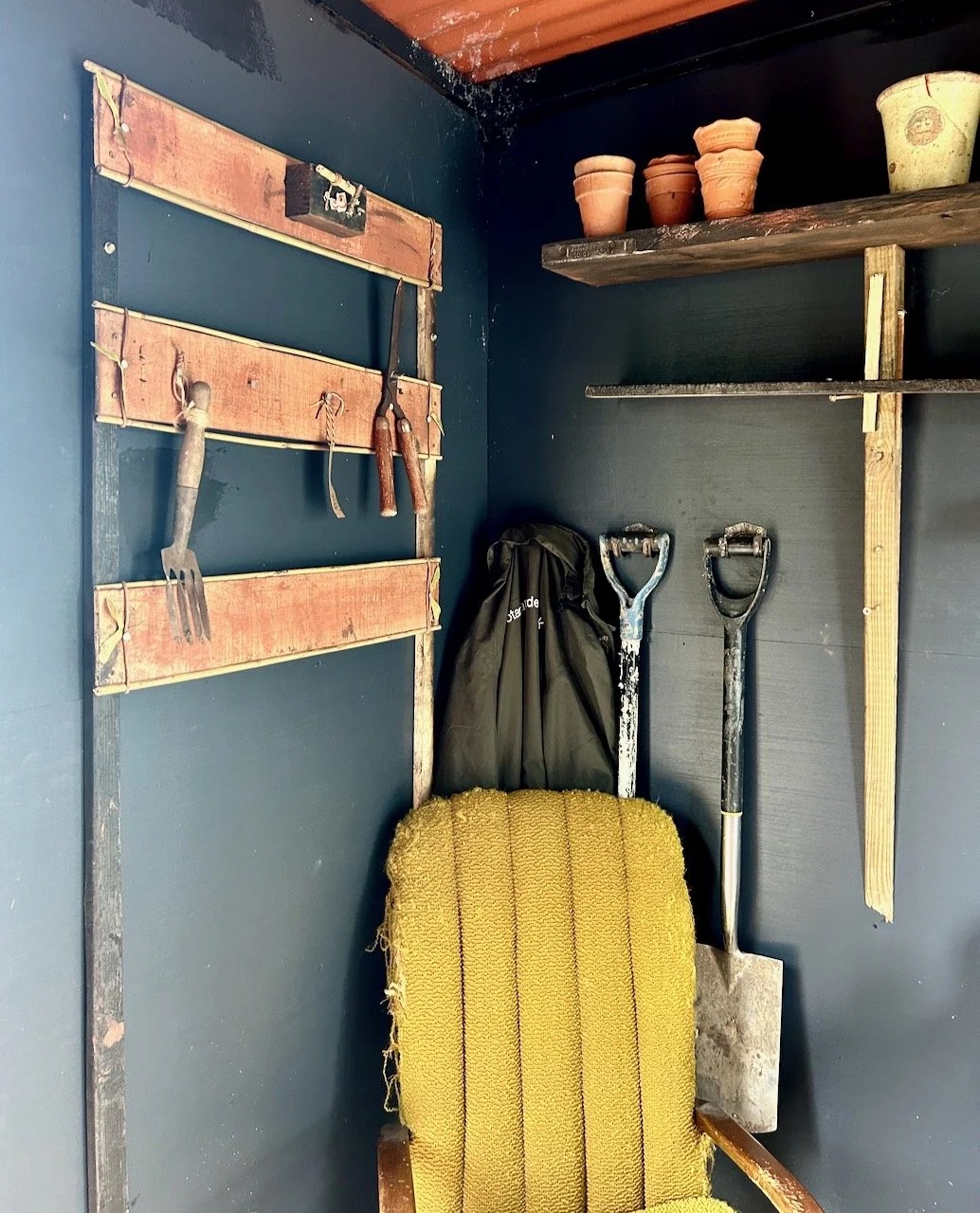
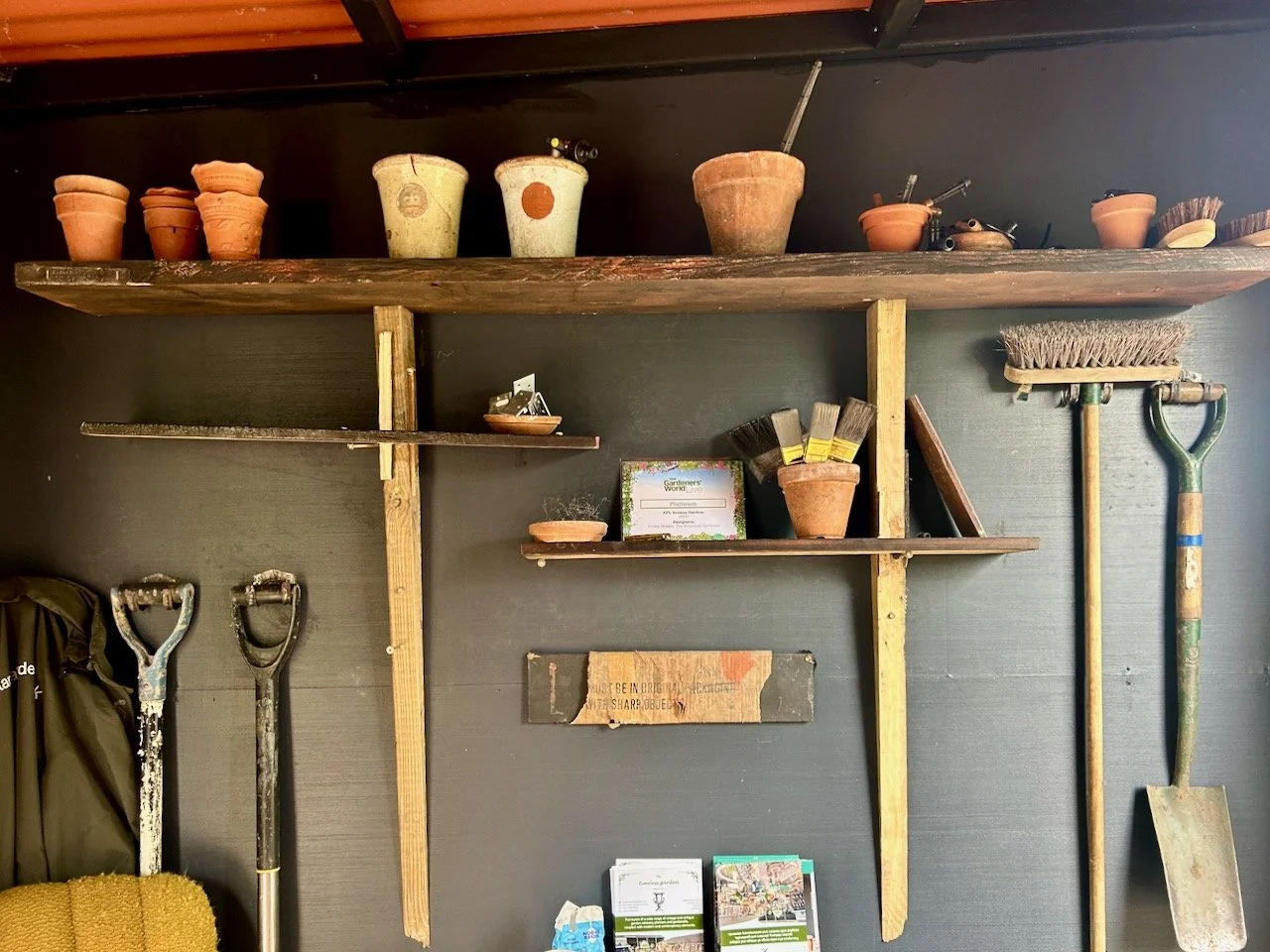
As I stepped into the shed, which was the entrance to this garden, I knew I was going to like it. They say first impressions count, and this to do list (who doesn’t love a list?!) and mix of vintage items, along with the humour had me hooked. Entering through a shed was definitely a point of difference so hats off to the garden’s designer Vivien Mosely, and of course to The Botanical Gardener who brought the design to life.

A handwritten to do list on a blackboard
Black walls in the shed entrance to the garden with vintage tools and pots hanging on the wall/shelves
Another view - straight on - of the vintage shelving tools & pots

The garden offers a glimpse into the future, so the blurb said.

It’s set in 25 years time, where water resources are limited and the landscape is parched. Which unfortunately may be a realistic outlook if this summer and it’s four heatwaves (so far) are anything to go by, unless we get better at capturing water, as there was certainly plenty of it about in the first few months of the year.

But also, 2050 is 25 years away - surely 2050 is in a future space age, not within actual reach. We can all remember 25 years in the past (well, if we’re old enough to) and often it’s forty years ago that feels like it was much closer.

But anyway back to the garden.

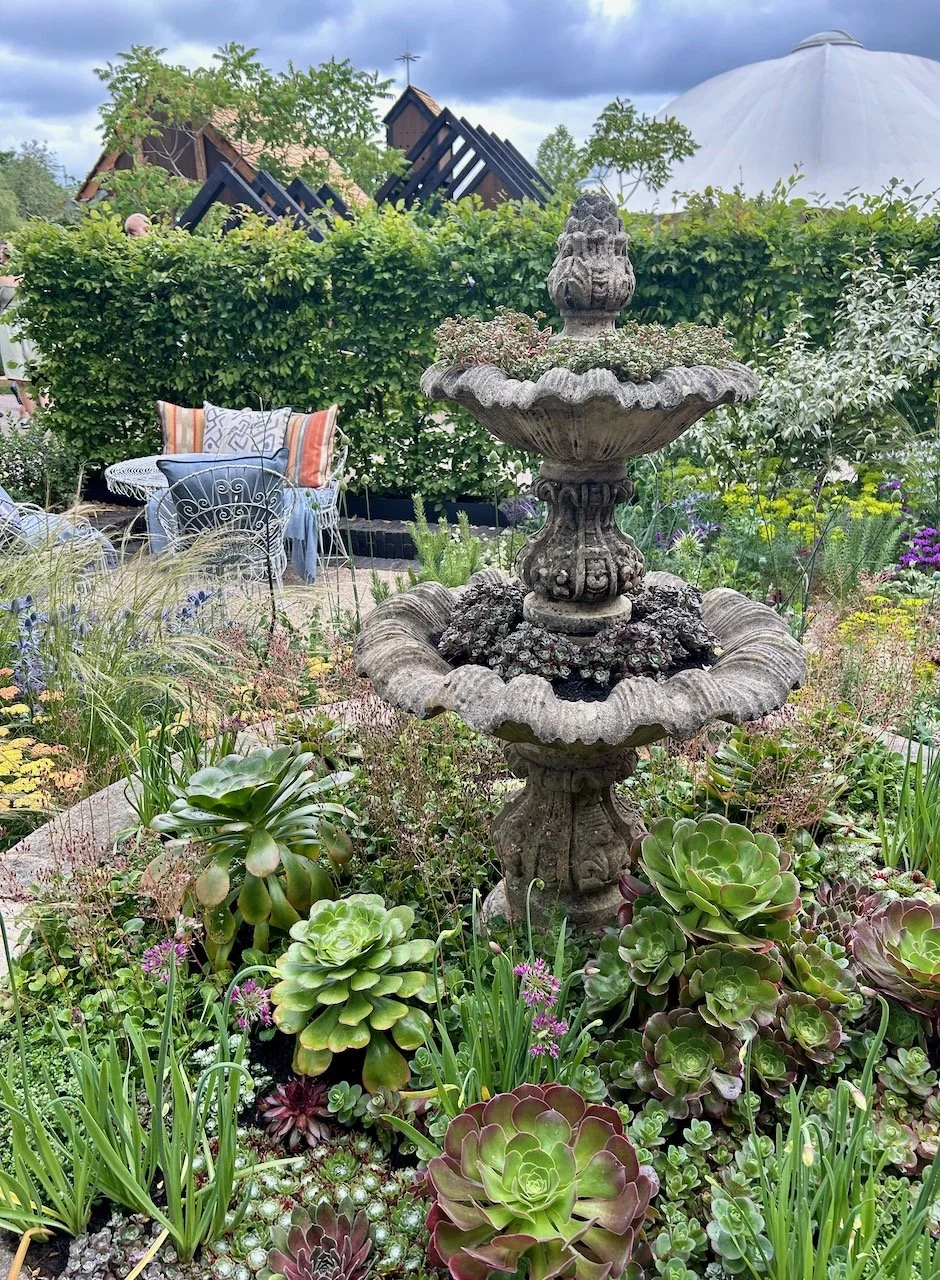
An old municipal type water fountain filled with succulents, with the seating area beyond

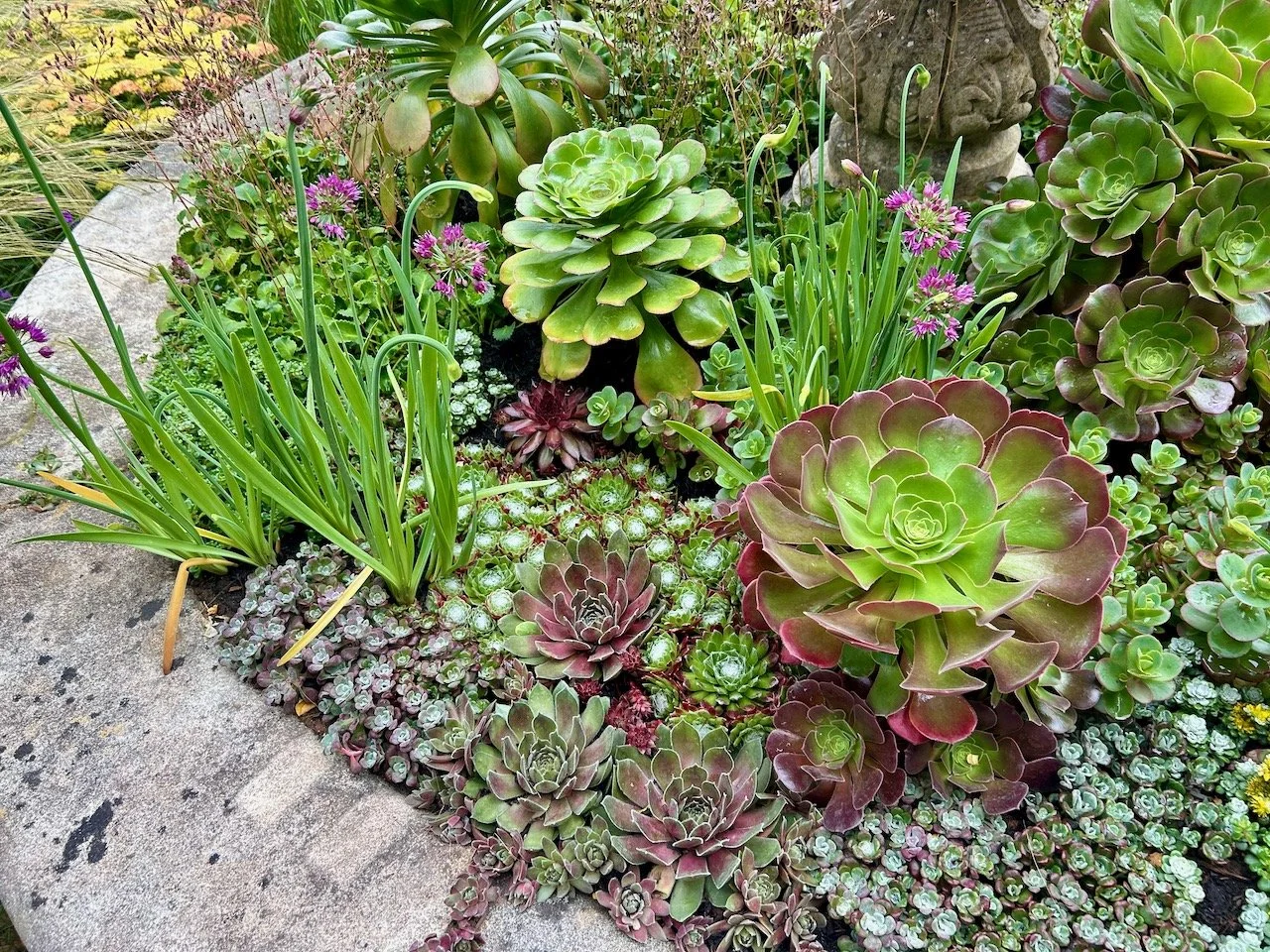
2050 is a garden that invites visitors to consider how gardening will change, and what plant species we can plant in our gardens today that will also thrive in the future. And my own increasing addiction to succulents isn’t lost on me either, here they’re used in a stunning and dramatic way to replace the ‘lost’ water.

A closer look at the bulbs and succulent planting in the fountain
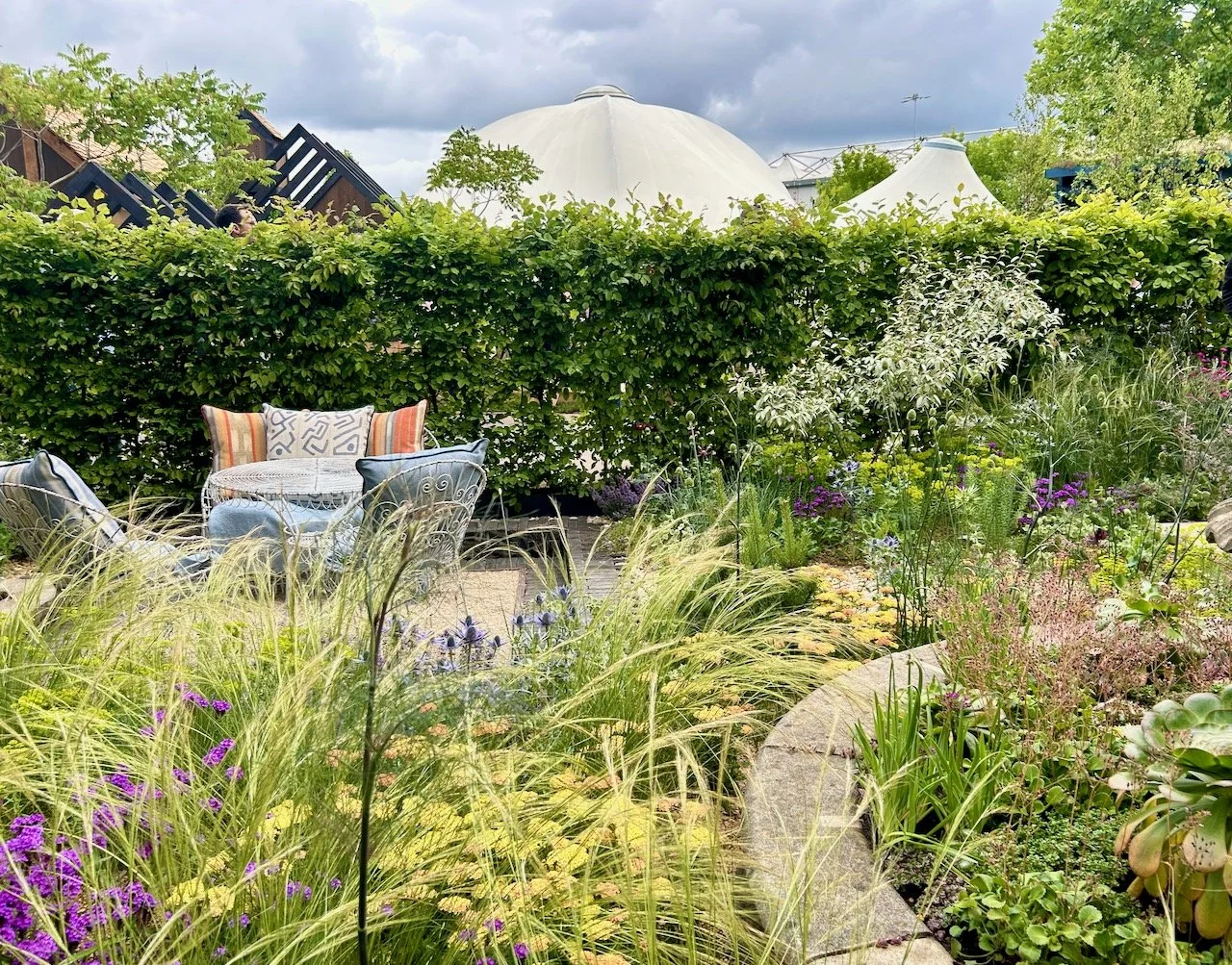
Looking across the floaty planting of grasses to the seating area

By using derelict artefacts and features evoking a sense of nostalgia the garden reminds us that we don’t miss the water until the well runs dry, but also that we can create something beautiful as we adapt to the changing climate.

There’s definitely something to think about there, and how we adapt our planting now, whether we do that consciously, or sub-consciously as the garden centres change their offering looking towards the longer-term.

And this garden shows, it can still be beautiful and attractive. I’m not one for a water feature in the garden, but a fountain of succulents, now that would be something else wouldn’t it?

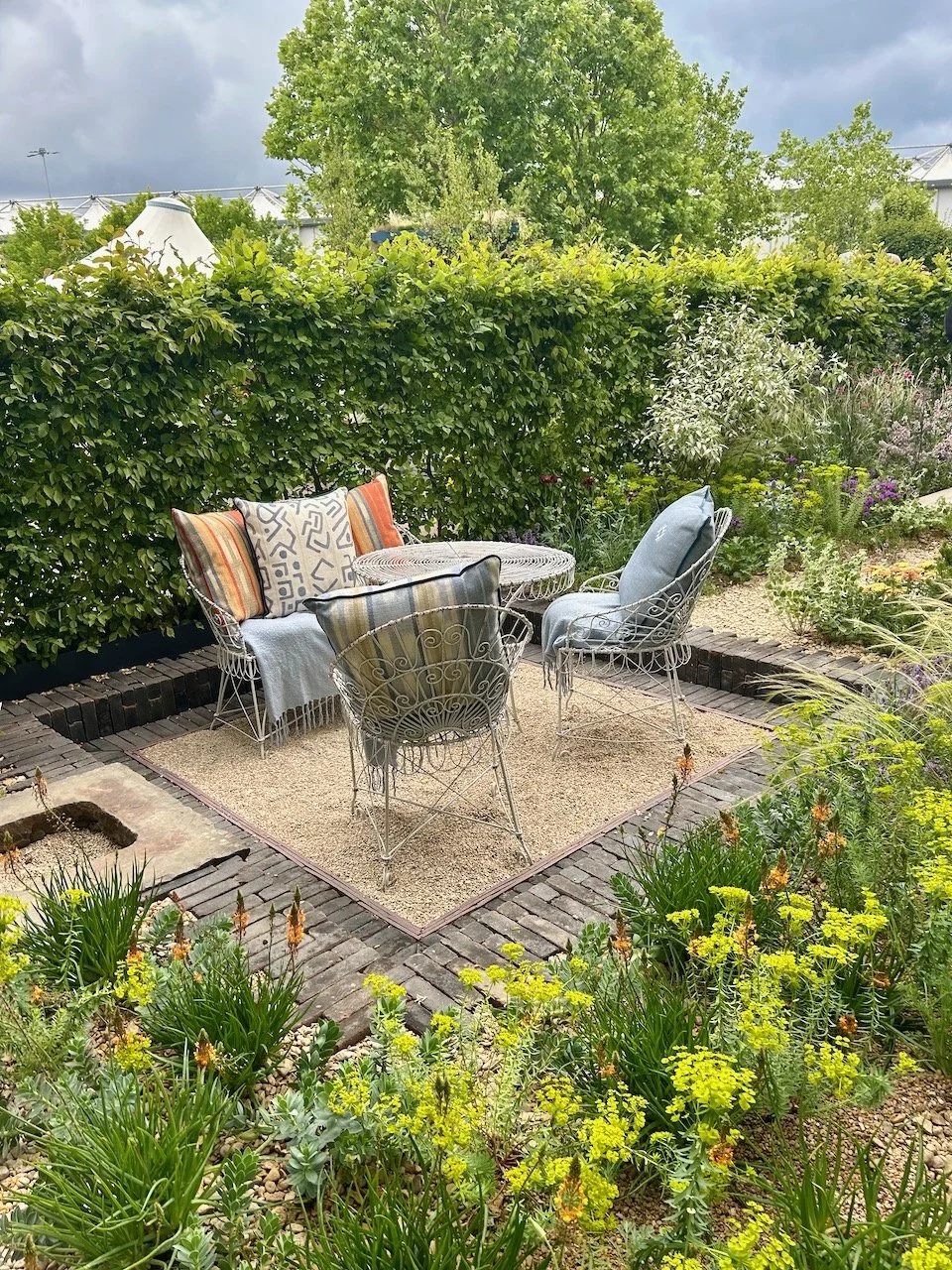
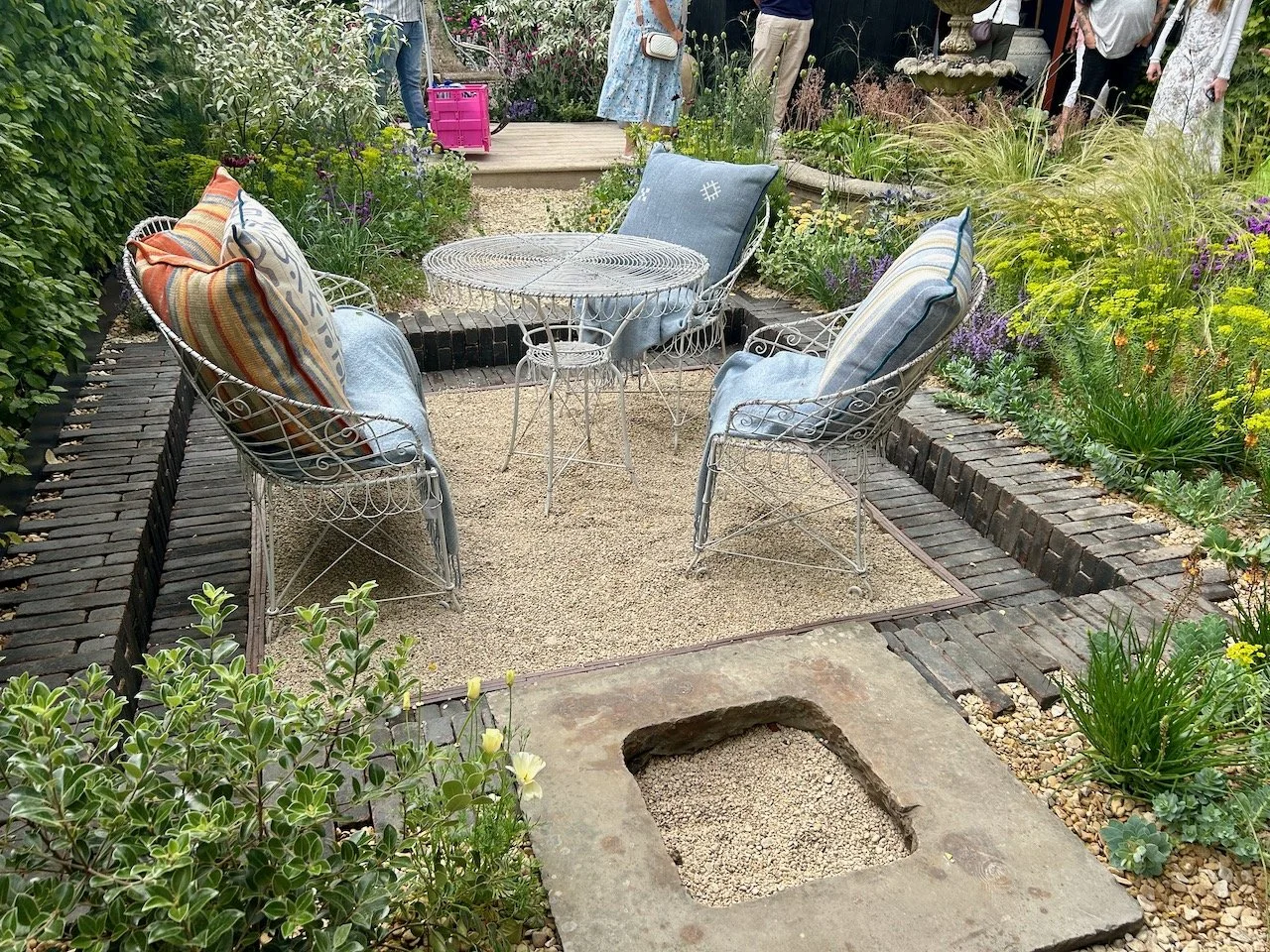
The slightly sunken seating area, edged with dark bricks and surrounded by planting including splurge and red hot pokers
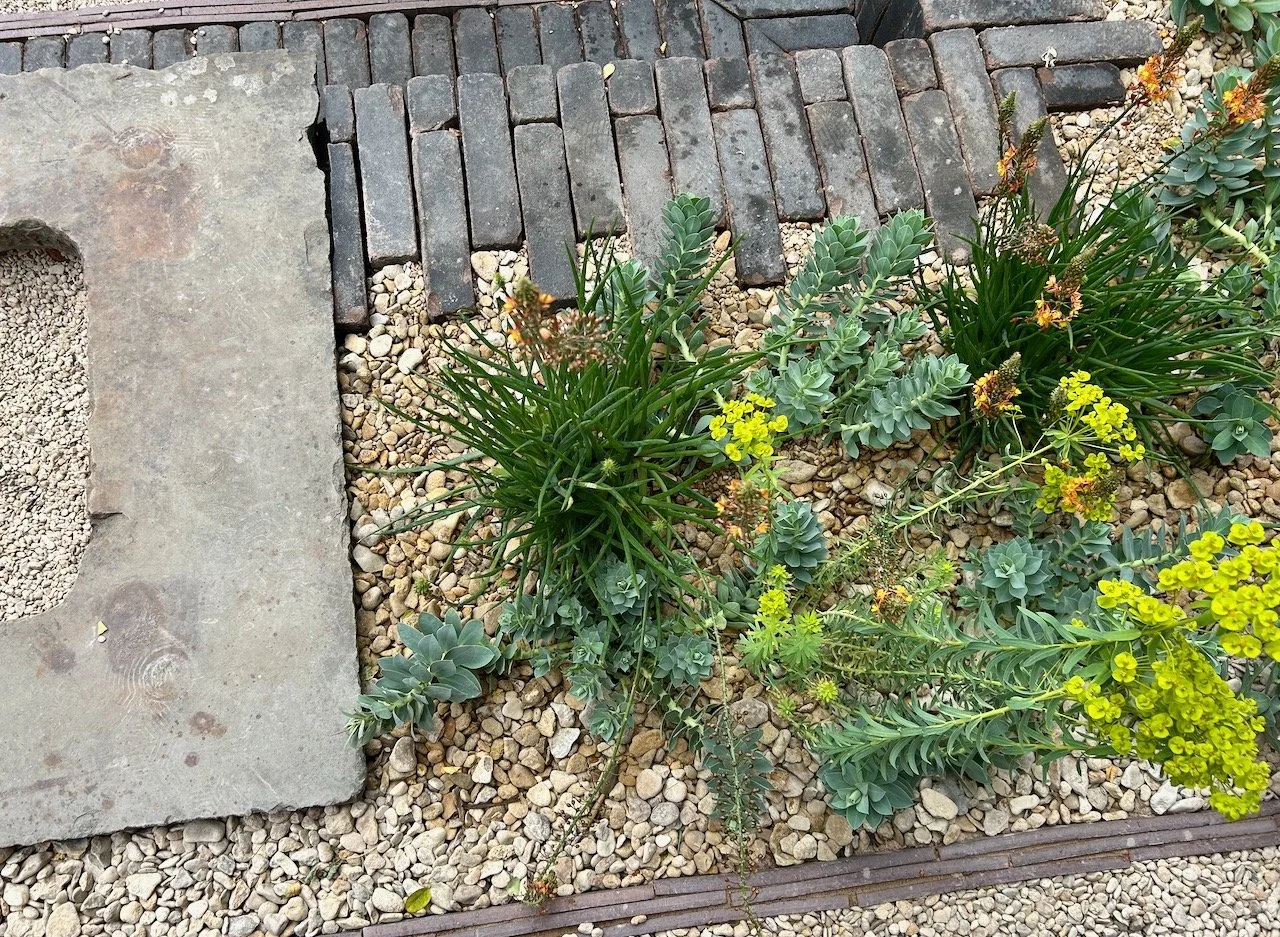
Looking more closely at the planting around the seating area, topped with gravel

While at the show I was keen to eye up seating areas, especially those that might be on gravel. And this one delivered all of that. It’s something I’d been thinking about for our garden here - though I’m not sure if the gravel would work in reality. It’d be like walking across lego once you’d kicked back and kicked off your flip flops wouldn’t it?

Stepping back to admire the sunken seated area, a potential firepit and the planting

I like the architectural detail around the sunken seating area, and spent quite a while thinking if a sunken area could work in our garden. Then I realised it would probably annoy me, and make me feel constrained, and that along with the prospect of finding much builder’s rubble consigned the idea for our garden to history!

But it doesn’t make me love this garden any less, what do you think?

* With thanks to Gardeners’ World for inviting me to Gardeners’ World Live, it was quite a show! I’ll be sharing more from my visit to this year’s show throughout the year - I hope you enjoy them as much as I did the show.
A useful velvet box pouch

I’ve recently bought myself a new ‘for workshops’ sewing machine (more on that another time) and as it’s primary use is ‘on the go’ I wanted to make sure it was easy to transport, so bought a sewing machine bag to carry it in. After the first time taking my new machine out, I realised that I needed a pouch to house the foot pedal and cables - I know, what were the odds of me needing another pouch?!

I wanted something relatively soft as this pouch will live in the ‘throat’ of the machine - the gap between the needle and the main part of the sewing machine on the right hand side. You’ll not be surprised to learn that I’ve kept various furnishing fabric samples over the years, and it was these I had in mind for this boxy pouch.

I’ve not made a boxy pouch before, and I didn’t have a pattern but I reckoned, how hard can it be?

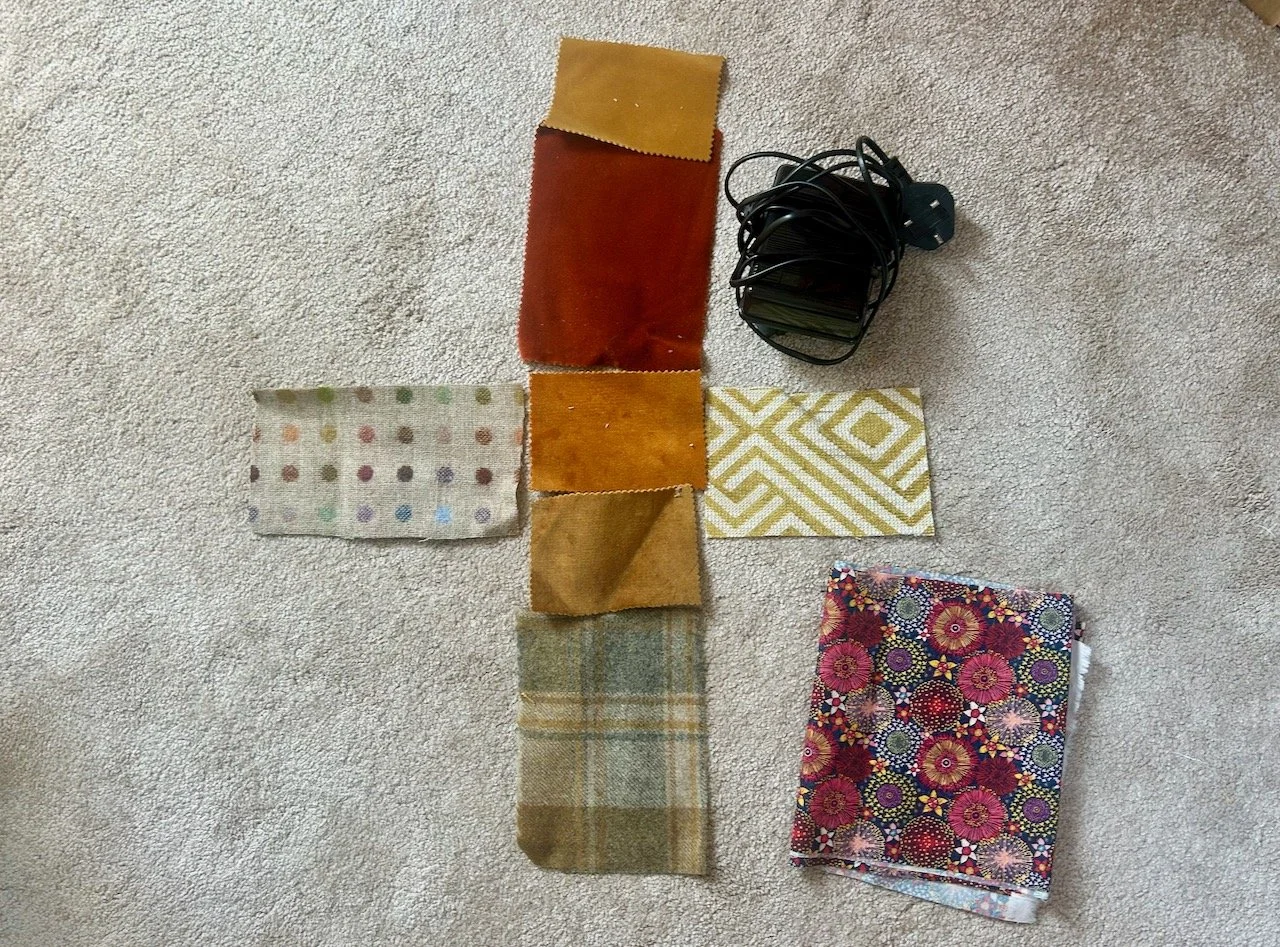
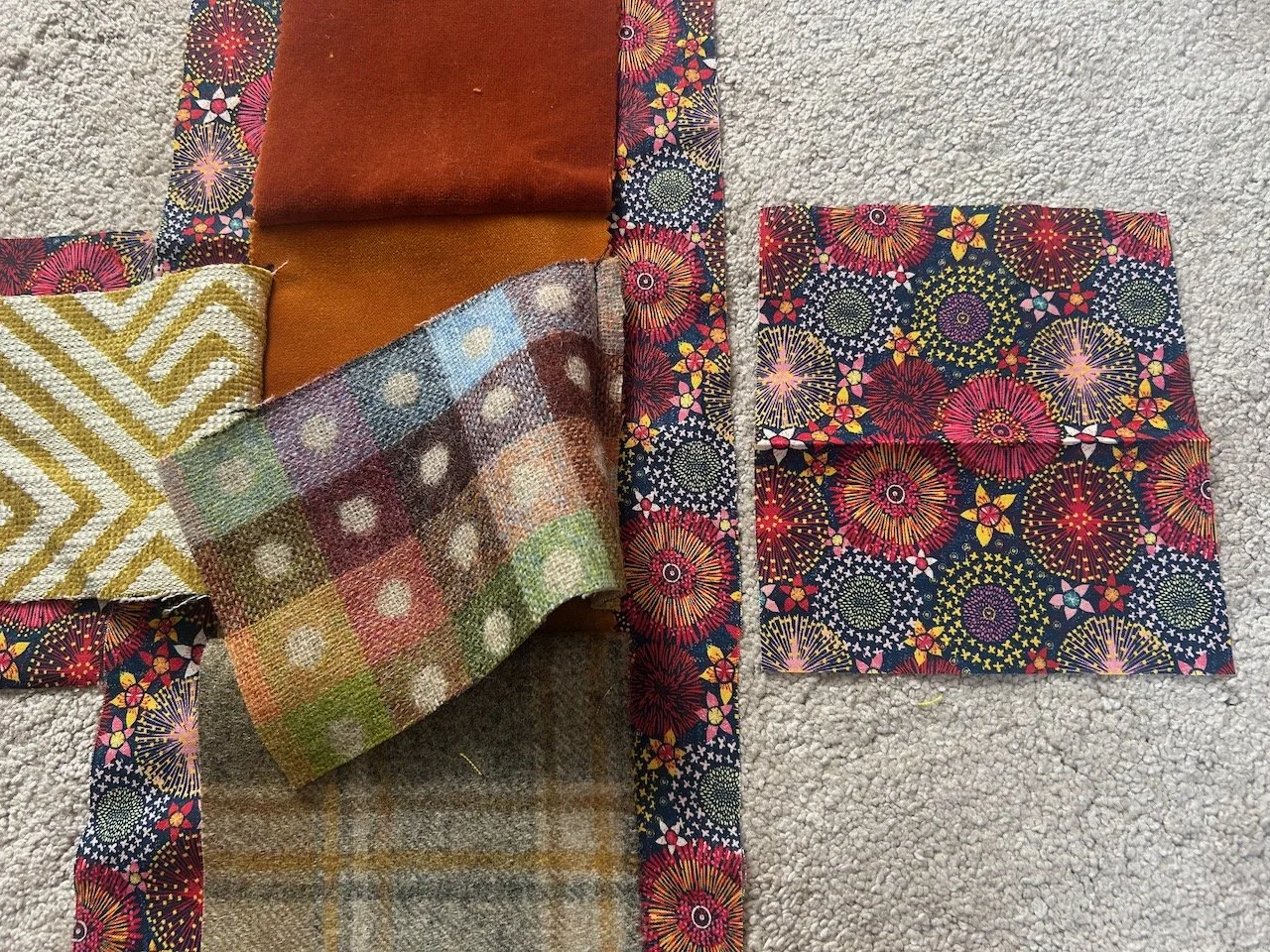
I laid out the materials which I planned to use - the velvet ones are from upholstery samples when we were considering a velvet sofa in our previous home, and the patterned samples are from the large footstool we now have in our bedroom. It seems I know what colours I like, which is a good thing as they all are a similar tone and all work together.

Laying out the upholstery samples, the lining and the sewing machine pedal

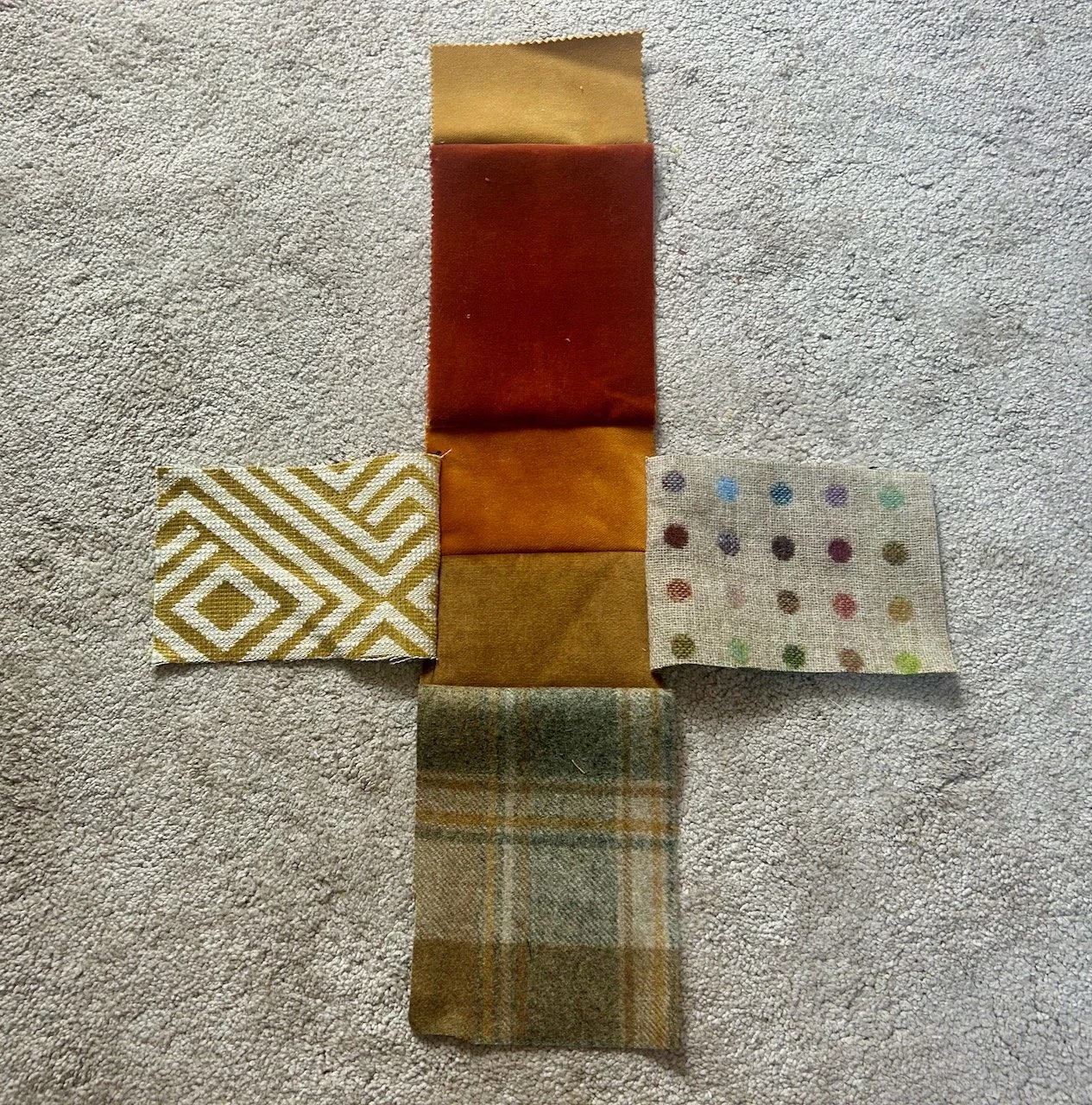
When I had the fabrics sewn together - and had cursed my idea for using velvet without using the walking foot on my sewing machine - I checked again that the foot pedal would fit. It would probably be tight, but we were good.

The samples sewn together in a kind of cross formation

I wanted a jazzy lining and so the navy flower burst material which came in a scrap pack I bought online was perfect. There was a fair bit of that too, which is always a bonus when it’s a fabric you like, but I did need to join it - but as that would be inside, that wasn’t an issue.

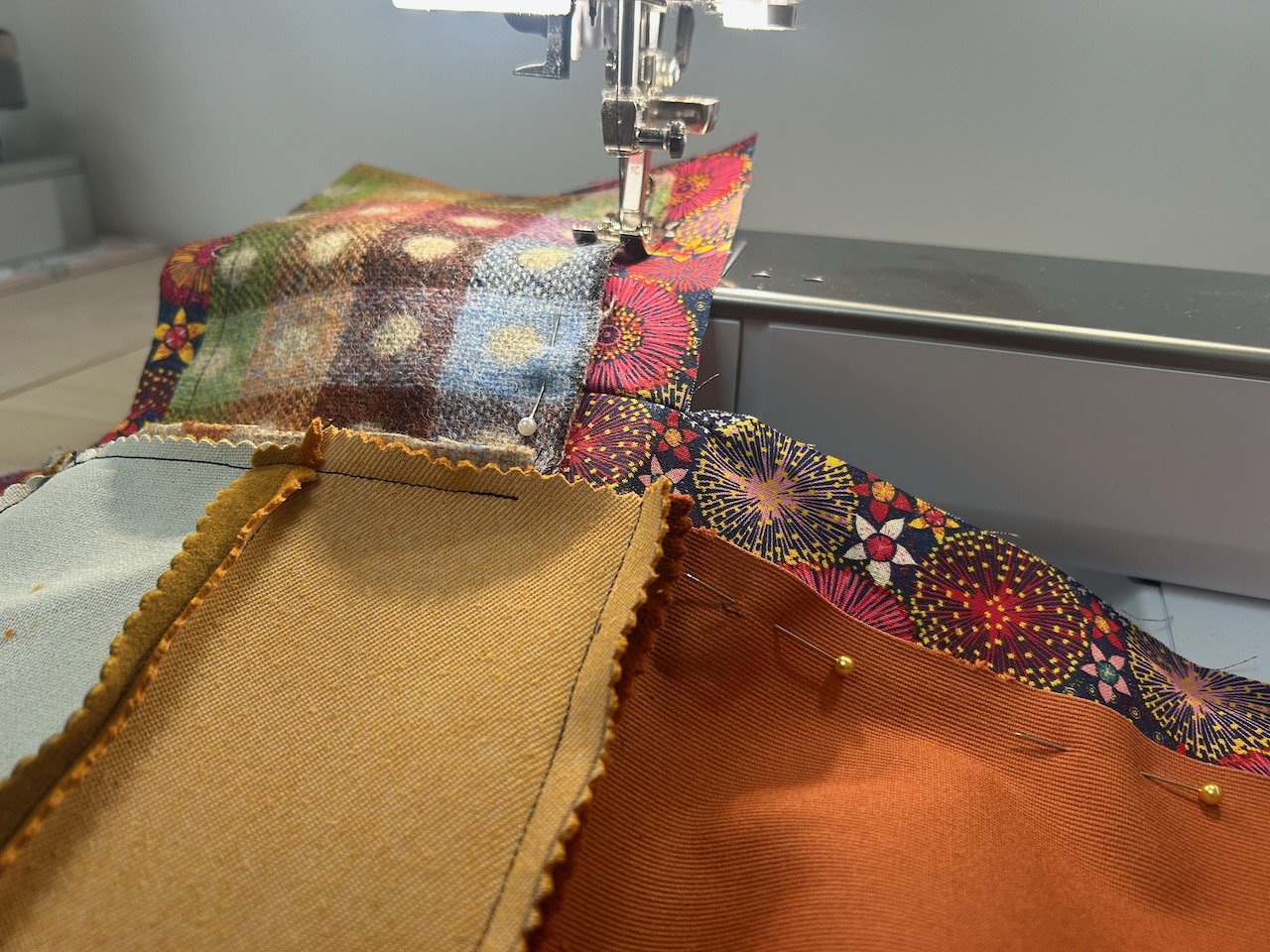
Adding lining behind, with the joins for the sides
Sewing underway at the machine

With the lining and outer materials attached and turned through, I edged the cross outline. After this I decided that it would probably work best to assemble the pouch with hand sewing. That would save any more arguments with the sewing machine, and the velvet and would also mean that I had as much space as possible to fit the pedal into the pouch, which after all is what it was all about. I didn’t mind if some of the lining showed on the outside either.

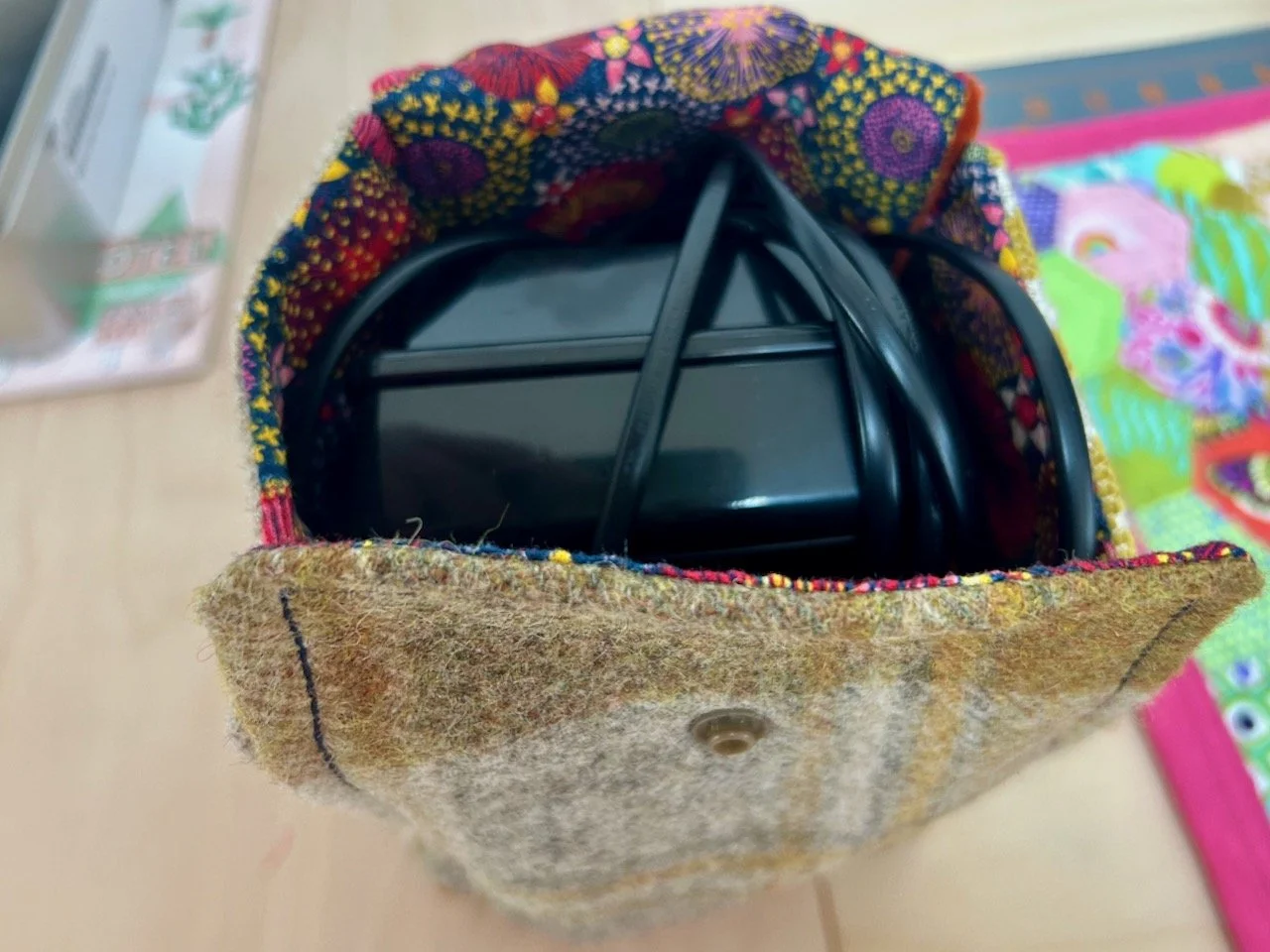
The completed pouch, complete with sewing machine foot pedal inside
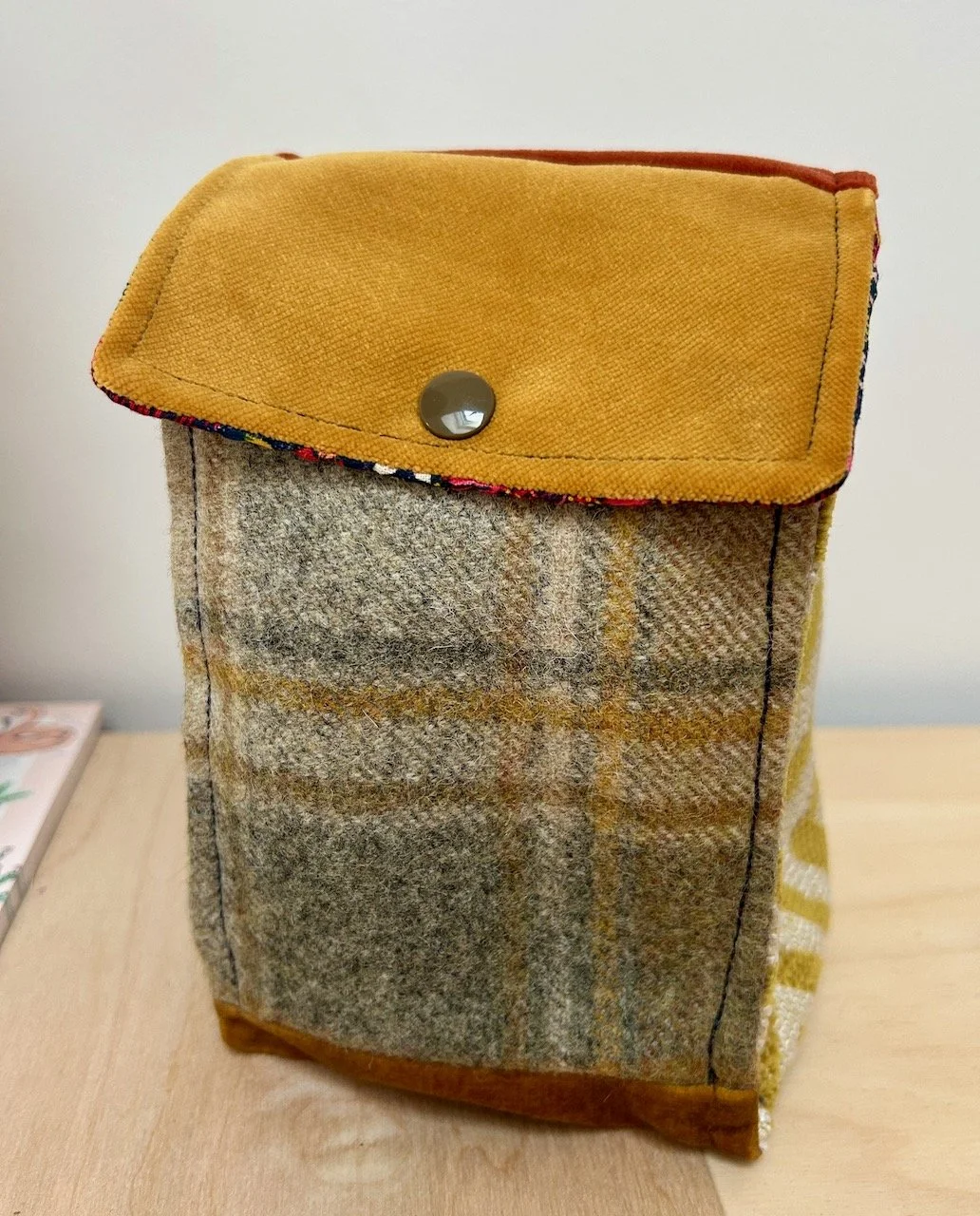
the completed pouch - with mustard velvet on the top and toning tweed on the front - complete with a brown popper

A toning brown popper completed the ad-hoc boxy pouch. I think it’s looking pretty dapper, as well as functional and practical, and gives me my own unique addition to my ‘to go’ sewing machine bag.

And it really wasn’t that hard at all.