How tall is a Liver Bird?

Well, I suspect that is a question you weren’t expecting, and I’m not sure it was the first thing on my mind when we visited the Royal Liver Bird 360 attraction on our visit to Liverpool a few years back. But it is a really good question, and one that crosses your mind the closer you get to them. And if you’re curious, it’s 18 foot - with a wingspan of 24 foot. To put that into perspective a double decker bus is 14 ft 4” - so quite big, is a good answer.

But before we get to that, the building is pretty spectacular, and architecturally important. It’s perfectly symmetrical with entrances on all four sides, and its pioneering use of reinforced concrete earns it its place in architectural studies, but it’s also pretty special to look at. It cost £621,000 to build which is estimated to be the equivalent of around 58 million today.

Looking up at the Royal Liver Building in Liverpool

And know you know how tall a Liver Bird is, do you know their names?

These questions, all perfectly reasonable when you stop and think, are coming thick and fast now aren’t they? I suspect more of you might know the answer to this one, but they’re called Bella and Bertie. The legend is that they face away from each other as if they were to ever to mate and fly away the city would cease to exist. There’s another story though, and that’s that Bella looks out to sea watching for returning seamen, while Bertie looks inward into the city making sure the pubs are open.

A model of the liver birds

We started in the basement, and up we went. Firstly by a lift, then some stairs - stopping part way up to take in the views and see where we were heading next, and walking through an industrial part of the building which had a ship-like feel - not altogether surprising for a port city.

pipes over a window giving an industrial feel
clocks and dials and fuse board boxes on a wall

We were taken outside for a look at how far we’d got, and to look at the clocks. There’s four on the towers, pointing in the four cardinal directions. The clocks were started on 22 June 1911 at 1.40pm - the precise time George V was crowned, and became known as the Great George Liver Clocks.

Each of the clock faces are all 25ft in diameter, which is larger than that of Big Ben so they’re also the largest electronically driven clocks in the UK.

Getting a closer look up at the clocks - but still not at the top

Back inside, there was time for some arty-farty shots - but it also shows how the building decor changed now that we’re in more public areas.

looking upwards to a staircase painted white with black railings
a closer look at the underneath of the stairs above

And still we went up, and boy was it worth it.

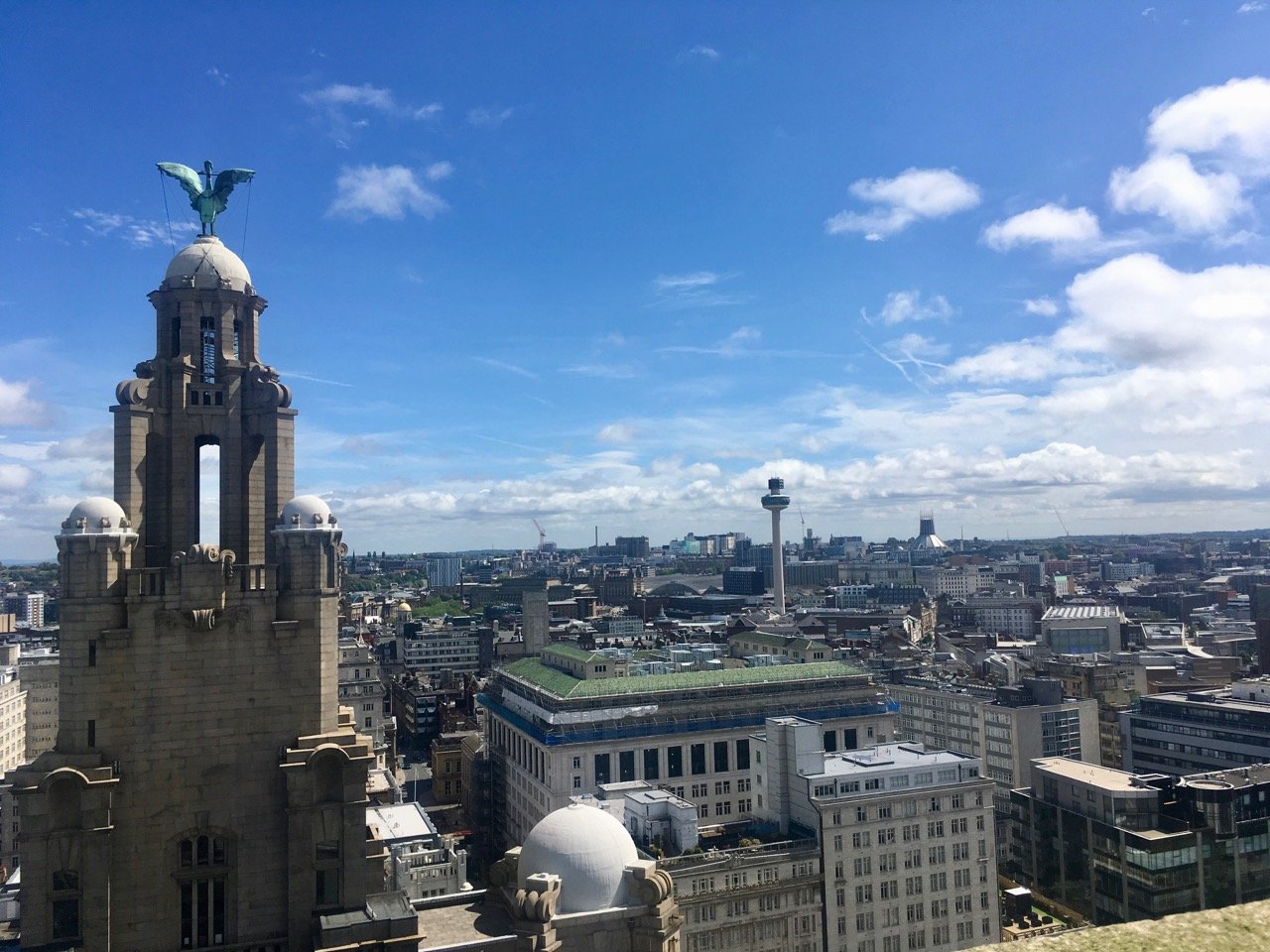
At the top, outside looking across to one of the Liver Birds - Bertie - he's looking into land
looking through the structure of the building
Looking at views across the city
looking over the mersey

The views - all round - are amazing, and when you reach the top you realise why this is named the 360 experience, it really is. And despite the glorious weather for our visit on a sunny July day - it’s a windy experience too, but totally worth it.


MOH and I standing in short-sleeved tops with a liver bird in the background
I was featured on Blogger Showcase

Street art in Lyons

Lyons was our last trip abroad, pre-pandemic in February 2020. It seems so long ago in some ways, but also still quite fresh in my memory. Maybe because it was our last trip abroad, maybe because it was such a great trip - and most likely because just thinking about it makes me feel full up, the food everywhere in Lyons was so, so good and also for our mad dash through the airport to make sure we didn’t miss the plane. We didn’t, but it was way closer than either of us liked.

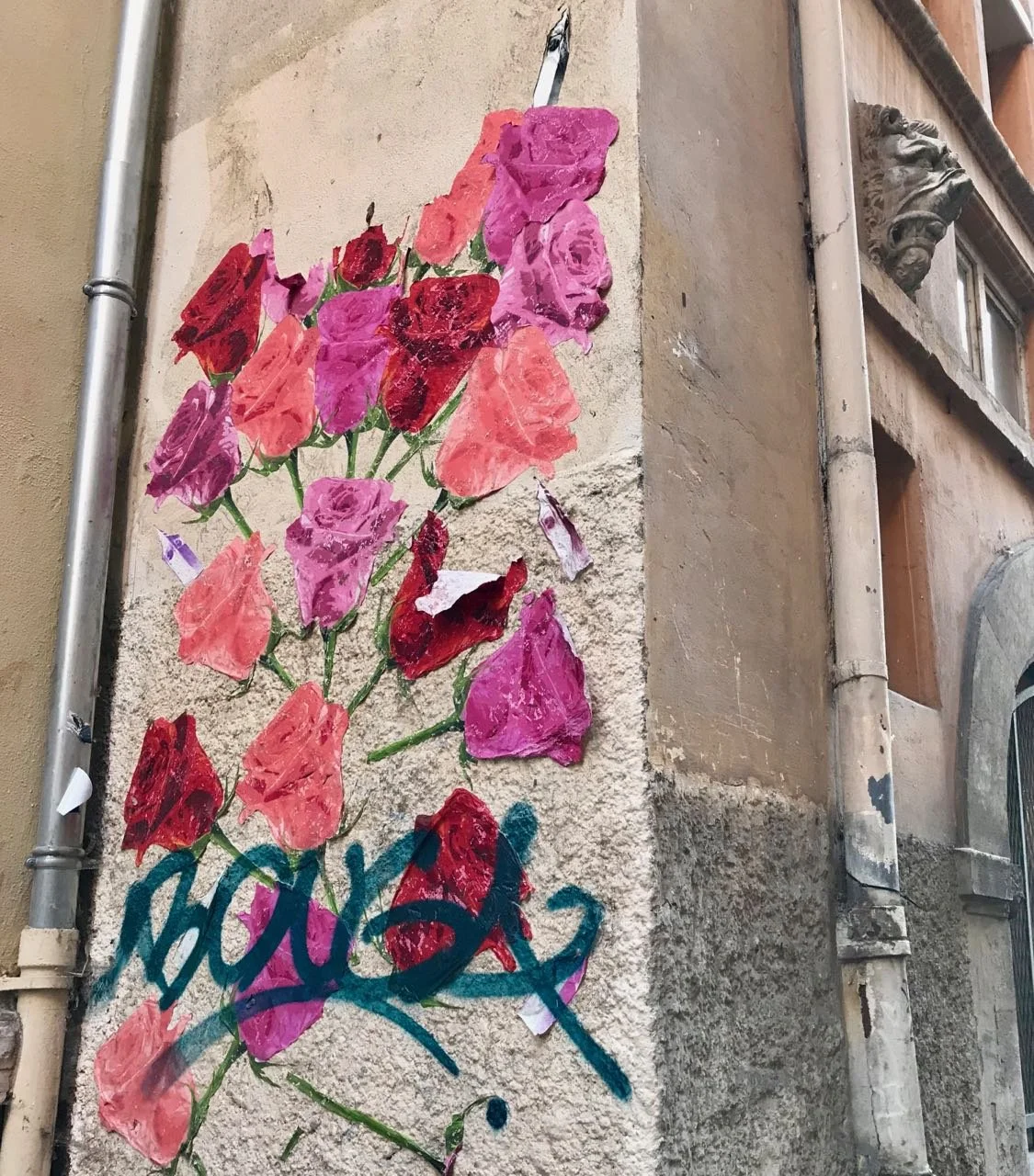
Lyons was a pretty city, and we covered a lot of it on foot. We walk a lot when we’re away anyway, but it was also much needed exercise after sampling, no eating, plenty of glorious food. I don’t think I’ve ever been so full, for so long. And it was full of street art, each with a very different feel. It’s a tough one, but I think these roses are my favourite - they’re on an unassuming part of a building, between two drainpipes with a gargoyle perhaps showing his displeasure.

pink, peach and red roses painted onto a side of a building with graffiti on top

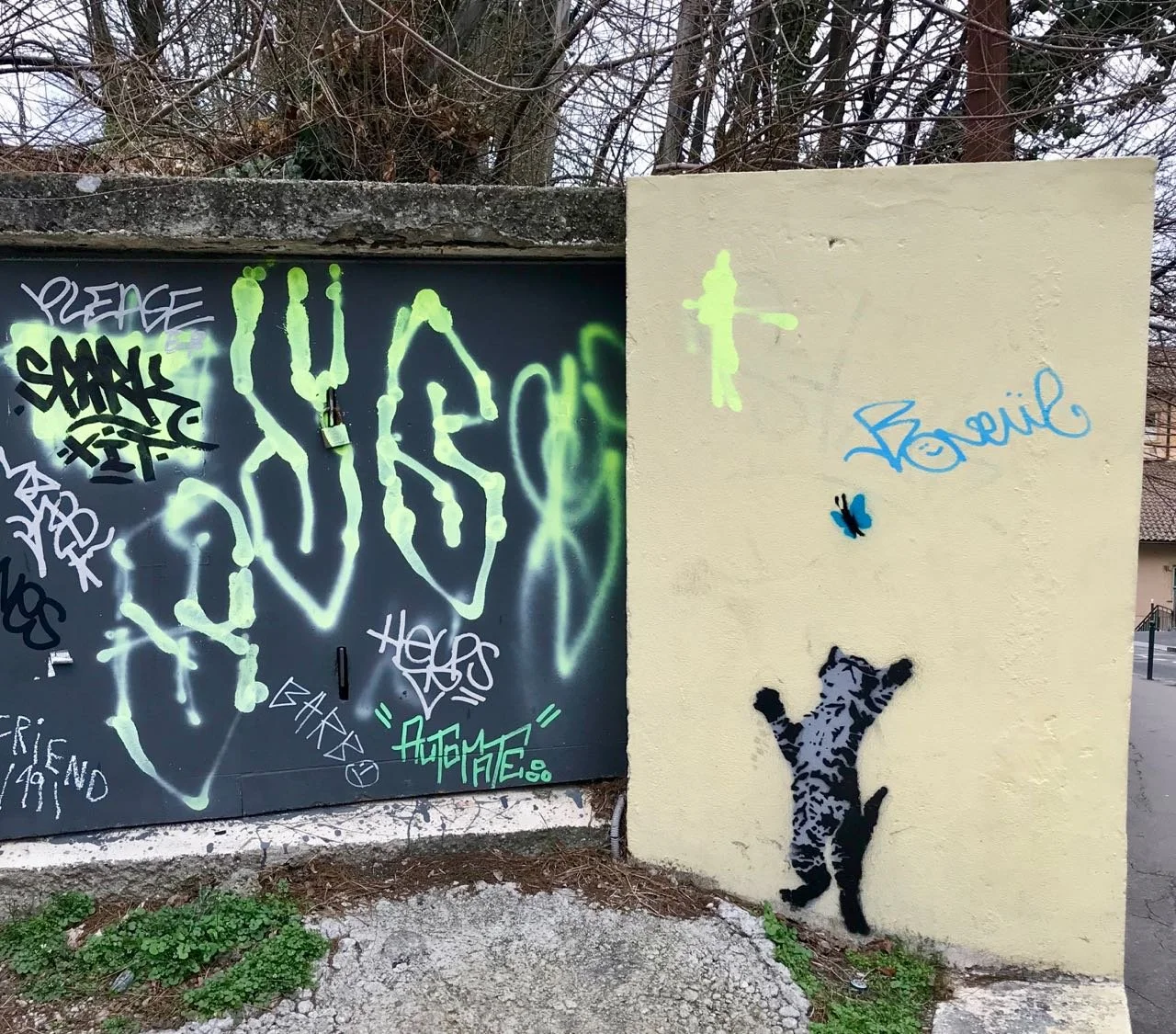
The cat chasing a butterfly came a close second though. With the neon graffiti alongside it, both were eyecatching in different ways.

A black wall with neon yellow and white graffiti - on a wall at right angles is street art of a tabby cat standing on its back legs trying to catch a butterfly

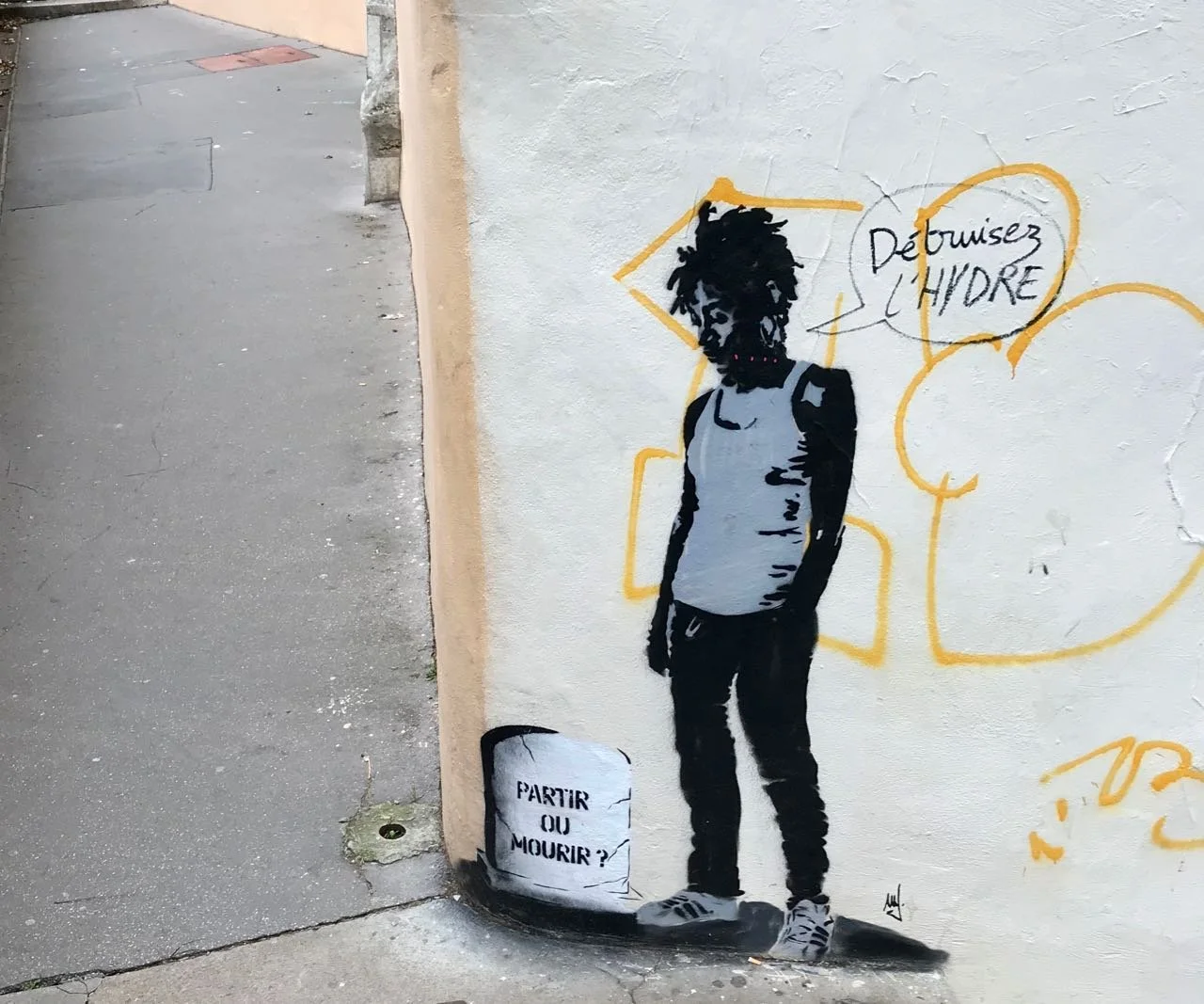
This one shouts uber cool, though the partir ou mourir (leave or die) grave stone brings another dimension. The yellow shapes behind look like they’re part of a different addition to the wall, but also they do highlight and enhance the overall look, who knows?

An image of a youth in a vest, jeans and trainers in black and white looking down at a gravestone with the words partir ou mourir?

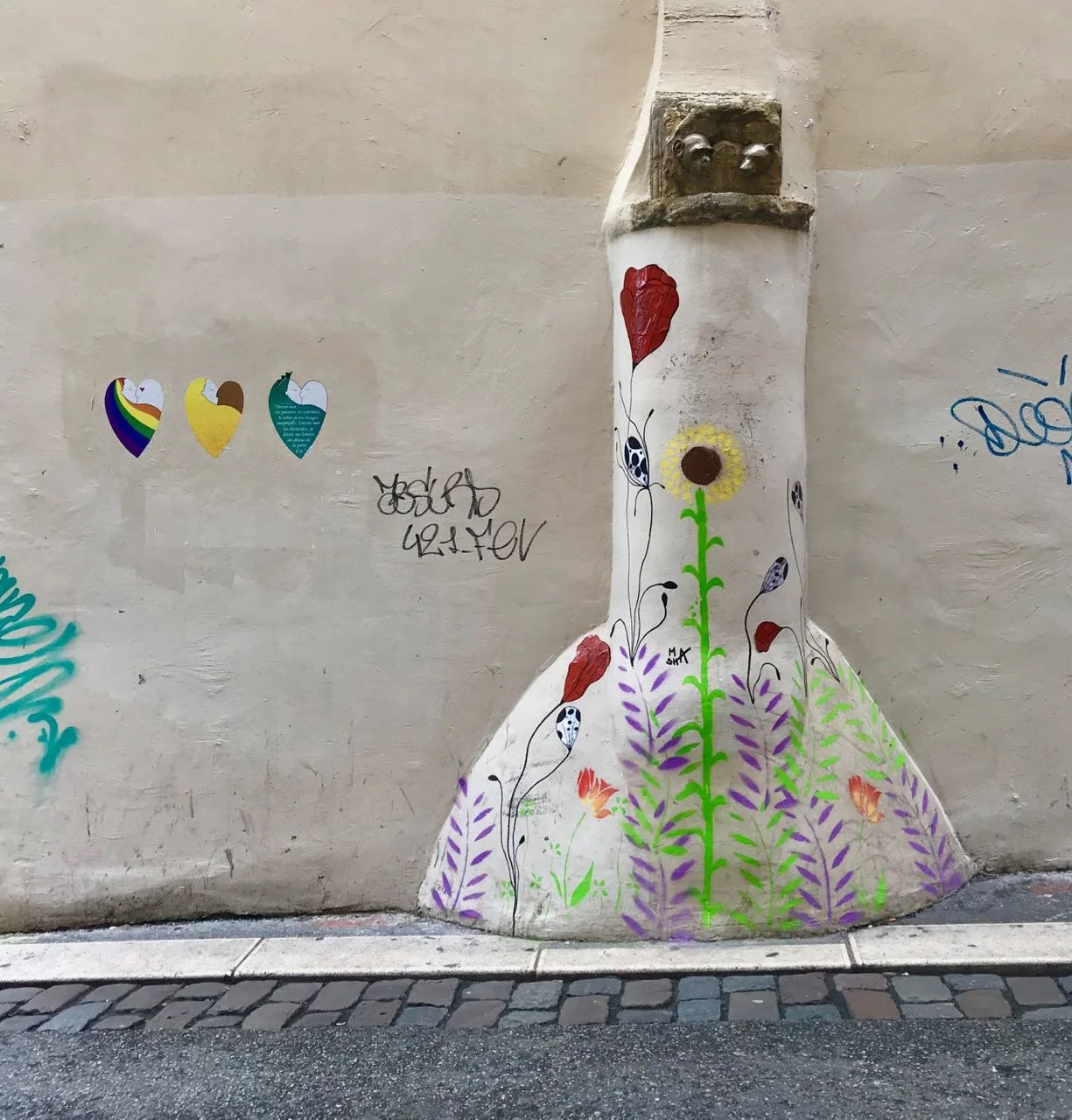
And to prove there were all different styles, this rather strange shaped protrusion onto the pavement was decorated quite differently. With the spring like flowers, and the three hearts to the left. And that’s without mentioning the sculpture which is part of the building. Completely intriguing.

3 coloured hearts alongside a decorated part of a building protruding onto the pavement, which is decorated with a sunflower, tall flowers and what look like poppies

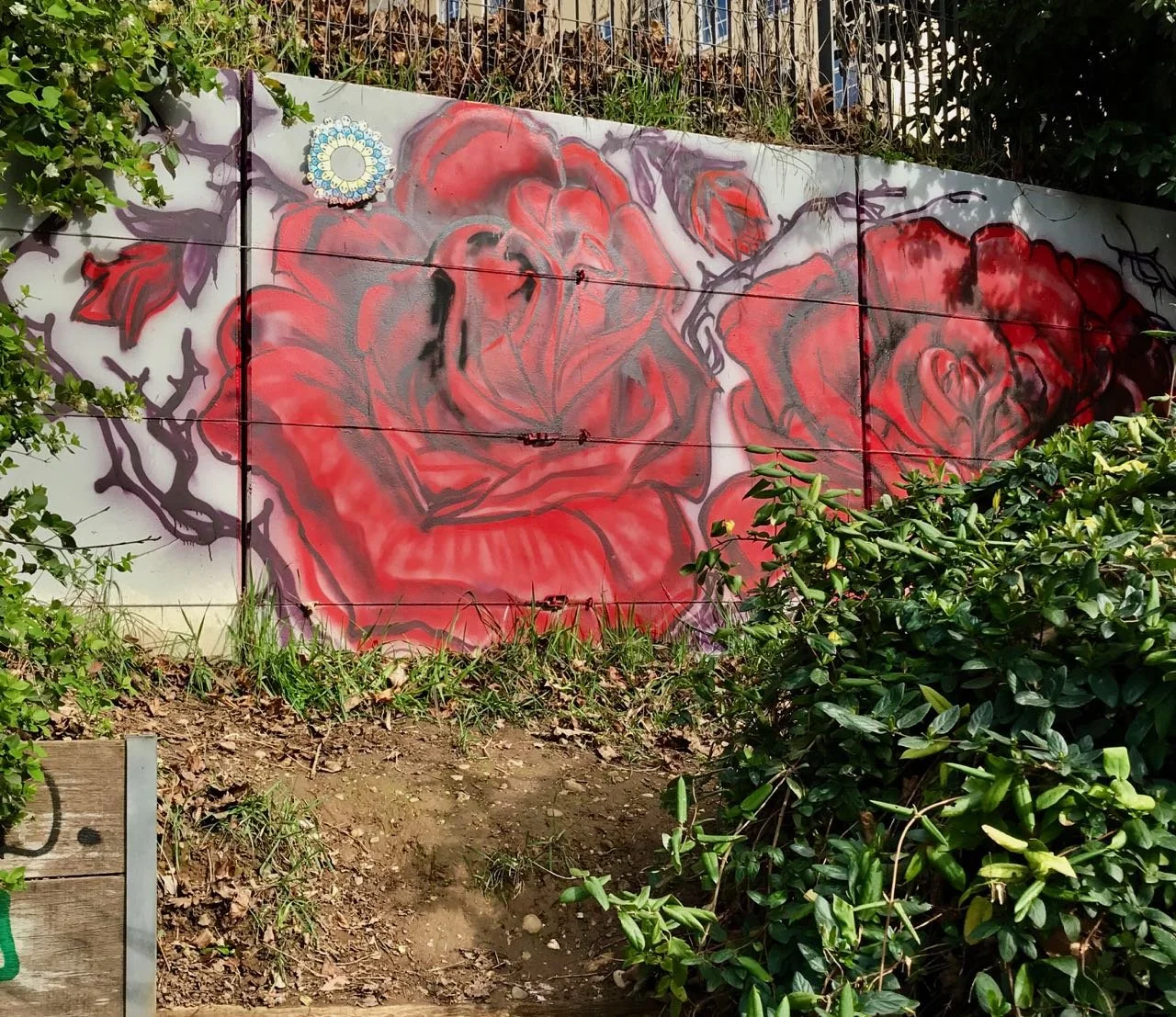
The final piece of artwork I’m sharing was just stunning, and in a most unusual spot. They were on one side of a stepped area, a prolonged stepped area which seemed to be never ending and definitely needed something to distract you from the steps. So many steps! I took full advantage of a photo stop!

giant red roses on a concrete retaining wall, surrounded by greenery

I love it when a city has unexpected finds like this, don’t you?

The kitchens at Belvoir Castle

I don’t know about you, but I find kitchens in large stately homes fascinating, and those in castles even more so. Above stairs at Belvoir was fantastic, but below stairs even more so - maybe it’s because I know my place, or maybe its the industriousness of them, but I know they’re always worth a look. The old kitchen at Belvoir Castle was at the centre of a series of rooms which includes larders, stores and rooms for the senior kitchen staff.

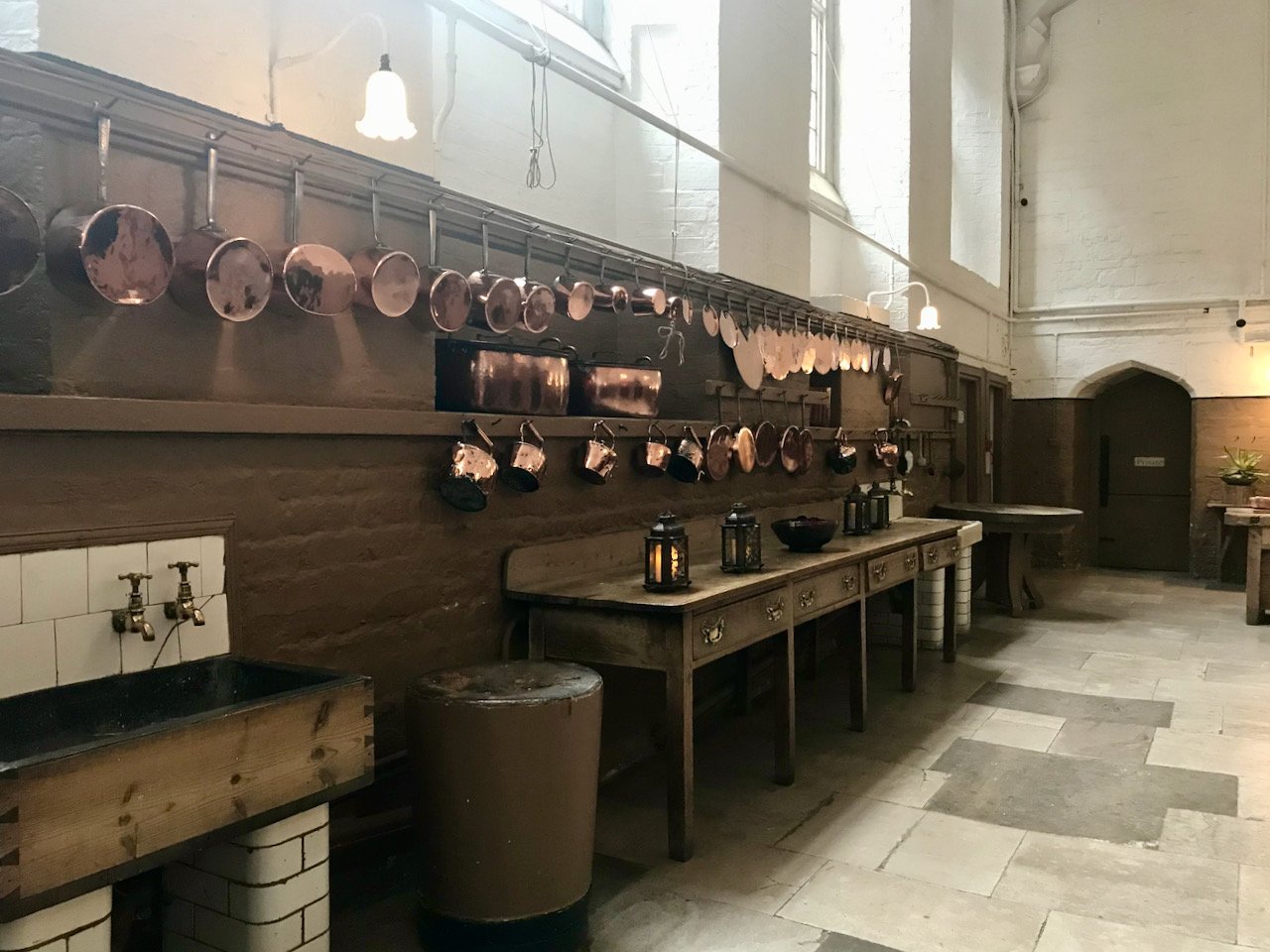
a look along the kitchen with a wooden sink, freestanding wooden table and copper saucepans hanging along the wall

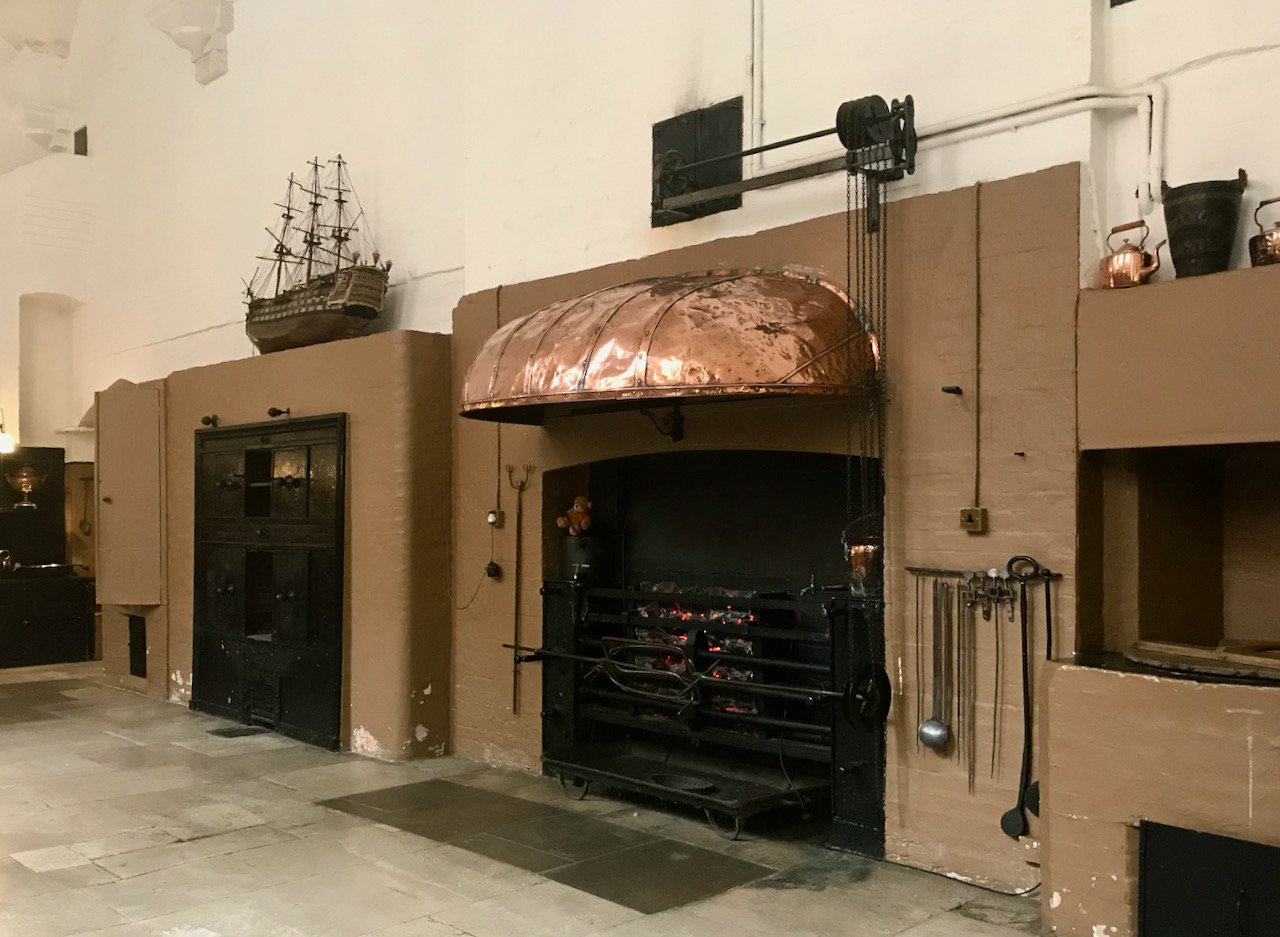
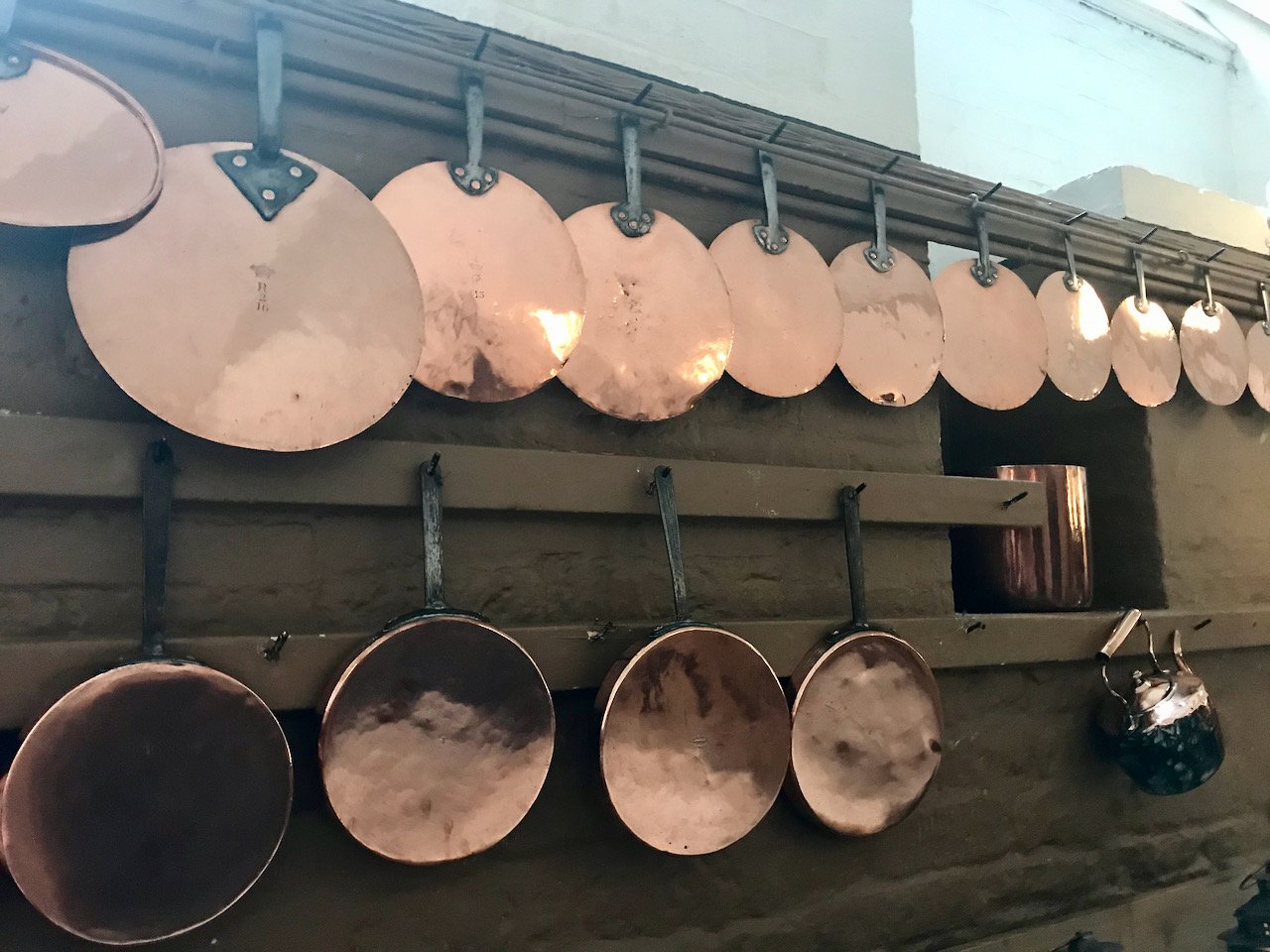
In this kitchen there were thirty plus staff preparing meals for the family, guests and the staff. It doesn’t bear to think how much food and drink was prepared in this space with its coal fired ranges and glorious copper pots and pans. And let’s not even think about keeping it or those pans absolutely gleaming.

the ovens along one side of the kitchen with an open fire with a large copper 'hood'

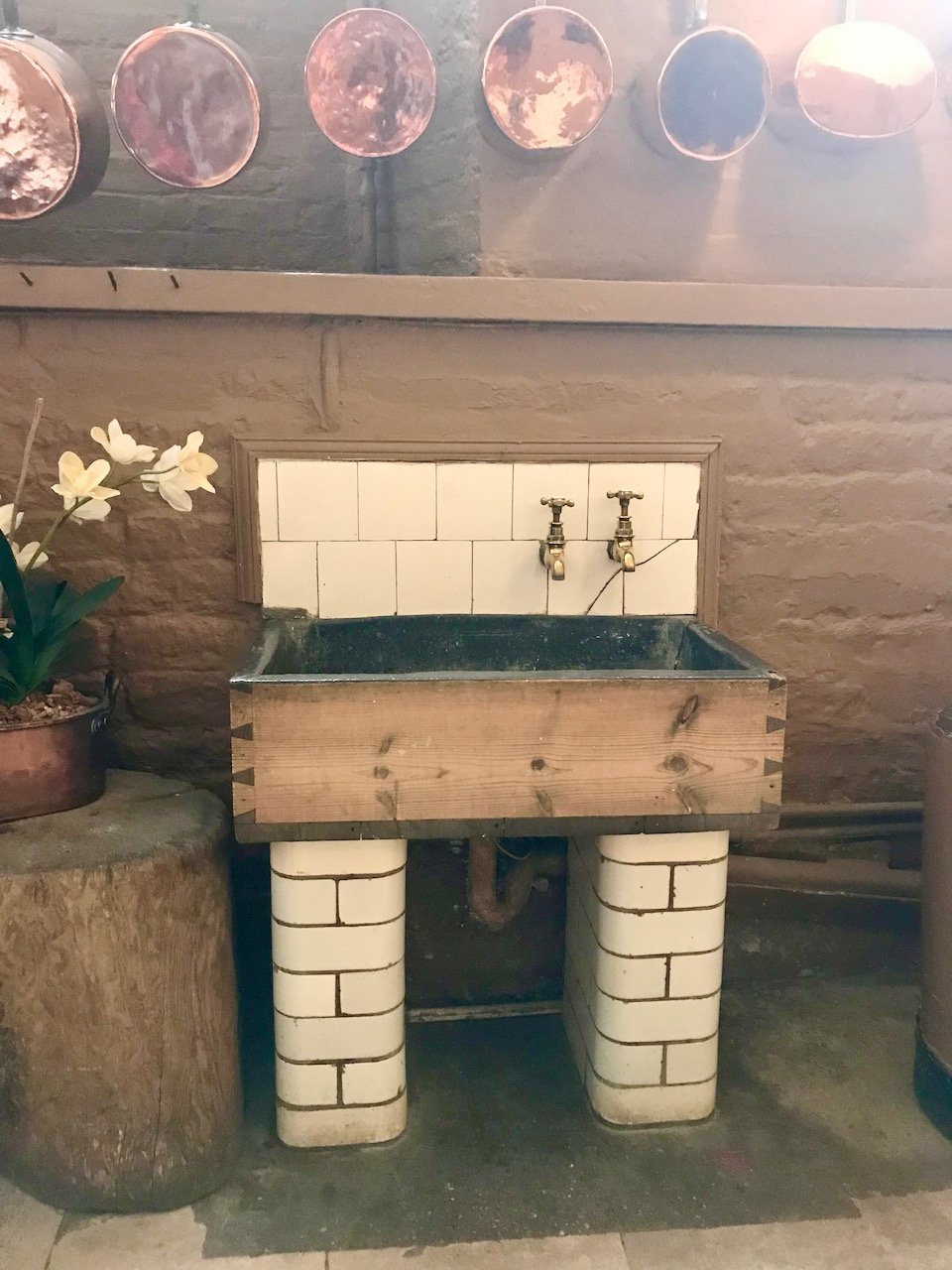
The simplicity of the wooden lead-lined sink on tiled pillars tell its own story - and can most probably tell us many, many stories of its own.

a wooden lead lined sink on tiled pillars with two taps out of the tiled splashback
copper pans hanging on a brown wall
large copper urns in the background, in the foreground a large wooden kitchen table with 'fake' food - fruit, strawberry tarts

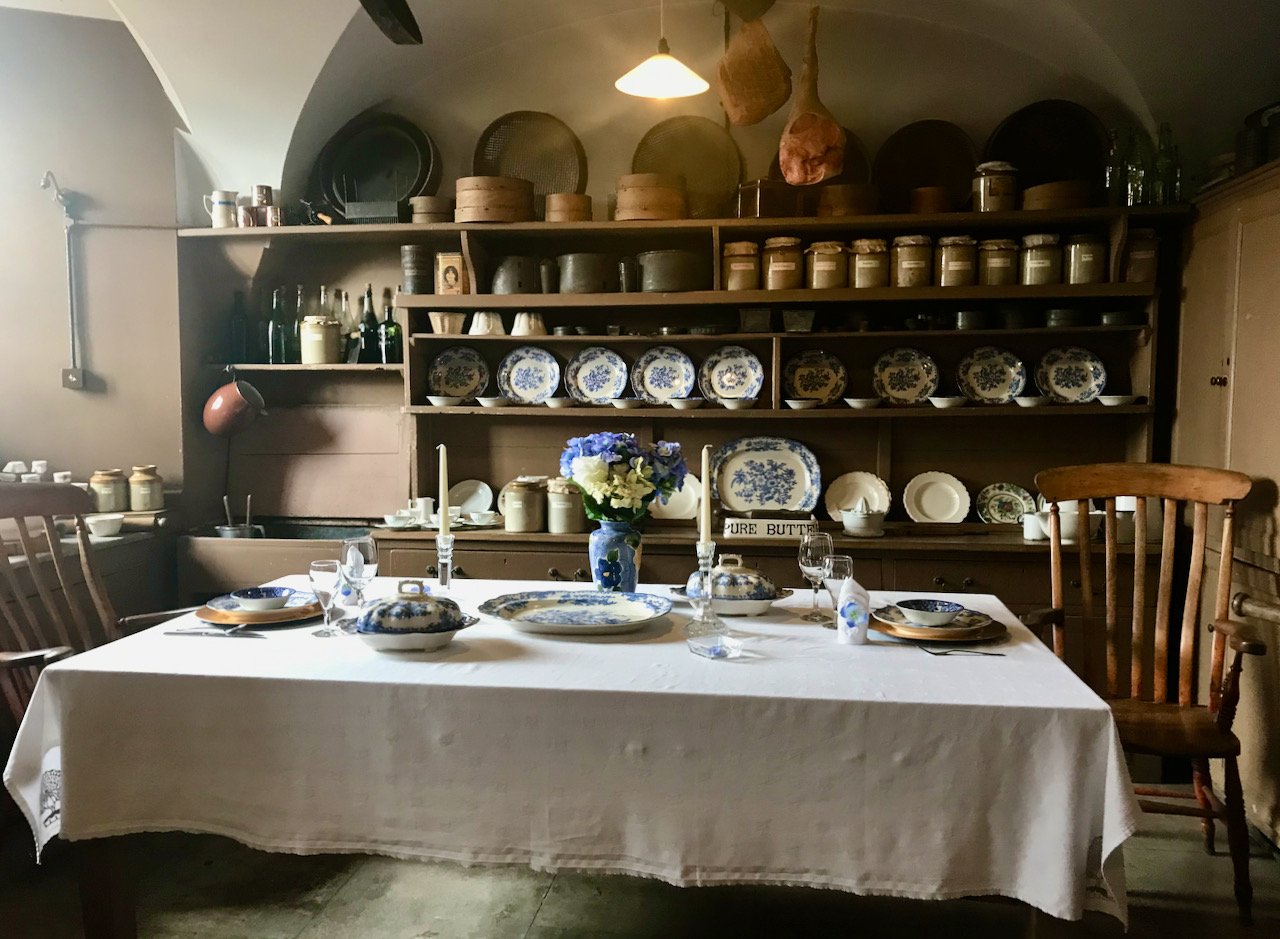
One of the other rooms that was open to visit was The Pastry, which had a dual purpose. For what it’s named after - there’s a marble slab set below the window, which I don’t seem to have captured, but that was designed to provide a cool, dry and calm area where the cook could prepare delicate pastries and more I’m sure.

a separate side room with a table laid with blue/white crockery.  A dresser in the background with more crockery, storage jars and bottles

The room was also used as a space for the cook and kitchenmaids as a dining room and rest room, and it looks much more like the country kitchens we’re more familiar with - complete with some metal signs and tins that I’d be very happy to own myself.

a metal lyons tea sign and a breakfast biscuit tin on top of the cupboards
a close up of the end of the table laid with a place setting, and the wooden carver chair pulled out the dresser with blue/white crockery displayed in a symmetrical pattern in the background

Seeing these spaces empty is as I said before fascinating, and I bet even my most realistic visualisations are a patch on what life in kitchens like these were really like. I think I much prefer being able to imagine what it might be like, rather than experiencing them first hand - cooking meals for more than two people can be stressful enough, especially as there’s been really little opportunity to do that over the past few years.

I was featured on Blogger Showcase