









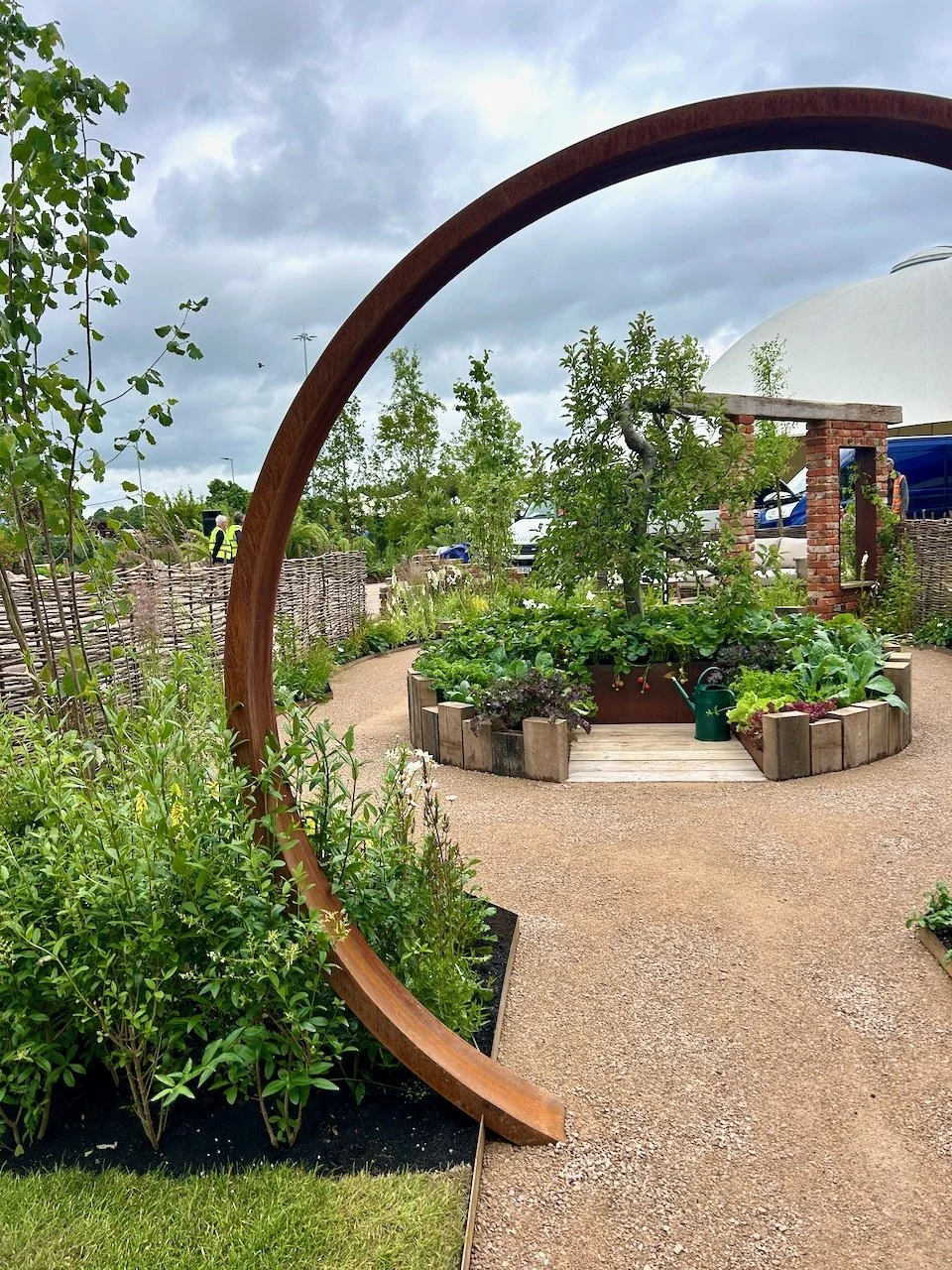
Wine tasting at Roccafiore

Well, when in Rome - or more accurately, Umbria…

Exactly, we just had to visit a vineyard on our trip to Italy this autumn, and MOH lost no time trying to find just the one. And that’s how we ended up at Roccafiore, a vineyard in Todi close to where we were staying. What interested me was what they call the “natural and sustainable viticulture” which we learnt means a more natural way of producing wine.
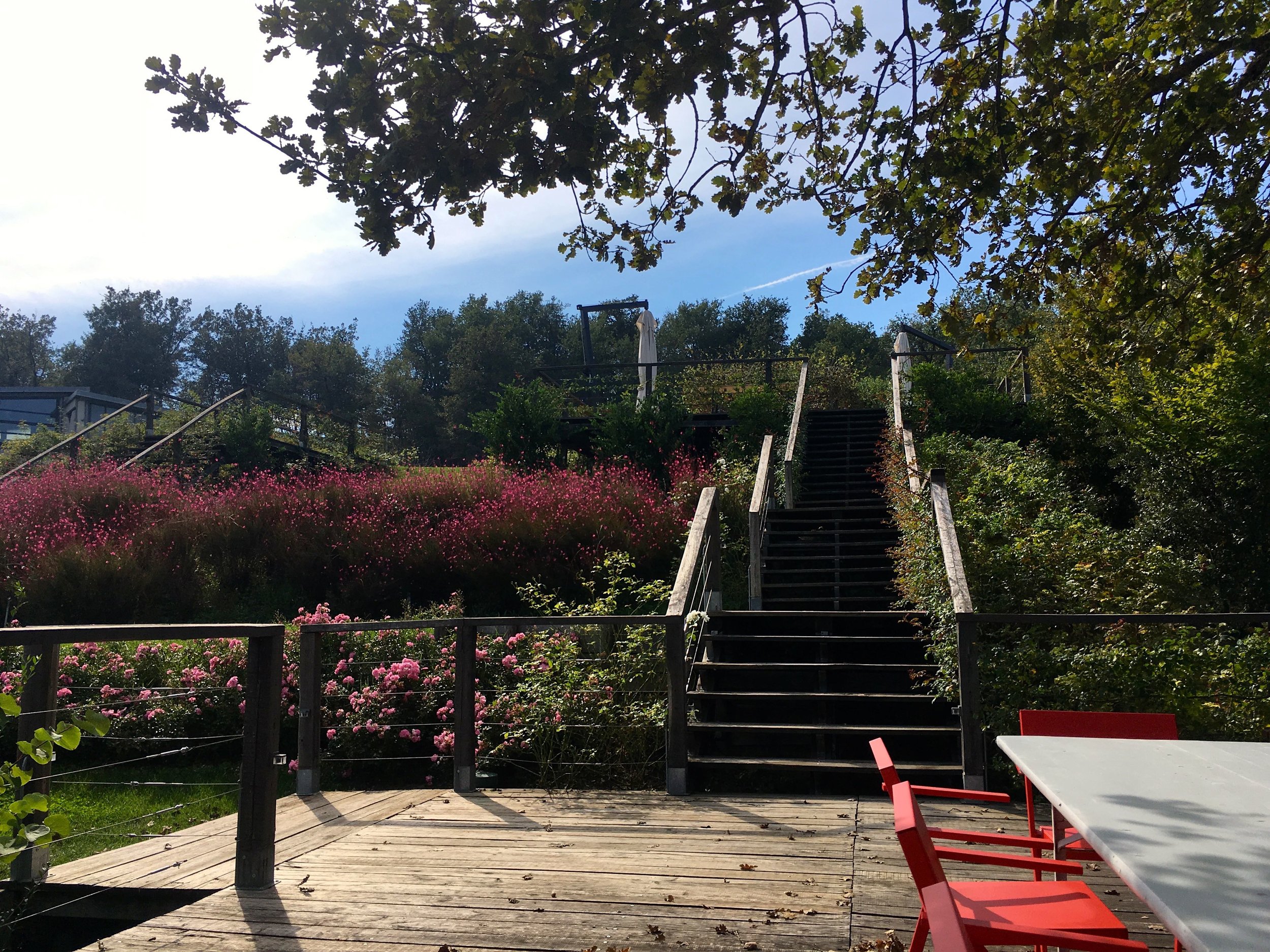
A view over the vineyard's gardens and terraced patios

It’s just a small vineyard set in the hills of Todi, the terraced gardens where we had our tasting were very pretty - usually the tastings take place inside, but as it was unexpectedly warm we were more than happy to sit in this pretty setting. When we arrived the workers were having their lunch, and they were a great advert for their company - I’ve said it before, but you can tell a lot by a company by their workers, and later when we saw them at work, they looked equally as happy.
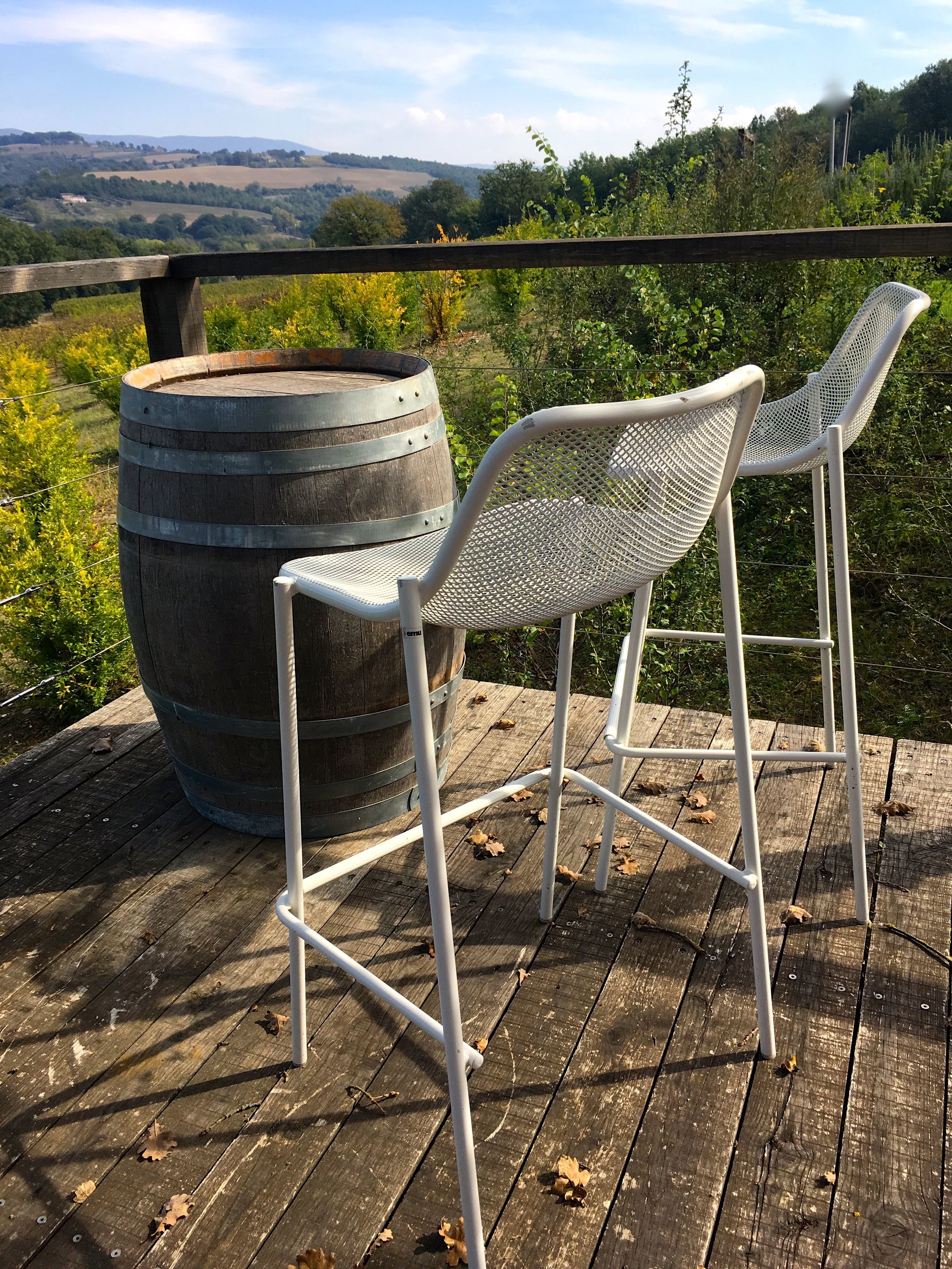
A place to perch and enjoy the Italian Countryside

Having our tasting outside meant more work for our host as she fetched and carried everything we needed, including a pretty jam jar of flowers and a wine passport for us to make notes about the wines in, and some weird dog-like biscuits (in the basket) which I wasn’t much of a fan of.

The serious business of wine tasting was ready to begin
admiring the roccafiore merchandising

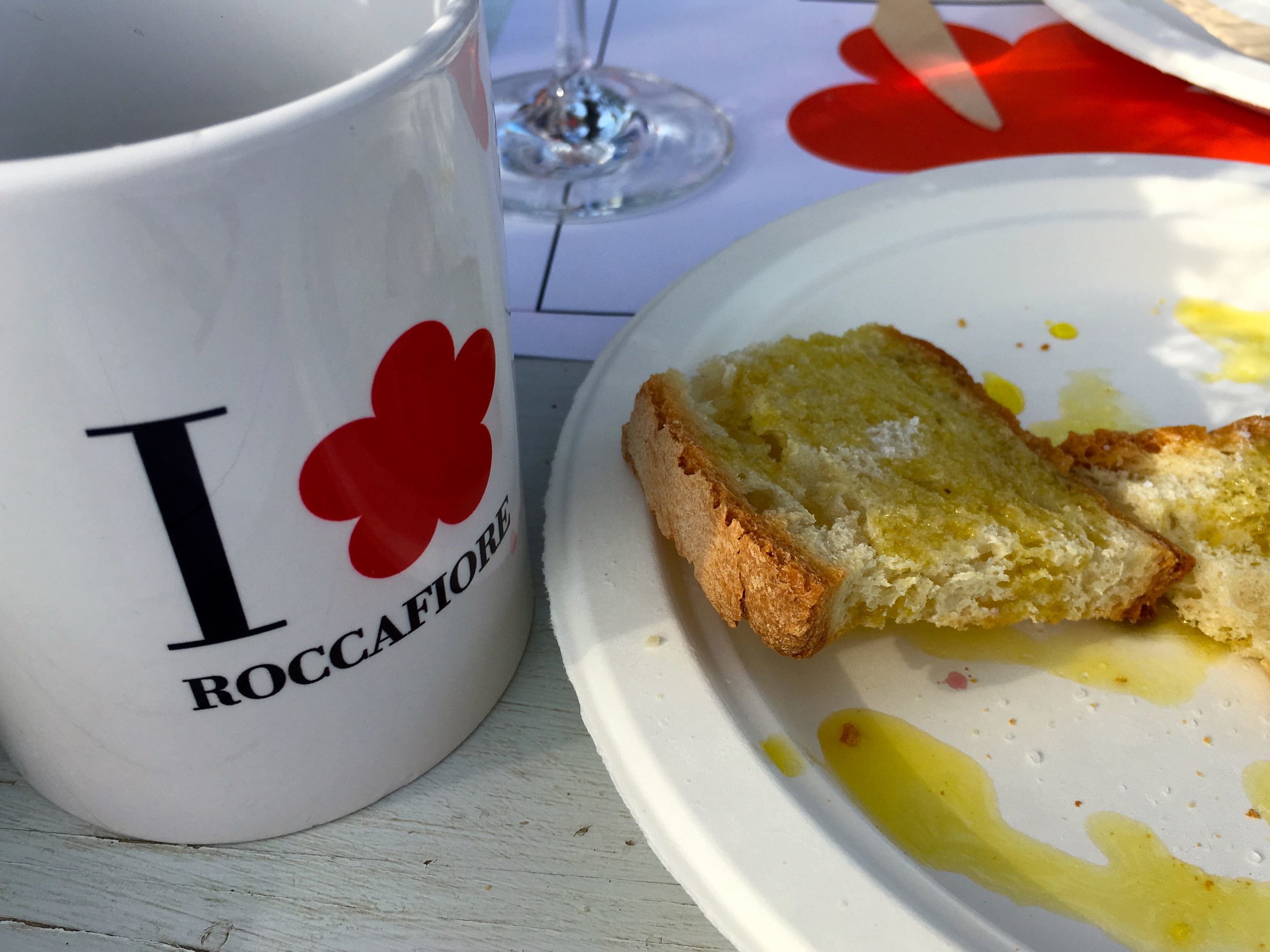
We’d chosen to have lunch alongside the wine, which is always a good move, and the lunch included some of the charcuterie from pigs kept on the land, which tasted as good as it looks. There’s also olive groves on the land and they also produce olive oil, which we tasted slathered over bread, and also very tasty. Tasty isn’t a word I thought I’d use about olive oil, and it’s here we realised that we don’t use olive oil in the same way at home, and it’s wasted how we do use it!

local charcuterie to accompany the wines
the best tasting olive oil

When it got to the part of the tasting that the price list came out we surprised ourselves by considering the olive oil. We didn’t buy any though as there were only 3l cans available, and this summer aside, we couldn’t think of when we could make use of so much olive oil to do it justice, which was a shame.

We also did the calculation on the optimum bottles of wine to ship home, which turned out to be three cases. Red, of course, although even I was tempted by a couple of the whites. And so a couple of weeks after we returned from Italy, some of their Il Roccafiore, a Sangiovese and Prova d’Autore (a blend of Sagrantino, Montepulciano and Sangiovese) followed us home.

A jam jar of flowers no doubt picked from the vineyard's gardens

As I said at the top of this post, when in Rome (or Umbria)…
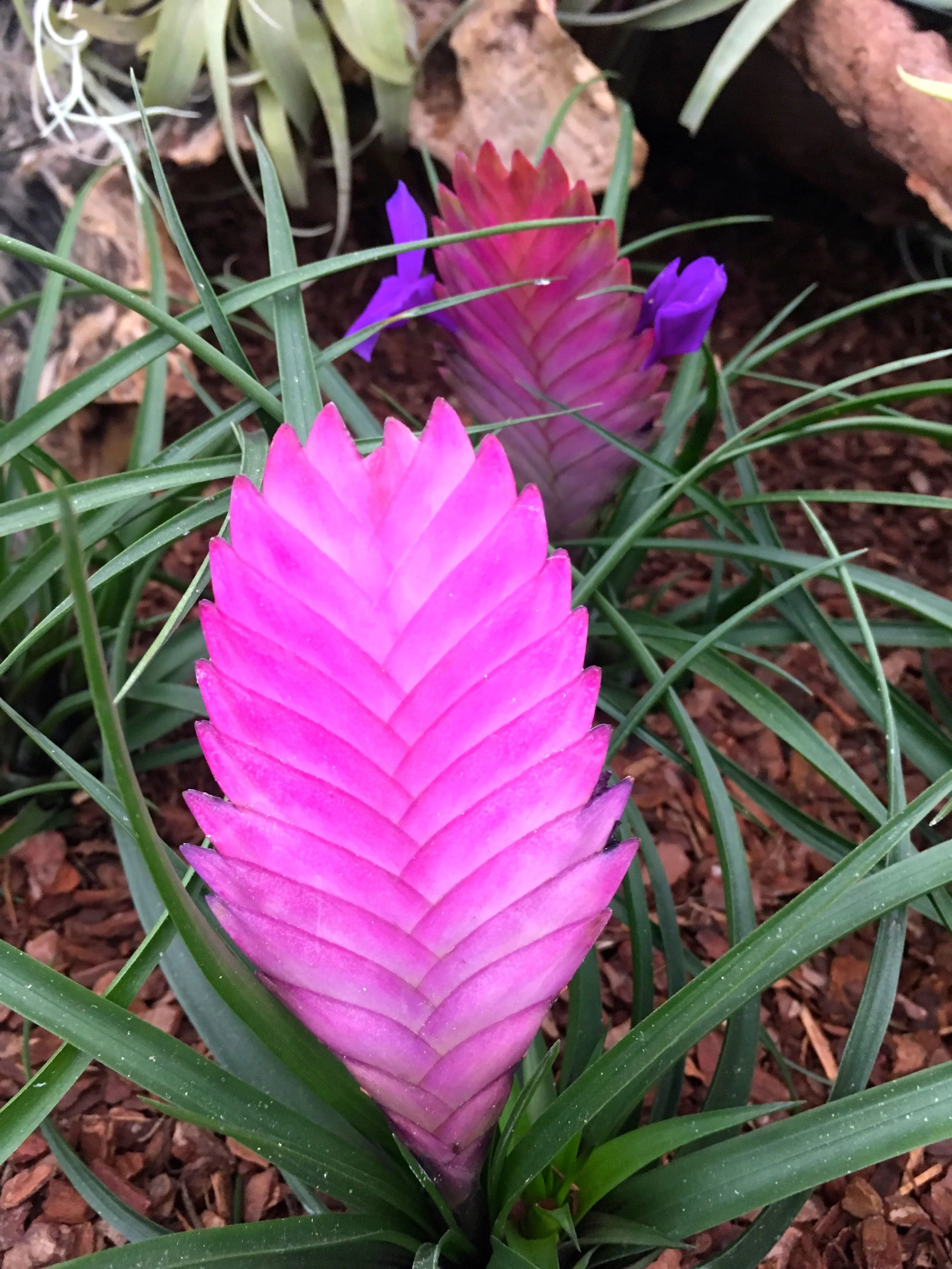
Airplants, wonder plants

These plants are fascinating. They’re from South America and named because they use their short, wiry roots to attach themselves to branches, cliff-faces and pretty much anywhere rather than rooting in soil.

They have requirements for air, light, water and warmth and benefit from brighter conditions, rainfall and humidity, so they’ll have thrived this summer in the UK. I saw these, and was fascinated by them at Gardeners’ World Live in Birmingham this year.

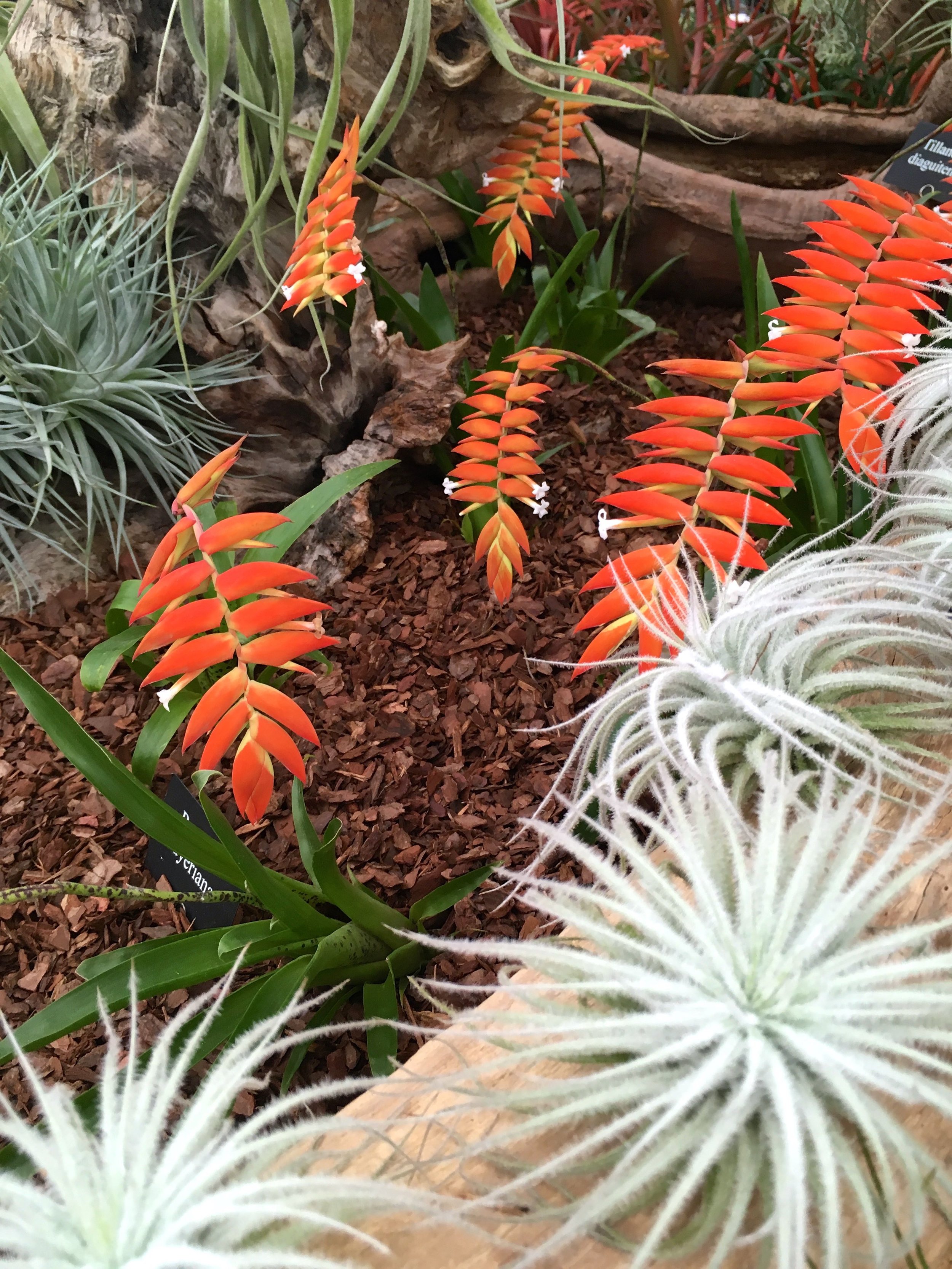
And just because they don’t grow in soil, doesn’t mean they aren’t pretty. I mean, just look at these:

vibrant colours, a pink you wouldn't believe
oranges and wispy white airplants

I wasn’t expecting such vibrant colours either. The sort of plants that I expected were more like this, but even these have a tinge of pink, which change colour in bright light.

Growing on rocks

But what was even more fascinating was the baskets of air plants ready to be bought. They have an almost water-plant quality to them don’t they?

choose your own air plants at gardeners' world live

And there’s definitely a hint of spider plant babies to them too isn’t there?

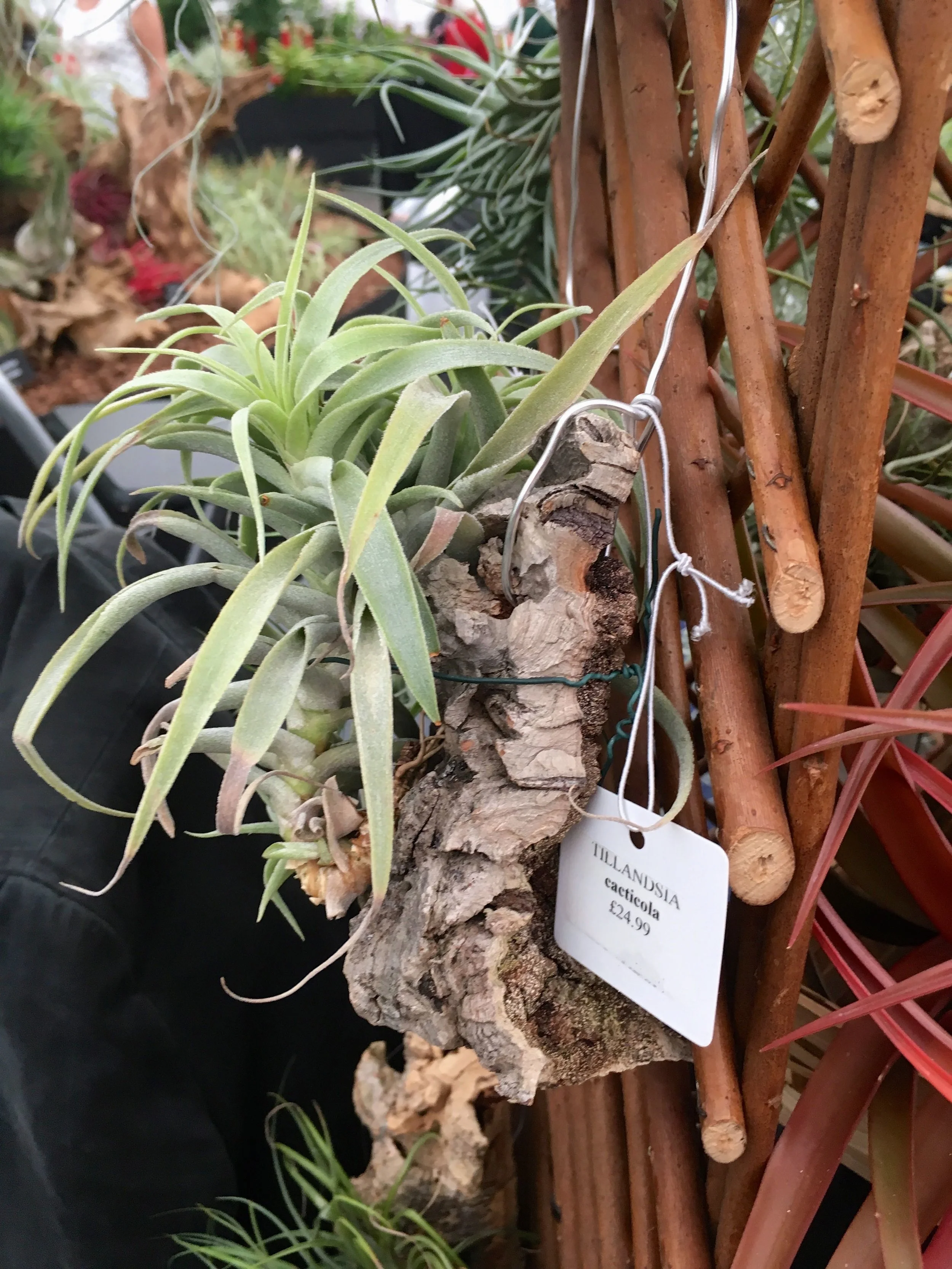
One thing that’s struck me as I’m typing this post is how I’m describing the plants: water-like, spider-like, but I hope you can see what I mean. Often air plants are grown on logs, and this was an option in Birmingham, as well as some clear glass tubes which gave them a more modern feel.

air plants growing logs
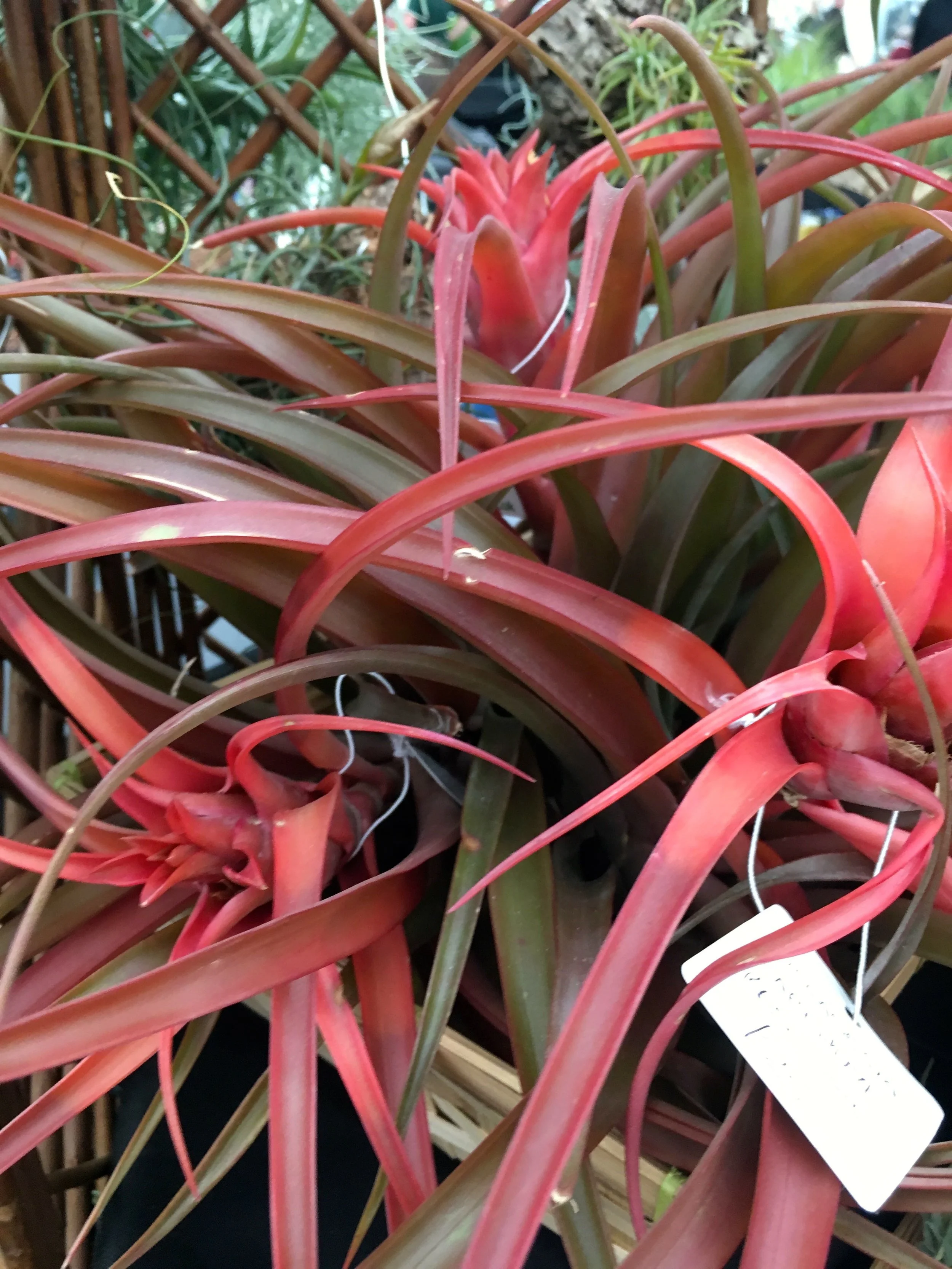
vibrant red airplants

But be warned, air plants grow, flower, set seed and die - so if you want a long lasting display, it’s worth cultivating your own from the offsets - and then you’ll be in the same situation as I am with my aloe veras, where I can’t bear to part with any of them!

What do you think, could you be an air plant convert?

The Dutch Garden and Orangery at Hestercombe

We visited Hestercombe Gardens in Somerset earlier in the year, much earlier in the year, which explains the grey skies in some of these photos. In fact later on the day of our visit it snowed, and we ended up cutting short our weekend, which we learnt this past weekend was a good call as the Devon village where we were staying was cut off for three days. Or perhaps, we didn’t make the right call after all, depends on your viewpoint I guess…

This shot of the ornate garden was taken on the Dutch Garden side looking through to the Mill Pond, and it’s a hint at the formality and grandeur of the Dutch Garden.

A pretty gate to entice you in to this part of the garden at Hestercombe

Turning around, you can see the more formal planting, along with those grey snow-laden skies I mentioned before.

A moody and grey sky from the Dutch garden at Hestercombe

As you can see the planting had yet to spring into life, the pots would be full of tulips in the weeks to come, but not for our March visit. It’s at this time of year though that you can more easily see a garden’s structure, and I always think if it looks good without the plants, then it can only look better when they’re in flower.

large terracotta pots in the Dutch garden

We’ll have to go back again when there’s more in the garden, as I’m sure it will have a completely different feel. It’s a good garden to visit, so it won’t be any hardship, and you know how much I’m a fan of independent gardens as well as those of the RHS and National Trust.

We knew from the garden map that there was an Edwin Lutyens Orangery near to the Dutch Garden and looking to our right we quickly spotted it looking majestic a few steps away.

looking across to the orangery at Hestercombe

As with many of these gardens we visit, even the pathways have added interest and we discovered this to be the case as we walked past the in bud magnolia to see more of the Orangery.

fancy stonework on the pathway

And stepping inside was everything I expected an Orangery to be, and quite an elegant space.

heading inside the orangery

With citrus fruits too, although they had a way to go before picking I’m sure.

one of the fruits in the orangery
outside the orangery

The exterior uses Somerset’s yellow hamstone which even on the greyest of day has a great colour. Looking at the Hestercombe site, it’s available to hire for weddings, which seems a great use for the space, now I’m thinking I need to be a wedding guest there, but on a sunny day please!