












Wow! Heather at Compton Acres

Compton Acres is a fabulous independent garden in Poole, Dorset and the Heather Garden there was just one of the gardens that blew us away when we visited in March last year.  The garden has over 100 different forms of heathers, and if I'm honest who knew there were so many?

I don't seem to have much luck with heathers in my own garden and while there's some heather around the lake in Greenwich Park, nothing on this scale. But we weren't aware of what lay ahead of us until we turned the corner and saw this:

Who'd have thought heather could give so much colour

Yes, exactly. 

I told you it was quite something.

Originally this space, which is south facing and full of rocky banks was the summer home of Thomas Simpson's cactus and succulent collection, which I'm sure would be equally as impactful. That was lost during World War II and after it was transformed into what would have been, at the time, a highly fashionable heather garden.

A lovely march day in the Heather Garden at Compton Acres

There were walkways and benches to get up close to the heather, and so that's what I did.  Each plant was full of colour, and nothing like the sorry plants I've had in my garden, and which has led me to give up on heather in this garden. It's all in the soil, and my woodland-like garden isn't where they want to be.

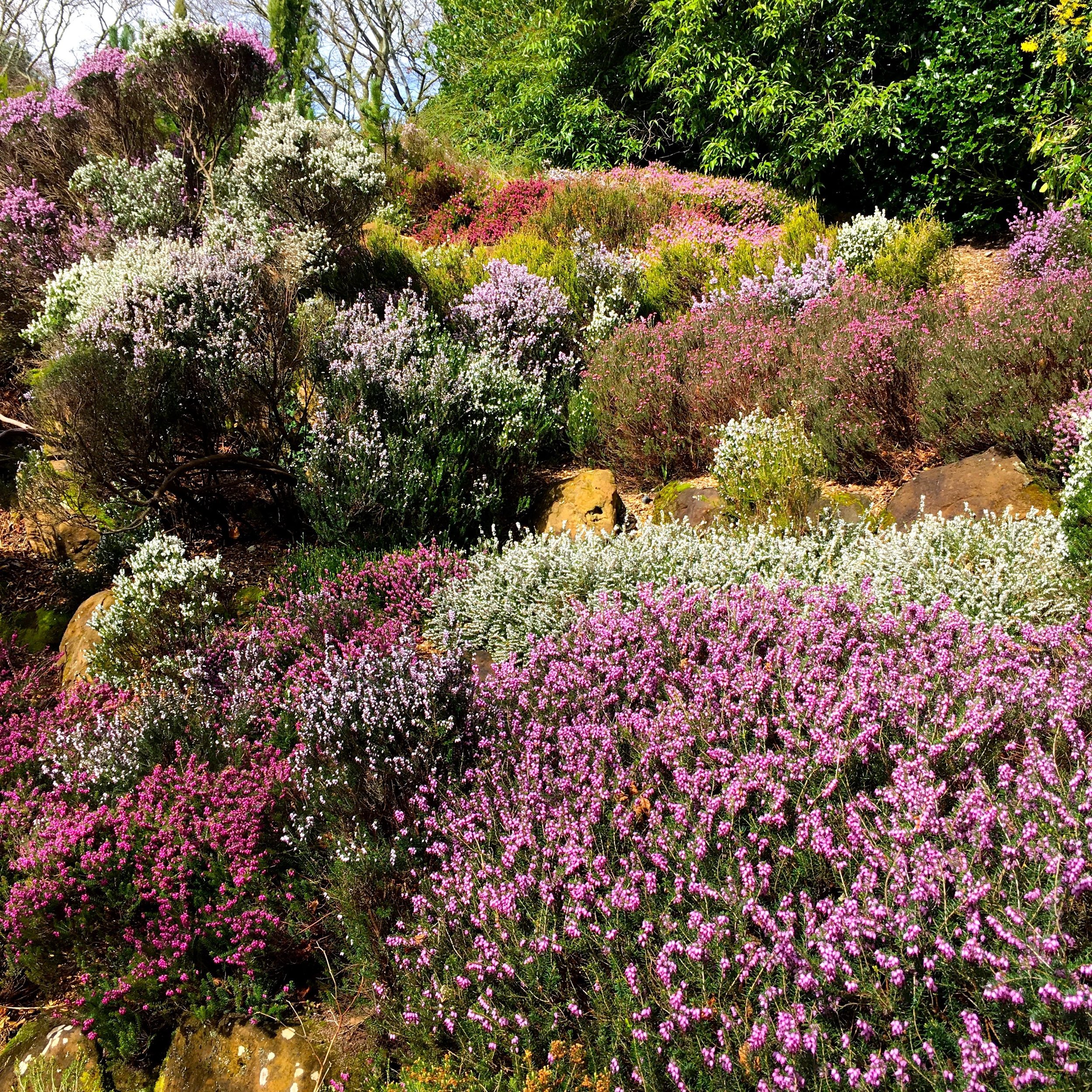
Getting close up to the heather at Compton Acres
 
waves upon waves of heather at Compton Acres in Poole

As you can see from the colour of the sky March last year was much different to this year, which I'm grateful for, but I can't help but wonder if the Heather Garden was as spectacular with a grey backdrop. It may well have been.

There was a bit more than heather in the garden though, but oh the colours

Despite being wowed by the overall sense of the garden there were still quirks to discover as you explored its paths.  These two lead statues were fun and elegant at the same time.

A couple of statues also enjoying the heather at Compton Acres

So who knew that heather could be this amazing, certainly not me and I couldn't help but be a little envious of the residents close by who overlooked this part of the garden.  I've plenty more to show you from this fascinating garden, and I'll do that over the next few weeks, but if you're in the area - or even close by - do go and have a look for yourself, I'm sure you won't be disappointed.

The Tropical zone in Cannington's glass houses

As the warmer weather appears to have deserted us again I've taken measures into my own hands and today I'm sharing pictures from our visit to the Tropical zone in Cannington's glass house.  It was grey and misty in London for most of today and while the warmer temperatures are forecast, I'd appreciate if they were here now.  I'm sure you would too!

The glass house was hot and humid, replicating the wet tropics of Indonesia and the Amazon Rainforest, I'm taking this post as a kind of acclimatising type of post in readiness and anticipation of less grey, less misty and more Spring-like weather.  

Even just writing this post I can feel the warmth as we stepped into this area, the temperatures aim to be between 26 and 28 degrees, tough hey?

Lush leaves in the tropical zone at Cannington

Warm, but lush. 

Just look at all the greens, and the odd burst of colour too.

Pops of colour in the jungle
 
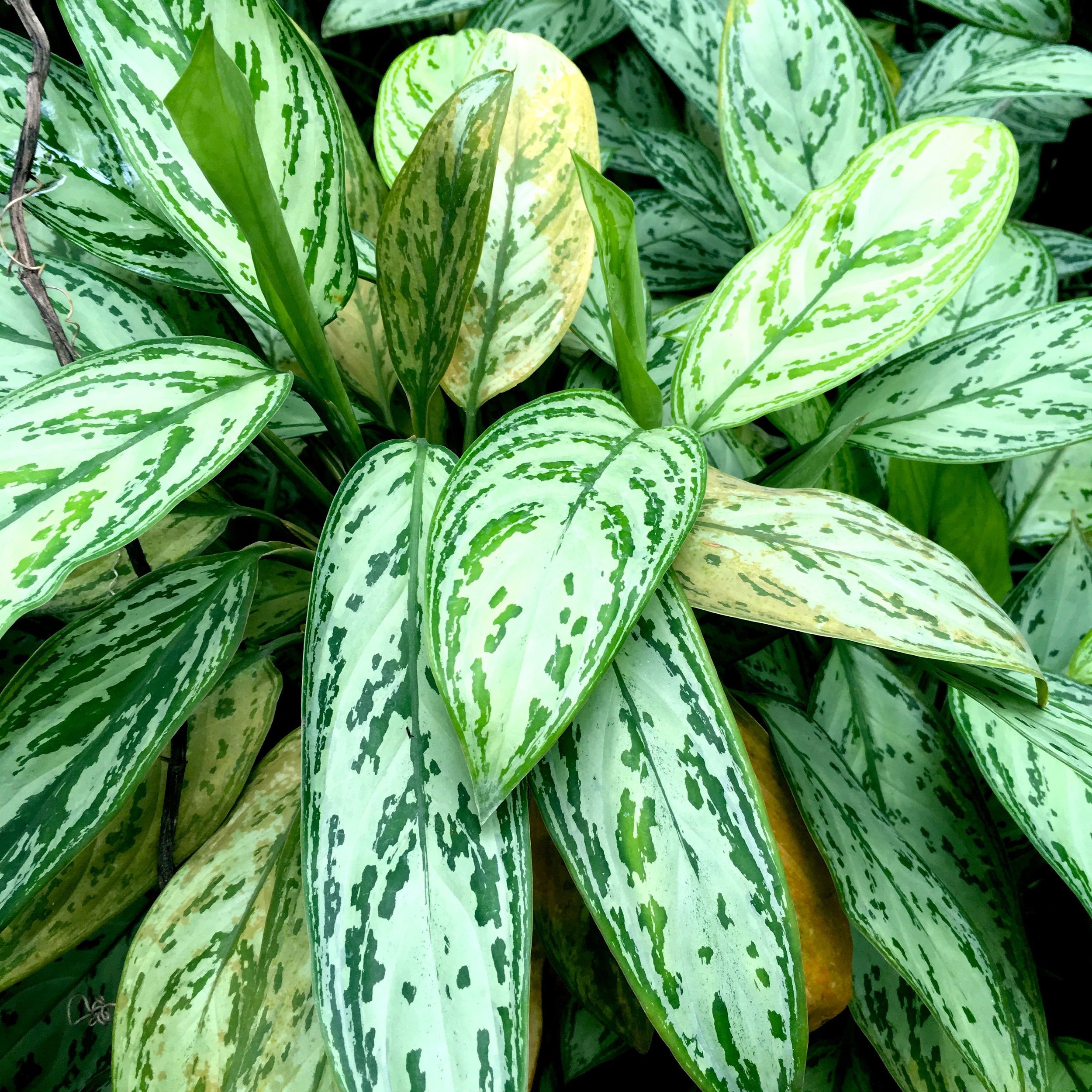
speckled leaves enjoying the heat as much as me

As we walked around the small but densely planted space, something unusual caught my eye above me.  It was green, but not the usual green of plants. Taking a closer look, I was right, but no less curious. 

up above there was something strange and green

I don't think I've ever seen anything like it, and had no idea what it was. We thought it might be pepper, but we'd seen that at RHS Wisley and it wasn't this colour. 

Isn't the colour vibrant? And isn't it fascinating?

On closer inspection it was jade vine and as vibrant as it looks here

Thankfully there was a sign telling us it was a "Strongylodon macrobotrys" or more helpfully a Jade Vine.  I can see how it gets its name!

It's also commonly known as an Emerald Vine or Turquoise Jade Vine and is a native of the tropical forests of the Philippines.  Stems can be up to 18 metres in length and it's a member of the pea and bean family.  Can you imagine if I grew one of these on the allotment...

No me neither, especially in this weather.

colourful leaves in the jungle at cannington

But there was more colour for us to see before we headed back to the more temperate areas.  The pink, red and green leaves above, which I'm sure I've photographed before, most likely at Wisley and a much welcomed hibiscus. 

The prettiest hibiscus at Cannington in Somerset

Doesn't it look fresh and full of warmth.  So who knew that you could find such tropical-ness in a small part of Somerset which is well worth a visit if you're close by.  I'm sure you won't be disappointed, and the added bonus is that if it's a chilly day, like us, you can spend time discovering the peculiar, but wonderful Jade Vine.

The Blue Garden

One of the small gardens within the Walled Gardens of Cannington is the Blue Garden and that's a challenging choice, as 'true blue' is a relatively rare colour among flowers.  You might immediately think of cornflowers, irises and periwinkles, and maybe even the more purple blues of lavenders and pansies.  And I'm sure there's more, but they don't roll of the tongue easily, do they?

WHAT OTHER COLOUR BENCH WOULD YOU EXPECT?

WHAT OTHER COLOUR BENCH WOULD YOU EXPECT?

The cobalt blue benches were striking on the wet and grey day we visited.  With more blue flowers in the garden I'm sure it would be a fantastic space.

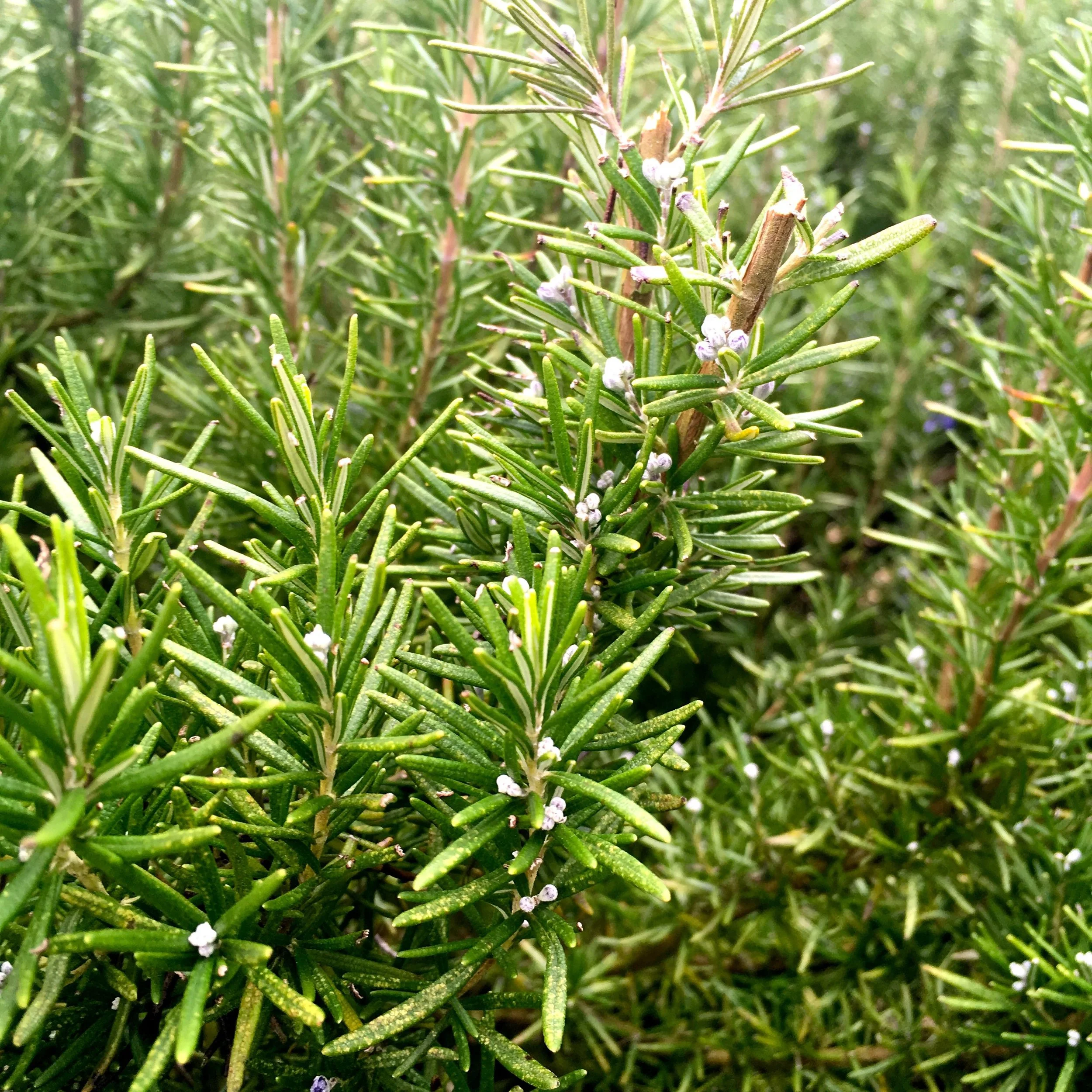
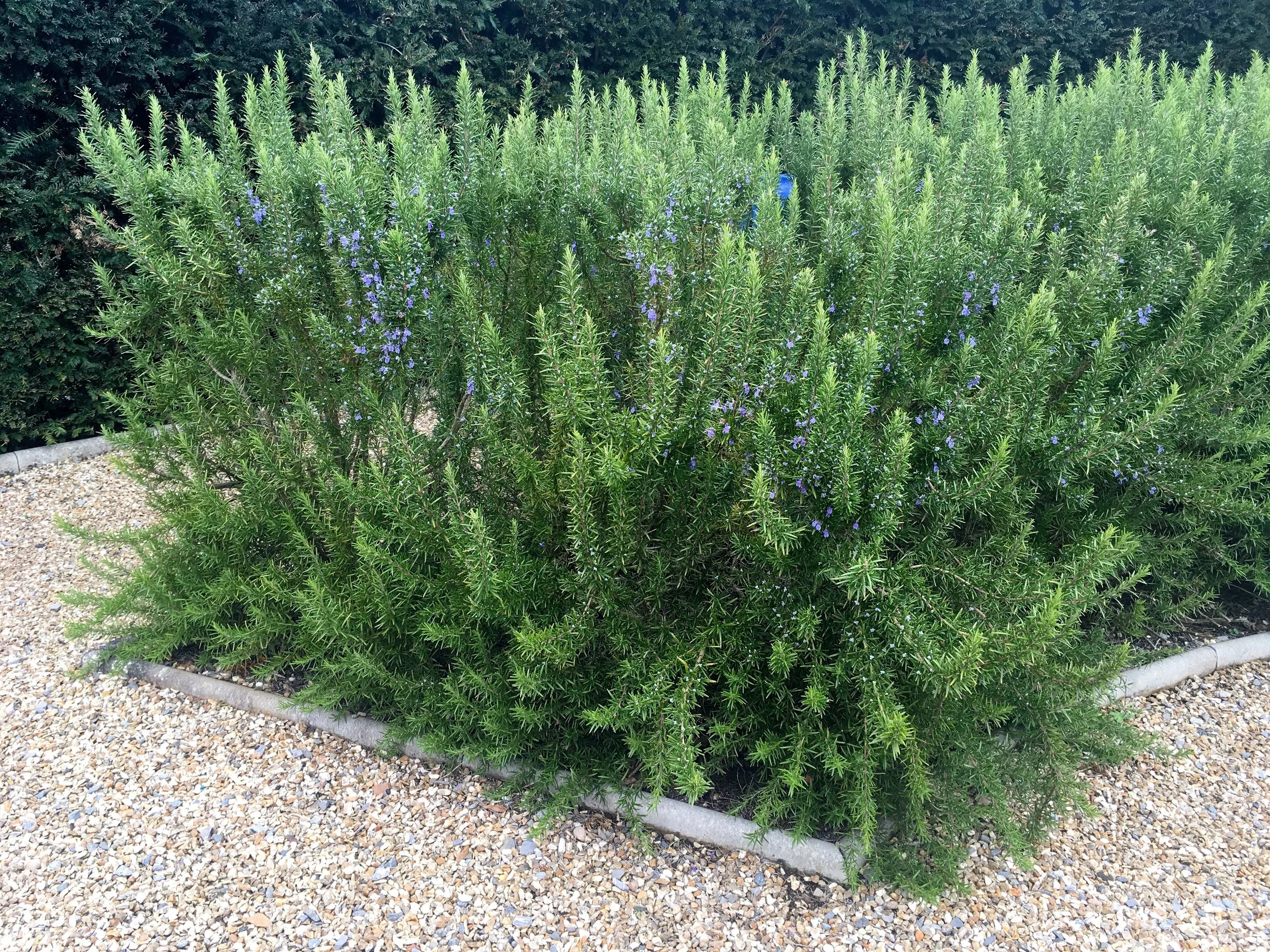
You forget that rosemary has small blue flowers, but it does, and they were starting to make themselves known.  I bet the garden is also one of most fragrant spots what with the rosemary and lavender.

BLUE FLOWERS STARTING TO SHOW ON THE ROSEMARY

BLUE FLOWERS STARTING TO SHOW ON THE ROSEMARY

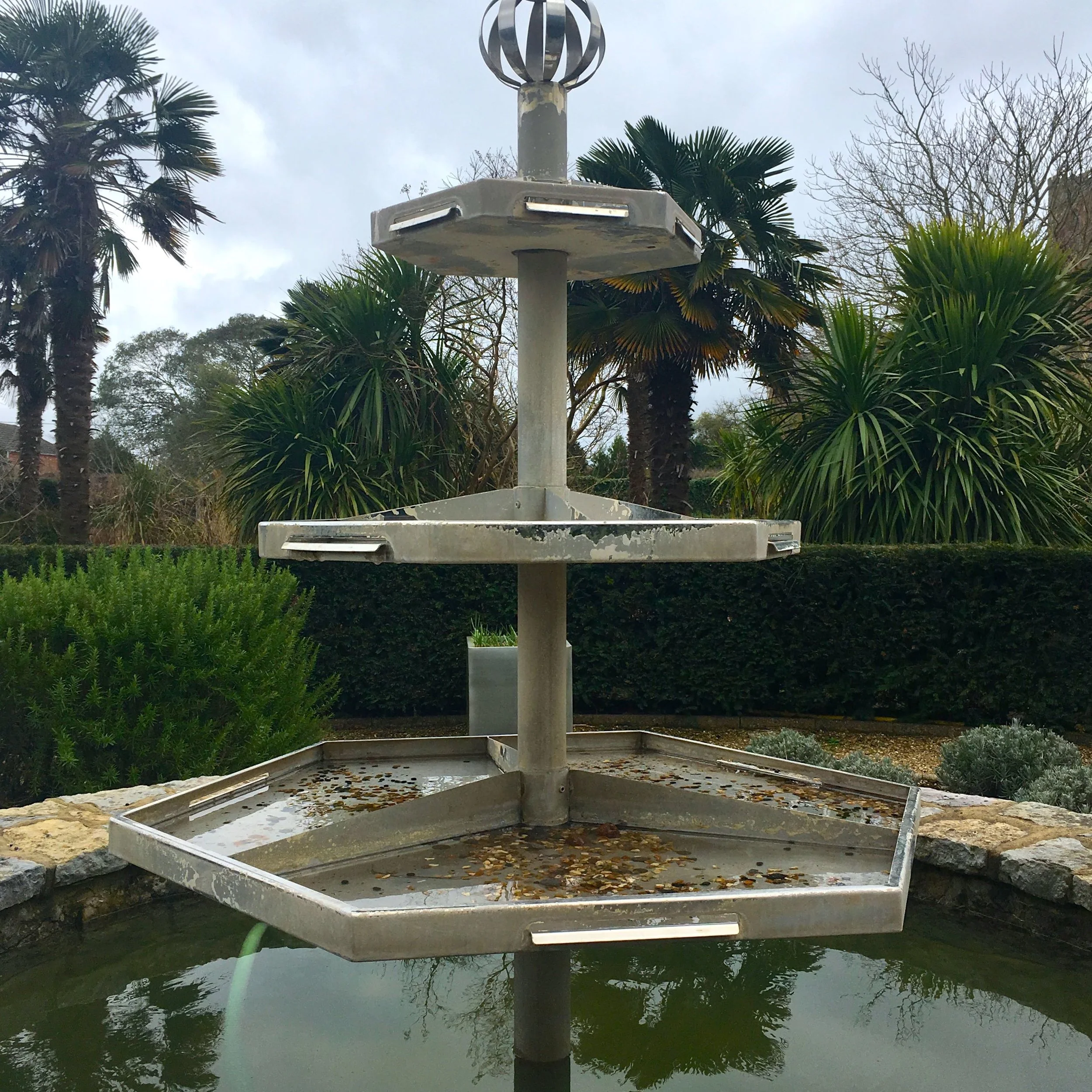
The water feature, which somehow I've cut the top off in my photo, was designed by a student and creates a modern interpretation of a conifer tree.  It's been modified though as it seems that the design also soaked visitors.  As you'd expect the stone wall that it sits around it matches the theme of the garden - blue lias stone - and was quarried in Somerset.

THE BLUE GARDEN WATER FEATURE

THE BLUE GARDEN WATER FEATURE

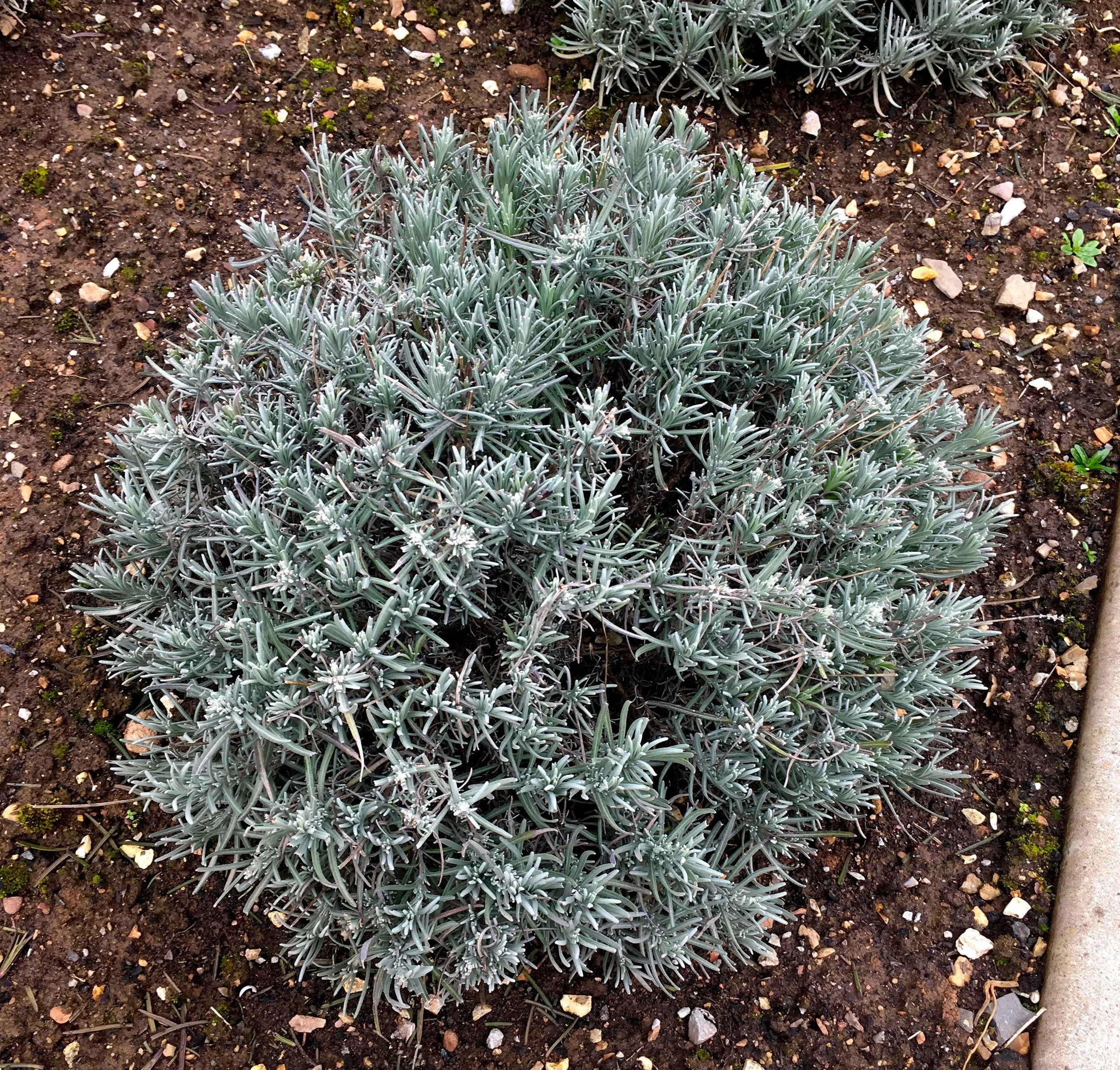
THE SILVER BLUE LEAVES OF LAVENDER

THE SILVER BLUE LEAVES OF LAVENDER

There's a lot of rosemary in the central part of the garden, and it was a good reminder of how it can be used sculpturally, adding shape and height.  It also gives me hope for my future rosemary hedges over on the plot.

ROSEMARY USED IN SWATHES OF BEDS

ROSEMARY USED IN SWATHES OF BEDS

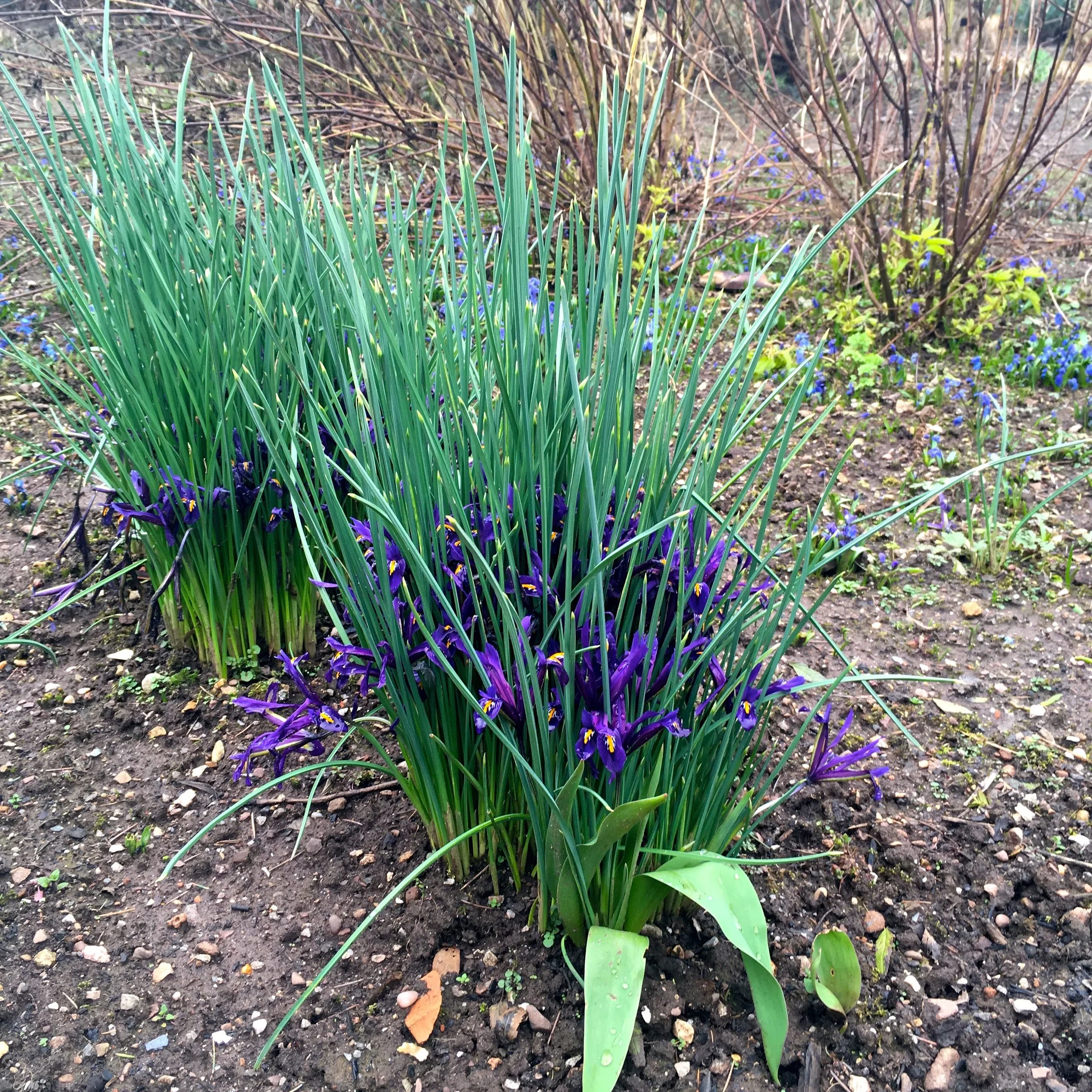
Given that our visit was the middle of March we did well to see the blue flowers we did, especially given the cold weather.  The irises were starting to make themselves known and yet again reminded me that I need to add some to my garden.

DWARF IRISES ADDING A PURPLE BLUE TO THE GARDEN

DWARF IRISES ADDING A PURPLE BLUE TO THE GARDEN

The board in the garden says it's been designed for year round interest, and it'd be great to see it throughout the year, wouldn't it?

“TheGardenYear