In Munich's Englischer Garden

After six days of cycling around Bavaria, in Munich we decided to do things differently and set about exploring on foot. I'd planned a hectic schedule - what else - and we had a lot of ground to cover, including a walking tour of the city's historic centre, several beer gardens and much more. There was of course more than we could ever hope to achieve, but we did see a lot of Munich in a short amount of time. 

Over the next few weeks I'll be sharing more of Munich - it's beautiful, you really should go - but today I'm sharing photos from the time we spent wandering around the Englischer Garden. 

It's big. It's among Europe's biggest city parks, bigger than Hyde Park in London and New York's Central Park. We only saw a small part of it, and we did tick off the sights I wanted to see, so let's get on.

We approached it from Prinzregentenstrasse and the first thing I was looking for was the surfers. Yes surfers.

bridge.jpg
weirandwillow.jpg

I'd read that there was surfing just past the Haus der Kunst art museum on the River Eisbach. As we entered the English Gardens we kept our eyes peeled and sure enough soon saw someone walk past us in his wetsuit with a surfboard under his arm. 

So it was true.

But it didn't look like we'd found the right spot judging by the pictures above.

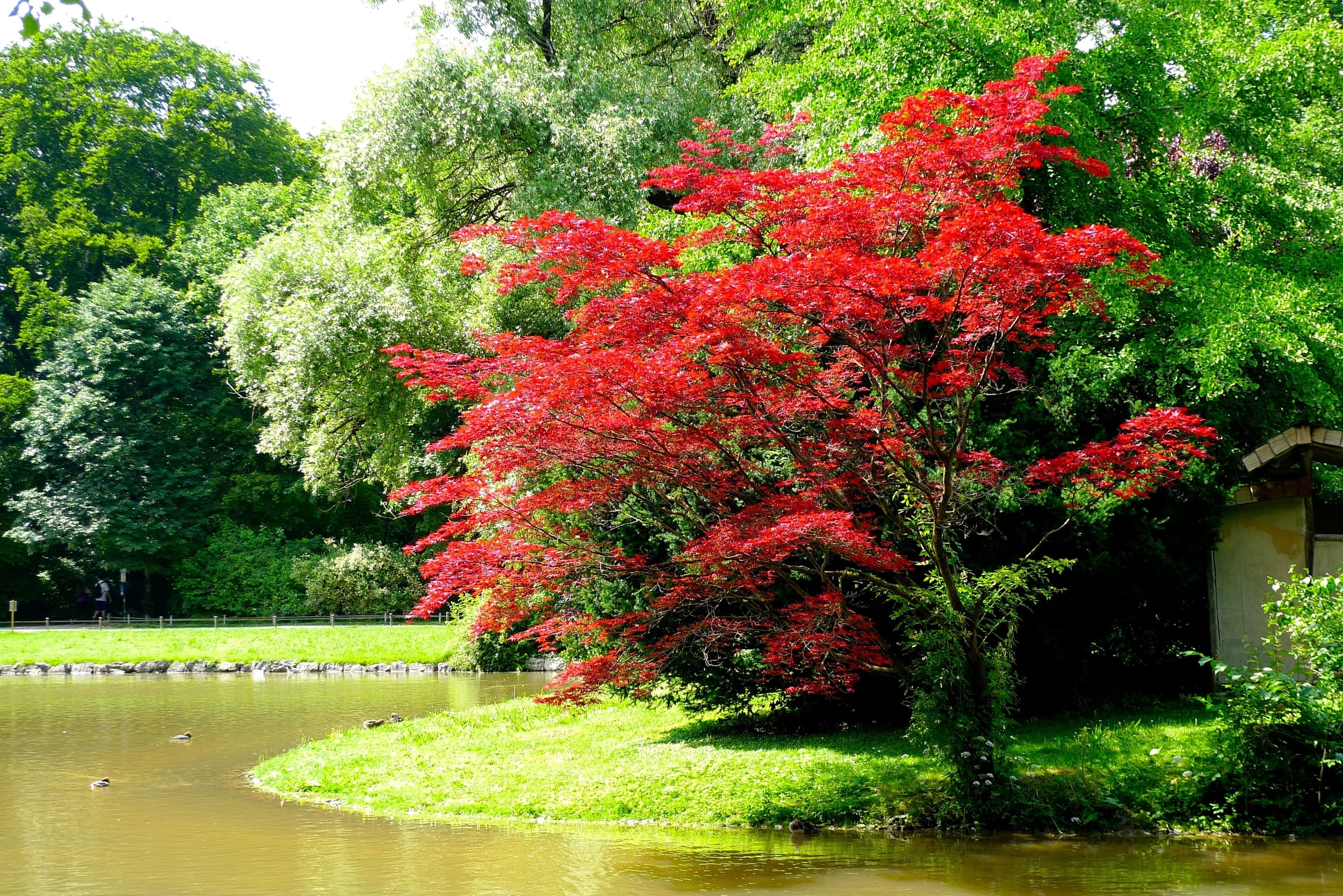
We carried on, and were soon distracted by this beautiful red tree on a central island.
redtreeisland.jpg
urasenke

We carried on following the river and sure enough we found the surfers. It was the strangest sight and most compelling to watch.

surfing.jpg
surfinginmunich.jpg

I have many photos from this part of our walk, trying to get the perfect shot and wanting to see how each of them did. It was mesmerising. Soon though MOH suggested we move on, as the next thing on our list was the beer garden and the Chinese Tower.

We'd also lost all sense of direction but headed towards the centre of the park and then alongside the river hoping that we'd work it out. We did soon enough, when a horse and carriage stopped and offered to take us on our way. Declining we headed off the way he'd come, now pretty sure we were on the right tracks.

anotherbridge.jpg
woodedarea.jpg
sunlightonthetrunk.jpg

And we were right, just when we thought we might give in because we'd clearly got very lost we spotted a signpost labelled "Chinesischer Turm" - hoorah!  It was built in the 18th century during the craze for everything oriental.

CHINESISCHER TURM

CHINESISCHER TURM

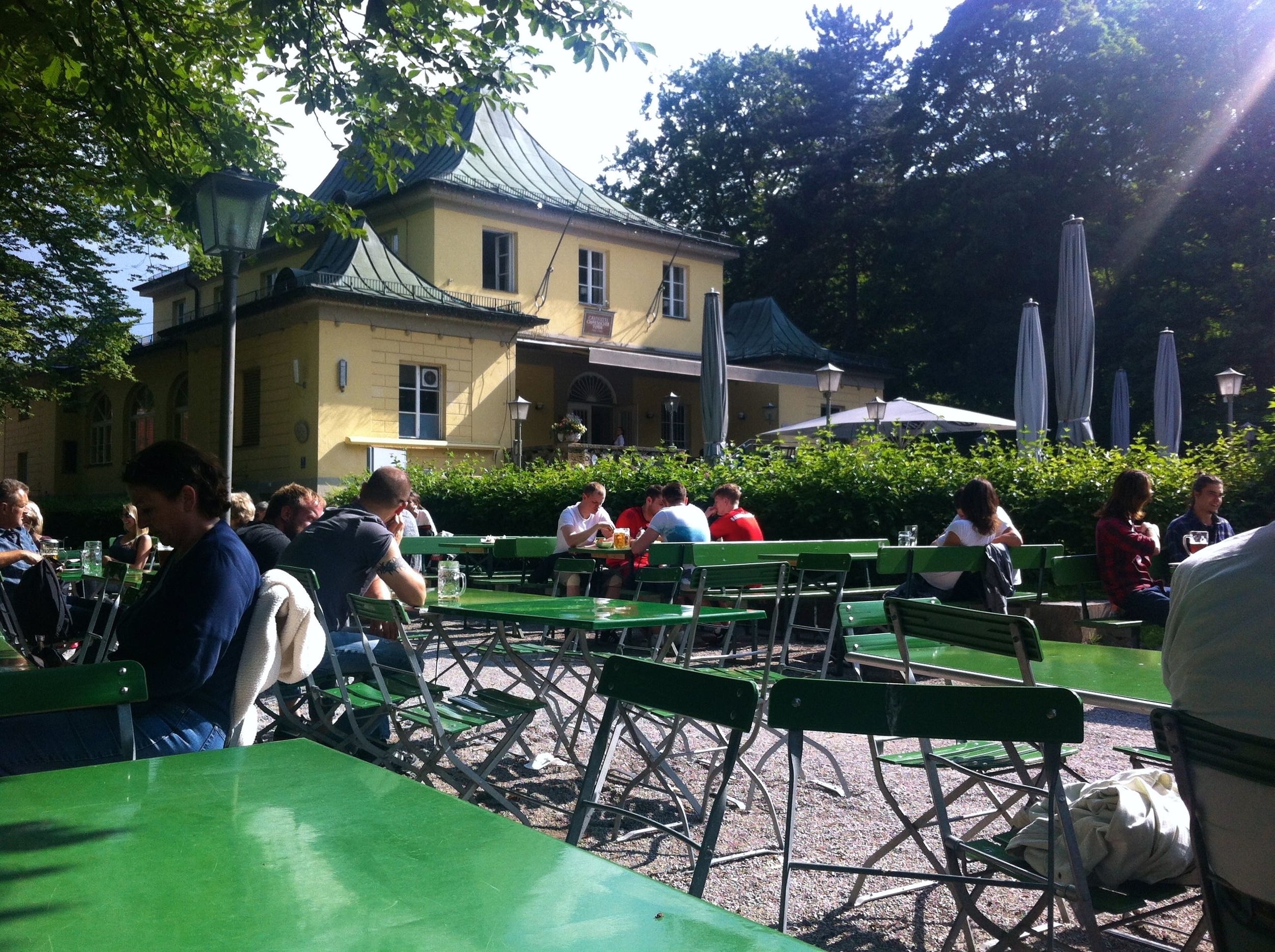
Not only had we reached the second waypoint on my list, we'd also found Munich's oldest beer garden!  Soon we'd equipped ourselves with beer and currywurst and sat in the sun enjoying the very civilised way to drink beer. And plan our way back towards the centre of Munich.
BIERGARTEN

I'd provisionally planned to see some of the other historic follies in the park, but after a day of walking and now knowing roughly how far it was back they were shelved for the day. 

Quite an enjoyable afternoon - and who'd have thought it, surfers in Munich.  Certainly not me.
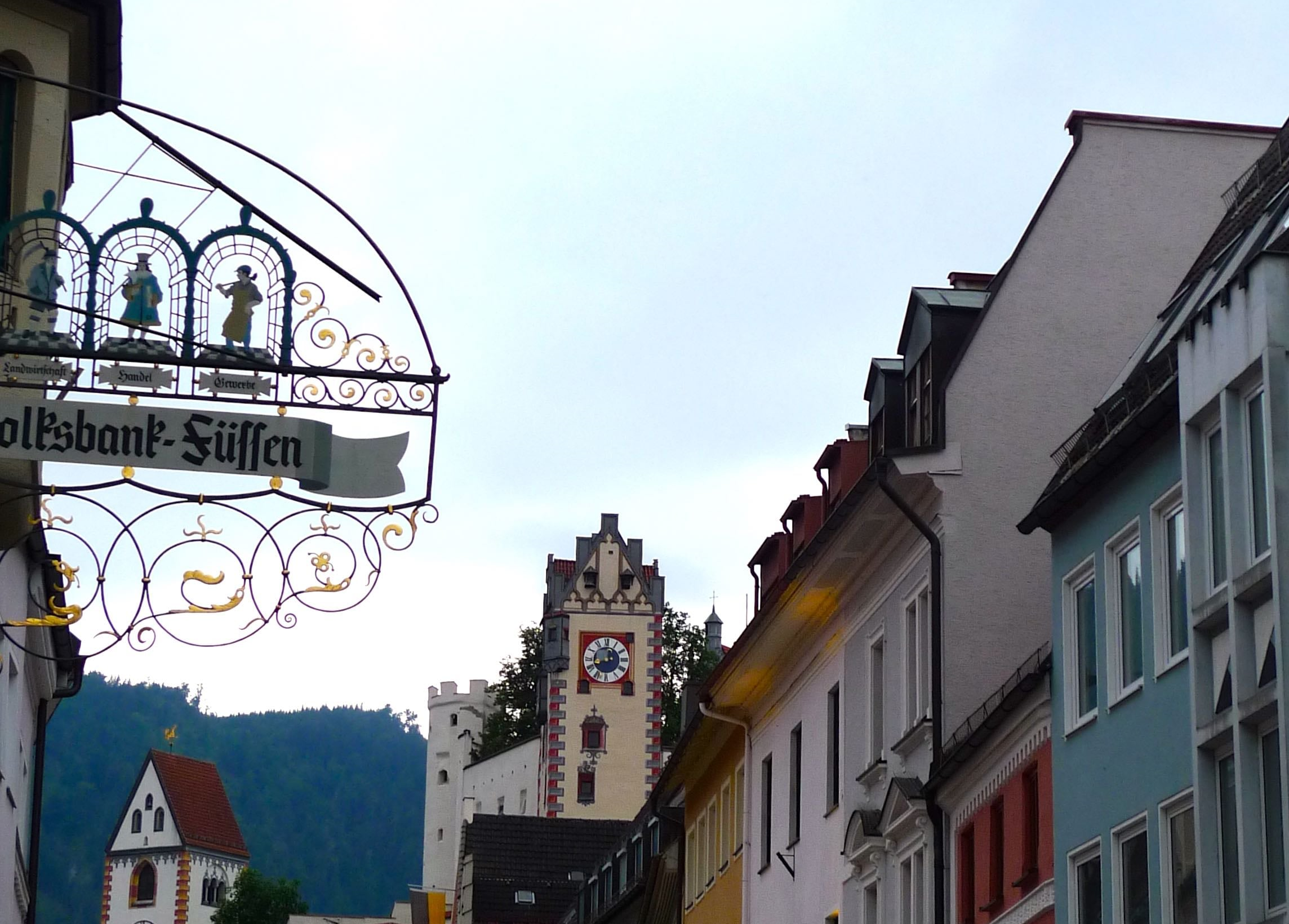
Füssen: a pretty town which we saw twice

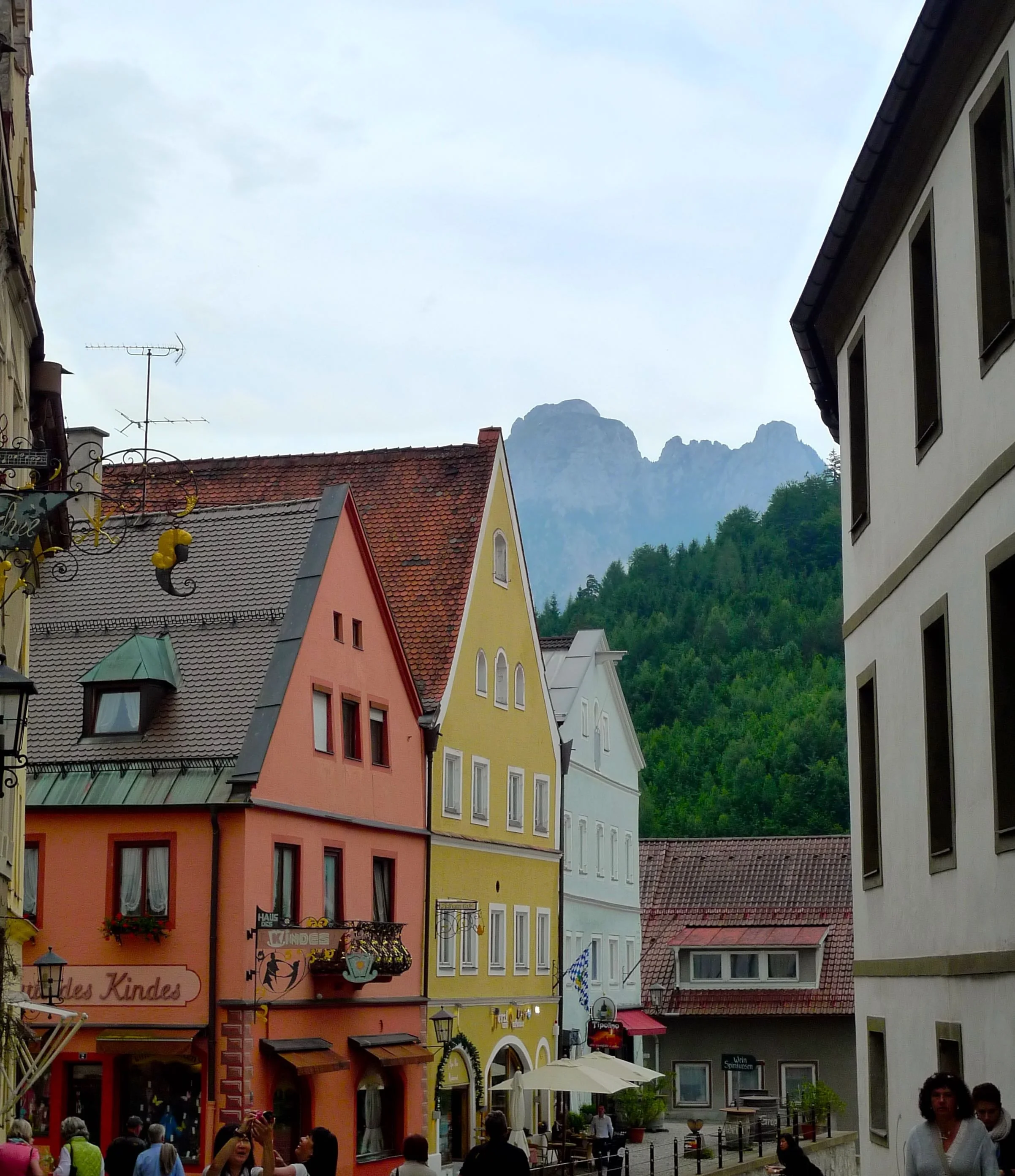
Yes, we're back in Germany for a blog post or two this week as I realised when I looked back at 2015 in photos that I didn't quite finish sharing pictures from our trip to Bavaria last June. Füssen was where we picked up our bikes and headed off on our cycle tour, as well as being our finishing point. It's a pretty town and it was on our second visit  - after all the cycling - that we got to see more of it and appreciate its personality.

It nestles at the foot of the Bavarian Alps and I've since learnt is the highest town in Bavaria at over 800m above sea level. As well as being our starting point for the cycle tour, it's also the southern starting point of the Romantische Straße and it's believed that the name Füssen comes from the Latin meaning "supply camp".  Interesting because if you remember we cycled along the Via Claudia Augusta cycle route - a route across the Alps which follows an ancient Roman road - on our first day. 

As I said, it's a pretty town, look:

fussenbuildings.jpg

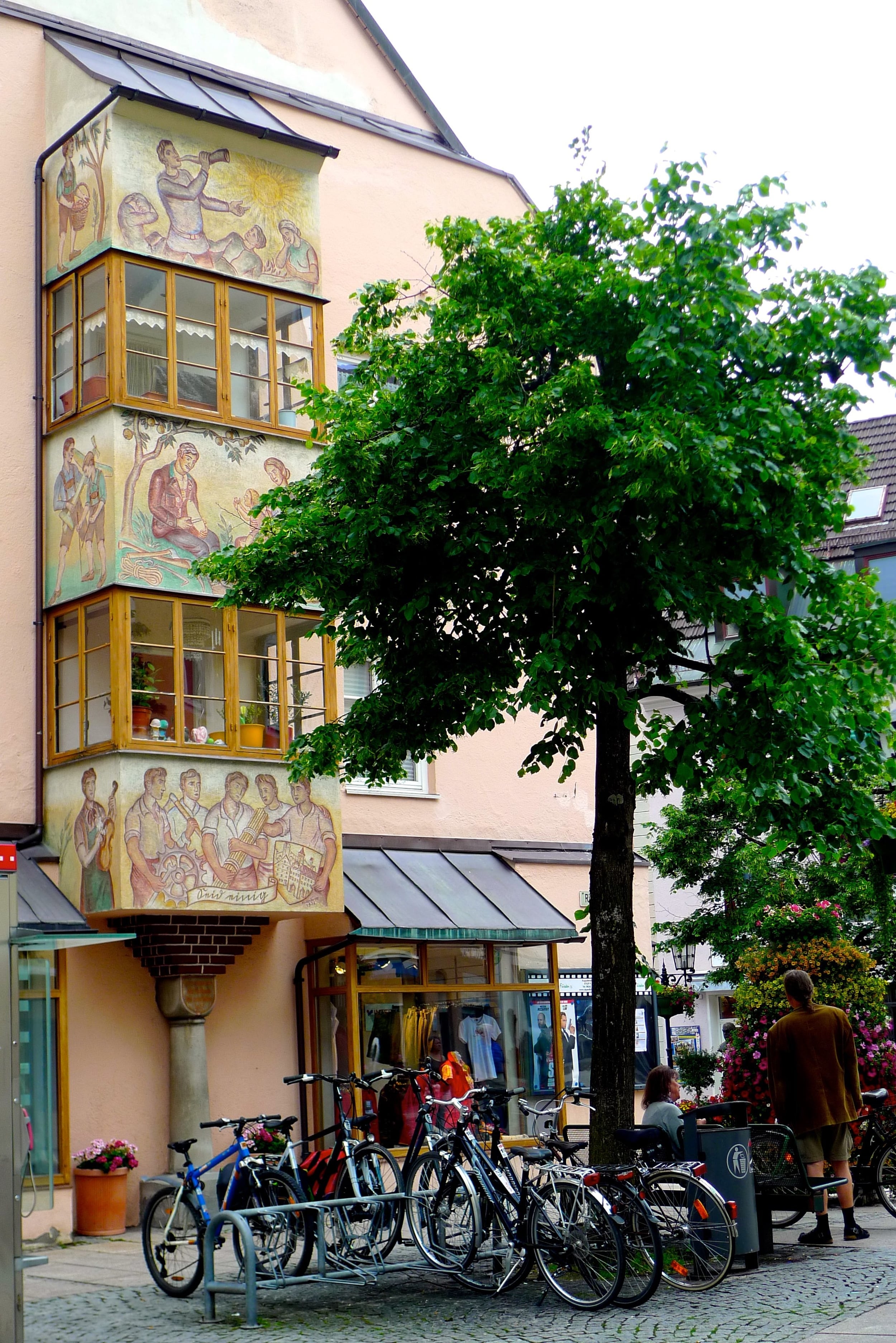
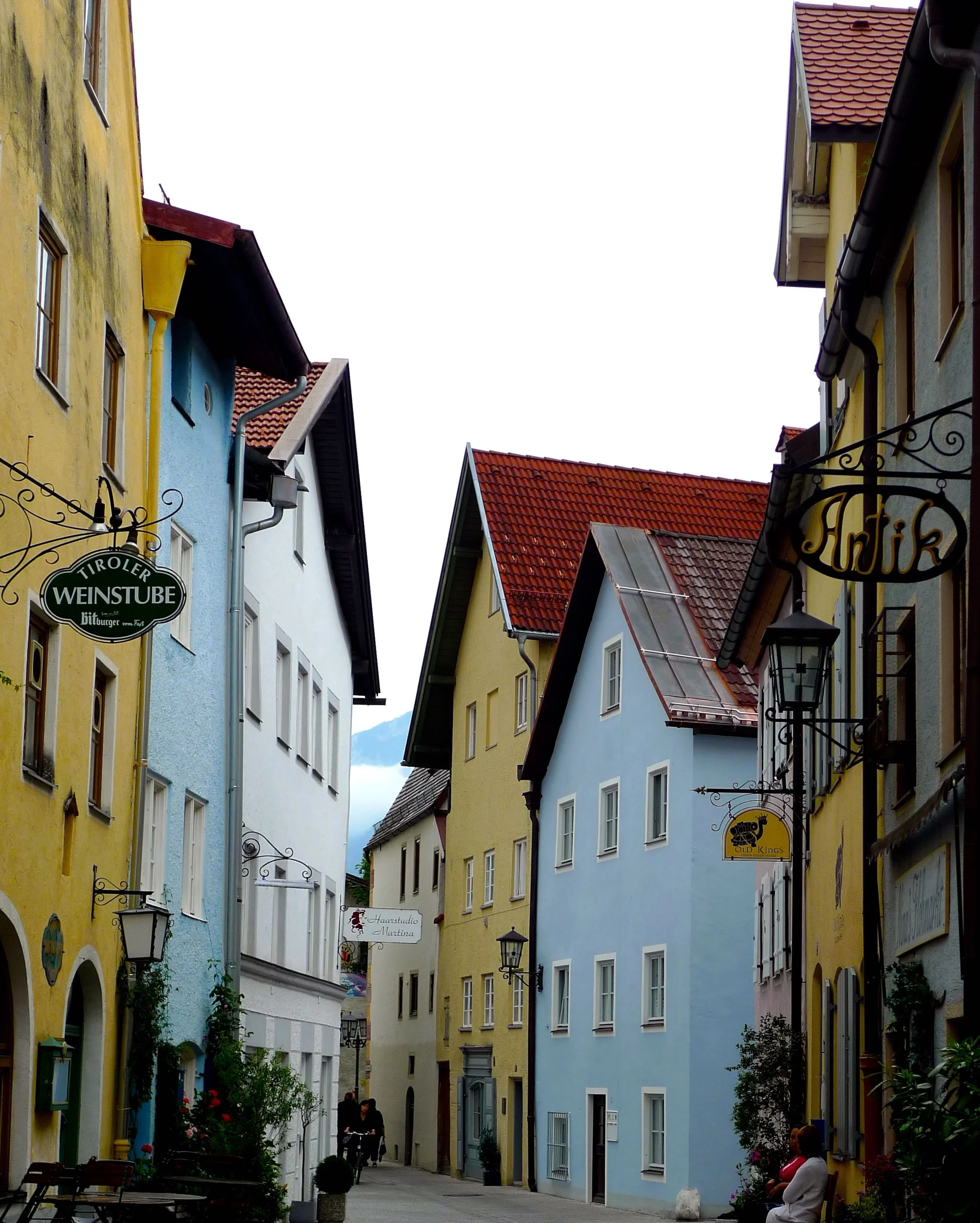
Like many of the Bavarian towns we visited it's buildings are painted more imaginatively than ours in the UK.  

Fussen Clock Tower

It's also well set up for cyclists, this was just one of the bike racks I spotted. 

fussencycles&decoratedbuildings.jpg
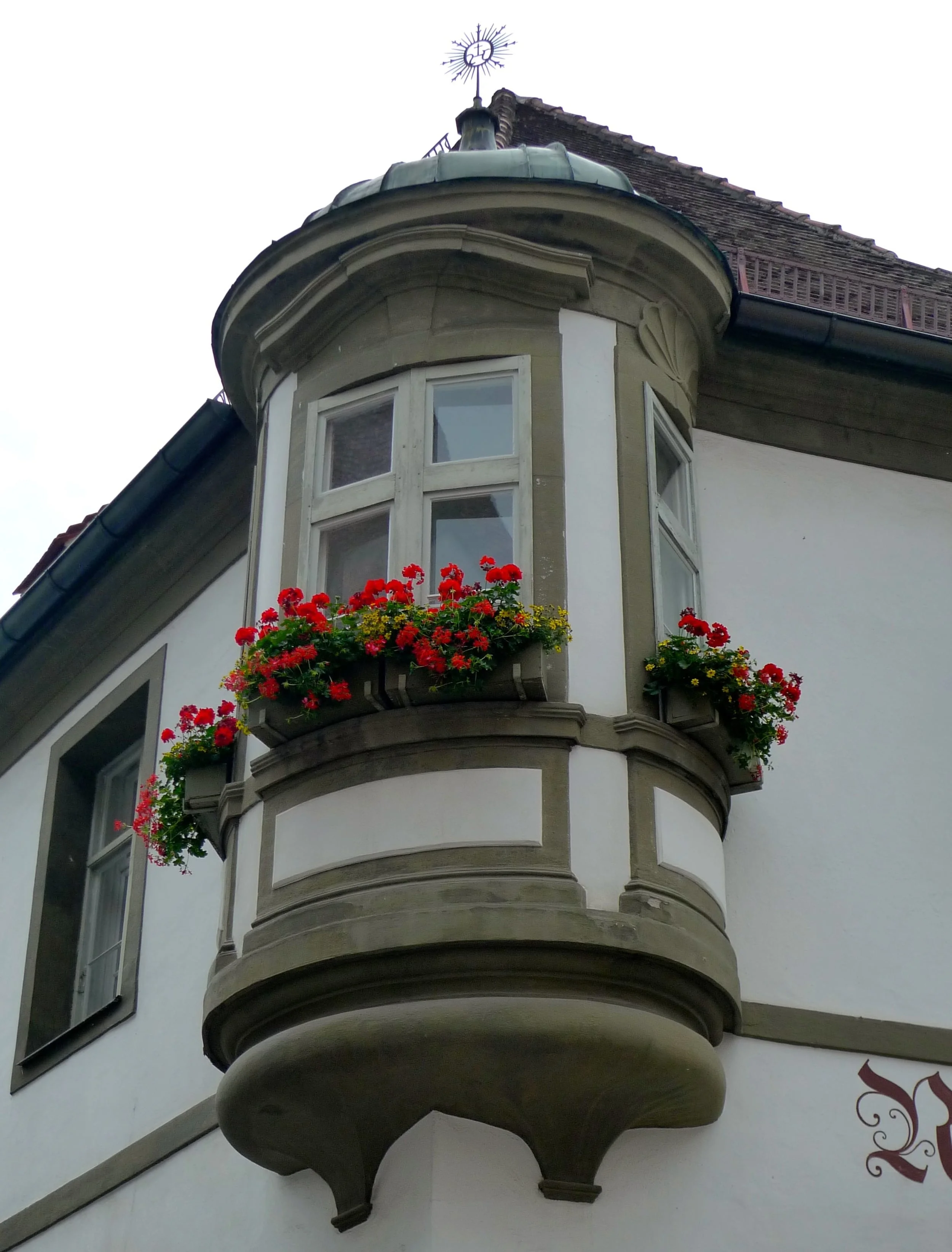
windowboxes.jpg
HOW PRETTY AND INVITING? 

HOW PRETTY AND INVITING? 

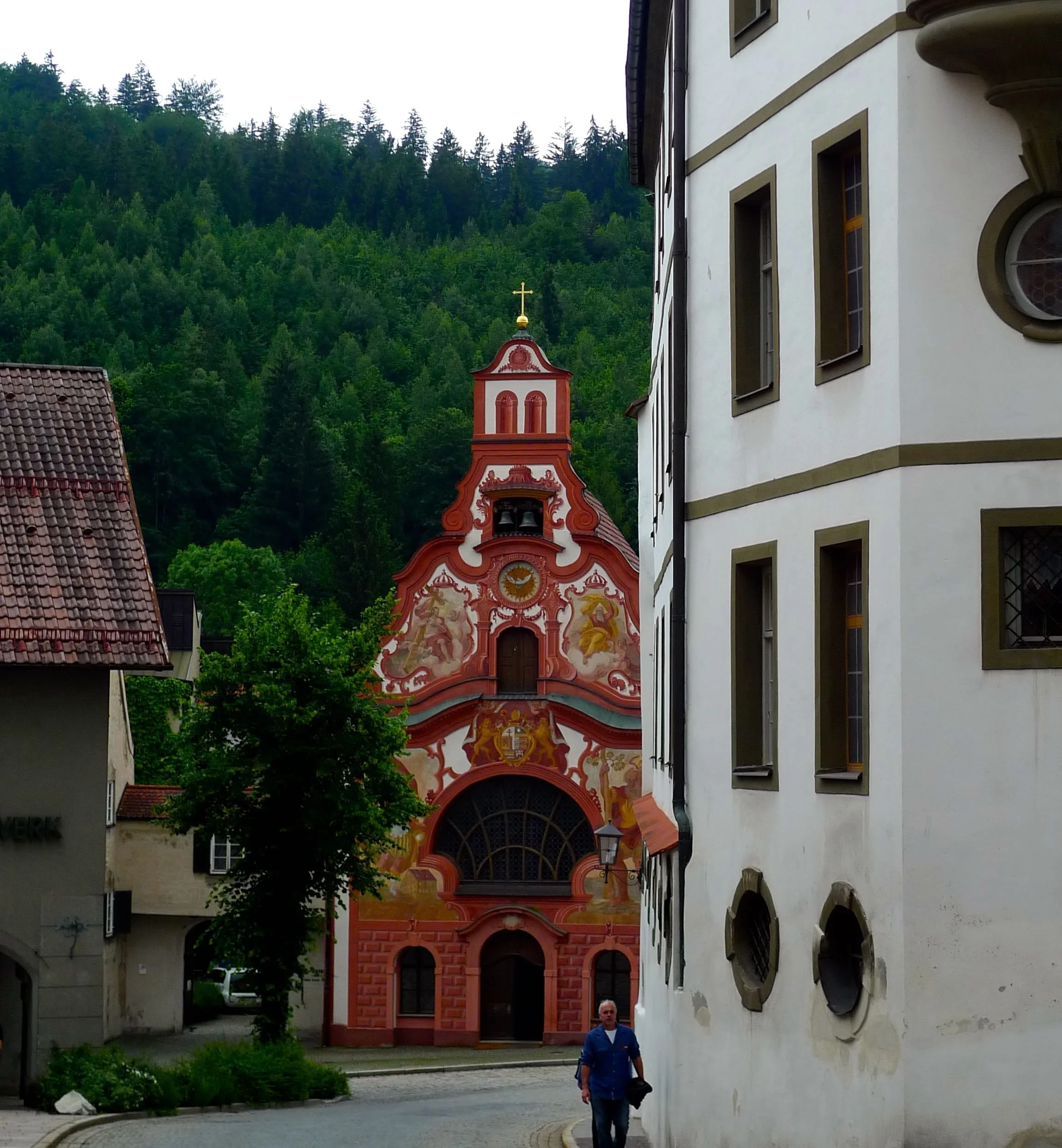
I remember for the second day, the cycling notes said to turn left just before the red church, when we read this  the night before we thought it was a bit random and hoped we'd spot the red church, and our turning. The next day we realised we'd have struggled to miss this beautifully decorated church!

THERE WAS NO MISSING THE BEAUTIFUL RED CHURCH...

THERE WAS NO MISSING THE BEAUTIFUL RED CHURCH...

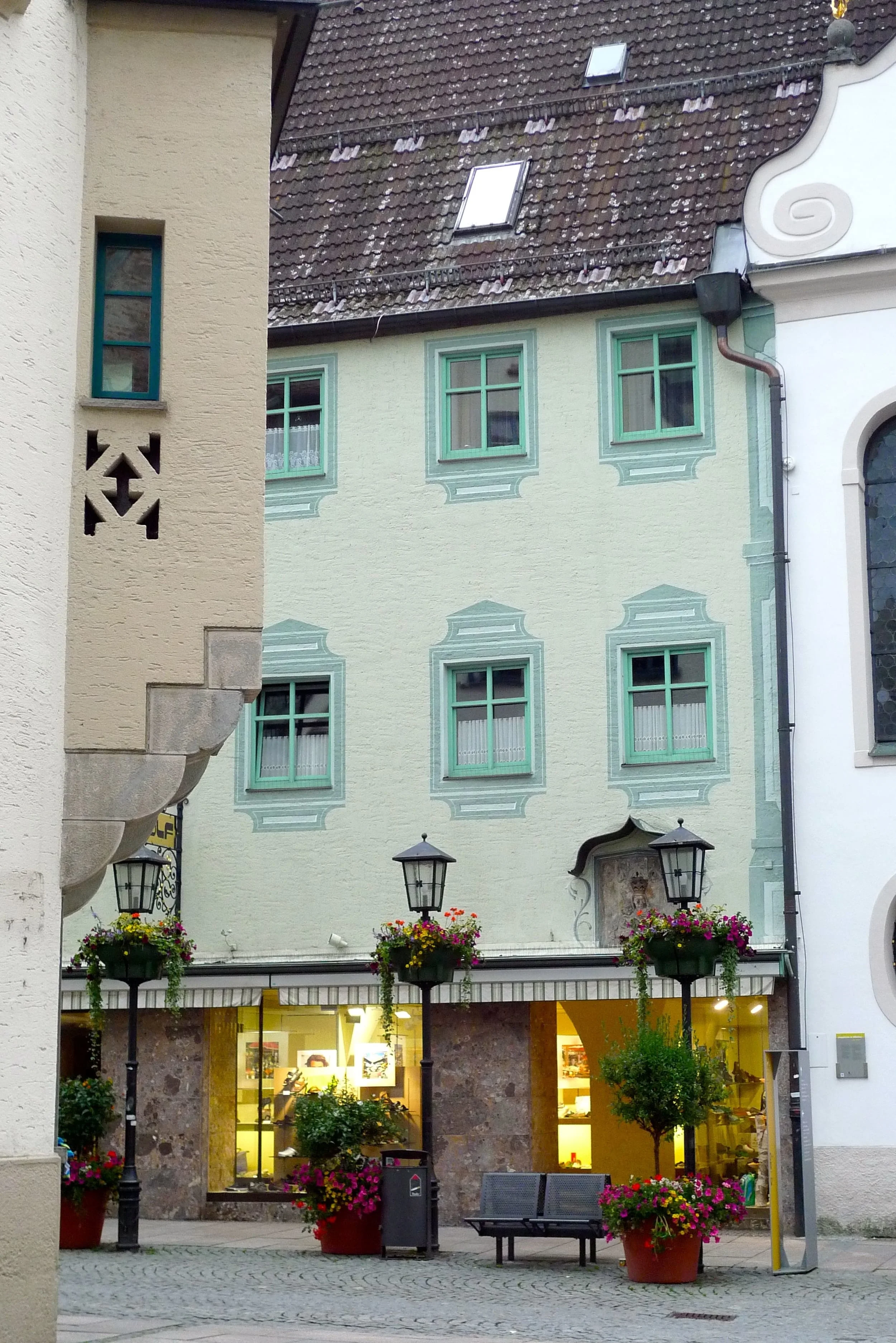
pastelbuildings

The blues and the yellows of the buildings above look postcard perfect, and I can't help but wonder if just a little planning went into this street's overall look? Either way, it's stunning. 

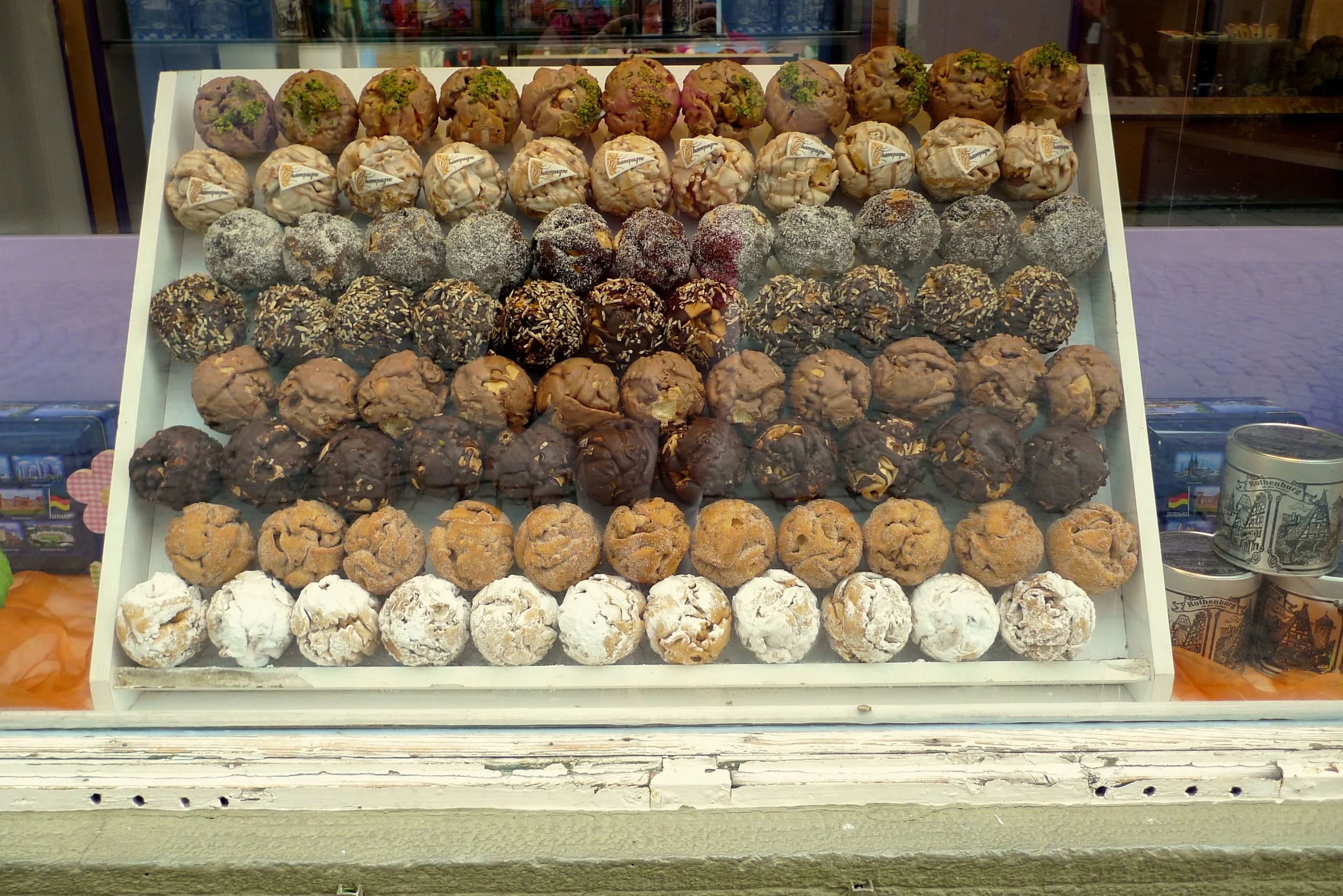
As we walked around we stopped and admired these in one of the shop windows, and wondered what they were. We soon found out that they were the town's speciality Snowballs. They're sweet and huge - a good handful, although you wouldn't want to be on the receiving end of this snowball if anyone threw it. They were pretty solid, and we could see how they got their name when we tried one. It was a mixture of pastry and filling, in layers much the way you'd create a snowball from snow. They weren't really to my taste, but I'm glad we tried one.

SNOWBALLS

SNOWBALLS

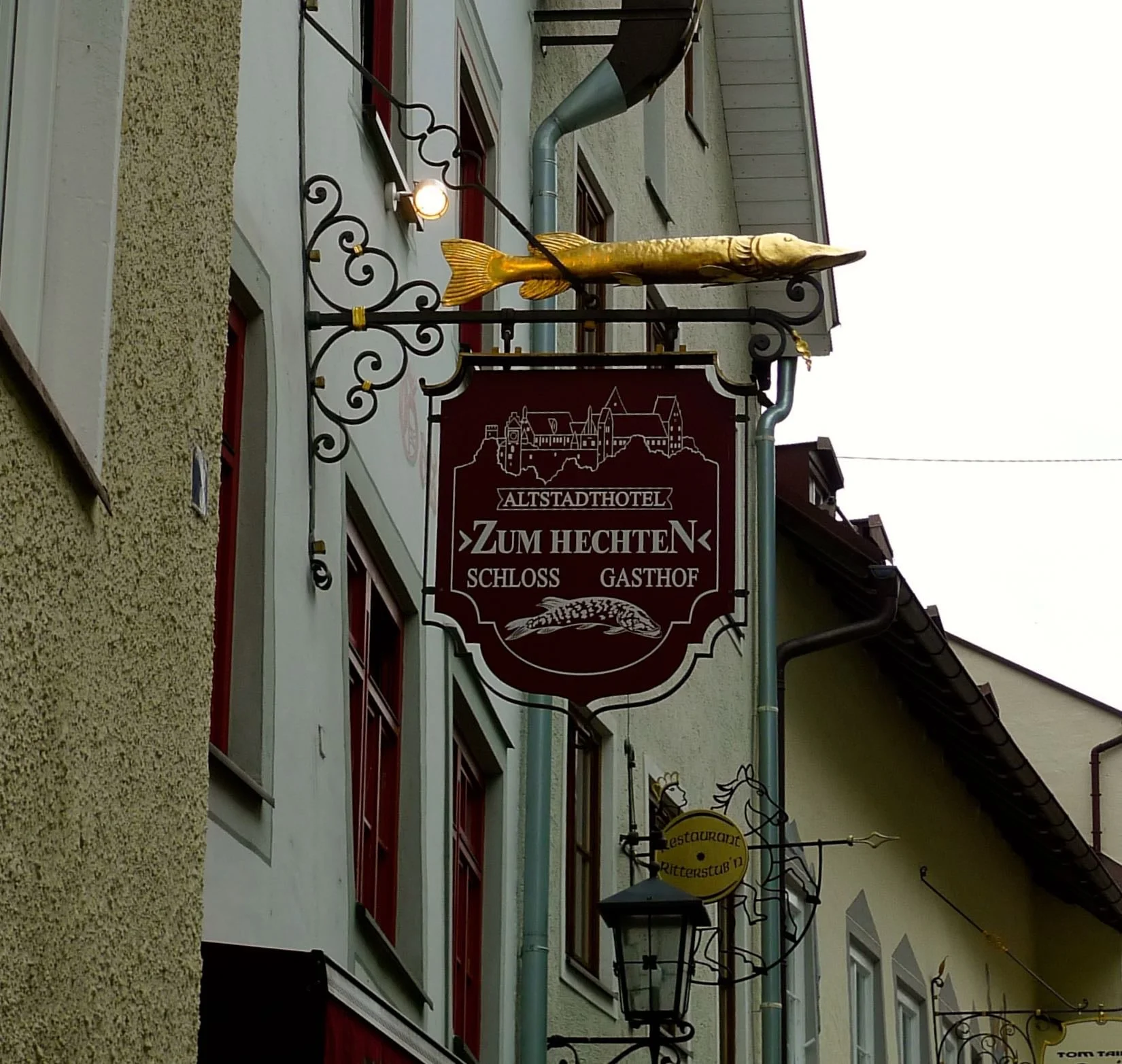
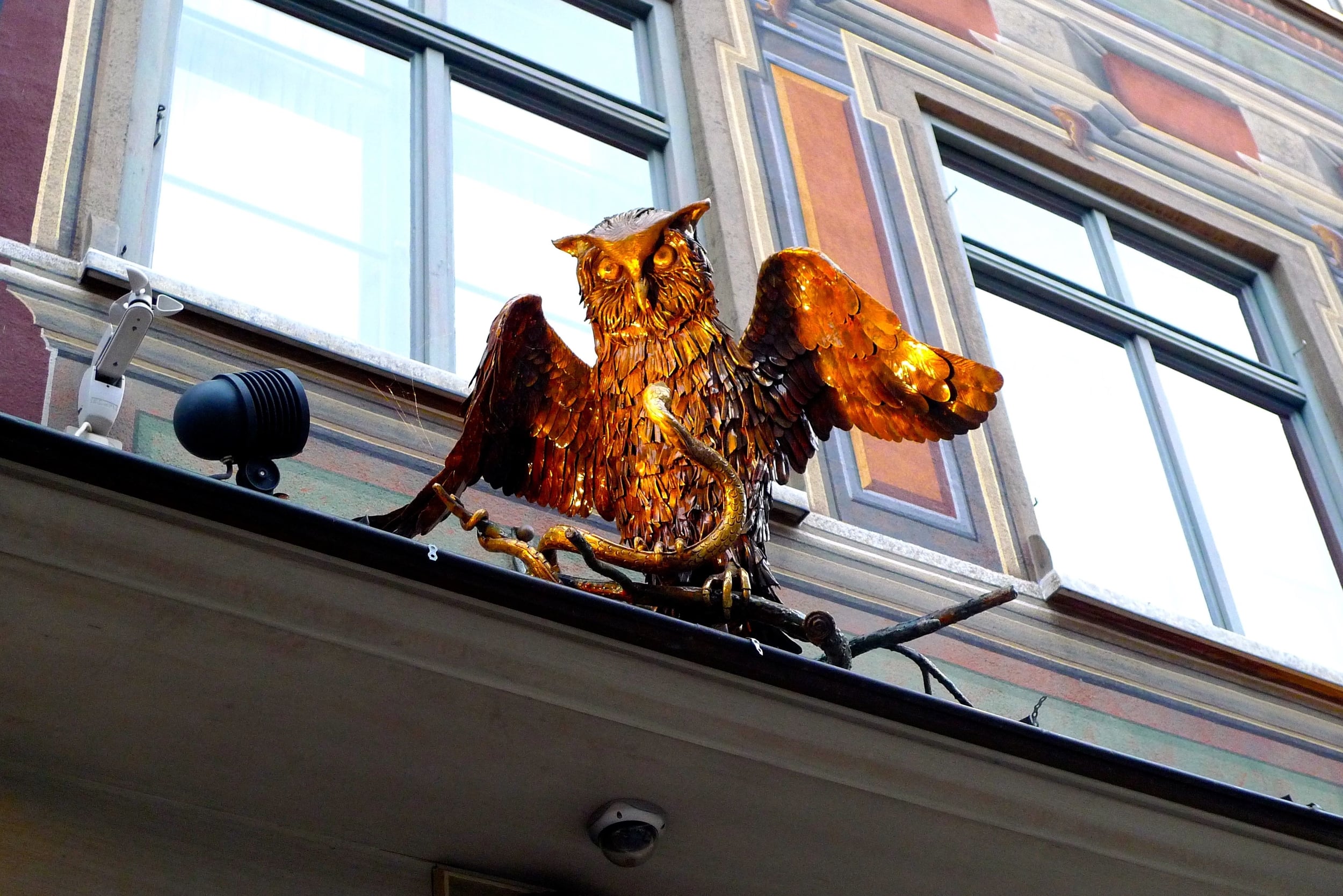
The other thing I noticed on our walk around Füssen was the signs hanging above the shops, here's just a small selection:

BavarianIronwork
ZumHechten
goldenowl.jpg
fussen

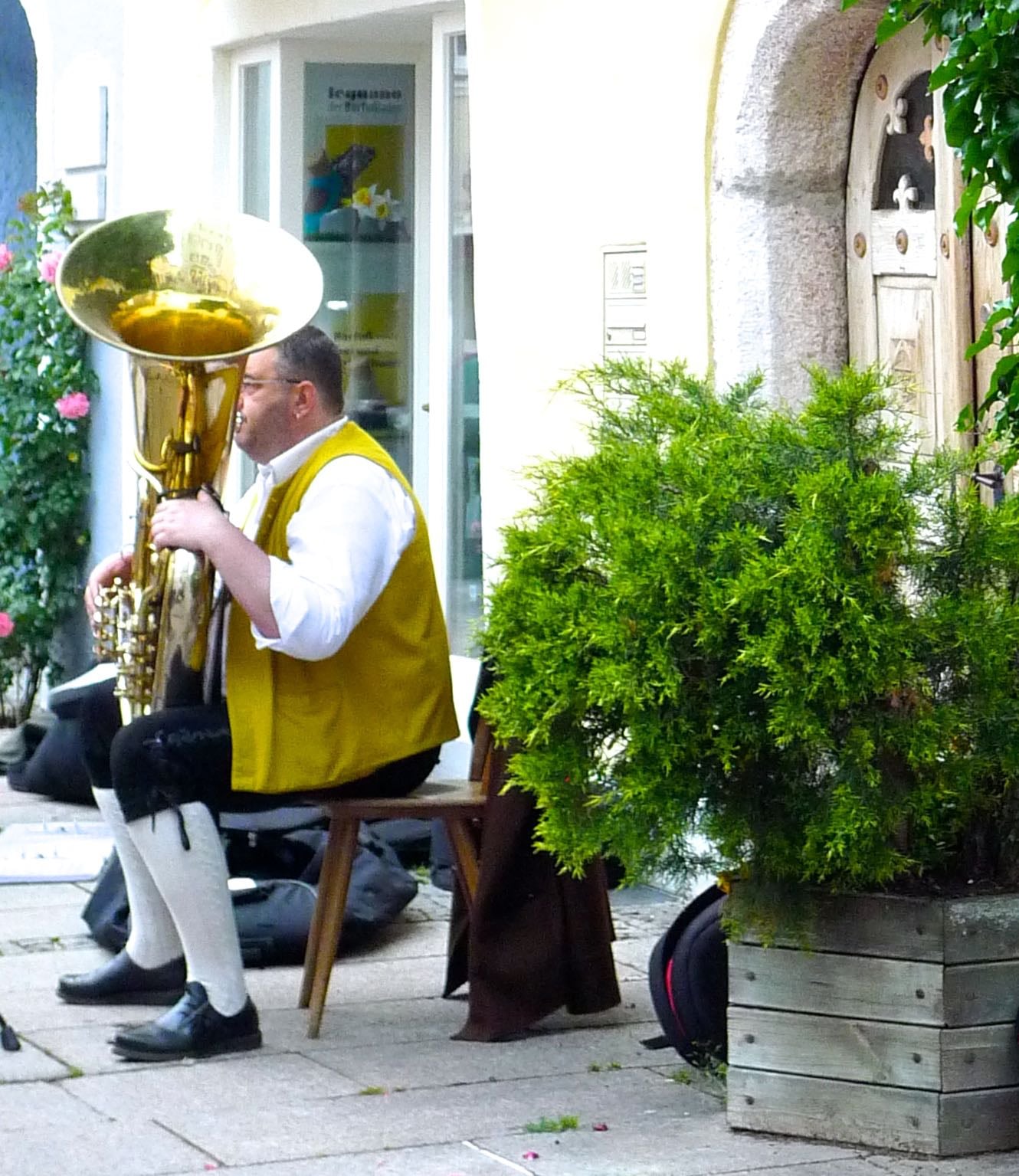
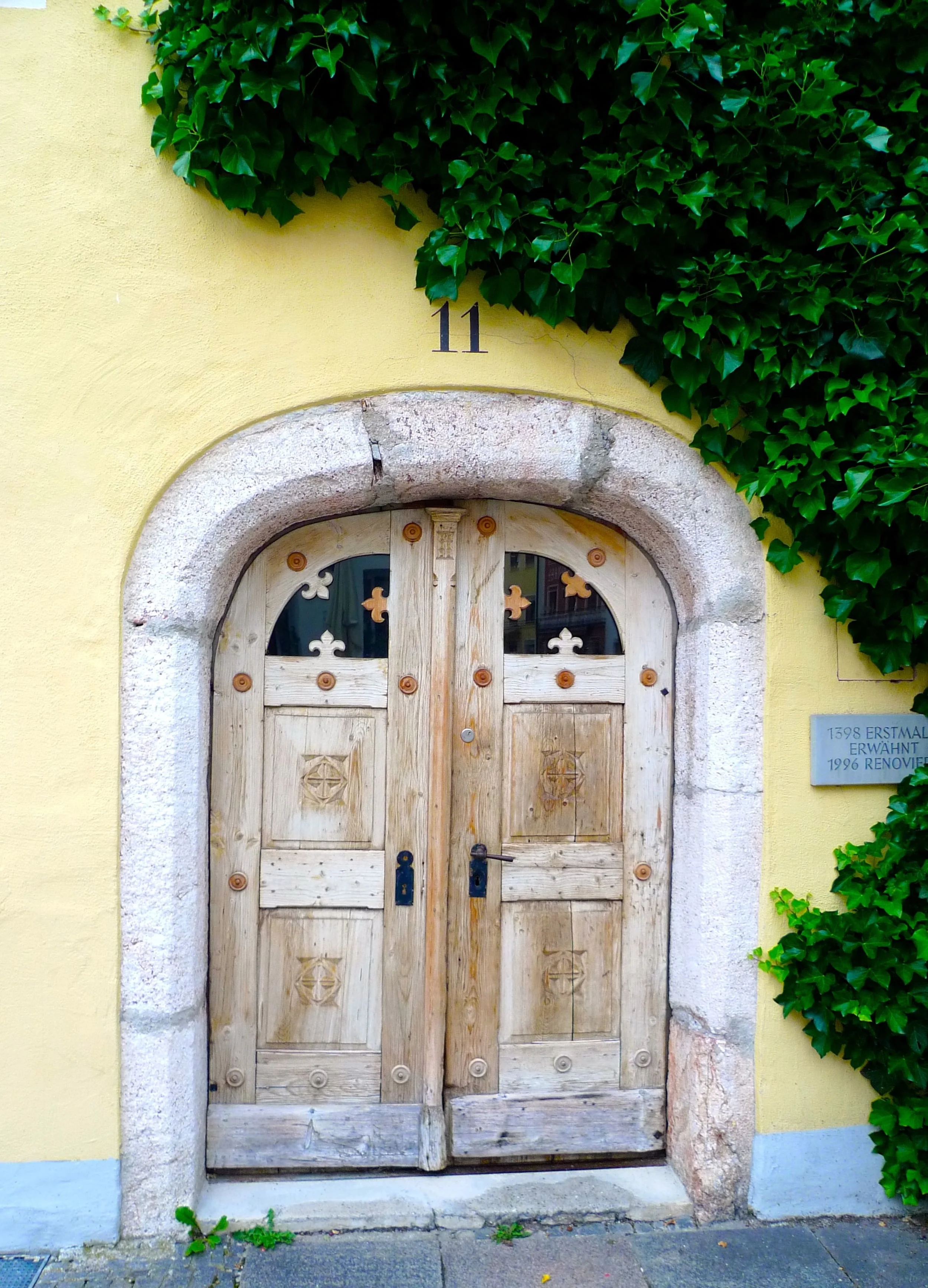
On Sunday I shared a couple of black and white pictures of the band that set up almost out of nowhere. It was a great end to our stay in Füssen and once we'd finished eating I decided to get some close ups of the band, the tuba player was my target. And then I noticed he was sitting outside a real life fairy door!

tubaplayer.jpg
ALifeSizedFairyDoor.jpg

And that is, I think a true reflection of this pretty town. Our next stop was Munich, in a few days I'll share what we got up to when we arrived there.

Post Comment Love

Christmas at the Geffrye museum

On Saturday we popped up to town and into the Geffrye museum in Shoreditch. I visited the museum of the home and had a great time - I haven't shared those photos yet, but I'll share more in the New Year. On that first visit I learnt that each of the rooms is decorated in the traditional style of the period it depicts, so I was keen to head back and see what this meant. 

I wasn't disappointed, it was fascinating.  

Deck the halls with boughs of holly

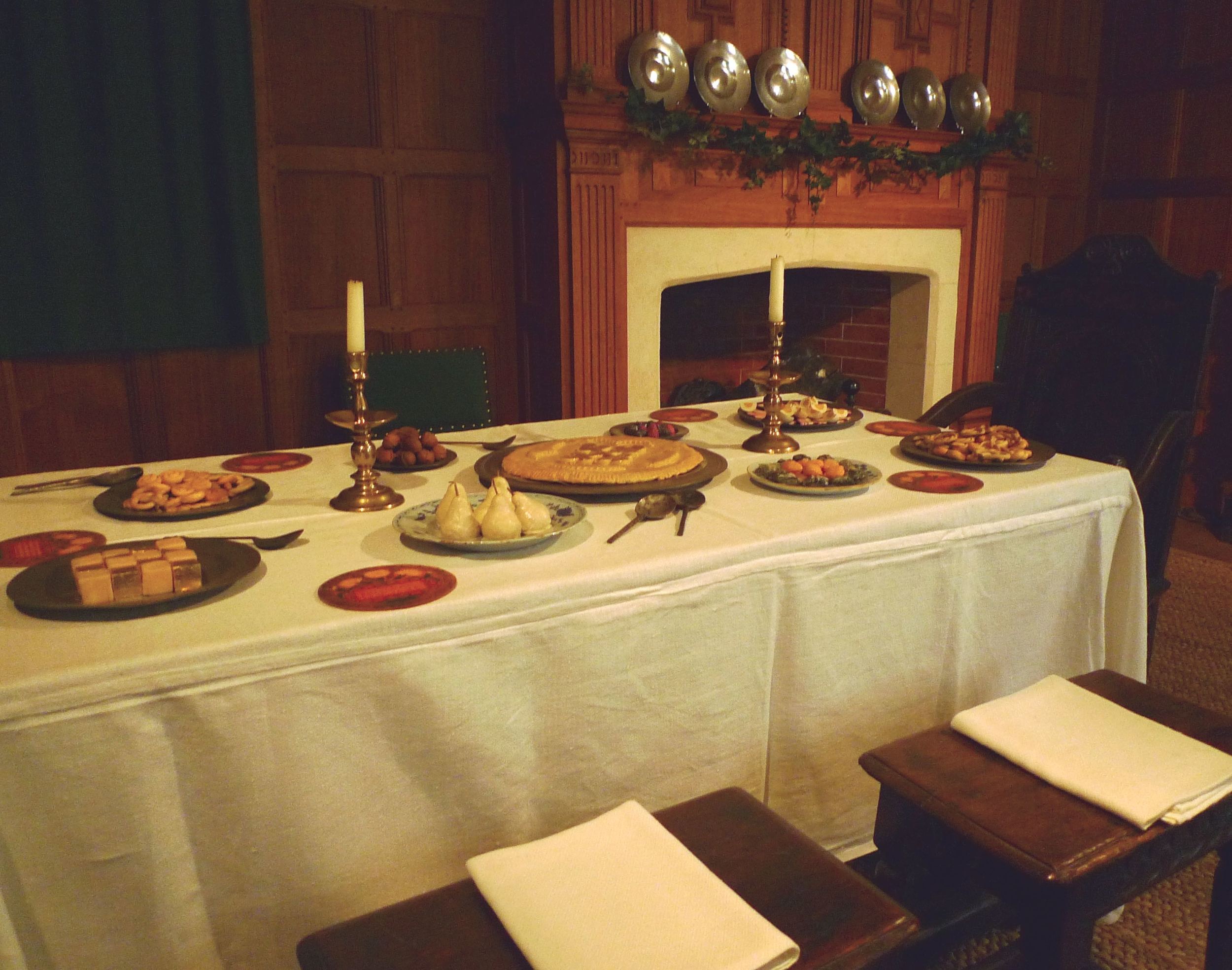
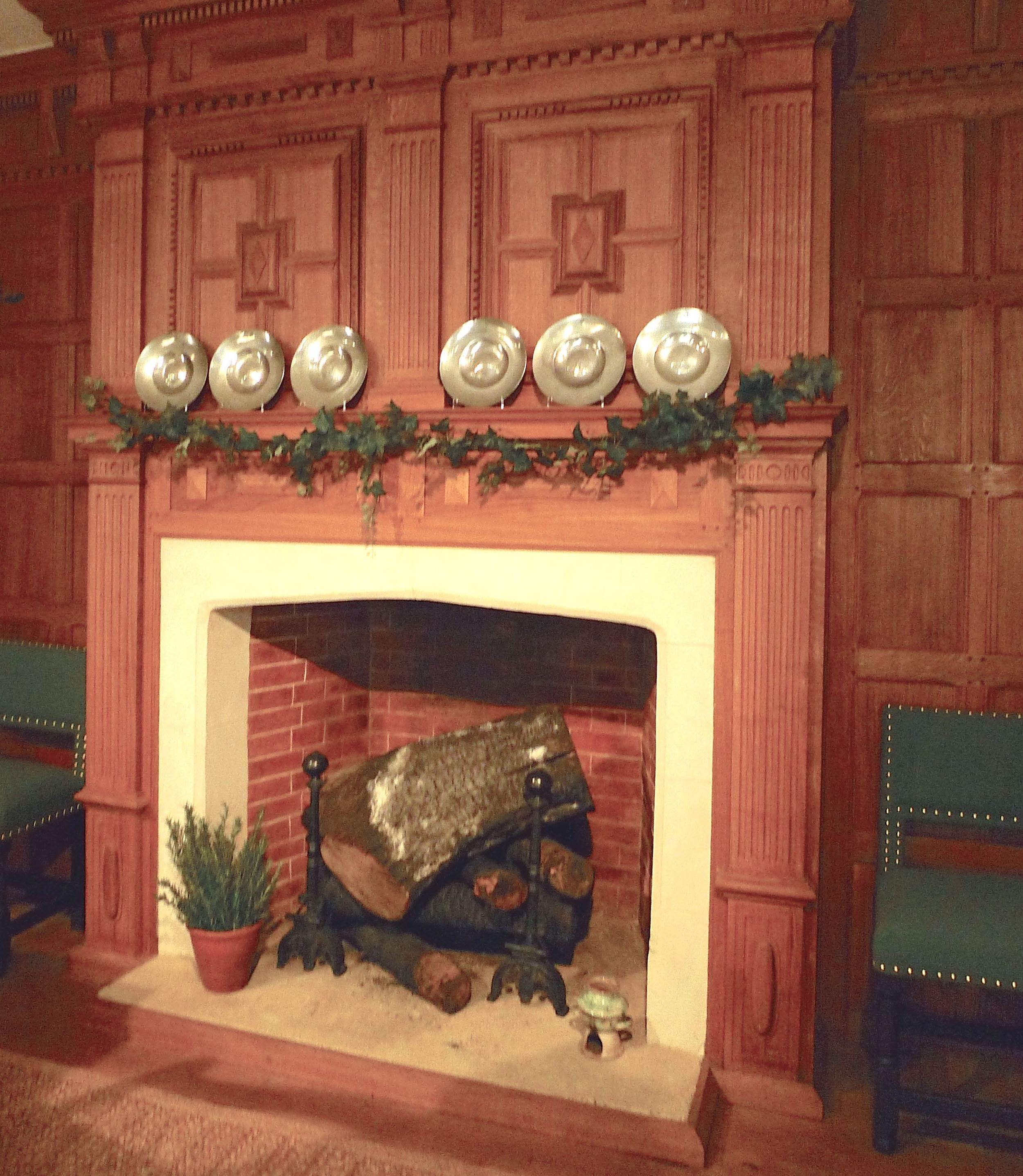
It's 1630 and we're in the Hall - or the main room - of a middling London home.  The room is decorated with evergreens, but it wouldn't have been done until Christmas Eve; while the evergreens were a Pagan custom the early Christians adopted them as a symbol of everlasting life. 

Food-wise the table is set with the second course - a mix of savoury and sweet dishes, quite something when sugar was regarded a luxury. Christmas lasted for Twelve Nights, starting on Christmas Day - it was a time of fun and New Year and Twelfth Night providing high points.  

A HALL IN 1630

A HALL IN 1630

We had Musick all the Afternoon

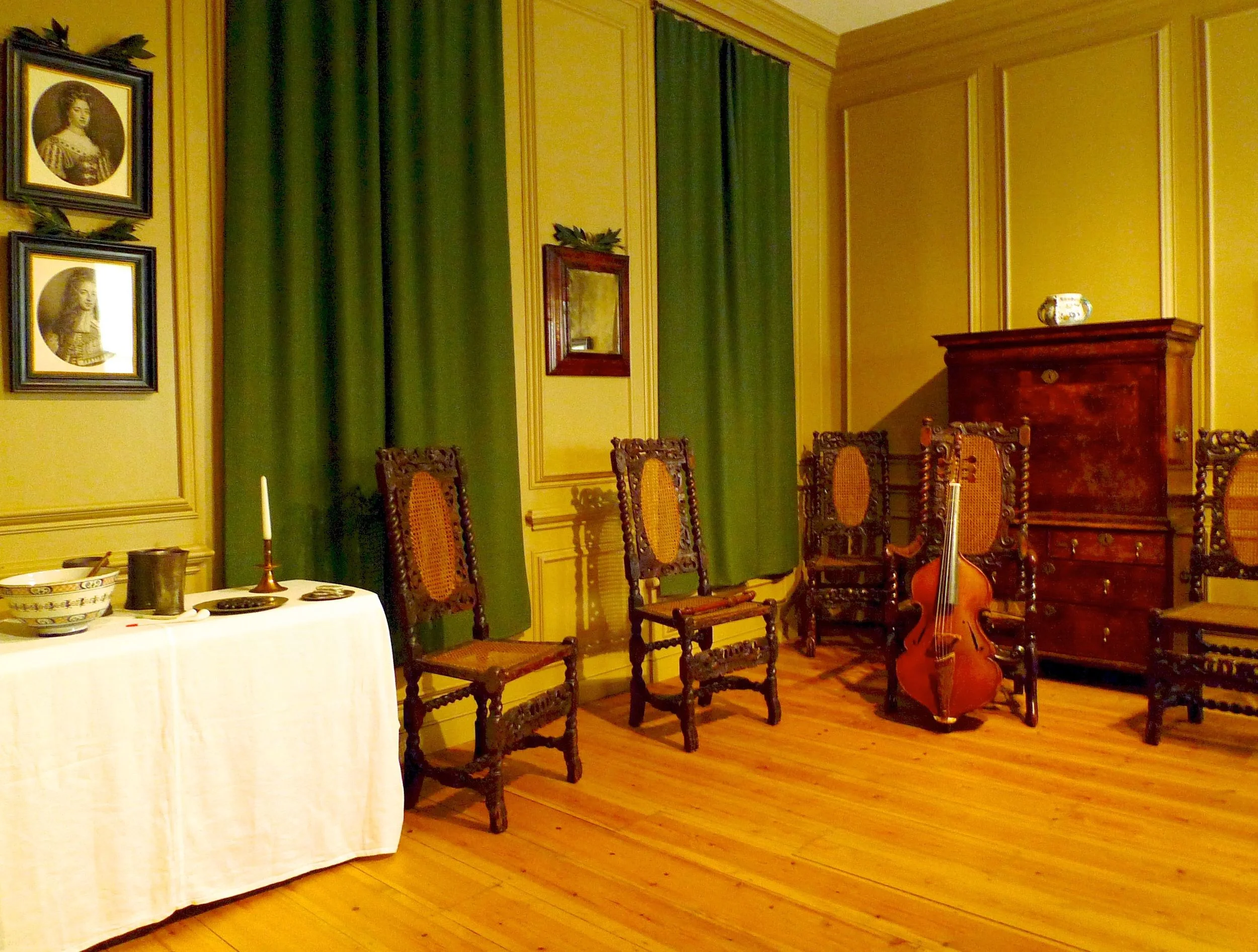
It's Christmas Day and we're now in the Parlour of a London townhouse in 1695. We'll spend the afternoon listening to music played on the viol and recorder before later going to the evening service at the church. There'll be dancing and fun, drinks of punch and snacks of apolives and anchovies and once again the room is decorated with evergreens.   

Christmas had been banned during this period, following the Civil War and this room shows a much understated celebration, because despite the ban there is evidence that people still celebrated privately. 

A PARLOUR IN 1695

A PARLOUR IN 1695

Two jellies and a glass of wine

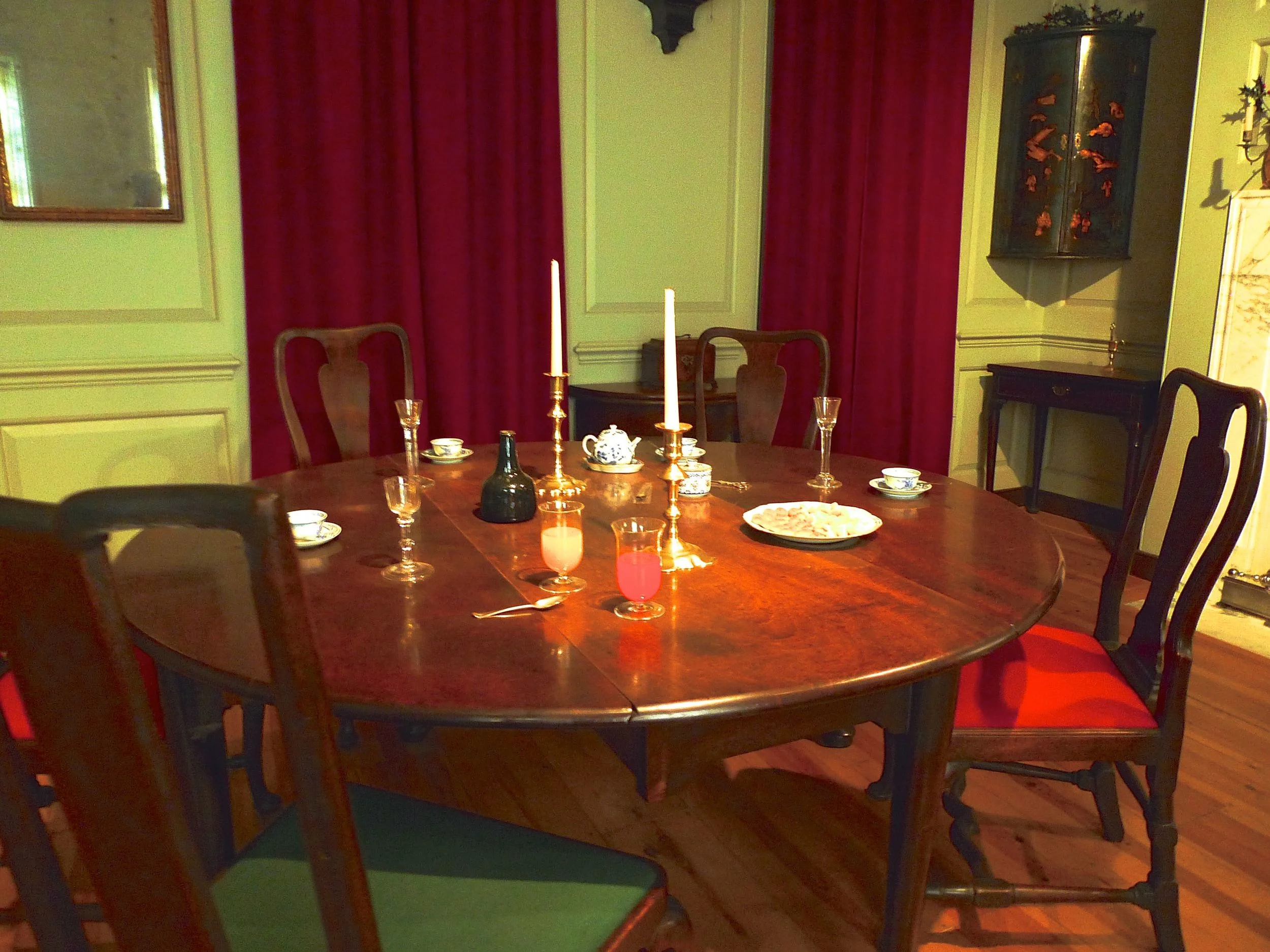
It's now the eighteenth century and this room - the Parlour- is set on an evening between Christmas and New Year where the family are taking supper. A friend calls and is offered two jellies and a glass of wine as he has missed supper. 

It's in this period that a French visitor remarked on the English custom of wishing each other a Merry Christmas and a Happy New Year and giving presents...

PARLOUR1745.JPG
PARLOURIN1745.JPG

Rost beef and Plumb Pudding

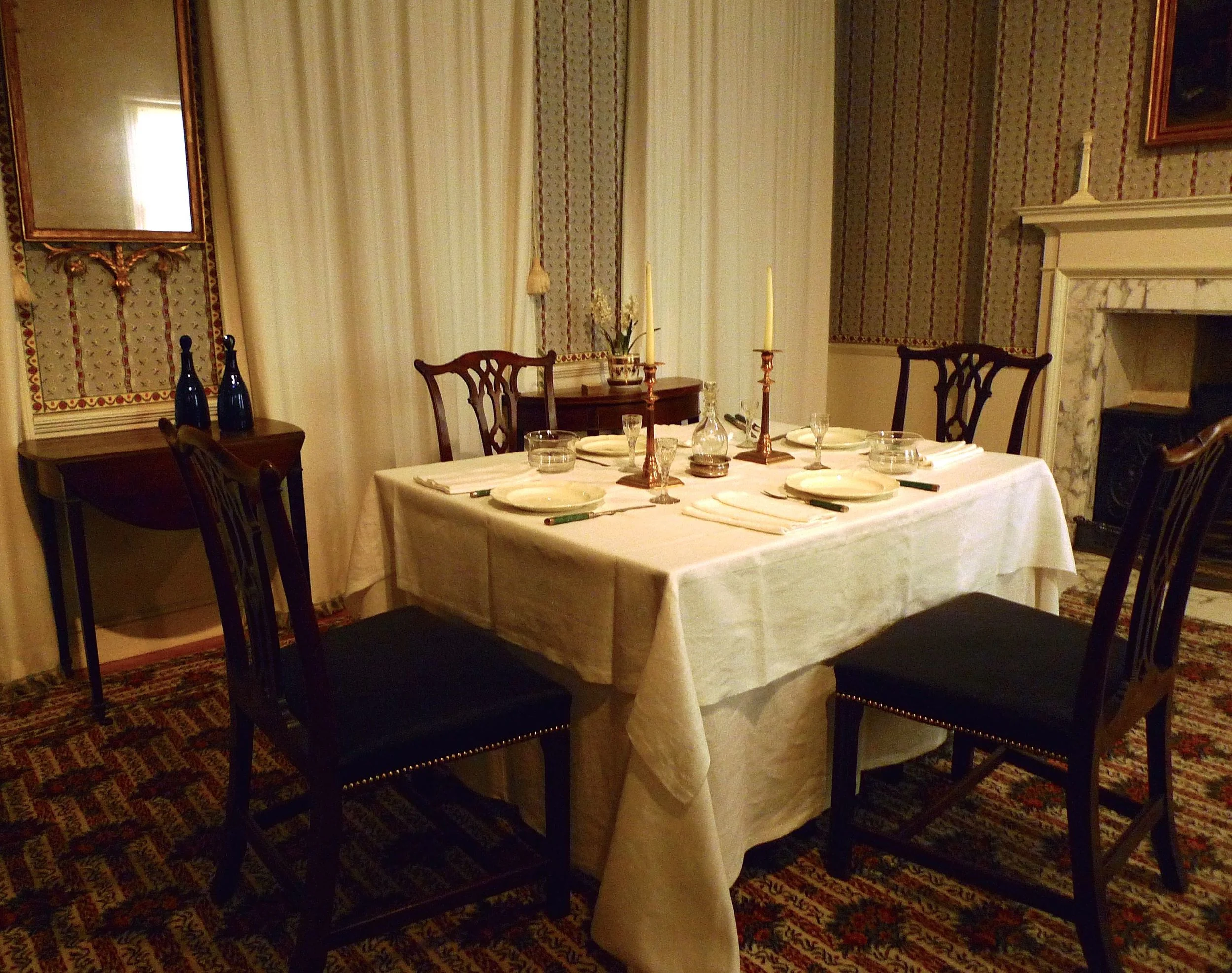
It's Christmas Day again (time is just flying past!) and we're about to have our traditional roast beef and plum pudding. Although turkey was introduced by 1530 it didn't replace beef as the main dish until the nineteenth century. And the plum pudding was served with the beef and not as dessert.  

PARLOUR1790.JPG

New Characters for Twelfth Night

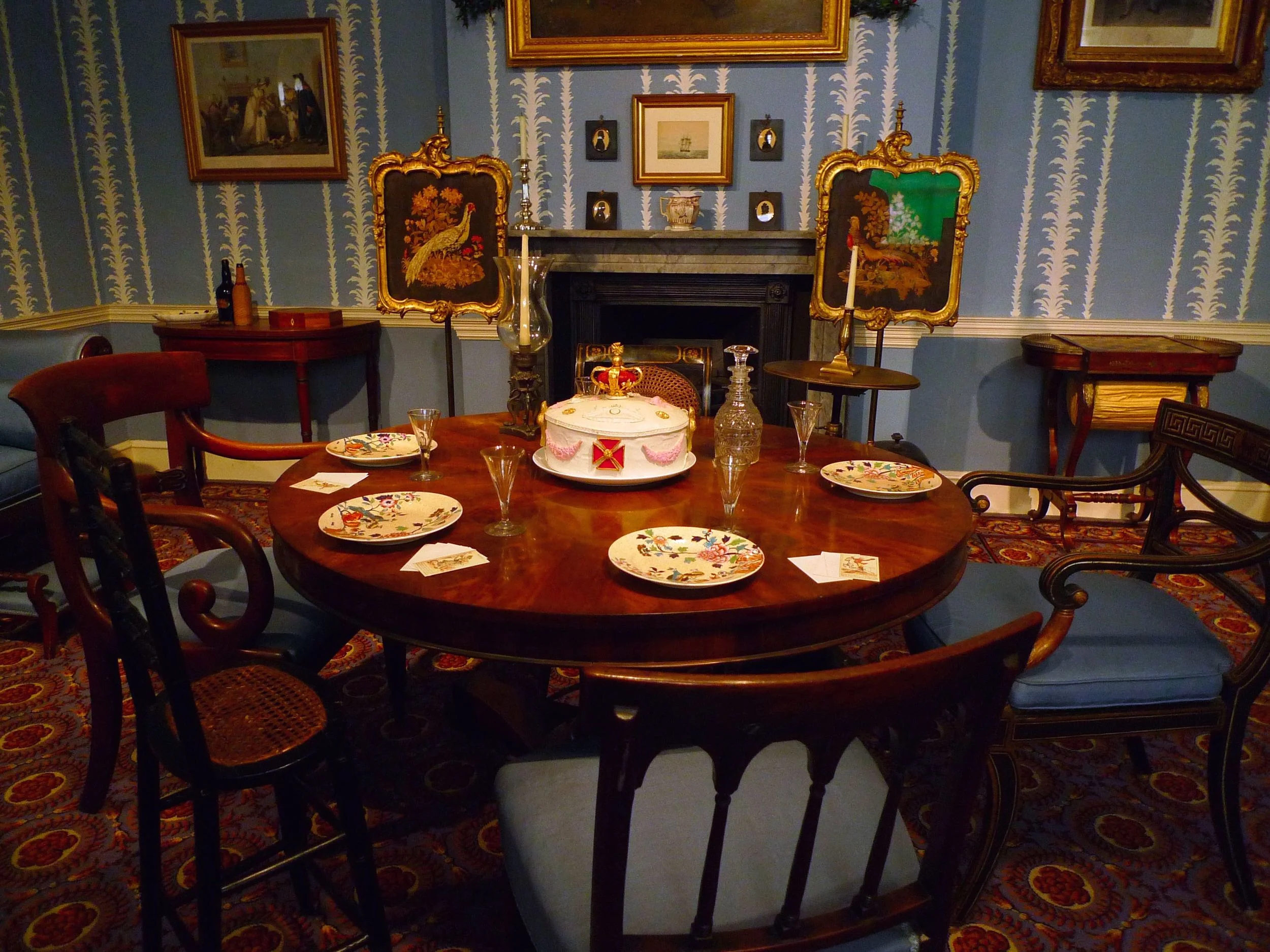
It's now 1830 and we're in one of my favourite rooms at the Geffrye museum, I just love the colour of it, isn't it great? Anyway we're celebrating Twelfth Night in this Drawing room. By the nineteenth century the Christmas celebrations were becoming more elaborate again with old traditions reappearing and the Twelfth Night game became more like the modern day charades. The cake became more elaborately decorated with sugar frosting and gilded paper trimmings, now there's a tradition I'm happy with!

A DRAWING ROOM IN 1830

A DRAWING ROOM IN 1830

O Christmas Tree, O Christmas Tree

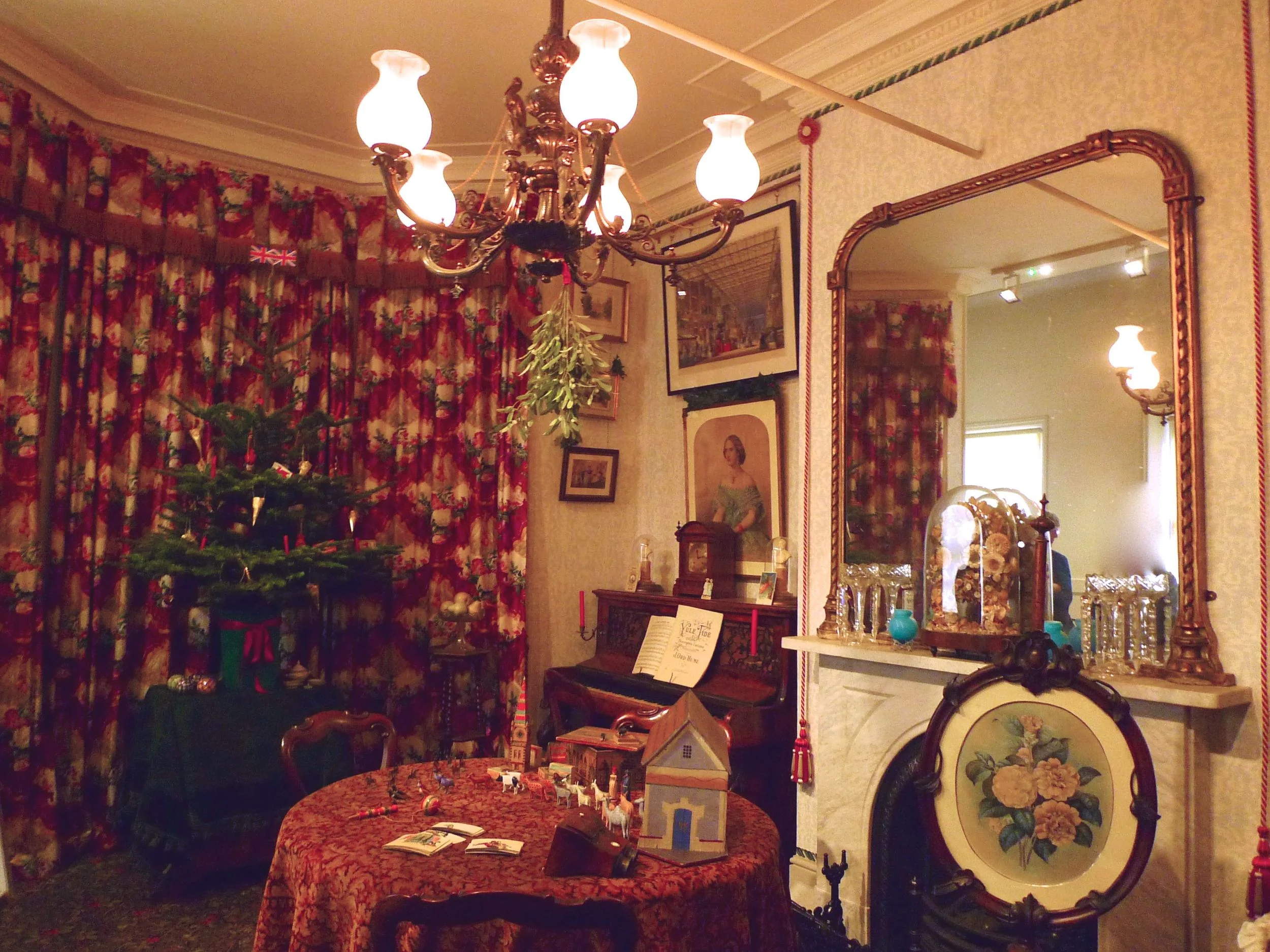
 We're now in a Vicorian Drawing room for a family gathering in the evening of Christmas Day. The room is dominated by the Christmas tree which the family have decorated and placed presents underneath. It's during Queen Victoria's reign that many of our current day Christmas traditions started.

It's thought that Prince Albert's enthusiasm for the Christmas tree helped embed it into Christmas traditions, and while he is often credited with introducing it, it's more likely that it was Queen Charlotte, the German wife of George lll who did that. 

And while I'm not quite that old the rooms are starting to resemble a Christmas I am more familiar with.  

DRAWINGROOM1870.JPG

Wishing you an utterly charming time

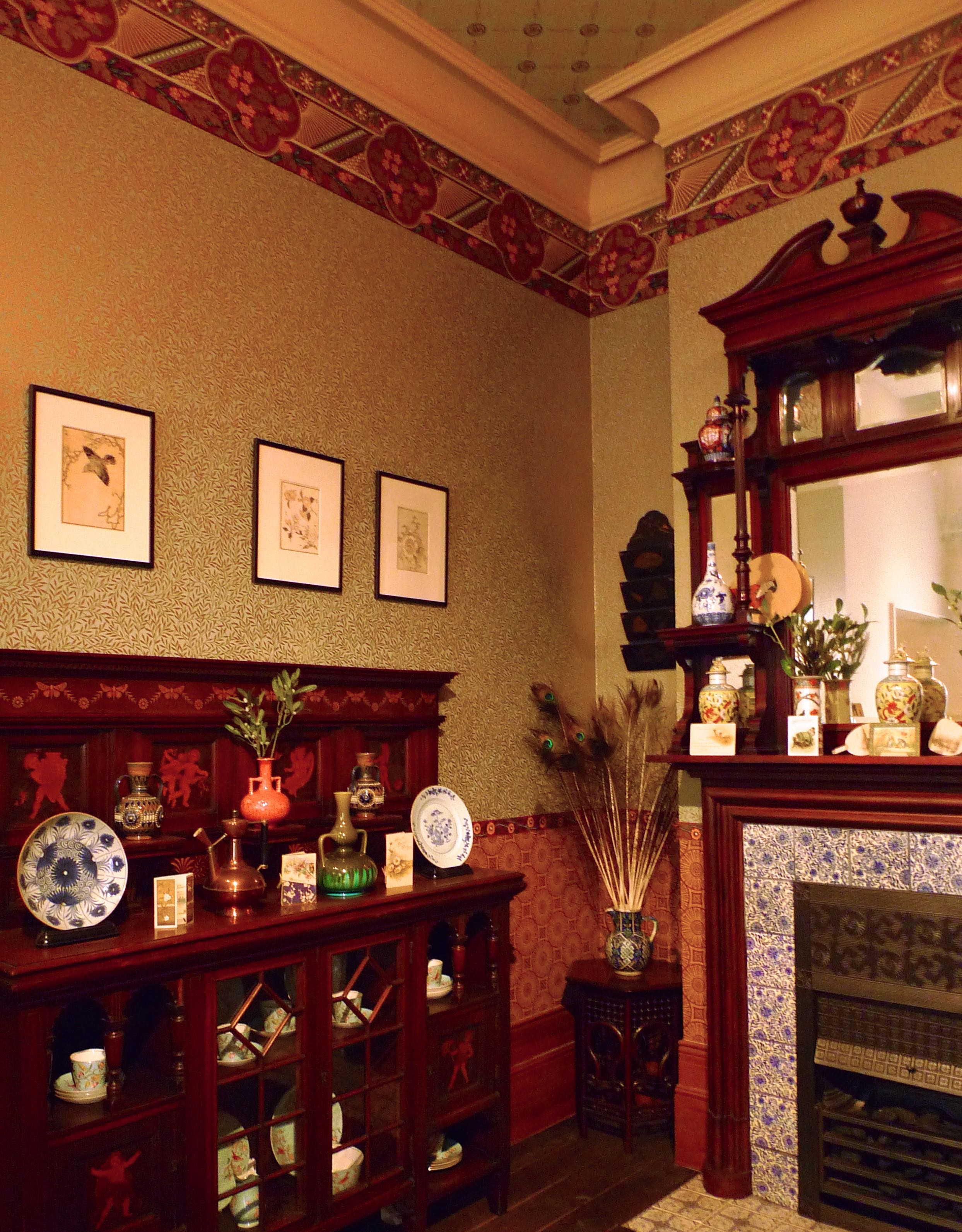
 In this room we're with a family celebrating Christmas in a more artistic manner; their decorations are inspired by the Aestheic Movement and it's love of all things Japanese.  The Christmas card - and English invention - is prevalent here too. The first commercial card appeared in 1843, but it wasn't until the 1860s that it became more common to send cards.

By 1880 the Post Office were inundated with cards to deliver and they started to urge people to "post early for Christmas" although in 1880 it meant on the morning of December 24th!

ATHOMEIN1890.JPG

The stockings were hung by the chimney with care

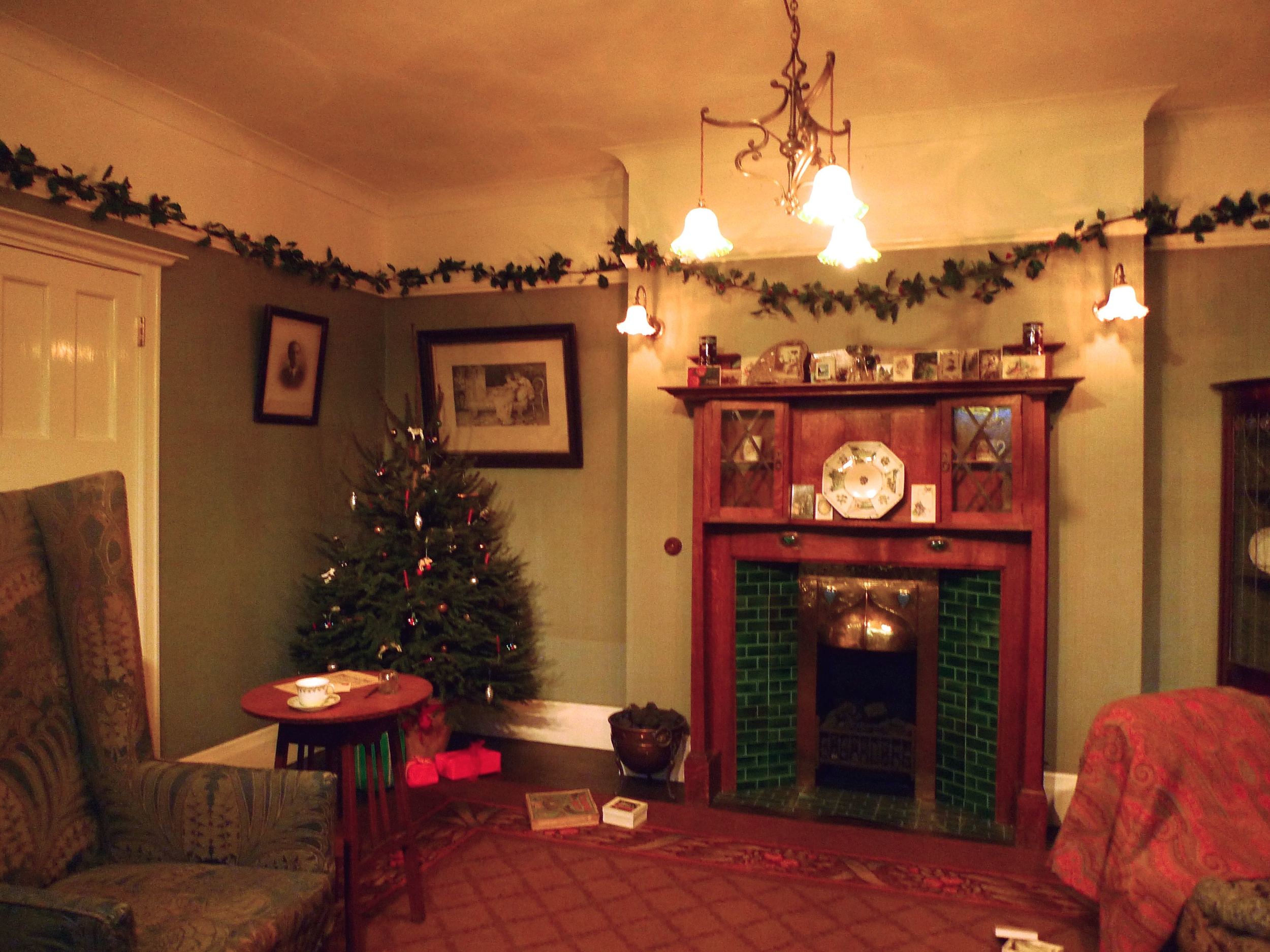
 This next room reminds me of my previous house, not exactly the same but definite similarities. We're in the Drawing room, on Christmas Eve with a young family. The shopping has been completed on a bustling Oxford Street and now the young mum is home where she's decorated the tree with ropes of holly, with help from the maid. She's stopped for a well earned cup of tea before hanging the children's stockings on the fireplace - a new tradition adopted from America.

AN EDWARDIAN CHRISTMAS

AN EDWARDIAN CHRISTMAS

I've been to a marvellous party

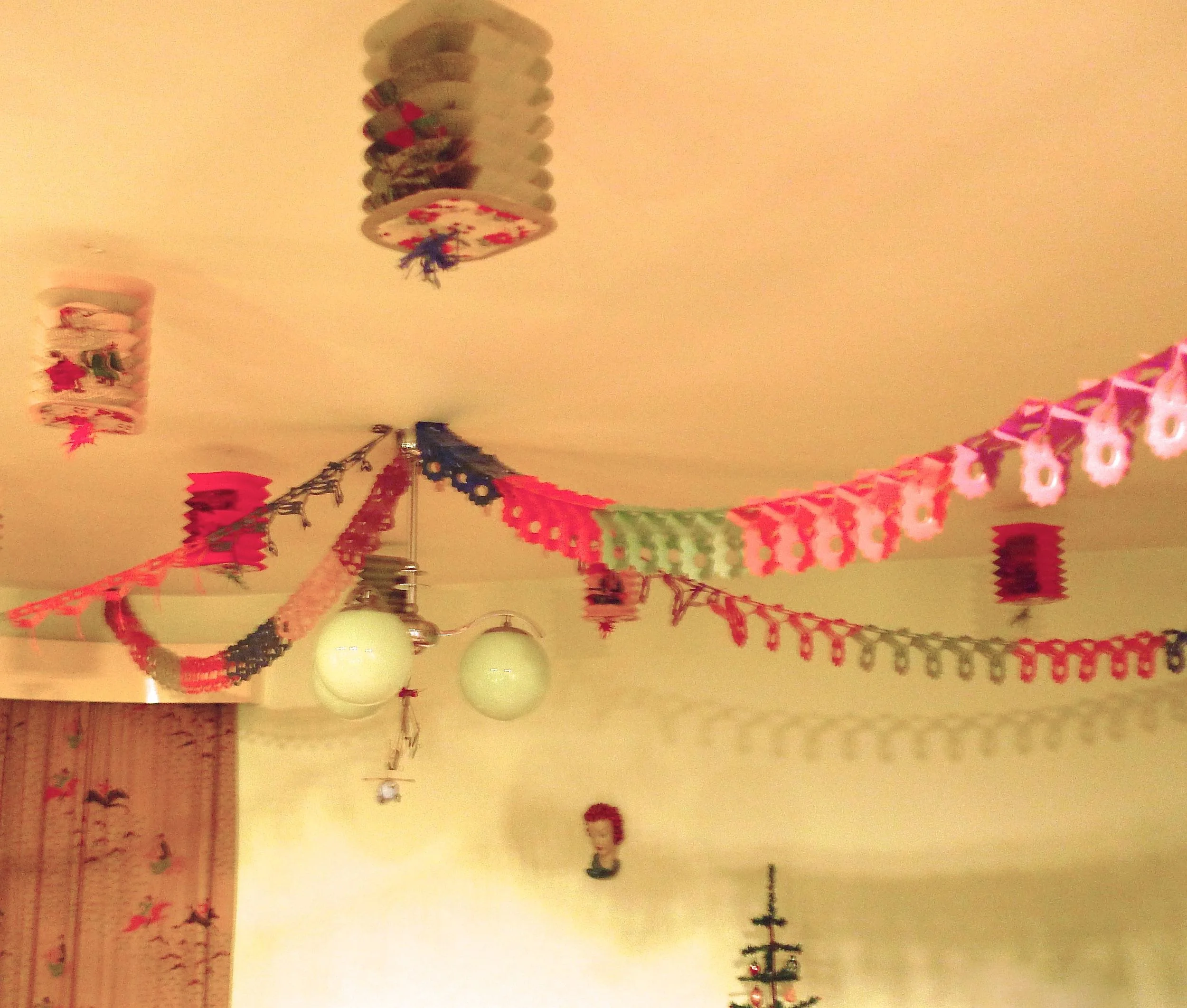
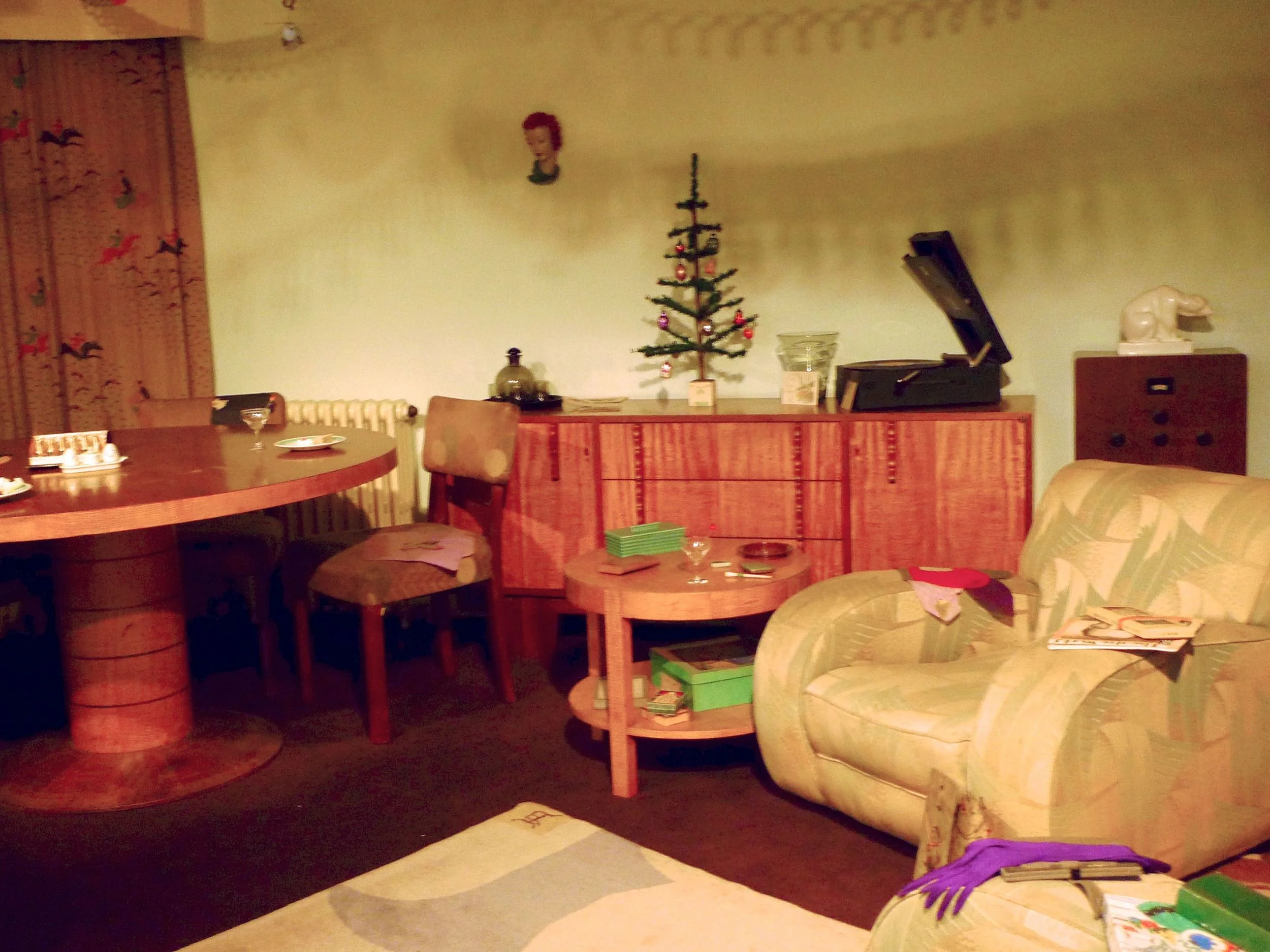
 We're now in a flat in one of London's new mansion blocks, it's Christmas Eve and the young couple are hosting an early-evening cocktail party for friends and neighbours, and they're hoping to impress with their decorations and canapés. 

I couldn't help but smile when I saw these garlands as I'm sure my parents had something very similar, and very delicate. 

1930s CHRISTMAS DECORATIONS

1930s CHRISTMAS DECORATIONS

1930SCHRISTMAS.JPG

The young couple won't be staying in London for Christmas but will motor down to family in Oxfordshire, where they're looking forward to hearing the Kings Speech, which was first broadcast in 1932.  

Santa Claus is coming to town

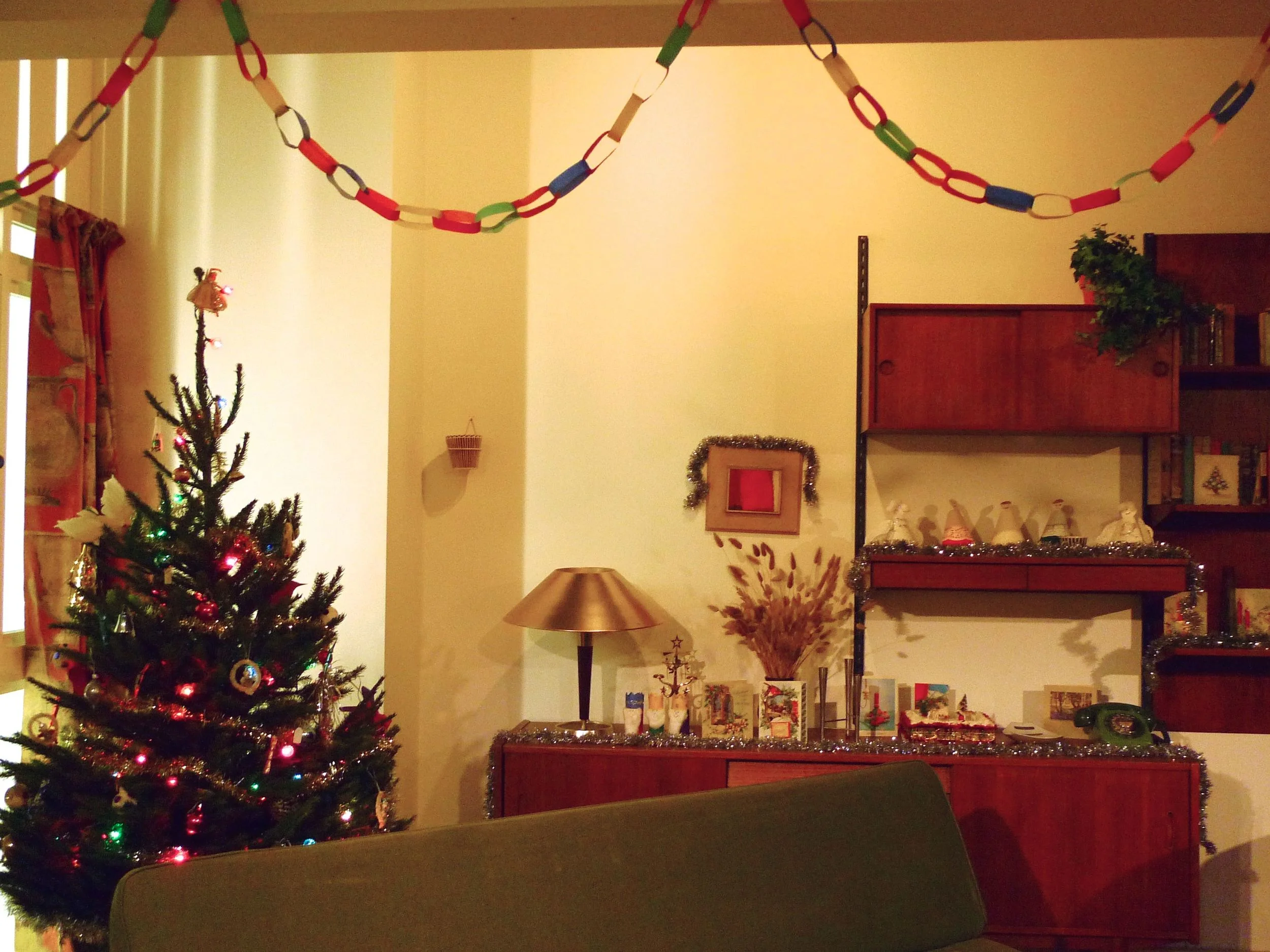
It's Christmas morning and we're in the home of a young family and it's a scene that no doubt still happens across the world today. It reminds me very much of the Christmases as I grew up, and the card alongside this display was also reminiscent of my childhood Christmases too. It said "despite several reminders, the children's mother is doubtful that the children will remember which of their friends and relations sent which gifts, and is dreading having to write Thank- you notes without knowing what present was sent." Except in my case, we were encouraged to write our own thank you notes!

The other part that made me smile was that "her woman's magazine did suggest an alternative to the usual Christmas dinner" because they've really gone to town with that now. 

MIDCENTURYCHRISTMAS.JPG

Happy Christmas!

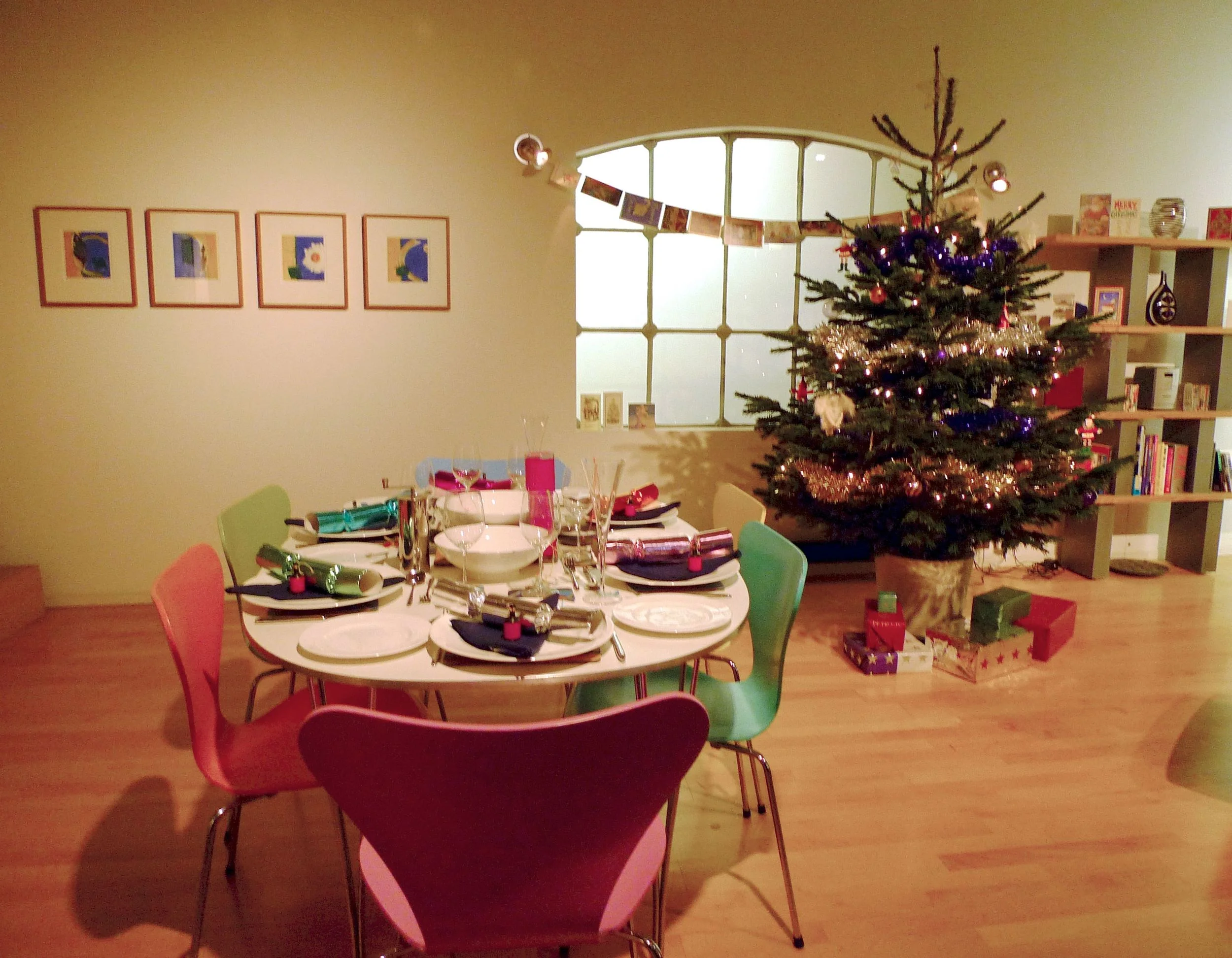
Finally we're in the modern-day Christmas - this room is set in mid-nineties loft-living converted warehouse in London's Docklands. There was a Nigella book on the recipe stand in the open plan kitchen and it looks as if a great festive dinner is about to take place.

CHRISTMASPRESENT.JPG

I hope you've enjoyed this quick trip of Christmas through the ages as much as I did. In the New Year I'll share more from my previous visit to this fabulous museum.

If you don't get to visit my blog again before Christmas, let me wish you a very Happy Christmas - see you in 2016!