


William Morris was a writer, artist, craftsman and socialist and most often known today for his timeless patterns on wallpaper, material and much much more. He had a house built in 1860 in Bexleyheath, just up the road from us and it was described then as the "beautifullest place on earth." While I've nothing against Bexleyheath, I suspect back in 1860 it was a very different place and most probably classed as country, which it's a far cry from today. It's also our local National Trust property and yet this was our first visit there, I don't know what took us so long but I"m pretty sure it won't be so long before we visit again. We cycled there from Greenwich in our first group cycle, but more about the cycle another day as there's lots from the Red House I want to share.
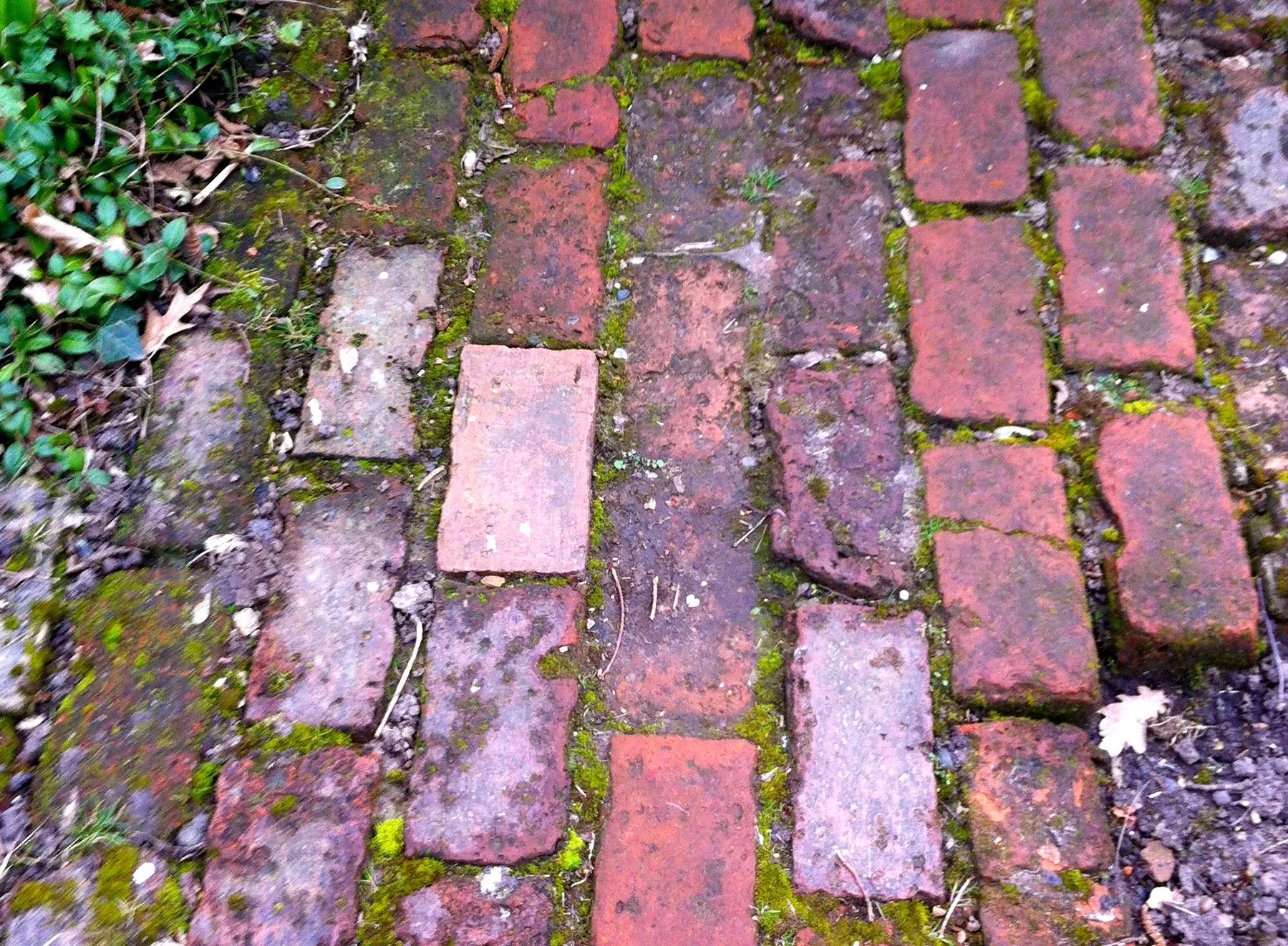
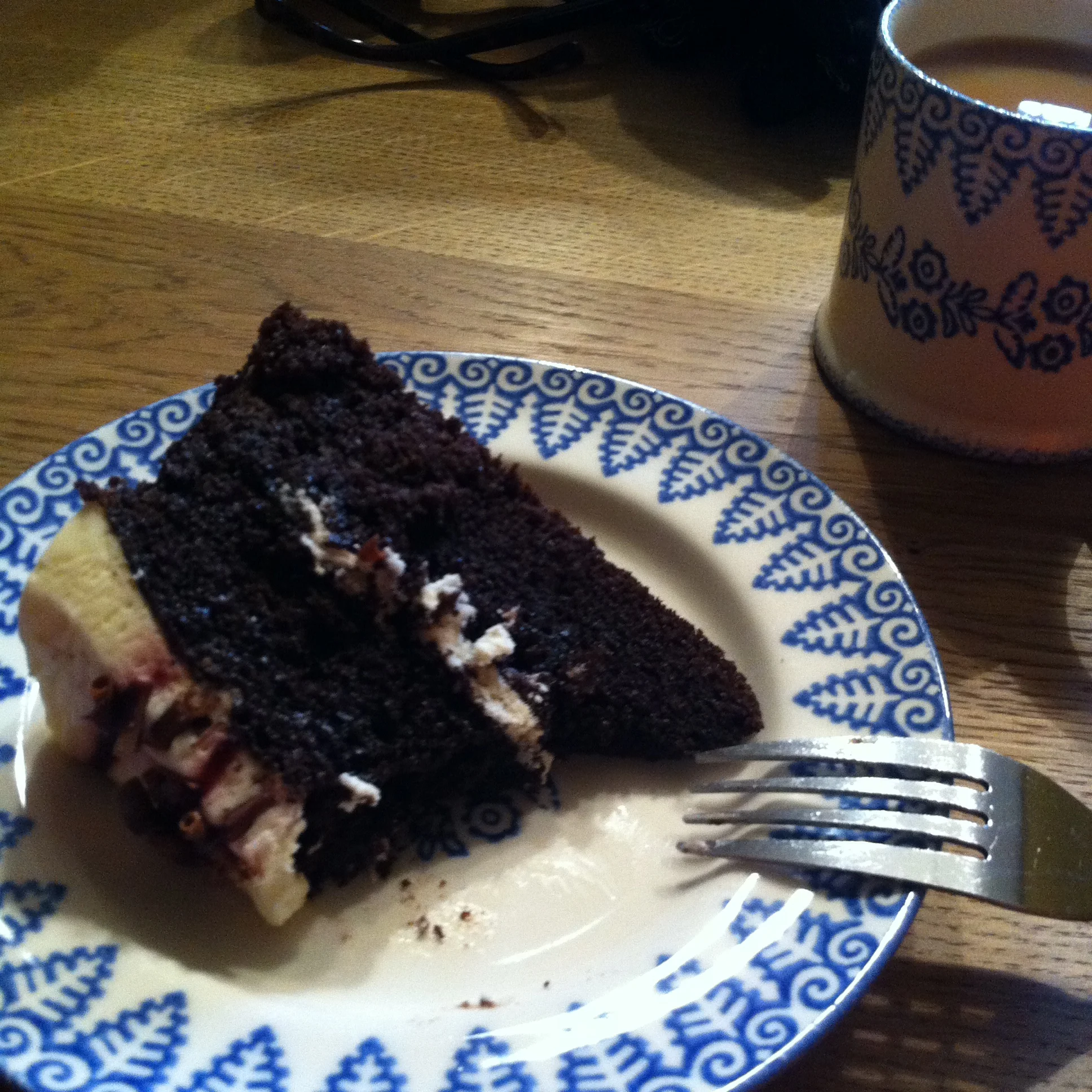
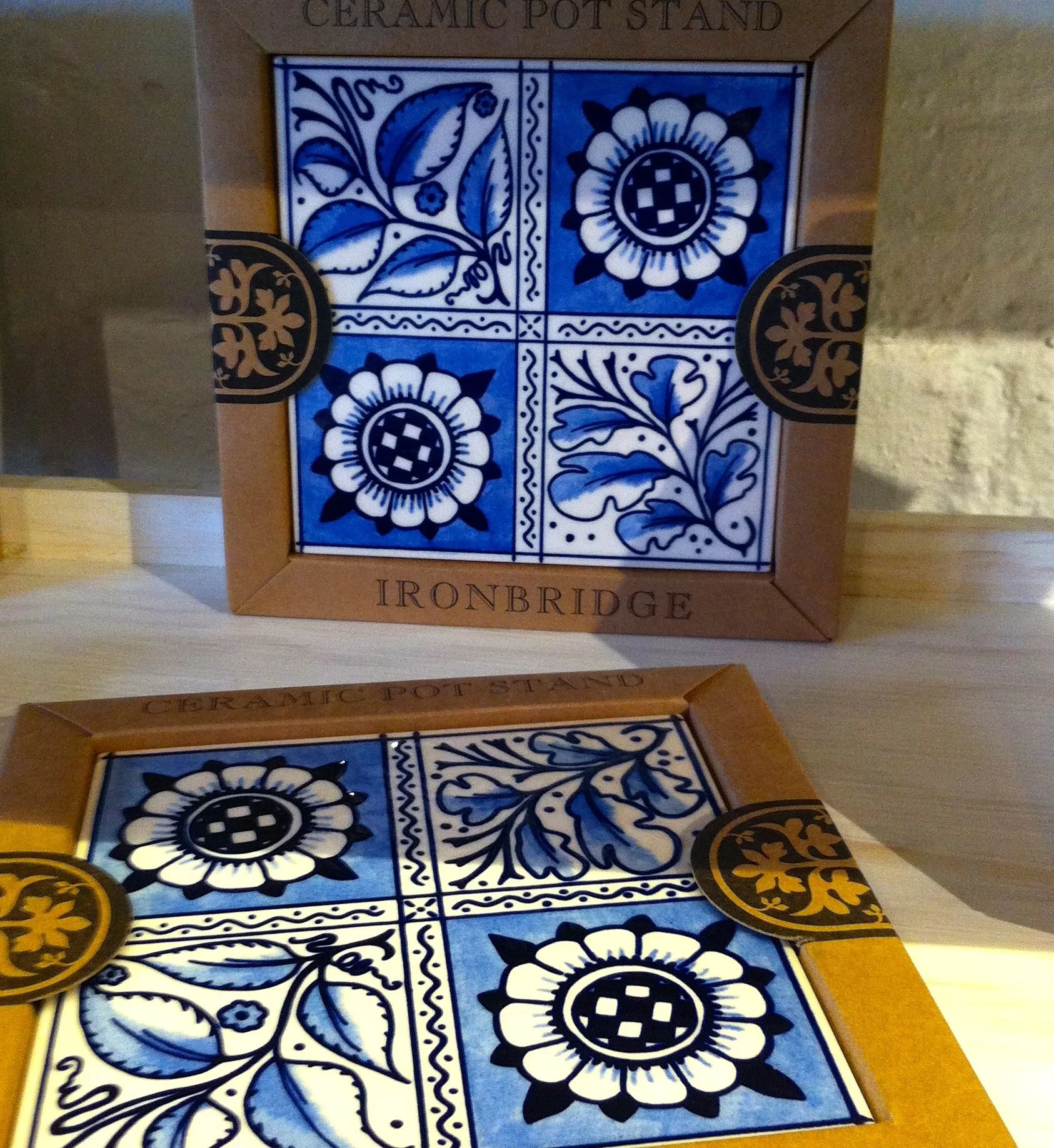
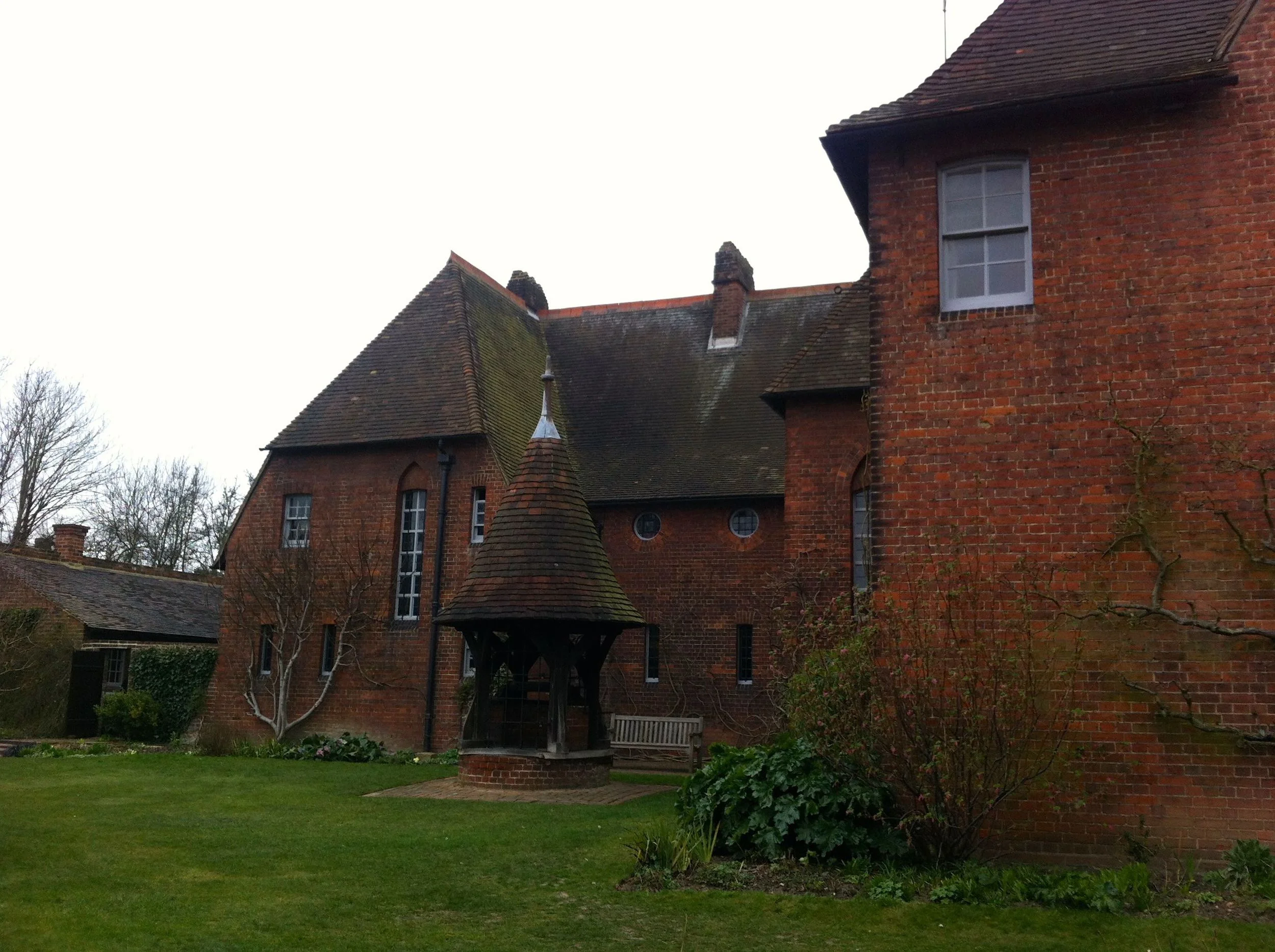
This was our first view of the Arts and Crafts style house, which as we discovered later had some Medieval influences. The brick path too was a favourite and it was along this path that our visit started - to the cafe with chocolate cherry cake and a cuppa! The patterned crockery was a good omen, as was the quick tour around the shop. Sadly no purchases though, as even with my bike's basket I didn't want to add too much weight for the hills I knew I'd face on the way home!
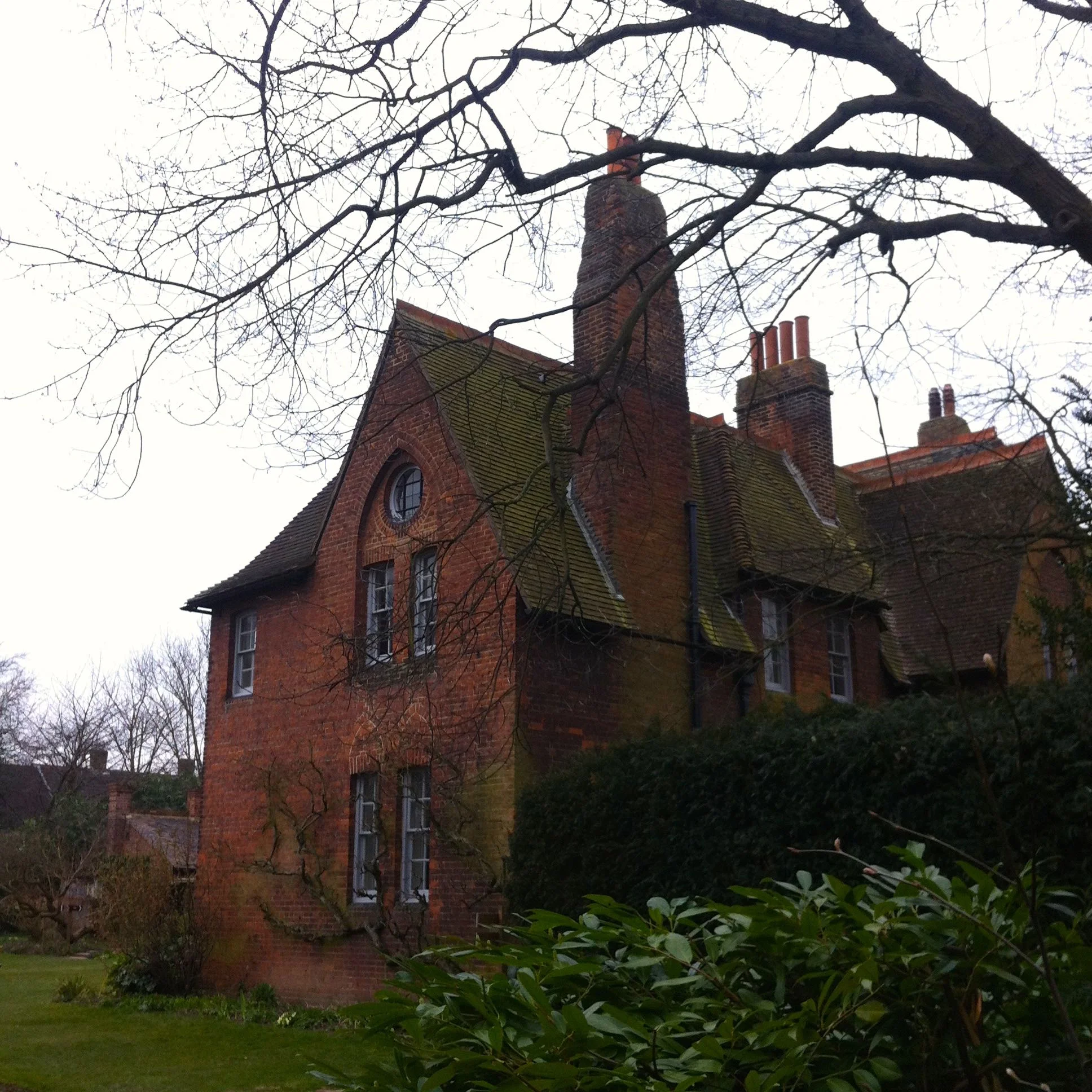
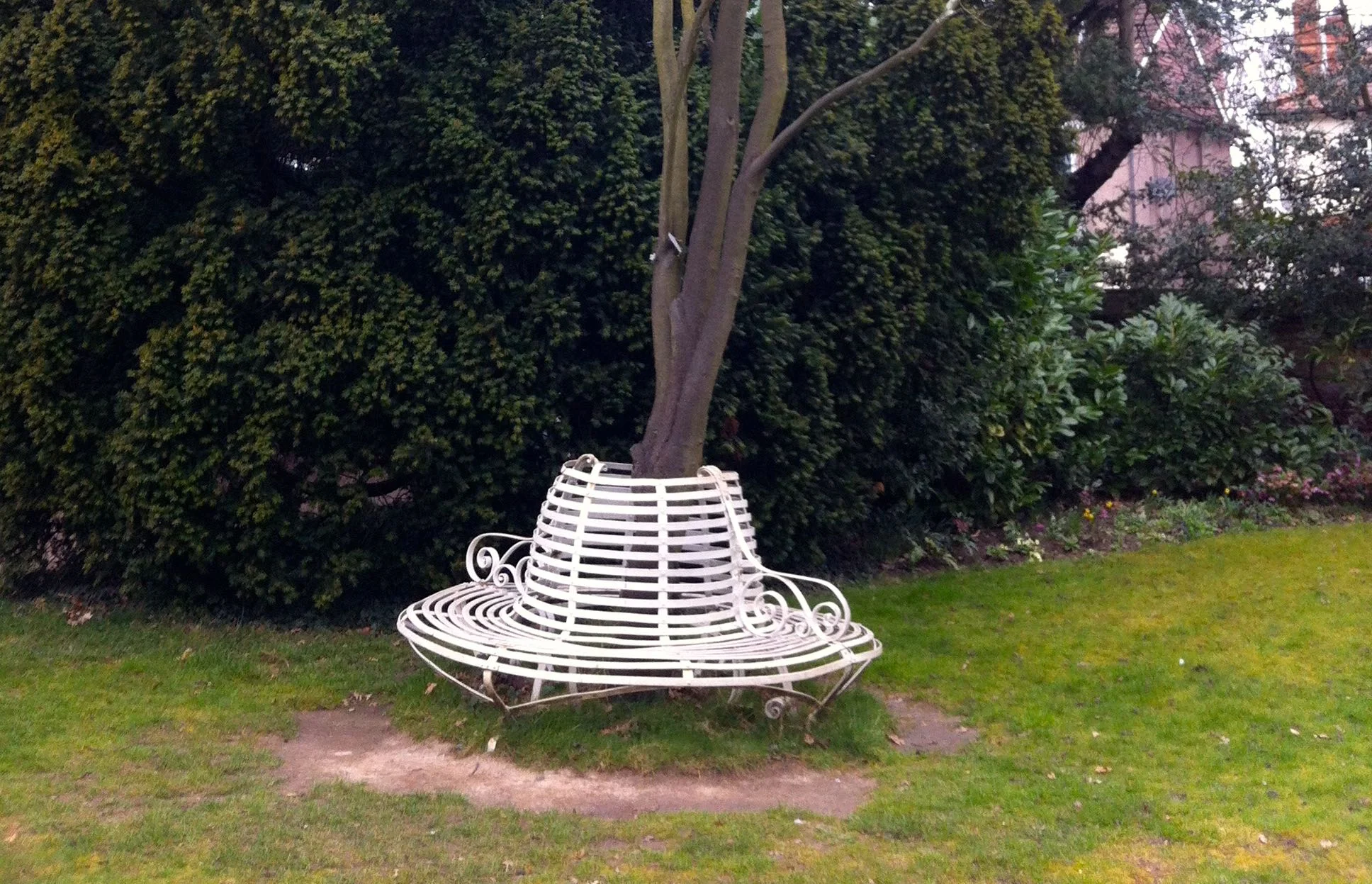
As our tour started we stood by this tree bench listening to our guide tell us that the Red House is considered one of the most influential buildings in domestic architectural history and how the National Trust are still making discoveries throughout the house, which they've only had for ten years.
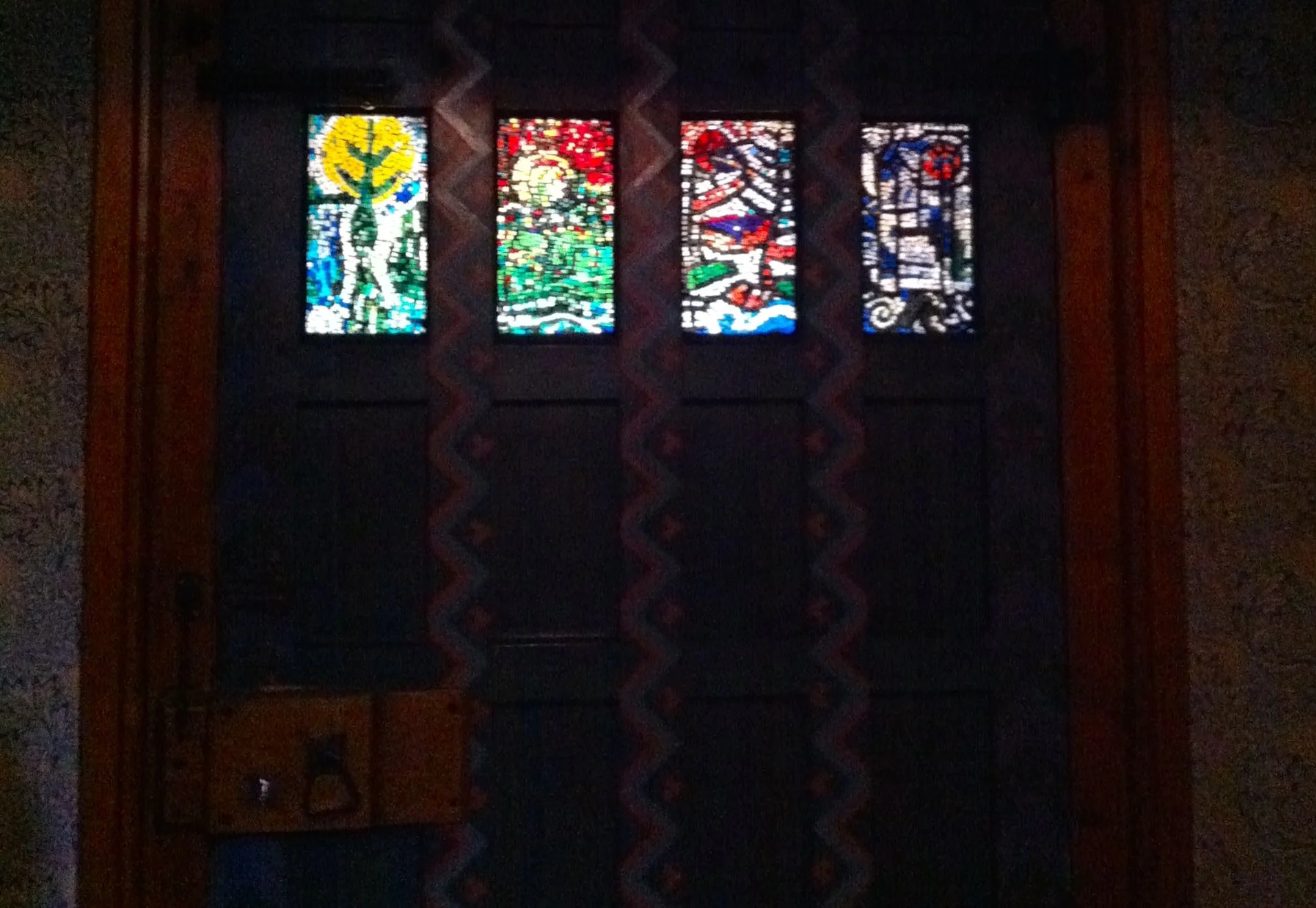
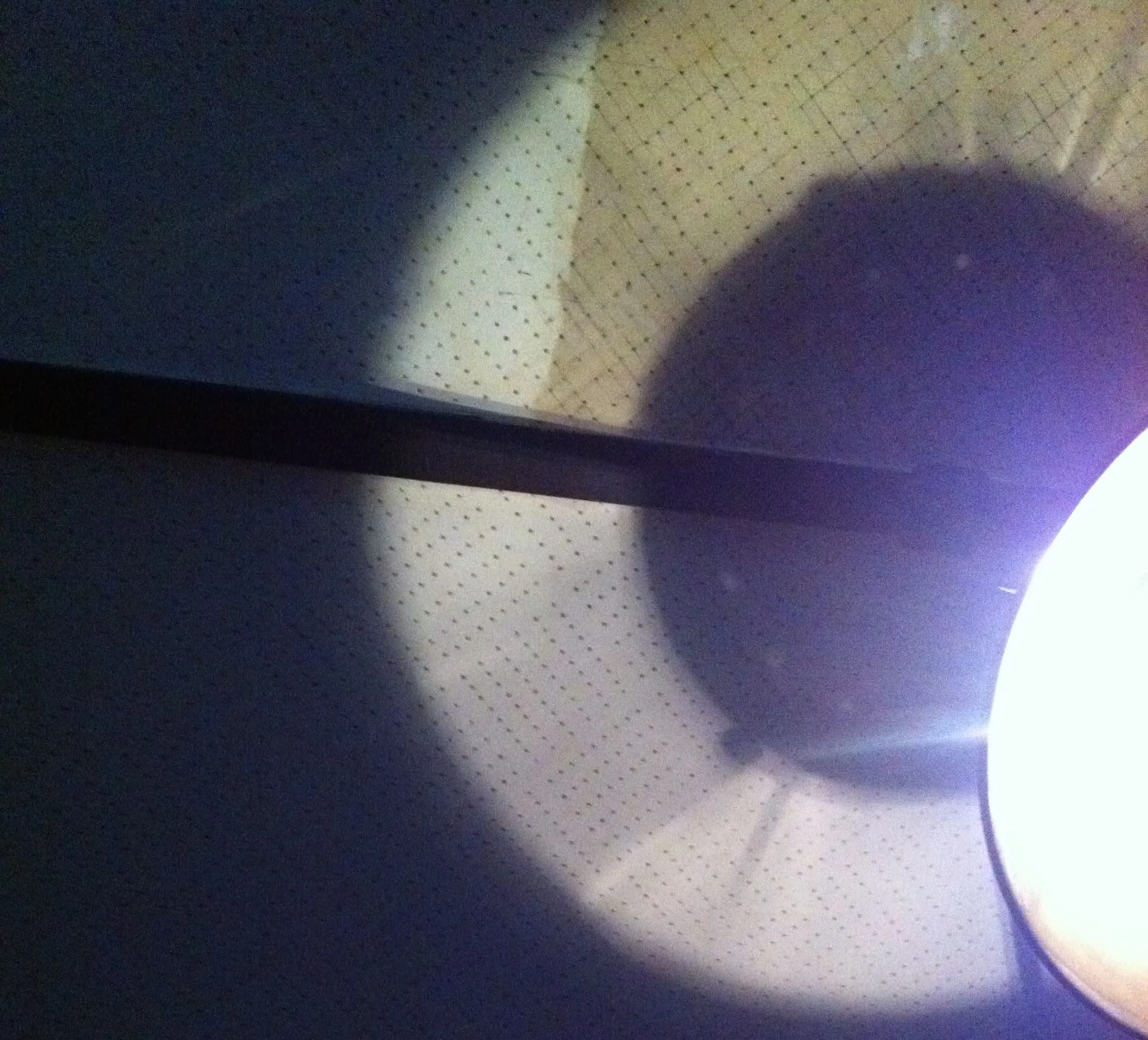
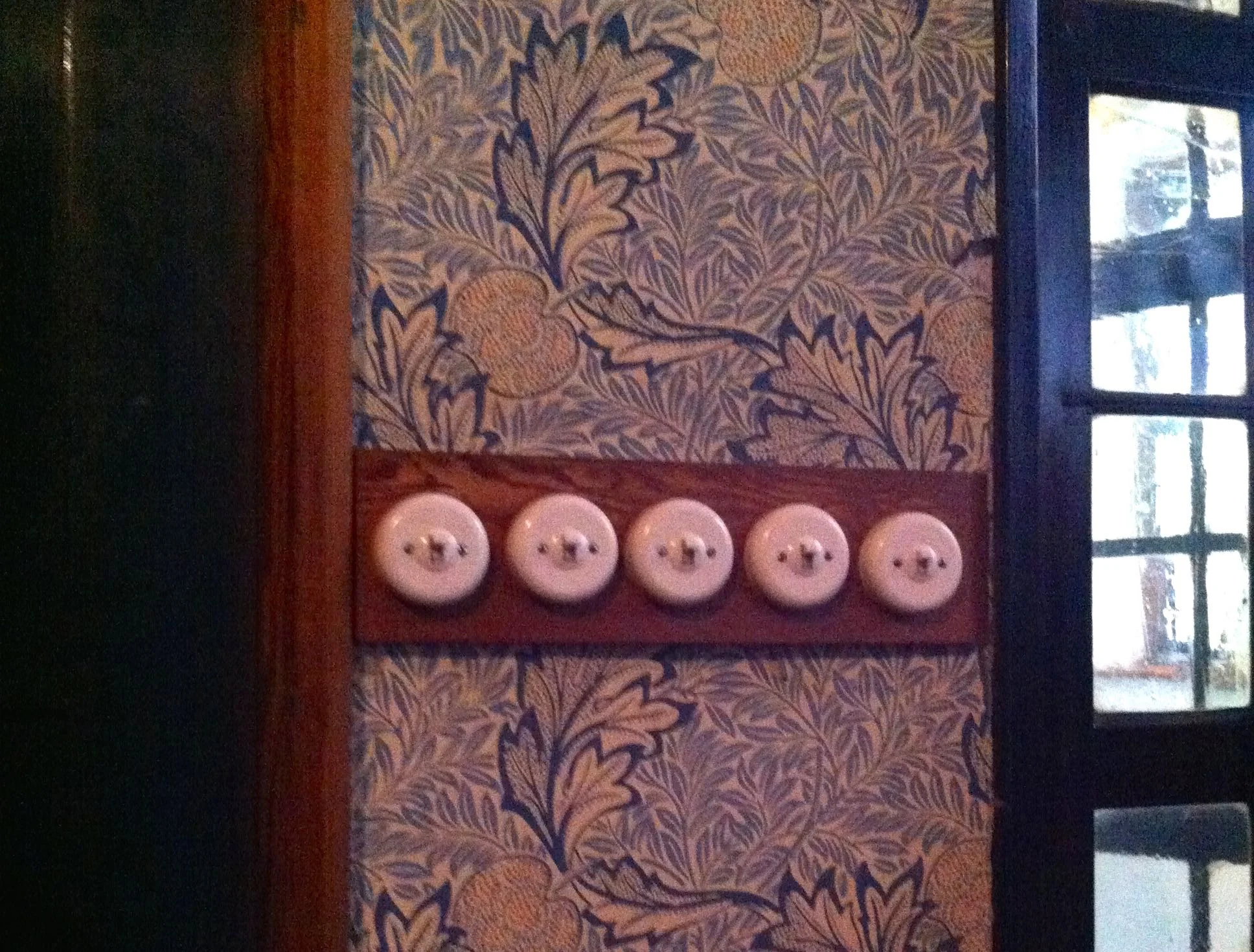
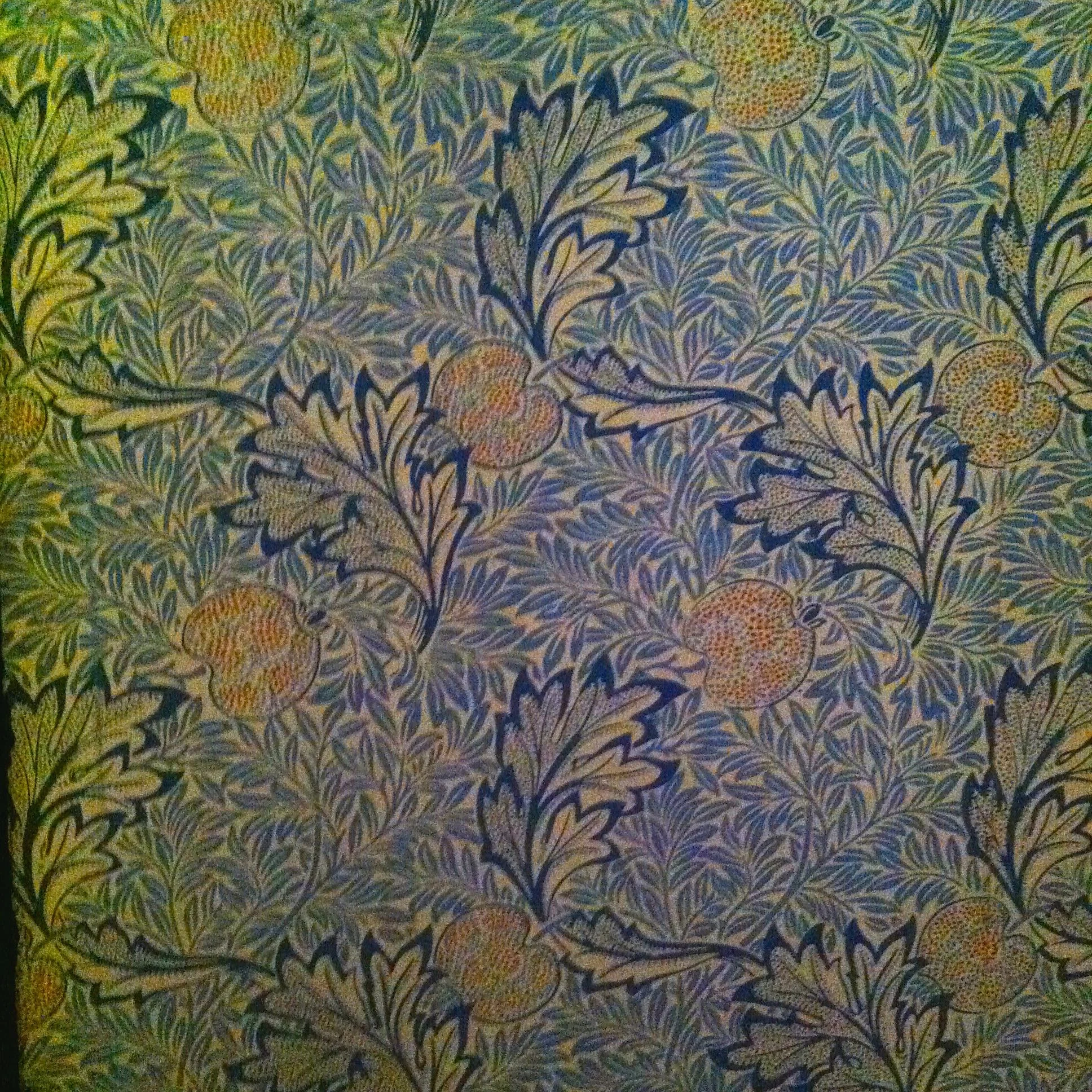
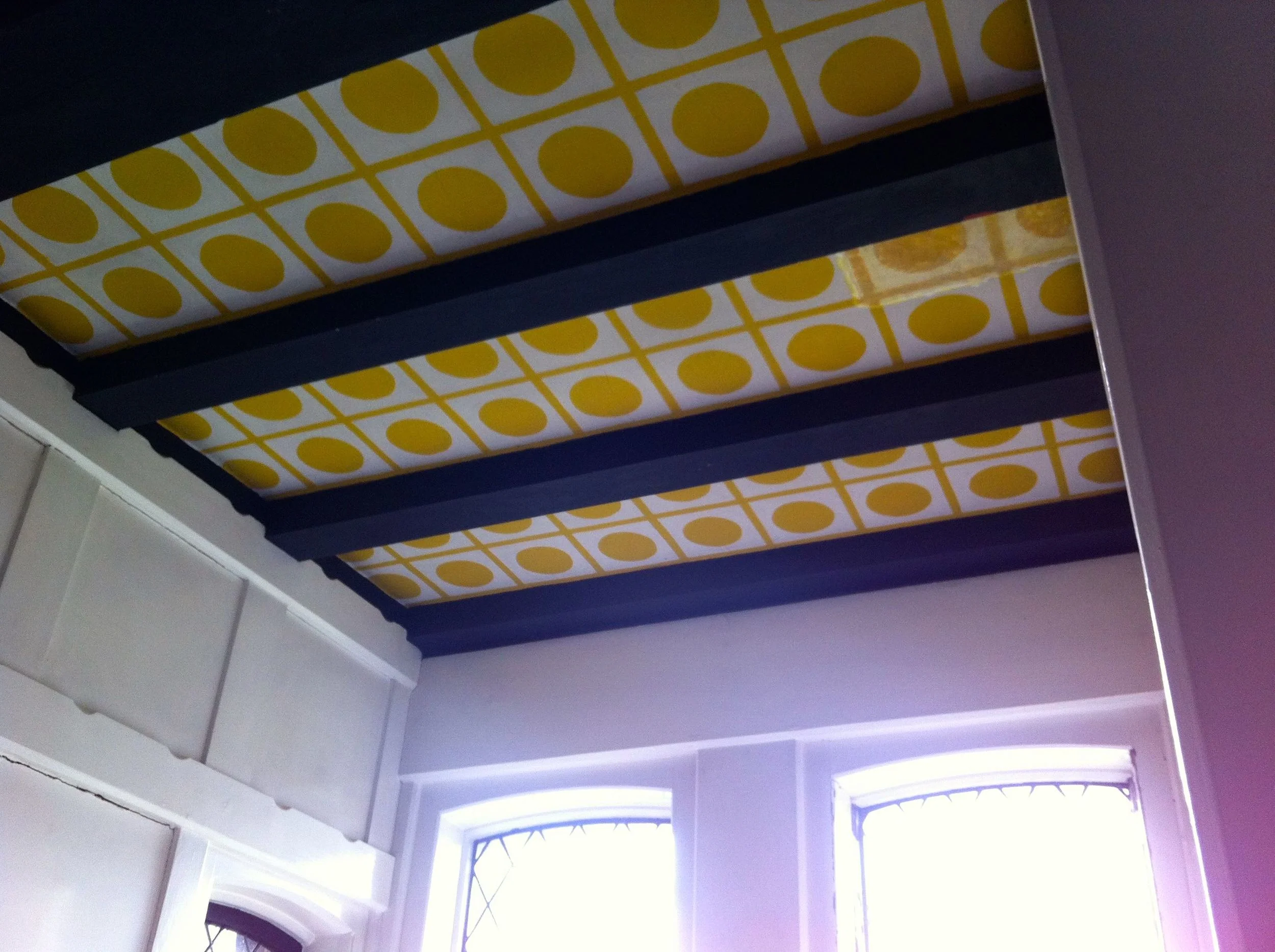
As we stood in the hallway (above) we got our first glimpse of the patterns and also a stunning mediaeval decorated front door - I particularly liked the glass in the door but sadly my pictures don't do it justice, so you'll really have to go and see it for yourself! The ceilings showed a series of dots, which Morris used to set out the pattern so that when friends visited to help decorate they could follow these easily. And we thought the "bring a paintbrush" party was a modern idea.
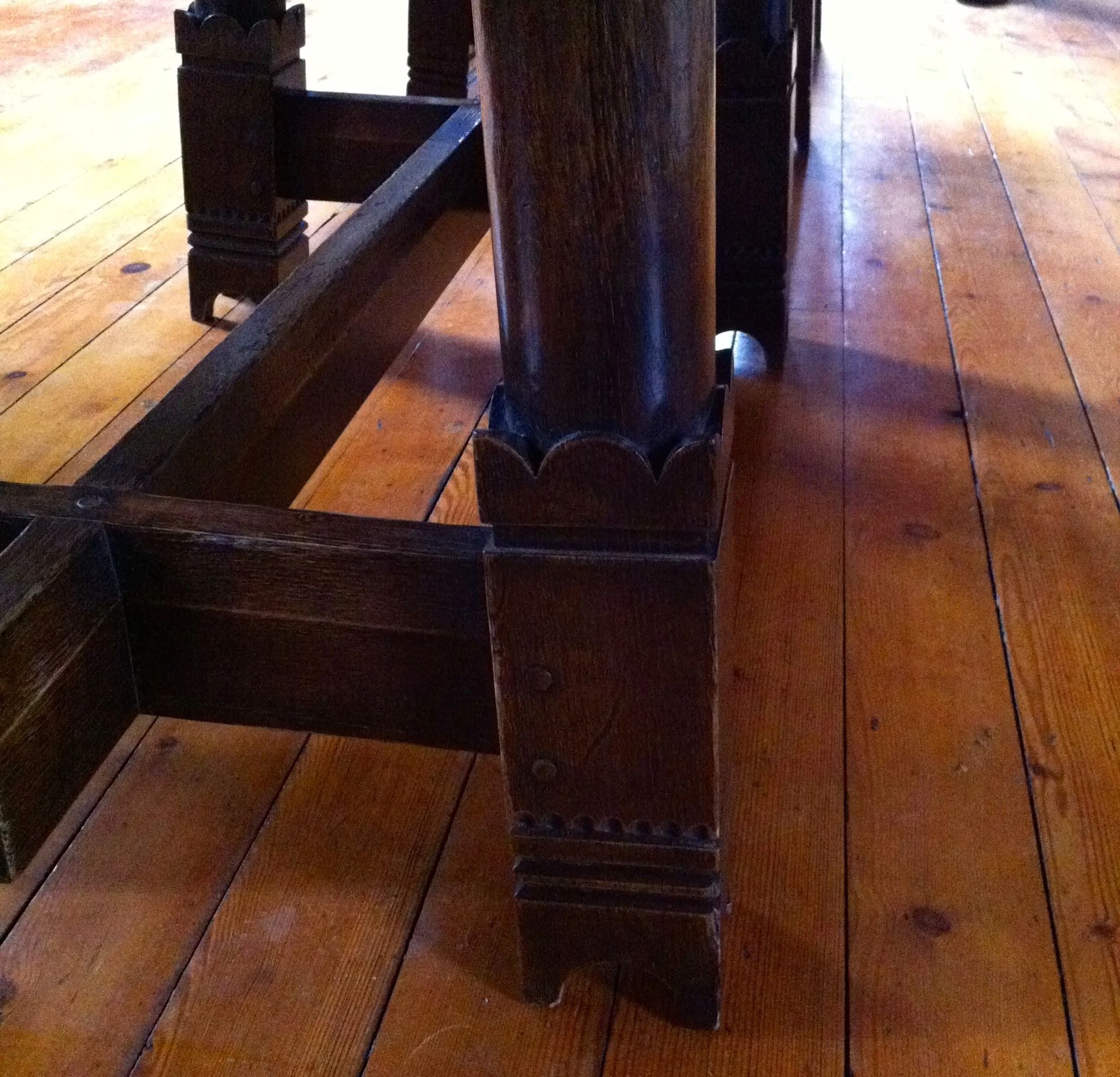
The Dining Room still has the original table and it has some fantastic detail on the legs, and throughout our tour we saw many of these, inside and out. In the main rooms each had some large built-in wooden furniture which weren't my favourite, but the one in the Dining Room was used to store the bedlinen (from whichever season wasn't being used) which struck me as odd, but I guess it was expensive and a much valued item. But even so, I'd not considered storing bedlinen in our dining room before...
As we moved upstairs we saw this fabulous ceiling - there's definitely nothing understated about it is there? Remember those series of dots on the ceiling downstairs, well this is the finished pattern, the one downstairs was never finished. There's also something else about this ceiling, on the sloping parts in one corner instead of the designated pattern there's a smiley face*. Tests have shown that it's in the same paint as the rest of the ceiling so it seems it was painted in Morris' time.
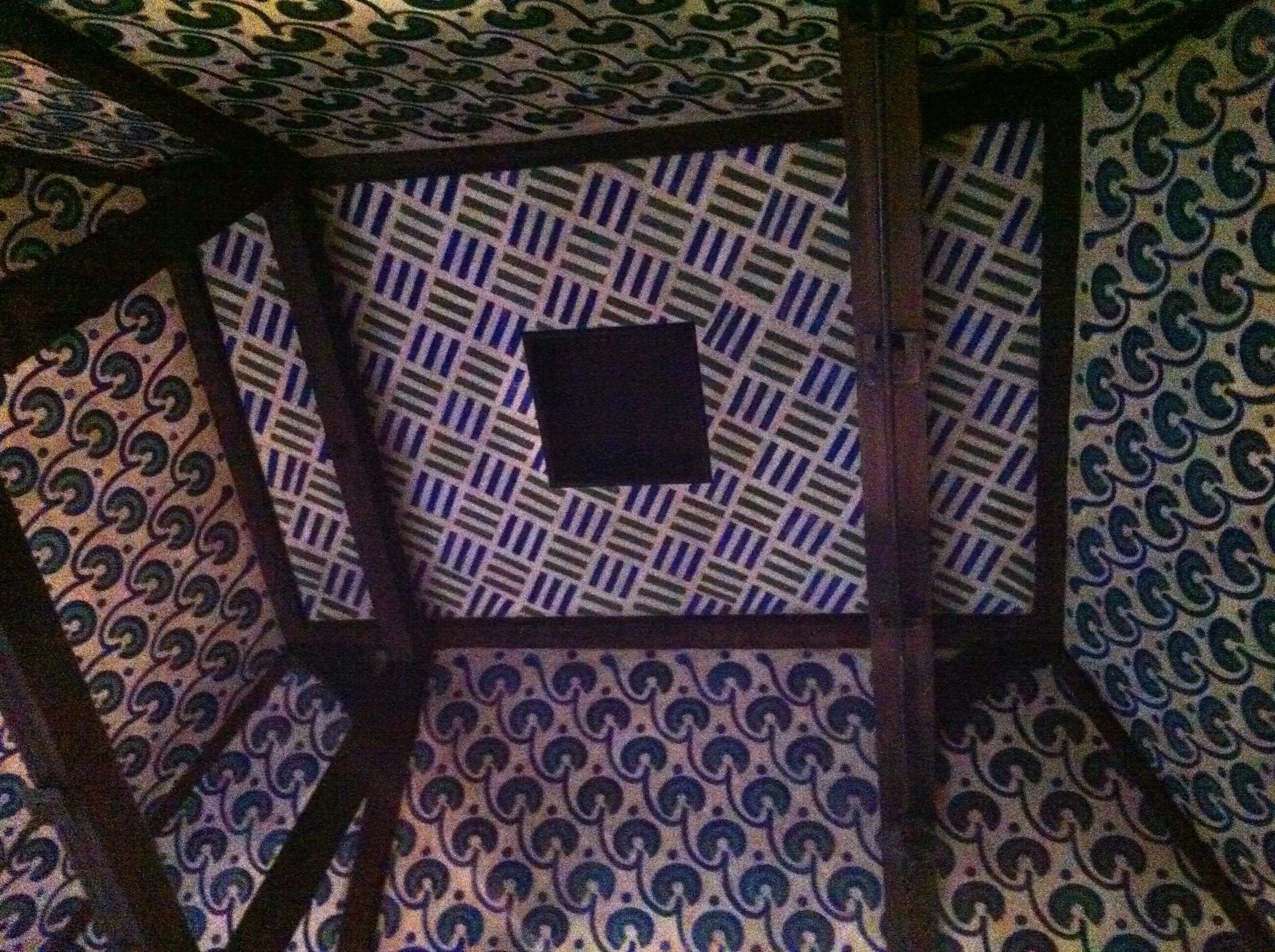
* It's hard to spot in pictures but in the picture below you can see there's a change to the pattern in the top right of the central square just to the left of the beam that runs vertically through the picture.
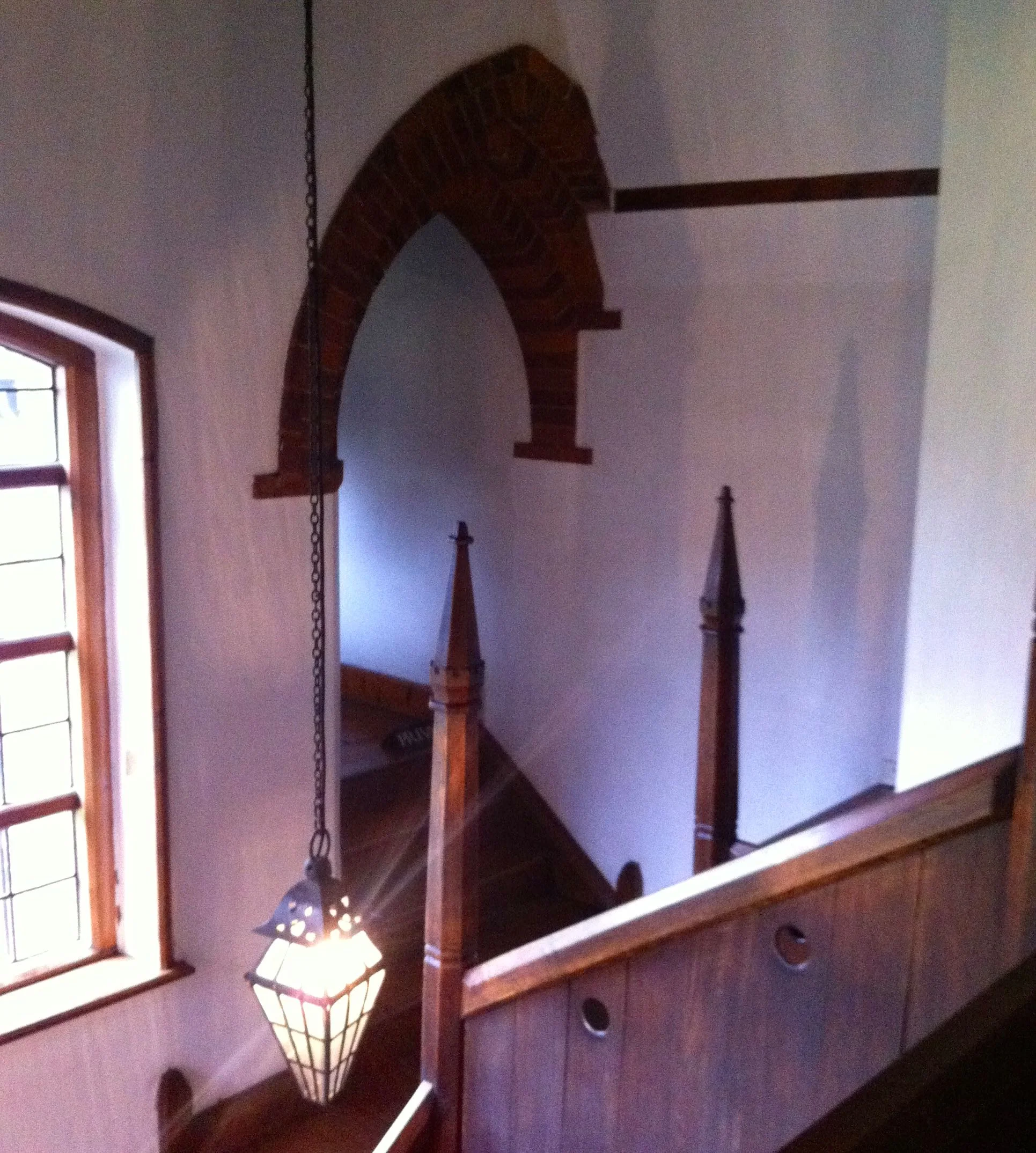
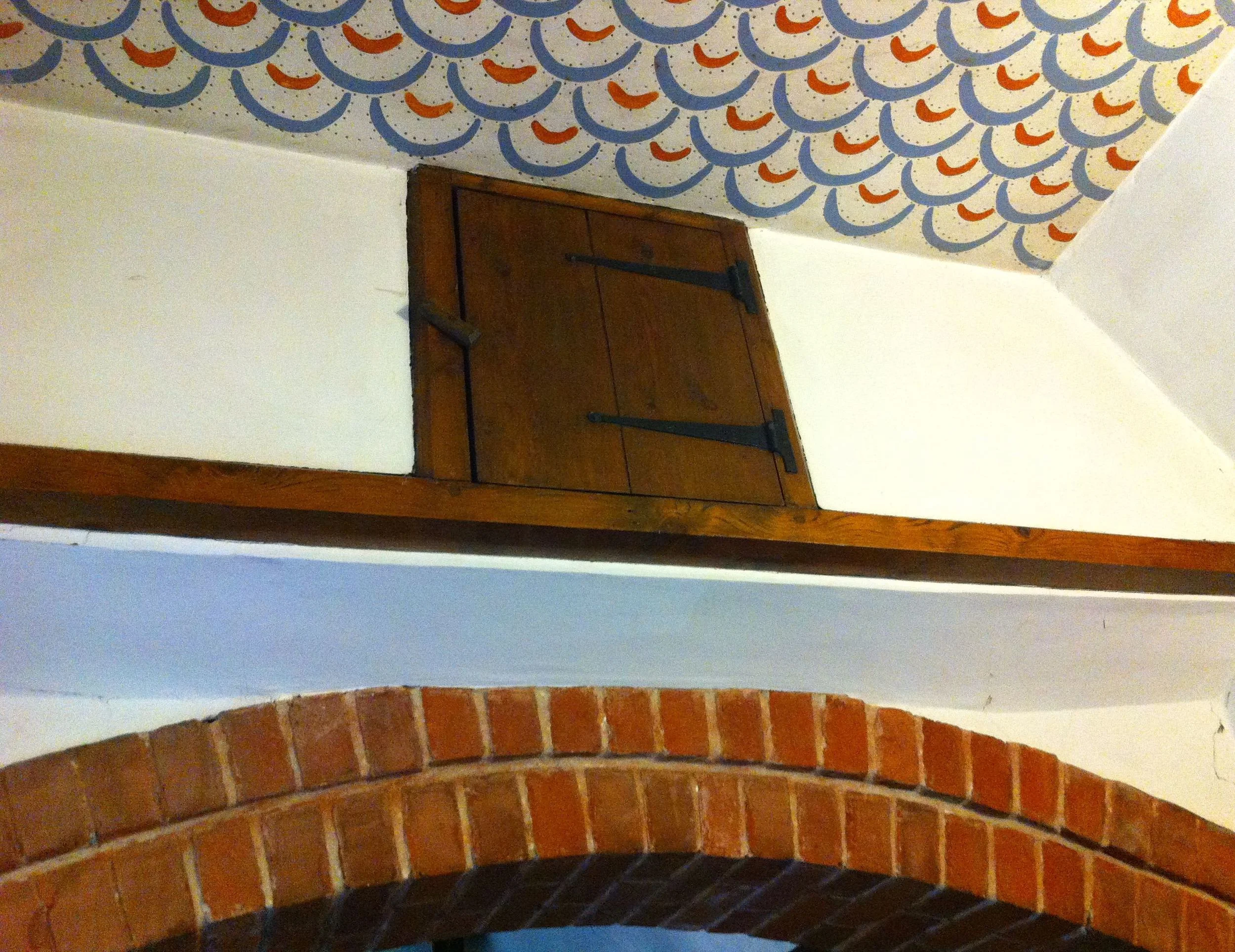
The picture above is the landing underneath that blue and green ceiling, and it's pretty special itself - I like the arch which disappears into the wall and suggests an older building. But in fact it was designed that way, it leads to rooms which aren't yet open to the public but ones that the NT hope to open in the future. Walking along the corridor the other way we were treated to another fancy ceiling, again the prickings clearly visible, and this small door above the arch was to the apple store.
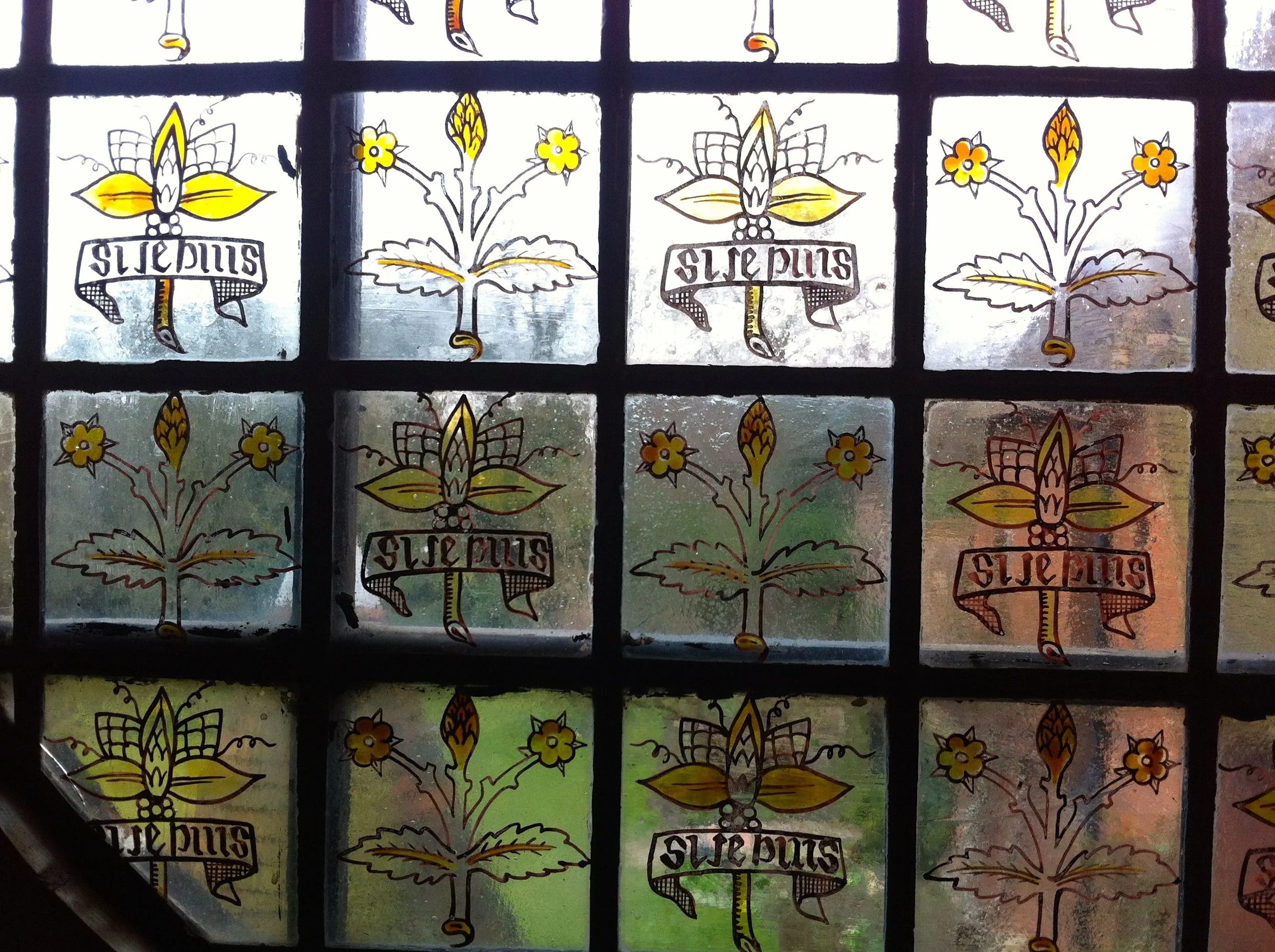
The corridor itself led to Morris' studio but before we got there we stopped to admire these windows. The designs on them are hand painted with silver and it's thought these were practice designs as in some the yellow colour is overdone and is more orange than in others. Either way it makes for a stunning window.
It's said that Morris wanted the house to look like a jewel box and Rosetti wrote that it was "more of a poem than a house".
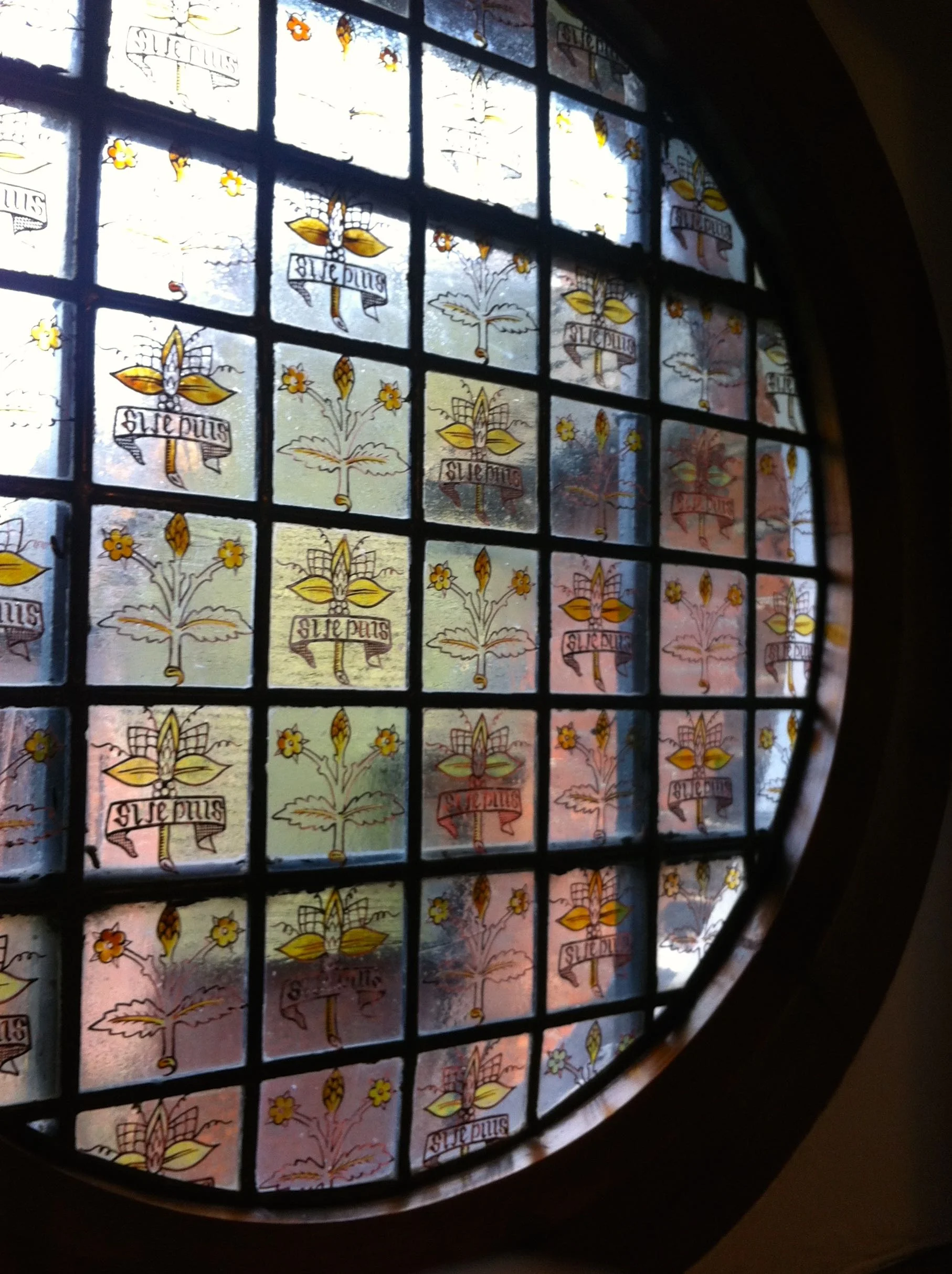
Morris' studio was, as you'd expect full of light with windows on three sides - it was also a fairly chilly room. Our guide explained that the house was built the wrong way round as the family rooms were on the North side and servants rooms were on the warmer sunnier side. It was built this way so it sat right on the plot and was later conceded to be an error.
It didn't stop the creativity though as it was here that Morris, Marshall, Faulkner & Co began as a direct result of Morris finding nothing he liked to furnish the house. The company still exists today as Morris & Co as it later became known and still produces wallpaper and textiles based on his timeless designs.
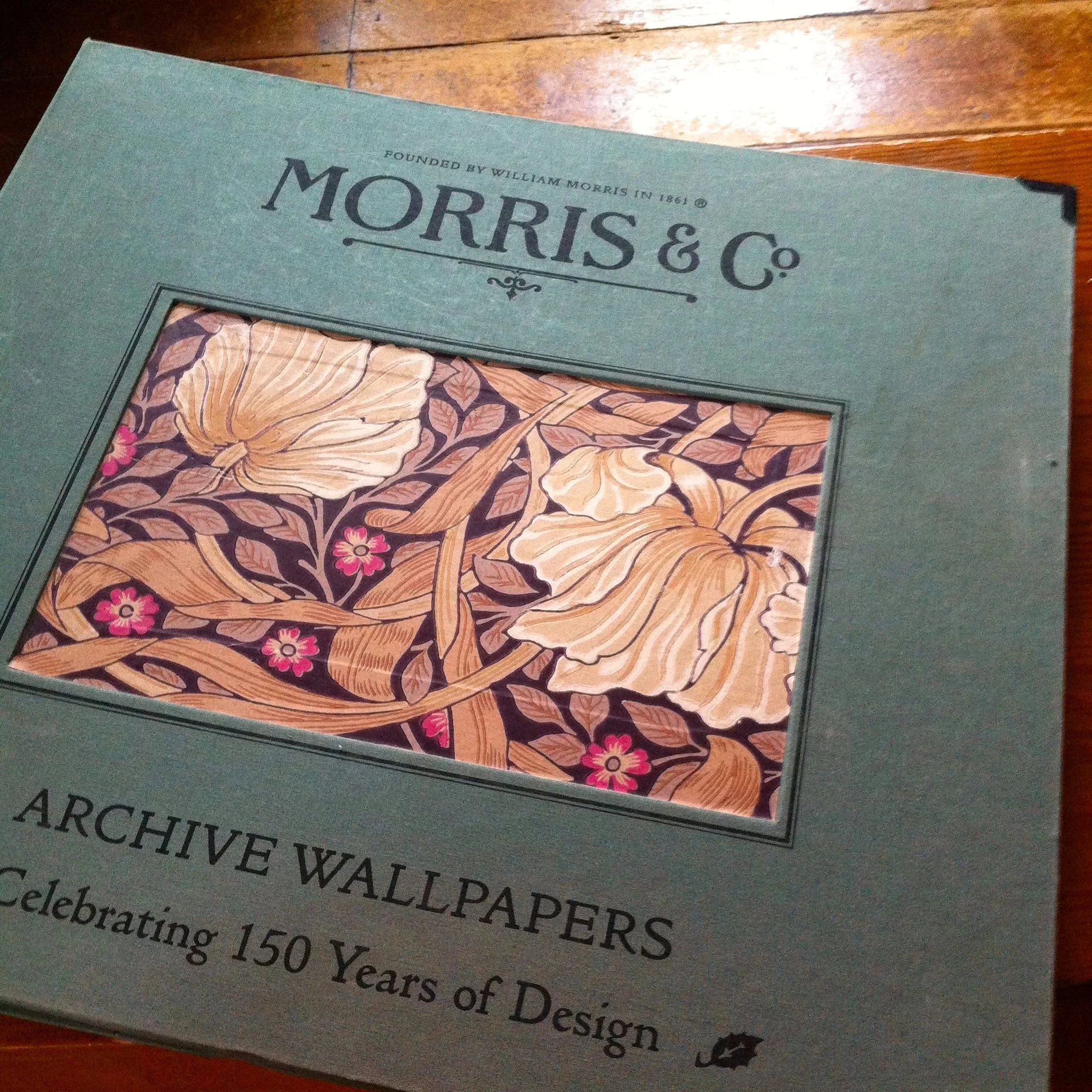
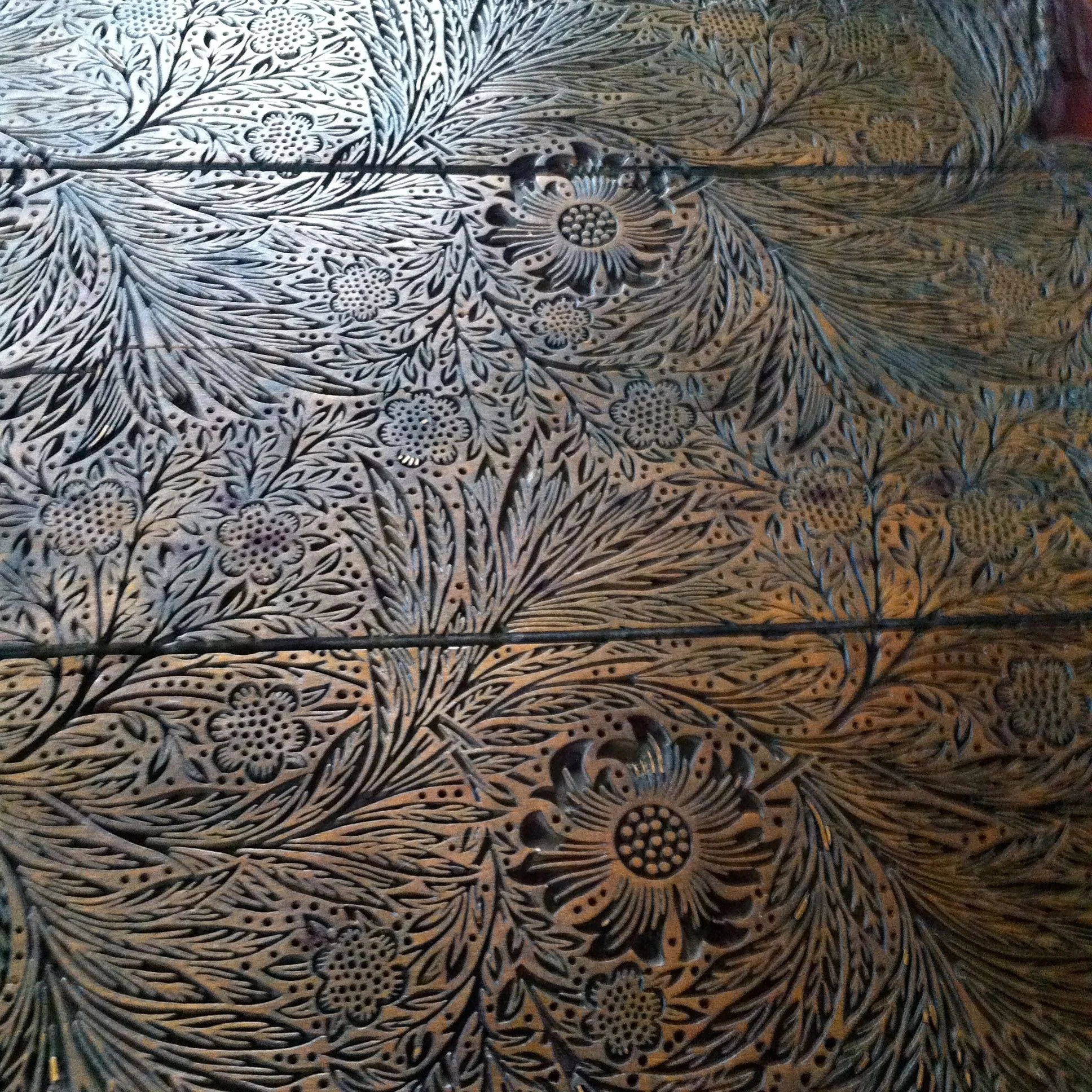
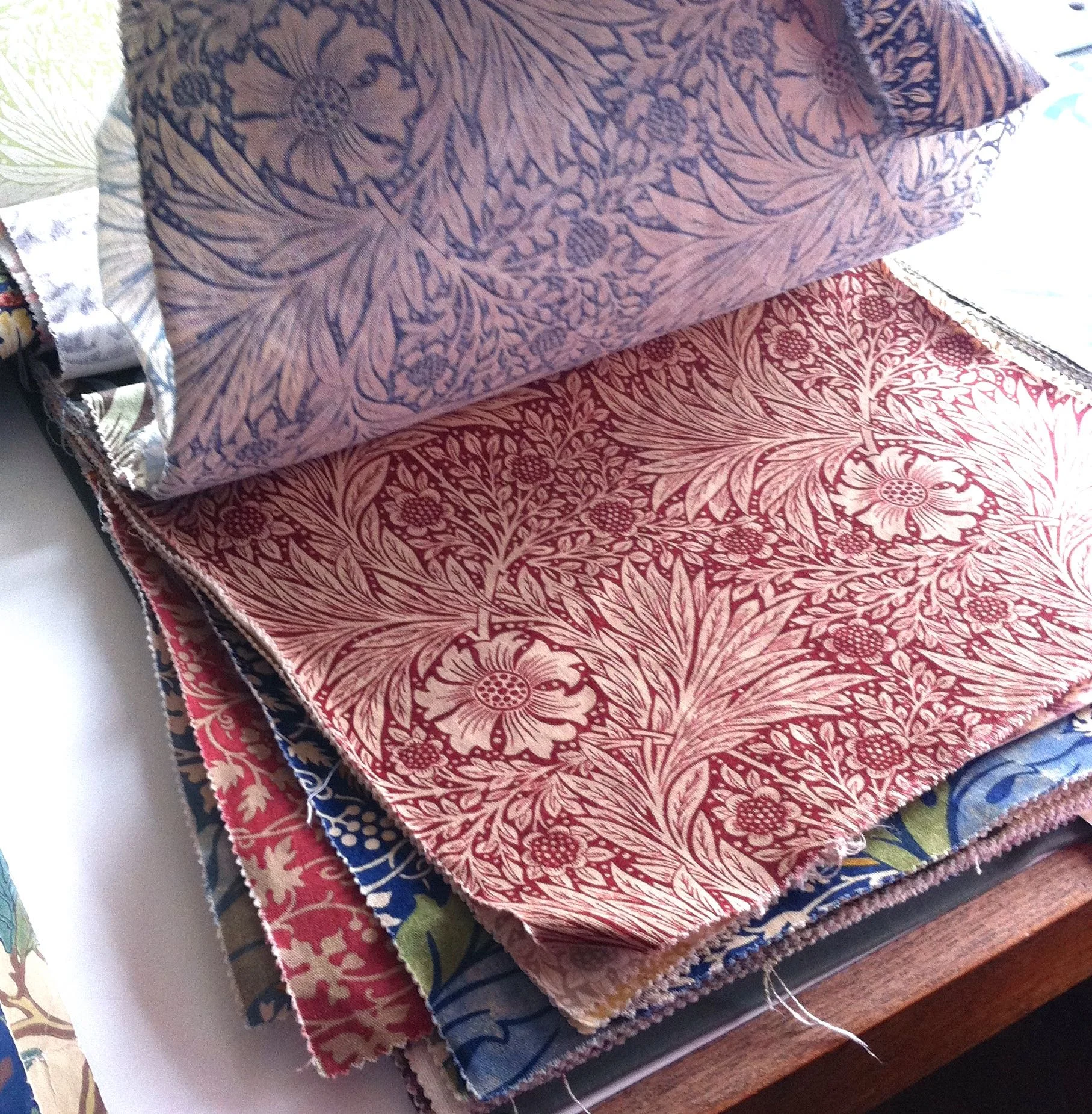
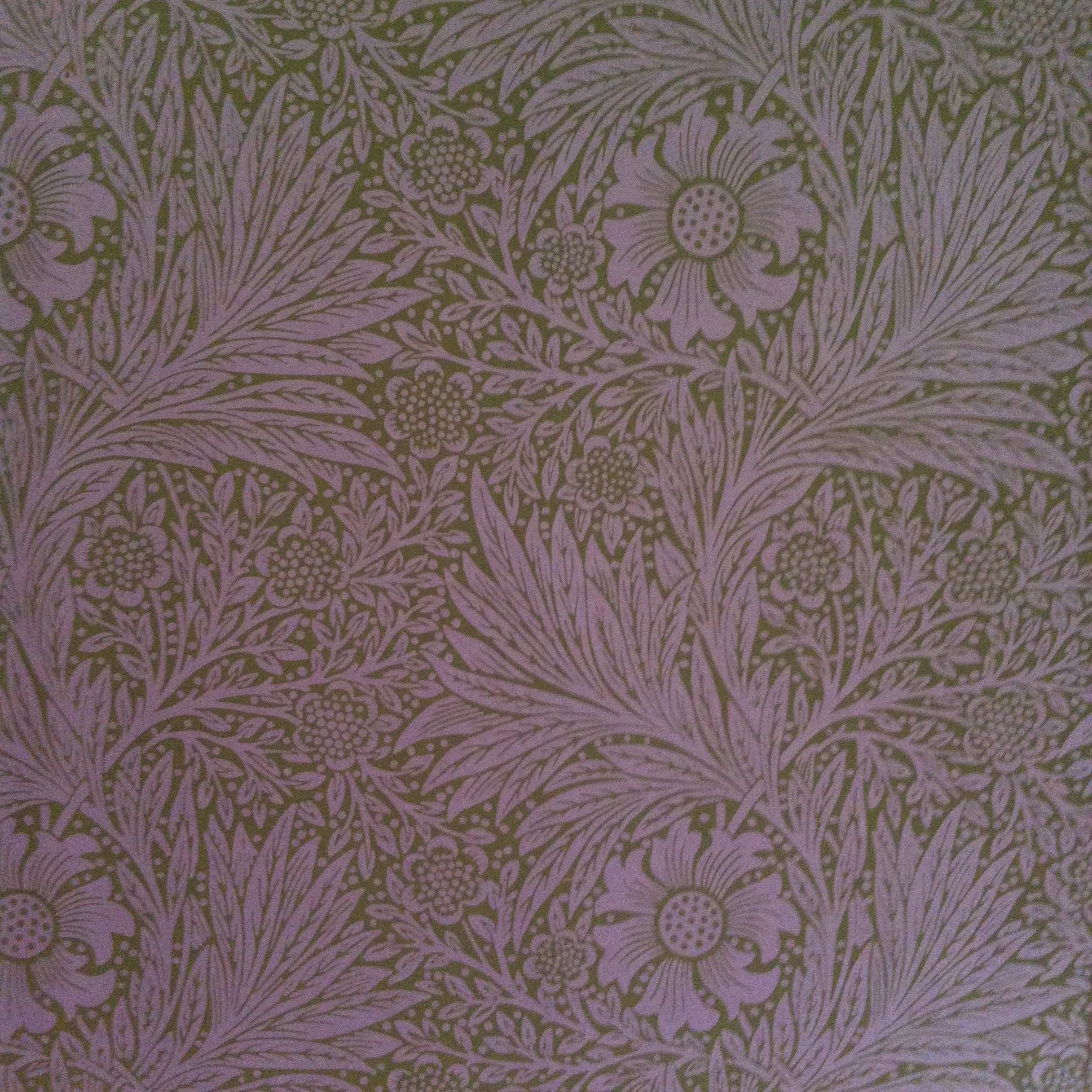
In the studio there's sample books of wallpaper and fabrics on display alongside the wooden pattern block for the pale green wallpaper on the walls. Absolutely fascinating.
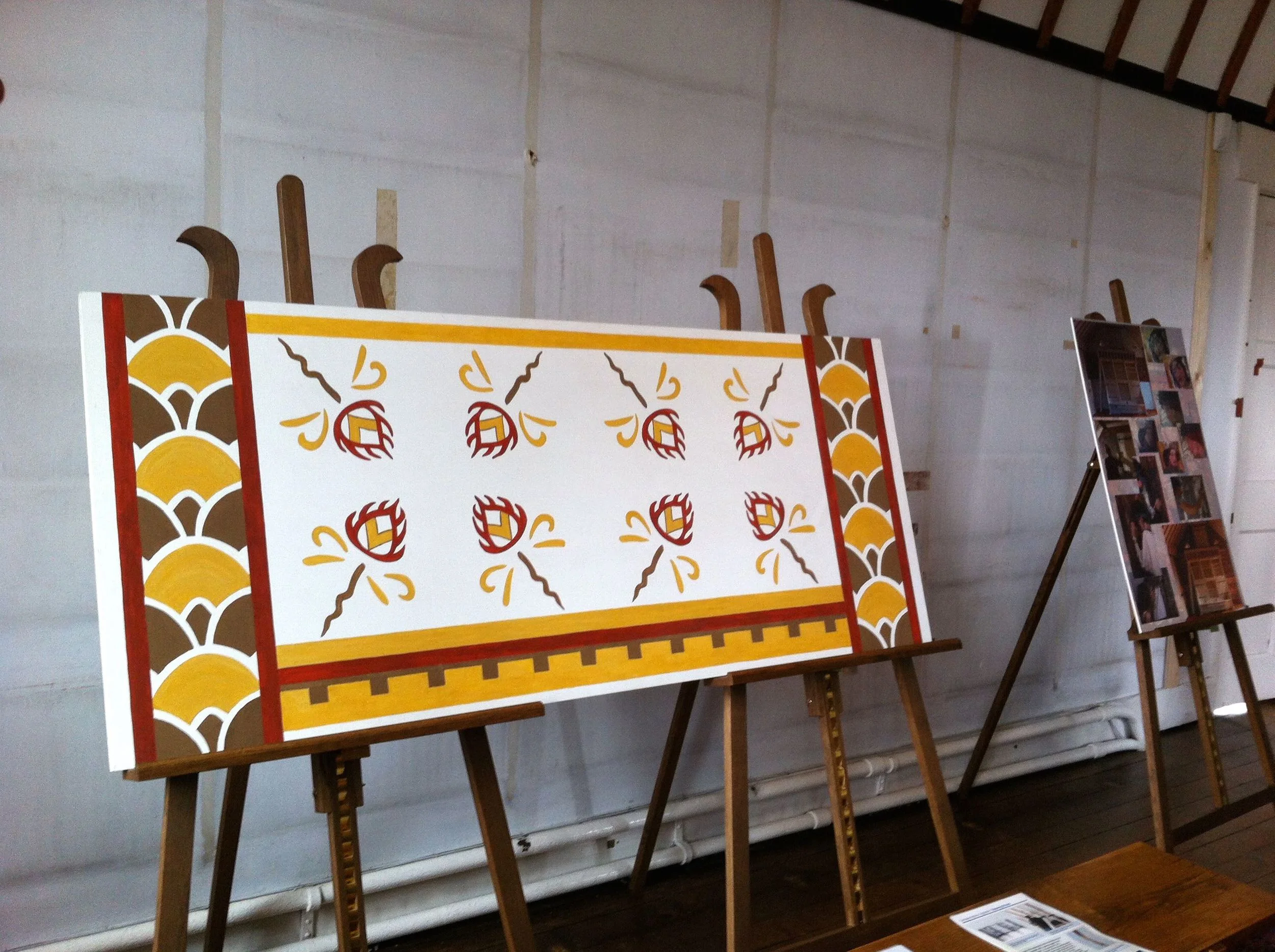
The next and final room we visited was the Drawing Room, also on the first floor and above the Dining Room. The Trust have discovered some of the original ceiling decorations underneath the wooden battens that were added by a later owner. It seems instead of removing the existing design the newer, whiter (and much plainer!) ceiling and battens were added on top. Removing the battens revealed the design and this has enabled an accurate reproduction of the ceiling decoration to be made. Quite amazing - and hugely ornate!
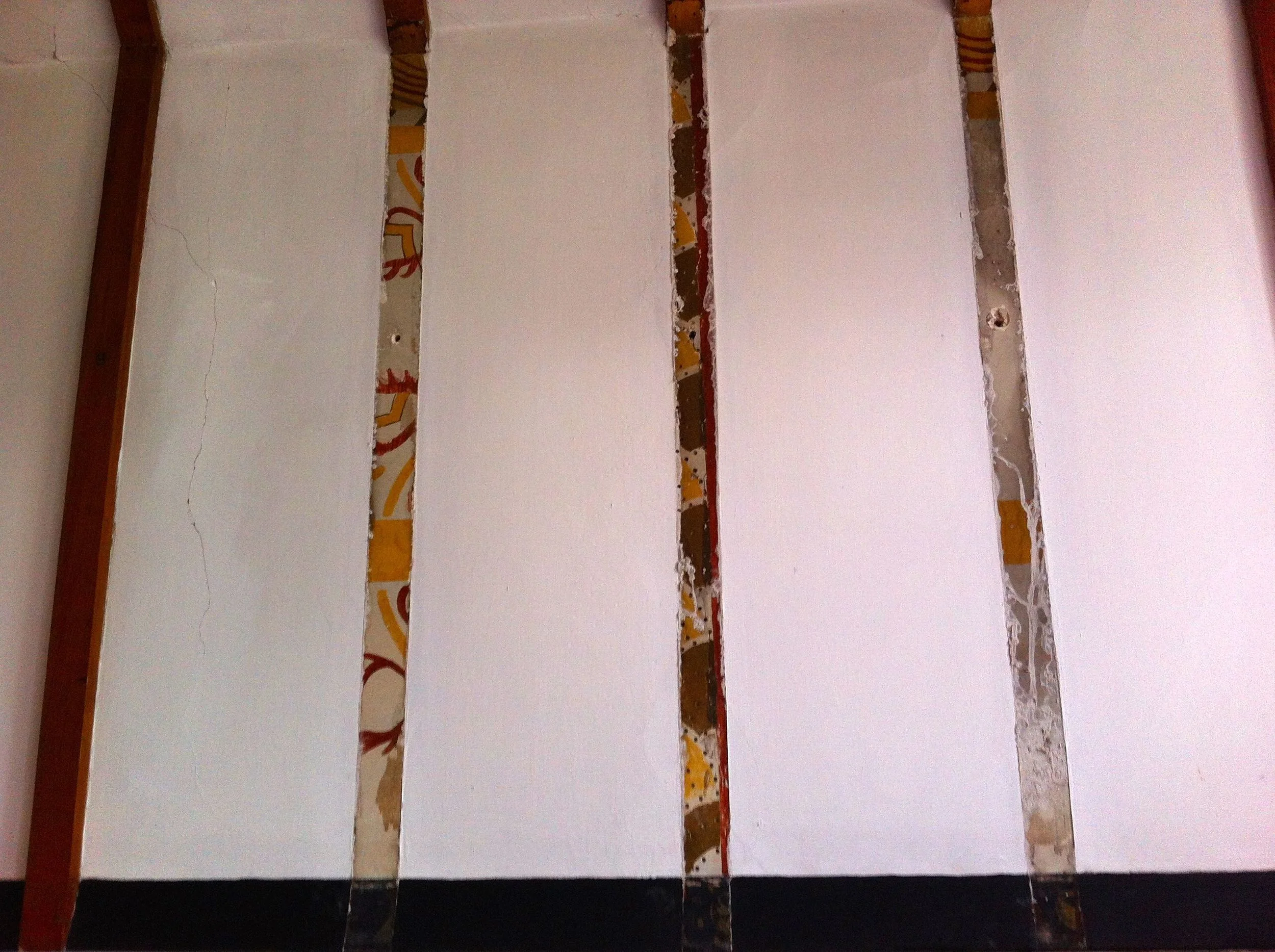
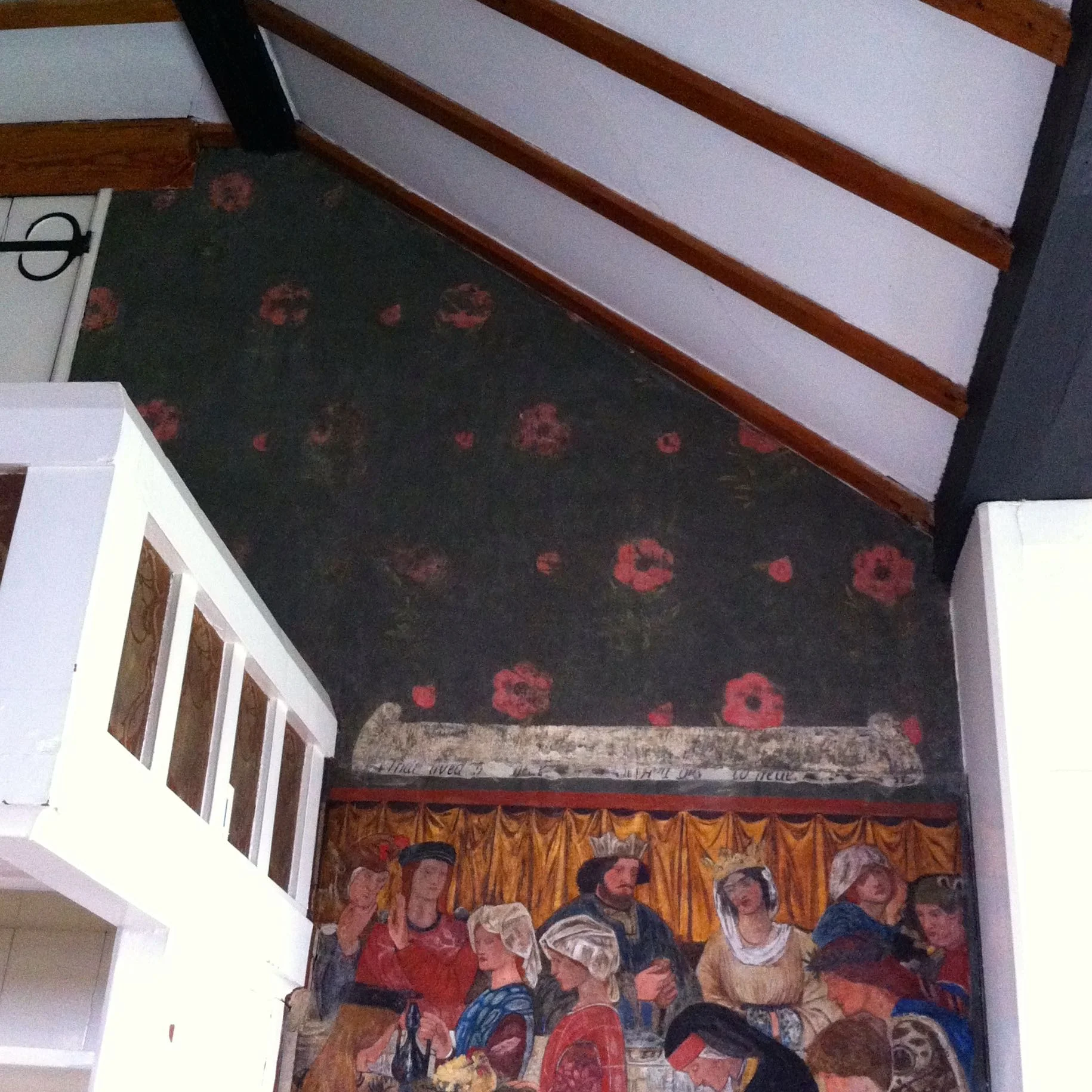
Above the settle - another large wooden structure built into one end of the room, complete with a mock Minstrels gallery, which if I'm honest I didn't much care for - another discovery was made and that's of this original wall covering with its repeating floral design. The pictures below show the discovery and a reproduction of what it would have looked like originally. It's another timeless design, but alongside the ceiling I think it's safe to say they liked colour in their rooms!
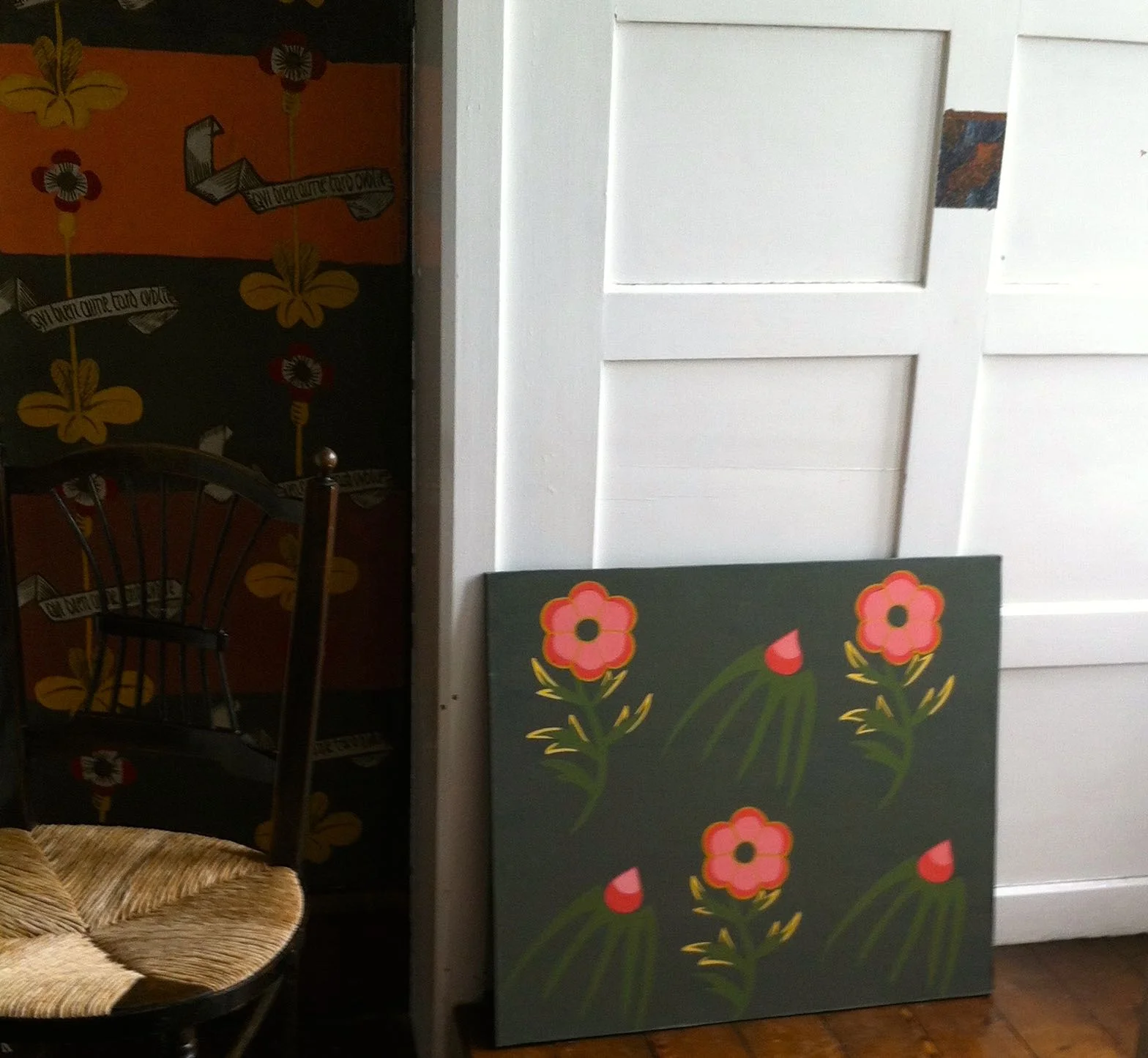
I was quite taken with this simple geometric pattern also in the Drawing room... so alongside the paintings, floral pattern and that ceiling. For me there's a simplicity to this repeating design above the window alcove that has a feel of tiles to it.
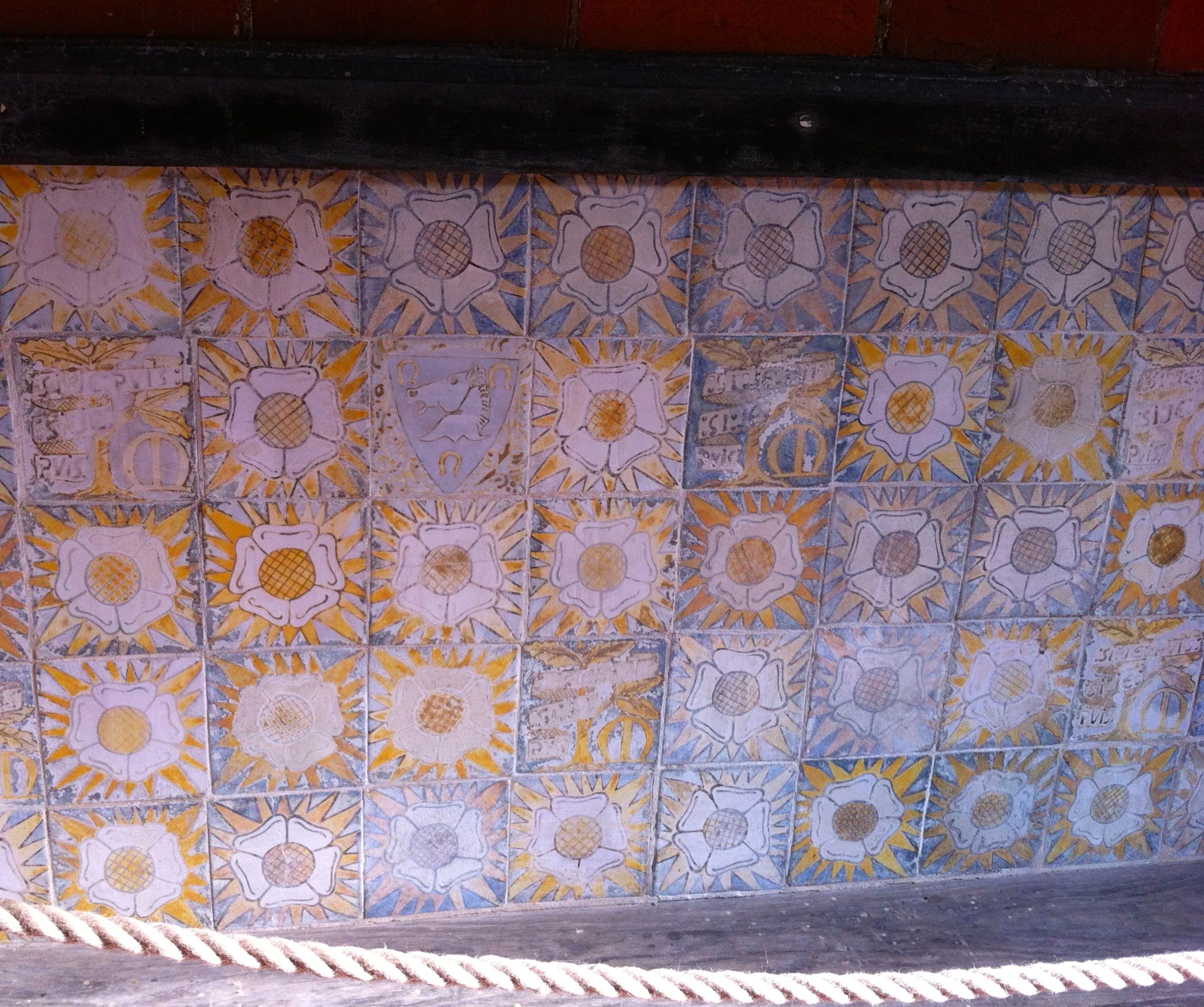
And talking of tiles, as we left the Red House we took some time to observe and admire these original tiles, which looks like more practice was taking place! And then we were once again out in the garden, which hadn't quite woken up just yet, and it was time to get back on our bikes and head towards home, which I hoped would be slightly more downhill than our uphill route here!
So as first visits go it was great, because I'll be back to check out the garden throughout the year and to catch up on future discoveries the NT make as I'm sure they'll be more. And if there's any more of that chocolate cherry cake I'll be back for another slice of that too!