


Volunteering to plant the #TowerPoppies

Towards the end of the summer I received an email from Team London with volunteering opportunities and one of those was to plant poppies at the Tower of London. I'd already seen them once - see The Poppies at the Tower of London - and had seen how remarkable the installation already was, so I was keen to volunteer some time to be part of this and to get up close to the poppies too. 

So at the end of September we headed to the Tower of London for our four-hour volunteerng session starting at 9am on a misty Sunday morning.  And that's early for us to be in town on a Sunday morning! 

After queuing with the other volunteers to enter the moat, we picked up our volunteer t-shirt and commemorative badge and having been split into groups of around twenty to thirty we watched a short film explaining the story of the poppies and how to to assemble them. Then we picked up our protective gloves and headed out into the moat - somehow, I don't know how I managed to pick up a pair of left-handed gloves! Luckily I'd brought my gardening gloves so quickly swapped to using those. I'd also brought some foam pads to kneel on and our knees were soon very grateful for those too!

image.jpg
image.jpg

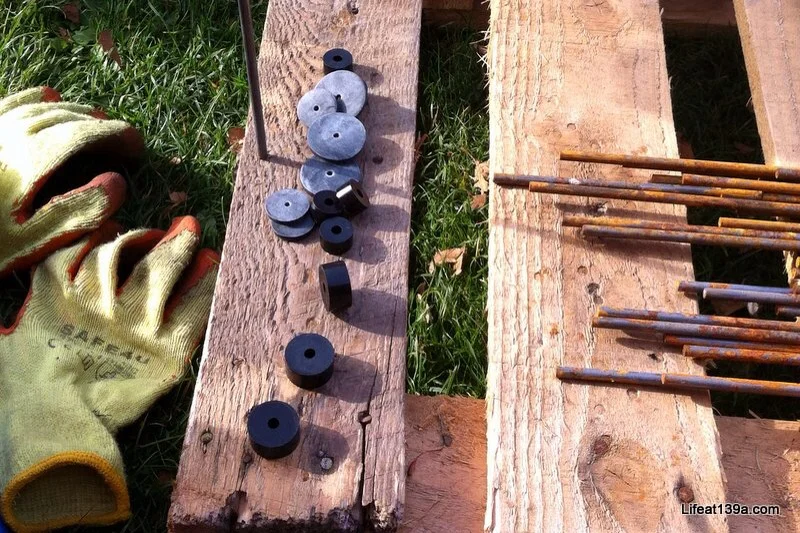
Each group of volunteers split into two teams with half assembling the rods - small washer, large washer, spacer, end-cap which became our mantra - and the other half planting the poppies. We were assured the groups would swap over so everyone would be able to plant poppies (and we did) so we started assembling the rods. 

It wasn't quite as easy as it sounds. Some of the washers were quite hard to get onto the steel rods, which came in three lengths. Soon the gloves were abandoned as we knelt around the makeshift pallet tables and tubs of washers, spacers and end-caps.  

image.jpg
image.jpg

There was a knack to assembling the rods and it did (mostly) get easier, although there were some that I passed over to MOH for expert attention! The atmosphere among the volunteers was friendly and amicable although we were aware of the significance of each poppy, and each poppy was planted with the respect it deserved. 

image.jpg

We swapped to planting poppies, and clearly we needed the poppies which were stored in boxes at the edge of the moat to do that. To add the poppy to the assembled rod we needed to remove the end-cap and the spacer, add the poppy and then replace the spacer and end-cap. 
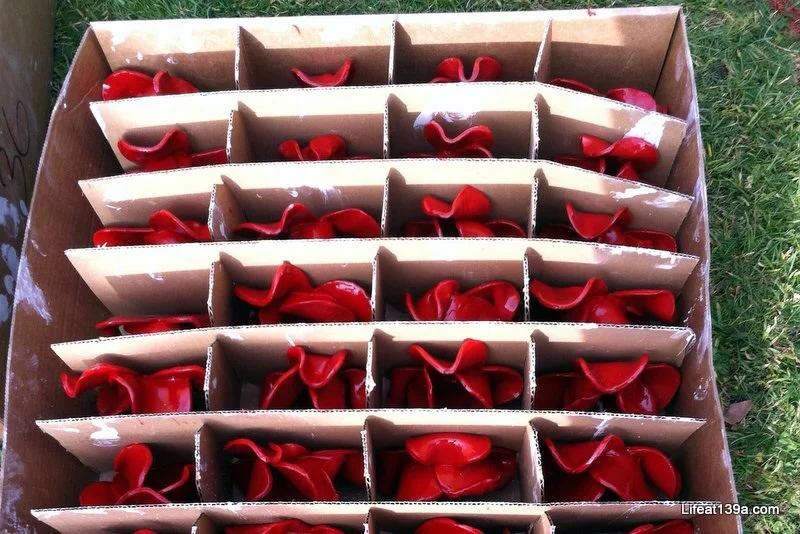
image.jpg

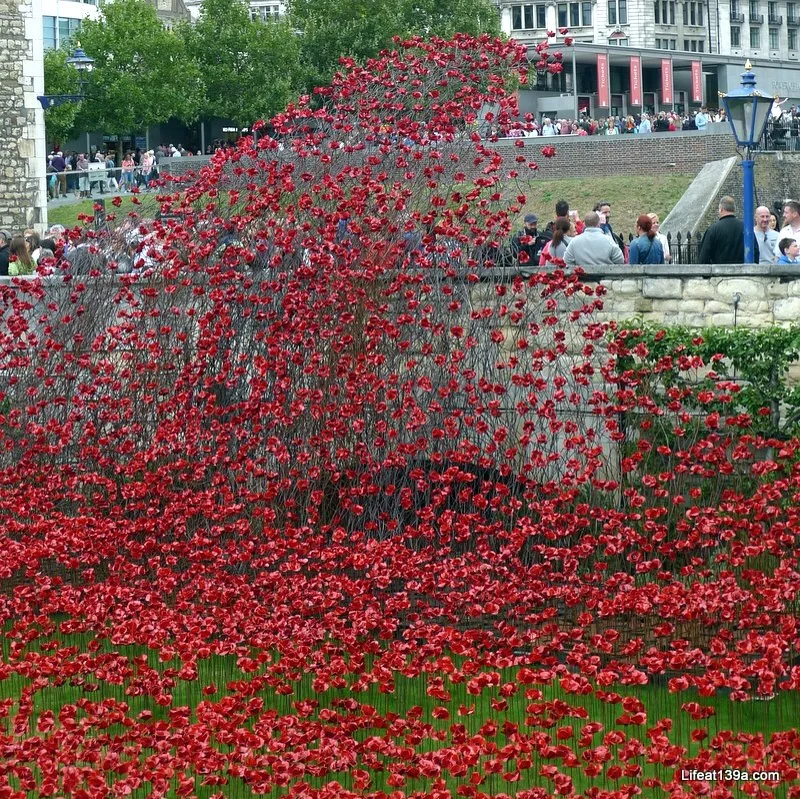
Then wearing the safety glasses - by now over our sunglasses as the sun had seen off the mist and it was a lovely day - we planted the poppies. There's a method for the three differing heights too, every half a metre there's a mid-height poppy and every metre there's a tall poppy. The majority of poppies are on steel rods approximately 50cm tall and we were encouraged to plant these so the poppies were touching. They looked better planted closely together, but I imagine there was also the need to fit in all of the 888,246.

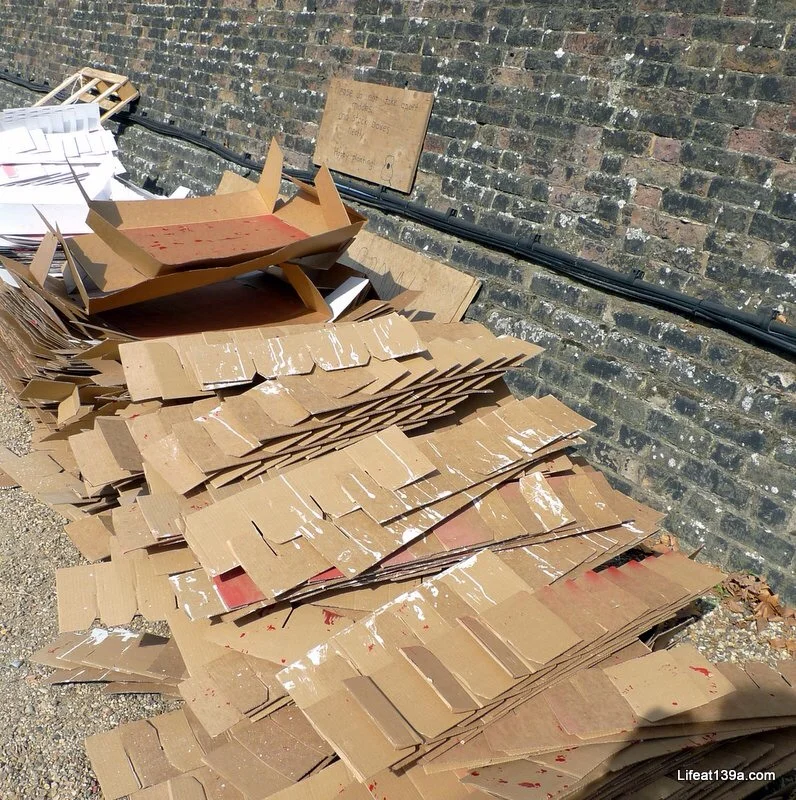
image.jpg
The empty poppy boxes were returned to the workshops and used to deliver more poppies to the moat

The empty poppy boxes were returned to the workshops and used to deliver more poppies to the moat

We swapped back to assembling rods and if you saw my Black and White photo this Sunday - see Black & White photo 18: #TowerPoppies - you'll have seen that it was tough on our thumbs. We each had blisters and the cuticles on my index finger were split however this seemed a small inconvenience given the sacrifice that each of the poppies represented. 

There were plenty of opportunities for photos, including when one of the Beefeaters visited the moat

There were plenty of opportunities for photos, including when one of the Beefeaters visited the moat

In each four-hour volunteer session they anticipate planting between five and seven thousand poppies. Just before midday, so about three hours into our shift the team-leaders said we could start packing up as in that session the volunteers had already assembled and planted seven thousand poppies! There were a lot of volunteers there that morning - perhaps a hundred or so, but that's a still a lot of poppies planted.   

MOH and I among the #TowerPoppies

MOH and I among the #TowerPoppies

And so, I'll leave you with a few more shots of the poppies taken from within the moat:
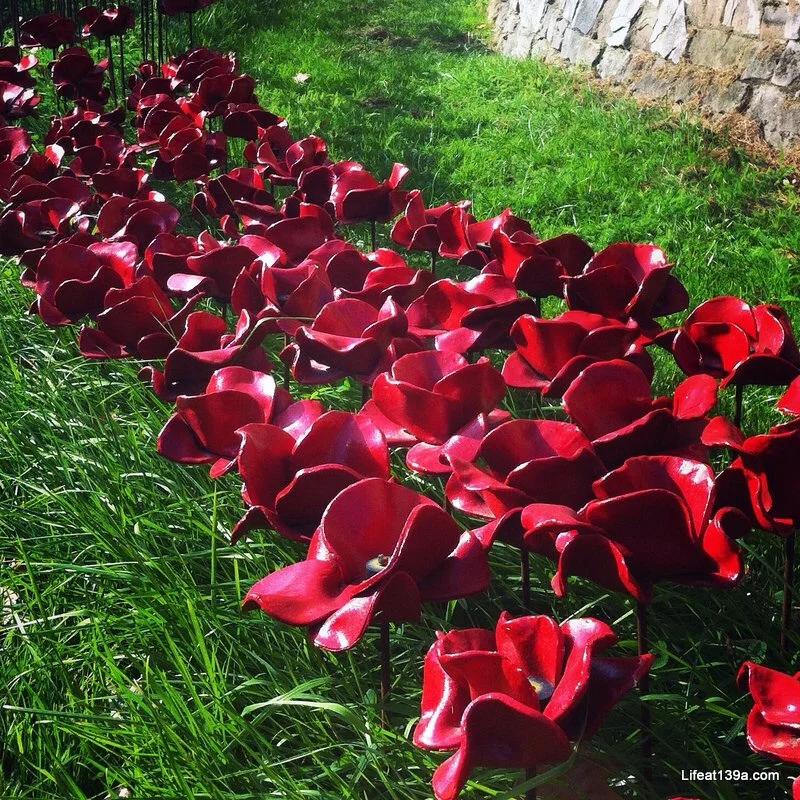
image.jpg
image.jpg
image.jpg
image.jpg
image.jpg
image.jpg
image.jpg
image.jpg

At the going down of the sun and in the morning, we will remember them.
The Poppies at the Tower of London

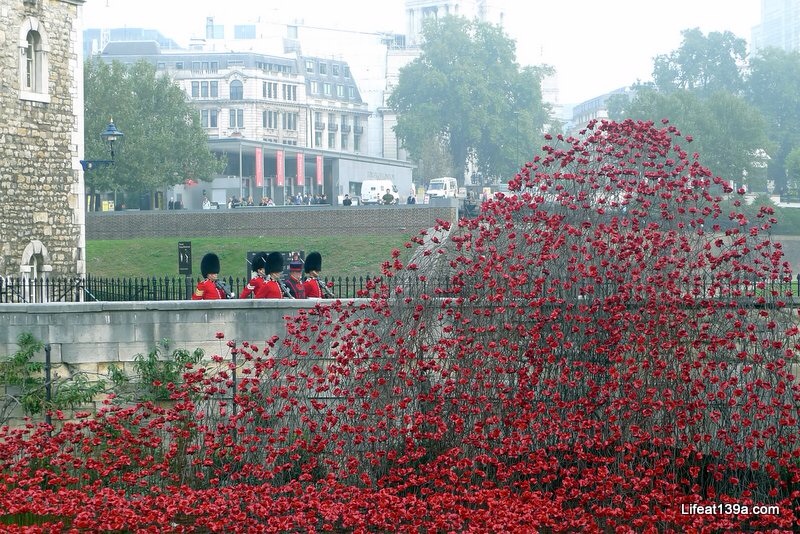
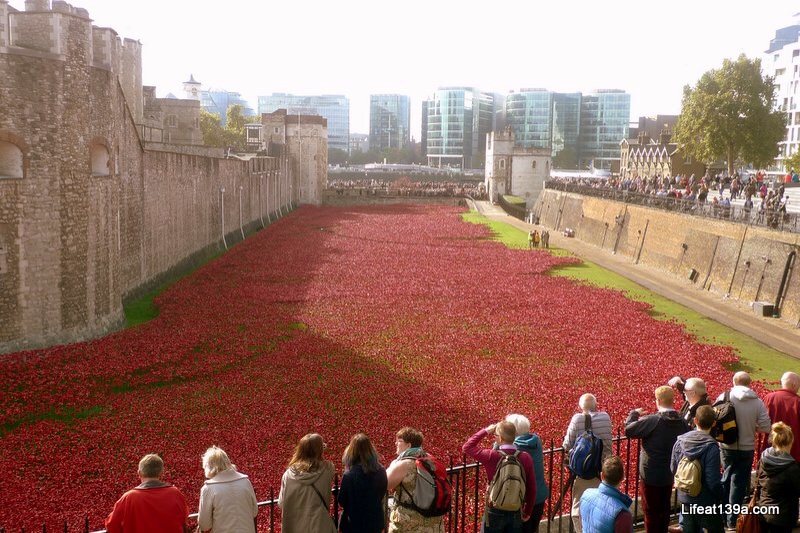
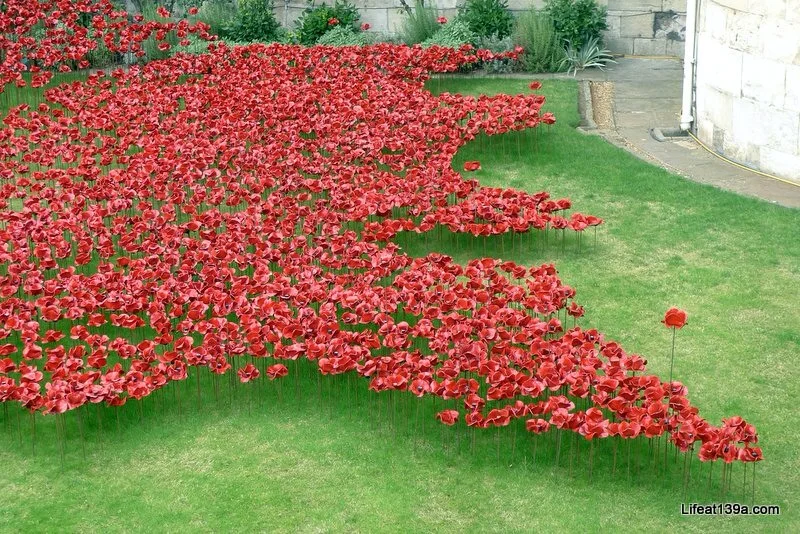
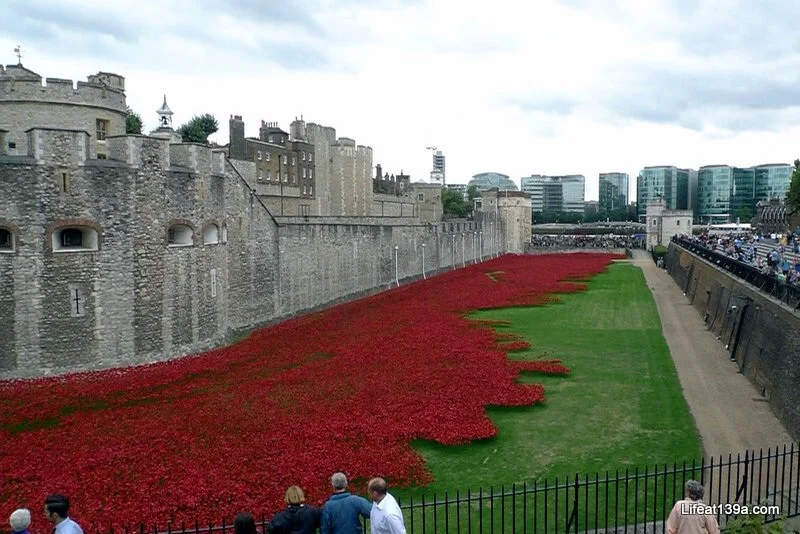
Or as they're officially known the Blood Swept Lands and Seas of Red which mark the centenary of the First World War, an evolving art installation with each poppy representing a British military fatality during the war.  There's 888,246 ceramic poppies being planted by volunteers and they are a powerful visual commemoration.

The first poppies were planted in the moat at the Tower of London on 17 July and they'll continue to be planted up until Armistice Day - 11 November.  They're already covering the 16 acres of moat and each of the two volunteer sessions a day aims to plant between five and seven thousand poppies, which need to be assembled before planting.

I first popped up to the Tower of London to see the poppies in August, then spent a Sunday morning volunteering in the moat planting poppies at the end of September (there'll be more on that next week) and then made time for another visit in October.  Each time I took some pictures and today I'll share how the installation has grown over my three visits.

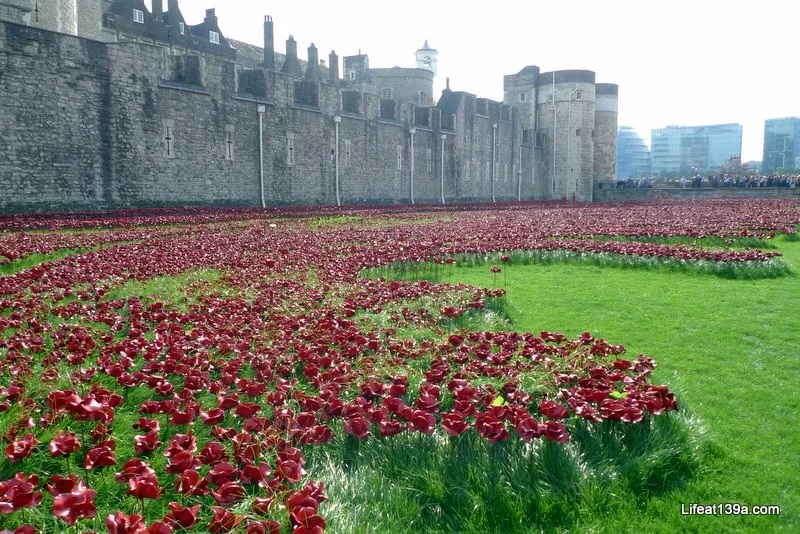
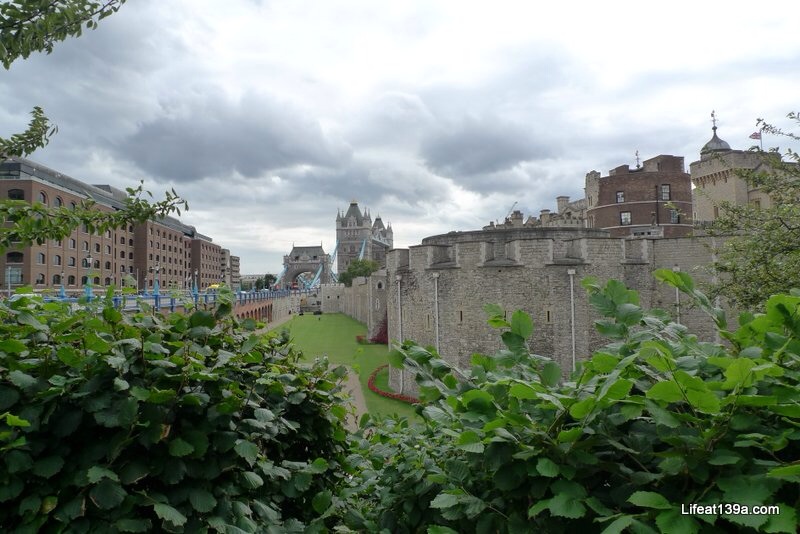
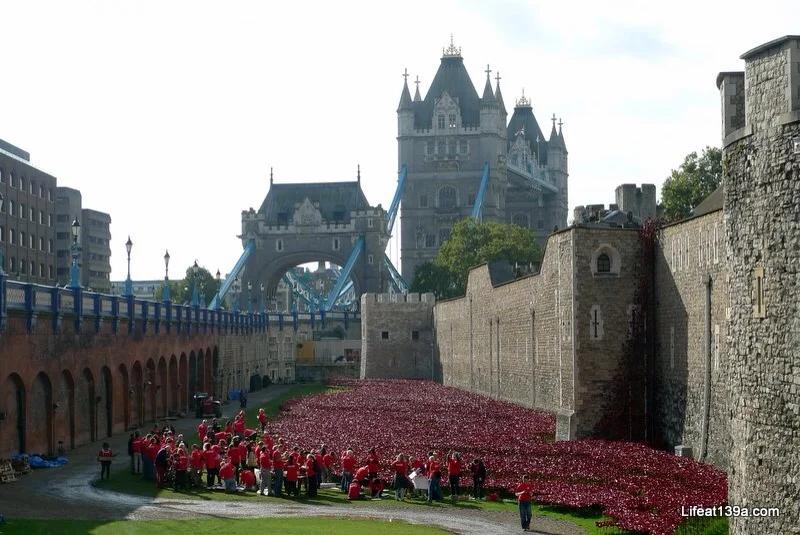
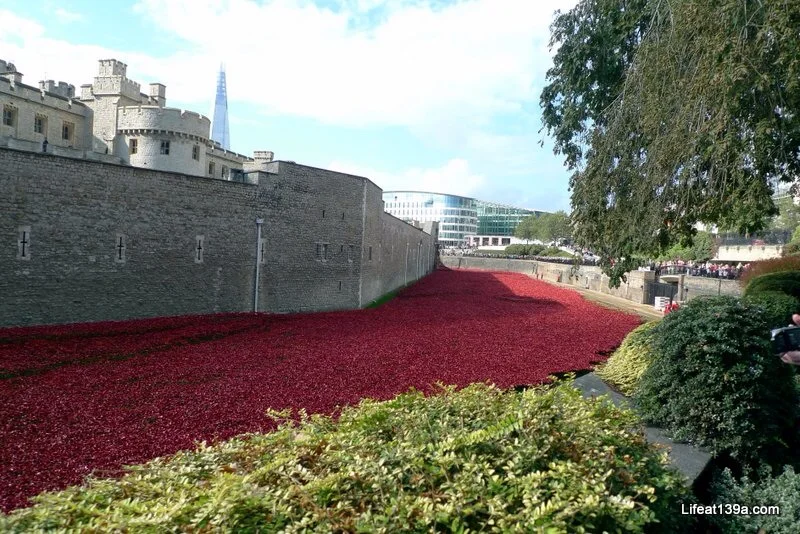
In August, looking towards the Thames

In August, looking towards the Thames

image.jpg
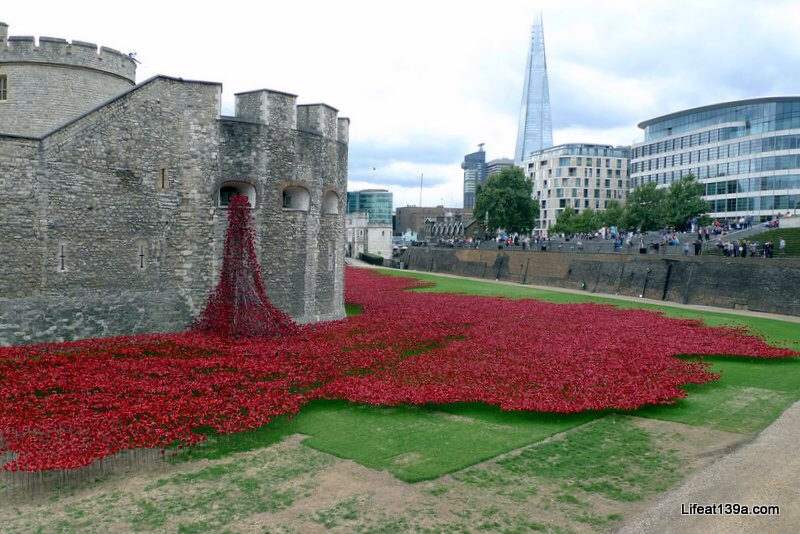
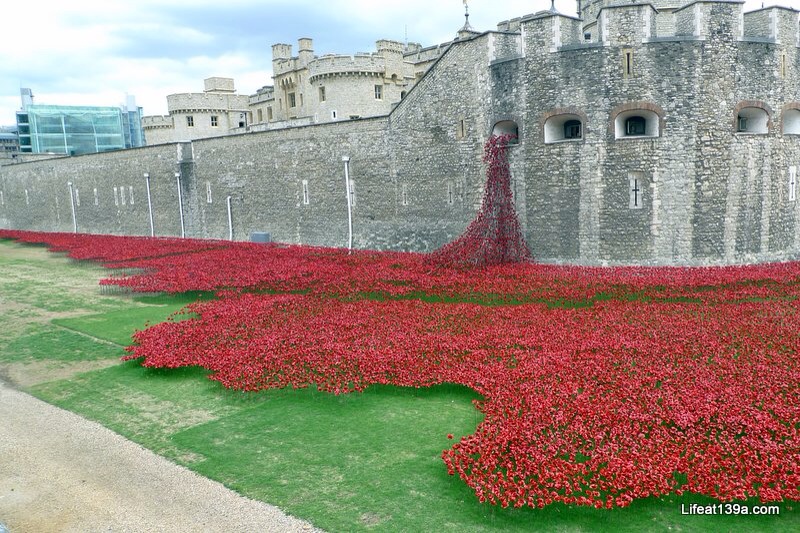
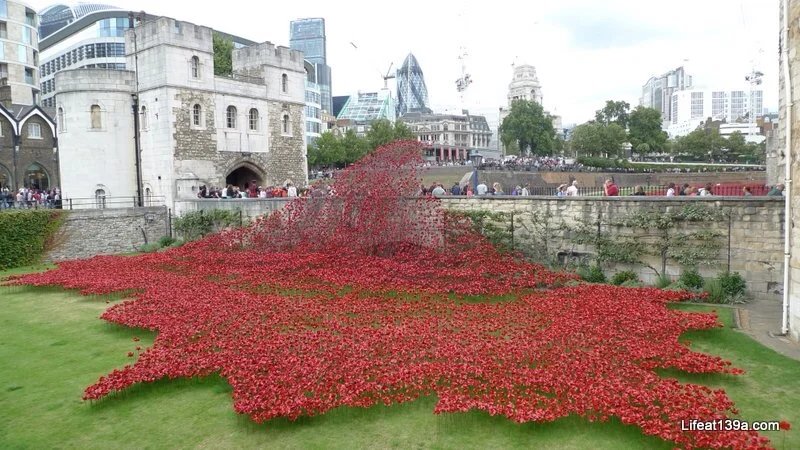
August: looking towards St Katharine's Dock and below towards Tower Bridge

August: looking towards St Katharine's Dock and below towards Tower Bridge

image.jpg

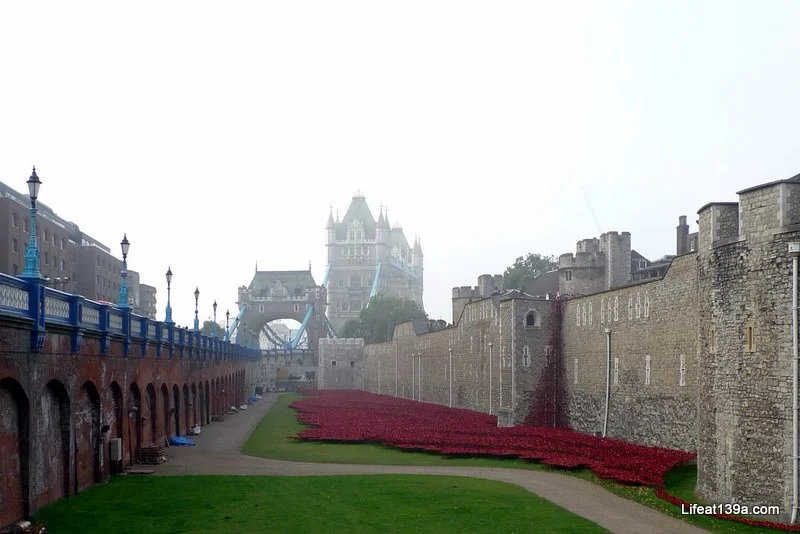
Even back in August they looked impressive, but there was clearly more poppies to be planted. The difference a month makes is amazing, below is the same stretch of moat at the end of September.  With just a few more poppies!

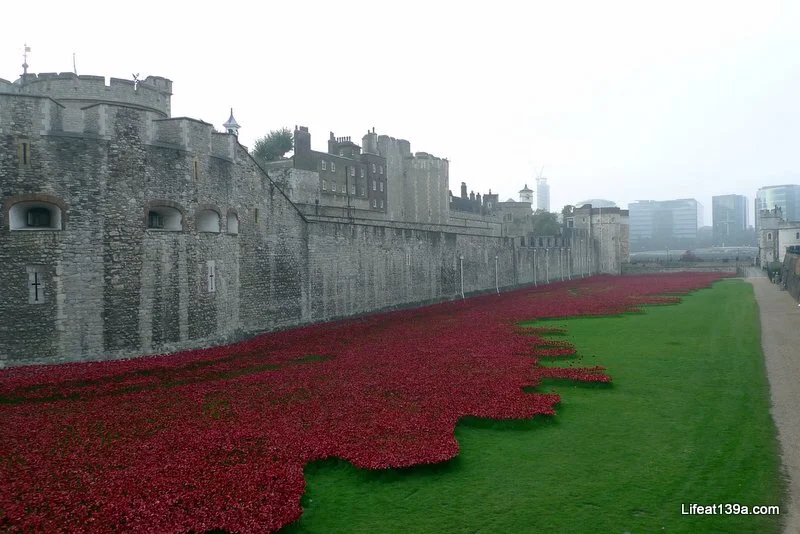
A misty September Sunday morning

A misty September Sunday morning

Similarly the section looking towards St Katharine's Dock was more densely planted

Similarly the section looking towards St Katharine's Dock was more densely planted

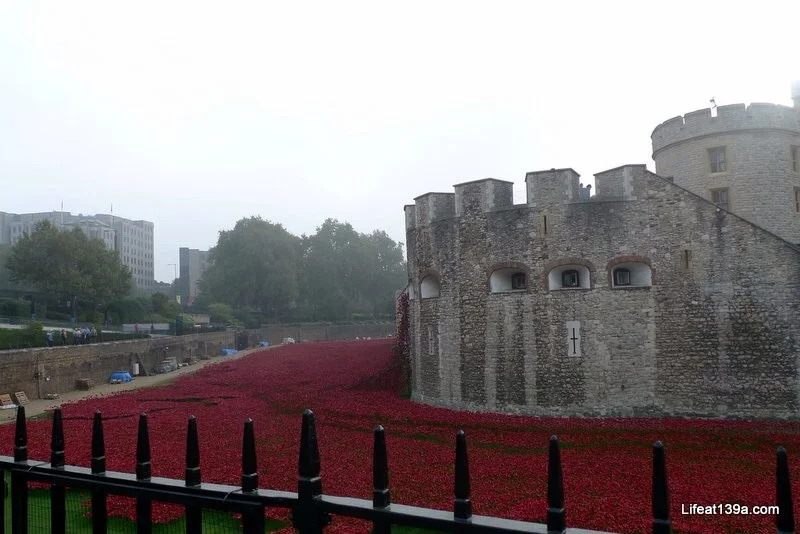
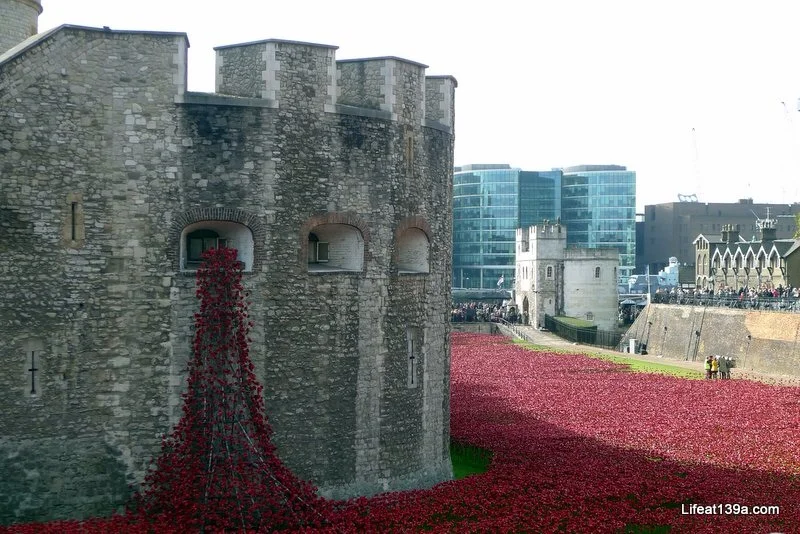
But not much seems to have changed in the section looking towards the Thames

But not much seems to have changed in the section looking towards the Thames

Our September visit was on a misty Sunday morning and much earlier than we'd usually be in town on a Sunday!  We were there early for our 9am - 1pm volunteering slot - I'll some share photos from our time in the moat early next week - but it did mean I was able to get some shots I wouldn't have got later on, like this one:

image.jpg

By the time I visited with mum and dad in October the planting looked more dense throughout the moat, and yet there was still another three weeks or so of planting to take place. There were noticeably more people coming to see the poppies too and it seems this has increased still further during half-term and as Armistice Day approaches. 

Further planting underway in October

Further planting underway in October

image.jpg
image.jpg
image.jpg
And this time, the section looking towards the Thames had also changed

And this time, the section looking towards the Thames had also changed

Each time I've visited I've been amazed and impressed by the number of poppies. While there's plenty of people visiting, there's also a hushed, respectful and reverent feeling around.

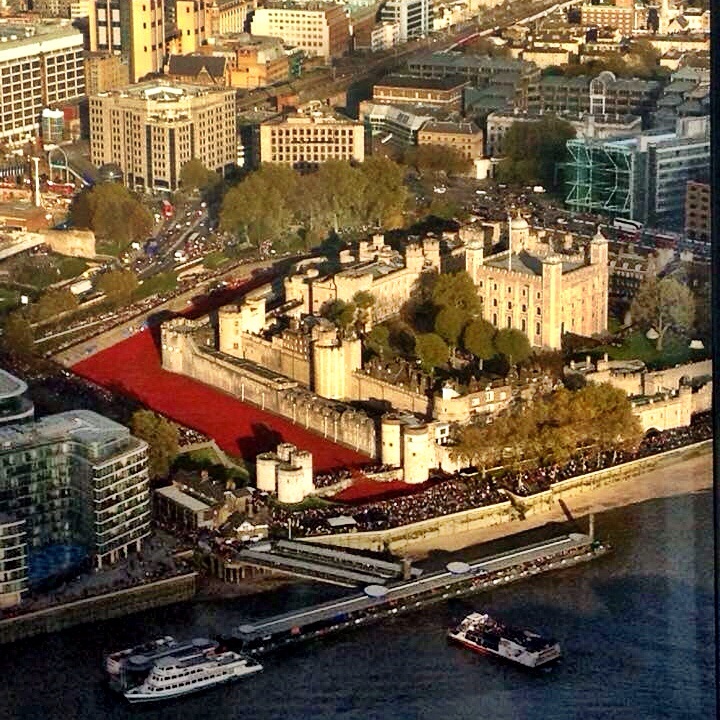
There's one view that I've seen which shows the true scale of the installation and it's this one taken from The Shard. Sadly I didn't see this first-hand so I'm grateful to my friend Nicola for letting me share her photo here. Wow.  

Photo credit: Nicola Ward @NWard1111

Photo credit: Nicola Ward @NWard1111

All of the ceramic poppies have now been sold and dismantling starts immediately after Armistice Day with more volunteers undertaking this huge task. The monies raised from the sale of the poppies will help support six service charities in the UK, which is a great way to ensure that service people today get the support they need. And it's a fitting way for such a poignant memorial to make a difference as we remember those who lost their lives serving our country. 

image.jpg
image.jpg
image.jpg
image.jpg

The a-maze-ing gardens at Glendurgan

I was hoping to share an update on the tree work taking place in my garden today, however as it's still underway I've decided to leave that until next week. So instead there's pictures from our visit to Glendurgan Gardens in Cornwall, another from our trip in September.  The gardens were started by the Fox family in the 1820s as they wanted a "small piece of heaven on earth".  Two of the Fox brothers lived close by - so as our guide explained, they really did like the area - and one founded Trebah Gardens just up the road. I'll share my pictures from there another time. 

Glendurgan is a wild and wonderful valley garden and the climate and geography are key to its success. Wooded slopes provide shelter and being in one of the mildest climates in the UK also helps. Like other Cornish valley gardens there's many sub-tropical plants and one or two other fascinating additions - remember this Boat Seat I shared a while back?

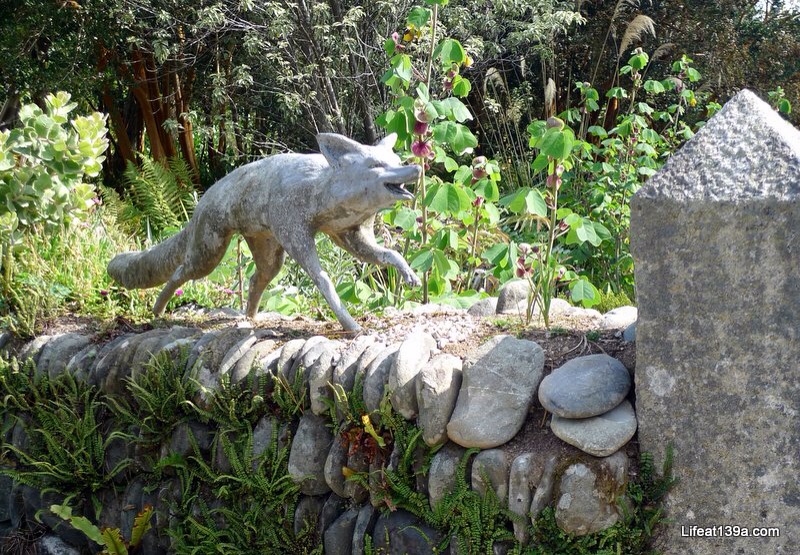
I wish the foxes in my garden were this static

I wish the foxes in my garden were this static

Agapanthus 

Agapanthus 

Banana, with some tiny fruit

Banana, with some tiny fruit

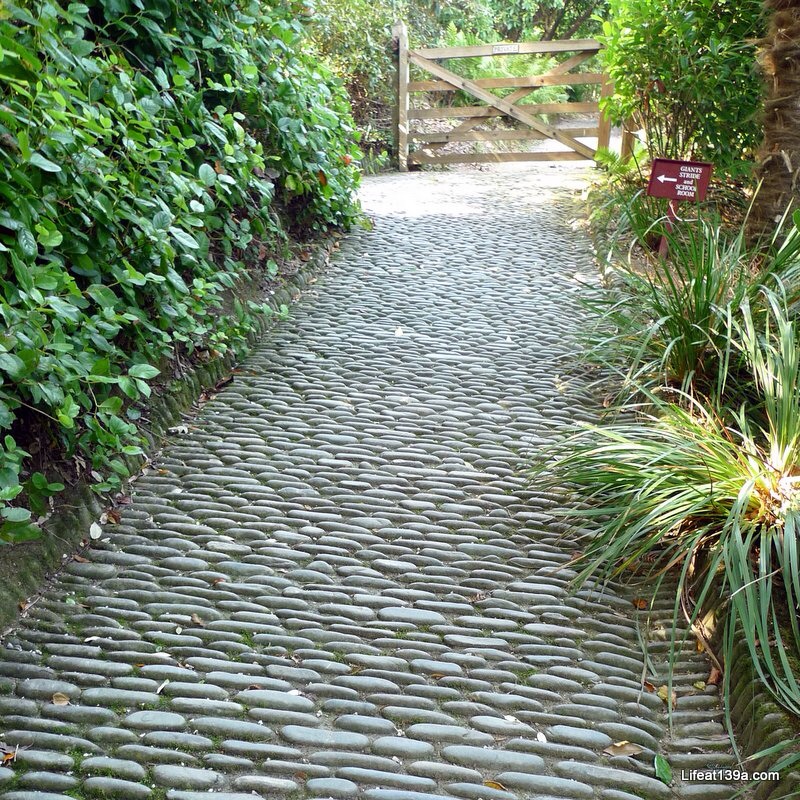
We were given a handy tip to walk down one side of the garden as if we were to come up the other side it would be less steep. So duly noted and a few metres along we couldn't remember if we were supposed to walk down the left or right-hand side of the garden. Oh well, we decided to head towards the School Room and headed off down this pretty cobbled path. 

image.jpg

There were lots of cobbles in the garden and put to good use in paths and walls. I'm not sure I'd fancy either collecting them, hauling them up (or down) the valley or laying them!

image.jpg

And so we reached the rebuilt School Room. It was rebuilt in 2002 and provides a focus at the head of the valley and is a modern interpretation of the original building. The original building was built in 1829 and was used by Mrs Fox to educate local children until 1842 when the school moved to the loft of a fish cellar in the village of Durgan at the bottom of the valley. 
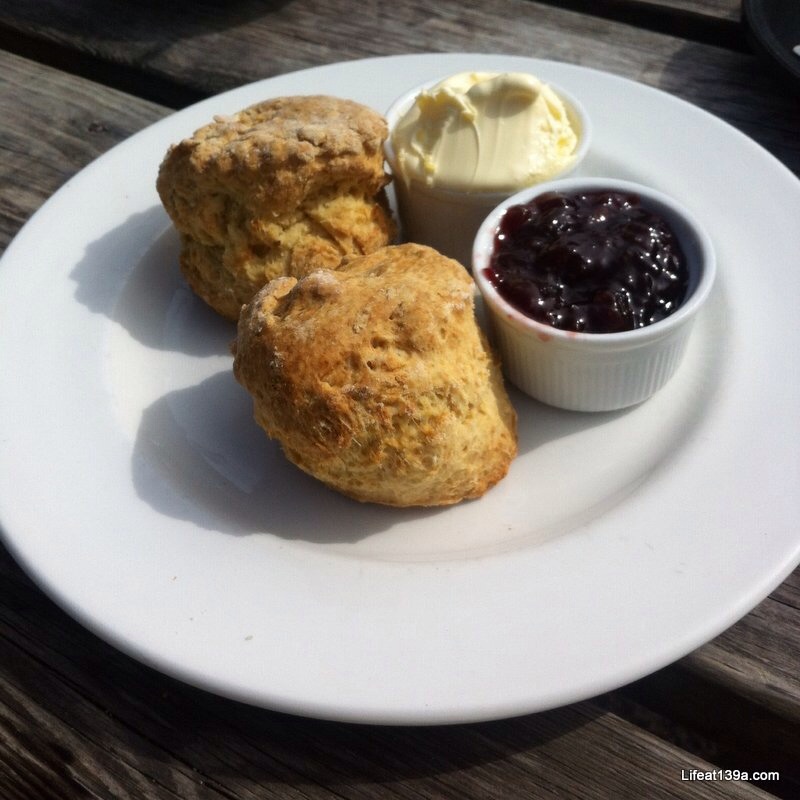
image.jpg

With views out to this tree and down the valley, it's a pretty idyllic place to learn. 

image.jpg
image.jpg

Before heading down towards the village of Durgan and the coast, we headed over the Bamboo bridge. The handrails were made of bamboo and tied functionally and decoratively with rope. 

image.jpg

The paths were surrounded by lush greenery which brought some respite from the warm September Cornish sun. There were hints of autumn though with fungi appearing. 

image.jpg
image.jpg

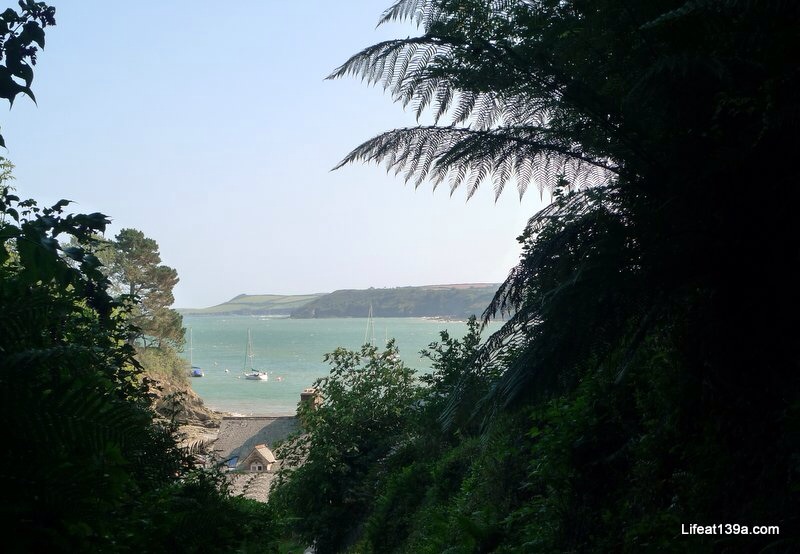
And then we got our first glimpse of the view and the Helford river. Yes, wow!

image.jpg

The village of Durgan was quaint and they must have known we were coming as they'd put the flags out...  We sat on the beach wall watching the water (and other visitors) for a while before heading back up the valley using the path on the other side of the garden. 

image.jpg
image.jpg

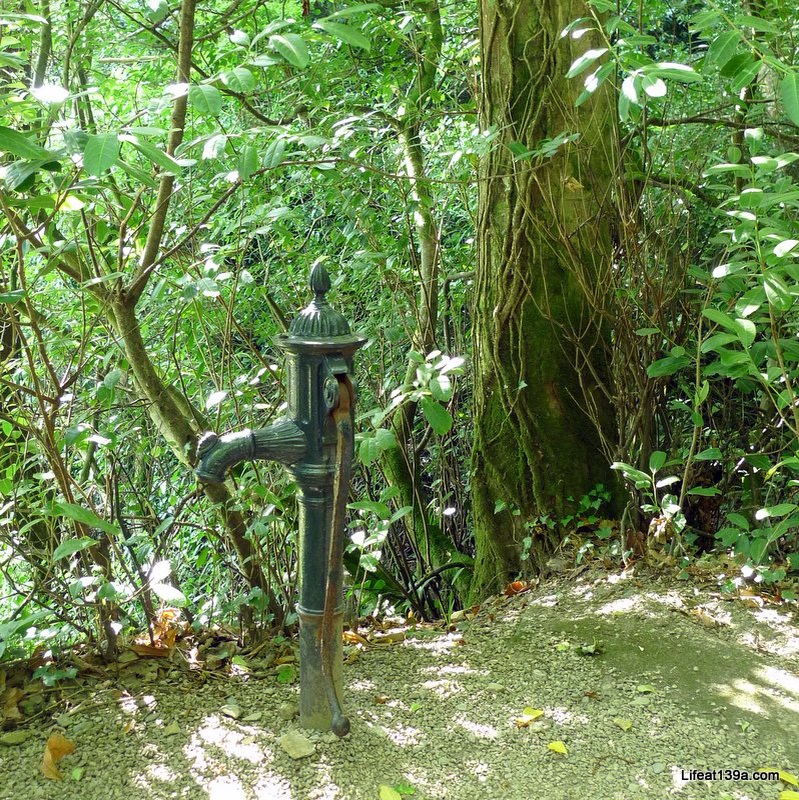
This side was steeper so in our 50-50 choice earlier I think we switched the advice we were given, oh well. Onward and upwards. It wasn't long before we came across this old water pump in what was probably a practical place but it seemed a little odd to us. 

image.jpg

And then there was the Old Cattle Rush, which we presumed was a way of herding cattle. We've since discovered more and it acted as a kind of level crossing over one of the garden's main routes, and down which cattle rushed to drink from the stream. 

image.jpg

We climbed higher through the garden to get this fantastic view of the maze which was planted in 1883 and continues to baffle visitors - including us!  We did get to the middle but it was hard work, not helped by the fact that it's set on the side of the valley, so it was all up and down, and round and round and then back again!  It's beautiful to look at though. 

image.jpg

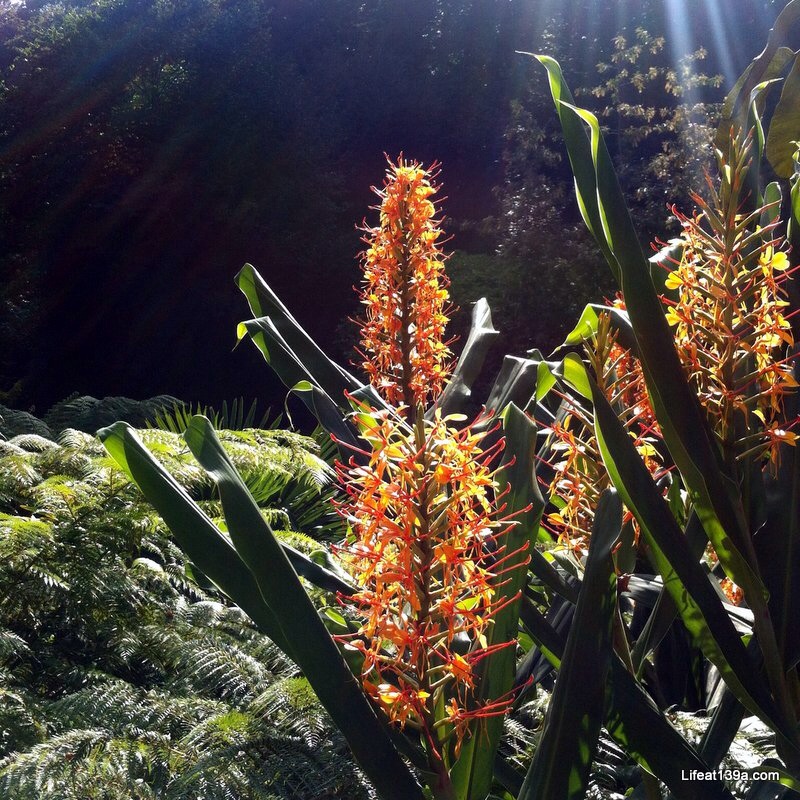
After our trip in the maze we happily spent some time admiring the ferns and orange flowers. And getting our breath back!

image.jpg
image.jpg

So with a final look back at the valley - just look at that blue sky - a scoot past the Boat seat, it was time to claim our hard earned cream tea in the cafe. 

image.jpg
image.jpg

There is another entertaining feature called the Giant's stride, but I'll save that for next time. It's fun and definitely provided us with some laughs.