

It's been a while since I shared the start of our gabion basket journey, and I can't believe how quickly it's gone, so today, belatedly I'm sharing how we filled them. I was keen for a mix and match approach, but MOH favoured buying rocks and going for a more normal look. The sort of look you see on the sides of motorways, and as we later discovered in our local B&Q, and then again for part of the gabion wall at Hyde Hall. They're everywhere and it’s like when you've decided on a new car, you’re suddenly aware of it everywhere, and wonder if you’ve made the right choice.
I don't expect you'll be surprised to learn that we didn't go for the uniform and more usual buying rocks to fill these. MOH had worked out the quantities needed - using one of the gabion basket providers sites - and told me a big number, I think in the hope to shock me. It didn't shock me as I'd already used that calculator and gone one further and worked out the cost for buying the stones too. Yes, exactly.
I did some speedy internet searching, on eBay and Gumtree and Freecycle, to see if we could buy bricks and rubble, and even if people would give them away. It turned out we could, and even better, there were a couple of people giving stuff away less than twenty minutes away by car. Proving to MOH that we could collect enough stuff for free, and he knows me well enoug to know when he was beat.
So on another one of those hot days we headed over to Hither Green and loaded the boot of my Renault Clio full of sacks of rubble, bricks and broken slabs. The lady there was happy for us to take as much as we could and a car-full was gratefully accepted. The next day we headed over to the other side of Blackheath and loaded the car again, this time with help from the man giving the rubble away. He said he was glad to be getting rid of it, so it was the least he could do. In this collection there were roofing tiles, more broken slabs, some rubble and some bags of post-crete that had been activated.
So now as well as the stones, bricks and other suitable garden rubbish we had two car-fulls of free rubble or hardcore. And the latter was all stored in our front garden, so there was still the large job of moving them through the house and up to the end of the garden. In the heat that wasn't a job we relished, and then while we were preparing the area and getting the baskets positioned I managed to get a reaction to a mosquito-like bite.
We'd already decided to fill the large 1 metre depth x 1 metre high x .5 metre wide baskets first. There's two of those and they were the most important to be filled as our new pizza oven would sit on top of these. With the bite growing ever bigger and me becoming increasingly grumpy about it and less mobile, I was banned from carrying bags of rubble.
Thankfully that coincided with the day that my SIL and BIL were drafted in to help out, and the day the four of us installed sleepers in another part of the garden. And yes, they did work hard and we were ever so grateful. It's amazing how much more work you can get done with four pairs of hands, over two (even when one pair of hands isn’t as useful as they’d be without that bite!)
So while the three of them carried our newly found collection of rubble through the house, around the chicane of the dining room table, out of the conservatory, across the circles and up to the stone circle at the end of the garden I waited and sorted out pieces suitable to be at the front and on display. The thing with gabion baskets is they get their strength from how they're filled. So the filling needs to be compacted and free of large gaps, as large gaps don't equal stability.
And so we made a start.

What we immediately learnt was that 1 metre is a long way to place things, and I quickly became a dab hand of nursing blocks for the edge down the drop using hands through the wire baskets. And even then it'd often fall over as it got to the bottom, and that's where the rake (both ends) came in handy.
Never let it be said I'm not resourceful!
And gradually I got into a rhythm and worked out how many bricks and half-bricks I could fit into a row, and how by using slate I could make the small level adjustments I needed. I was also keen to use the remnants of paving we had leftover from our patio and the stone circle (and subsequently the patio extension and barbeque stand) so there was some continuity and of course, so we could finally use up what we had left!

It didn't take that long for them to fill. And clearly that's easy for me to say, as I was waiting for the rubble to be delivered rather than lugging it up the garden!

Throughout the afternoon there was much stepping back to admire and check progress. And if you tackle a project like this (or in fact any project) it's something I recommend. The level may be telling you it's level, but what does it look like? For a detail person like me, who annoyingly can often spot when things are millimetres from where I wanted them, it's the only way to go and be sure you're happy with it.
That of course occasionally gets me into slight pickles, like the time when I wanted the stone circle moved by five centimetres, thankfully I'd spotted its location wasn't right before digging really started, so while the gardeners were a bit miffed to start with, once I'd shown them the difference it would make, they were totally on board, but it was touch and go for a moment. And if you're wondering how I managed to show them something that didn't exist, well I didn't of course, but I did show them the view from our rear windows and how the circle was niggle-ling-ly (yes I know that's not a word) out of kilter for the eye.

And let's zoom back in for a moment, as once the gabion baskets are filled, they need closing and so the sewing with wire skill was called on again. It's pretty neat isn't it?

ALL MOH'S OWN WORK
Following advice from Katie Rushworth, from ITV's Love Your Garden, we laid a paving slab inside the basket, then closed the lid and added a paving slab on top. The reason for this is that if (or when there's movement inside the basket, the internal paving slab will help retain some the baskets stability. Clever huh?

Oops, it's time to stand back and admire our work again!

And this is with all of the baskets filled. We didn't have enough rubble and hardcore for all of the smaller baskets and ended up buying some London Stocks bricks to give it enough of a yellow feel for me. We also bought some thermal blocks (think breeze blocks that are easy to cut) for the inners. This made filling the final three seating baskets much quicker and gave us the knowledge that our seating blocks, will be pretty stable.

So our gabion baskets are filled, and it's starting to take shape - what do you think? There's still a bit to do and I hope to share the next installment much quicker than before, because it won't be long before we get to the pizza!
If you're keen to see more examples of how gabion baskets are used, then why not follow my board on Pinterest. It comes highly recommended as MOH also undertook research and sent me links to some of the things I'd pinned onto my board. He doesn't do social media, and couldn't work out why I found this amusing...
But if gabion baskets can get him looking at Pinterest (albeit through Google searching) then it really is quite a powerful tool!

Allotment envy, or something to aim for?
We were at the allotment last night watering, and checking to see how my fence and sticks had fared against the wildlife and there was good news; the fence was still standing, some sticks had been disturbed but most importantly the four newly planted tomato plants had been left alone. Phew.
While MOH busied himself watering and re-watering I found myself looking at the plot next to ours, it's one of the most bountiful and best looking on our site. I'm not surprised that the BBC will be at our site filming and no doubt it'll be this double-plot they'll focus on (unless of course they want to show a contrasting plot, then we'll be right up there!)
Not only is it bountiful, twice the size of the other plots, it looks good too.
It got me wondering if I was envious, or if it's something to aspire to. I definitely started at the envy end of this, but knowing how much work we've already put into our plot I know this has to be the result of many, many hours hard work over a long period. As such it's a shining example of what can be achieved, so it's also an inspiration.

PEARS
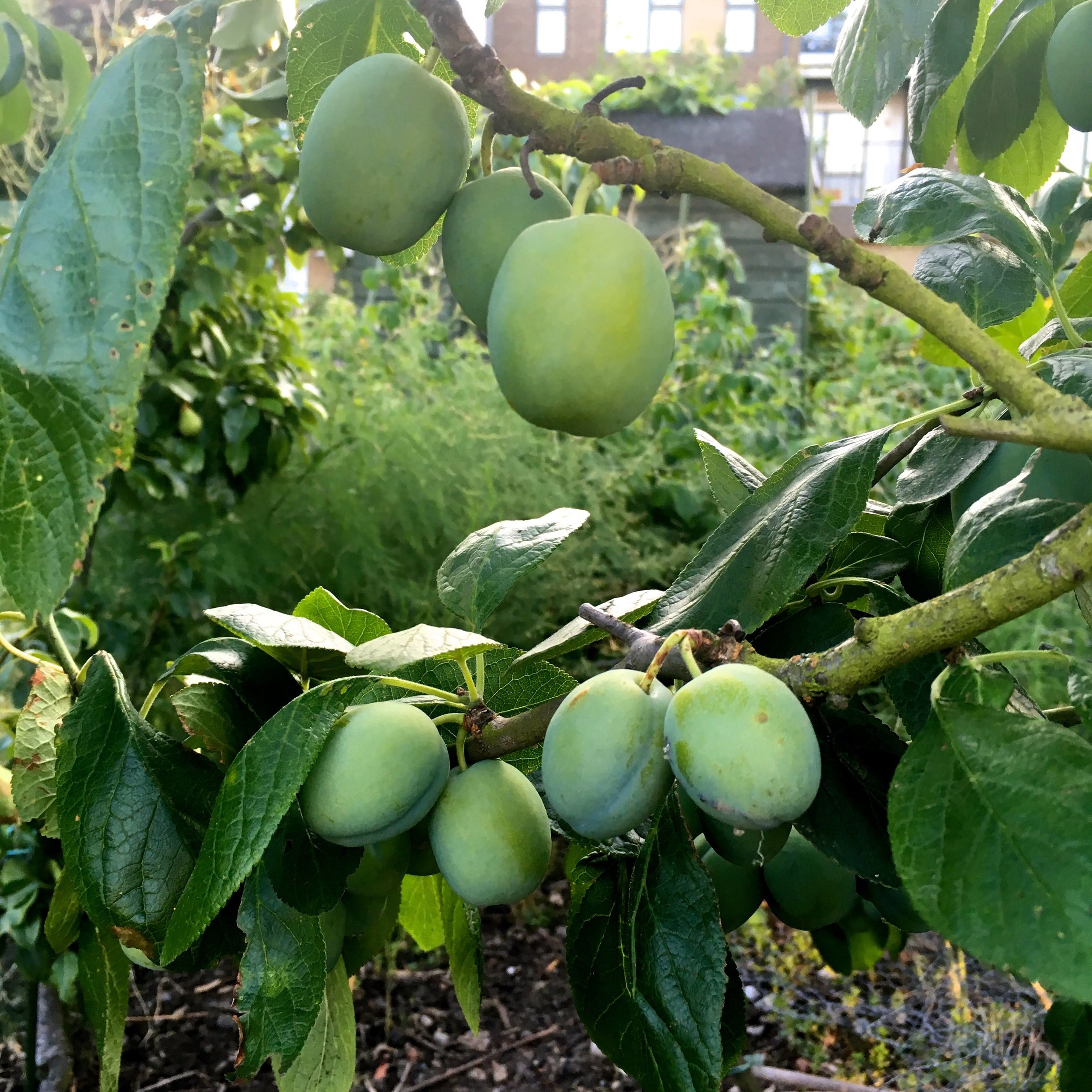
PLUMS
It's always good to compare and learn isn't it and I think that's the beauty of allotments, we can quickly learn from others by having a wander around the paths that separate our plots. All of my photos were taken from the path - that's important for me to include in this post as plot holders aren't allowed onto other plots without permission. Just saying.
I don't know the circumstances of this lady's plot (and if I did I'm sure I wouldn't be sharing them here) but I do know she manages two plots single handed. That alone is quite some feat, and then you see how much she grows, it's amazing. I know it's all about the ground work (pun intended) but even so, I think it's impressive.

LAVENDER
MOH is also impressed with the plot next door but also frustrated. Frustrated because there's often so much left on the plants and he wonders if it ever gets picked. I've a theory that it's all about the growing for this lady, and I guess if there's only one of you that's a lot of produce to consume. But we don't know, for me, it's enjoyable to see but it can be a bit daunting looking over and comparing at times!

ASPARAGUS
We do benefit from some migrating plants though - and well, free plants! A couple of raspberry canes bridged the path last year and I've happily left them where they planted themselves. Last weekend I noticed that some very tiny asparagus-like plants have appeared near where my potatoes are, so these have been moved further in the plot, we'll see how they go - they are tiny, so I think it'll be a good few years before we keep ourselves in asparagus!

The other thing I like about this plot, but I'm not sure I could manage is that the plants merge into one. There isn't the formal and blocky paths that we'll have on ours, who knows perhaps as things grow and grow well we'll lose the grass paths to cram in more growing space.

And flowers, it's full of flowers. And of course that means pollinators, which of course helps all over.

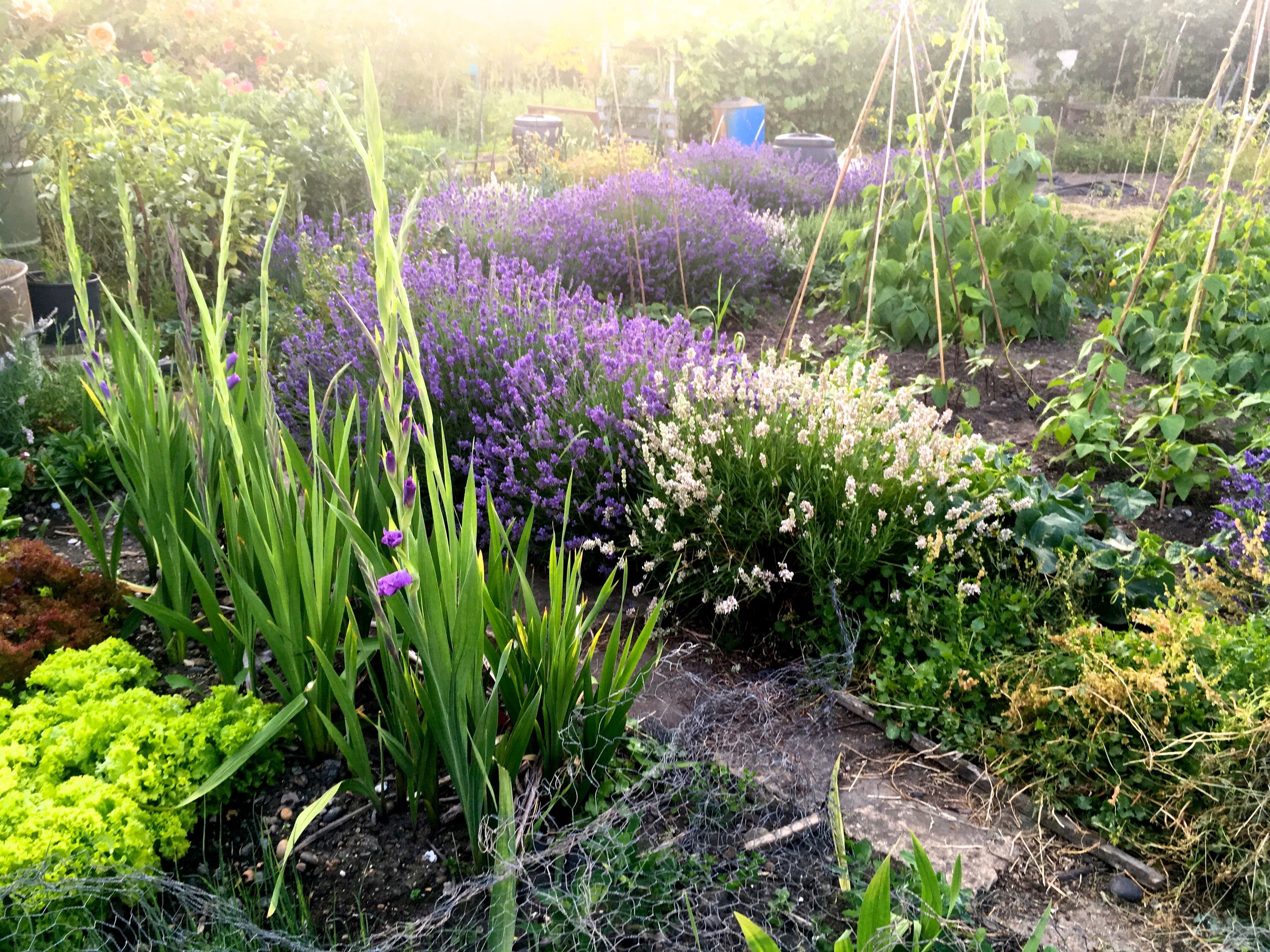

And look at those cubes of lettuces. Not striped like I dream of (well not actual dreams) but blocks of the same lettuce. Maybe that's more do-able for me. I've not sown any lettuce yet this year, but I really should.

The mix of flowers and veg works well and there is as much lavender as you think. And it puts my small plants to shame, but they'll get there and as they came from cuttings they're doing well.


Ah yes, don't talk to me about the onions. The few I have left are about pickled onion size, thankfully it's good we like pickled onions...
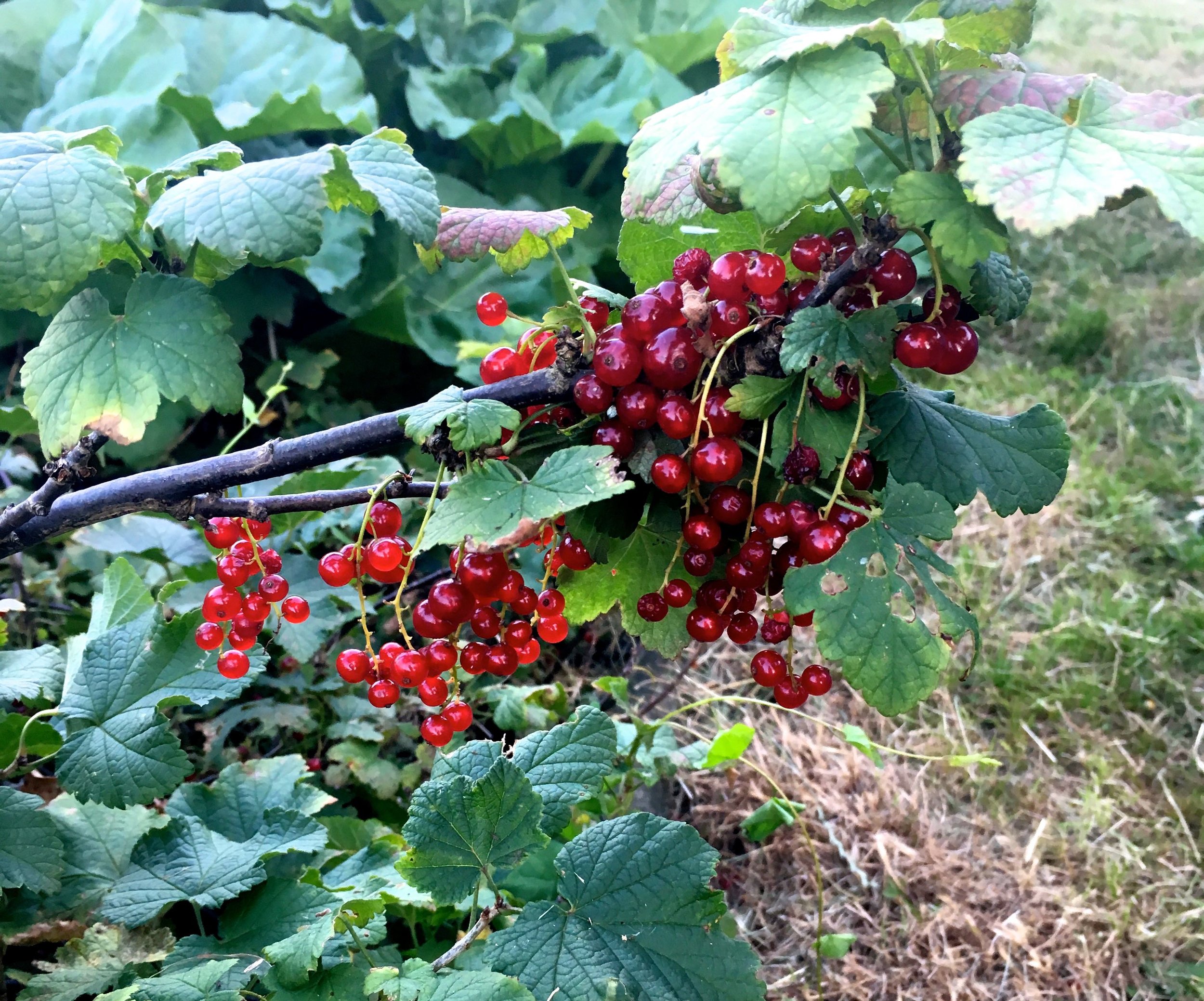
I've long-term ambitions for more soft fruit including redcurrants. We've had plenty of raspberries and strawberries before them, and MOH really does make a rather good Eton Mess.

Even the compost and more messy areas are flourishing. Yes, it's definitely something to aspire to, isn't it?
A succulent in a tin
A while back I bought a tin of strawberry tea in a fabulous pink tin from Fortnum & Mason. It turned out that the tin was indeed fabulous, but the tea not so much. So saving the best of it, the tin has been in my cupboard for a while as I knew, one day I'd have a use for it. I vaguely remembered seeing succulents planted in tins on Pinterest and I thought, as you do, how hard can it be?
In short, pretty easy - the hardest and most laborious part was removing the paper labels from two sides of the tin. There'd been plenty of cycles through the dishwasher, some scoring and some soaking, but some of the label remained. Last weekend I decided the paper labels were going once and for all. Cue more soaking - and a new trick - some nail varnish remover to remove that sticky residue that some glues leave.
And finally my tin was ready.
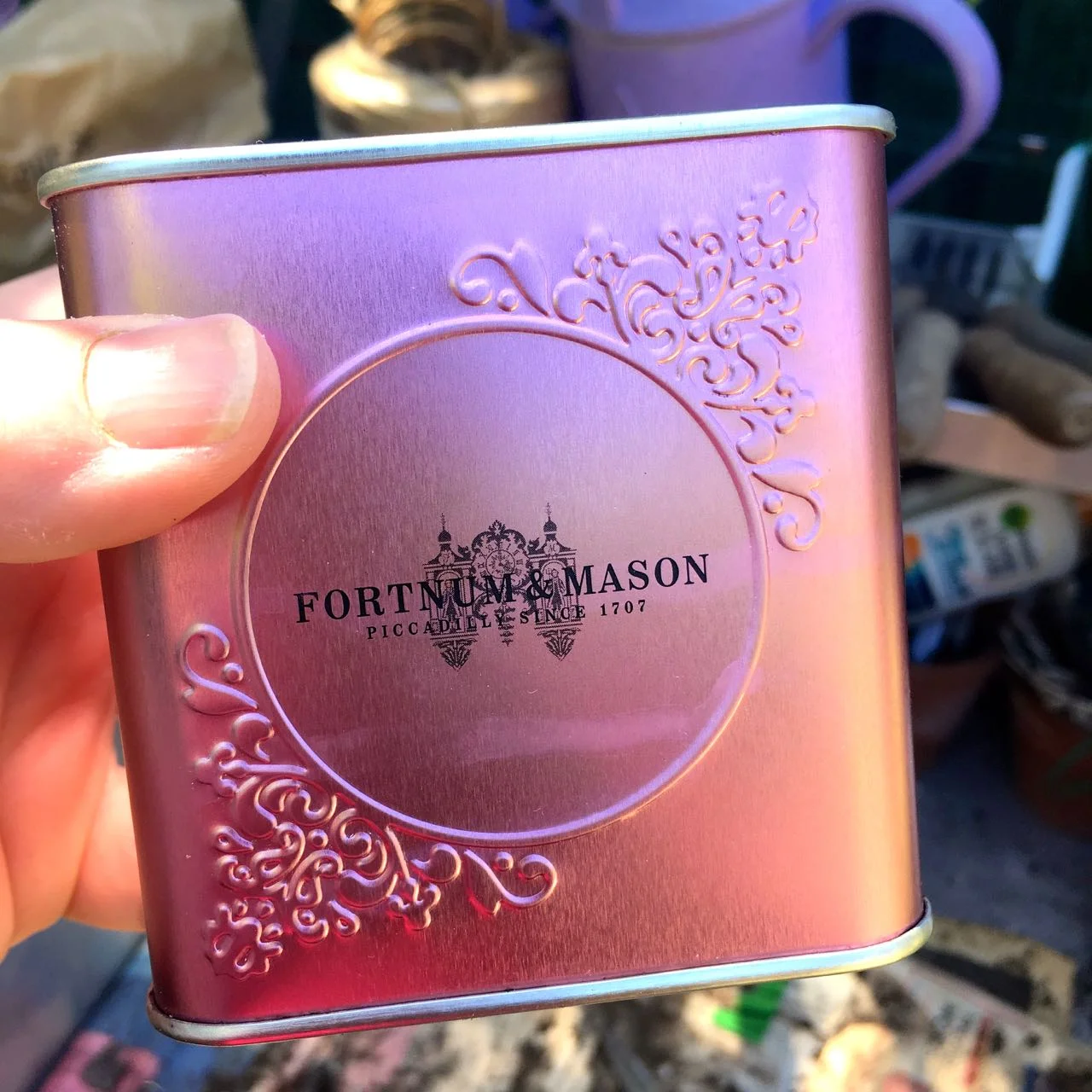
I decided not to pierce drainage holes in my pretty tin, but also didn't want the succulent to sit in water. But instead of crocks and stones I added some corks to the bottom of the tin before filling with earth.
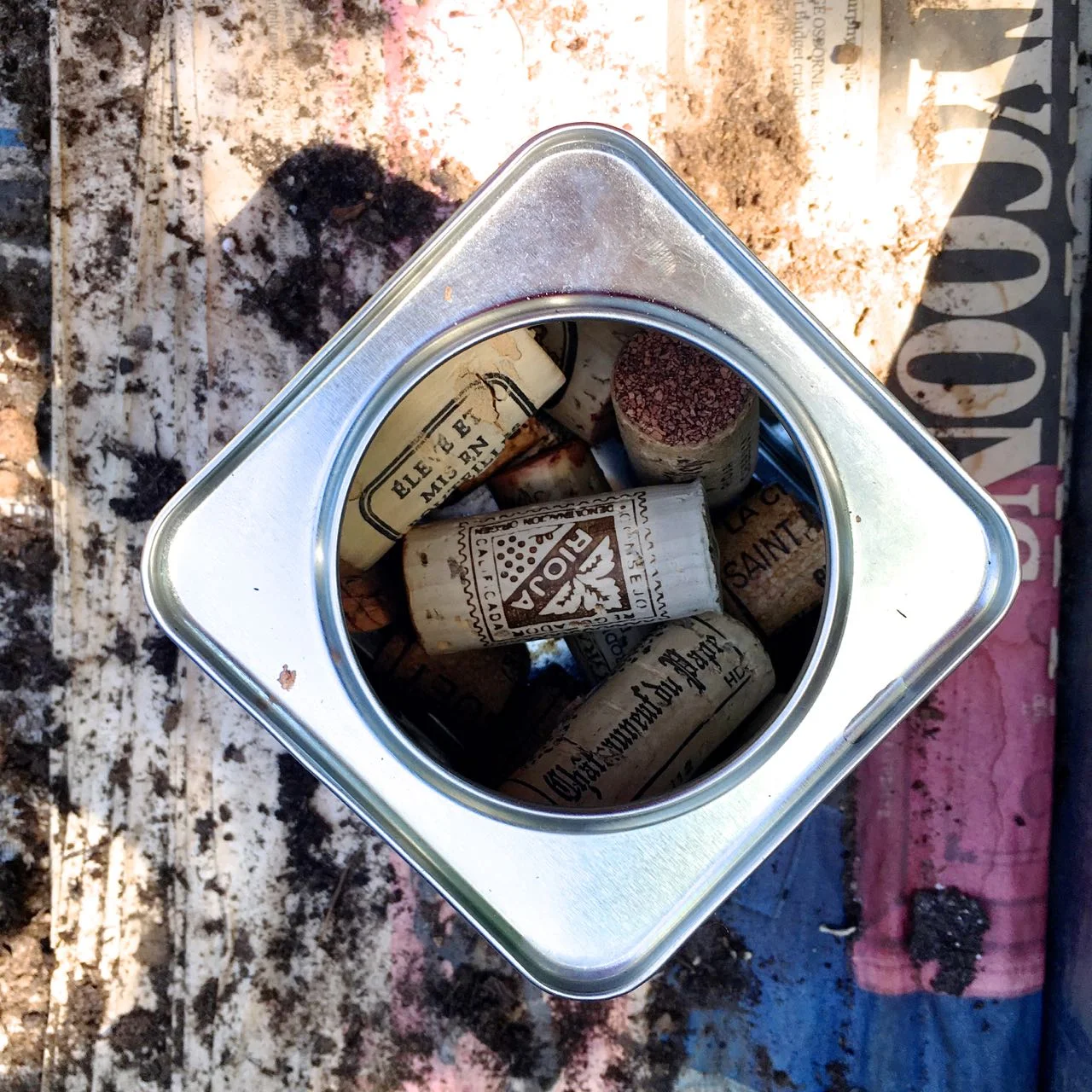
I hadn't planned to plant a pink succulent, I'd wanted to use one of the ice white ones that I'm propagating from a fallen leaf as I thought that'd make a nice contrast to the pink. However when I looked at the leaves, they weren't quite ready and I couldn't quite bring myself to uproot the ice white plant that's still establishing itself in my succulent trug.
And instead this pink succulent called me.
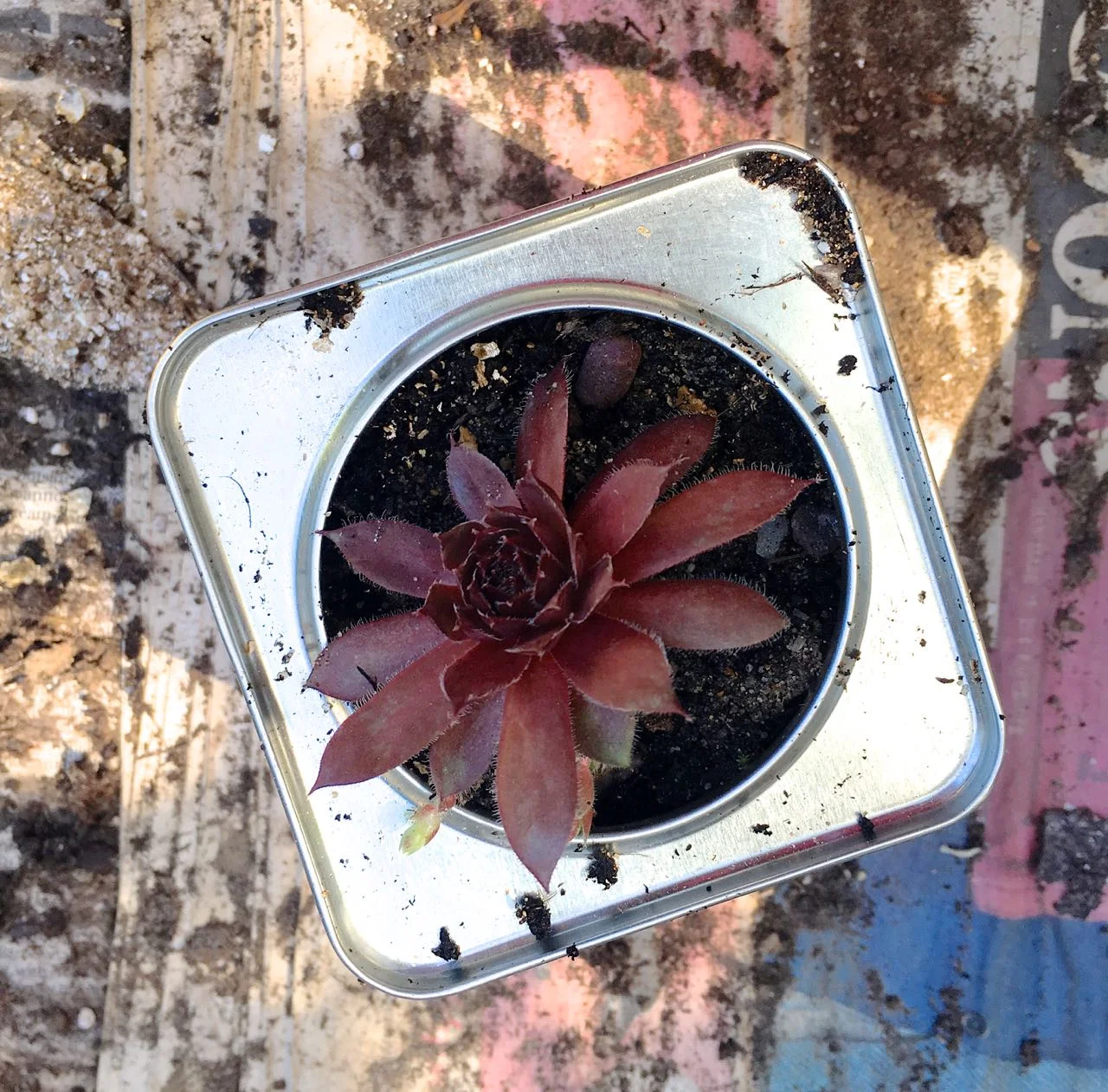
I added some vermiculite to the top - I think I'd used my grit laying the base for the pizza oven - and that adds a textured addition to the soil, which glistens in the sun and will, I hope help with moisture retention.
The results though were stunning, a pretty succulent in a pretty tin, and a great garden table decoration that'd look equally good in the conservatory, or well anywhere really.

What do you think?
If you want some more succulent inspiration, why not join me over on my Succulent Love board on Pinterest: