



Coffee pots, Vouvray and arriving in Tours

It's been a while since I've shared a cycling post and I'm aware that in our Loire Cycle Tour I've left you hanging around at the farm at Chenonceau. Not a bad place to hang around, but there's still plenty more from our trip. So as this week I'm contemplating pushing my bike over the threshold, I thought it would be as good a week as any to resume our trip.

So today we're cycling onto Tours and taking an unscheduled detour to Vouvray. Our detour was entirely swayed by the fact it's a wine we recognised! Our route on this trip wasn't taking us near any of the other recognisable wine towns like Chinon or Saumur, so we decided to make the most of the town that was almost on the route, and stop there.

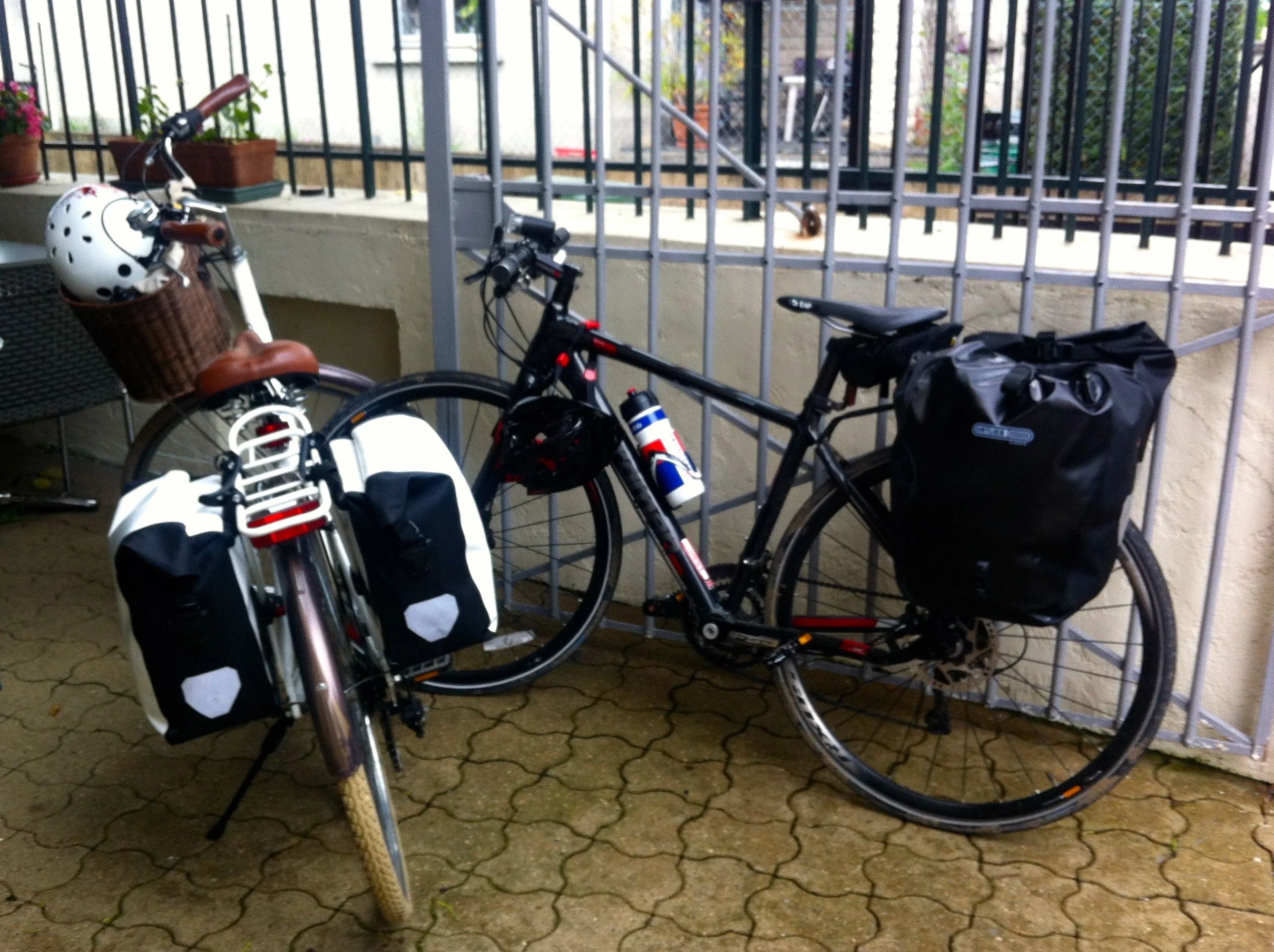
It was a shorter cycle than some of our 'moving on' cycles, so adding a detour, and one that involved wine, made sense.  And what made even more sense was heeding the packing offer from MOH for our longer journeys. That meant I packed most of the heavy stuff, and actually most of our stuff in his panniers.

We stopped off in the town of Amboise to buy some lunch to store in my basket and promptly found a whole new, bustling part of town we'd not discovered before. Oops - so if you go there, check out the town properly before you leave, unlike us...

We left Amboise along the river and enjoyed a quiet, peaceful and ambient ride with nods to cyclists coming the other way, the ones that overtook us and the ones we overtook too (yes, there were some!)

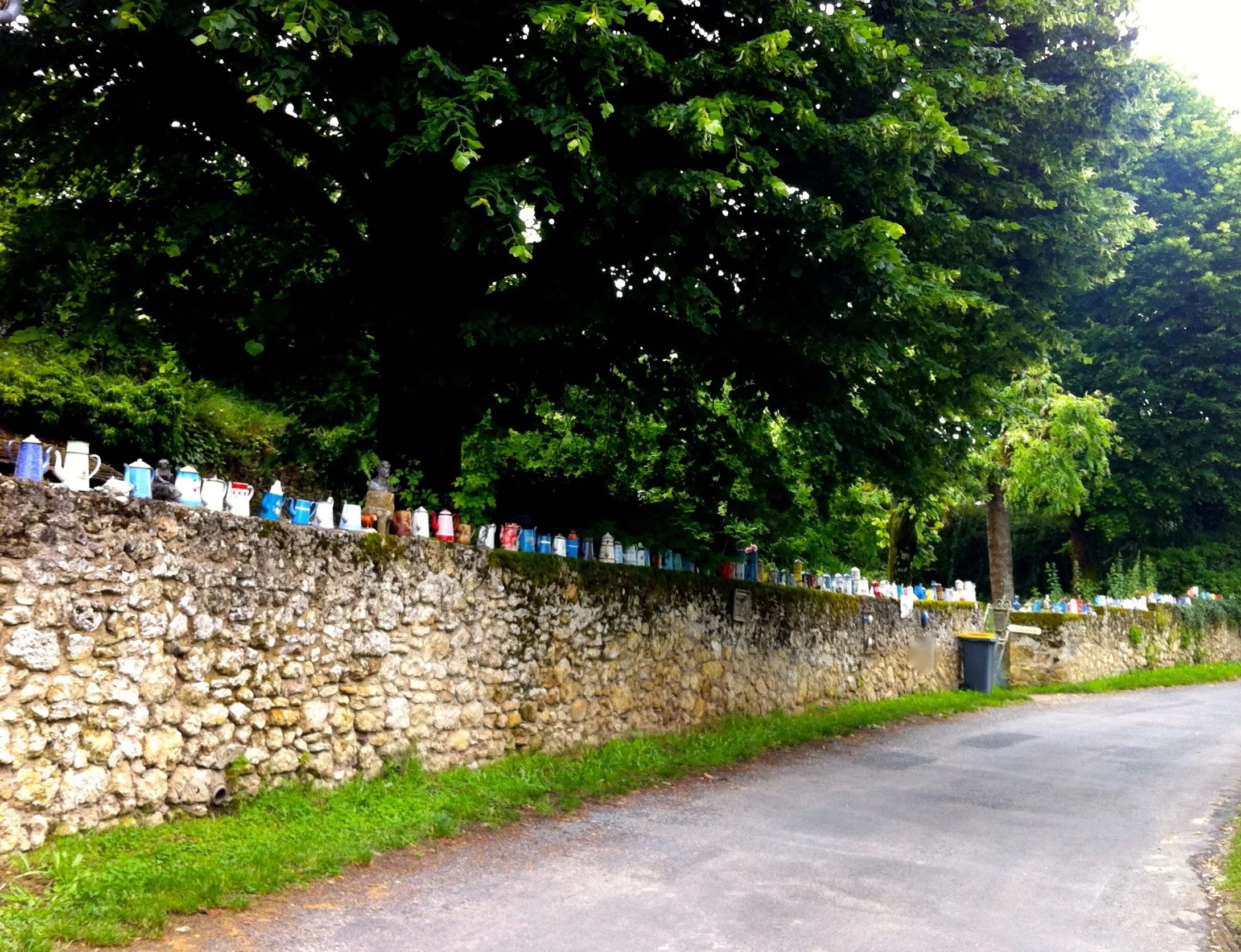
As we cycled towards one house my eye was caught by something brightly coloured decorating the wall. I couldn't work out what it was as we approached the house, but as soon as I did, I knew I had to stop because you'd never believe me otherwise, just look.
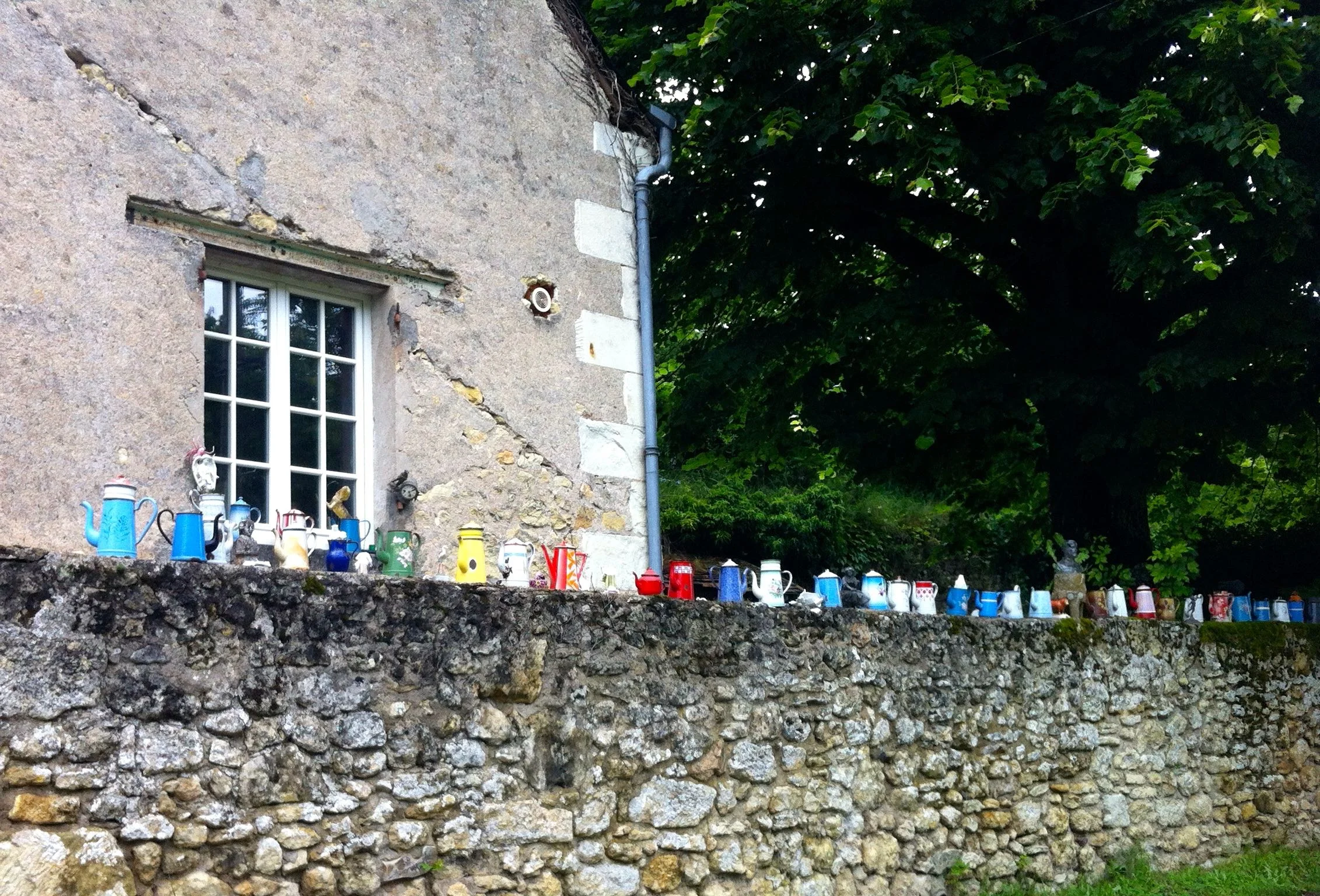
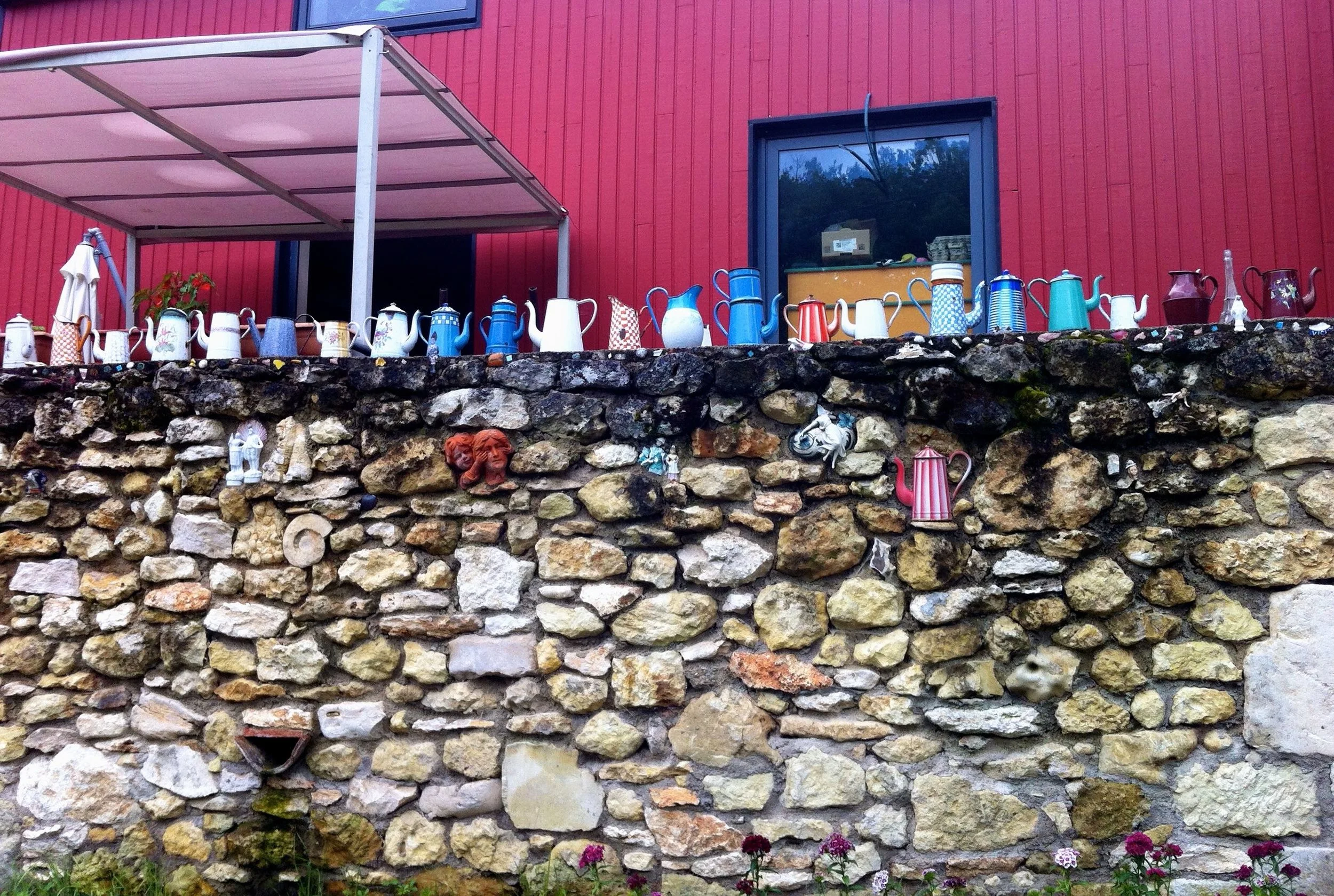
Cycling along the coloured top of the wall caught my eye, and I wondered what it was decorated with
It was only when I was close up that I recognised the colourful additions as coffee pots, each and every one of them
And there was some serious collecting going on as they stretched the whole length of the wall

The whole wall was topped with coffee pots. And mostly they were enamel coffee pots, and made quite a sight. Too many to count, but definitely something to marvel at, and wonder if it was a household that liked coffee, as much as its coffee pots!

THE VIEW OPPOSITE THE COFFEE POT HOUSE

THE VIEW OPPOSITE THE COFFEE POT HOUSE

There were some hills too, and as usual I was slow up them. I was surprised to be overtaken by a speedy pensioner on one of the hills, until I realised she was on a motorised bike, it was even more of a surprise for MOH when she sped past him too. It actually wasn't the last we'd see of this group of older riders, and they were the only cyclists we met on the whole trip that soured our experience, and not just because they overtook us.

The gents were dressed head to toe in lycra, which is fine, we saw other cyclists who were, but most weren't. It's a leisurely route and unlikely ever to form part of the Tour de France, so it was a bit OTT, as was tagging onto the back of MOH and I as we cycled along, cycling almost on my back wheel. It was quite disconcerting, and in the end we pulled over to let them past so they could cycle how they wanted to without annoying us. 

Of course, as is always the way, then they stopped in the next town and so we were ahead of them again. And sure enough, they had to get past us again. We'd nicknamed them Grandad Pelaton by this stage and once again stopped to put some distance between us and them, and if I'm honest I was glad we were doing that detour to Vouvray, as it meant there'd be no further encounters with them; they weren't unpleasant, just pushy.

we cycled past vineyards too today which kind of made us thirsty

It was clearly our day to encounter cyclists. Out next encounter was as a couple of cyclists stopped to let us past. Well she did, he cycled on, and again this was fine. Only thing was he didn't realise her chain had come off, we did and so stopped to help her and eventually her OH returned to see what was going on. We are experts at chains on step-over bikes now, which was lucky as her OH was convinced, like we were to start with, that the chain cover didn't need to come off to put the chain back on. But it does, as I said we're experts!

We reached the point of our route where we needed to cross the river to detour into Vouvray. We weren't quite prepared for the size, or busyness of the bridge and seriously reconsidered the alternative route when we saw it. It was one of those large metal structures, without a segregated bike lane and with one of those huge roundabouts to get onto it. 

As we'd passed the Grandad Peloton, who'd stopped for a picnic lunch, we decided to continue to Vouvray and hope that wasn't their plan too. So over the bridge we went, and into Vouvray.

Our unscheduled stop in Vouvray where we decided to buy and try some of the wine of the same name

The only thing is, it was pretty much shut. But not all of it, it was a small town and what I'd call functional. We popped into the Grands Vins Du Val De Loire (above) and were treated to a fantastic welcome by the proprietor, who was keen to share his wines with us and of course sell us his wares. We tasted a few, bought a bottle of sparkling Vouvray to have with our lunch, which was promptly replaced with a chilled bottle after we shared our plans.

In the end we didn't have it with lunch, but that's because we cycled up the road and found a bar instead. I mean to have a glass of Vouvray in Vouvray, because we could, was an opportunity not to miss. We had second thoughts about buying another bottle we'd tried and so cycled back and bought a second bottle. That gave me a bit more of a packing challenge though, but I managed to find enough space in MOH's panniers for that second bottle, the chilled originally-for-lunch bottle had already been safely stowed in my wicker basket.
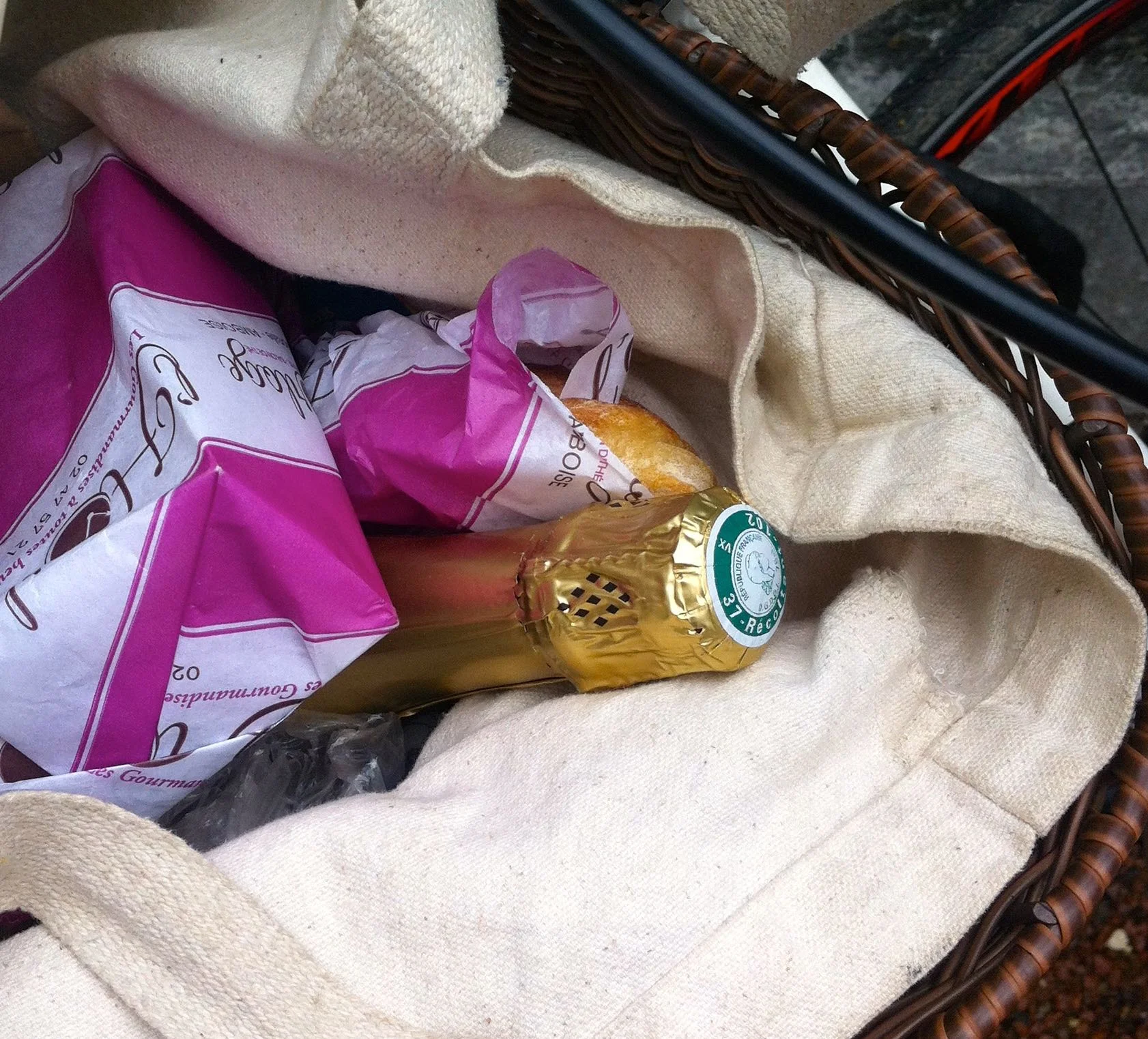
A VOUVRAY IN THE BASKET
A VOUVRAY IN THE BASKET

PARKED UP AT THE BAR

PARKED UP AT THE BAR

The trickiest part about our detour was finding our way back onto the path. We knew we weren't going back over the big bridge and it looked as if there was a route through the town and along the river again. It started off well, and then we missed a sign and ended up cycling along a pretty main road parallel to the river.  After a few rather large lorries rattled past us and worried for our new purchases, we realised we could drop down the embankment onto a much safer, and more relaxing route.

So we did, and we finally stopped for lunch too. And didn't drink the bottle of wine.

Our next challenge was to find our hotel in Tours, it was a pretty town to arrive in and by far the biggest town we'd been in for a while, so big it's actually a city and that was a bit of a shock, but not unpleasantly so. As usual I had the address of the hotel in my panniers but no actual directions to find it - that happens a lot, with the bikes and without - but this time we got lucky.

Somehow by following our nose (well, mine actually) we'd found ourselves on the same road as our hotel. It was a wide boulevard with two lanes of traffic either side of a tree lined walkway that was almost as wide as the space for traffic and so very French. It was ideal for cycling up and down looking for the hotel, and we couldn't help but wonder why we don't have something similar for cyclists and pedestrians back home. 
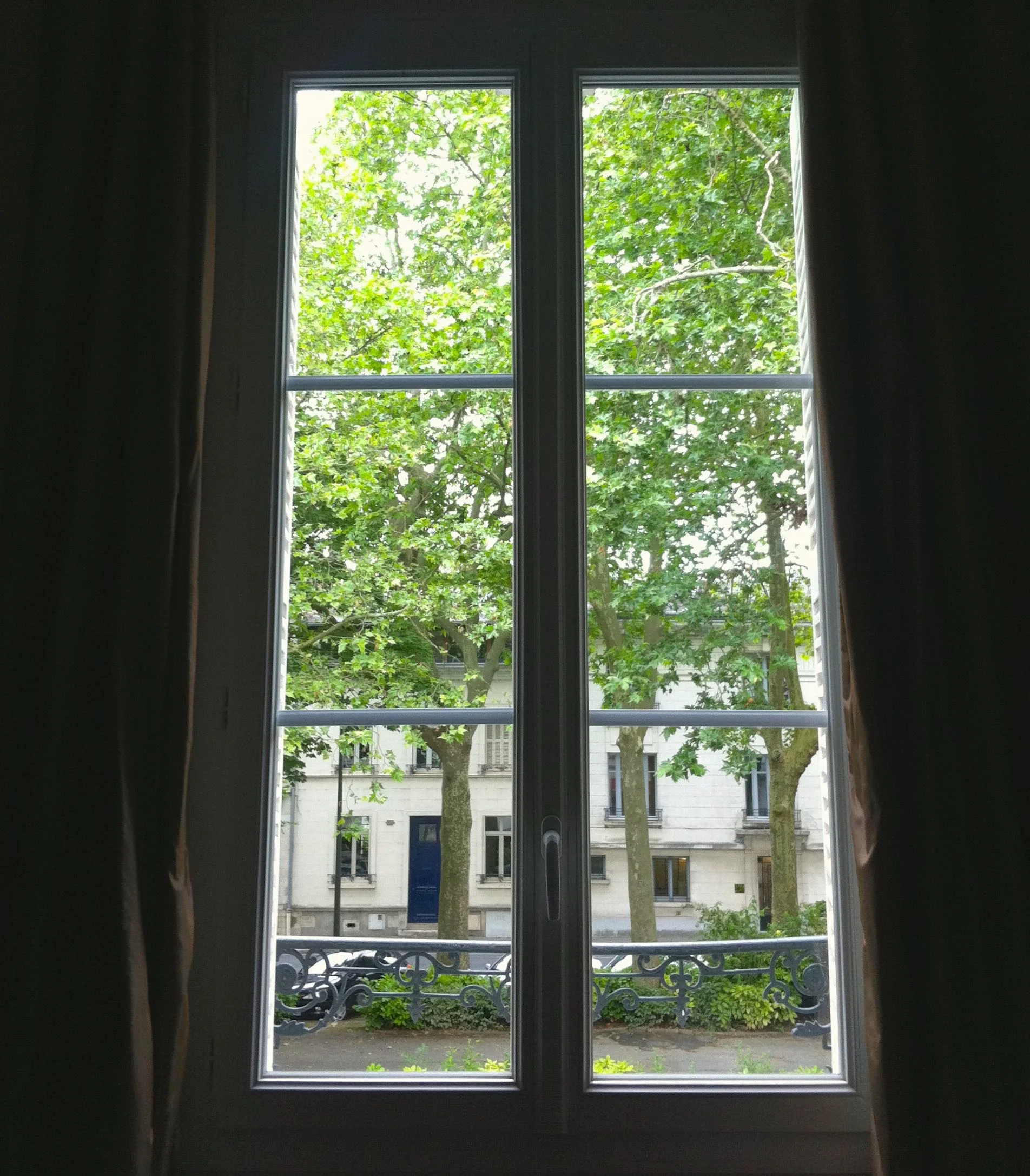
The view from our room in Tours

With the bikes parked in the garage around the corner, we arrived in our room to find we had our very own view of the boulevard outside. Actually it was a pretty stylish hotel, with plenty of modern touches alongside the classic French decor you imagine you'll find. This light - which turned out to be really hard to photograph - looked great, in that effortlessly French chic style.

the stunning light fitting in the hotel stairway which sadly my photo doesn't do justice too

And as well as the classic view from our window, the breakfast room provided its own oasis of calm, stealing light from the balcony above with the clever use of glass bricks - that's definitely something I'm storing away in case I ever get to do something similar. I probably won't ever get the chance to, but it was so clever and very effective.

They'd made the most of getting light into the space with these glass blocks forming the balconies above
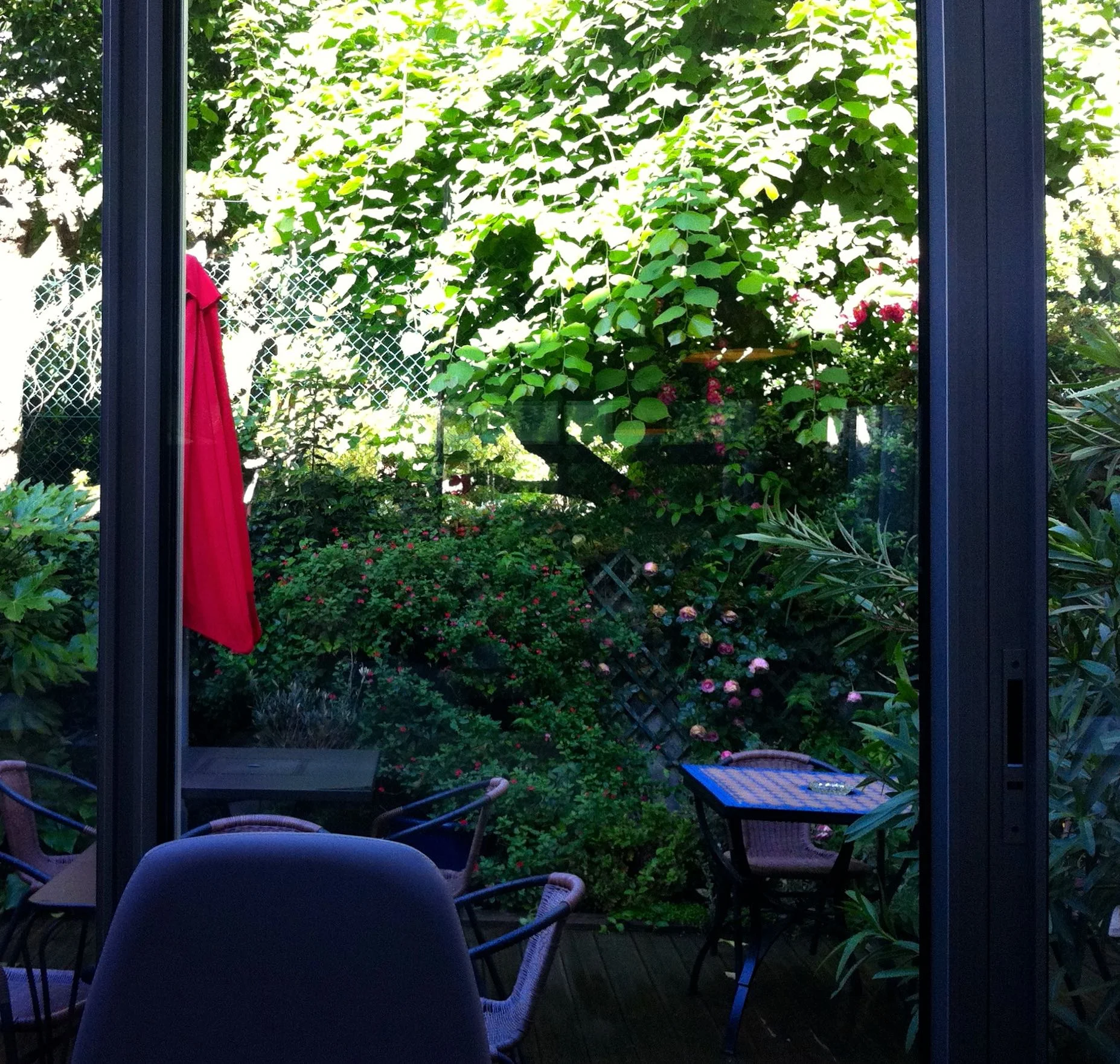
A small outside space for guests which was an oasis of green in the city

Just imagine how fab it would be to have breakfast out on the terrace surrounded by the lushness of the garden? Sadly it was a little too damp and chilly for that to be a viable option for us, but all wasn't lost as this is the place that introduced me to chestnut spread, which I happily slathered all over my toast and went in search of in the supermarket, so I could bring some home.

Actually that reminds me, it's in the cupboard unopened. How on earth have I let that happen. I'll be right back, I've a jar of chestnut spread to find... and some bread to toast!

In a snowy Hofgarten

It's just over a year ago that I shared my first visit to Munich's Hofgarten here on the blog, despite our visit having taken place some six months earlier. It's a lovely central space and one that's well used by visitors and locals alike. So when the coach dropped me off just around the corner from the Hofgarten on my recent visit to Munich, I knew that my first stop would be to see how it looked in winter, and how it dealt with the snow.

As I arrived at the arched entrance I was half expecting to see the cheery guy who'd been there before, but no such luck. There were though fabulous blue skies, blue enough to rival any summer's day. The temperatures were something else entirely, and that's in the negative, I had my big woolly scarf though to keep me warm.

Heading through the arch into Munich's Hofgarten

The view down the avenue of trees was breathtaking. It was good without the snow, but somehow better with it. And yes, this is still me writing this, the snow-detesting me. But look, and I'm sure you'll see what I mean.  

Looking down the avenue of trees in the Hofgarten
Looking down the main avenue covered in snow in the Hofgarten

I looked over to my left and the central pavilion glistened in the snow and sunlight. I remembered how its inside was clad partly in shells and hoped to get better pictures than on my first visit.  

The pavilion to the goddess Diana in the distance

But first, I'd spotted some swaying on the branch of a tree. And yes, that's a snow topped bird table.  

A snowy topped bird table in Munich's Hofgarten

It's great isn't it, and hopefully its visitors and/or inhabitants welcomed the greenery as well as the food supply.  Onto the central pavilion. I think with the clear blue skies, and the snow it was even more stunning than on my first visit.

IMG_8980.jpg

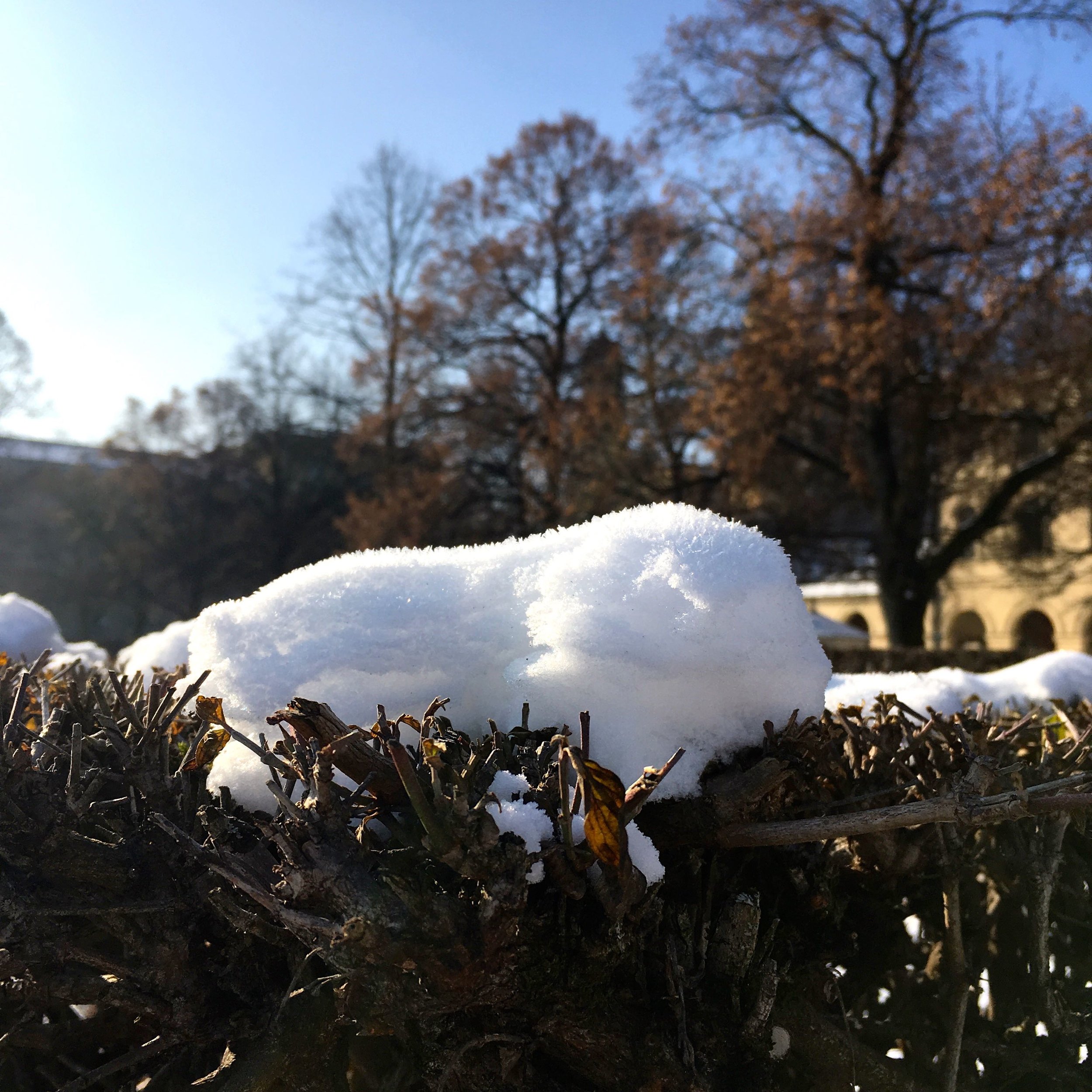
On my tentative walk along the path I stopped to capture snow resting on the top of the hedge, and like the picture of the frost on my fence, I was amazed at how much detail my iPhone picked up.

Capturing the snow on the hedge in Munich's Hofgarten

Sadly the pavilion was chained off so I wasn't able to improve on my existing pictures. I learnt that leaning in and around to get a picture didn't work and after a couple of attempts I gave up and decided to head towards the strange dome shape in the distance. As I approached I remembered that under the cover was probably a fountain, and sure enough when I got closer it was obvious that the cover was made from wood. And covered with snow. Looking back at my photos confirmed they were fountains, and that gave me an idea for a future post comparing a summer and winter shots. I wonder how many of the same shots I've got...

Unable to get into the central pavilion in the Hofgarten I headed towards the covered fountains

What I liked about the garden in the winter was the starkness of it. The snow definitely gave a blank canvas and the lack of greenery on the hedges and trees gave a clear idea of the garden's structure. And the importance of that too.

Bare trees show the structure of the garden in the centre of Munich
bare hedges show the shape and formality of the garden even in winter

By now I'd covered half of the garden and it was getting chilly, so with the shops calling my name I headed back towards that central avenue and back towards the centre of Munich, but not without first stopping to admire the ironwork.

Somehow the snow shows off the design of the railings more clearly in Munich's Hofgarten

You really didn't expect anything else did you?


* While this post isn't in collaboration with Viking or Stihl, it was only possible because of the UK press trip arranged by them. 

More than 'just' a lawnmower

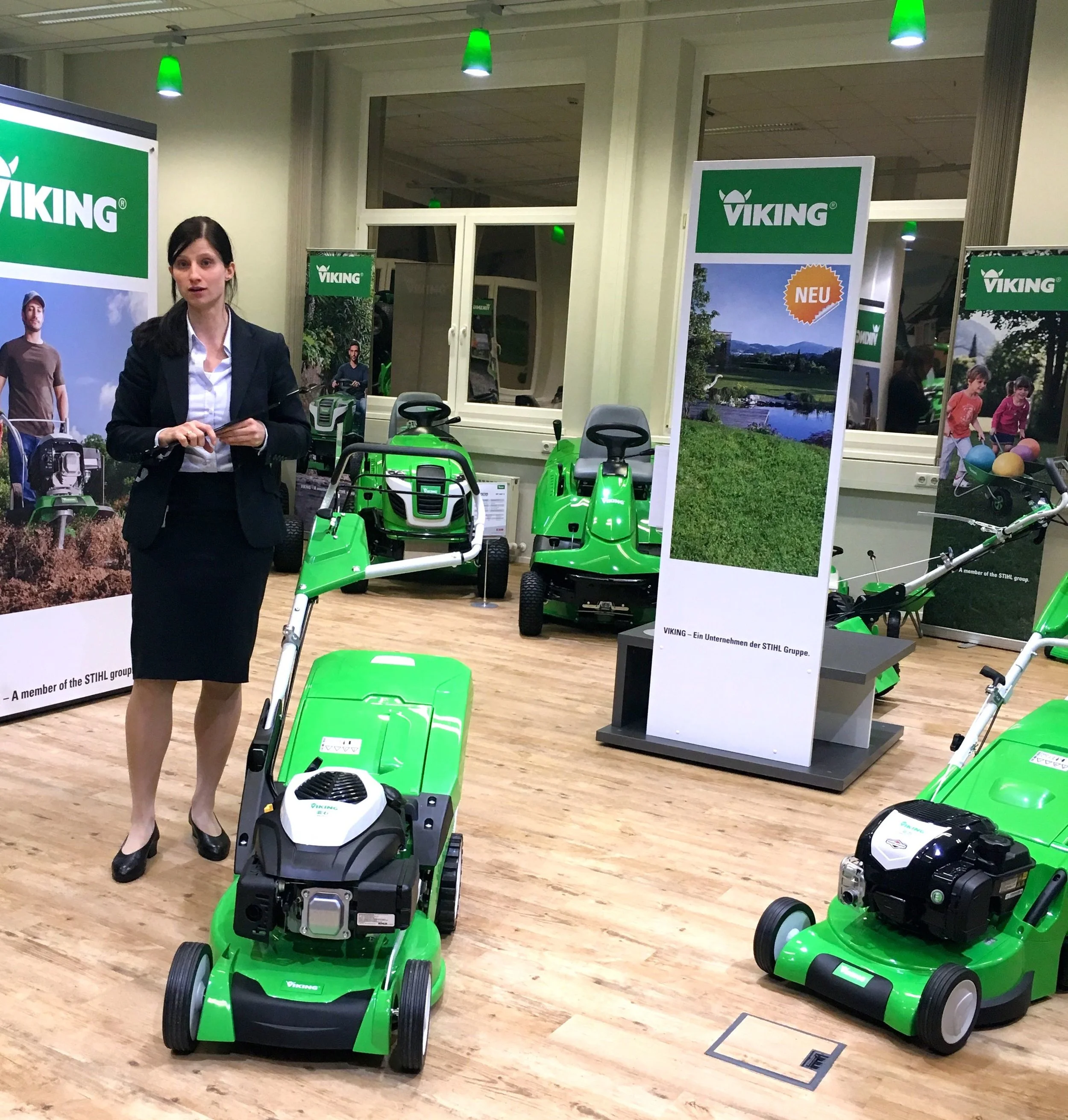
Last week I said I'd share more about my trip to the Viking factory in Kufstein as part of the Stihl and Viking press trip, and I've started to write this post in my head many times. It's a post I want to reflect the warmth and hospitality we enjoyed, but also where I hope I can share some of the passion that was so apparent from the Viking workers.  

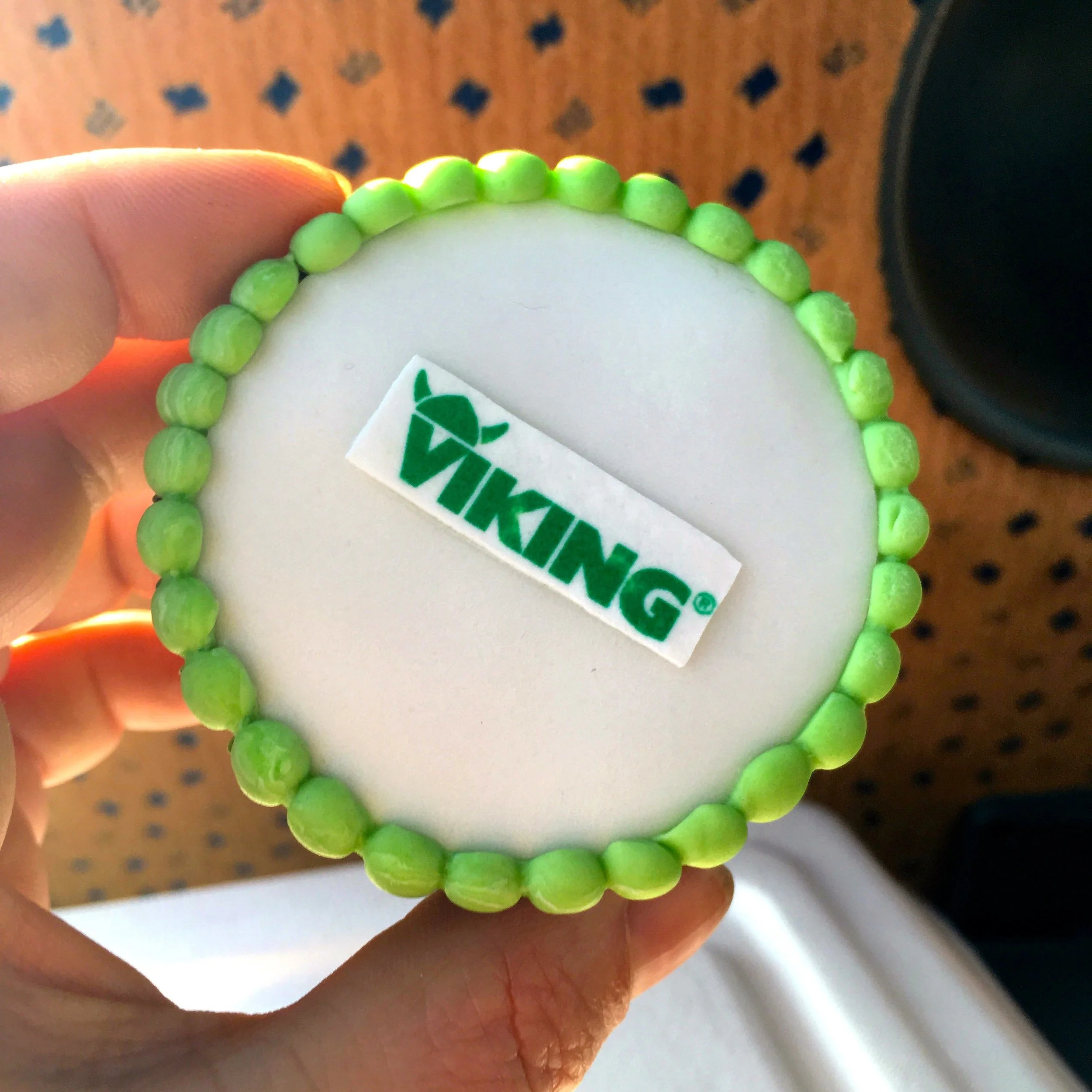
And I also want to explain why now I think Viking lawnmowers are more than just a lawnmower. But let's start at the beginning, or with cake anyway. This was part of our packed lunch as we travelled from Munich to the factory in Kufstein.

CAKE IS ALWAYS A GOOD PLACE TO START

CAKE IS ALWAYS A GOOD PLACE TO START

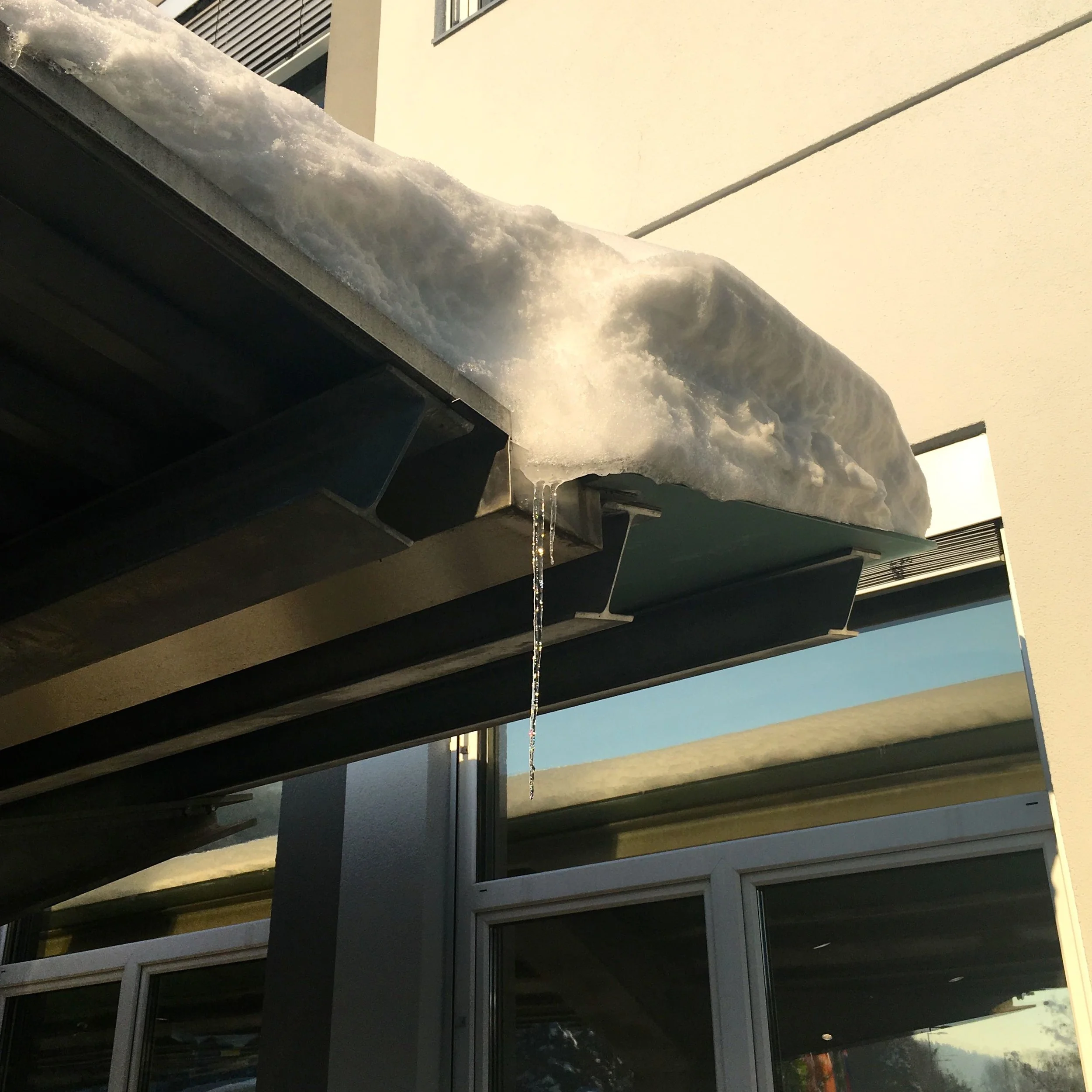
Arriving at the factory, and having got over the amount of snow I started to marvel at the icicles. And once I'd snapped this one I joined the rest of the group and admired the amount of snow, the blue skies and the view. Not a bad view, hey? It was only later during the factory tour that we saw this mountain view is the one the workers on the production lines have.

ICICLES ABOVE THE DOOR

ICICLES ABOVE THE DOOR

JUST A BIT OF SNOW SURROUNDING THE CAR PARK

JUST A BIT OF SNOW SURROUNDING THE CAR PARK

HOW ANY WORK GETS DONE WITH THIS VIEW IS BEYOND ME

HOW ANY WORK GETS DONE WITH THIS VIEW IS BEYOND ME

Viking are actually a relatively young company, founded in 1981 in Kufstein, with twenty people. Since then they've joined the Stihl group and moved into a new factory, which with tremendous foresight, is a space that has allowed them to expand their operations and double their floorspace, creating the Competence Centre where they do everything from the ideas, the design, the testing and build the machines.  And they still have enough land to double the size of their factory again, now that's forethought. 

I've not been on many (any) factory tours but I was struck by just how happy and proud all of the Viking employees were, from the production line to the research department, and yes it's not something you think about is it. Research into products, I mean. We learnt - and saw - just how this passion for their product has driven research to make the lawnmowers efficient, quiet and long lasting.

I'll come back to the noise levels, taking efficient as read, let's start with long lasting. Now I'm not technically minded, and apologies if you are - actually if you are you'll probably be interested in this review by Jay at Gadgety News who was also on the trip - but what I learnt about the elastic properties of metal in a short presentation was fascinating.

I'll attempt to put that briefly into non-technical speak.  

Lawnmowers have blades, those blades are made of metal. The blade is attached to the crankshaft, which (very) basically attaches the blade to the lawnmower.  If you try to bend one of those blades, you'll struggle because they're hard and unbendable. The blades rotate and cut the grass, simple. Now this might not be something you'd ever thought of (and I'm with you there), but when your lawnmower hits a stone, or something else hard, what happens is something has to give, and because the blade is hard, traditionally it's the crankshaft which does. And that's not good, because it's expensive. Expensive to fix and expensive to replace.

With me so far?

So what the clever people at Viking have done is develop a blade that can in effect be sacrificed, instead of the expensive crankshaft. The research that's gone into this is astounding. And it makes sense doesn't it, sacrifice a cheaper part that is easier to replace rather than a key and expensive part. 

Now this was the bit that was really fascinating. What they've done is make use of the elastic properties of the metal, yes that hard metal blade that's unbendable. When it rotates at speed its properties change and I saw it with my own eyes gracefully flapping like a bird. The movement is relatively small, but there is movement and that means when the lawnmower hits something hard, the blade is able to absorb the impact and the more expensive crankshaft is protected.

And that's what struck me about Viking, they want to deliver the best product they can to their customers. They don't want us throwing away their lawnmowers with a broken crankshaft, and replacing them with another model or worse still make, they'd much rather us buy their products and replace the blades as we need to. It's the kind of thing that really plays to my sustainability ethos, and yours too I'm sure. 

Just like the compact range - remember I shared unboxing the Stihl Compact Trimmer recently, and yes I'm still waiting for my grass to grow - with their interchangeable batteries. It just makes sense.  Actually while we're talking about the compact range, in the Viking showroom I saw there is also a compact lawnmower which uses the same size battery.

As I said it just makes a lot of sense.

But anyway, back to the noise levels.

Now I shouldn't have been surprised at the extent Viking go to to ensure the noise levels of their lawnmowers are low. But I was. In the Competence Centre, we were treated with a visit to Europe's largest anechoic chamber. And until I stepped through the door, I had no idea what it was or what I'd experience. 

But it was amazing.

It's basically a room where the echo is removed. From your steps, from your voice, from clapping your hands, from everything. It's the opposite of an echo chamber and is designed to absorb reflections of sound or electromagnetic waves. A totally surreal experience, and one that MOH who's into his hifi was slightly envious of when I told him. 

So you'll be able to tell if your neighbours have a Viking mower, as you won't be able to hear it and it won't disturb your gin and tonic in the garden, as they start to cut their grass. I don't know about you, but that always happens to us. We've finished our gardening, and want to enjoy the efforts of our hard work, we just get settled and then the neighbours fire up their lawnmower, which is clearly, by the noise levels alone, not a Viking!

A happy workforce

I've mentioned this before, but it was so noticeable. I'll admit I don't have a UK production line comparison, but I've a hunch that it won't compare. The Viking products are on the whole assembled by hand, they have machinery to check parts of the process, of course they do, but there's also a lot of human interaction. As we toured the factory floor and the offices, the Viking employees couldn't help but show their pride and enthusiasm for their company, and the part they played in it.

As a communicator in my day job, that was a pleasure to see, and when I correctly guessed that passion was one of their company values, the management team couldn't have been more proud this had been spotted based on their employees behaviours. And if I'm honest, if I were them, I'd have been proud too.

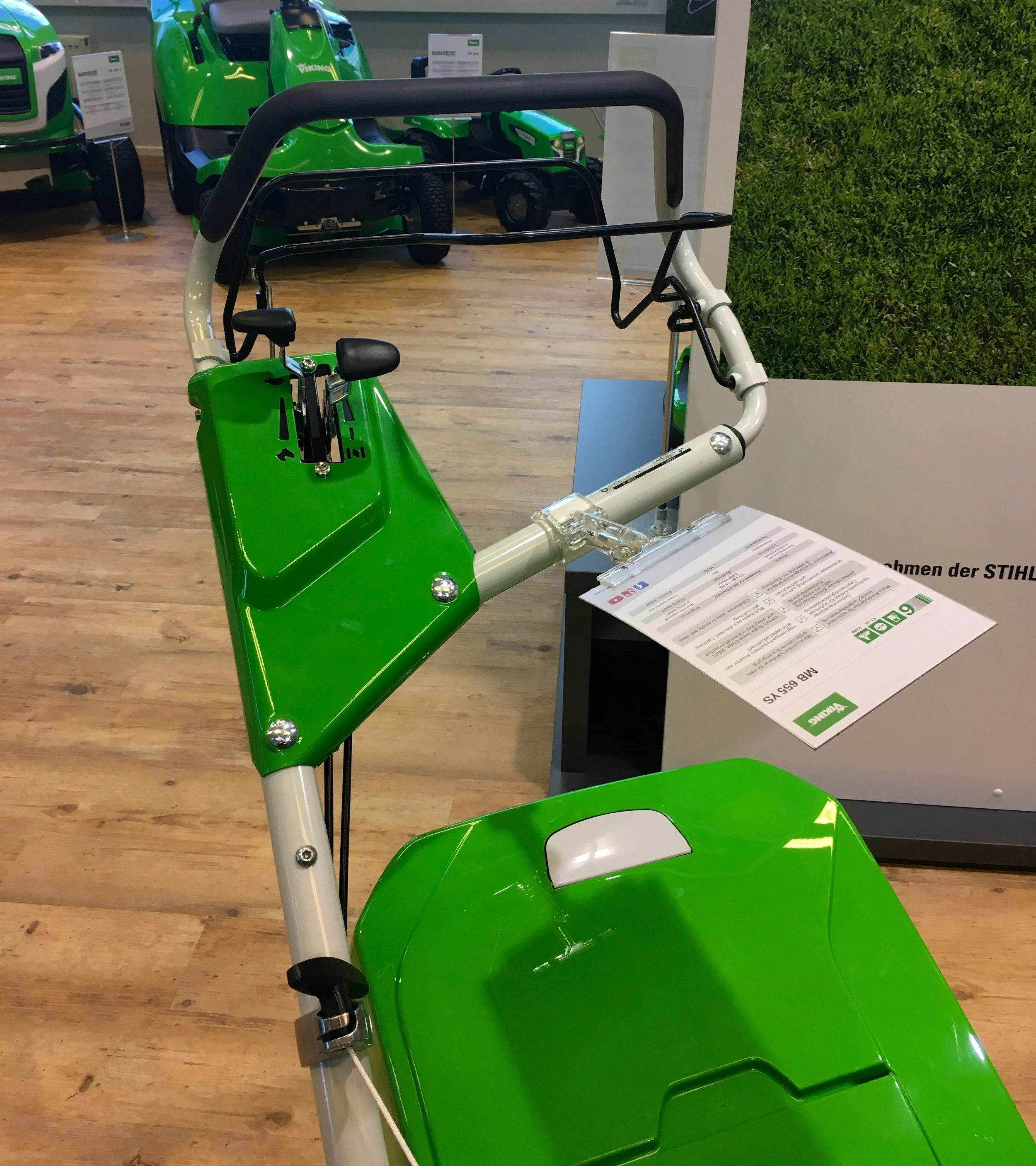
Can you spot what's different here?

showing off the viking mono handle lawnmower

I'll admit it's not the greatest picture, but the one below should give you more of a clue.

A close up shot of the viking mono handle

Yes, it's the new mono handle. 

At first, I thought it looked odd and not lawn mower-like at all, but having seen the research that Viking put into their products I was sure there'd be a reason for this. And in fact there's three:

  1. It gives easier access to the grass box, which means it's easier to empty too.

  2. It has a different folding system to most mowers, which means it has a smaller footprint for storage (you can see this in the photo above)

  3. It's height adjustable.

So knowing all of that, it does makes sense, and the design grows on you, and it's something I think we'll see more of. I tell you, these Viking people are clever.

I've so much more to tell you about my visit to the Viking factory, including the future of smart gardening and the Viking iMow and our evening at the Fortress at Kufstein, but I'm saving that for another day.

This post is long enough already and stuffed full of information I never thought I'd write about before this trip, let alone be fascinated by. I hope I was able to share some of the passion and pride that was so evident throughout my visit, and I'm sure you're starting to realise why I think these are more than 'just' a lawnmower.

UPDATE: Since I've been back there's been some Stihl and Viking news. From 2019 the Stihl group will manufacture the entire product line of Viking exclusively under the Stihl brand name, so in effect Viking's green will change to Stihl orange. This picks up on lots of the points we made during the trip while talking with Viking's top management about leveraging the popularity and prestige of the Stihl brand name.  

There's good news for us too, as there's growth potential for the Stihl dealer network in the UK and it's also likely that jobs at Viking's plant will be boosted as well. And after having met so many of them, I'm really pleased about that.


* This is a collaborative post with Stihl and Viking whose factory I visited as part of the UK press trip, but as always all views and opinions are my own.