


Sun on Saturday: A cycle to Lesnes Abbey and beyond

Last Sunday we joined our first Skyride and met up with the rest of the group in Manor House Gardens. That's just ten minutes or so from us by bike and despite this it was a park we'd never been in before. 

At one end, near the cafe and meeting point was Manor House with a beautifully blue sky behind it. The gardens - which I failed to take a picture of - reminded me of a country park. The grass was fenced off with metal railings and for me that gave it a Victorian feel.
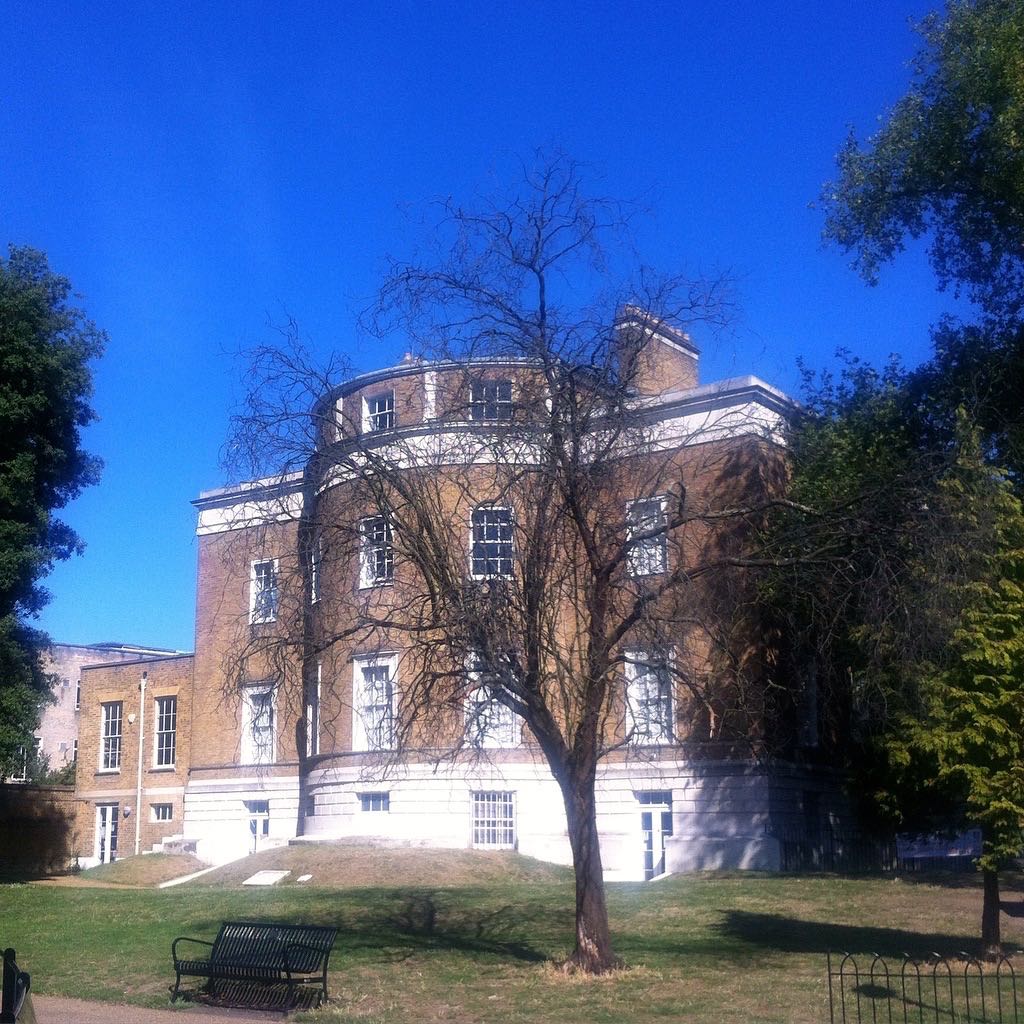
ManorHouseinLee.jpg

We set off en masse - there was about fifteen of us and the three ride leaders - and headed for the South Circular. Eek! Actually we only crossed over the A205 so that was ok, but we took some back roads towards the A20, which we did cycle along for a short section. Those poor motorists!

As is usual with South London there were a few hills, both up and down as we weaved our way towards Abbey Wood and Lesnes Abbey. Which you'll not be surprised to know is yet another local place I'd not been to before so I was keen to see what was there.

LesnesAbbey.jpg

Yeap, ruins.

The Abbey was founded in 1178 by Richard de Luci the Chief Justiciar to Henry II. And in the short time I was there I learnt that it had an interesting history. It is thought that the Abbey was founded as an act of penance by de Luci who was closely implicated in the murder of Thomas Beckett at Canterbury Cathedral in 1170. When in 1179 the first Abbot was consecrated, Richard de Luci resigned his office as the Chief Justiciar to become a canon of Lesnes.
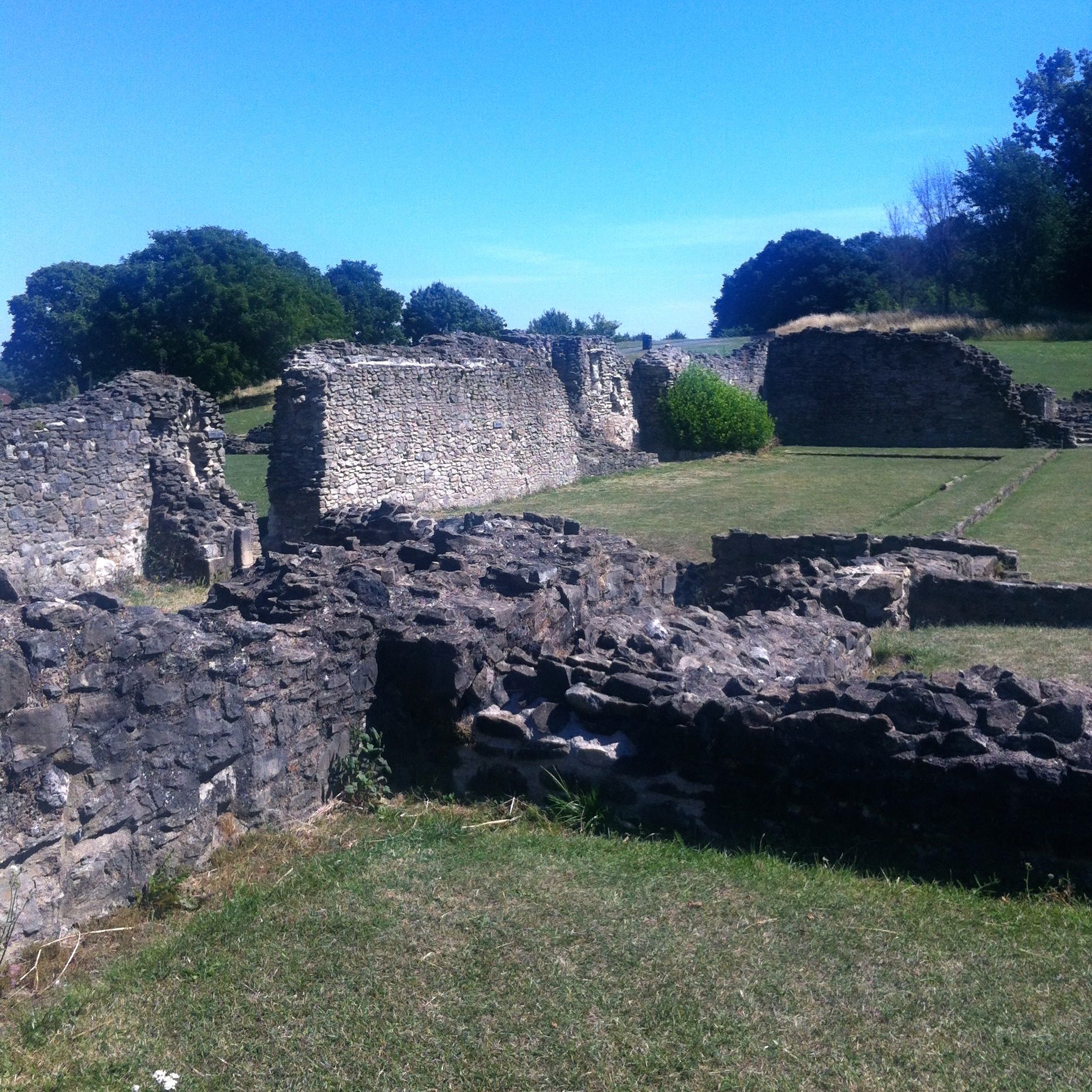
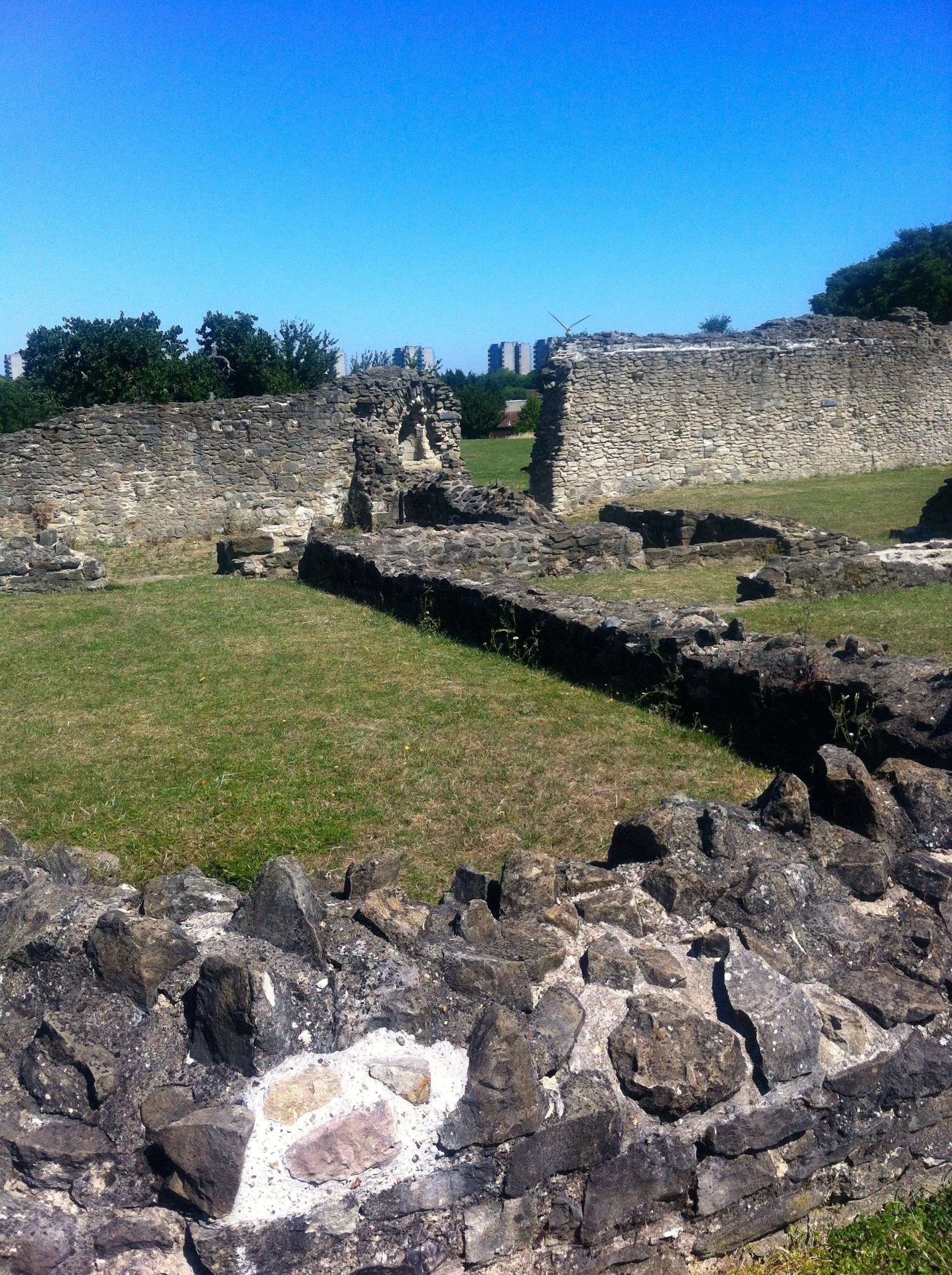
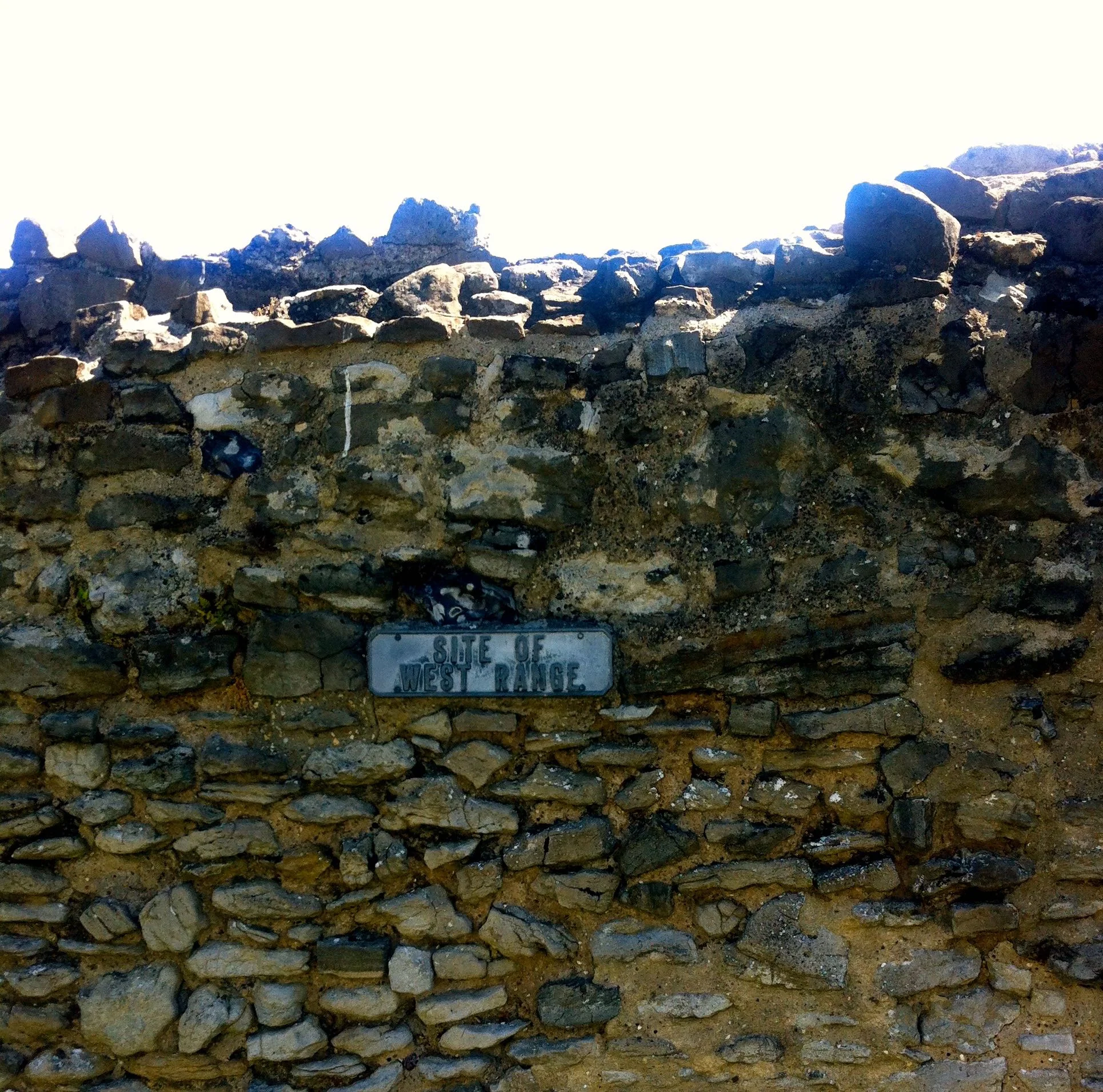
It was the sort of place that made it easy to look around, with metal signs in each part of the ruins. I didn't have long there and I'd like more time to look around the ruins, and the surrounding woods.
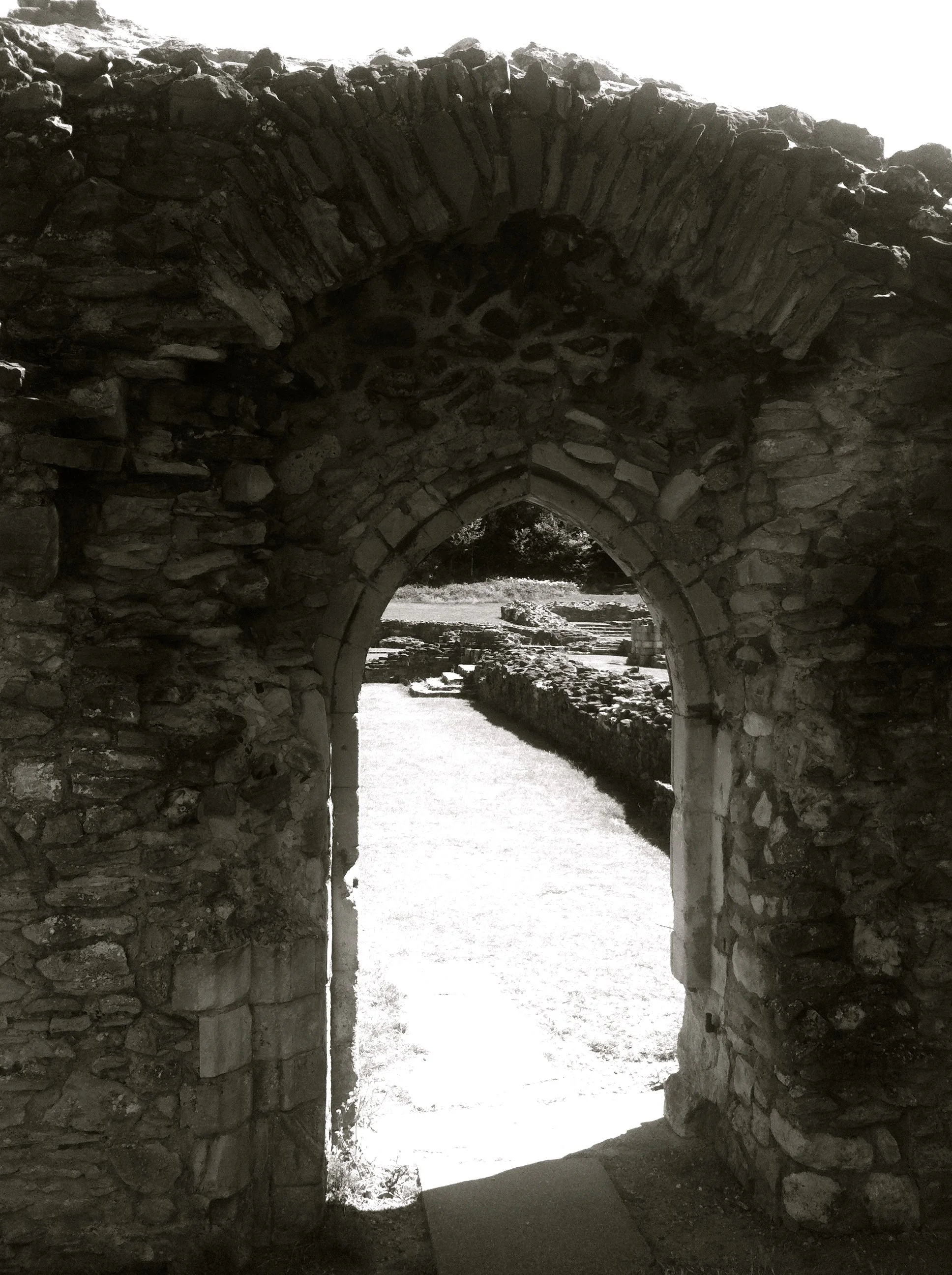
I was captivated by this archway and what lay behind it. Just to the right of here was a larger, more open space and when I learnt that this area was the church, that made sense.
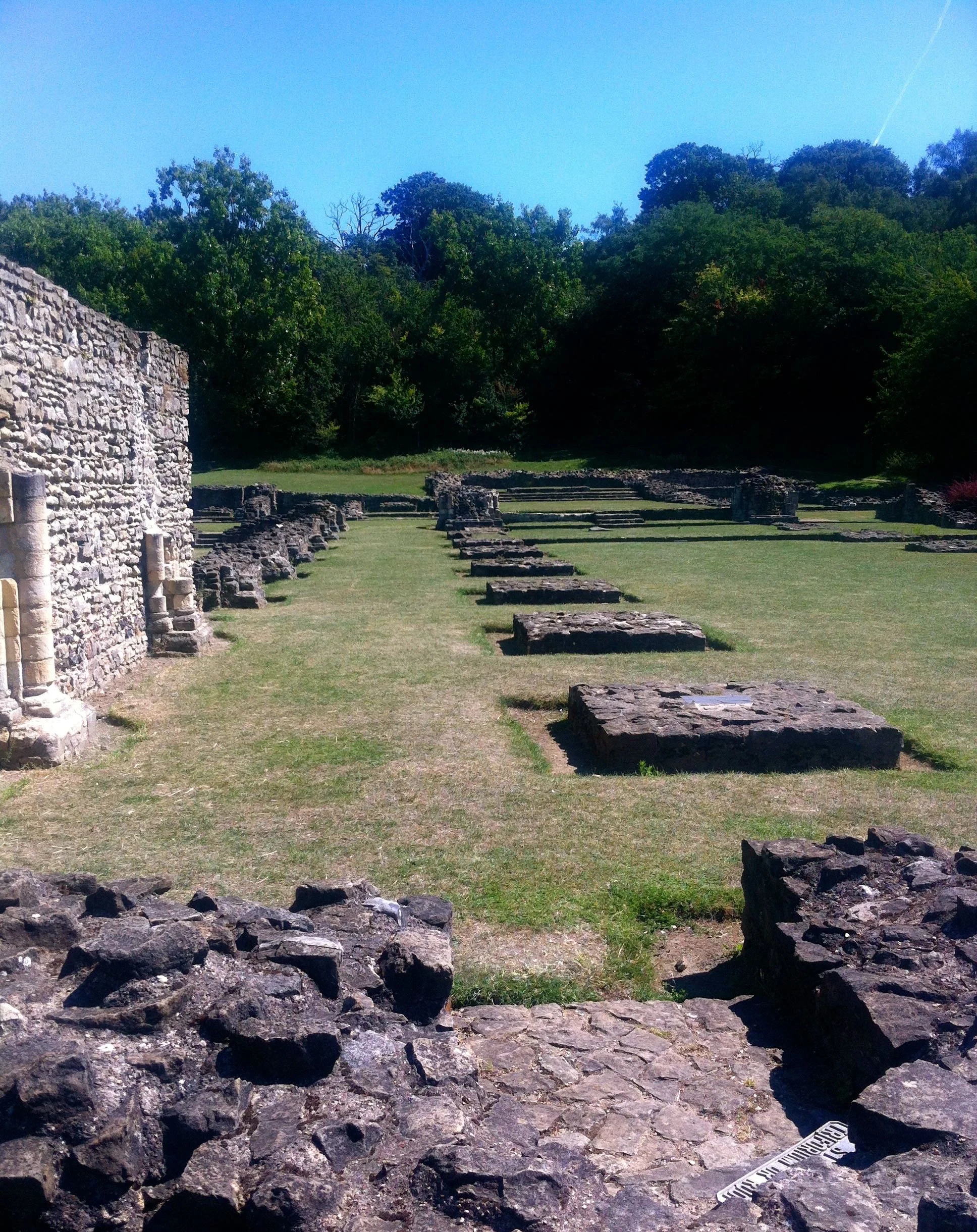
The Abbey closed around 1525 by Henry VIIIs chief minister, Cardinal Wolsey, and most of its monastic buildings were pulled down soon after the dissolution. The site was later acquired by Henry Cooke who kept the Abbot's Lodging as a mansion house; later though it came into the possession of Sir John Hippersley (what a great surname!) who dug it over for building materials! The Abbots Lodging though survived intact until it was demolished in 1845.
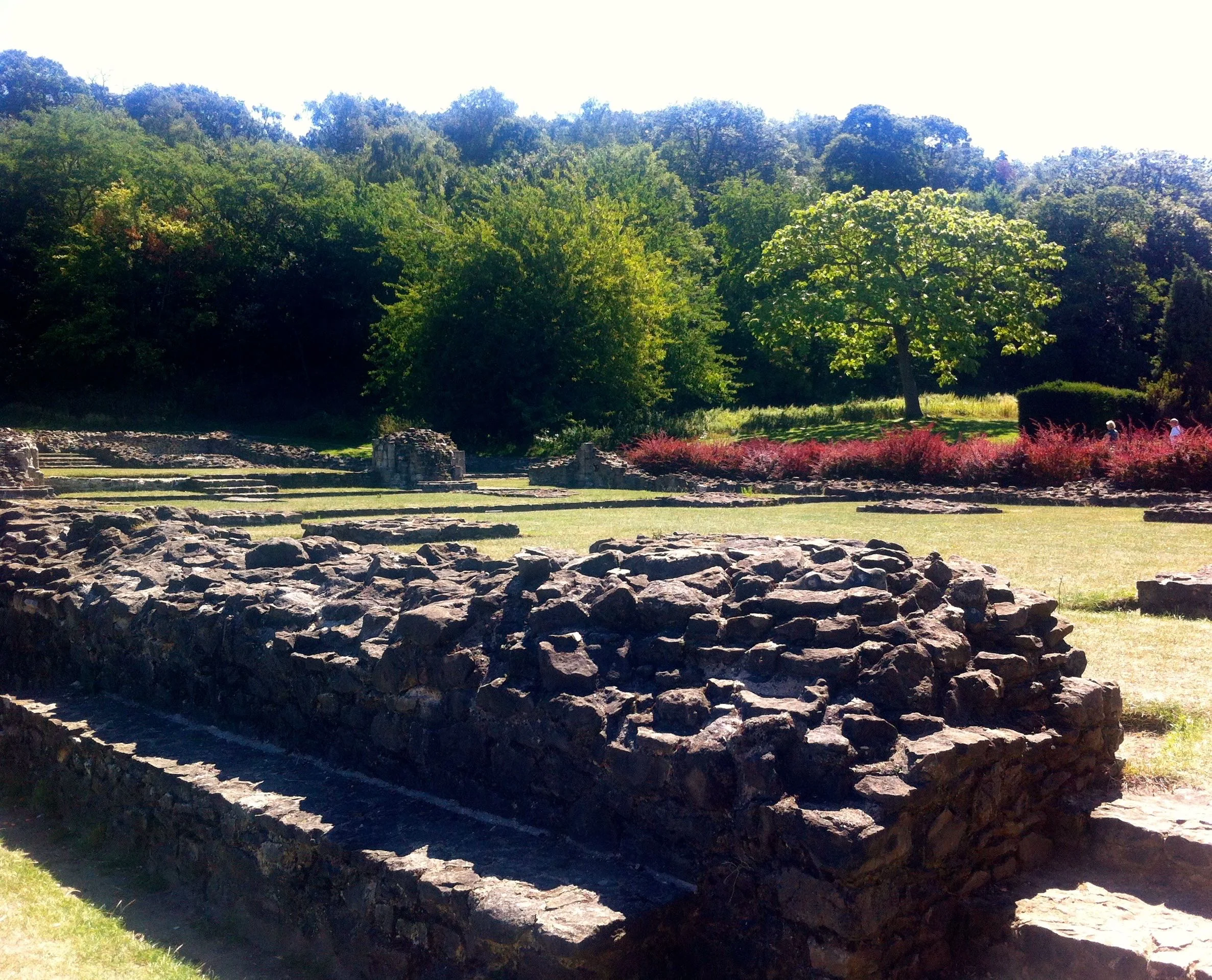
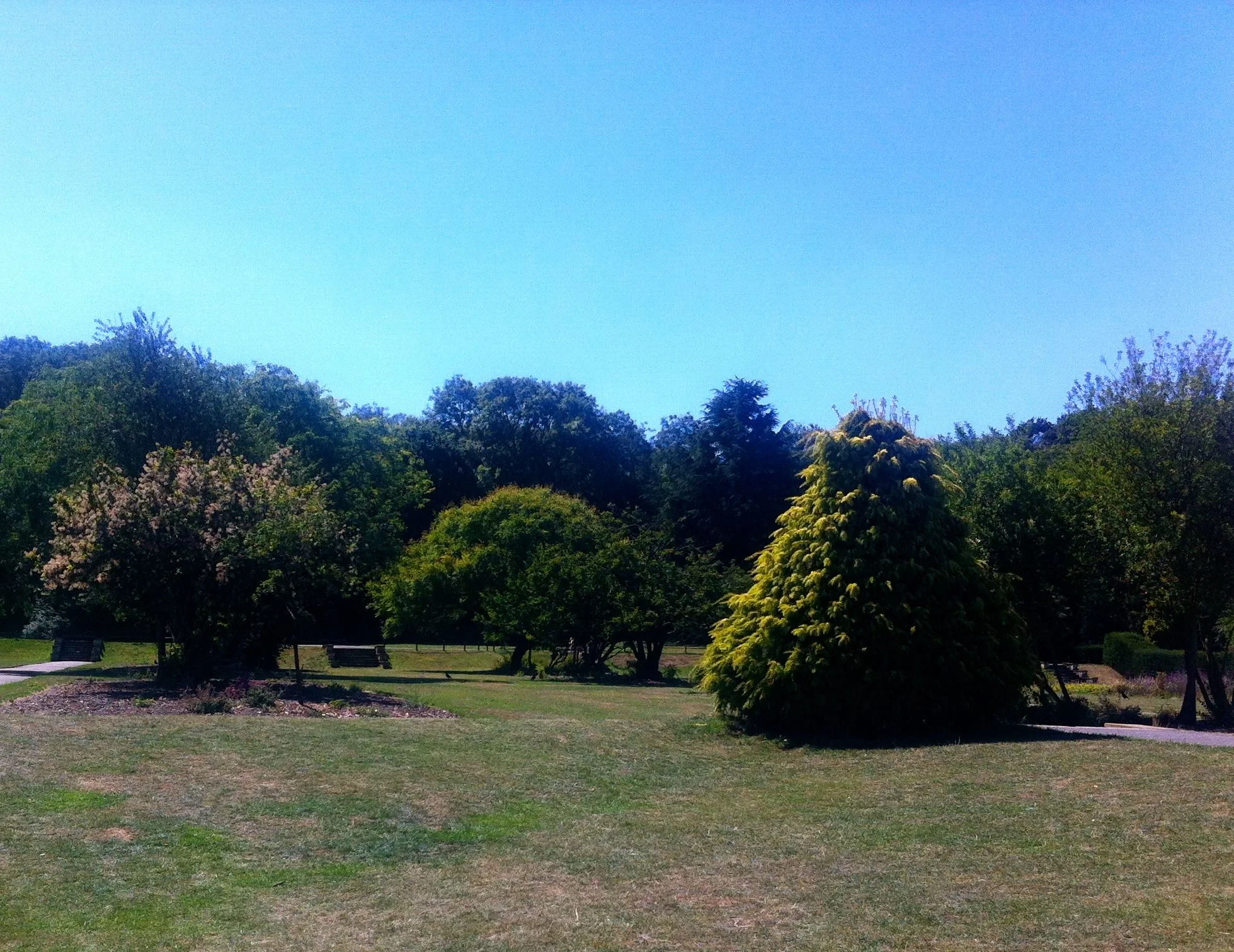
That's what amazes me about history. A piece of unassuming land in, let's say an often less favourable part of South East London could hold so many secrets. 

There's more building work about to start too, with a new Visitor Centre. The ground had been prepared but building hadn't obviously started yet. Looking at the plans for the news Lesnes Lodge, it'll be a great addition to the site when it opens. I'm not sure when that will be as it seems it is behind the published timetable.

So this is yet another place we'll come back to - and one that's easily within cycling distance - on our next visit I hope to have a better look around, explore what looks to be the gardens in the picture above, find out where I can dig a fossil and check out the wildflower gardens.

Back on the bikes we headed through the maze of Thamesmead and eventually onto the the Thames Path, which is familiar cycling territory for MOH and I. We cycled back up to the Woolwich Ferry and then the ride leaders led us up to Charlton via what can only be described as the steepest hill I've seen so far in this part of town.  Needless to say part of that hill involved some walking and wheeling, even MOH found it hard going.

After clocking up nearly 37km we left the ride in Blackheath and made a dash into the Farmers Market to pick up something for lunch.  It was a lovely day - if not a tad warm - for a cycle and once again we've discovered some local places to visit again and explore further.

 

My Travel Monkey

A circular route around Murnauer Moos, with a 10km warm-up

For our fifth day of cycling we expected to complete a 30km circular route around the circumference of the conservation area known as Murnauer Moos (Murnau Marsh). Our notes said it was a "generally flat and leisurely circuit" so that sounded good, and even better there was a Gästehaus on the route which the notes said served "wonderful" cakes. 

Murnauer Moos is quite unique in Central Europe, both because of its size, unity and landscape as well as it's flora and fauna. Peat was extracted from the marshland until the middle of the twentieth century and in 1964 it was declared a conservation area.  It's home to over 4000 difference species of fauna and 800 plants, which is quite a lot!

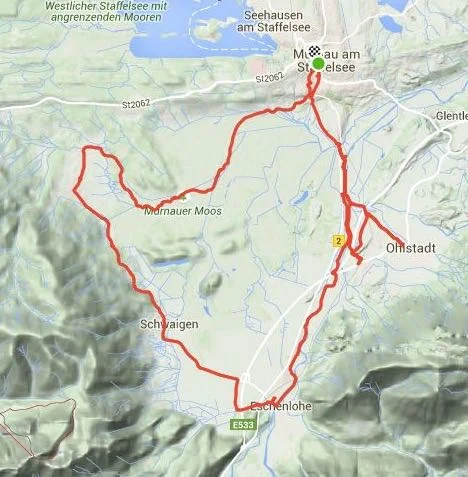
We cycled out of Murnau and the plan was to head towards Eschenlohe but as you can see from our route on the right we had a slight detour towards Ohlstadt first.

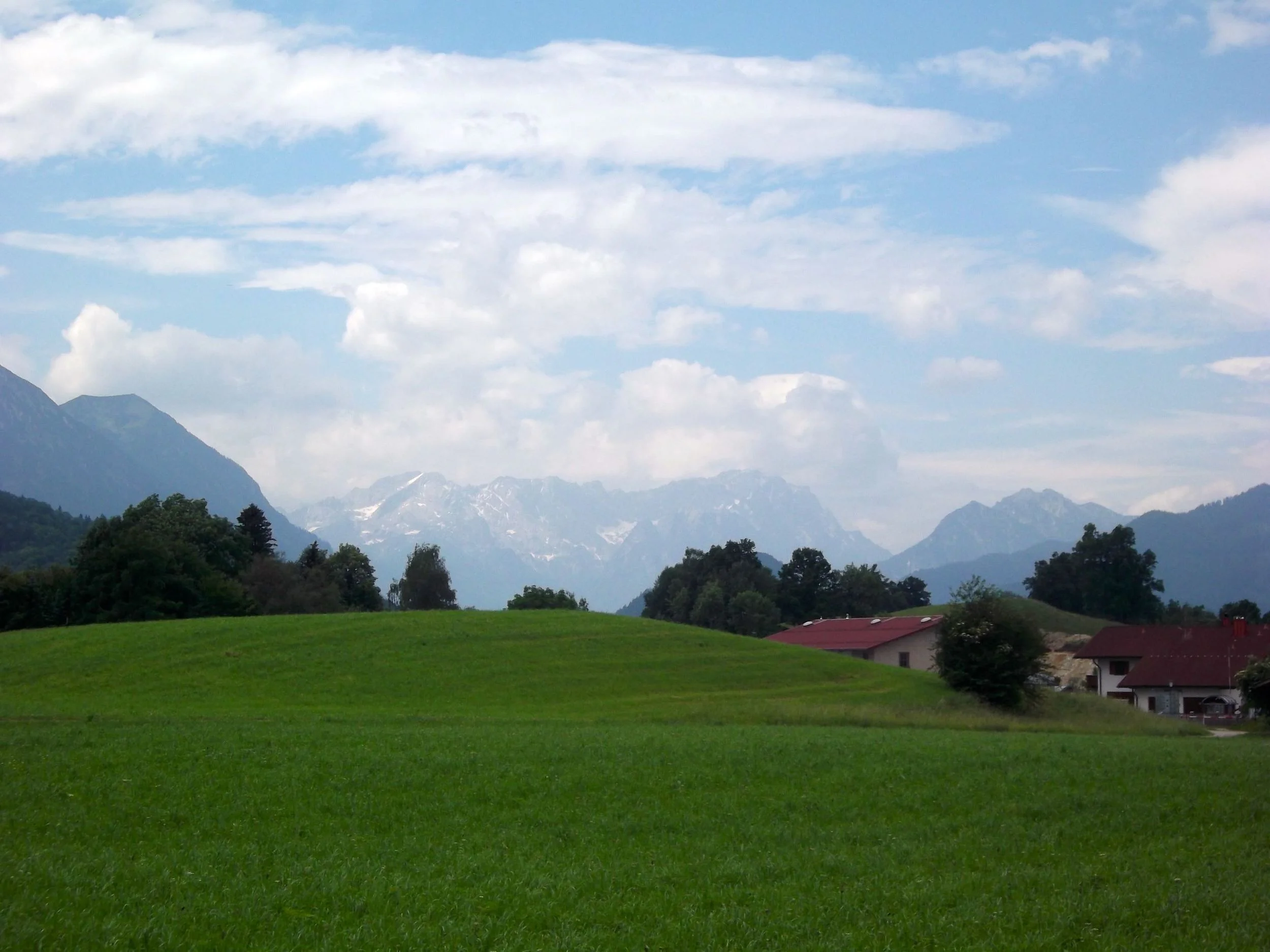
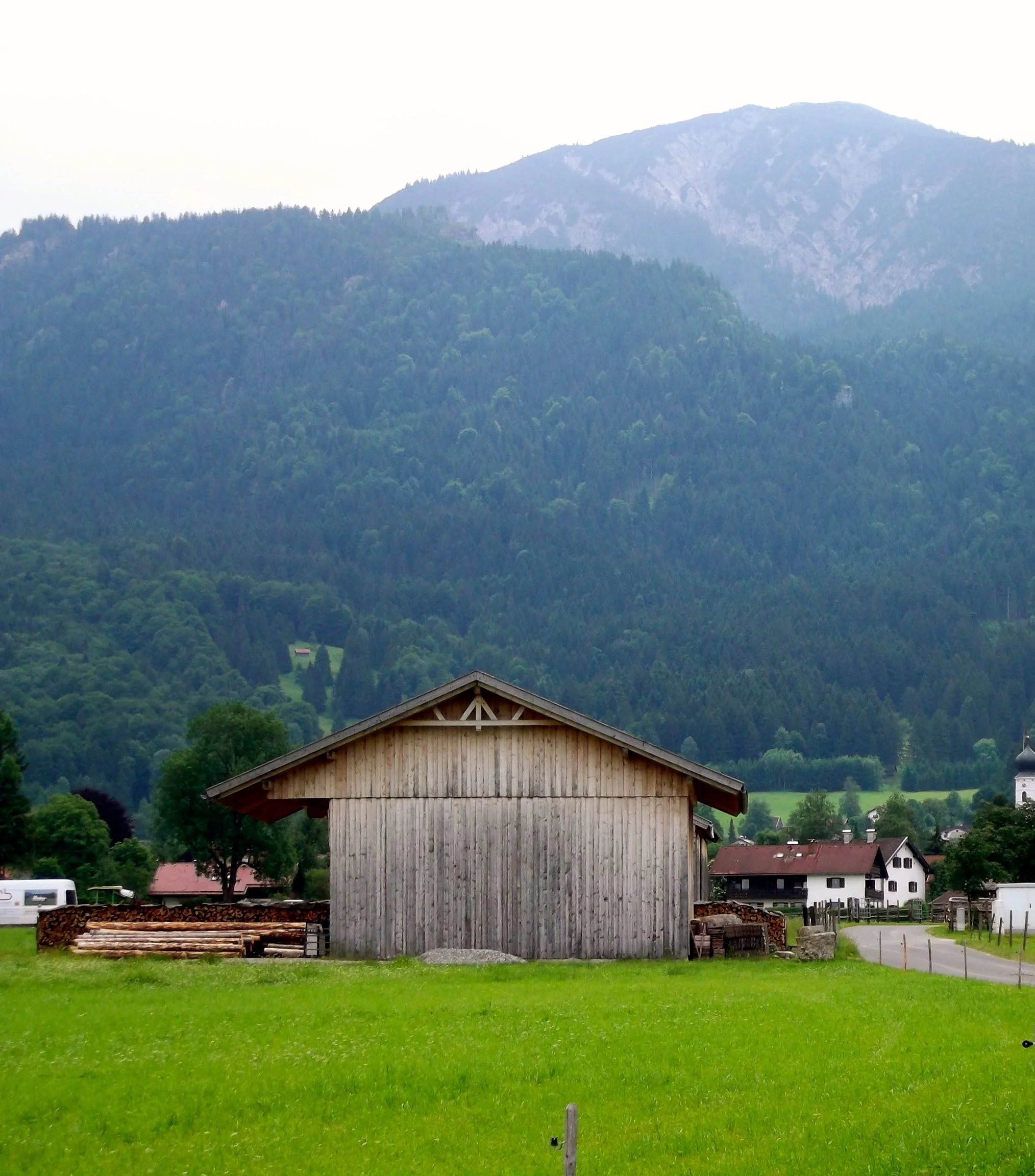
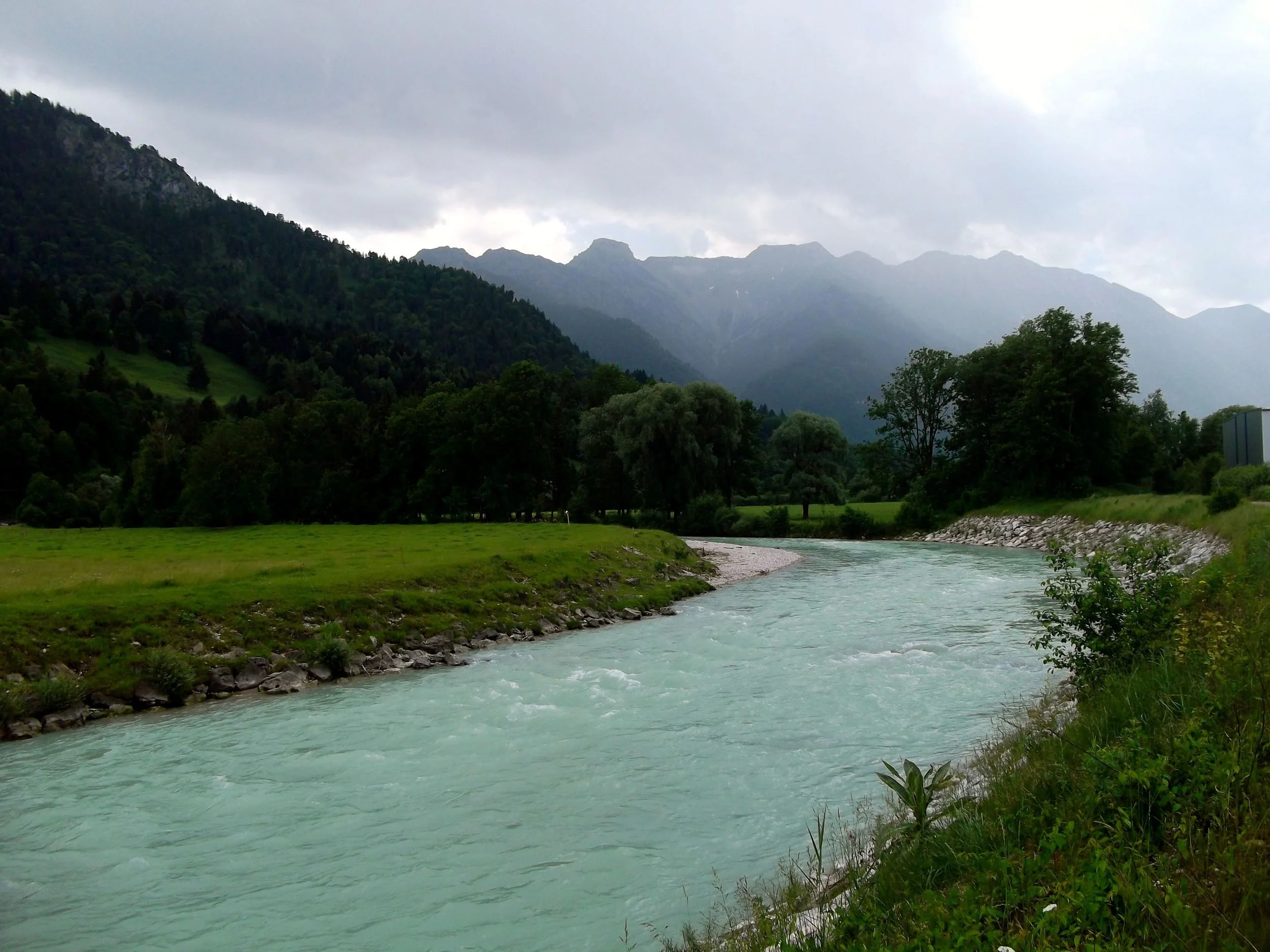
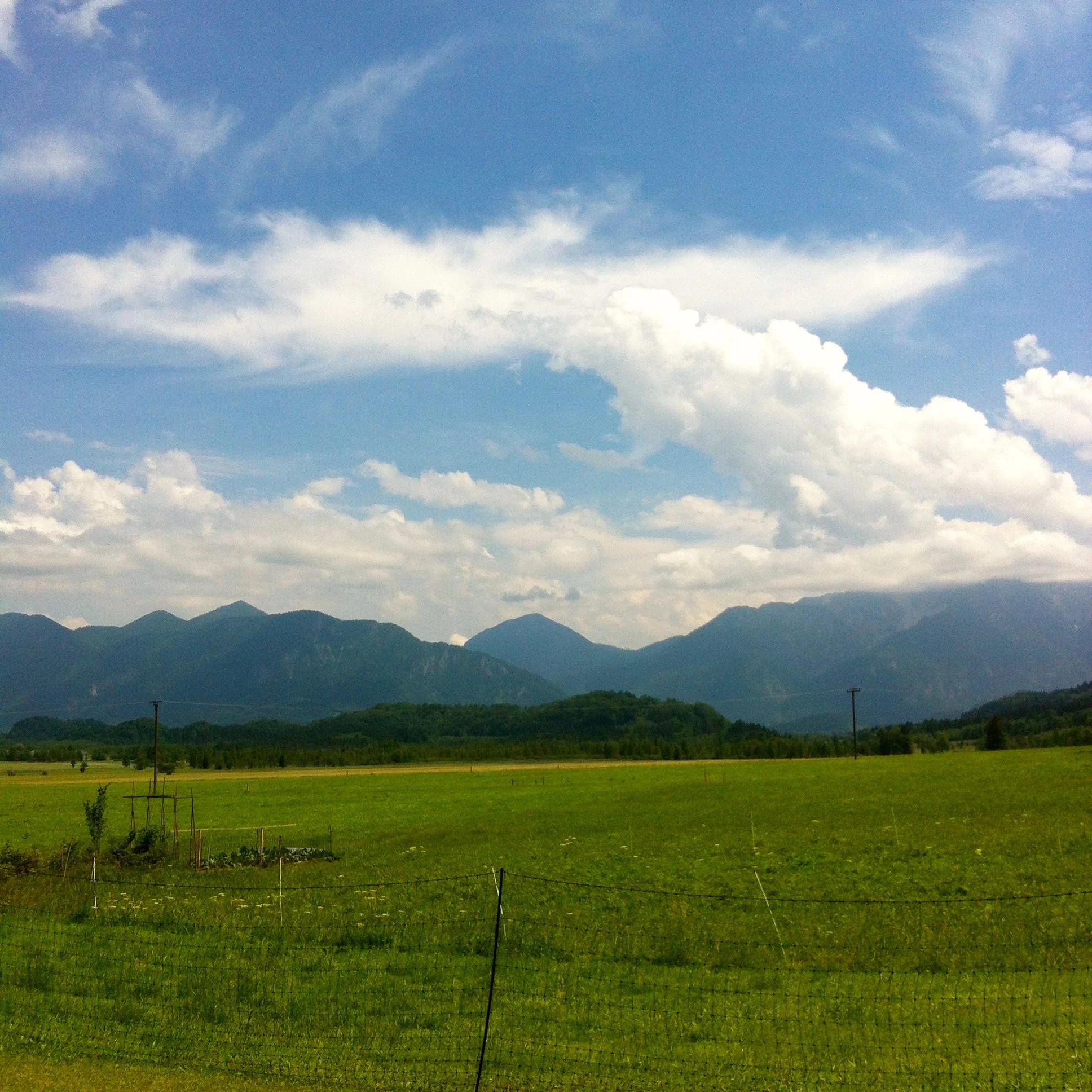
The views as we unknowingly cycled towards Ohlstadt were amazing and our detour was almost worth it for those alone. We reached the main road and checked the notes, when Ohlstadt wasn't mentioned at all we realised we'd missed a turning somewhere. 

So back we went and tried a path alongside the railway line. We weren't sure, but carried on anyway and soon came out at that same main road just further down.

Hmmnn...

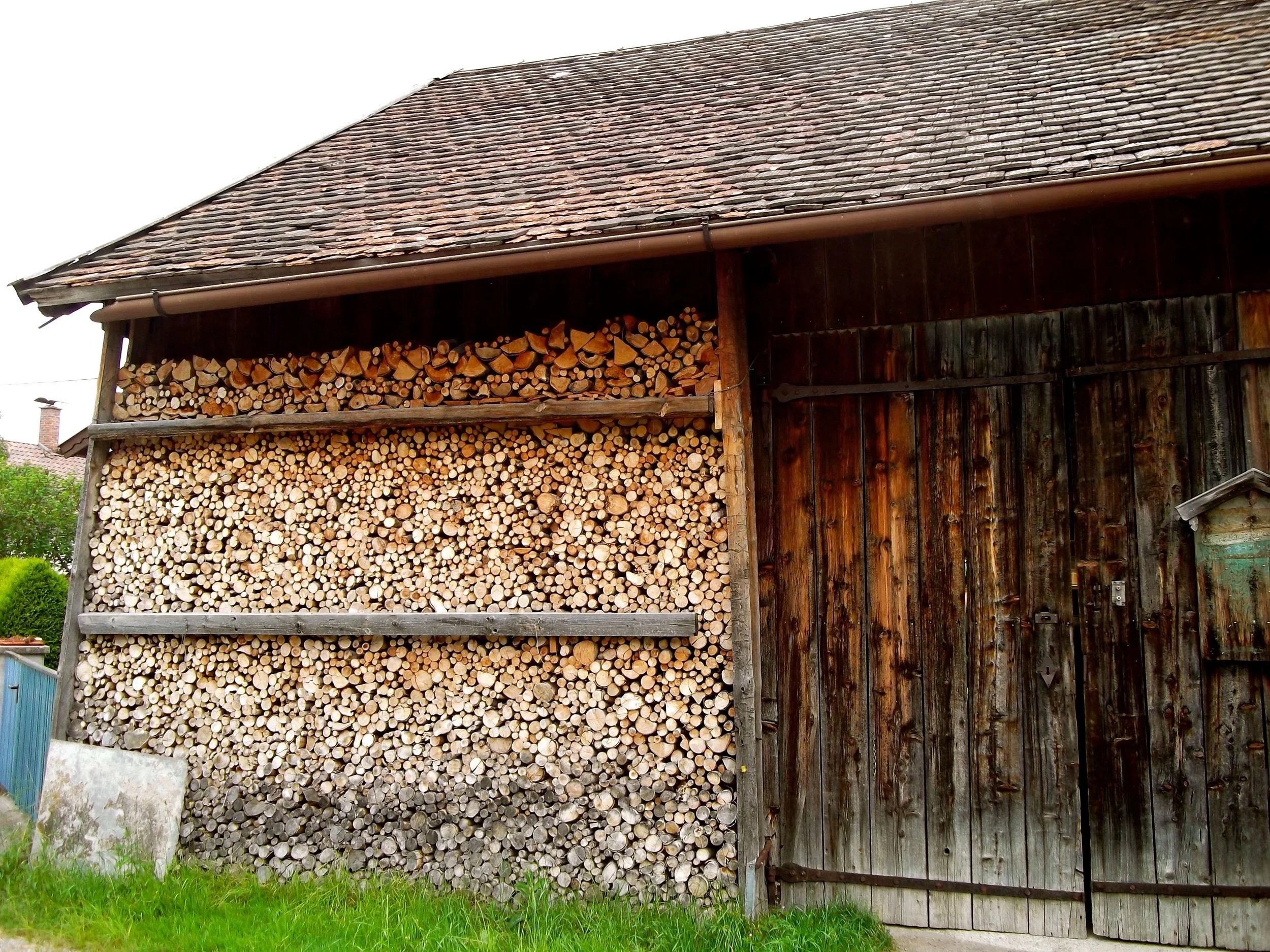
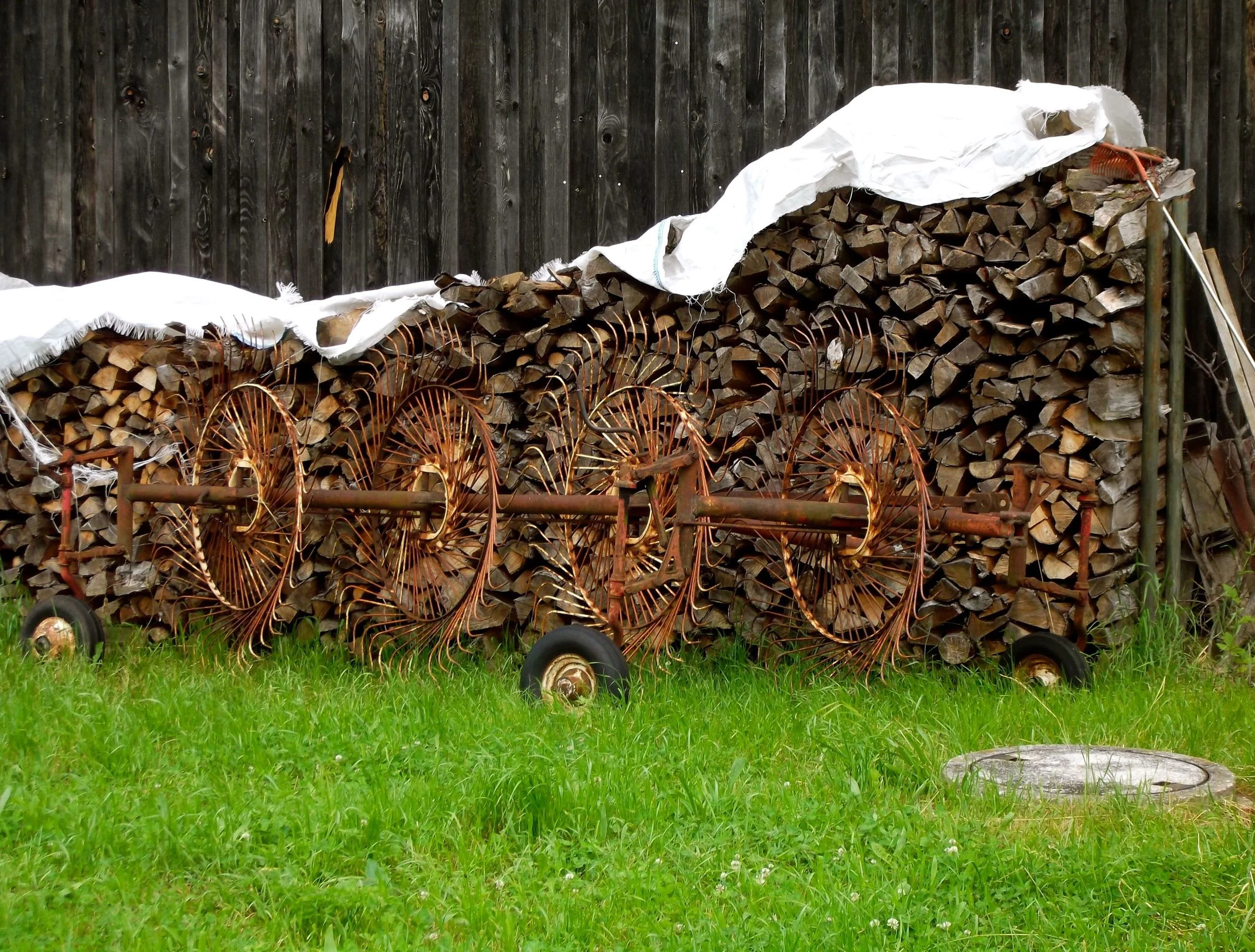
Ah well, let's just enjoy the views we weren't supposed to see. And I got my wood pile fix in early too, and with some farm equipment too.

We headed back the way we had come and back to the main road we'd left Murnau on. From here we retraced our tracks and realised we'd missed out an instruction, missing turning left before we turned right. Finally we were on the track that related to our notes, but not first without clocking up  ten kilometres as our warm-up.

The route notes were fairly sparse and included "at the industrial zone turn left at the fence and follow the Radweg sign" - when we got to the fence it made perfect sense, but perhaps some more clues on how to reach the industrial zone might have helped!

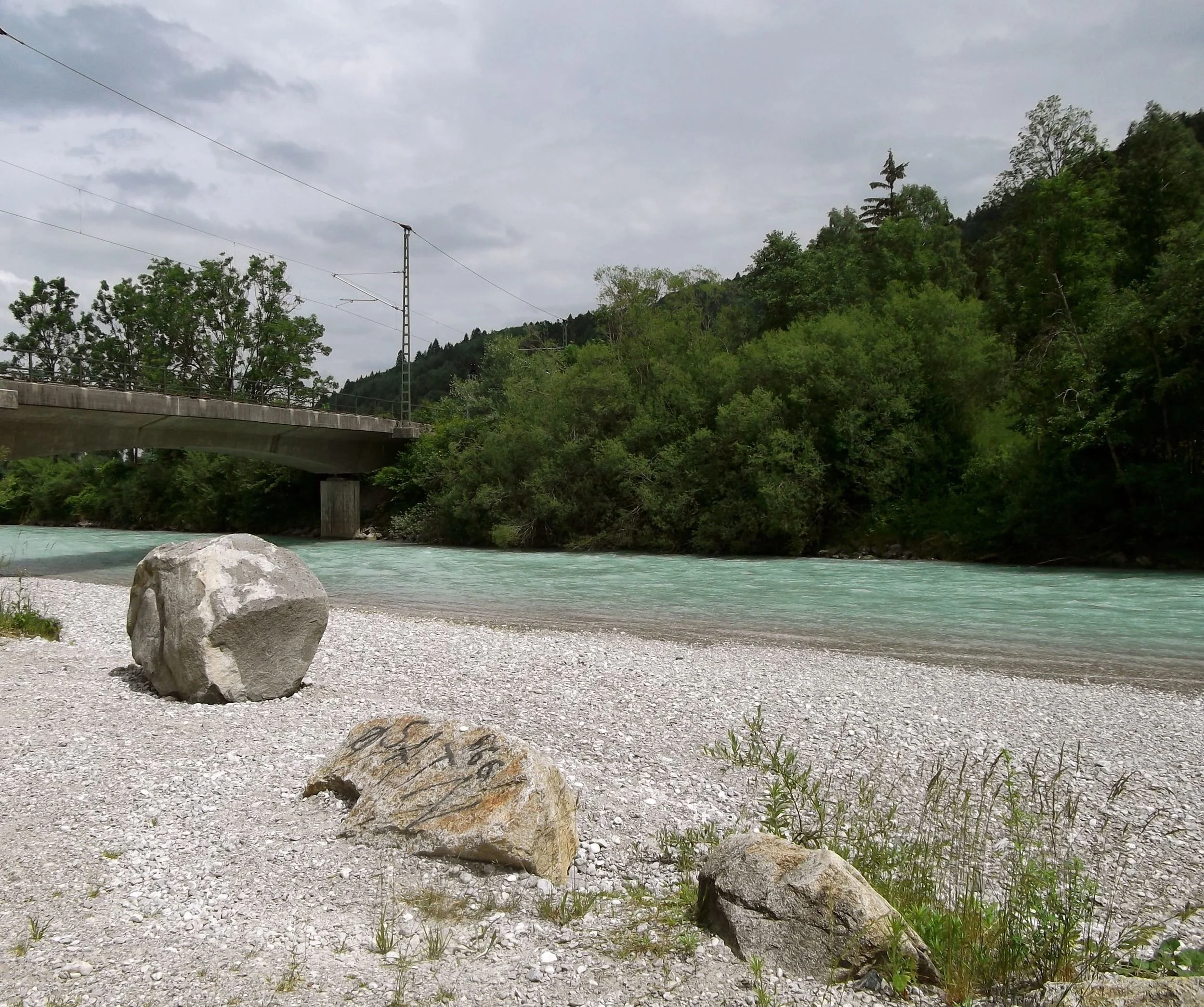
Although it was threatening to rain as we approached the river, it never really managed it. And yes, the river really was that colour.

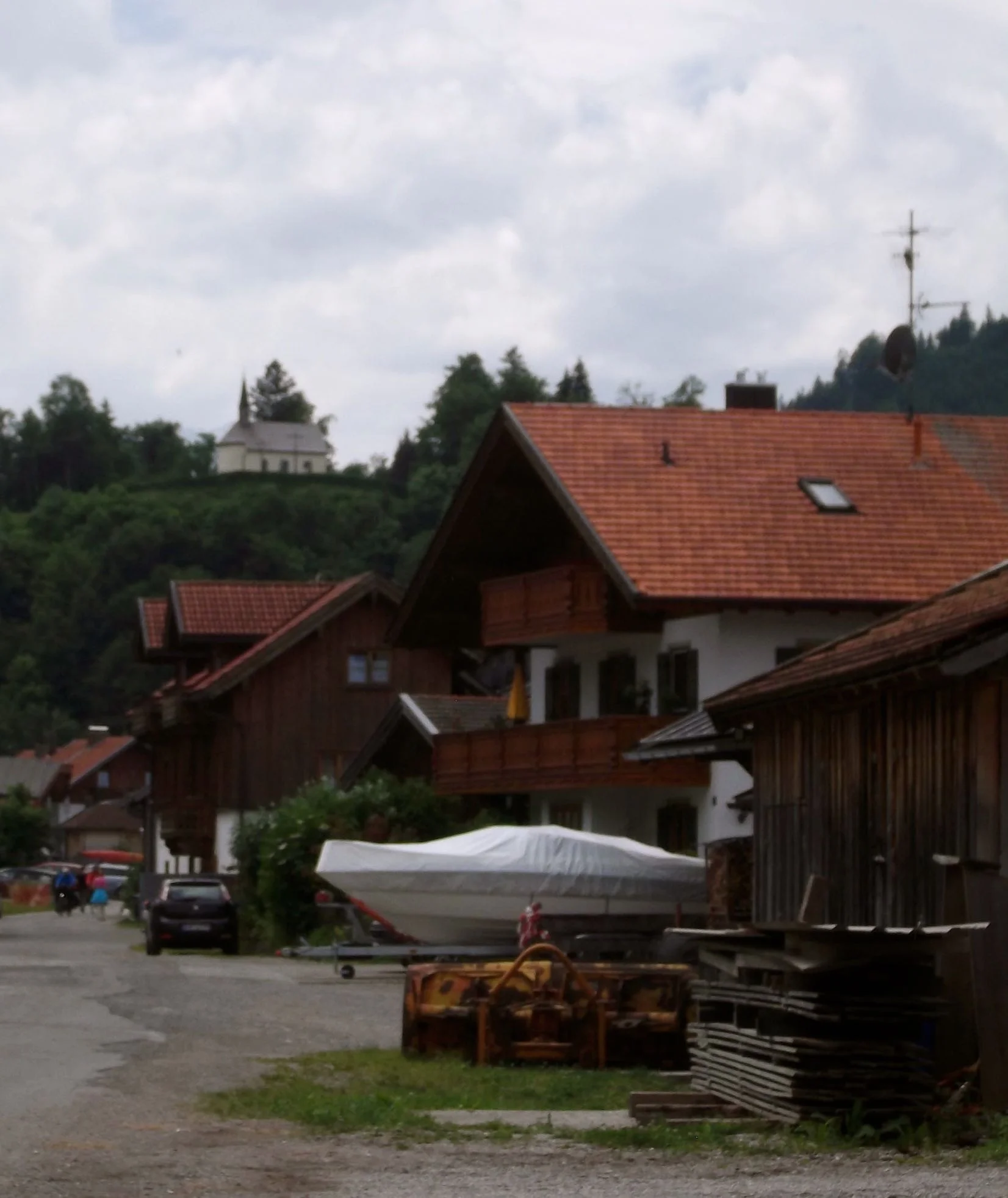
It wasn't long before we were heading towards the village of Eschenloe, and the only village of notable size since we left Murnau (despite our diversions). Two of the road tunnels to the south of the village were used during the Second World War in the production of the Messerschmitt. Tunnels were used as they weren't easily detected by airborne reconnaissance missions. 

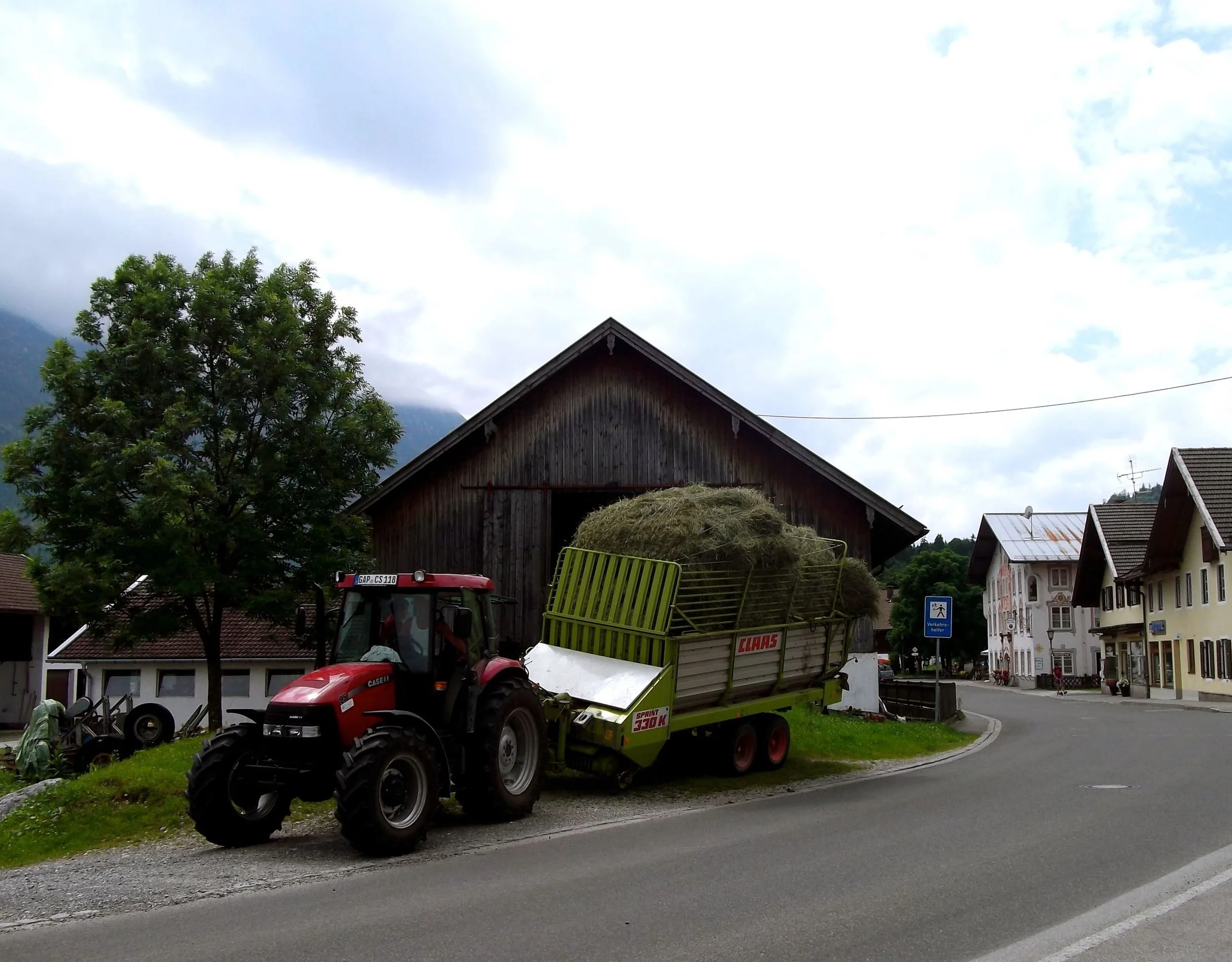
While looking for and failing to find toilets, as the Rathaus was shut on Saturdays we watched this farmer expertly reverse his tractor up a small slope into the barn - something he'd clearly done before!

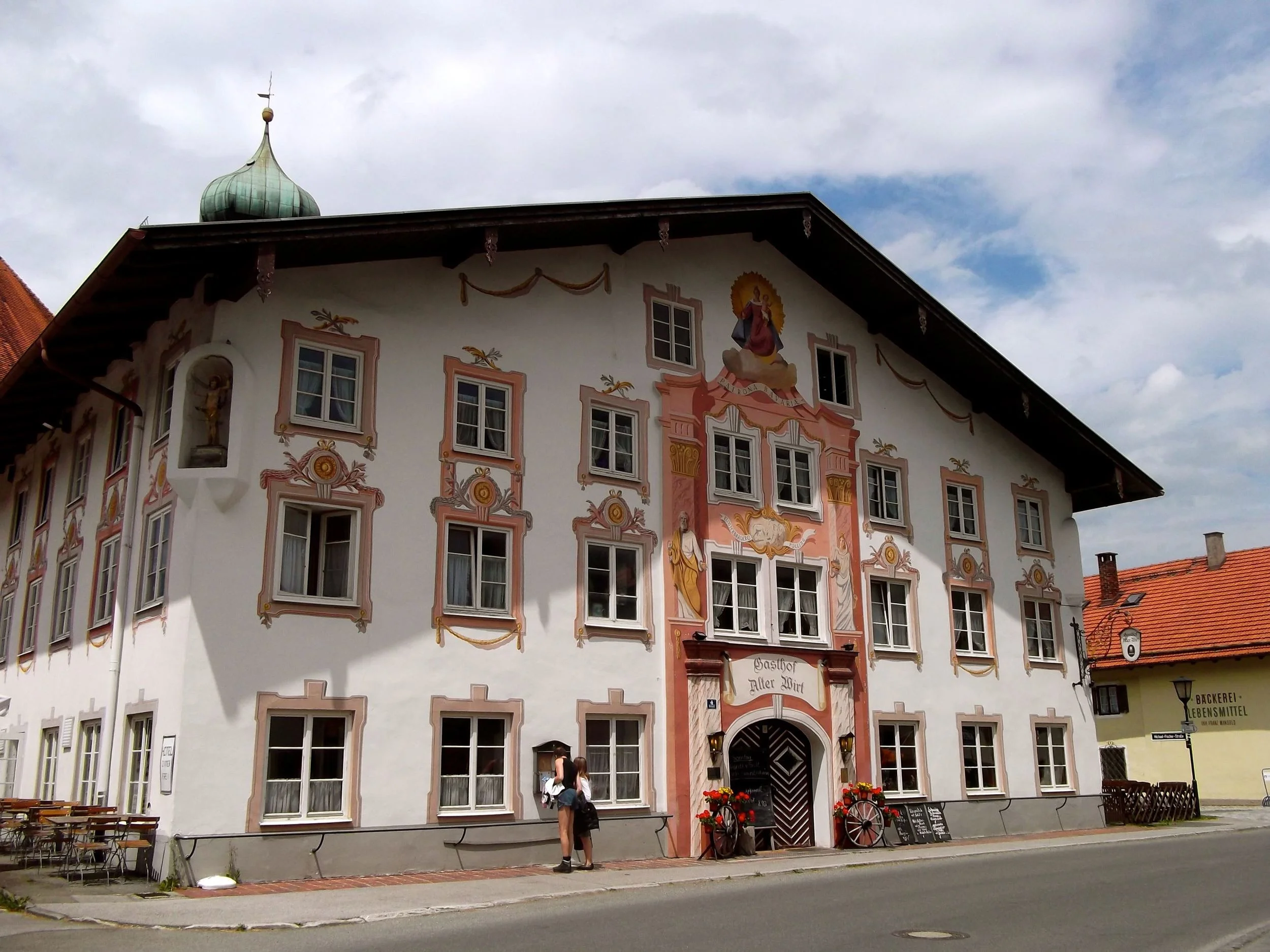
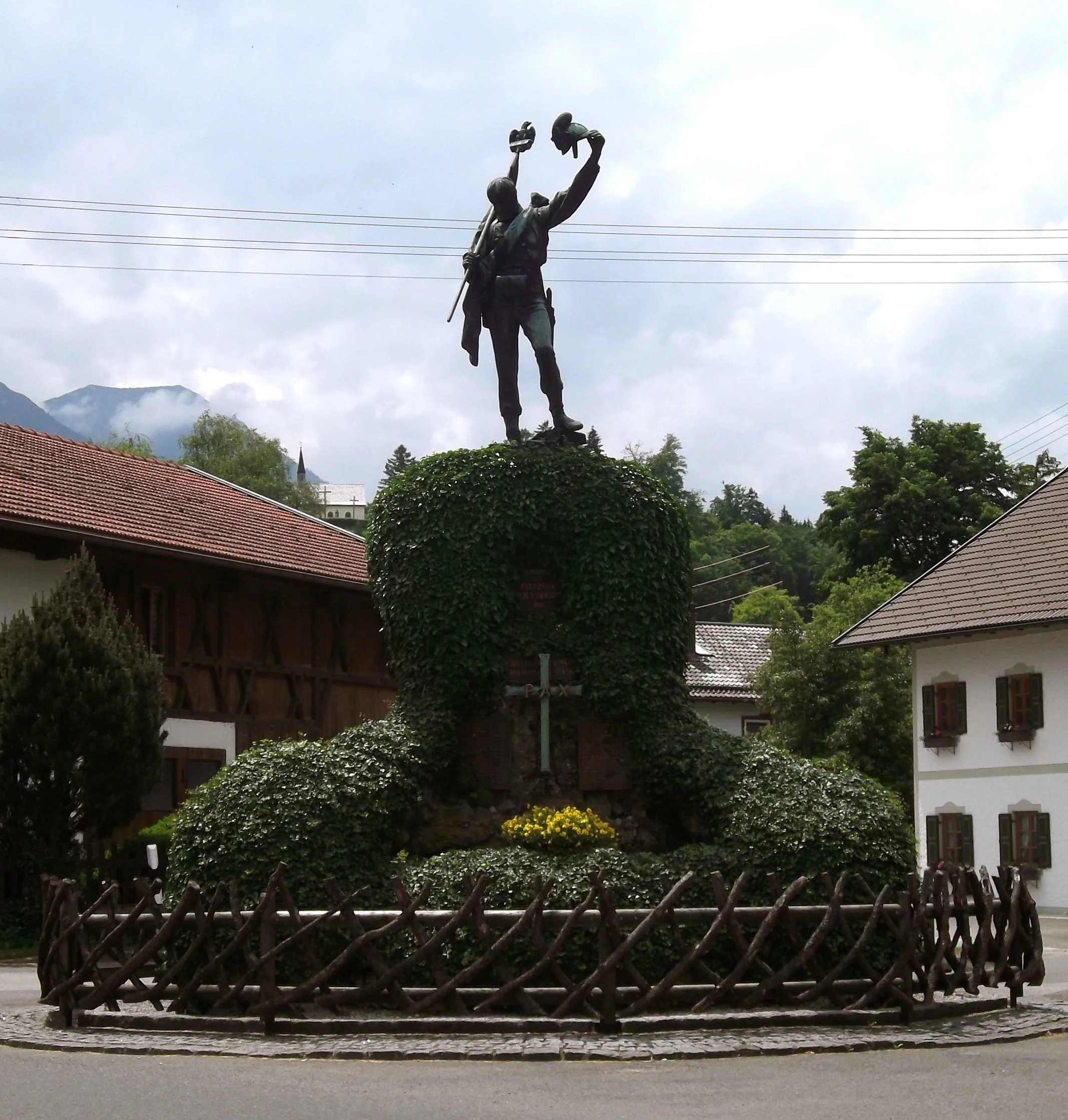
Heading back towards the centre of town, past the highly decorated Rathaus and onto the Second World War Memorial.

Unsure of how much further along the village of Grafenaschau was we decided to stop by the side of the road to eat our lunch and watch the world go by. At the top of a smallish hill it was actually a great place to stop as we watched cyclists of all abilities tackle the hill.

Fed and ready to go again we went down the hill, around the corner and was almost upon the village and the cafe with the wonderful cakes. It'd be rude not to stop wouldn't it, so we did. We ordered a beer and followed that by a humongous slice of cake and a coffee.  And sat and admired these views.

We could have sat here for much longer, and eaten more cake. And I think we would have done had it not been for the bikes and having to cycle back to the hotel. But as we did, it was time to go.

We cycled back through more of the marsh area alongside the Lindenbach stream on gravelly paths. It was warm by now and we decided to push hard to get back to the hotel. It turns out that doing this and upping the speed on winding, gravelly paths wasn't such a good idea. At one corner I was almost off my bike, but somehow I saved it at the last minute - and I'm glad I did.

Before much longer and after a few more hills we were back at the hotel, but not before clocking up 42.6km - not bad for a 30km cycling day!

The Tibetan Peace Garden at the Imperial War Museum

This week my Jury Service has resumed and I've been back in Southwark; there's still a lot of sitting around but that means I'm even more determined to get out and about over lunch. Usually we have an hour and a half for lunch (I know!) so yesterday I headed off towards the Imperial War Museum. My original intention was to find some green space to sit and eat my lunch and if there was time to pop into the museum.

It didn't work out that way though because soon after I entered the grounds I stumbled upon this Tibetan Peace Garden. And what a beauty it is.

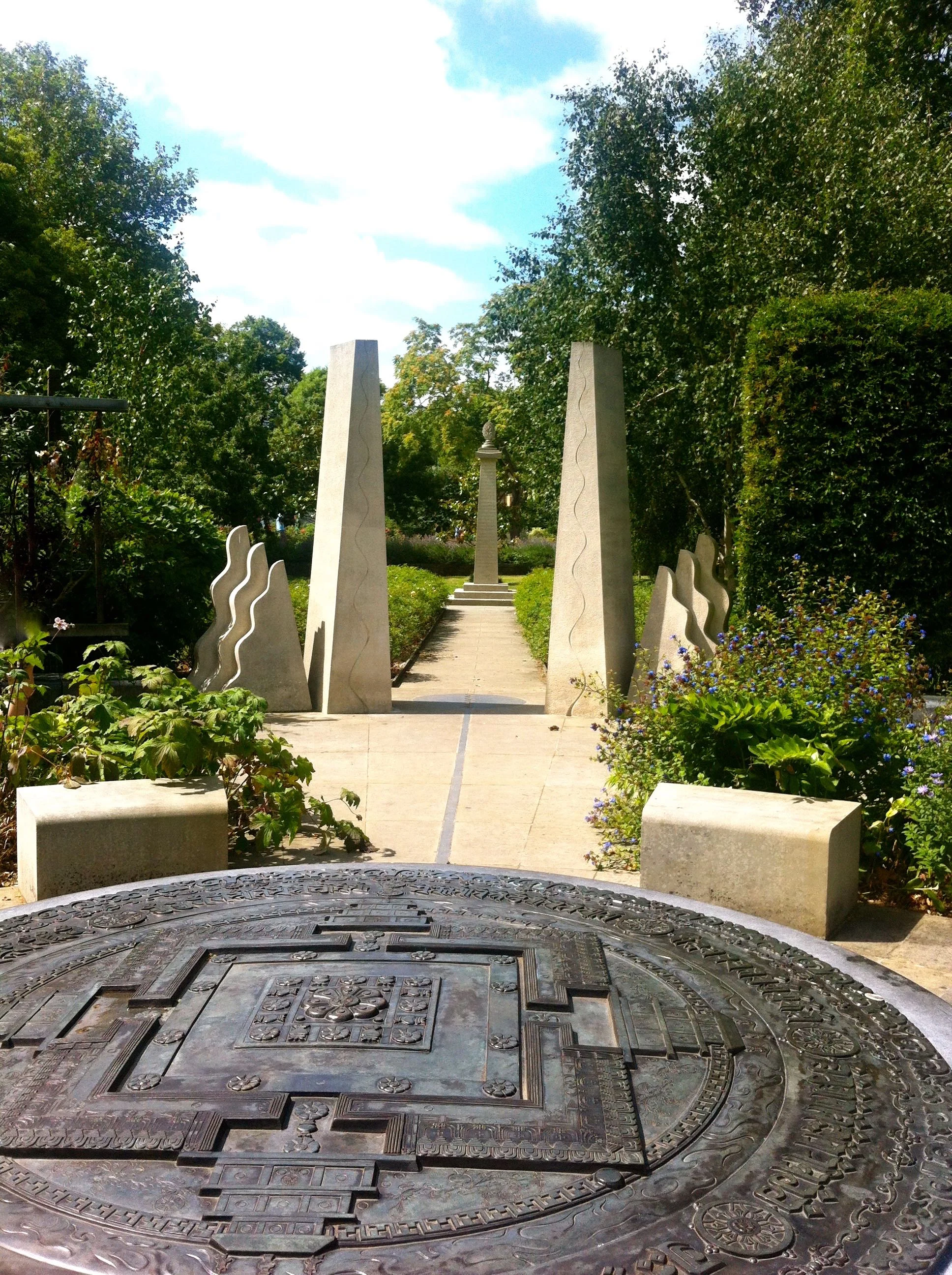
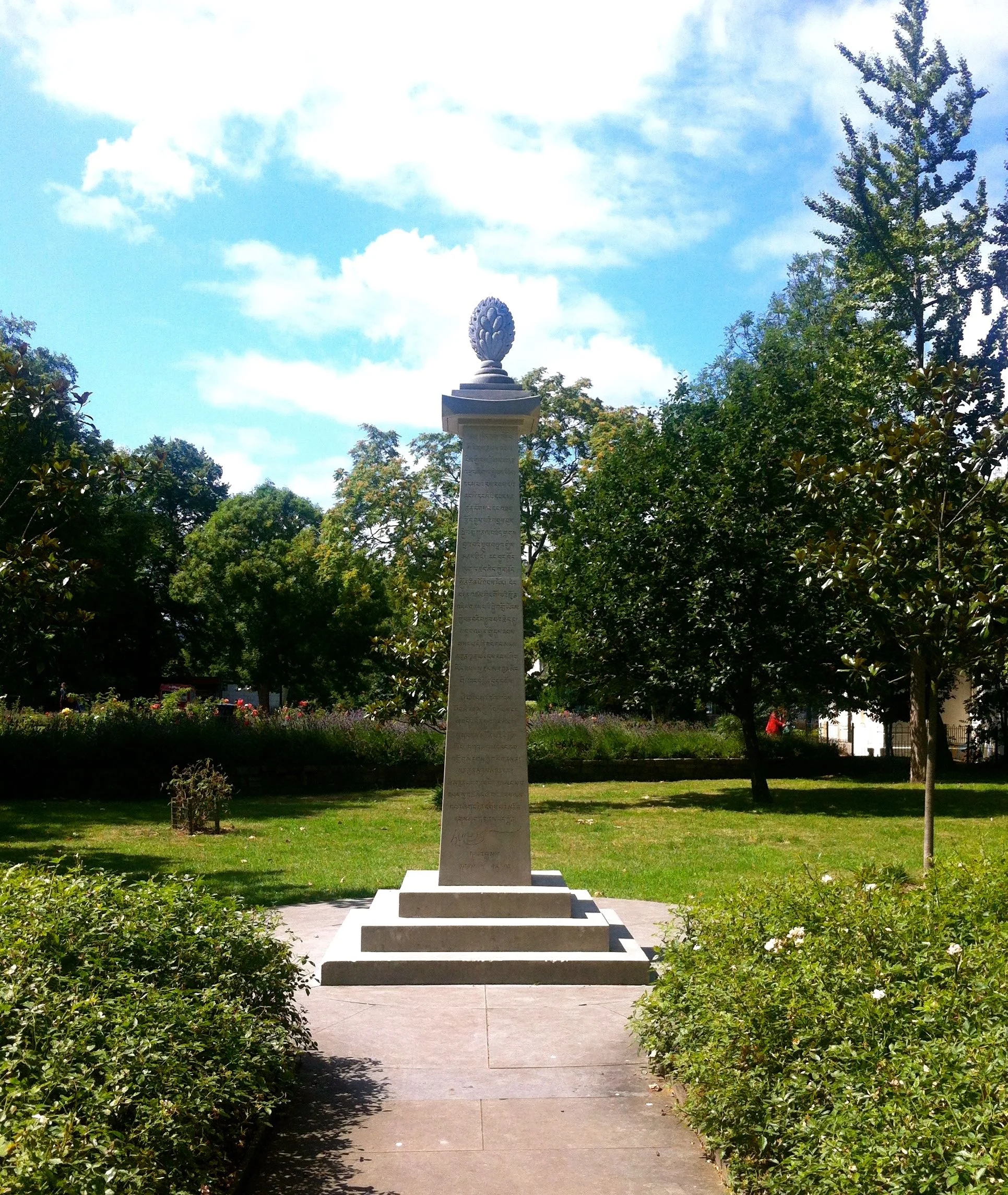
Standing in the centre of the garden, by the black Kilkenny limestone and the bronze cast of the Kalachakra Mandala I had a great view looking towards the Language Pillar. It's design is based on the Sho Pillar in front of the Potala Palace in Lhasa and is made from Portland stone. More on this later though.

The bronze cast above is considered by the Dalai Lama to be a vehicle for world peace and it's believed it has the power to grant its blessings on all who see it. I'll let you know if it works!

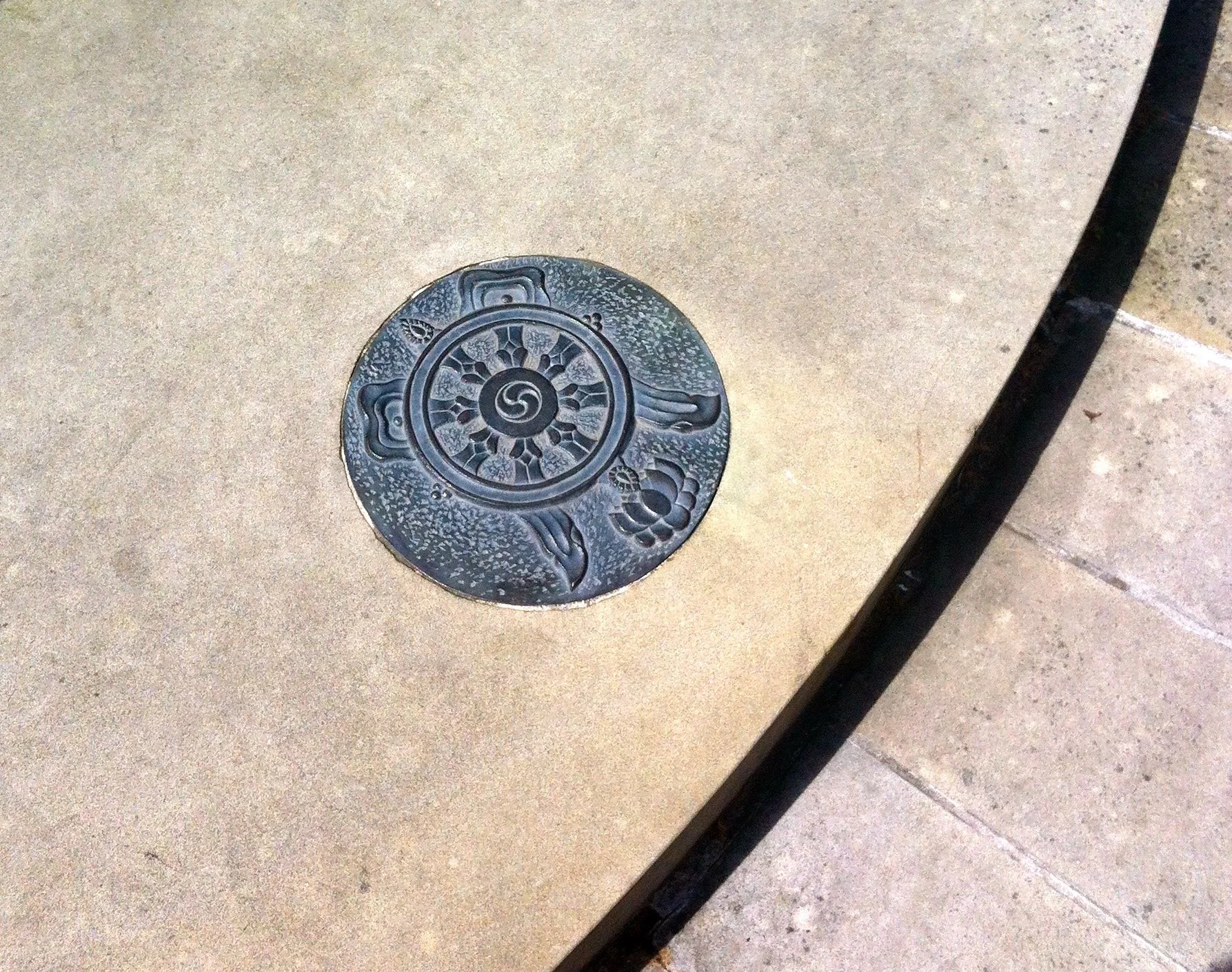
In the paving around the mandala are the classic Buddhist images of the "Eight Auspicious Symbols"

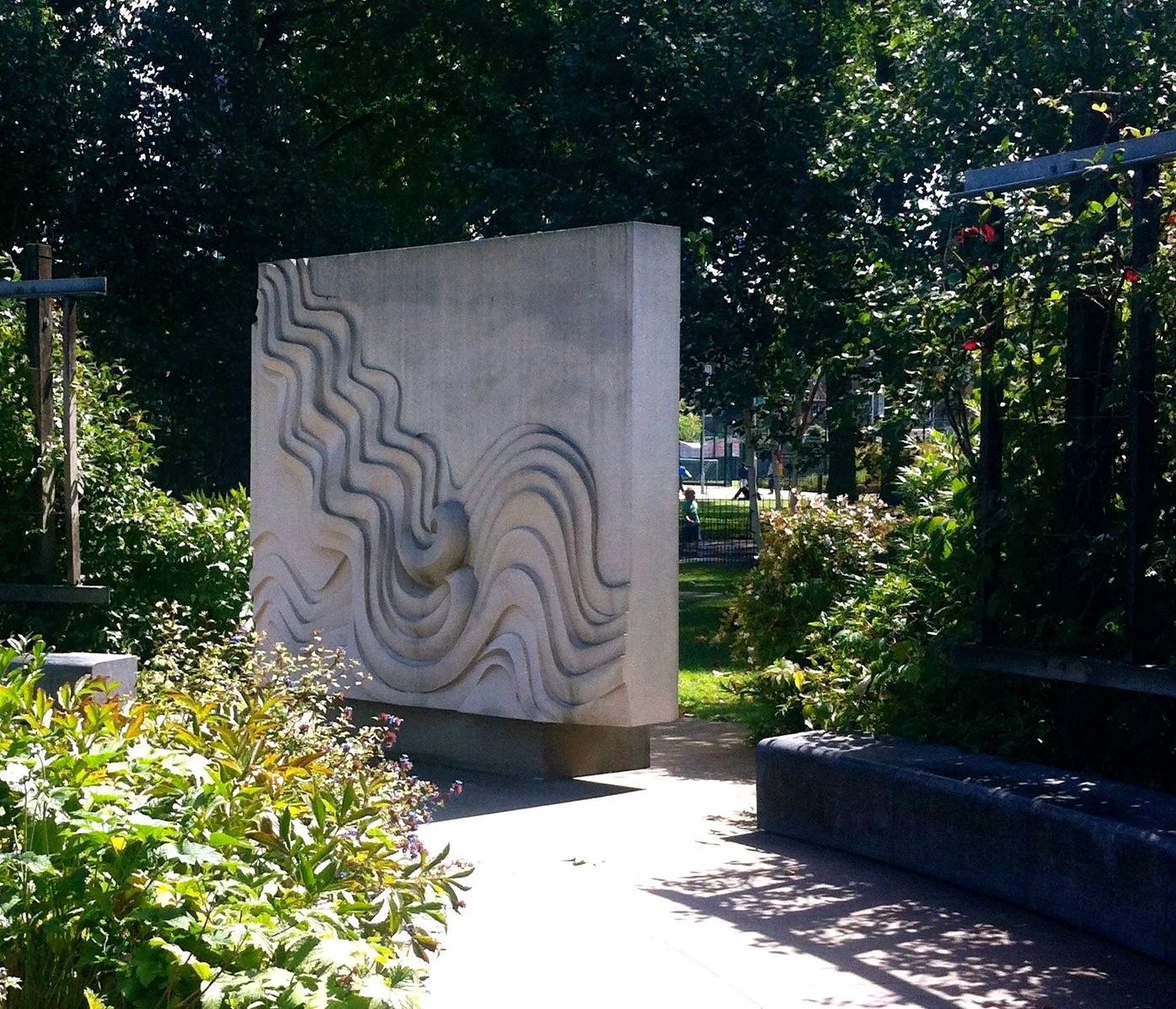
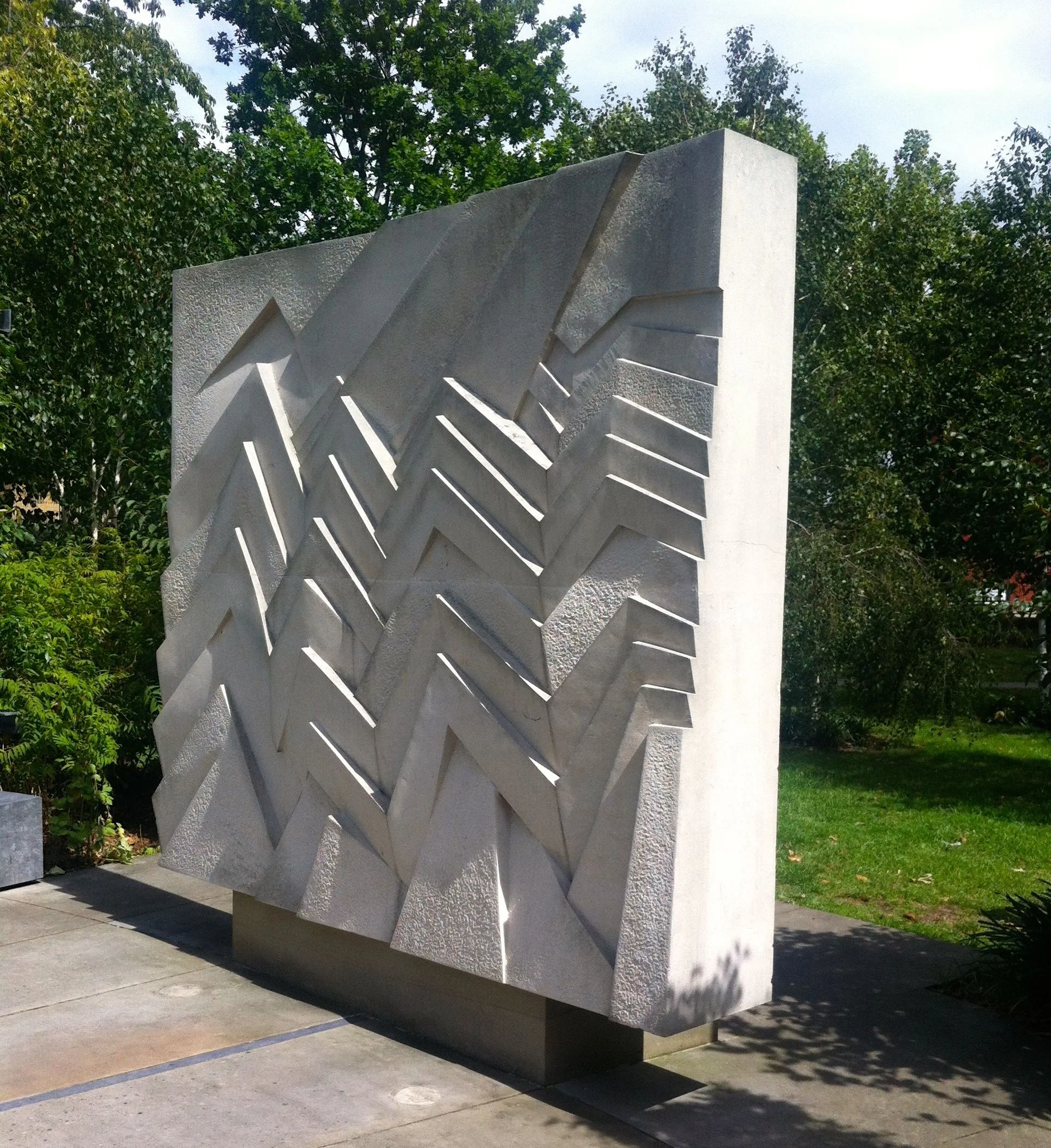
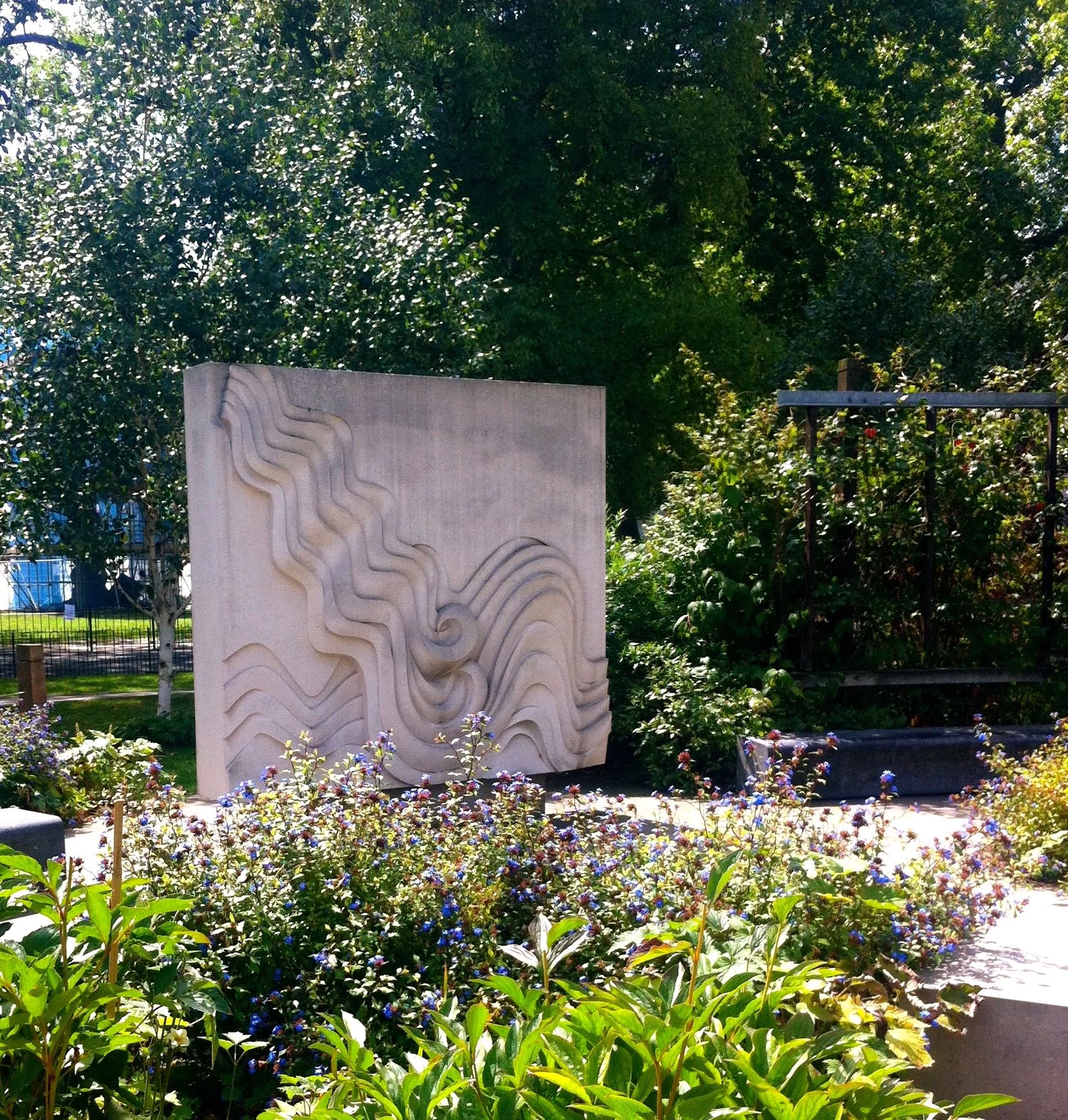
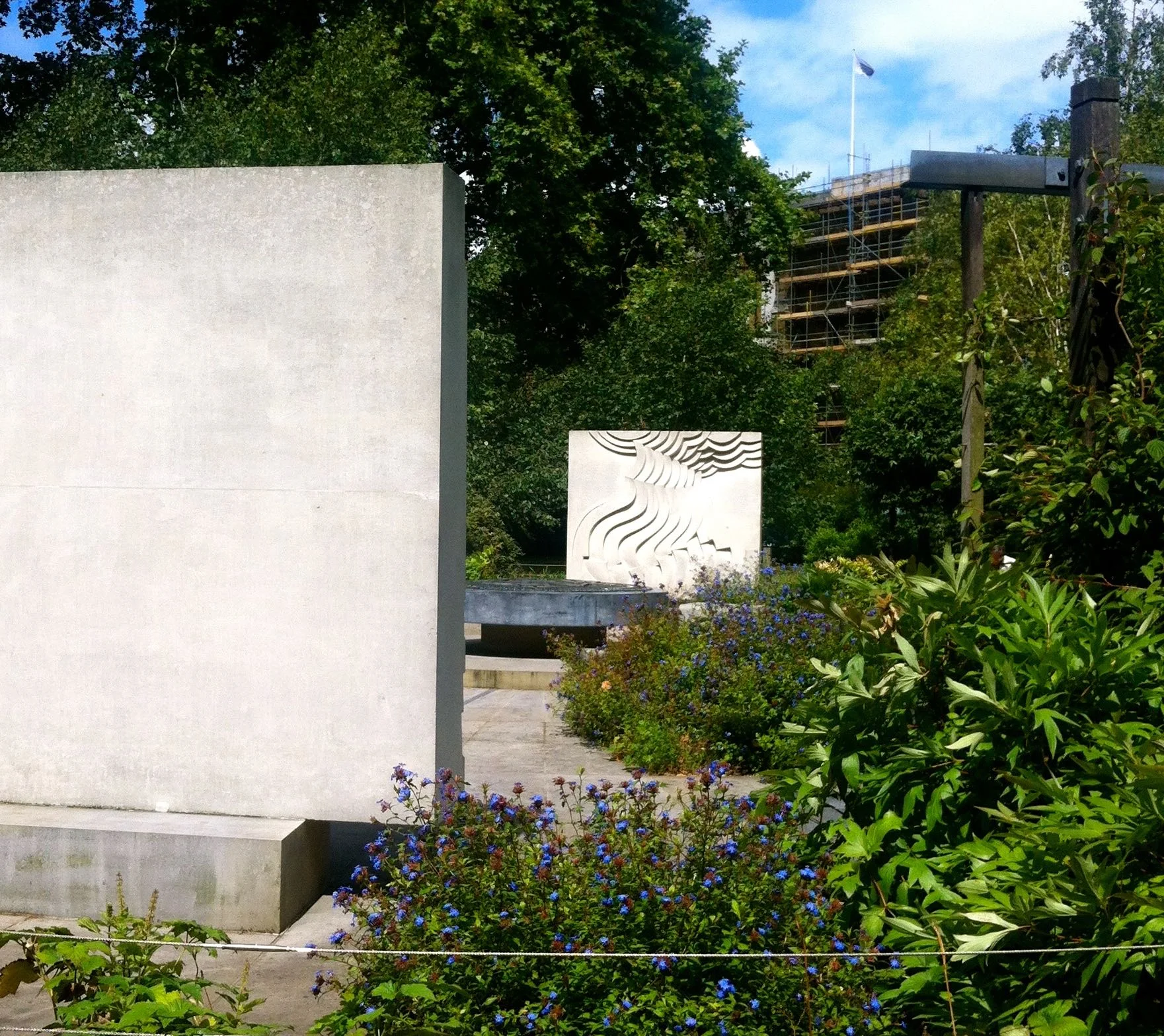
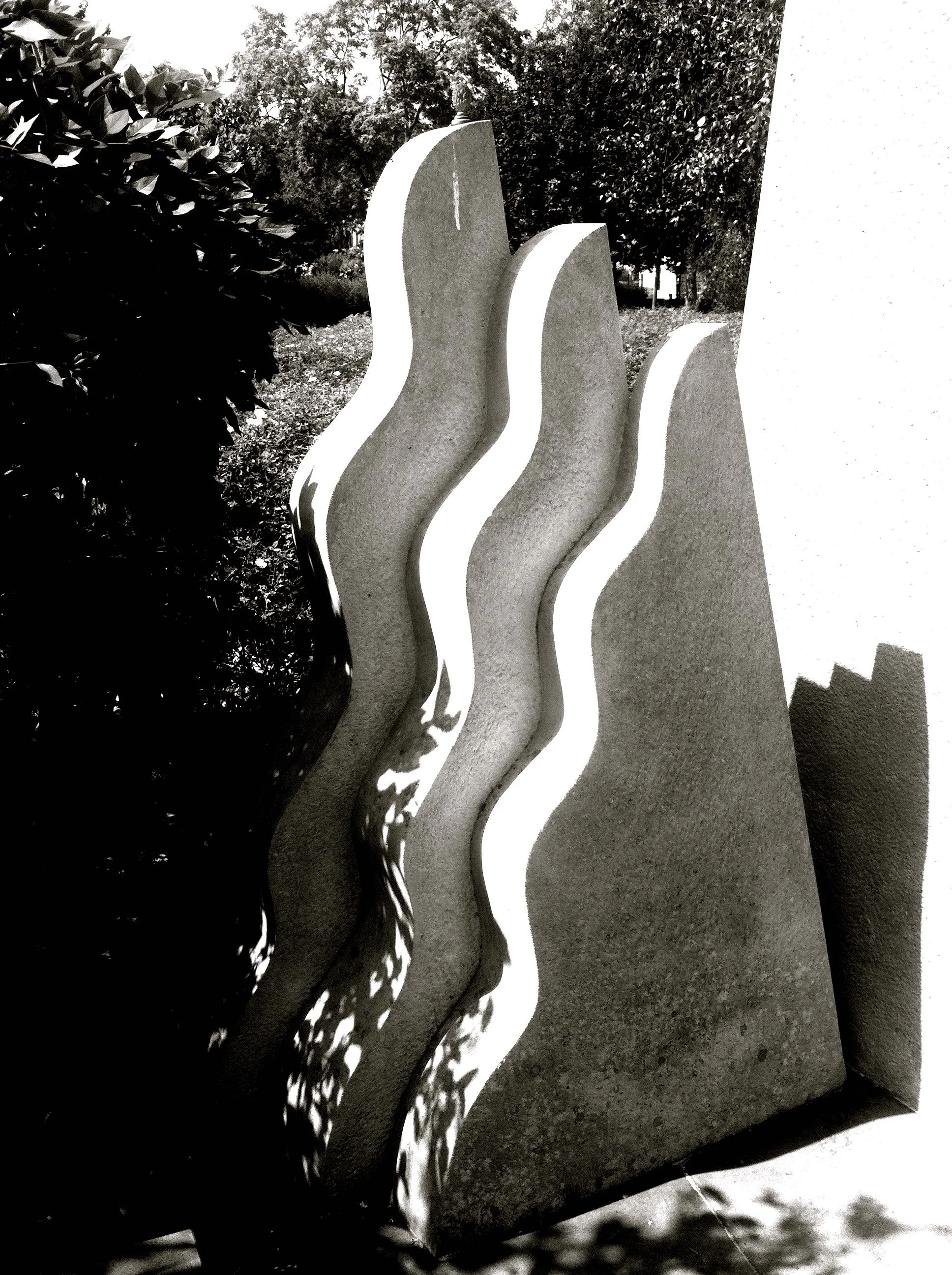
Around the edge of the gardens are four contemporary sculptures carved in Portland stone showing the elements Air, Fire, Earth and Water - the fifth element of Space is represented by the open arena.

IMG_0172.jpg

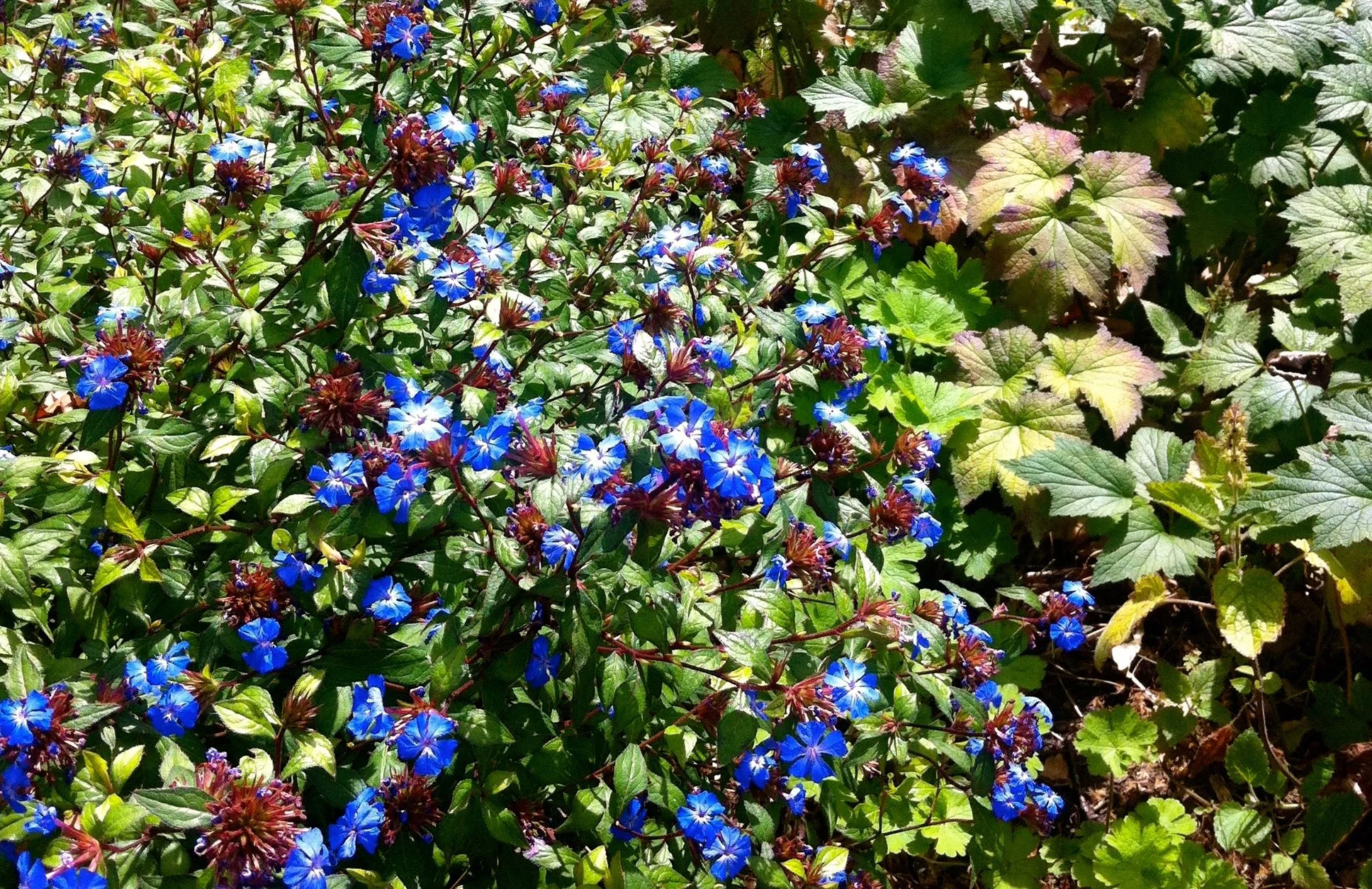
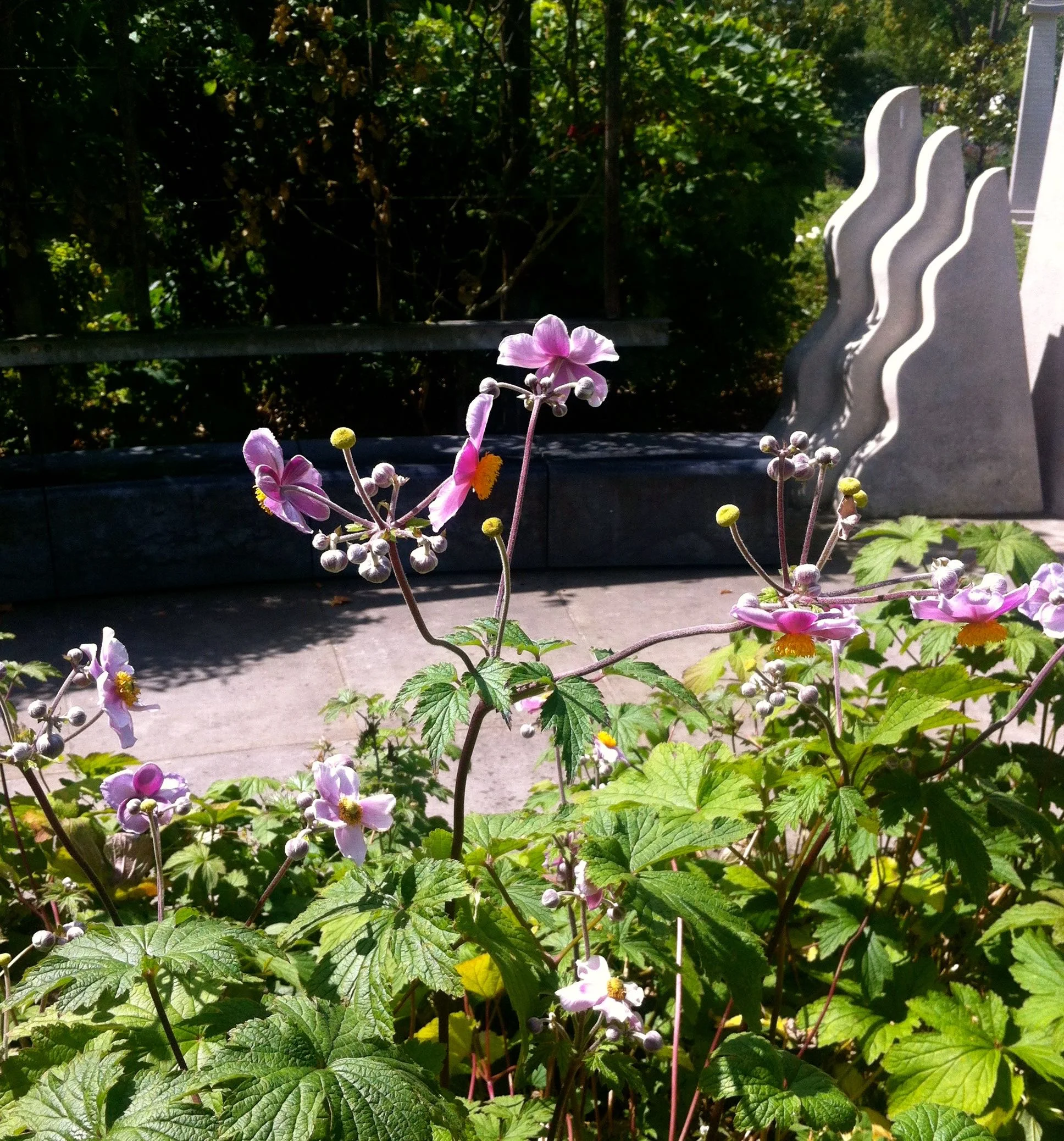
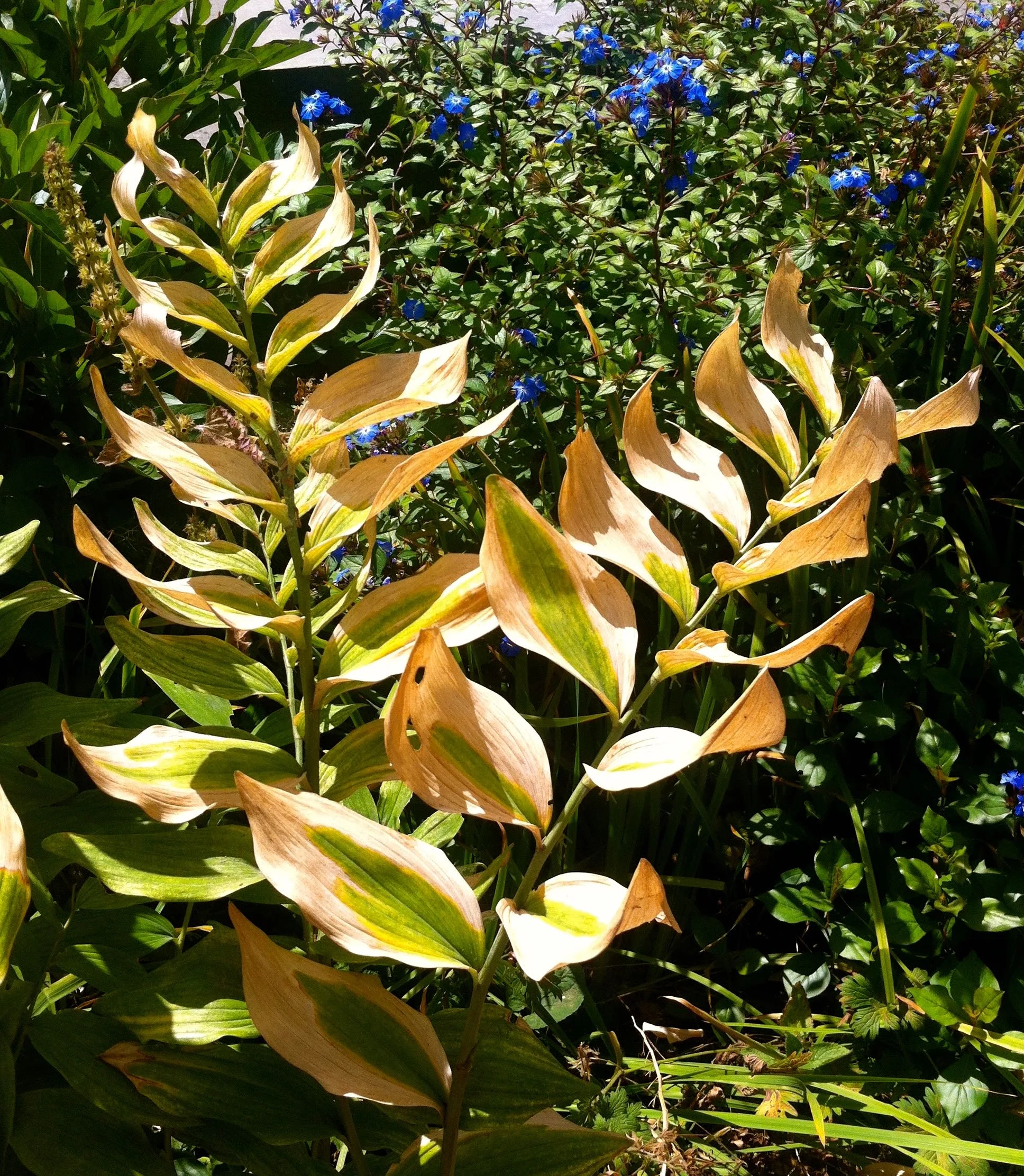
The plants in the garden originate from Tibet and the Himalayan regions.

The inscription on the Language Pillar - shown in four languages - reads

"WE HUMAN BEINGS ARE PASSING THROUGH A CRUCIAL PERIOD IN OUR DEVELOPMENT.

CONFLICT & MISTRUST HAVE PLAGUED THE PAST CENTURY WHICH HAS BROUGHT IMMEASURABLE HUMAN SUFFERING & ENVIRONMENTAL DESTRUCTION.

IT IS IN THE INTERESTS OF ALL OF US ON THIS PLANET THAT WE MAKE A JOINT EFFORT TO TURN THE NEXT CENTURY INTO AN ERA OF PEACE & HARMONY.

MAY THIS PEACE GARDEN BECOME A MONUMENT TO THE COURAGE OF THE TIBETAN PEOPLE & THIER COMMITMENT TO PEACE.

MAY IT REMAIN AS A SYMBOL TO REMIND US THAT HUMAN SURVIVAL DEPENDS ON LIVING IN HARMONY & ON ALWAYS CHOOSING THE PATH OF NON-VIOLENCE IN RESOLVING OUR DIFFERENCES."

- THE XIV DALAI LAMA OF TIBET, 13 MAY 1999

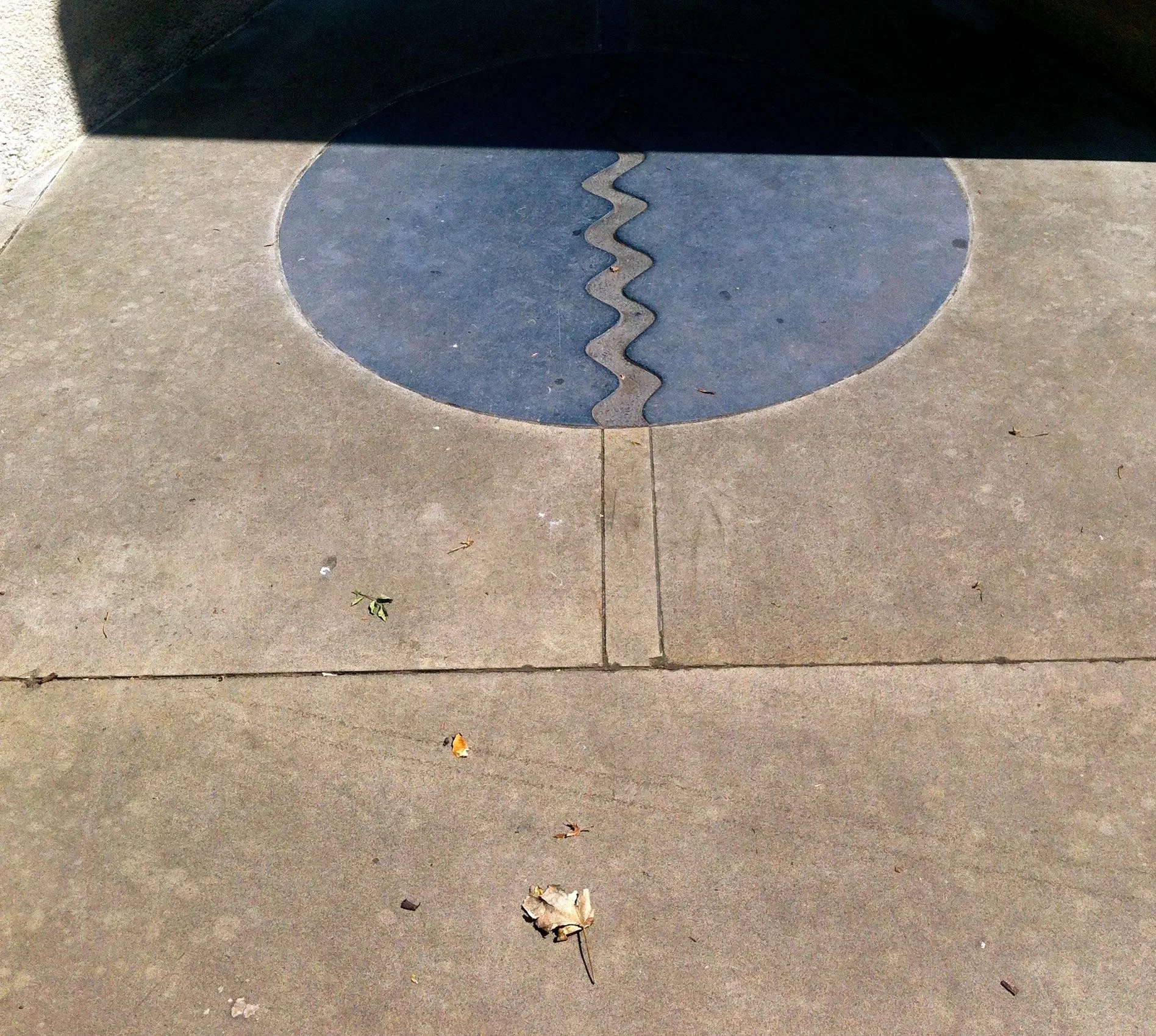
Walking into the garden from the language pillar you see a circular bronze image set in Kilkenny stone. The two Tibetan syllables in the centre mean Virtue and Foundation and it is the logo of the Tibet Foundation, who commissioned the garden.

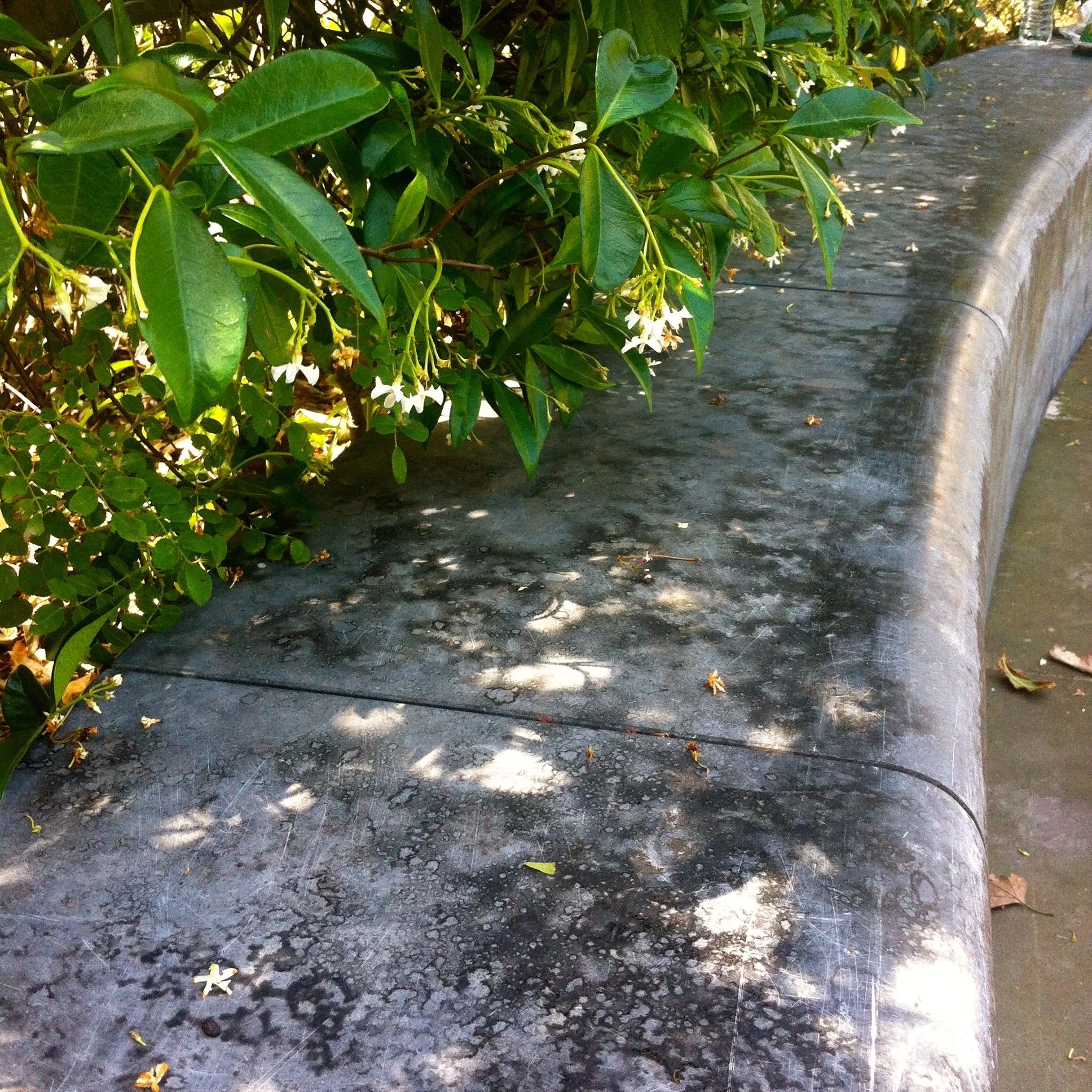
Around the outer perimeter of the garden there's a low Kilkenny stone wall, which doubled up as a bench and a lunch spot for me and many workers from the local area.

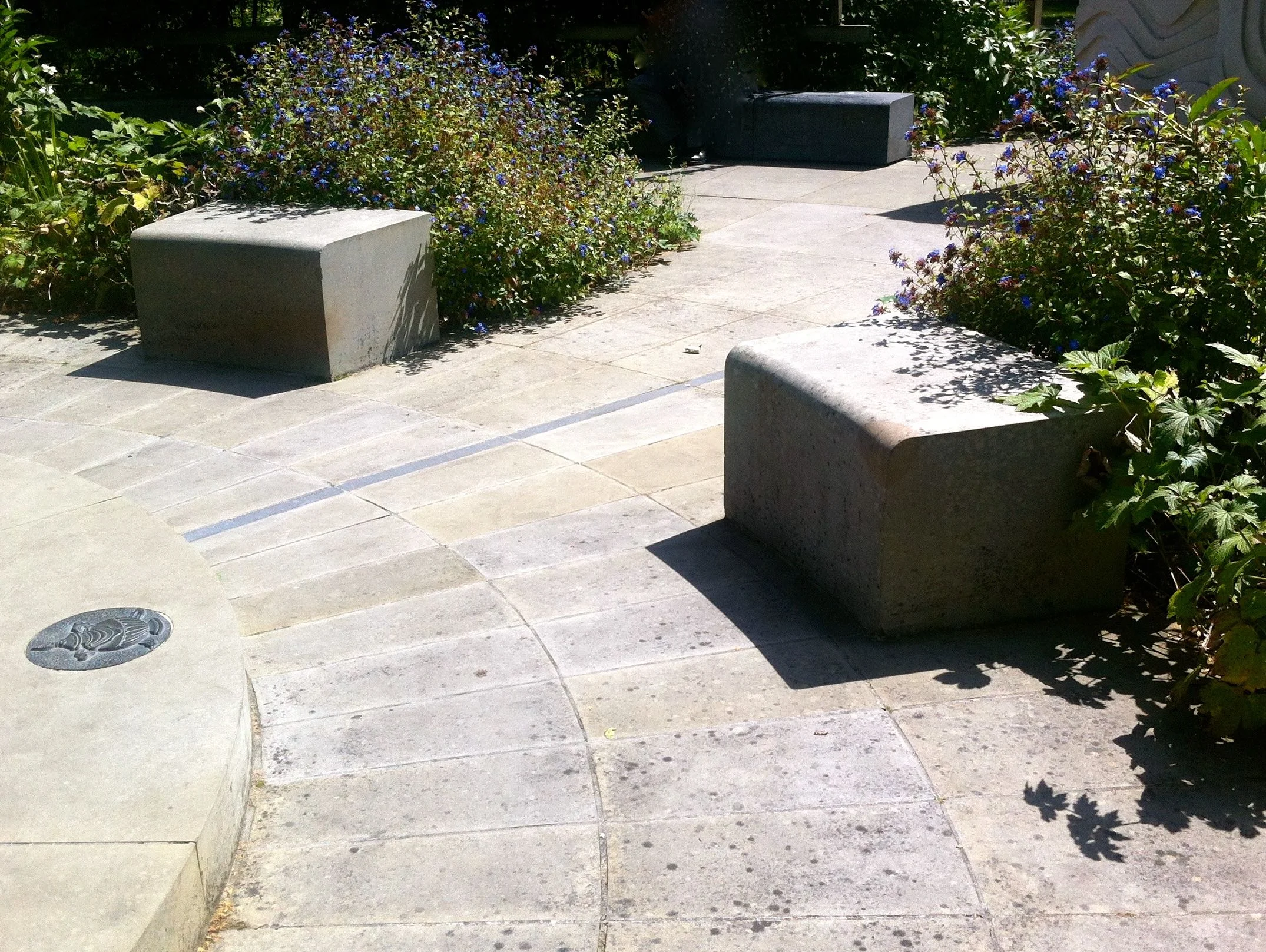
Around the mandala are eight low York stone contemplation seats, which represent the Noble Eightfold Path of right view, thought, speech, livelihood, effort, mindfulness and concentration.

It was a great spot for lunch and it really did have a quiet and peaceful aura to it, which given that my visit took place over lunch during school holidays where there were plenty of children enjoying clambering over the large naval guns outside the museum's entrance, was no mean feat!