


Taming my patio trellis

Welcome back sunshine, I missed you! Not only did I plan to test out my new garden parasol while you were away I also planned to tackle the climbing plants on our patio. Neither happened until this weekend though.

There's all sorts of climbers gone (almost) wild on the patio, including troublesome ivy which grows twice as fast as everything else and the more welcome everlasting sweet peas, a burgundy clematis - which I thought I'd lost to foxes digging at its base, but haven't, some sweet smelling jasmine, my Gertrude Jekyll pink rose and a random white rose. And there's the Chilean potato plant which despite having its roots on our side of the fence, appears to have mostly moved next door - how rude!? 

It always needs some kind of taming around now, but a spell of sunshine and rain accelerated the need to sort it out. As usual the prompt was when the sweet peas started growing horizontally across the patio, so out came some secateurs, garden twine and some patience.  I think each year tackling this growth gains me about two-three inches of garden. That may not sound much, but the cumulative effect would be massive - and I'd have the narrowest of narrow gardens before too long too.
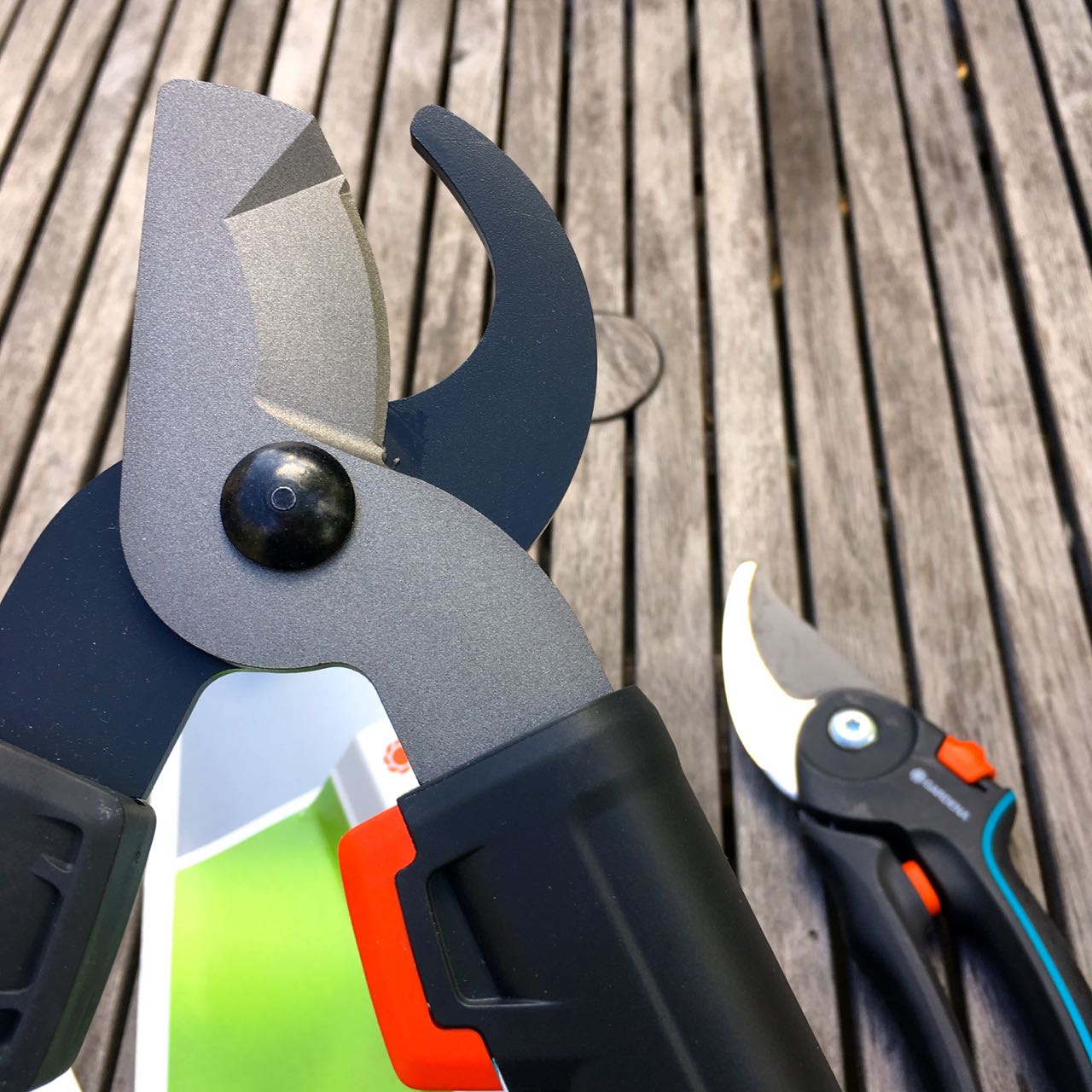
This year I was putting some new tools from the Bunnings garden range to the test:
IMG_2759.jpg

Bunnings, who recently acquired Homebase are an Australian brand who have a big focus on DIY and Outdoor Living, sent me a pair of secateurs and loppers and I was keen to see how they fared. And if you're wondering Bunnings have already opened a store in St Albans and over the next few years all Homebase stores will be converted to the new brand. 

Back to the garden tools, the trickiest thing was removing the packaging, and a screwdriver was required. But as I'm way too impatient to find the right sort, I opted for using my bike multi-tool which did the job. The loppers were free, and I had a right result as I realised that the screw might be a good replacement for the screw that keeps falling out of our fridge - and it was, so I was already onto a winner, and that was before I'd cut or lopped an unkempt wisp.

And yes, it's only taken me four years to get around to trying another screw. It's also true that if you want something doing it's just as well to do it yourself. I'll say no more.

removing from the packaging was probably the trickiest thing

Yes, it's quite unruly isn't it, and the plants are quite high, the fence is 6ft, then there's 2ft of trellis and still the plants are above that.
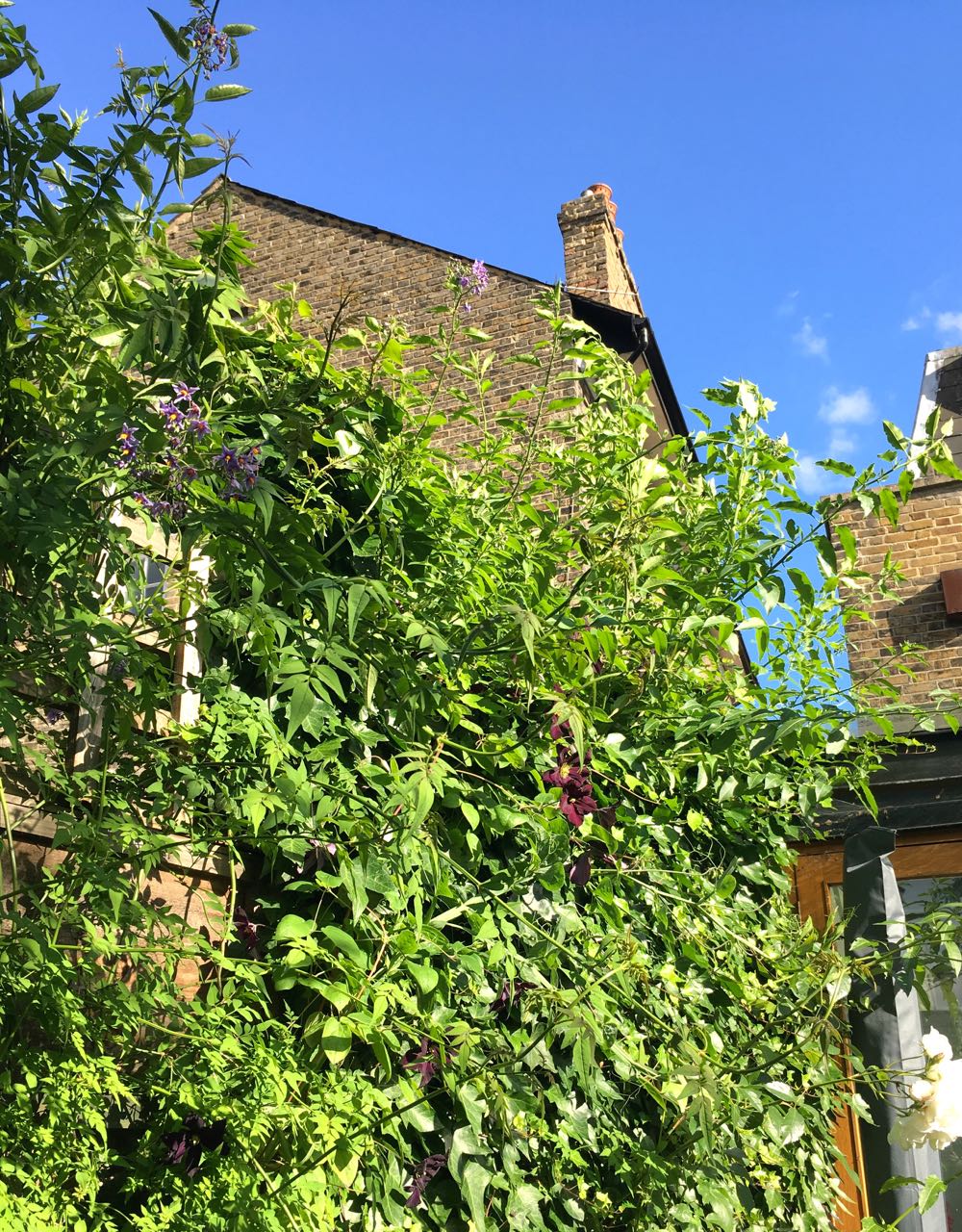
Rampant climbers, overgrown ivy and blue skies

I started out at a comfortable level and was quickly impressed with the secateurs which have a more angled blade than I'm used to. This was super-handy for getting in behind the ivy and snipping it, especially on brickwork. The general advice for dealing with ivy on brickwork is to snip it in several places so it dies, and then to remove the dead ivy a few days later. Otherwise you risk damaging the brickwork as ivy is full of suckers, and a massively strong plant.

using the secateurs to accurately cut the ivy

Anyone else think these secateurs have a smiling face?

Can you see where I could reach to?!

It wasn't long before I'd made progress on one of the panels, but only at the height that was comfortable to work at. Does anyone want to guess my height?!

But the far - and high-reaching Chilean potato plant called for something else. And that was the loppers. And some steps.

But there was still the chilean potato plant to tackle, and the skies were greyer now too
out came the step ladder and work was underway again

And it wasn't long before the high, wispy branches had gone, the ivy thinned and the white roses and burgundy clematis were tied in and looking almost respectable.  What do you think?

A much tamer - and neater - trellis covered with climbing plants

I wasn't the only one that was impressed with the secateurs. No sooner had I put them down than they were picked up again by MOH used somewhere up the garden. We have plenty of secateurs, but of course it was these he needed. I got them back though and the euphorbias which are starting to die back were duly despatched to the compost.

cutting the euphorbia too, this year MOH is sad to see them go!

That's another job done, and it won't be too long, I hope, before I get to the bottom of my garden to do list.

And did I ever tell you I'm an optimist?!


* This is a collaborative post but all views and opinions are my own.

Starting an allotment, what I've learnt

We've had our allotment for two years now - I know - it's gone quickly, and yet I still don't think we've mastered our plot. It still has the upper hand, and the weeds which I've said before are our best crop, have been joined by poppies, our second best crop. 

I thought today would be a good time to look back and see what we've learnt, how we've adopted our approach to allotting and what we'd do differently if we were to start again today.

The excitement of starting out

It seems a long time ago since we excitedly (me) and unhurriedly (him) headed over to our allotment for the very first time. I was determined that we'd spend a full day there getting to know our new space and we quickly learnt there was a lot of work to do.  But undeterred, and knowing when he was beat, we dug and dug and dug and even managed an ice cream as refreshment, as well as planting out some purple sprouting broccoli.

DAY 1 ON THE PLOT, A DAY FULL OF DISCOVERIES

DAY 1 ON THE PLOT, A DAY FULL OF DISCOVERIES

It was a great first day and we were full of the joys that only new plot holders can have. We had big plans and fairly quickly realised we'd need some compost bins and somewhere to store our tools.  The compost bins were easier to source, especially when I drove past a skip with a stack of pallets alongside it and house owners that were happy for me to help them out.

TWO COMPOST BINS MADE FROM PALLETS

TWO COMPOST BINS MADE FROM PALLETS

We also learnt that digging can be therapeutic, and of course there was the weed off!

Crops to be proud of

We've had kilos of broad beans, a cauliflower as big as my head and plenty of sweet peas and sunflowers which kept us in cut flowers. I also used some of the globe artichokes from that rogue artichoke plant under the crab apple tree that continues to thrive as a cut flower. One year - hopefully this year - we'll master harvesting them at the right time and how to prepare them too.  Later in the year there were turnips and I had a good crop of tomatoes, strawberries and raspberries too. 

SUNFLOWERS: AND PLENTY OF FREE SEEDS TOO

SUNFLOWERS: AND PLENTY OF FREE SEEDS TOO

Without the successes of taking home produce we'd grown, I think our enthusiasm would have waned much more quickly, so for us, it has definitely been the right approach to try and tame our plot section by section.  

And those sunflowers, I saved a couple of the heads and have a whole sunflower farm currently growing in the greenhouse, so they are a great crop to grow!

After a long, cold and inactive winter

When we checked in with the allotment in April this year and found it covered in weeds, we hit a low of almost despondency. The areas we'd weeded at least three times before needed clearing again and it seemed to be never ending. And that's probably true, I think I read somewhere once that it is likely to take seven years to be completely weed free - but true to form the amount of weeds and this year poppies too,  couldn't get me down for long. I needed a plan!

Shortly after we watched a Gardener's World episode where Monty paid tribute to Geoff Hamilton and how he'd pioneered organic growing methods when it really wasn't the done thing and we learnt about the no dig approach. We paused that part of the programme and watched and re-watched it many times, both realising this could be something that would help us.  And a plan began to form.

But for it to work we'd need to add raised beds, something that we'd resisted before, and because we didn't quite believe it would work on top of the weeds and to be thorough we had a bit of weed before we piled up bags and bags of compost into our new beds and planted out our onions.  We've still more to add, but I'm confident that this will help us, and we'll be able to use the compost from our garden bins, as well as those on the plot, to keep them topped up.

ONIONS, UNDER COVER AS PROTECTION FROM BIRDS AND FOXES

ONIONS, UNDER COVER AS PROTECTION FROM BIRDS AND FOXES

What I'd do differently

  1. Have a plan, but be flexible but don't be too optimistic about what you can achieve in the hours you can dedicate to your plot.
  2. Consider installing raised beds and adopting the no dig approach, or a semi-no dig approach as we have in one section of our plt.
  3. Research sturdy and secure garden storage which can be used on the plot to save carrying tools to and from the plot each time; it's amazing how the thought of taking your tools can dissuade you from visiting, however keen you are.
  4. Decide how much time you can realistically spend on the plot each week or each month, and hold yourself to it.
  5. Try to sow just enough plants for the plot, not over sow, and not be faced with the need to dig and prepare beds as you need to use them. Although that's something I think will take me a while to work on, and I may never really manage!

* This is a collaborative post, but as usual, all views and opinions are my own.

How well do you know your neighbours?

I recently learnt of some interesting research that Rattan Direct are undertaking, by means of a survey, into how well we know our neighbours. We have many neighbours - more than most - and the subject intrigues me - we share boundaries with seven other households, which is a lot, isn't it?

Our excessive number of neighbours is partly because of the flats next door and partly how the gardens are split and because ours dog-legs around the corner. I can name each of our neighbours and there's some we're more friendly with and stop and chat to if we see each other in the street, but we live in London and on a relatively main road, so that doesn't happen too often.  

There is once a year though that there's a regular get together - and that's on London Marathon day. It's quite a thing for all of us to congregate outside, catch up on the local news and cheer the runners along their way!  

So if you're wondering how well you know your neighbours and have a minute or two to spare to take this survey anonymously, then thank you.  And if you're wondering why there's an image of the Painted Ladies in San Francisco accompanying this post, then it's because I often wonder if the people living here are as neighbourly as I imagine they would be, or if they too are caught up with their busy lives and living on what is probably one of the prettiest and most photographed streets in the world makes them feel less neighbourly to each other, because of being gawked up continuously, or more so because they have a common bond!  Who knows?

THE PAINTED LADIES IN SAN FRANCISCO (Image credit: Unsplash)

THE PAINTED LADIES IN SAN FRANCISCO (Image credit: Unsplash)

* This is a collaborative post, but all views and opinions are my own.