


A pretty chateaux with stunning flower arrangements

We've already walked around both of the formal gardens at Chenonceau with their similarities and differences and today finally, we're popping into the chateau. But not without a look at the outside and how it bridges the River Cher. 

Chateau de chenonceau from Diane de Poitiers garden

Isn't it stunning?  And like our homes today the bridge across the river was built in stages. It was first built by Diane de Poitiers who was gifted the chateau by King Henri II in 1547. When Catherine de Medici, Henri II's widow, removed Diane she added the two storey gallery, to hold glamorous parties - and I bet they were just that.

On the way in I spotted another gargoyle, this one looking a lot more menacing than the ones in Blois.

I spotted another gargoyle on the way in

And what a front door. It dates back to François I and is made of sculpted wood and painted. It bears the arms of the builders of Chenonceau along with the salamander of François I and a Latin inscription. A grand chateau needs a grand front door, and this is certainly that.

That's quite a front door isn't it?

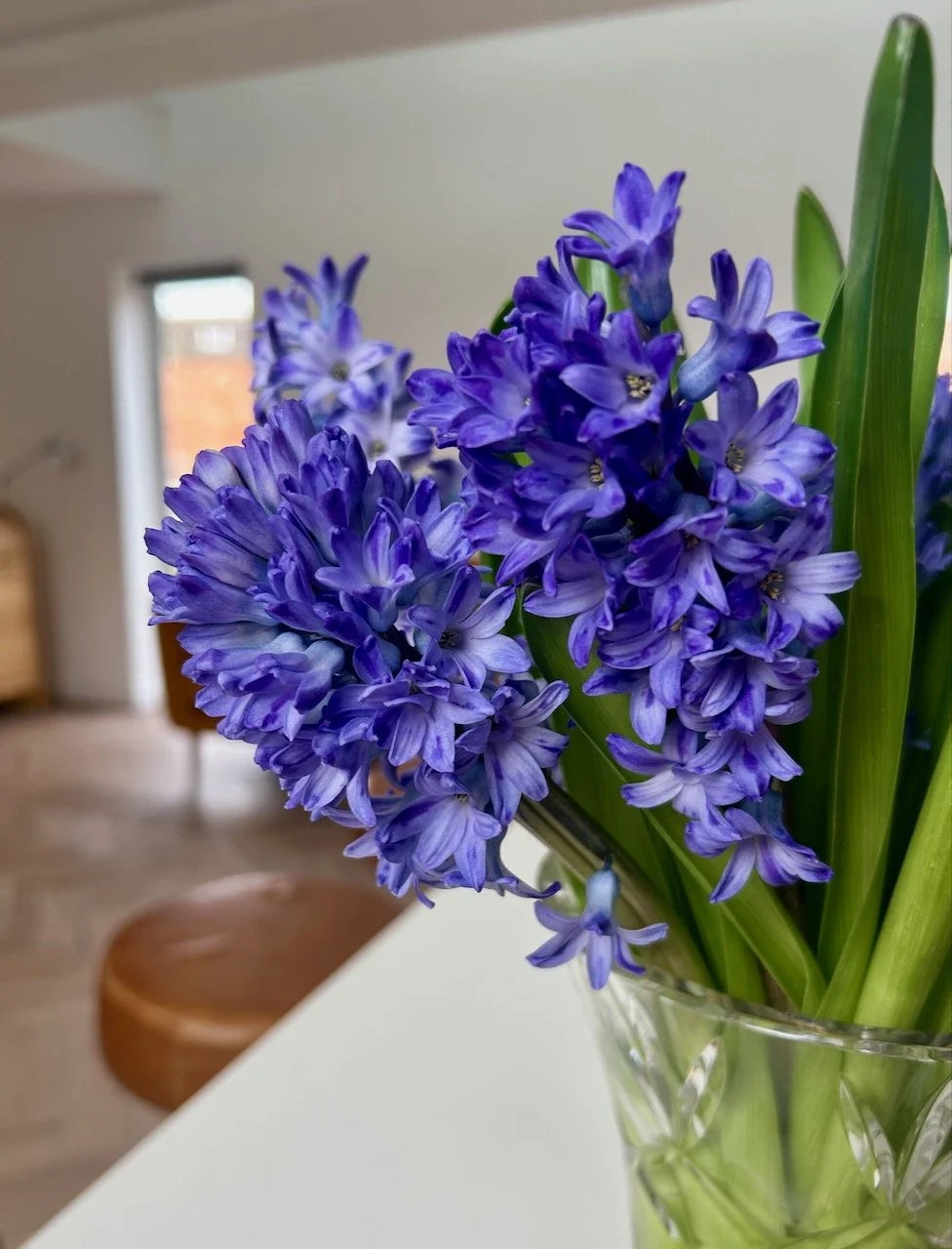
As well as the grandeur which you'd expect from a chateau, what struck me about Chenonceau was their stunning flower arrangements. Throughout the chateau their modern take on the arrangements left me in awe. I'm annoyed with myself though as my photos aren't as sharp as they could be. As usual I used my iPhone but I suspect I had a smear on the lens. 

A pot covered in moss and full of blooms
Flowers in front of the tapestry
pinks and purples in a modern arrangement

I couldn't wait to get into the Gallery, and when we did I was pleased that we'd managed to get there before the large group we seemed to be following about, so it meant it was almost empty. And in real life it's even more stunning than in the photo.

The gallery at Chenonceau
A close up of the chequered floor in the gallery at Chenonceau

It's sixty metres long and six metres wide. Daylight floods in through the eighteen windows and you can just imagine the grand balls that would have taken place here. During the First World War it had a change of use when Dr Gaston Menier (of chocolate fame) paid to set up a hospital in the chateau. And as a crossing over the river it played its part with the Resistance too. I'm always totally amazed at the heroics of people at that time in readiness to save people.

There were as many flowers, plainer of course, below stairs. The greenery and hydrangeas below were in the kitchen areas. And while they are less fancy, I don't think you can say the same for that handrail, can you?

Greenery below stairs
An iron hand rail in the kitchens at chenonceau
hydrangeas, onions and garlic

Back upstairs the flower arrangements continued to amaze. I loved this one, comprised of many square and oblong glass vases and full of flowers, which were also repeated across the mantelpiece in the library, where Catherine de Medici had her desk.

A desk full of flowers in the green study
And covering the mantelpiece

The last arrangement I'm sharing today is in one of the darkest rooms of the chateau, so along with a smudge on my lens I'm grateful I could rescue even a part of this photo. The shading helps though I think.  It's from Louise of Lorraine's bedroom, which is dark and moody and you'll not be surprised to learn that she retired to Chenonceau to meditate and pray after the assassination of her husband King Henri III.

I found this one of the most moving rooms in the chateau, and while the room was dark decorated in blacks, greys and silvers she always dressed in white, following the protocol for royal mourning and was given the name the White Queen.  The room is decorated with motifs of feathers, which represent sorrow and silver tears. This simple, but stunning flower arrangement was totally appropriate.

Lilies in a stunning arrangement in Louise of Lorraine's bedroom

Quite a different take on flower arrangements aren't they?  

The formal gardens at Château de Chenonceau

Yes, as well as being a pretty special chateau, Chenonceau has two formal gardens. And a remarkable history. It reflects the combined influence of five women who influenced this stunning chateau which stretches over the river Cher, not the Loire as you might imagine.

First it was Catherine Briçonnet, wife of the royal chamberlain who supervised the construction of the chateau. Later, Diane de Poitiers, Henri II's mistress, created the largest of the formal gardens and built a bridge over the Cher. After his death though his widow, Catherine de Médicis reclaimed the chateau and topped the bridge with a gallery - I'll share more of the inside of the chateau in a later post. She also added a formal garden to rival Diane's, it seems there was great rivalry between these women, even in gardens.

The final two women were Louise Dupin, who because of the respect people had for her was able to survive the 1789 Revolution, to be restored by Madame Pelouze in the 19th century. I'm very grateful that each of these women played their part in history, because the result is probably my favourite chateau so far. And that's quite a claim.

So onto the gardens. First up is the large formal garden created by Diane de Poitiers.

Looking towards the chateau de chenonceau over diane de poitiers garden from the raised walkway

It's a sunken garden and there's a walkway around the garden which we headed around first. You can just about see espaliered roses spreading out across those walls. I don't have any photos of these close up so clearly at the time I saw those as just another rose, especially as roses were the flower of this holiday. I think I was much more interested in the squiggles in the grass. Yes, that's a technical term.

Fascinating aren't they. Not only there swirly pattern, but also what the plant was. I couldn't tell from the walkway so after admiring one of the many white pots dotted at equal distances on the edge of the higher level I was determined to head down there and find out more.

A close up of one of the white pots on the surrounding wall

From the lower level it was much easier to see the individual plants, and while they had the grey of lavender it wasn't lavender. The yellow flowers, which you can just see on the right of the picture gave me a clue, but I still wasn't sure. So as I spied some gardeners happily gardening away, I went to find out. At my decision point language skills weren't considered, but as soon as I got their attention I realised that I might not understand their answer, so might be none the wiser.

Thankfully though they understood my pigeon French, or enough of it anyway. And their answer confirmed my suspicions. It is Santolina - or Santalene. Yay. In fact double yay. Yay for identifying the plant, and a bigger yay for asking, being understood and understanding the response. 

the shapes in the lawn are individual plants of santolini

Santolina is a plant I wish I grew already, and now I definitely want some. I'm not sure I'll manage the swirly shapes, but it'd be great to have some.  Satisfied with knowing the plant I could go back to admiring the stonework. And this is quite something.

stonework at chateau de chenonceau

I think Diane de Poitiers did well with with her garden. I certainly enjoyed it. As we headed back towards the chateau this normal sized house caught my eye. It looked tiny though after all these chateaux. The greenery surrounding and almost covering it, looks like wisteria and I bet it's stunning when it's in flower.

a mini chateau covered with greenery
a reflection in water

And well there's always time to peer over a wall and snap some reflective shots isn't there?  Next up we went into the chateau, but I couldn't help taking a peek over to Catherine de Medicis' garden. It's smaller than Diane's garden, squarer and of a simpler design. No swirly bits here, but looked equally charming.

catherine de medicis garden viewed from the chateau

On reflection I think we should have gone into this garden before visiting the chateau, as somehow the simplicity of the garden was lost on me after the wow of the chateau's interiors. I remember thinking it wasn't as special, but now I'm not sure if that's because I was in sensory overload mode. 

a wide path encases the garden

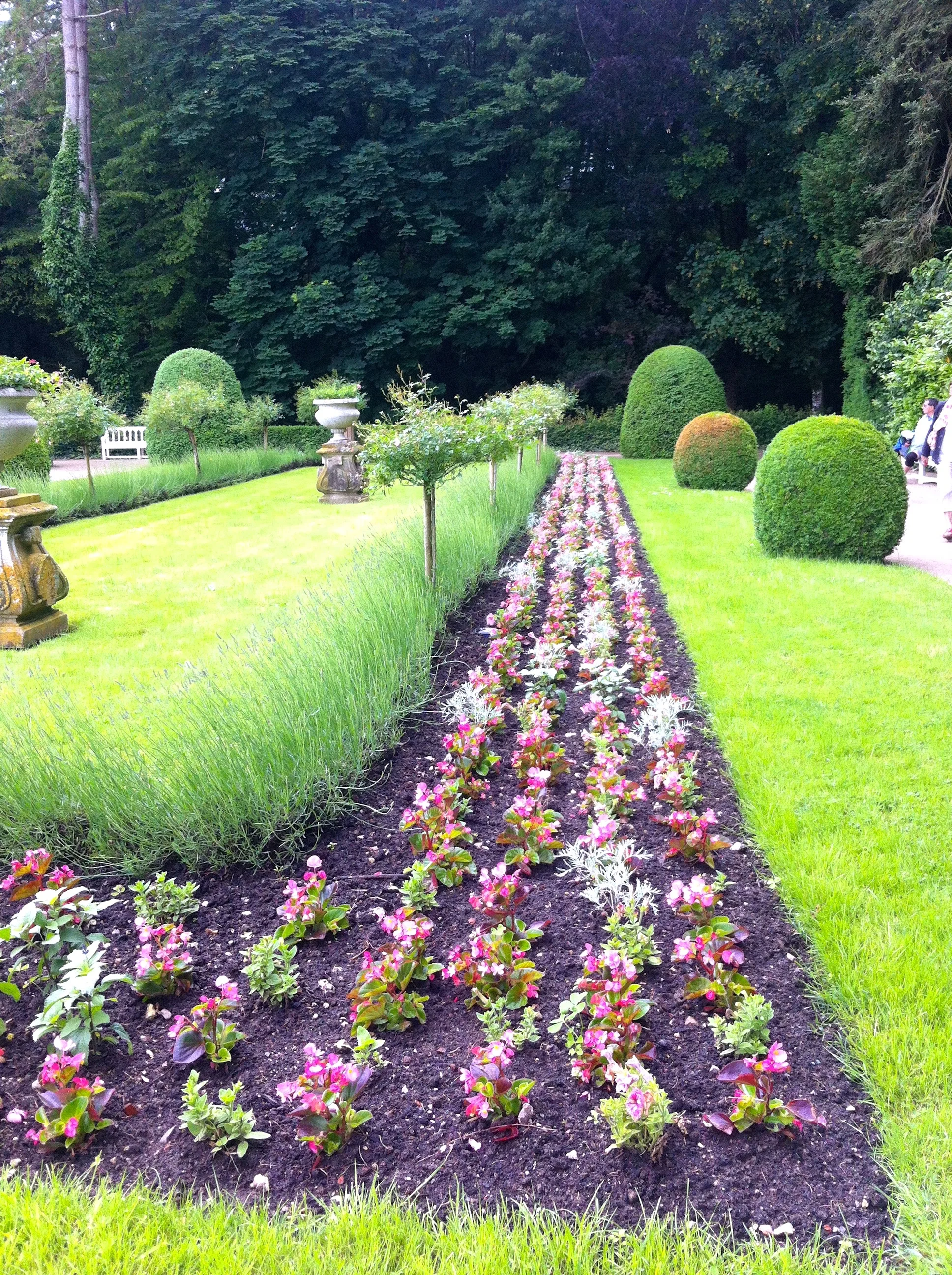
The planting is felt different, with more symmetry and probably more like gardens we're used to.  And this time there was lavender.

A different style of planting

There was also a large central pond, with some equally large fish in. It's a much smaller garden and I wondered why that was. If, as she was she was rivals with Diane, surely she'd want to outdo her in everything? Maybe she did, or maybe she thought less was more, who knows, but it's an interesting conundrum isn't it?

A central pond looking over towards the chateau

So there you go, the two formal, but two quite different gardens of Chenonceau. There is a third garden, and that's a much more practical one and we'll come back to that at a later date too. 

I left thinking that these five women all must have been pretty special, and all very determined. And isn't that great?

Log piles, great views and a bit of a wrong turn

After our wet and windy cycle to Amboise the next day it was still wet, but thankfully not raining and there was no rest for us. We only had two nights in Amboise and the plan was to cycle to the Château de Chenonceau, we'd seen a sign the day before so roughly knew our route. And if you remember I said that it was all downhill into the centre of Amboise, so our route out of the town was all uphill. And it was hard going.

I managed to cycle enough uphill to get approving glances from the locals out for a chat, as you do. Well I think it was approving glances, maybe it was the usual madness of the English look. Who knows! We retraced our route which was thankfully less wet and windy than the day before. 

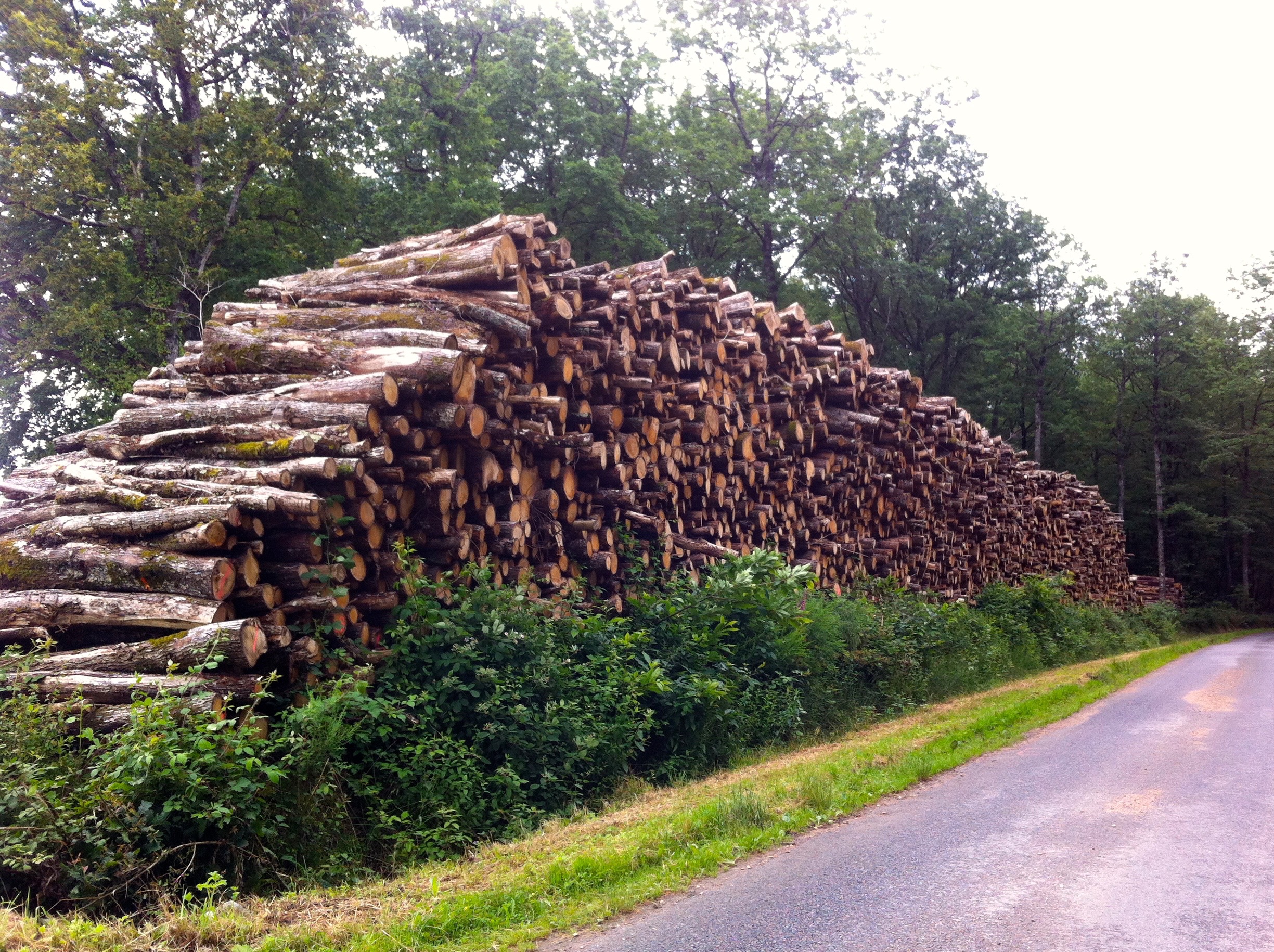
We turned right and followed the Loire a Velo signs towards Chenonceau eagerly anticipating what the new part of the route would bring. It wasn't long before I spied a log pile in the distance. And it's amazing what can make me pedal harder but, sadly, a photogenic log pile is one of them. And this reminded me of our trip cycling in Bavaria, but as I found out bigger!

More log piles than Germany

I told you they were bigger!

An even larger log pile

Having left the bike I was patrolling up and down in awe of the log pile, when I spotted a lone foxglove. I told you they were photogenic didn't I?

A foxglove and logs

As I was heading back to where I'd left MOH and the bikes I realised the field behind me - although log pile free - was equally as pretty.

Not forgetting the beautiful field behind me

Before long we were back on our bikes, we'd passed through a small village and got slightly confused with the signs. We headed off confidently, but after four or so kilometres and no more signs MOH agreed we might have gone wrong. So back we went. That was eight kilometres we weren't expecting.

By now, despite having a large breakfast I was starting to fade. So it was time for a stop. Back in the village where we went wrong. I was hoping for some of our packed lunch, but MOH whipped out some gel bars and gels. 

cycling off in the horizon

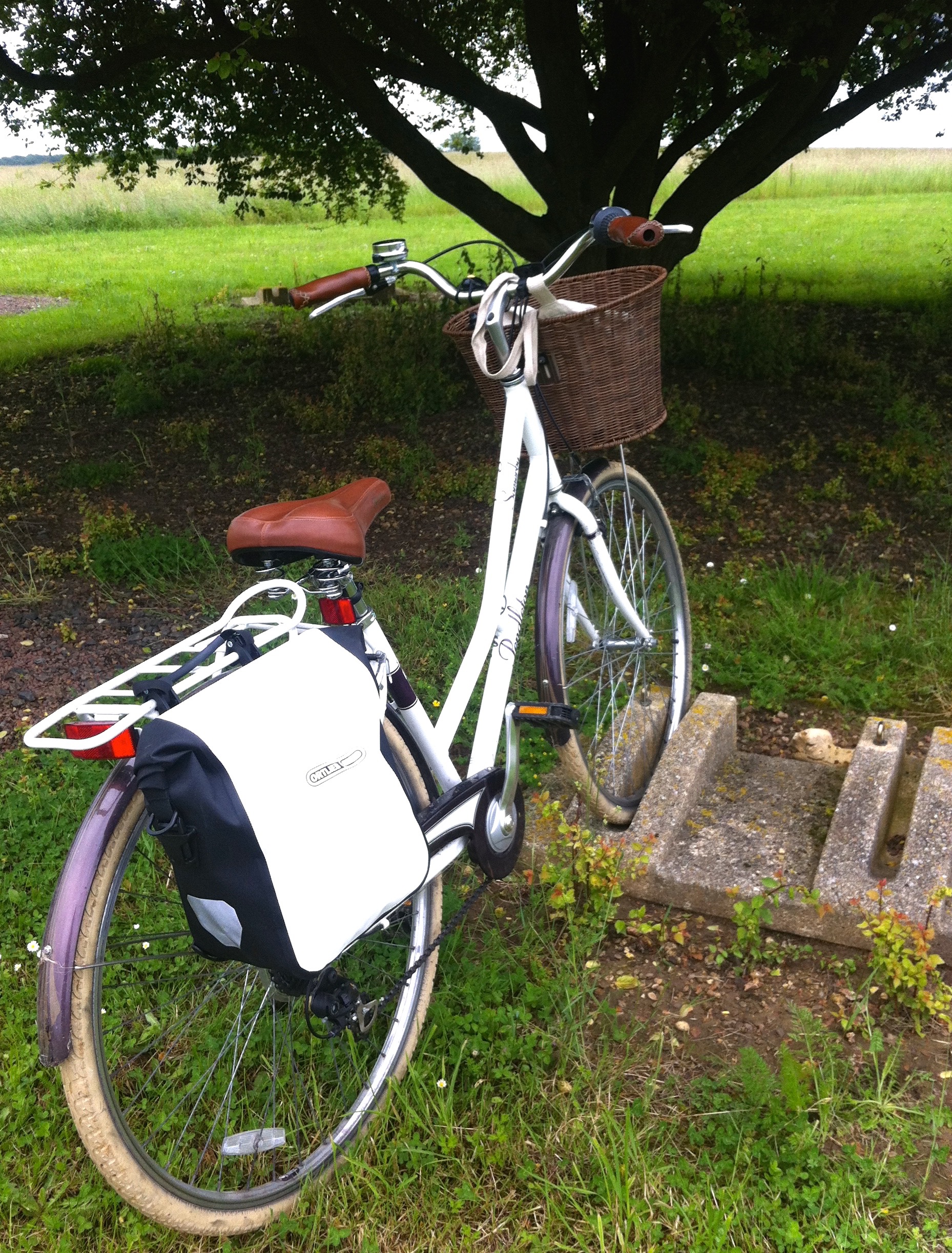
Ah well, they did the job and I amused myself at why there was a picnic bench and some bike racks in a random field in the French countryside. But I was oh so glad there was. The bench, like the bike racks were concrete and the lichen patterns were fantastic.

Parking my bike as you do
A lichen covered picnic bench

After a much needed break, and a much longer cycle than we'd expected - it was 23 or so miles there - Chenonceau was in our sights. I'll admit I wasn't looking forward to the journey back. As we parked and secured our bikes, the rain that had been threatening throughout our cycle made its presence known so it was a quick scramble to don our waterproofs and for me to cover my saddle with a plastic bag!

And then we headed into Chenonceau, only to be refused entry because we had a picnic. We could either leave it in a locker or go out and eat it, so that's what we did. I understand why they wouldn't want the place littered but it seemed a bit OTT to me. Later on we discovered the prices inside the chateau grounds were way higher than those by the entry points, and that just felt a little too mercenary. 

Arriving at chenonceau

Before I finish this post I'll leave you with our first glimpse of Cháteau de Chenonceau, which from this angle doesn't look quite as special as I'd expected, but don't worry more was to be revealed. I'll also tell you that our cycle back was a lot shorter than getting there, at closer to fifteen miles. It turned out we'd been on a circular route and had gone the scenic way first, which I think on reflection was the right way round!

A glimpse of chateau de chenonceau

More soon on the gardens at Chenonceau - there are three - and of some more usual shots and a look at the sumptuous interiors. It really was a great chateau to visit, and I'm glad I'd arranged the trip to include this one.

Have you been, did it live up to your expectations?