







The terraced borders and magnolias at Powis Castle

I ended my post on the giant hedges in this garden teasing you with magnolias and more flowers, and I won’t disappoint. But in that time I’m sure our own gardens have more than sprung into life, I really don’t know where the time goes, but anyway…

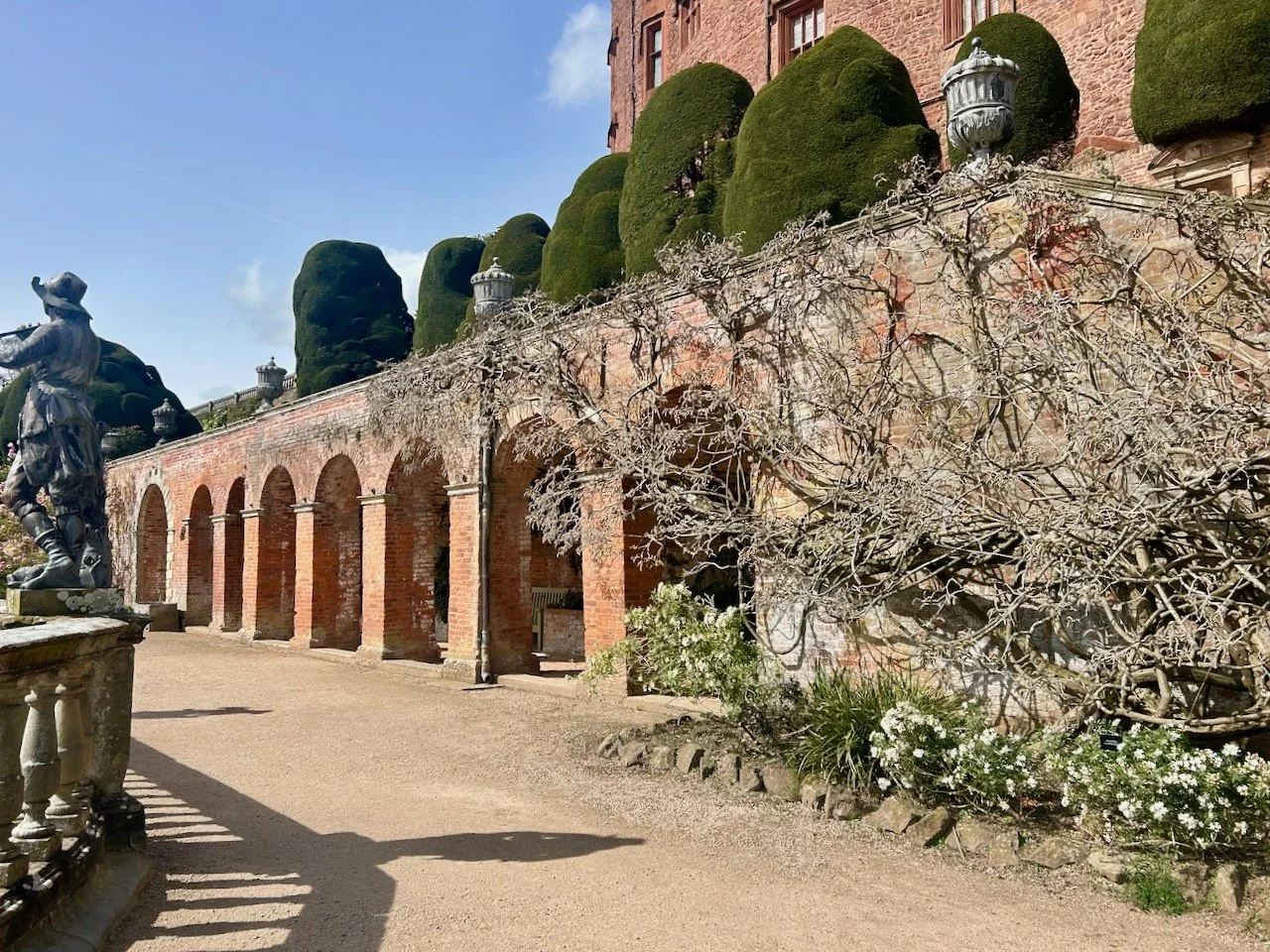
The deep terraced borders at Powis Castle

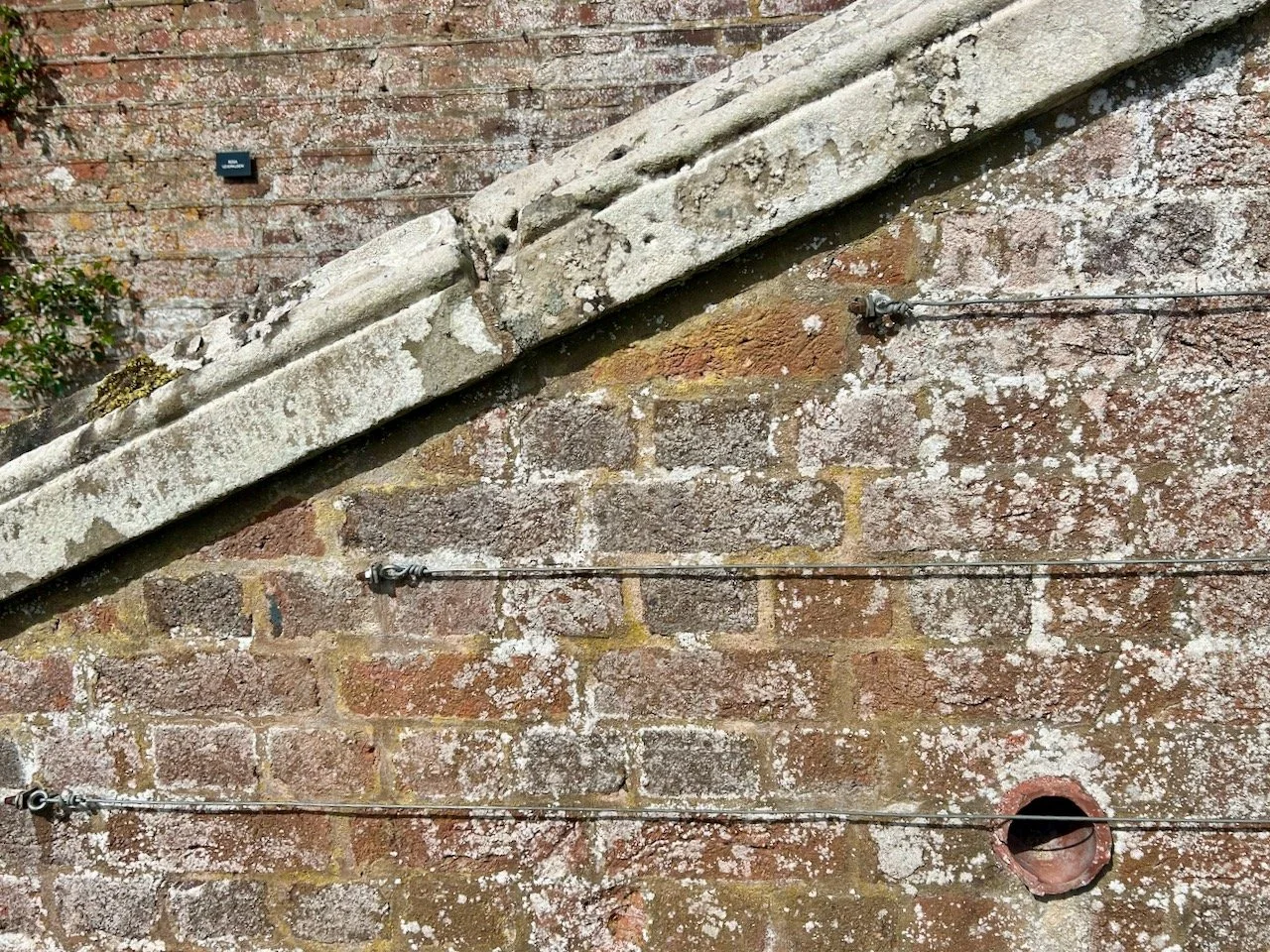
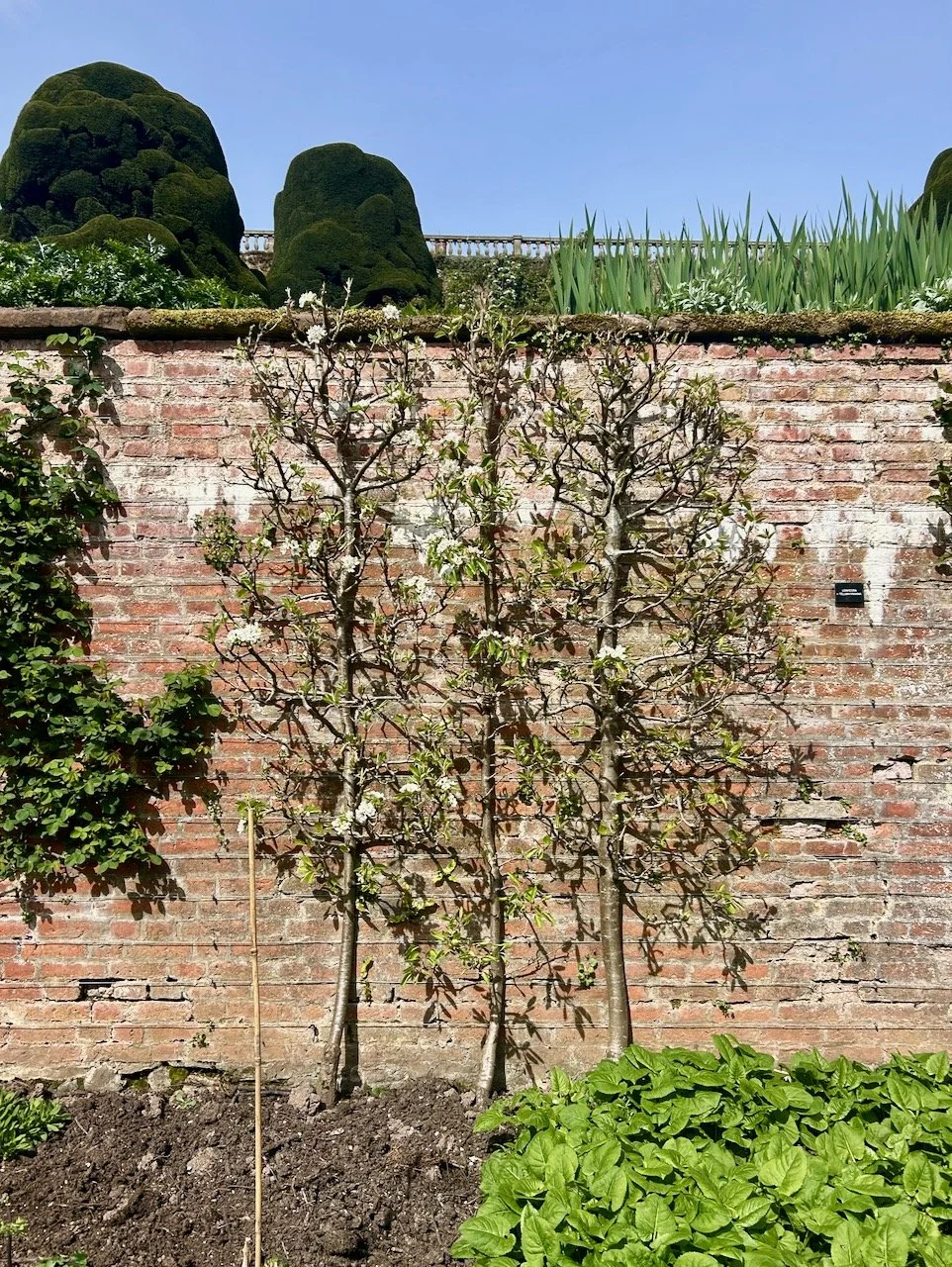
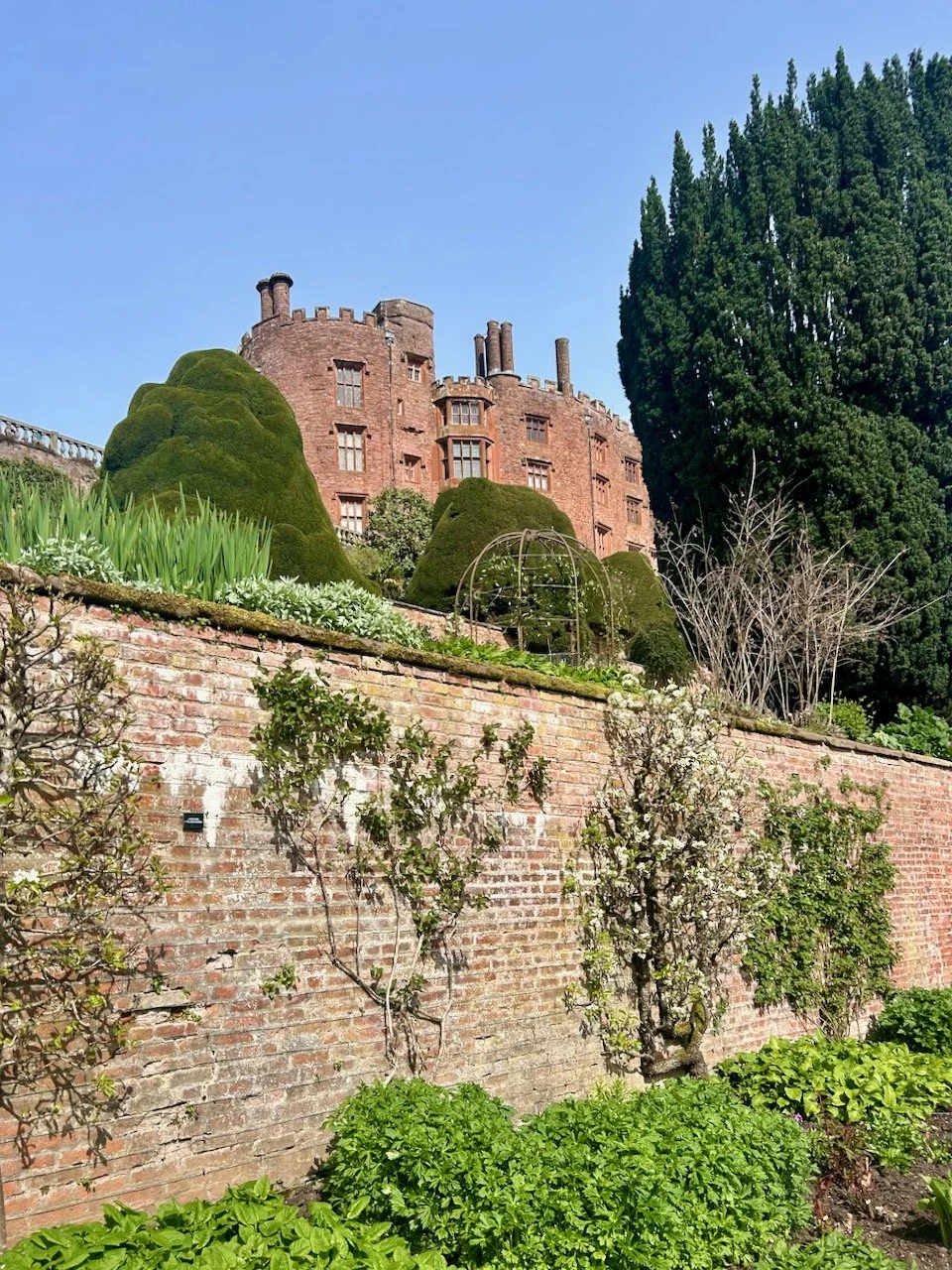
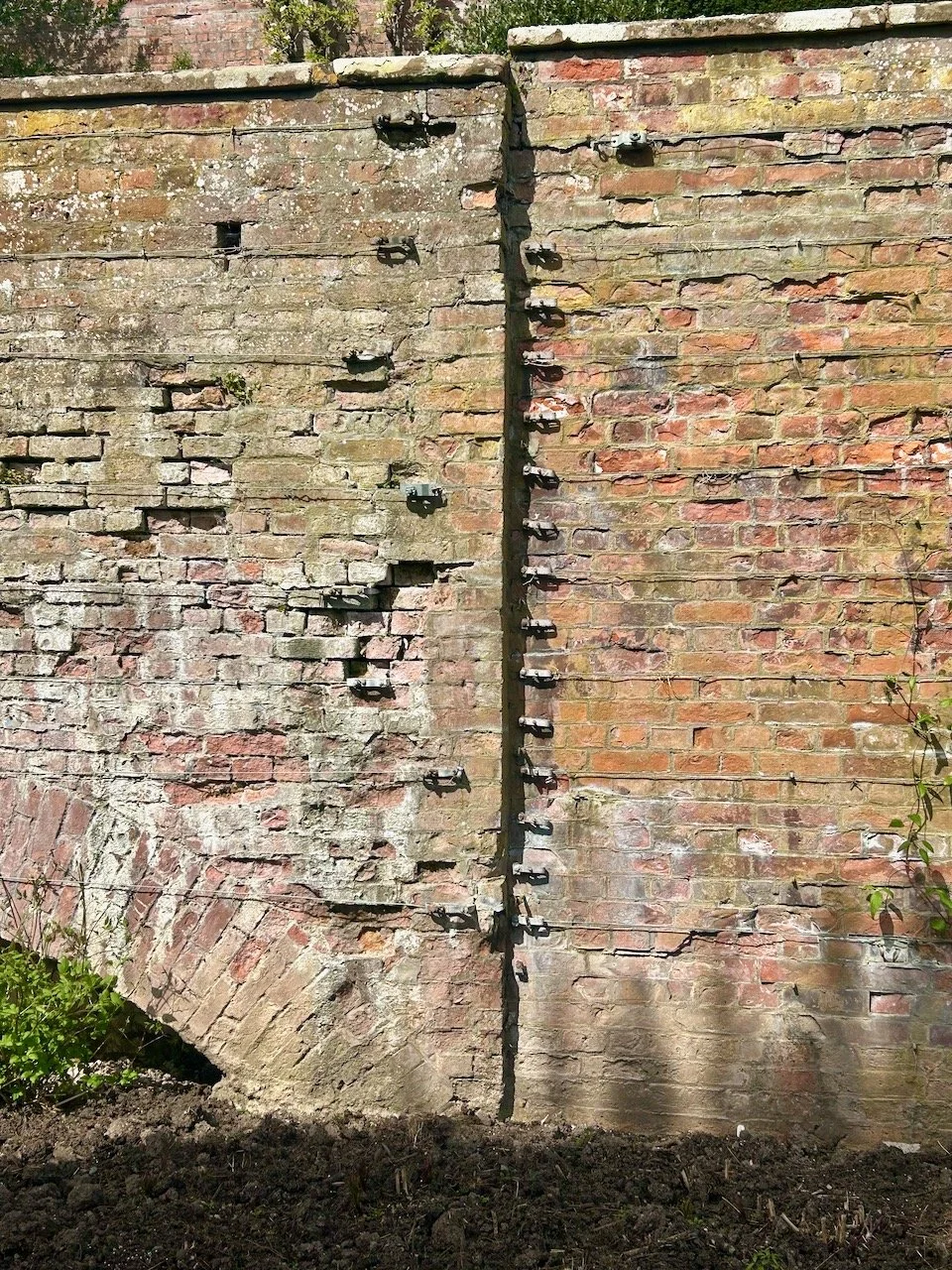
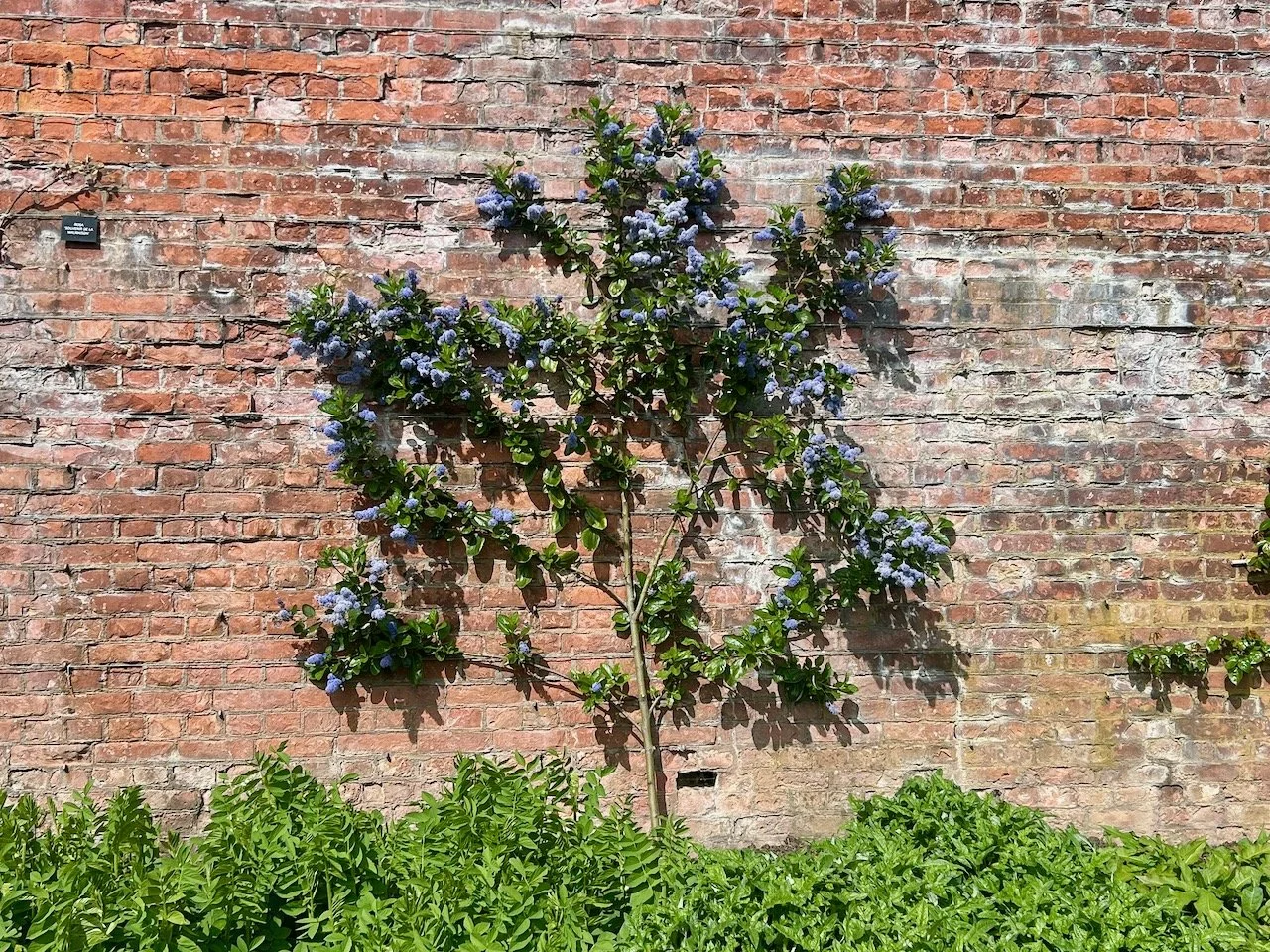
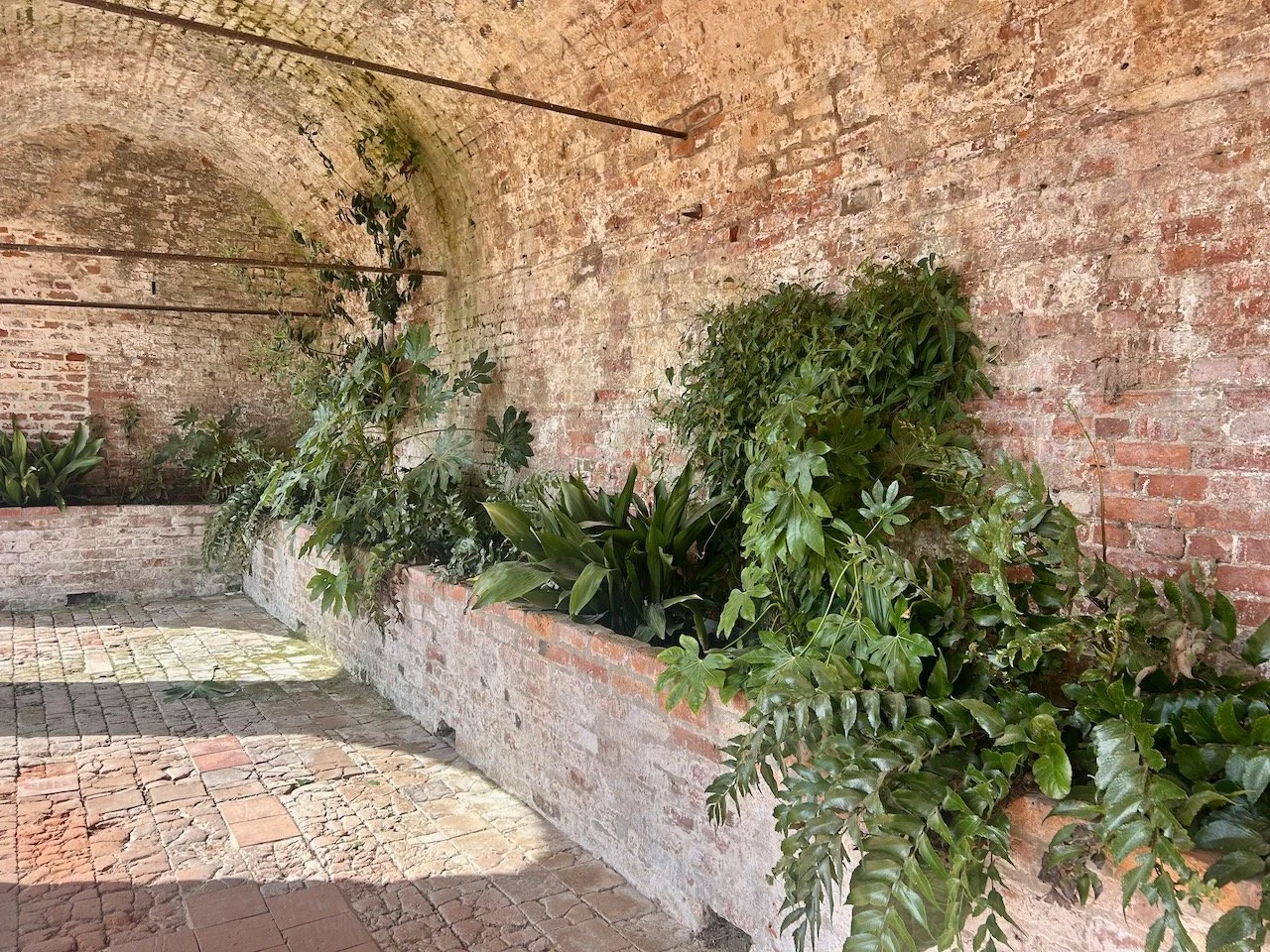
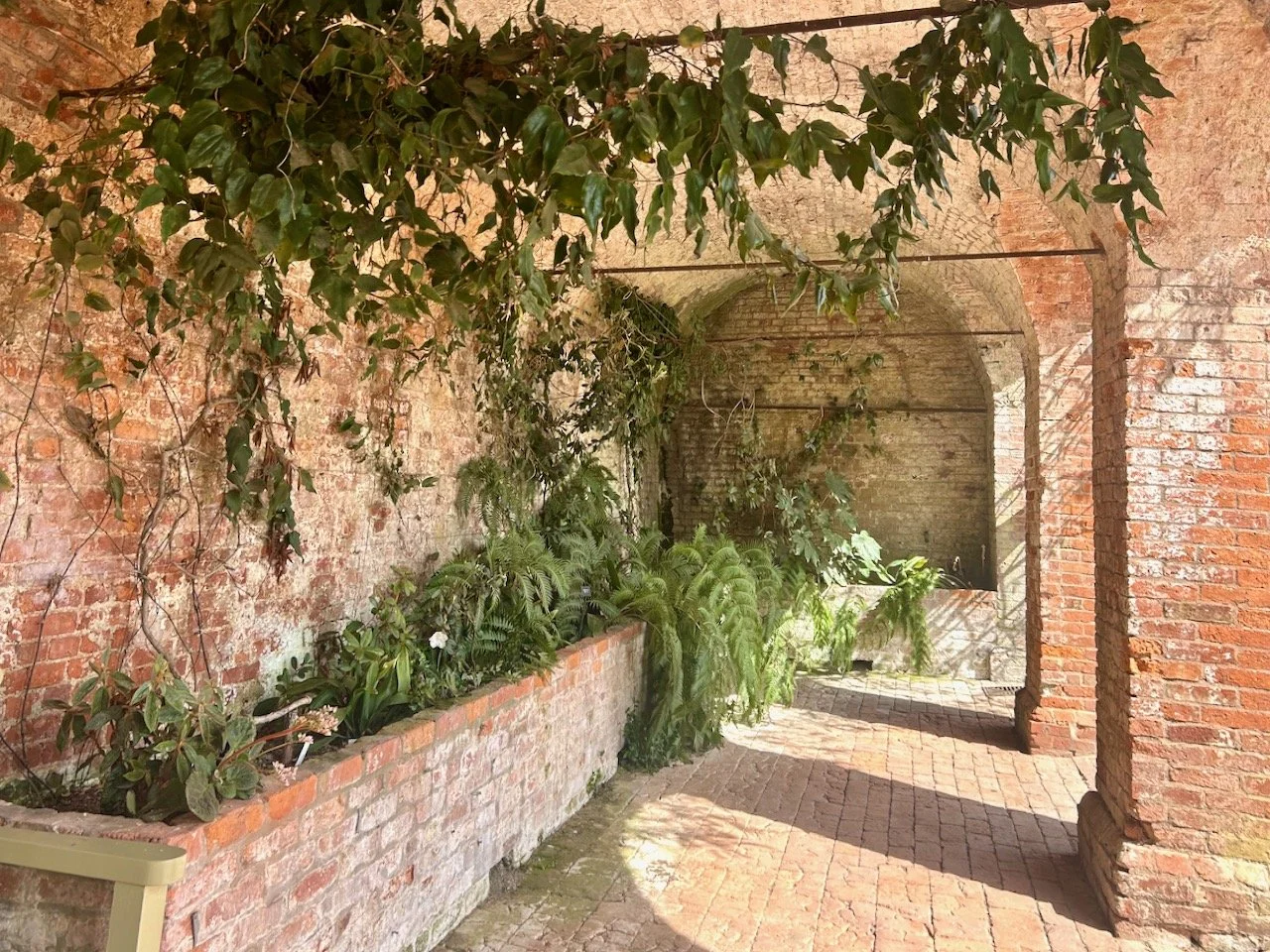
The borders are terraced with each mostly having a beautiful brick wall as their background, this immediately struck me as an ideal place for inspiration for my own garden, and I’ll share more in a separate post on how their use of plants against the wall has inspired me. These borders though are deep, gorgeous but deep and that means a lot of plants and probably in my own garden not an awful lot of room left for the grass!

Lush fresh growth in spring

They were full of fresh green spring lushness - whether that was the new growth, or the zing that the euphorbias bring.

lime green euphorbias bringing their zing
Clumps of plants in the deep terraced border at Powis Castle with evergreens at the rear, having had a good trim

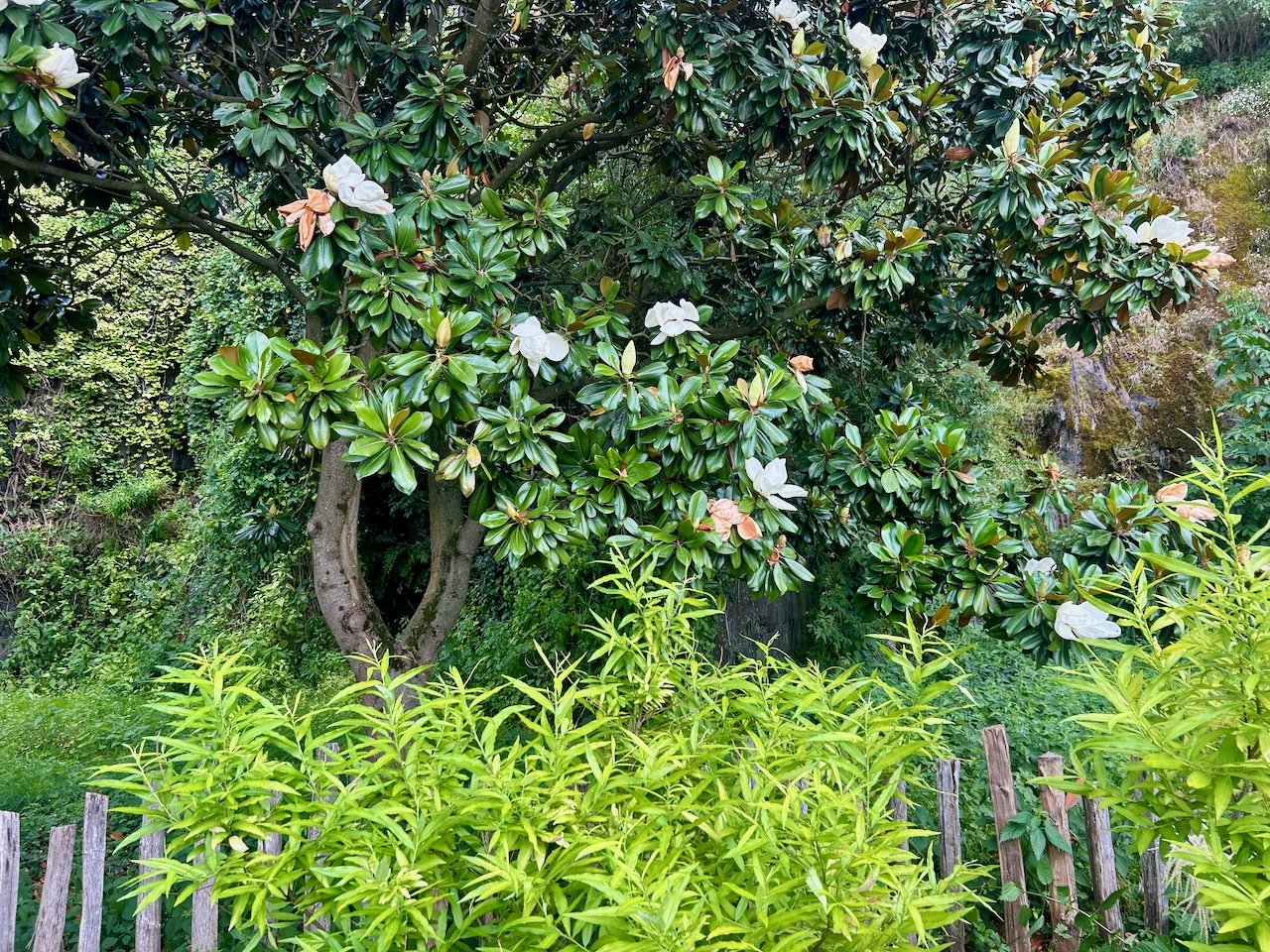
But there were also plenty of magnolias. Their scent filling the air as we got close, such a joy.

A gnarly magnolia tree with some flowers in a corner of the garden
creamy white and pale pink magnolia flowers

I might have also found an euphorbia that MOH could get on board with - these orange flowering more spicy looking plants bring a less usual spring colour to the party, so I’ll be on the lookout for something like these, even though I will still continue to love the zesty lime green versions.

An orange flowering 'spicy' euphorbia which caught my eye
A single peony bud getting ready to burst open

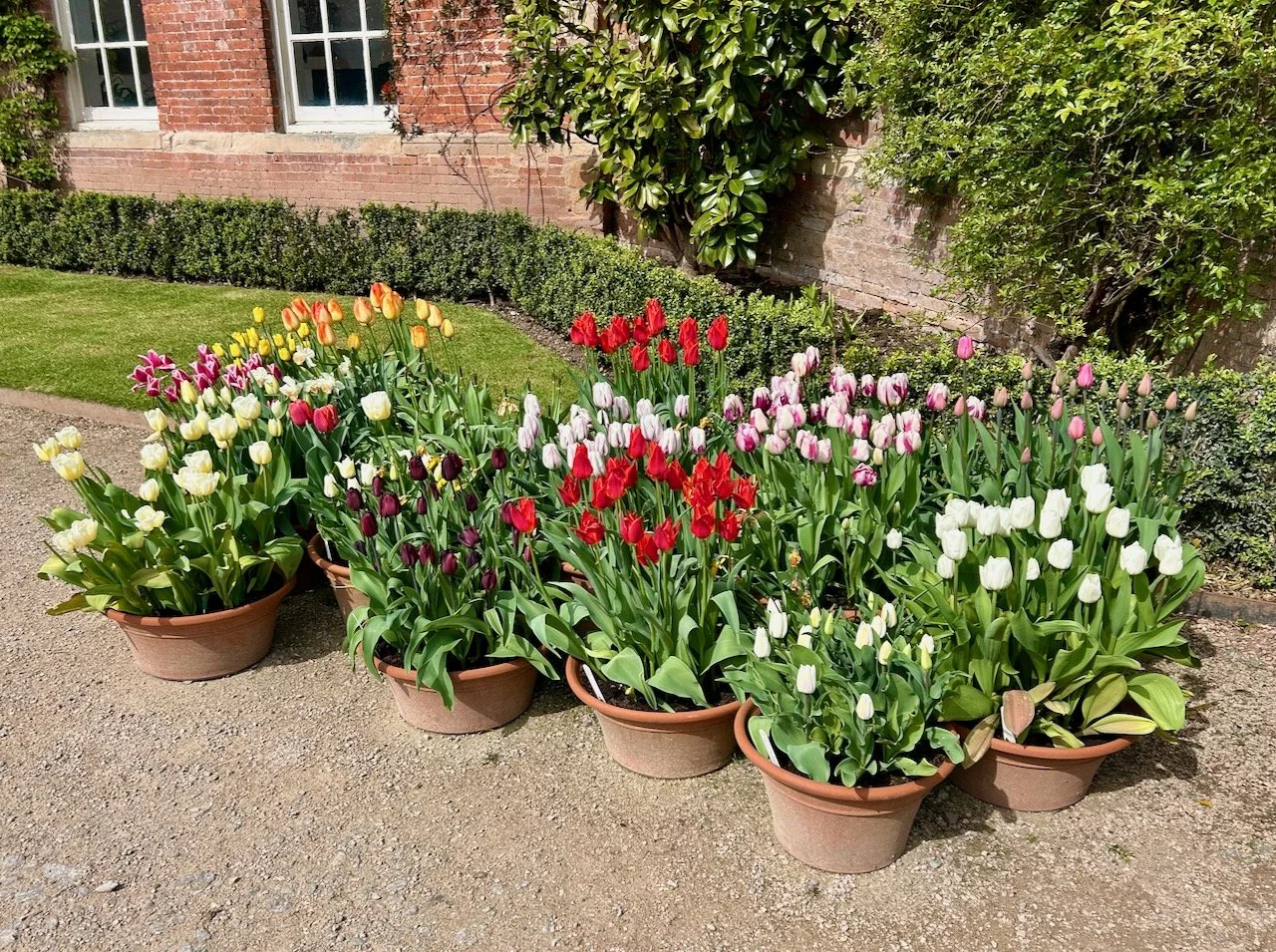
There was also the hint of the peonies to come, right next to the joyfulness of spring that is tulips.

Rich yellow and red striped tulips in a large group

And this spring these Imperial Fritillarias seem to have called my name - I’m seeing them everywhere, and they were even on the front cover of one of the RHS magazines that arrived in the post, and have subsequently become my phone’s wallpaper. So it’s safe to say that at some point I’ll be having my own plants, I just hope they look as good as these - and the ones on my phone!

Imperial fritillaries seem to be my flower this spring, and that's no bad thing
the glossy almost yellow magnolia leaves

Ah, more magnolias - such luscious pink flowers this time and such glorious scent.

deep pink magnolia flowers covering this tree
A lone purple iris looking majestic

But the irises and buddleia weren’t to be outdone and they each brought their own shade of purple to the borders.

A branch of small tiny pink and purple flowers reaching across the path
A closer look at some of the deeper pink magnolias as we walked by

But in springtime, it really was the magnolias at Powis Castle that stole my heart - it’s easy to see why isn’t it?

The yew hedges at Powis Castle

Time has flown and it’s hard to believe it’s already over a month since our trip to Wales, and our visit to Powis Castle. I’d planned to get out in the garden as there’s plenty to do out there, but the weather had other ideas so instead I’ve edited my photos of the gardens and hedges at Powis, and well, there’ll be more than one blog post!

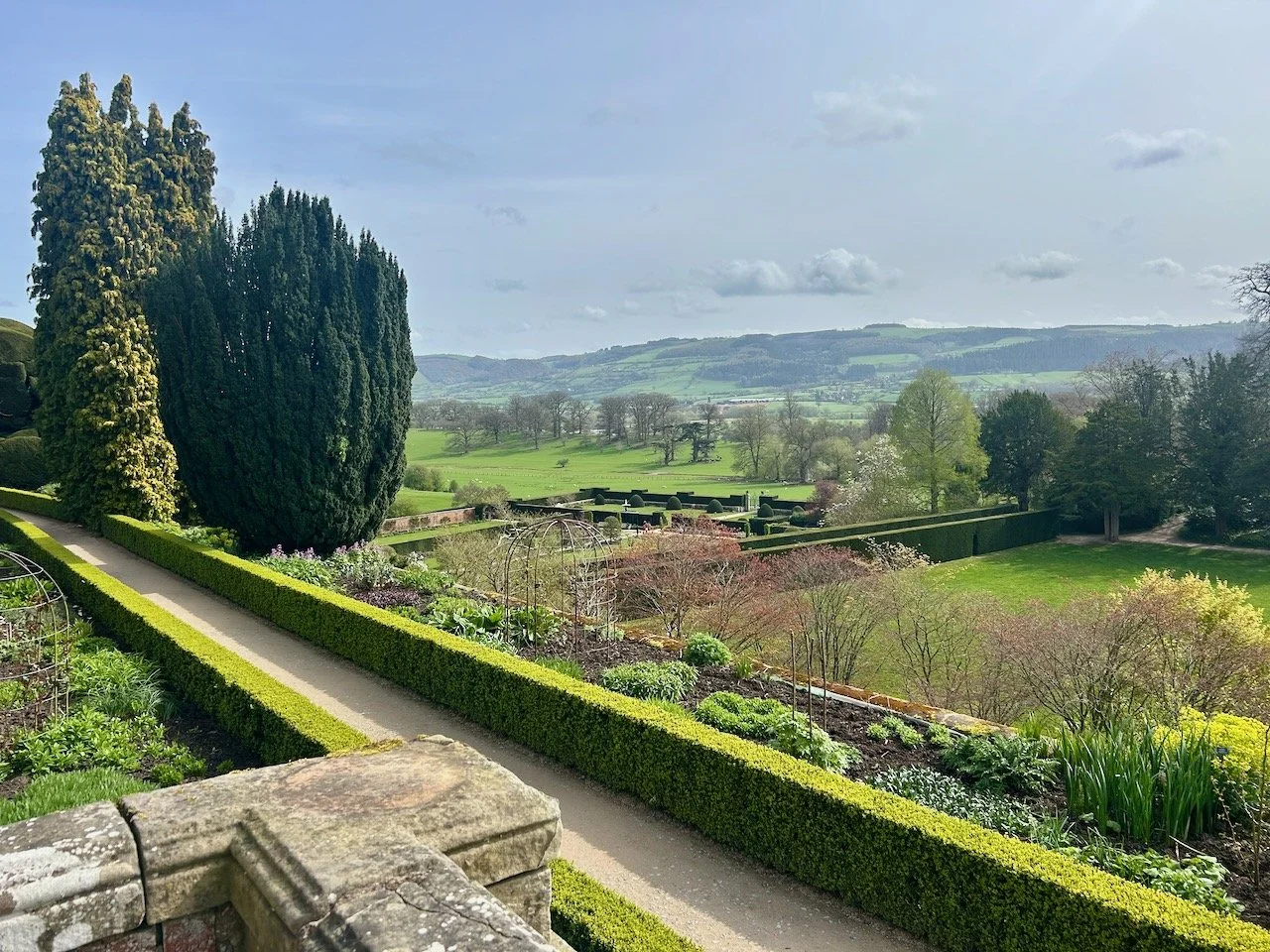
But when you walk into a garden and this is the opening view, you just know you’re going to have a fabulous visit, and we did.

A view across the clipped hedges of the Severn valley
Looking down and across the garden at Powis Castle

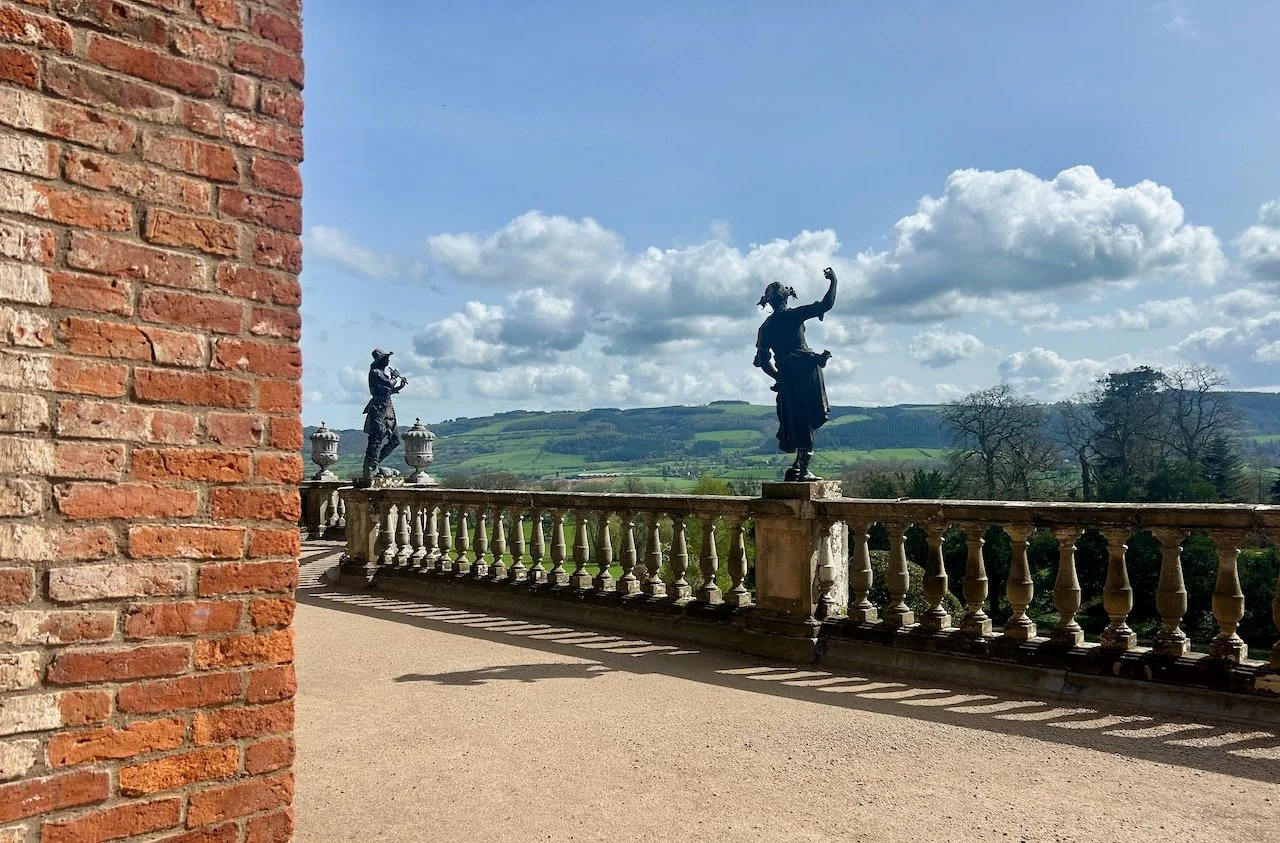
The castle was built in the 13th century as a medieval fortress and over the years has changed to reflect the Herbert family who have occupied the castle from the 1570s. The views across the Severn Valley are fantastic, and the gardens retain many of its original features including the 17th century Italianate terraces lined with fantastic borders, and 30ft clipped yew trees. Plus there’s an Edwardian formal garden with century old apple trees and rosebeds and so much more.

fresh new growth of plants clambering across the hedge
pretty blue/purple 'dancing' clematis also on top of the hedge

As with any garden though it’s about the plants big and small, and in the gardens there was a vast scale from delicate buds, dancing flowers and huge, huge yew hedges.

The castle in the distance, the path in the foreground is edged with the most magnificent giant yew topiary

I told you they were big!

So big I think we can agree with the National Trust when they say giant.

More views of the giant yew topiary

The giant yew topiary was first planted at Powis in the 1680s; then the fashion was for strict geometric patterns or formal gardening, so the yews here began life as a trimmed obelisk shape. By the 1780s garden fashions had changed favouring a natural blending of garden with the surrounding countryside, so the topiary trees that were kept were allowed to grow in their natural shape.

'inside' the yew topiary - the trunk and inner branches on show

During Victorian times the fashion for stricter controls returned and the National Trust say that yews were shaped using a sickle, while the other hand held onto the ladder - definitely not a job for the faint hearted. Today they use electric hedge trimmers to keep the unique character of these topiary trees. It takes four staff three months to cut all the hedges once a year, with the yew topiary trimmed between late August and early November.

A gateway cut into the yew topiary which towers above the 8ft+ brick wall and beyond
Yew topiary and the castle
A small dusky purple 'wort' type plant
Another shot of the giant cloud like topiary

Like many great houses the gardens evolve and reflect both the fashion of the day and the desires of the garden’s supporter. The garden here at Powis owes much to Lady Violet, wife of the 4th Earl of Powis who set out to make it ‘one of the most beautiful, if not the most beautiful in England and Wales’.

She worked on the garden for 18 years enriching the planting on the terraces and adding new shrubs and perennials. Her biggest contribution was to relocate the Kitchen Garden, including the glasshouses, to a new position out of sight of the castle and in its place she created the picturesque formal garden, complete with a croquet lawn, cottage style flower borders and meticulously trimmed fruit trees.

Looking across the Severn valley with the formal garden in the foreground

The garden remained unchanged after her death in 1929, until 1952 when it came under the care of the National Trust. They have continued to pursue her ambitions while preserving its many layered historic structure.

frittilaries and the odd dandelion in the grass
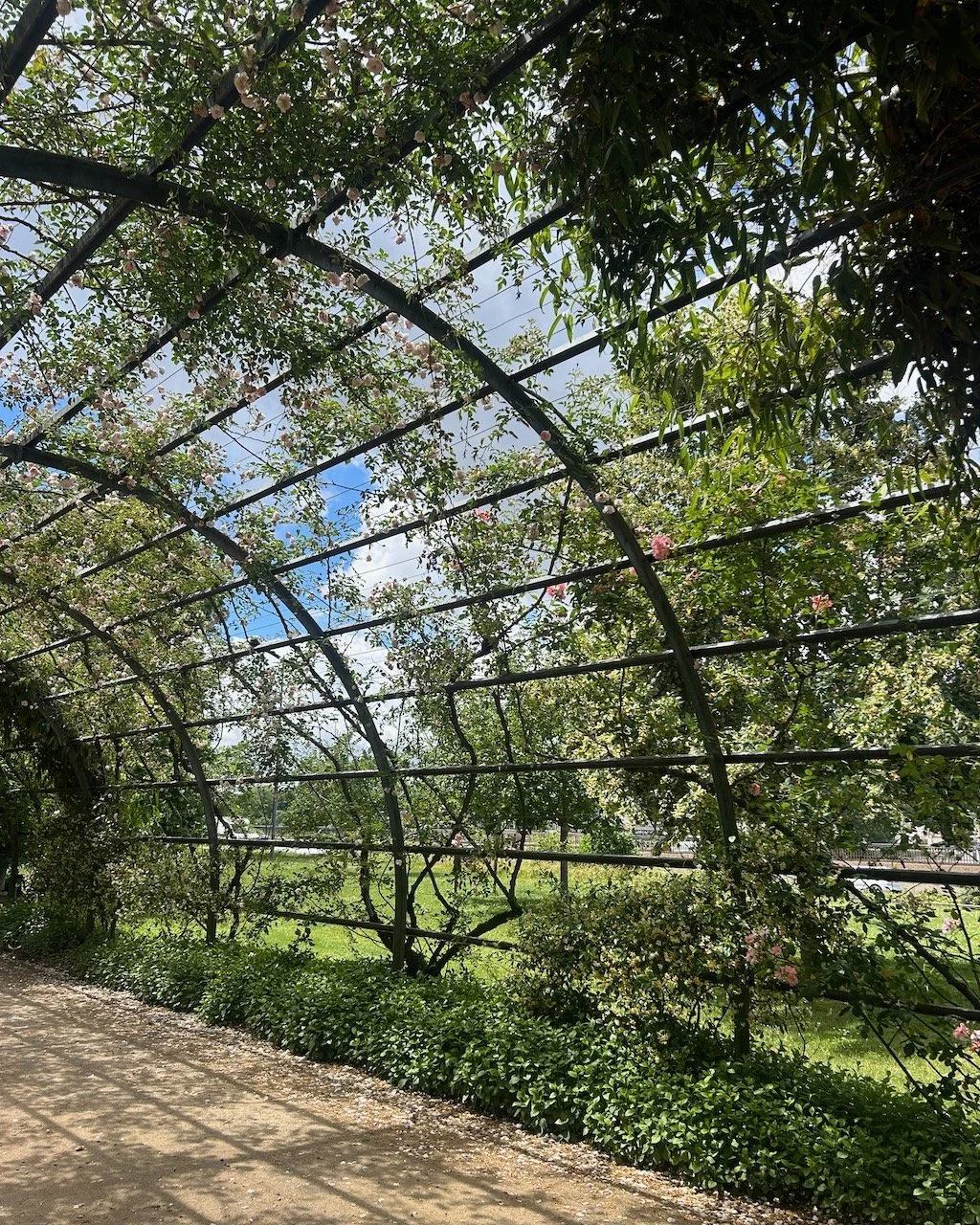
An archway of roses (not yet in leaf or flower)
One of the shaped fruit trees at Powis Castle

It’s a fantastic space and I’m sure will be even more stunning when it’s in full flower. We visited in early April, and the magnolias were getting going and much of the terraced borders were coming into bud. I’ve so many more photos of the terraces to share, but I’ll save these for the next post.

The fountain in the lower part of the garden among more yew 'flump like' topiary
Looking back from the lower level up towards the castle and the terraced garden

And the view from the bottom of the garden looking up at the castle, is just as good as the one from the top looking down. Now that’s the sign of a great garden isn’t it?

A dragon at Bodiam Castle

We’ve recently had a few days away with MOH’s family in East Sussex, staying in an AirBnB which looked out over Bodiam Castle. We spent more time indoors that first day than we planned, thanks to Storm Benjamin but as the day went on, and I think the rain finally ran out, we headed to the nearby castle built in 1385 by Sir Edward Dallingridge and his wife Elizabeth.

And it is the fairytale castle with a moat which was once part of a working estate with farmland, wharf and watermill. The site was ‘waterscaped’ by Sir Edward who built this castle with Elizabeth when they married. The purpose of the castle has been debated by historians and it’s believed to have been built as a defence, a status symbol and a home.

The castle had had a bit of a makeover for Halloween, and for the half term. The dragon was a great touch, because every castle needs a dragon, right?

The big kids amongst us also couldn’t resist a quick game of quoits, which was way harder than it looks. That quick game became a battle of wills, as we couldn’t leave until we’d scored at least one - and here’s evidence of the one I scored. I’ll just say that I was the only one to manage this…

No wonder the dragon was looking over us - there were also dragon eggs hatching in the courtyard!

Bodiam also plays host to one of the most important bat roosts in the UK - they’re everywhere once you start noticing them - with three types of bats roosting here: Natterer, Daubenton and the tiny Pipstrelle which we see in our garden at twilight.

As I said it had rained a fair bit, and the lower half of the kitchen was wetter than I suspect it would have been in its day - and I bet cook would not have been amused.

But I bet that large fireplace (one of two in the kitchen) would have been a roaring every day. There’s actually 33 fireplaces built into the walls at Bodiam Castle, and most of them are on the side where the Lord and Lady slept, and not on the servant’s side.

The original portcullis here is made of oak and is one of the oldest in the country, and walking underneath it really does make you wonder about its history, and what it would say if it could.

I took the photo below just above we left the castle, walking under the portcullis and it struck me that they couldn’t be more different, but were just metres apart.

Pausing as we wandered back across the moat my eye was caught by the trees arching to frame a smaller oak tree in the distance. It as a good reminder of just how wonderful nature is and how calming it can be, and how quickly that calm can be restored after a storm.